
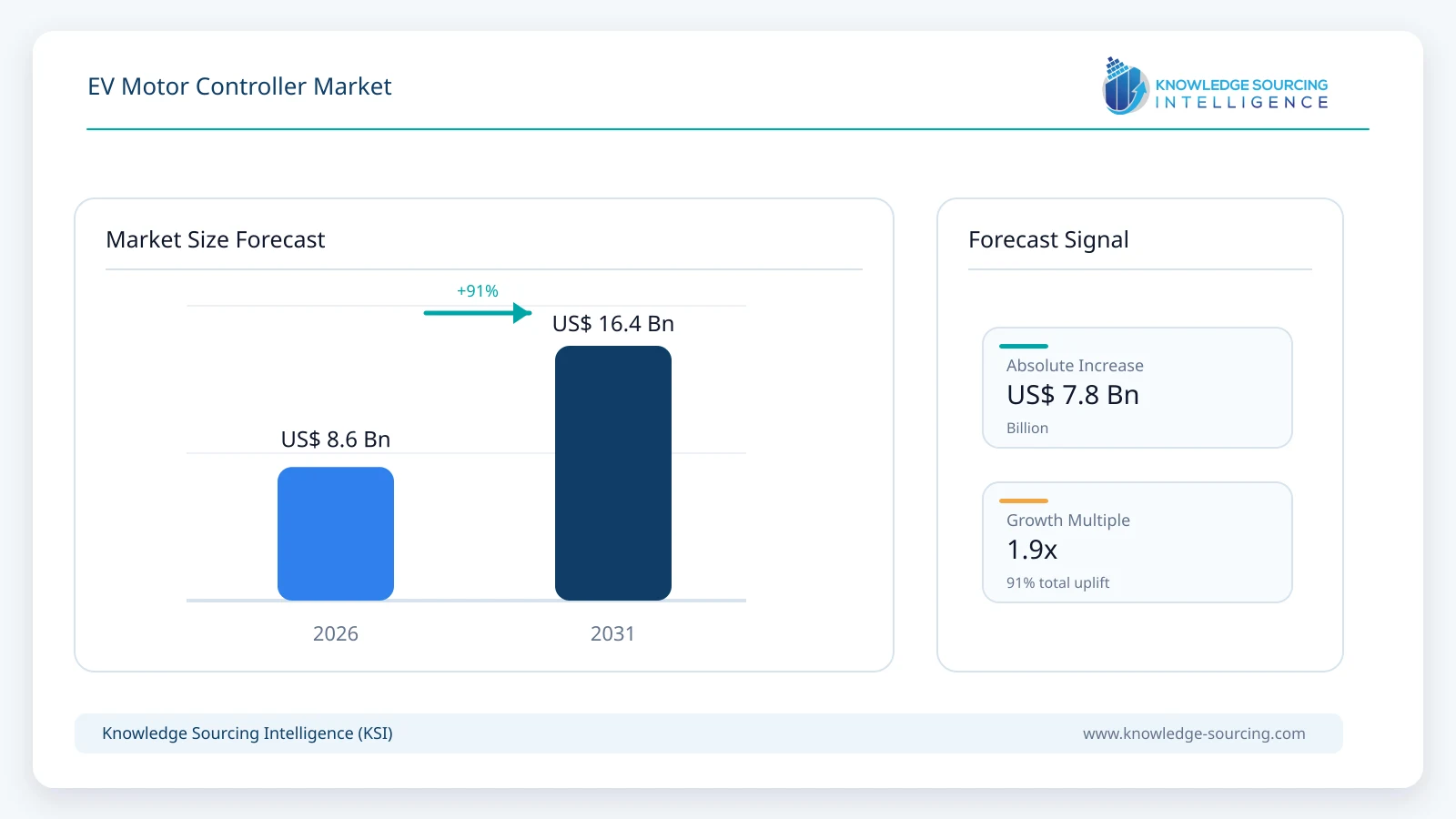
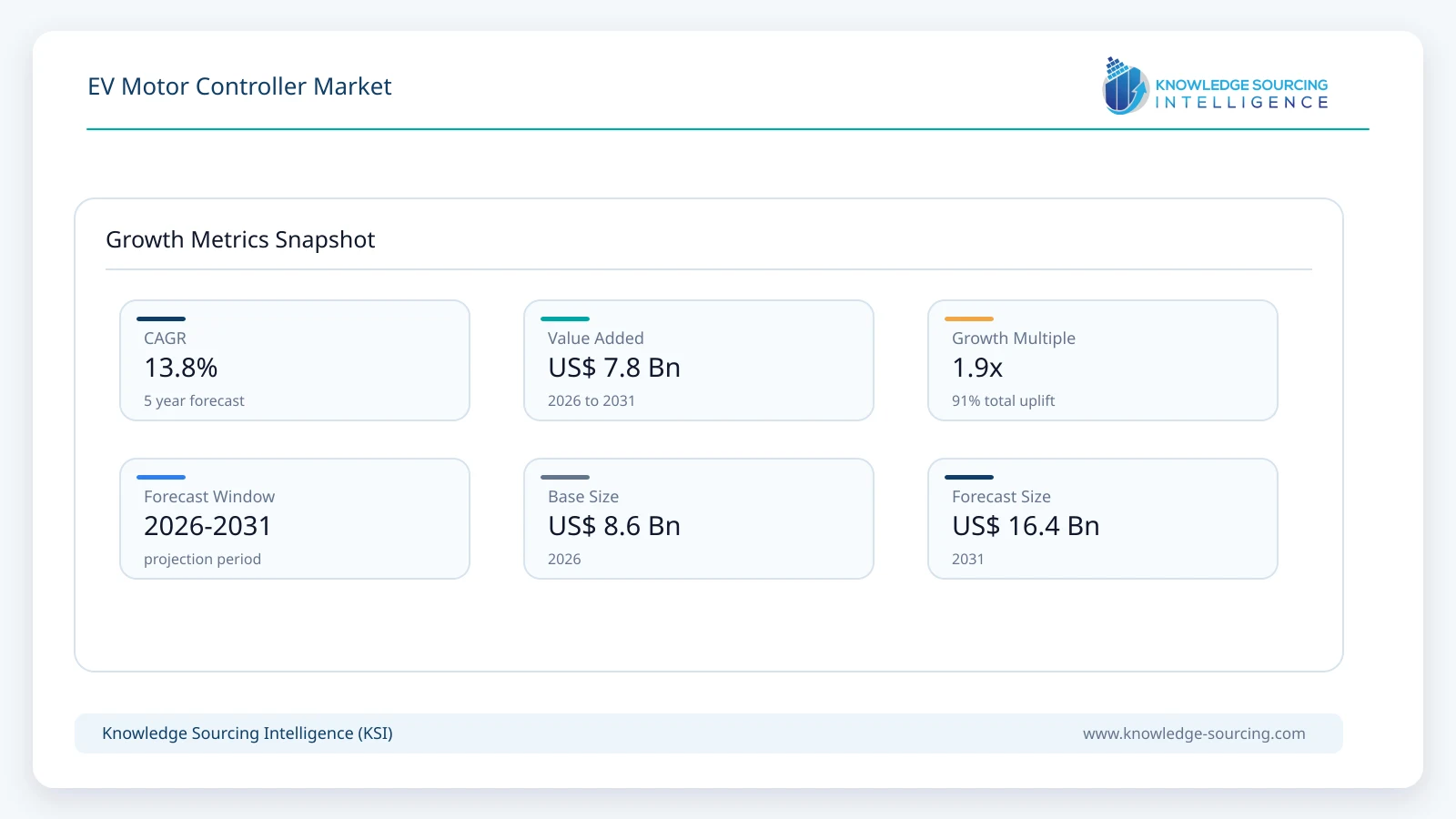
The EV Motor Controller Market is forecast to grow at a CAGR of 13.8%, reaching USD 16.4 billion in 2031 from USD 8.6 billion in 2026.
Highlights:
- 1Vehicle electrification remains the principal demand catalyst, with expanding production of battery electric vehicles, plug-in hybrid vehicles, electric buses, and commercial electric fleets driving sustained procurement of advanced motor controllers.
- 2Permanent Magnet Synchronous Motor (PMSM) controllers represent the most commercially significant product category due to their widespread deployment in modern passenger EV platforms, where high efficiency, compact design, and superior torque characteristics are prioritized.
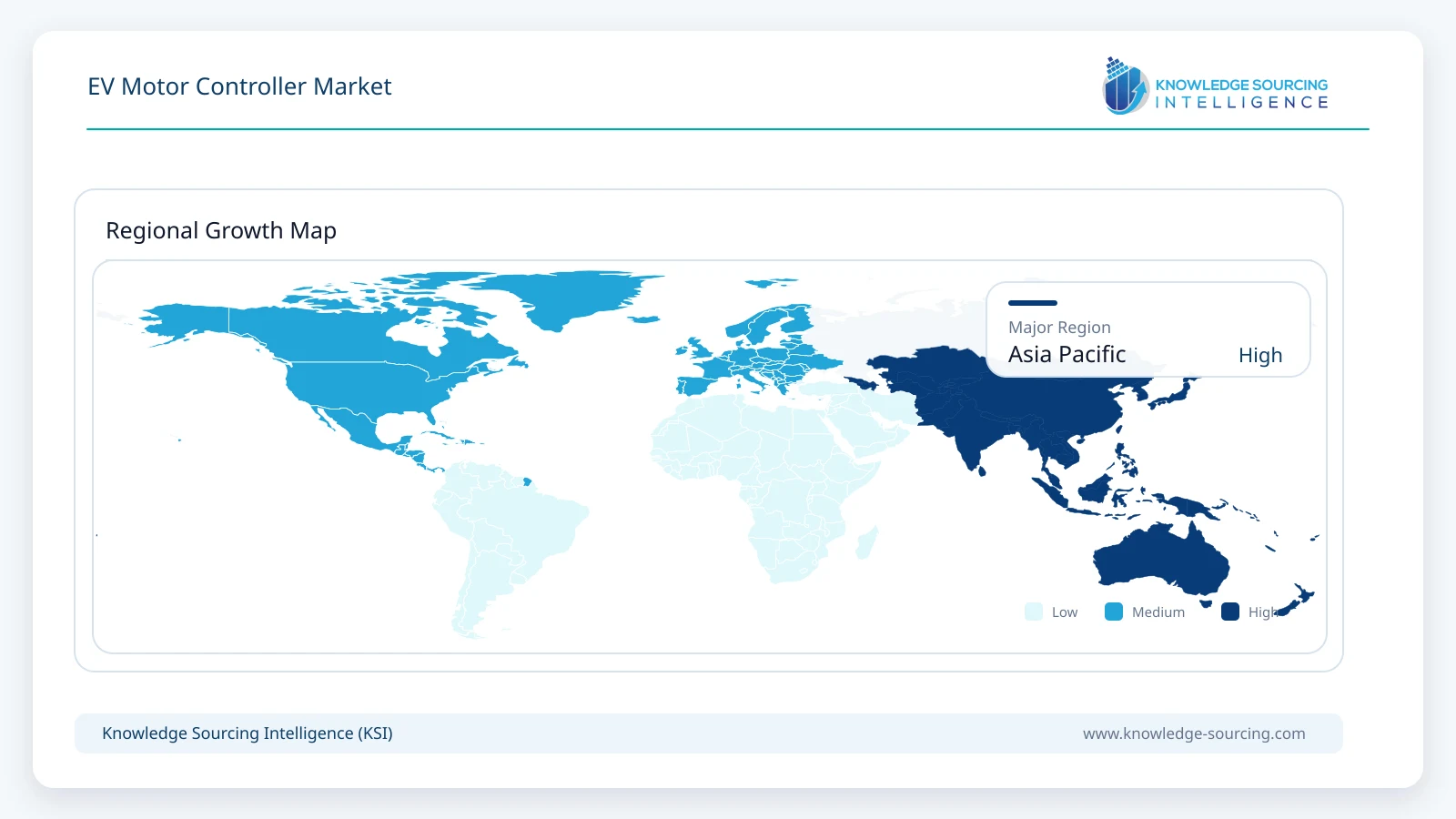
- 3Asia Pacific continues to represent the strongest manufacturing and sourcing region, supported by extensive electric vehicle production capacity, established automotive electronics supply chains, battery manufacturing investments, and government-backed industrial policies.
- 4Field-Oriented Control (FOC) continues gaining wider adoption because it delivers precise torque regulation, improved energy efficiency, smoother vehicle operation, and enhanced regenerative braking performance across varying driving conditions.
- 5Functional safety, cybersecurity, and automotive software compliance are becoming increasingly important procurement criteria, encouraging suppliers to strengthen software validation, embedded diagnostics, and standards compliance alongside hardware development.
- 6Competition is increasingly based on integrated power electronics, semiconductor innovation, software capabilities, and long-term engineering partnerships, rather than standalone hardware specifications or component pricing alone.
The EV motor controller market represents a critical component of the electric vehicle powertrain ecosystem. A motor controller functions as the electronic interface between the battery pack and the electric traction motor, regulating voltage, current, torque, rotational speed, and regenerative braking according to vehicle operating conditions. By processing driver inputs and sensor feedback, the controller converts direct current (DC) from the battery into controlled electrical signals suitable for the propulsion motor. The quality of motor control directly influences vehicle acceleration, energy efficiency, thermal performance, driving comfort, and overall powertrain reliability. Consequently, vehicle manufacturers increasingly consider motor controller performance as an important factor in achieving longer driving range, improved safety, and lower total ownership costs.
Demand for EV motor controllers is closely linked to global electrification of passenger vehicles, commercial vehicles, buses, two-wheelers, and specialized industrial mobility platforms. Unlike many automotive electronic components that primarily enhance convenience features, motor controllers remain indispensable to vehicle propulsion, making their procurement less discretionary. Every battery electric vehicle (BEV), plug-in hybrid electric vehicle (PHEV), and many fuel-cell electric vehicles require highly optimized motor control systems capable of operating under varying loads, temperatures, and driving cycles. This essential role creates a sustained replacement and original equipment manufacturing (OEM) demand across multiple vehicle categories.
Purchasing priorities have evolved considerably over the past several years. Automotive manufacturers no longer evaluate controllers solely on peak power output. Instead, procurement teams emphasize power conversion efficiency, software flexibility, thermal durability, cybersecurity, compliance with functional safety standards, semiconductor integration, and compatibility with multiple motor architectures. As vehicle platforms become increasingly software-defined, OEMs seek controller suppliers capable of delivering hardware together with configurable software algorithms that support over-the-air updates, adaptive torque management, and predictive diagnostics throughout the vehicle lifecycle.
The industry structure reflects close collaboration between automotive manufacturers, Tier-1 suppliers, semiconductor companies, software developers, and power electronics specialists. While some global vehicle manufacturers continue developing proprietary motor control technologies to strengthen vertical integration, many rely on established suppliers capable of meeting stringent automotive qualification standards and supporting high-volume production across multiple geographic regions. Long-term supply agreements, engineering collaboration during vehicle development, and platform-based manufacturing increasingly characterize commercial relationships within the industry.
Revenue generation within the EV motor controller market depends not only on vehicle production volumes but also on rising electronic content per vehicle. Higher-performance electric vehicles frequently require more sophisticated controllers with advanced digital signal processors, silicon carbide (SiC)-based power electronics, integrated thermal management, and sophisticated control software. Commercial vehicles and heavy-duty applications often utilize higher-capacity controllers capable of supporting demanding duty cycles, creating greater revenue potential compared with lower-power passenger vehicle applications.
Technology migration is also influencing commercial opportunities. The industry continues transitioning from conventional insulated-gate bipolar transistor (IGBT) designs toward silicon carbide MOSFET-based architectures where cost-performance economics justify adoption. These next-generation semiconductors improve switching efficiency, reduce heat generation, enable higher operating frequencies, and support compact system designs. Although SiC components remain relatively expensive, their ability to extend driving range and reduce cooling requirements has encouraged broader adoption among premium passenger vehicles and commercial electric fleets.
Another defining characteristic of the market is the growing importance of software capabilities. Modern controllers increasingly incorporate advanced control algorithms capable of optimizing motor efficiency across varying operating conditions. Functions including field-oriented control, regenerative braking optimization, torque vectoring, traction management, and adaptive thermal protection depend heavily on embedded software rather than hardware alone. Consequently, software engineering expertise has become an important competitive differentiator alongside power electronics manufacturing capabilities.
Government policies continue shaping procurement decisions throughout the value chain. Vehicle emission standards, fuel economy regulations, zero-emission vehicle mandates, and public investment supporting electric mobility encourage manufacturers to accelerate electrification programs. These regulatory initiatives indirectly stimulate demand for motor controllers by expanding electric vehicle production rather than directly regulating controller technologies. Compliance with automotive functional safety requirements, electromagnetic compatibility standards, and cybersecurity regulations further influences supplier selection.
Supply chain resilience has become another important commercial consideration. Semiconductor shortages experienced during recent years demonstrated the vulnerability of automotive electronics manufacturing to disruptions in wafer production, packaging capacity, and logistics networks. Consequently, OEMs increasingly prioritize suppliers with diversified semiconductor sourcing strategies, regional manufacturing footprints, and proven inventory management capabilities. Companies capable of guaranteeing delivery schedules under changing market conditions gain competitive advantages during vehicle platform sourcing decisions.
Fleet operators represent another influential buyer group. Commercial transportation companies increasingly evaluate controller performance based on lifetime operating efficiency rather than initial purchase price. Small improvements in energy conversion efficiency can substantially reduce electricity consumption across large vehicle fleets over extended operating periods. Fleet procurement decisions therefore increasingly consider predictive maintenance capabilities, controller diagnostics, remote monitoring, and software upgrade flexibility in addition to conventional performance specifications.
The market also benefits from continuous improvements in electric motor technology. Permanent magnet synchronous motors, induction motors, brushless DC motors, and switched reluctance motors each require optimized controller architectures. Suppliers capable of supporting multiple propulsion technologies provide greater flexibility for OEM platform development while reducing engineering complexity during vehicle design.
Manufacturing localization is becoming increasingly important as governments encourage domestic electric vehicle production through industrial policies and investment incentives. Regional manufacturing facilities reduce transportation costs, improve responsiveness to customer requirements, and support compliance with local content regulations where applicable. Consequently, several leading automotive electronics suppliers continue expanding production capacity across North America, Europe, and Asia Pacific to serve regional vehicle assembly operations more effectively.
Research and development expenditure remains substantial due to continuous advances in semiconductor technology, power density optimization, thermal management, embedded software, and functional safety. Automotive manufacturers typically require suppliers to participate throughout multi-year vehicle development programs, necessitating long-term engineering investment before commercial production begins. Suppliers capable of sustaining these development cycles while maintaining manufacturing quality standards are generally better positioned to secure high-volume production contracts.
The competitive environment is therefore defined by engineering capability, manufacturing reliability, software expertise, regulatory compliance, and long-term customer relationships rather than price competition alone. Buyers typically prioritize product reliability and lifecycle performance because controller failures directly affect vehicle safety, warranty costs, and brand reputation. This purchasing behavior supports sustained investment in product validation, quality assurance, and continuous technology development.
Looking ahead, demand will continue to be influenced by expanding electric vehicle production, higher vehicle electrification across commercial transport, advances in wide-bandgap semiconductor technologies, and increasing software integration within vehicle architectures. Suppliers capable of combining efficient power electronics, intelligent control software, scalable manufacturing, and resilient supply chains are expected to remain well positioned as automotive electrification programs progress across global markets.
Market Drivers
Rising Electric Vehicle Production Expands OEM Procurement of Motor Controllers
The most important commercial driver for the EV motor controller market is the continued increase in electric vehicle manufacturing across passenger cars, light commercial vehicles, buses, heavy-duty trucks, and two-wheelers. Every new electric propulsion platform requires dedicated motor control systems that match battery architecture, motor configuration, and vehicle performance targets. As automotive manufacturers expand their electric product portfolios across multiple vehicle segments, sourcing volumes for motor controllers increase proportionately.
OEM purchasing strategies increasingly favor scalable controller platforms capable of serving multiple vehicle models with limited hardware modifications. Platform standardization reduces engineering complexity, simplifies production planning, and lowers lifecycle costs. Consequently, suppliers invest in modular controller architectures that can be adapted across different voltage levels and power ratings while maintaining common software frameworks.
Commercially, this trend supports higher production volumes, longer supply agreements, and stronger collaboration between vehicle manufacturers and Tier-1 suppliers during early vehicle development stages.
Advancements in Power Semiconductor Technology Improve Controller Performance
Power semiconductor innovation continues reshaping product development priorities throughout the industry. The gradual adoption of silicon carbide (SiC) devices enables higher switching frequencies, lower electrical losses, reduced cooling requirements, and improved overall drivetrain efficiency compared with conventional IGBT-based systems.
Vehicle manufacturers increasingly evaluate controller suppliers based on their ability to integrate advanced semiconductor technologies without compromising reliability or production scalability. Although SiC solutions currently command higher component costs, improved energy efficiency and extended driving range often justify their use in premium passenger vehicles and commercial applications with demanding operating profiles.
This technology shift encourages sustained investment in power electronics design, semiconductor partnerships, and manufacturing capabilities, strengthening differentiation among established suppliers.
Software-Defined Vehicle Architectures Increase Demand for Intelligent Control Systems
Modern electric vehicles rely heavily on embedded software to optimize propulsion system performance. Motor controllers now perform considerably more than simple power conversion functions, incorporating advanced torque management, regenerative braking optimization, thermal protection, fault diagnostics, and communication with centralized vehicle control units.
Automotive manufacturers increasingly prefer suppliers capable of delivering integrated hardware and software solutions that support remote software updates, predictive maintenance, and continuous performance improvements throughout the vehicle lifecycle. This changes procurement priorities from hardware-centric purchasing toward long-term software support and engineering collaboration.
As software functionality becomes more sophisticated, suppliers with strong embedded systems expertise strengthen their competitive position within future vehicle development programs.
Government Electrification Policies Stimulate Long-Term Industry Investment
Public policy continues to influence investment decisions across the automotive sector. National emission reduction targets, fuel economy standards, zero-emission vehicle mandates, purchase incentives, and charging infrastructure programs encourage manufacturers to accelerate electric vehicle production planning.
These initiatives indirectly support sustained demand for motor controllers by increasing electric vehicle manufacturing volumes rather than directly regulating controller technology. Government-backed industrial programs promoting domestic battery manufacturing, semiconductor production, and automotive electronics localization also encourage suppliers to establish regional engineering and manufacturing operations.
From a commercial perspective, policy stability reduces investment uncertainty and supports multi-year capacity expansion decisions throughout the EV power electronics value chain.
Market Restraints and Challenges
High Power Electronics Costs Continue to Influence Vehicle Platform Economics
Although electric vehicle production volumes have increased, the cost structure of advanced motor controllers remains a significant consideration for vehicle manufacturers. Modern controllers incorporate high-performance semiconductors, insulated substrates, gate drivers, digital signal processors, current sensors, thermal management systems, and sophisticated embedded software. When combined with rigorous automotive validation requirements, these factors result in considerably higher development and manufacturing costs than conventional automotive electronic control units.
The transition toward higher-voltage vehicle architectures has further increased engineering complexity. Controllers designed for 800-volt systems require enhanced insulation, improved thermal stability, and components capable of handling higher switching frequencies without compromising long-term reliability. Silicon carbide (SiC) devices provide measurable efficiency gains but continue to command a price premium compared with conventional insulated-gate bipolar transistor (IGBT) solutions. Consequently, manufacturers must balance efficiency improvements against overall vehicle affordability.
Cost sensitivity is particularly evident in entry-level passenger vehicles and electric two-wheelers, where purchasing decisions are strongly influenced by retail pricing. OEMs serving these segments frequently seek controller designs that achieve acceptable performance without incorporating every available technology enhancement. Suppliers therefore face continuous pressure to optimize manufacturing costs while maintaining compliance with stringent automotive quality standards.
To address these challenges, manufacturers increasingly pursue design standardization, greater semiconductor integration, automated production processes, and long-term sourcing agreements that improve economies of scale. Continued investment in localized manufacturing also helps reduce logistics costs and mitigate exposure to exchange-rate fluctuations.
Semiconductor Supply Risks Affect Production Planning and Delivery Commitments
Motor controllers depend heavily on semiconductor availability. Power MOSFETs, IGBTs, SiC devices, microcontrollers, digital signal processors, memory components, communication integrated circuits, and sensing technologies must all be sourced according to strict automotive qualification requirements. Disruptions affecting any of these components can delay production schedules and increase inventory costs.
Unlike many consumer electronics, automotive components require extensive qualification before being introduced into serial production. Replacing one semiconductor supplier with another often requires redesign, validation testing, and regulatory certification, extending development timelines. This limits procurement flexibility during periods of constrained supply.
Automotive manufacturers have therefore become more selective when evaluating controller suppliers. Procurement teams increasingly assess supplier resilience, manufacturing footprint, inventory management capabilities, and long-term semiconductor partnerships alongside technical performance. Buyers prefer suppliers capable of demonstrating diversified sourcing strategies rather than dependence on a limited number of fabrication facilities.
Many suppliers are responding by expanding strategic inventory, qualifying multiple semiconductor sources where technically feasible, and establishing regional manufacturing facilities closer to automotive assembly plants. These measures improve delivery reliability but also increase working capital requirements.
Thermal Management Requirements Increase Engineering Complexity
The performance of an EV motor controller is closely linked to its ability to operate efficiently under demanding thermal conditions. High current densities, frequent acceleration cycles, regenerative braking events, and elevated ambient temperatures generate significant heat within power electronic components. If thermal loads are not effectively managed, controller efficiency declines, component degradation accelerates, and long-term reliability may be compromised.
Commercial vehicle applications present particularly demanding operating environments. Electric buses, delivery vans, heavy trucks, construction equipment, and mining vehicles often operate continuously under heavy loads while experiencing wide variations in environmental conditions. Buyers in these sectors prioritize thermal durability because unexpected controller failures can result in operational downtime and increased maintenance expenses.
Developing compact controllers with high power density while maintaining acceptable thermal performance remains a substantial engineering challenge. Manufacturers continue investing in advanced cooling technologies, optimized circuit layouts, improved packaging materials, and simulation tools that enable more effective thermal design without substantially increasing system size or weight.
As vehicle manufacturers seek greater power output from increasingly compact drivetrain architectures, thermal management will remain an important differentiator influencing supplier selection.
Software Validation and Functional Safety Requirements Extend Development Cycles
Motor controllers have evolved into highly software-dependent systems responsible for controlling propulsion, torque delivery, regenerative braking, and communication with multiple vehicle subsystems. This increased functionality also expands the complexity of software development and validation.
Automotive manufacturers require suppliers to comply with internationally recognized functional safety standards such as ISO 26262 while also meeting cybersecurity expectations under evolving regulatory frameworks. Every software modification must undergo extensive verification to ensure reliable operation under normal driving conditions as well as fault scenarios.
Development programs therefore require multidisciplinary engineering teams specializing in embedded software, power electronics, systems engineering, functional safety, cybersecurity, and vehicle integration. Validation activities frequently continue throughout vehicle platform development, increasing engineering expenditure and extending commercialization timelines.
Smaller suppliers may encounter challenges maintaining the engineering resources necessary to satisfy these requirements across multiple customer programs. Consequently, the industry increasingly favors organizations capable of combining software expertise with established automotive quality management systems and long-term technical support capabilities.
Raw Material and Critical Mineral Price Volatility Influences Manufacturing Economics
Although motor controllers do not consume battery materials directly, they depend upon copper, aluminum, engineered ceramics, specialty polymers, semiconductor substrates, and electronic-grade metals used in power electronics manufacturing. Price fluctuations affecting these materials influence manufacturing costs and long-term sourcing strategies.
Global demand for electrification technologies has intensified competition for several critical industrial materials. At the same time, geopolitical developments, trade restrictions, logistics disruptions, and energy price volatility periodically affect production costs throughout the electronics supply chain.
Automotive manufacturers generally prefer long-term pricing stability because vehicle platforms remain in production for many years. Controller suppliers therefore face the challenge of managing input cost fluctuations while honoring fixed-price supply agreements negotiated well before production begins.
Many companies mitigate these risks through strategic procurement contracts, supplier diversification, localized manufacturing, and increased design flexibility that allows alternative materials or component sourcing where appropriate without affecting product performance or regulatory compliance.
Major Segment Analysis
Permanent Magnet Synchronous Motor (PMSM) Controller Segment
Permanent Magnet Synchronous Motor (PMSM) controllers represent the most commercially important product segment within the EV motor controller market because they support the propulsion technology adopted by a substantial proportion of modern battery electric passenger vehicles. The combination of high torque density, superior energy efficiency, smooth power delivery, and compact drivetrain packaging has encouraged widespread deployment of PMSM-based propulsion systems across both premium and mass-market vehicle platforms.
Vehicle manufacturers selecting PMSM propulsion typically prioritize driving range, acceleration performance, and overall system efficiency. These objectives place considerable emphasis on controller performance because the controller continuously regulates motor current, torque output, switching frequency, and regenerative braking behavior. Small improvements in controller efficiency can translate into measurable gains in vehicle range, making the controller an essential contributor to overall powertrain competitiveness rather than simply an electronic control component.
Buyer requirements within this segment have become increasingly sophisticated. OEM engineering teams evaluate PMSM controllers based on efficiency across varying load conditions, thermal performance, software flexibility, electromagnetic compatibility, diagnostic capability, and compliance with functional safety requirements. Reliability throughout extended vehicle operating lifecycles remains equally important because controller failures directly influence warranty costs and customer satisfaction.
Field-Oriented Control (FOC) algorithms have become the preferred control strategy for PMSM applications due to their ability to independently regulate magnetic flux and torque. This enables precise motor operation over a wide speed range while improving efficiency, reducing acoustic noise, and enhancing regenerative braking performance. Suppliers capable of delivering optimized FOC software alongside advanced power electronics strengthen their position during vehicle platform sourcing decisions.
The transition toward higher-voltage vehicle architectures has further increased demand for advanced PMSM controllers. Electric vehicles utilizing 800-volt battery systems require controllers capable of operating at higher switching frequencies while maintaining thermal stability and minimizing electrical losses. This has accelerated investment in silicon carbide-based power electronics, improved cooling technologies, and advanced packaging techniques that increase power density without compromising durability.
Commercial vehicle manufacturers are also expanding PMSM deployment where operational efficiency and lifecycle economics justify higher initial investment. Electric delivery vehicles, buses, and medium-duty trucks increasingly utilize PMSM propulsion because improved energy efficiency lowers electricity consumption across high-utilization fleet operations. Fleet operators evaluate controller suppliers based not only on technical specifications but also on diagnostic capabilities, predictive maintenance support, software update functionality, and long-term service availability.
Competitive dynamics within the PMSM controller segment increasingly favor suppliers capable of combining hardware manufacturing with software engineering expertise. Vehicle manufacturers prefer integrated solutions that simplify system validation, reduce engineering complexity, and support future software enhancements throughout the vehicle lifecycle. Long-term engineering collaboration during vehicle development therefore represents a major competitive advantage alongside manufacturing scale.
Another notable commercial trend involves platform standardization. Automotive manufacturers increasingly seek controller architectures that can be adapted across multiple vehicle models with minimal hardware redesign. Modular PMSM controller platforms reduce development costs, simplify production planning, and improve procurement efficiency while supporting diverse vehicle performance requirements. Suppliers offering scalable architectures gain greater opportunities to secure multi-platform supply agreements.
Manufacturing quality remains a decisive purchasing criterion. Because PMSM controllers operate under demanding electrical and thermal conditions throughout the vehicle's operational life, buyers place considerable emphasis on production consistency, validation testing, traceability, and compliance with automotive quality standards such as IATF 16949. Suppliers demonstrating proven manufacturing reliability often secure long-term contracts even in highly competitive bidding environments.
Looking ahead, the commercial importance of PMSM controllers is expected to strengthen as automotive manufacturers continue prioritizing energy efficiency, driving range, and compact drivetrain integration. Continued advances in wide-bandgap semiconductors, embedded control software, thermal management technologies, and high-voltage power electronics will further enhance controller capabilities, reinforcing the central role of PMSM controller technology within the global electric vehicle powertrain industry.
Regional Analysis
Asia Pacific
Asia Pacific represents the largest and most influential regional market for EV motor controllers due to its concentration of electric vehicle manufacturing, battery production, semiconductor packaging capacity, and automotive electronics supply chains. The region accounts for the highest volume of electric vehicle assembly globally, creating sustained demand for motor controllers across passenger vehicles, buses, commercial fleets, two-wheelers, and industrial mobility applications.
China remains the principal demand center within the region. Strong domestic electric vehicle production, government support for new energy vehicles, extensive charging infrastructure deployment, and the presence of vertically integrated automotive manufacturers have created a mature ecosystem for power electronics and drivetrain components. Vehicle manufacturers increasingly procure controllers capable of supporting both 400-volt and 800-volt architectures while emphasizing higher efficiency and localized manufacturing. Domestic suppliers compete aggressively alongside international Tier-1 companies by combining cost-efficient production with rapid product development.
Japan continues to focus on engineering quality, long-term reliability, and advanced power electronics. Automotive manufacturers prioritize highly efficient controller designs that support premium vehicle performance and stringent durability standards. Japanese suppliers also maintain strong positions in semiconductor technologies and embedded control software, contributing to continued innovation in high-performance motor control systems.
India is emerging as an attractive growth market as electric passenger vehicles, buses, commercial vehicles, and two-wheelers gain wider adoption. Government incentive programs supporting domestic manufacturing, together with production-linked investment initiatives and expanding charging infrastructure, are encouraging OEMs to localize component sourcing. Buyers increasingly seek cost-competitive controllers capable of meeting demanding operating conditions while maintaining affordability for price-sensitive vehicle segments.
South Korea benefits from its advanced automotive manufacturing industry, battery production capabilities, and semiconductor expertise. Vehicle manufacturers increasingly integrate sophisticated motor controllers into premium electric vehicles, with procurement decisions emphasizing software functionality, power density, and compatibility with next-generation vehicle platforms.
Australia, Taiwan, Indonesia, and Thailand contribute additional opportunities through expanding EV adoption, industrial electrification initiatives, and regional manufacturing investments. Southeast Asian countries are increasingly positioning themselves as production hubs for electric vehicles and automotive components, encouraging suppliers to establish localized engineering and manufacturing operations.
Despite strong demand fundamentals, regional suppliers must address challenges including semiconductor supply risks, varying national regulatory requirements, intense pricing competition, and evolving technology standards. Companies with diversified manufacturing footprints and scalable product portfolios remain better positioned to respond to these market conditions.
Europe
Europe remains one of the most technologically advanced markets for EV motor controllers, supported by stringent vehicle emission regulations, ambitious decarburization objectives, and substantial investment in electric mobility. Automotive manufacturers throughout the region continue expanding battery electric vehicle portfolios to comply with regulatory requirements while maintaining competitiveness across domestic and international markets.
Germany serves as the region's primary center for automotive engineering and premium vehicle manufacturing. Vehicle manufacturers emphasize high-performance propulsion systems requiring advanced motor controllers capable of supporting sophisticated torque management, regenerative braking, and functional safety requirements. Local procurement strategies frequently prioritize suppliers with proven engineering capabilities, established production quality, and close technical collaboration throughout vehicle development programs.
France has strengthened investment in electric vehicle manufacturing and battery supply chains through public-private industrial initiatives. Domestic vehicle manufacturers increasingly adopt modular electric platforms, creating opportunities for standardized controller architectures that can support multiple vehicle models while reducing engineering complexity.
The United Kingdom continues investing in electrification despite broader structural changes within the automotive sector. Research institutions, automotive engineering companies, and technology developers contribute to innovation in power electronics, embedded software, and advanced propulsion systems. Buyers place considerable emphasis on software integration and compliance with evolving cybersecurity requirements.
Italy and Spain contribute through expanding electric commercial vehicle production, component manufacturing, and industrial automation expertise. Regional suppliers increasingly participate in European supply chains by providing specialized electronics, precision manufacturing, and engineering services supporting larger vehicle manufacturers.
European procurement decisions increasingly extend beyond component pricing. Buyers evaluate lifecycle efficiency, carbon footprint, manufacturing sustainability, traceability, cybersecurity compliance, and long-term engineering support when selecting controller suppliers. Environmental reporting requirements also encourage manufacturers to strengthen supply chain transparency and responsible sourcing practices.
Regional growth is moderated by relatively high manufacturing costs, labor expenses, and ongoing competition from lower-cost production regions. Nevertheless, Europe's emphasis on engineering quality, functional safety, and technological innovation continues supporting demand for premium motor controller solutions.
North America
North America represents a strategically important market driven by accelerating investment in electric vehicle manufacturing, domestic battery production, semiconductor expansion, and supply chain localization. Public and private investment continues supporting regional electrification as vehicle manufacturers seek to strengthen domestic production capacity and reduce dependence on overseas component sourcing.
The United States accounts for the largest share of regional demand. Major automotive manufacturers continue expanding dedicated electric vehicle platforms across passenger vehicles, pickup trucks, commercial vans, and heavy-duty transportation. Procurement teams increasingly prioritize controller suppliers capable of supporting high-voltage architectures, advanced software functionality, and localized manufacturing operations that improve supply chain resilience.
Investment in battery manufacturing facilities and semiconductor fabrication has also strengthened opportunities for regional controller production. Vehicle manufacturers increasingly favor suppliers capable of integrating advanced power electronics while meeting strict automotive quality requirements and supporting long-term platform development.
Canada contributes through its growing battery materials industry, automotive manufacturing base, and policy support for zero-emission transportation. Cross-border automotive supply chains facilitate collaboration among manufacturers throughout North America, encouraging controller suppliers to establish production and engineering operations serving multiple markets.
Mexico continues expanding its role as an automotive manufacturing center due to established production infrastructure, competitive labor costs, and integration with North American supply chains. Increasing electric vehicle assembly activity is creating additional demand for locally sourced electronic components, including motor controllers and associated power electronics.
Regional buyers place significant emphasis on supply reliability, production scalability, and long-term engineering partnerships. Controller suppliers with manufacturing facilities within North America often gain competitive advantages through reduced logistics risk and improved responsiveness to customer requirements.
However, the region continues facing challenges associated with skilled labor availability, semiconductor dependence, evolving regulatory frameworks, and capital-intensive manufacturing investments. Companies capable of balancing technological innovation with localized production remain well positioned to benefit from continued market expansion.
Middle East & Africa
The Middle East & Africa remains at an earlier stage of electric vehicle adoption compared with Asia Pacific, Europe, and North America, but investment activity is gradually strengthening demand for EV motor controllers. Government initiatives promoting economic diversification, sustainable transportation, and industrial development are encouraging wider deployment of electric mobility solutions across selected markets.
The United Arab Emirates continues investing in electric public transportation, charging infrastructure, and smart mobility initiatives. Public sector procurement programs increasingly include electric buses, municipal service vehicles, and commercial fleets, creating demand for reliable motor control technologies capable of operating under high ambient temperatures.
Saudi Arabia has expanded investment in domestic electric vehicle manufacturing and industrial localization as part of broader economic diversification strategies. New manufacturing facilities and partnerships with international automotive companies are expected to increase regional demand for locally assembled powertrain components, including motor controllers.
Elsewhere across the region, adoption remains concentrated in urban public transportation projects, commercial fleet electrification, and government-supported demonstration programs. Infrastructure availability, electricity distribution capacity, and vehicle affordability continue influencing procurement decisions.
Environmental operating conditions present unique engineering requirements. High temperatures, dust exposure, and demanding operating environments require motor controllers with enhanced thermal management, robust enclosure protection, and long-term durability. Buyers therefore prioritize reliability and maintenance performance over purely cost-based purchasing decisions.
Although current production volumes remain comparatively modest, continued infrastructure investment and industrial policy initiatives are expected to create additional opportunities for international suppliers seeking regional expansion.
South America
South America represents an emerging market where electric vehicle adoption continues to expand gradually as governments encourage cleaner transportation and manufacturers introduce a broader range of electric vehicle models. Commercial fleet electrification currently generates a substantial share of regional demand because fleet operators often achieve clearer economic benefits through reduced operating costs.
Brazil remains the largest automotive market in the region. Expanding availability of electric passenger vehicles, public transportation electrification, and industrial investment in automotive manufacturing support increasing demand for power electronics. Vehicle manufacturers evaluate controller suppliers based on product reliability, service support, and cost competitiveness while accounting for local operating conditions.
Argentina continues developing electric mobility initiatives, although adoption remains influenced by broader economic conditions and investment cycles. Public transportation projects and commercial fleet operators represent important early adopters, particularly where government incentives support electrification.
Other South American countries are gradually introducing electric buses, municipal fleets, logistics vehicles, and passenger EVs. Charging infrastructure expansion and supportive regulatory policies will remain important factors determining future controller demand throughout the region.
Price sensitivity remains a defining characteristic of buyer behavior. Automotive manufacturers and fleet operators carefully evaluate total lifecycle costs before making procurement decisions. Suppliers capable of balancing performance, reliability, and affordability are therefore better positioned to secure business in this region.
Despite current market constraints, improving infrastructure, expanding model availability, and continued investment in cleaner transportation solutions are expected to support steady long-term demand for EV motor controllers.
Competitive Landscape
The EV motor controller market exhibits a moderately concentrated competitive structure in which established automotive Tier-1 suppliers compete through engineering capability, manufacturing scale, software expertise, and long-term customer relationships rather than price alone. Vehicle manufacturers typically involve controller suppliers during the early stages of vehicle platform development, making technical collaboration and validation support important competitive differentiators throughout the product lifecycle.
Competition increasingly centers on the ability to deliver integrated propulsion solutions rather than standalone electronic control units. Suppliers capable of combining motor controllers with electric drive systems, inverters, e-axles, transmission technologies, thermal management systems, and embedded software provide greater value to OEMs seeking simplified vehicle integration. This trend has strengthened demand for comprehensive electrified powertrain portfolios.
The competitive environment includes Robert Bosch GmbH, Continental AG, Denso Corporation, Mitsubishi Electric Corporation, Nidec Corporation, BorgWarner Inc., ZF Friedrichshafen AG, Hitachi Astemo, Ltd., Valeo SA, and Danfoss Editron. These companies compete across passenger vehicles, commercial transportation, industrial mobility, and specialty electric vehicle applications through extensive engineering resources, global manufacturing networks, and established relationships with automotive manufacturers.
Technology differentiation has become increasingly important as vehicle architectures evolve toward higher voltage systems and software-defined platforms. Suppliers continue investing in silicon carbide power electronics, higher switching frequencies, compact controller packaging, advanced thermal management, and sophisticated motor control algorithms capable of improving efficiency across diverse operating conditions. Embedded software development has emerged as a major competitive capability, particularly as OEMs seek configurable control strategies, predictive diagnostics, over-the-air software updates, and cybersecurity compliance.
Manufacturing quality remains a decisive factor during supplier selection. Automotive manufacturers require consistent production performance, rigorous validation procedures, traceability, and compliance with global quality standards throughout multi-year production programs. Companies with extensive experience in automotive electronics manufacturing often benefit from established quality systems and mature supply chain management practices that reduce operational risk for OEM customers.
Strategic partnerships continue shaping competitive positioning across the industry. Controller suppliers increasingly collaborate with semiconductor manufacturers, battery developers, software companies, and vehicle manufacturers to accelerate product development and improve system integration. Such partnerships enable earlier access to next-generation semiconductor technologies while supporting joint engineering programs for future vehicle platforms.
Geographic expansion also remains an important strategic priority. Suppliers continue establishing engineering centers and manufacturing facilities closer to major automotive production hubs in Asia Pacific, Europe, and North America. Regional production reduces logistics costs, improves responsiveness to customer requirements, supports localization objectives, and strengthens supply chain resilience during periods of market disruption.
Another notable competitive trend involves platform scalability. OEMs increasingly prefer modular controller architectures capable of supporting multiple vehicle categories through software configuration rather than extensive hardware redesign. Suppliers offering flexible platforms can reduce customer development costs while improving production efficiency across diverse electric vehicle portfolios.
As electrification expands into commercial vehicles, construction equipment, agricultural machinery, marine propulsion, and off-highway applications, competition is expected to broaden beyond traditional passenger vehicle programs. Suppliers capable of adapting their technologies across multiple end-use industries while maintaining high reliability and functional safety standards are likely to strengthen their long-term market positions.
Recent Developments
June 2026: Astemo announced that its motors and high-efficiency inverters featuring proprietary dual-sided cooling power modules were adopted for the new Nissan LEAF electric powertrain supplied through JATCO. The integrated 3-in-1 system improves energy efficiency, driving range, and overall electric powertrain performance.
June 2026: Bosch introduced its third-generation silicon carbide (SiC) semiconductors for electric vehicle power electronics, delivering approximately 20% higher performance. The technology enhances inverter and motor controller efficiency, improving battery-to-motor energy conversion, vehicle range, and charging performance.
May 2025: Astemo, Ltd. introduced a 12-inch air-cooled direct-drive system for in-wheel electric vehicles, expanding its electrified propulsion portfolio. The lightweight system improves heat dissipation while supporting compact vehicle applications and incorporates technologies developed through Japan's NEDO innovation program. The development broadens the company's electric drive offering and supports future demand for integrated motor, inverter, and controller technologies.
March 2025: Danfoss Editron announced the production launch of its ED3 onboard charger and electric power take-off (ePTO) for off-highway electric machinery. The solution supports high-power AC charging and simplified vehicle system integration, enabling OEMs to reduce charging time while improving overall powertrain efficiency. Commercially, the launch strengthens electrification options for construction, agricultural, and specialty electric vehicles that require advanced power electronics alongside motor control systems.
Regulatory and Policy Environment
Government regulation remains one of the strongest indirect influences on the EV motor controller market because controller demand depends on electric vehicle production rather than standalone electronics consumption. National decarbonization strategies, vehicle emission standards, fuel economy regulations, industrial policies, and electrification incentives collectively shape investment decisions throughout the automotive value chain.
Vehicle emission regulations in major automotive markets continue encouraging manufacturers to accelerate electrification programs. Fleet-average carbon dioxide reduction requirements in Europe, Corporate Average Fuel Economy (CAFE) regulations in North America, and increasingly stringent vehicle efficiency requirements across Asia Pacific have prompted automotive manufacturers to expand battery electric vehicle portfolios. Every additional electric vehicle platform introduced to satisfy regulatory targets creates corresponding demand for advanced motor controllers.
Government industrial policies are also reshaping supply chains. Programs supporting domestic battery production, semiconductor manufacturing, automotive electronics localization, and critical mineral processing encourage suppliers to establish regional engineering and manufacturing facilities. These initiatives reduce dependence on imported components while improving supply chain resilience for strategically important industries.
Compliance requirements for motor controllers extend well beyond propulsion performance. Automotive manufacturers require suppliers to satisfy internationally recognized standards governing functional safety, electromagnetic compatibility, environmental durability, and product quality before serial production begins. ISO 26262 remains the principal functional safety framework for automotive electrical and electronic systems, requiring systematic risk assessment, fault detection, redundancy where appropriate, and comprehensive software validation throughout product development.
Cybersecurity has become another important regulatory consideration. The implementation of UNECE Regulations R155 (Cybersecurity Management Systems) and R156 (Software Update Management Systems) has increased expectations regarding secure software development, over-the-air update capability, vulnerability management, and lifecycle software governance. Since modern motor controllers exchange data with multiple vehicle control systems, suppliers must increasingly demonstrate compliance with cybersecurity requirements alongside conventional electrical performance standards.
Electromagnetic compatibility regulations remain equally important because high-frequency switching within motor controllers can interfere with surrounding electronic systems if not properly managed. Manufacturers therefore conduct extensive electromagnetic compatibility testing during product qualification to ensure compliance with applicable international standards.
Government procurement programs supporting electric buses, municipal vehicles, defense mobility, and public transportation further contribute to controller demand. Public fleet procurement often emphasizes lifecycle operating costs, reliability, domestic manufacturing content, and maintenance support rather than lowest acquisition cost alone. This purchasing behavior encourages suppliers to strengthen engineering capabilities, aftersales support, and regional manufacturing presence.
Trade policy continues influencing procurement decisions across global supply chains. Tariffs, export controls affecting advanced semiconductor technologies, and regional trade agreements affect sourcing strategies for electronic components used in controller manufacturing. Consequently, many automotive suppliers are diversifying semiconductor procurement and expanding localized production to reduce geopolitical exposure.
Environmental regulations also increasingly influence manufacturing operations themselves. Automotive suppliers face growing expectations regarding carbon emissions reporting, responsible sourcing of raw materials, energy efficiency within manufacturing facilities, and recycling of electronic components. These requirements encourage investment in cleaner manufacturing processes and improved supply chain transparency.
Looking forward, policy stability will remain essential for sustaining investment in electric vehicle manufacturing capacity. Long-term regulatory certainty enables automotive manufacturers and component suppliers to commit capital toward product development, production facilities, and engineering resources required for future electric mobility programs.
Outlook and Strategic Implications
The EV motor controller market is expected to become increasingly sophisticated over the next five years as vehicle electrification expands across passenger transportation, commercial logistics, public transit, industrial equipment, and specialty mobility applications. Rather than relying solely on increasing production volumes, future value creation will depend on higher electronic content, improved software functionality, and greater integration within complete electric drive systems.
Investment priorities across the industry are shifting toward high-efficiency power electronics, silicon carbide semiconductor adoption, advanced thermal management, embedded software development, and scalable controller architectures capable of supporting multiple vehicle platforms. Manufacturers seek technologies that improve drivetrain efficiency while reducing overall system size, weight, and cooling requirements.
Procurement behavior is also evolving. Automotive OEMs increasingly evaluate suppliers based on long-term engineering capability, manufacturing resilience, cybersecurity compliance, software support, and product lifecycle management rather than component pricing alone. Multi-year platform agreements encourage suppliers to participate from the earliest stages of vehicle development, strengthening collaborative engineering relationships throughout the product lifecycle.
Software will continue to influence competitive positioning. Motor controllers are evolving into intelligent power management systems capable of adaptive torque optimization, predictive diagnostics, real-time thermal control, regenerative braking enhancement, and continuous software improvement through over-the-air updates. Suppliers with strong embedded software capabilities are expected to strengthen their participation in future software-defined vehicle platforms.
Power semiconductor technology will remain another major strategic priority. Wider adoption of silicon carbide devices is expected as manufacturing capacity expands and production costs gradually decline. Higher switching efficiency, reduced thermal losses, and improved power density will support broader deployment across both passenger and commercial electric vehicles, particularly in higher-voltage architectures.
Commercial vehicle electrification presents an additional opportunity. Electric trucks, buses, delivery fleets, agricultural equipment, mining machinery, and construction vehicles require high-power controllers capable of operating under demanding duty cycles. Fleet operators increasingly prioritize lifecycle operating costs, energy efficiency, diagnostic capability, and maintenance performance, creating opportunities for suppliers offering integrated hardware and software solutions.
Regional manufacturing diversification is likely to continue as governments strengthen industrial policies supporting domestic production of electric vehicle components. Suppliers establishing engineering centers, manufacturing facilities, and semiconductor partnerships across multiple geographic regions will be better positioned to reduce logistics risks and satisfy localization requirements established by automotive manufacturers.
Despite these opportunities, several risks remain. Semiconductor supply constraints, geopolitical uncertainty, raw material price volatility, evolving cybersecurity requirements, and continued pressure to reduce vehicle costs may affect investment decisions and profit margins. Suppliers unable to maintain continuous technology development while managing manufacturing costs may experience greater difficulty securing long-term OEM contracts.
Over the forecast period, competitive advantage is expected to depend less on individual controller specifications and more on the ability to deliver complete, software-enabled electric propulsion solutions supported by resilient supply chains and global engineering capabilities. Companies that combine advanced power electronics, scalable manufacturing, embedded software expertise, and close collaboration with automotive manufacturers are likely to strengthen their position as electric mobility continues expanding across global transportation markets.
EV Motor Controller Market Scope
| Report Metric | Details |
|---|---|
| Total Market Size in 2026 | USD 8.6 billion |
| Total Market Size in 2031 | USD 16.4 billion |
| Forecast Unit | Billion |
| Growth Rate | 13.8% |
| Study Period | 2021 to 2031 |
| Historical Data | 2021 to 2024 |
| Base Year | 2025 |
| Forecast Period | 2026 – 2031 |
| Segmentation | Product, Control Strategy, Power Output, Geography |
| Companies |
|
Market Segmentation
By Product
By Control Strategy
By Power Output
By Geography
Table of Contents
1. EXECUTIVE SUMMARY
2. MARKET SNAPSHOT
2.1. Market Overview
2.2. Market Definition
2.3. Scope of the Study
2.4. Market Segmentation
3. BUSINESS LANDSCAPE
3.1. Market Drivers
3.2. Market Restraints
3.3. Market Opportunities
3.4. Porter’s Five Forces Analysis
3.5. Industry Value Chain Analysis
3.6. Policies and Regulations
3.7. Strategic Recommendations
4. TECHNOLOGICAL OUTLOOK
5. EV MOTOR CONTROLLER MARKET BY PRODUCT
5.1. Introduction
5.2. Permanent Magnet Synchronous Motor (PMSM) Controller
5.3. AC Induction (Asynchronous) Motor Controller
5.4. Brushless DC (BLDC) Motor Controller
5.5. Switched Reluctance Motor Controller
6. EV MOTOR CONTROLLER MARKET BY CONTROL STRATEGY
6.1. Introduction
6.2. Field-Oriented Control (FOC)
6.3. Direct Torque Control (DTC)
6.4. Scalar Control
6.5. Sensorless Control
7. EV MOTOR CONTROLLER MARKET BY POWER OUTPUT
7.1. Introduction
7.2. Below 20 kW
7.3. 20–50 kW
7.4. 50–100 kW
7.5. 100–250 kW
7.6. Above 250 kW
8. EV MOTOR CONTROLLER MARKET BY GEOGRAPHY
8.1. Introduction
8.2. North America
8.2.1. By Product
8.2.2. By Control Strategy
8.2.3. By Power Output
8.2.4. By Country
8.2.4.1. United States
8.2.4.2. Canada
8.2.4.3. Mexico
8.3. South America
8.3.1. By Product
8.3.2. By Control Strategy
8.3.3. By Power Output
8.3.4. By Country
8.3.4.1. Brazil
8.3.4.2. Argentina
8.3.4.3. Others
8.4. Europe
8.4.1. By Product
8.4.2. By Control Strategy
8.4.3. By Power Output
8.4.4. By Country
8.4.4.1. United Kingdom
8.4.4.2. Germany
8.4.4.3. France
8.4.4.4. Italy
8.4.4.5. Spain
8.4.4.6. Others
8.5. Middle East & Africa
8.5.1. By Product
8.5.2. By Control Strategy
8.5.3. By Power Output
8.5.4. By Country
8.5.4.1. Saudi Arabia
8.5.4.2. UAE
8.5.4.3. Others
8.6. Asia Pacific
8.6.1. By Product
8.6.2. By Control Strategy
8.6.3. By Power Output
8.6.4. By Country
8.6.4.1. China
8.6.4.2. Japan
8.6.4.3. India
8.6.4.4. South Korea
8.6.4.5. Australia
8.6.4.6. Taiwan
8.6.4.7. Indonesia
8.6.4.8. Thailand
8.6.4.9. Others
9. COMPETITIVE ENVIRONMENT AND ANALYSIS
9.1. Major Players and Strategy Analysis
9.2. Market Share Analysis
9.3. Mergers, Acquisitions, Agreements, and Collaborations
9.4. Competitive Dashboard
10. COMPANY PROFILES
10.1. Robert Bosch GmbH
10.2. Continental AG
10.3. Denso Corporation
10.4. Mitsubishi Electric Corporation
10.5. Nidec Corporation
10.6. BorgWarner Inc.
10.7. ZF Friedrichshafen AG
10.8. Hitachi Astemo, Ltd.
10.9. Valeo SA
10.10. Danfoss Editron
11. RESEARCH METHODOLOGY
LIST OF FIGURES
LIST OF TABLES
Navigate
Trusted by the world's leading organizations











