
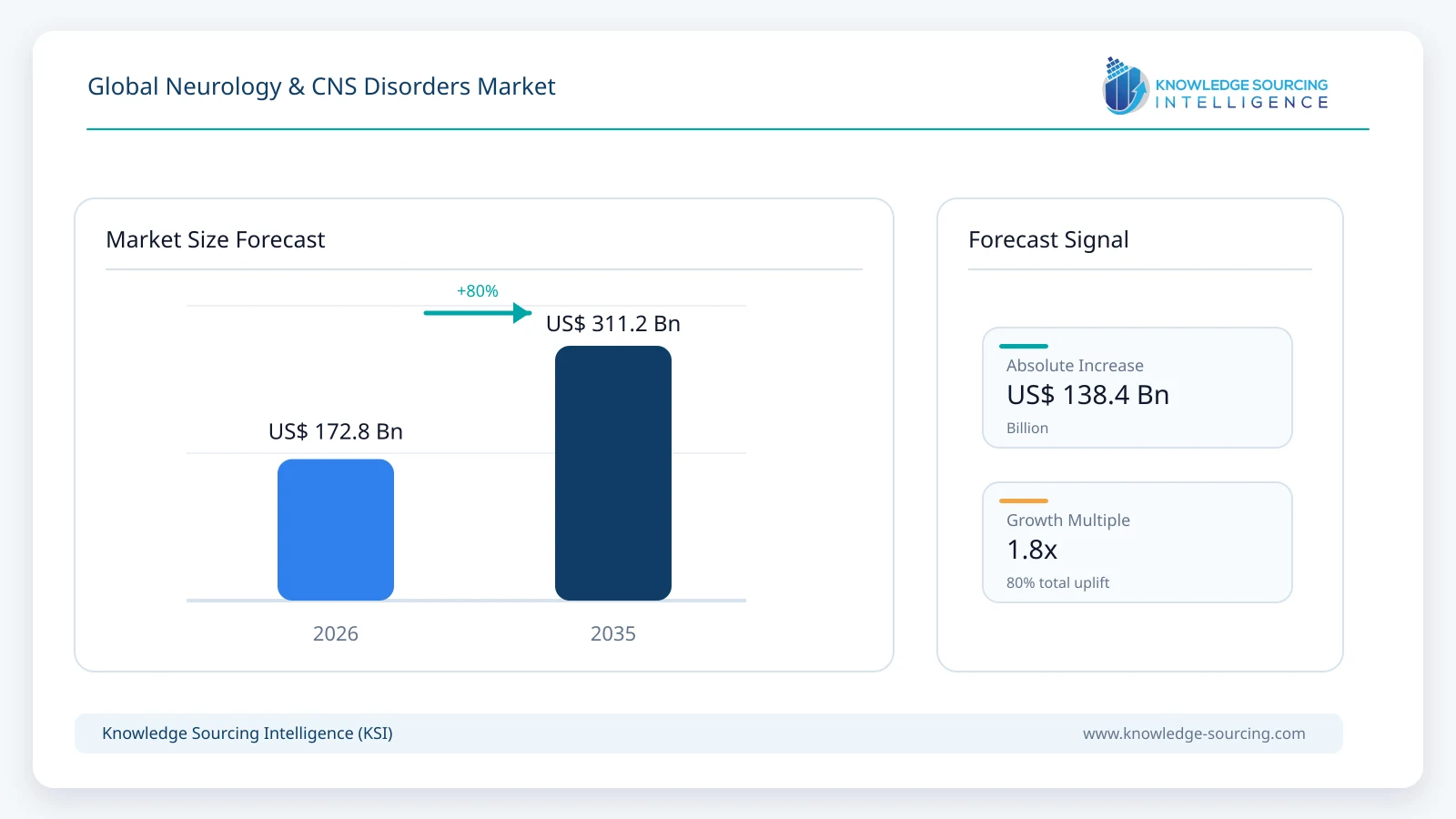
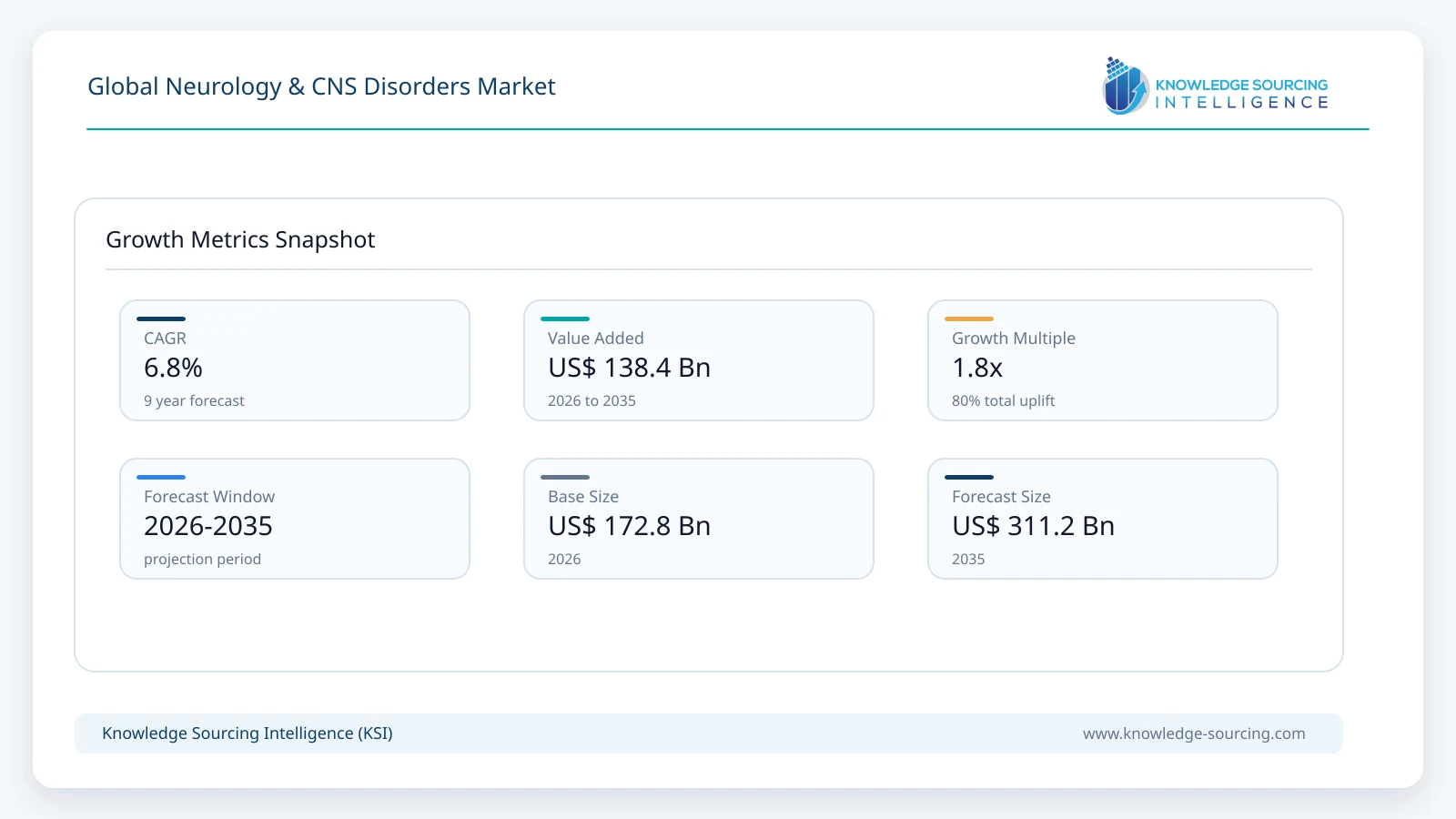
The global neurology & CNS disorders market is projected to grow at a CAGR of 6.8% the forecast period, increasing from USD 172.8 billion in 2026 to USD 311.2 billion by 2035.
Highlights:
- 1Aging populations are increasing neurodegenerative disease prevalence, which is expanding demand for long-term CNS therapeutics and monitoring systems.
- 2Biomarker-based diagnostics are improving early neurological detection, which is accelerating adoption of disease-modifying therapies.
- 3Regulatory agencies are supporting accelerated neurological approvals, which is increasing investment in rare and high-burden CNS diseases.
- 4Neurostimulation technologies are gaining clinical preference because refractory epilepsy and Parkinson’s disease patients require precision-adjustable intervention pathways.
Neurological disorders represent one of the fastest-growing chronic disease categories because global life expectancy continues increasing while neurodegenerative incidence rises with age-linked cognitive decline. Alzheimer’s disease, Parkinson’s disease, epilepsy, multiple sclerosis, and migraine disorders are creating sustained healthcare dependency because neurological damage frequently requires lifelong treatment, rehabilitation, monitoring, and caregiver support. Healthcare systems increasingly prioritize neurological infrastructure because delayed intervention elevates disability-adjusted life years and long-term institutional care costs.
Demand is shifting toward disease-modifying therapies because symptomatic management approaches are showing limited long-term neurological preservation. Biopharmaceutical companies are advancing amyloid-targeting antibodies, neuroinflammatory modulators, gene therapies, and RNA-based platforms since precision intervention improves differentiation in crowded CNS therapeutic categories. Regulatory agencies are accelerating orphan neurology reviews because rare neurological diseases continue facing limited commercial treatment availability.
Healthcare providers are integrating neuroimaging, biomarker assays, and digital neurological assessments because early-stage detection improves therapeutic response rates and treatment adherence. CNS markets increasingly depend on reimbursement alignment since advanced neurological therapies carry substantial administration and monitoring costs. Governments and payers are restructuring neurological reimbursement systems because untreated neurodegenerative progression increases public healthcare expenditure and workforce productivity loss.
Market Dynamics
Market Drivers
Rising Neurodegenerative Disease Burden: Neurological disorder prevalence continues increasing because aging populations are experiencing higher incidence of Alzheimer’s disease, Parkinson’s disease, and dementia-related cognitive decline. Chronic metabolic dysfunction and cardiovascular comorbidities are intensifying neurological vulnerability across middle-aged and elderly populations. Healthcare systems are strengthening early neurological screening because delayed diagnosis continues increasing long-term disability burden and institutional care dependency. Earlier neurological identification therefore expands diagnosed CNS patient populations.
Expansion of Biomarker-Based Diagnostics: Precision neurological diagnosis improves treatment selection because biomarker-guided assessment enables earlier identification of neurodegenerative progression and neuroinflammatory activity. Hospitals are integrating advanced neuroimaging and molecular diagnostic platforms as disease-modifying therapies increasingly require validated patient stratification before treatment initiation. High diagnostic costs still constrain accessibility across lower-resource healthcare systems. Biomarker integration therefore remains closely associated with long-term neurological treatment optimization.
Increasing Adoption of Digital Neurology Platforms: Digital neurological management improves chronic disease monitoring because remote cognitive assessment, wearable tracking, and AI-assisted analytics strengthen longitudinal patient surveillance. Healthcare providers are integrating tele-neurology consultation systems as specialist shortages continue limiting access to neurological expertise in underserved regions. Infrastructure disparities still affect implementation consistency across emerging healthcare systems. Digital neurology expansion therefore continues strengthening continuity of neurological care and treatment adherence.
Growth in CNS-Focused Precision Medicine Programs: Precision medicine improves neurological intervention because targeted biologics, gene therapies, and RNA-based treatments increasingly address disease-specific molecular pathways. Pharmaceutical companies are expanding neuroscience-focused R&D investment as conventional symptomatic therapies continue showing limited disease progression control. Long-term reimbursement challenges still constrain widespread accessibility of advanced CNS therapies. Precision neurology therefore remains increasingly important within future neurological disease management frameworks.
Market Restraints
High CNS clinical trial failure rates continue limiting successful commercialization of neurological therapies.
Limited neurologist availability in low-resource healthcare systems increases delayed diagnosis and untreated disease burden.
Long-term reimbursement constraints continue restricting accessibility of advanced biologics, neurostimulation devices, and gene therapies.
Market Opportunities
AI-Assisted Neurological Diagnostics Expansion: Artificial intelligence improves neurological assessment because automated imaging interpretation and cognitive analytics accelerate disease detection and clinical decision-making. Hospitals are integrating AI-supported neurology platforms as earlier diagnosis increasingly determines long-term treatment effectiveness and disability reduction outcomes. Reimbursement variability still limits widespread implementation across developing healthcare systems. AI-enabled neurology therefore continues evolving within advanced diagnostic ecosystems.
Growth in Home-Based Neurological Monitoring: Remote neurological monitoring improves chronic disease management because continuous outpatient surveillance strengthens treatment adherence and symptom tracking across long-term CNS disorders. Healthcare systems are expanding wearable neurology and digital therapeutic platforms as aging populations continue increasing neurodegenerative disease prevalence. Rural specialist-access limitations still constrain continuity of neurological care in underserved regions. Home-based neurological management therefore strengthens integrated chronic disease pathways.
Expansion of Neurostimulation Technologies: Neurostimulation improves neurological symptom control because adaptive electrical modulation supports precision intervention across Parkinson’s disease, epilepsy, and chronic neurological pain disorders. Hospitals are increasing investment in implantable neurological devices as minimally invasive intervention increasingly reduces long-term disability burden and pharmacological dependency. High procedural and infrastructure costs still constrain broad adoption across developing healthcare systems. Neurostimulation innovation therefore remains concentrated within advanced neurological care networks.
Disease & Epidemiology Analysis
Neurological and CNS disorders remain one of the leading causes of long-term disability because aging populations, metabolic dysfunction, autoimmune diseases, and neurodegenerative progression continue increasing simultaneously across healthcare systems. Alzheimer’s disease, Parkinson’s disease, epilepsy, multiple sclerosis, and migraine disorders account for a substantial share of neurological burden since chronic neuronal dysfunction progressively impairs cognitive, motor, and sensory function. Healthcare systems are strengthening neurological screening and outpatient monitoring because untreated CNS disorders continue increasing disability-adjusted life-year loss and institutional care dependency.
Neurodegenerative disorders continue representing a rapidly expanding patient population because longer life expectancy substantially increases exposure to age-related cognitive decline and neuronal degeneration. Physicians are expanding biomarker testing and neuroimaging utilization as earlier differentiation between neurodegenerative and neuroinflammatory disorders improves treatment targeting and disease management continuity. Delayed diagnosis continues limiting therapeutic effectiveness across underserved healthcare environments. Diagnostic expansion therefore remains essential for reducing long-term neurological disability burden.
Chronic neurological disease prevalence continues increasing because post-stroke complications, autoimmune CNS disorders, psychiatric neurological conditions, and genetic neurological syndromes intensify long-term healthcare dependency. Hospitals are integrating digital neurological monitoring and rehabilitation pathways as survival and chronic disease management continue improving across advanced healthcare systems. Treatment adherence and specialist accessibility still constrain sustained neurological recovery outcomes within long-term care environments. Integrated neurology management therefore remains strongly associated with preventive screening, early intervention, and continuous outpatient monitoring.
According to the World Health Organization neurological disorders factsheet, neurological conditions remain a major contributor to global disability and mortality burden. The Centers for Disease Control and Prevention confirms that Alzheimer’s disease, stroke, and epilepsy continue affecting millions of adults annually in the United States. The World Federation of Neurology highlights that neurological disease prevalence continues increasing globally because aging demographics and chronic metabolic disorders are expanding simultaneously.
Treatment Guidelines Landscape
Organization | Guideline Focus | Strategic Direction | Impact on Disease Management |
World Health Organization | Neurological disease prevention & management | Expanding early diagnosis | Improves long-term neurological outcomes |
American Academy of Neurology | Neurodegenerative disease management | Strengthening precision neurology | Improves treatment targeting |
European Academy of Neurology | CNS therapeutic optimization | Expanding integrated neurological care | Improves chronic disease continuity |
Centers for Disease Control and Prevention | Community neurological awareness | Expanding preventive screening | Improves early intervention |
National Institute for Health and Care Excellence | Long-term neurological rehabilitation | Optimizing outpatient monitoring | Improves treatment adherence |
Market Segmentation
By Therapy Type
Pharmaceutical therapy remains foundational in neurological disease management because antiepileptics, dopaminergic agents, antidepressants, and immunomodulators continue supporting long-term CNS treatment pathways. Biologic and gene therapy demand is increasing because disease-modifying intervention substantially improves management of neurodegenerative and autoimmune neurological disorders. Neurostimulation device utilization continues expanding as adaptive neurological intervention improves symptom control across refractory epilepsy and Parkinson’s disease populations. Healthcare systems therefore continue diversifying integrated neurological treatment ecosystems.
By Drug Class
Antiepileptic drugs maintain substantial neurological demand because epilepsy prevalence continues generating long-term treatment dependency across pediatric and adult populations. Dopaminergic therapies remain central to Parkinson’s disease management since progressive motor dysfunction requires sustained neurotransmitter regulation. Immunomodulators continue expanding in multiple sclerosis treatment because relapse prevention and disability reduction remain clinically important across chronic neuroinflammatory populations. Drug-class diversification therefore remains central to long-term neurological disease management and progression control.
By Indication
Alzheimer’s disease remains one of the dominant neurological treatment segments because aging populations continue increasing dementia-related healthcare burden globally. Demand is increasing for Parkinson’s disease intervention because neurodegenerative motor dysfunction continues impairing long-term patient independence and quality of life. Multiple sclerosis management maintains strong biologic dependency because autoimmune neurological progression frequently requires long-term immunomodulatory therapy and imaging surveillance. Migraine disorder diagnosis and preventive treatment programs continue expanding because chronic neurological pain substantially affects workforce productivity and quality of life. This indication structure strengthens demand for integrated neurological diagnostics, therapeutics, and long-term monitoring technologies.
Regional Analysis
North America Market Analysis
North America maintains leadership in neurological and CNS disorder management because advanced neurological infrastructure supports broad adoption of biologics, neurostimulation technologies, AI-assisted diagnostics, and specialty neurology networks. Demand is increasing for disease-modifying neurological therapies because healthcare providers continue prioritizing long-term disability reduction and cognitive preservation outcomes. Healthcare expenditure remains elevated because chronic neurological disease management and long-term rehabilitation continue generating substantial healthcare burden. Hospitals are expanding neurology-focused infrastructure because earlier intervention reduces institutional care dependency and recurrent hospitalization risk. Regulatory agencies continue accelerating neurological innovation because neurodegenerative disorders remain major contributors to disability-adjusted life years. The region maintains strong competitive intensity because pharmaceutical and device manufacturers continue expanding integrated CNS management ecosystems.
Europe Market Analysis
Europe maintains a strong neurological treatment ecosystem because universal healthcare systems support broad access to neurological diagnostics, biologics, and rehabilitation services. Demand is shifting toward biomarker-guided therapies and AI-assisted neurological monitoring because European neurological guidelines increasingly prioritize precision medicine pathways. Reimbursement pressure continues affecting advanced CNS therapy adoption because centralized healthcare systems remain highly cost sensitive. Healthcare providers are increasing neurological network integration because coordinated outpatient and specialty care workflows improve long-term neurological outcomes. Regulatory oversight remains stringent because biologics and neurostimulation technologies continue operating under extensive EMA and MDR surveillance frameworks. The region maintains strong adoption of digital neurological management technologies because aging populations continue increasing neurodegenerative disease prevalence.
Asia Pacific Market Analysis
Asia Pacific represents a rapidly expanding neurological market because aging populations, metabolic disease prevalence, and healthcare modernization continue increasing CNS diagnosis rates across major economies. Demand is increasing for neuroimaging systems, biologics, and digital neurology platforms because governments are improving neurological infrastructure and tertiary specialty care programs. Access disparities remain significant because rural healthcare systems frequently lack neurological expertise and advanced diagnostic capabilities. Hospitals are expanding neurological intervention programs because early diagnosis and chronic disease monitoring reduce long-term disability burden and healthcare resource utilization. International pharmaceutical and neurotechnology manufacturers continue strengthening regional partnerships because neurological treatment adoption is improving across urban healthcare systems. The region maintains strong long-term growth potential because neurodegenerative and chronic neurological disease burden continues increasing substantially.
Rest of the World
Rest of the World markets maintain uneven neurological treatment accessibility because healthcare infrastructure variability limits advanced CNS care availability. Demand is increasing for neurological diagnostics and chronic disease therapies because untreated neurodegenerative and neuroinflammatory disorders continue contributing substantially to disability burden across underserved regions. Financial limitations continue restricting access to biologics, neurostimulation devices, and AI-assisted neurological platforms because reimbursement infrastructure remains inconsistent. Governments are increasing neurological healthcare investment because chronic CNS disorders continue placing pressure on healthcare sustainability and workforce productivity. International partnerships are supporting neurology infrastructure expansion because specialist shortages continue constraining advanced neurological intervention accessibility. Long-term market expansion depends on healthcare modernization, reimbursement development, and neurological workforce growth.
Regulatory Landscape
Regulatory systems increasingly prioritize long-term neurological safety and treatment efficacy because advanced CNS therapies require extensive clinical validation and post-marketing surveillance. The FDA maintains accelerated neurological review pathways because Alzheimer’s disease, ALS, and rare neurological disorders continue contributing substantially to disability and mortality burden globally. European MDR and EMA frameworks continue strengthening neurological biologic and device surveillance because neurostimulation systems and disease-modifying therapies require extensive long-term safety assessment.
Drug and device approval complexity remains substantial because neurological disease management increasingly combines biologics, neurostimulation technologies, AI-assisted diagnostics, and connected digital monitoring systems within integrated treatment pathways. Regulatory agencies are increasing real-world evidence integration because long-term neurological outcomes depend heavily on treatment durability and chronic disease monitoring continuity. Manufacturers continue expanding neurological registry programs because advanced CNS therapies require continuous lifecycle assessment.
sGlobal regulatory harmonization remains limited because reimbursement structures, neurological approval pathways, and specialty care infrastructure differ substantially across healthcare systems. Companies are expanding regional regulatory partnerships because long-term CNS therapy adoption increasingly depends on localized clinical validation and reimbursement alignment. Regulatory evolution continues shaping advanced neurological innovation pathways.
Pipeline Analysis
The neurological and CNS disorders pipeline increasingly focuses on disease modification and neuroprotection because conventional symptomatic therapies continue showing limited long-term neuronal preservation. Biologic and gene therapy programs continue progressing because precision-targeted intervention remains central to improving outcomes across neurodegenerative and rare neurological disorders. Companies are increasing investment in RNA-based therapeutics and biomarker-guided treatment strategies because molecular targeting increasingly determines neurological treatment differentiation and regulatory positioning.
Regenerative neurological technologies are progressing because existing CNS therapies do not fully restore neuronal function after chronic neurodegenerative damage. Research institutions are developing stem cell and neurorestorative therapies because long-term neurological disability continues limiting quality-of-life outcomes across severe CNS populations. Clinical development remains complex because neurological efficacy validation requires extensive cognitive, motor, and functional outcome monitoring over prolonged periods.
Connected neurological monitoring platforms are expanding because chronic CNS disease management increasingly depends on continuous outpatient surveillance and relapse prevention. Device manufacturers are integrating predictive analytics because remote neurological monitoring and digital therapeutics continue gaining strategic importance across long-term care pathways. The pipeline increasingly reflects integration between biologics, neurostimulation technologies, AI-assisted diagnostics, rehabilitation systems, and continuous neurological disease management.
Competitive Landscape
Medtronic
Medtronic maintains strong neurological positioning because its deep brain stimulation and neurostimulation technologies support minimally invasive management across Parkinson’s disease, epilepsy, and chronic neurological disorders. Demand continues increasing because healthcare providers prioritize adaptive neurological intervention improving long-term symptom management and patient quality of life outcomes. The company continues strengthening neurotechnology innovation programs because integrated neurological management increasingly determines competitive differentiation.
Boston Scientific
Boston Scientific remains strategically important because its neuromodulation systems support precision-adjustable intervention across movement disorders and chronic neurological pain management. Demand is shifting toward adaptive neurostimulation technologies because minimally invasive neurological intervention increasingly defines long-term symptom-control pathways. The company continues expanding neurotechnology research because chronic neurological disease burden and neurointerventional demand continue increasing globally.
Biogen
Biogen maintains strong neurological relevance because its Alzheimer’s disease and neurodegenerative therapy portfolio supports disease-modifying intervention strategies across chronic CNS disorders. Healthcare providers are increasing adoption of biomarker-guided neurological therapies because precision neurological treatment improves long-term disease management and progression control. The company continues strengthening neuroscience innovation capabilities because neurodegenerative burden increasingly determines long-term neurological healthcare priorities.
Eli Lilly and Company
Eli Lilly strengthens neurological participation because its Alzheimer’s disease biologics support disease-modifying treatment pathways across neurodegenerative populations. Demand continues increasing because specialty neurology centers increasingly prioritize biomarker-supported cognitive decline intervention strategies. The company continues expanding neuroscience-focused commercialization because integrated neurological care increasingly shapes treatment optimization and reimbursement alignment.
UCB
UCB maintains strategic importance because its epilepsy and neuroimmunology portfolio supports long-term neurological disease management across chronic CNS populations. Demand is increasing for precision epilepsy intervention because treatment-resistant seizure disorders substantially affect long-term patient quality of life outcomes. The company continues strengthening neurological specialization because targeted CNS therapies increasingly shape competitive positioning within specialty neurology markets.
AbbVie
AbbVie maintains strong neurological participation because migraine and neuropsychiatric therapies continue supporting chronic neurological disease management pathways. Healthcare systems are increasing adoption of targeted neurological therapies because chronic migraine burden increasingly affects workforce productivity and long-term healthcare expenditure. The company continues strengthening neuroscience collaboration strategies because integrated chronic neurological management models remain strategically important.
Roche
Roche remains strongly positioned because biomarker-integrated neurological diagnostics and biologics continue supporting precision CNS disease management pathways. Healthcare providers are increasing biomarker-based neurological monitoring because neurodegenerative treatment increasingly depends on measurable disease progression evidence. The company continues strengthening diagnostics and neuroscience collaboration because integrated precision neurology ecosystems remain strategically important.
NeuroPace
NeuroPace maintains strategic differentiation because responsive neurostimulation technologies continue supporting precision epilepsy intervention across refractory neurological populations. Demand continues increasing because adaptive neurological monitoring and closed-loop intervention increasingly define long-term seizure management standards. The company continues strengthening neurotechnology innovation because personalized neurological treatment pathways remain clinically and commercially important.
Key Developments
May 2026: Jupiter Neurosciences, Inc., a clinical-stage biopharmaceutical company developing investigational therapies for neurodegenerative diseases, announced that patient enrollment is underway in its Phase 2a RESET clinical trial for JOTROL™ (investigational trans-resveratrol micellar formulation) in Parkinson’s Disease (PD), with first patient dosing expected in the near term.
Strategic Insights and Future Market Outlook
Global neurological epidemiology is shifting toward chronic neurodegenerative disease expansion because demographic aging, metabolic dysfunction, and longer survival timelines continue increasing simultaneously across healthcare systems. Diagnosed neurological populations are growing faster than specialist neurological infrastructure in several emerging economies, which intensifies long-term healthcare pressure. Governments are strengthening preventive neurology and early diagnosis frameworks because chronic neurological disability continues increasing payer expenditure and workforce productivity loss.
AI-assisted diagnostics, digital neurology platforms, and biomarker-guided treatment pathways are reshaping neurological disease management because earlier intervention substantially improves long-term cognitive and functional outcomes. Healthcare systems are integrating outpatient neurological monitoring and home-based rehabilitation into chronic disease frameworks as neurodegenerative survival continues increasing. Precision neurology therefore continues gaining importance within future CNS management strategies.
Long-term epidemiology forecasts indicate sustained neurological disease prevalence growth despite improving disease management because patients are surviving longer with chronic neurodegenerative and neuroinflammatory disorders. Healthcare systems therefore increasingly depend on preventive screening, precision therapeutics, neurostimulation technologies, and integrated rehabilitation frameworks to reduce future neurological burden.
Neurology and CNS disorders continue evolving from isolated specialty conditions into prolonged chronic healthcare challenges because earlier diagnosis and improving treatment accessibility are extending survival timelines across global populations. Precision medicine, AI-assisted diagnostics, neurotechnology innovation, and long-term neurological rehabilitation therefore remain central to future healthcare planning.
Global Neurology & CNS Disorders Market Scope:
| Report Metric | Details |
|---|---|
| Total Market Size in 2026 | USD 172.8 billion |
| Total Market Size in 2035 | USD 311.2 billion |
| Forecast Unit | USD Billion |
| Growth Rate | 6.8% |
| Study Period | 2021 to 2035 |
| Historical Data | 2021 to 2024 |
| Base Year | 2025 |
| Forecast Period | 2026 – 2035 |
| Segmentation | Therapy Type, Drug Class, Indication, Geography |
| Companies |
|
Market Segmentation
By Geography
Key Countries Analysis
Regulatory & Policy Landscape
Table of Contents
1. EXECUTIVE SUMMARY
1.1 Market Overview
1.2 Key Findings
1.3 Snapshot of Neurology & CNS Disorders Burden
1.4 Key Commercialized Therapies Overview
1.5 Pipeline Innovation Highlights
1.6 Market Size Snapshot and Forecast
1.7 Key Growth Drivers
1.8 Key Challenges and Market Constraints
1.9 Emerging Opportunities
1.10 Analyst Recommendations
2. DISEASE & EPIDEMIOLOGY ANALYSIS
2.1 Introduction to Neurology & CNS Disorders
2.2 Disease Classification and Clinical Overview
2.2.1 Neurodegenerative Disorders
2.2.2 Cerebrovascular Disorders
2.2.3 Epileptic Disorders
2.2.4 Neuroinflammatory Disorders
2.2.5 Psychiatric and CNS Functional Disorders
2.2.6 Neuromuscular Disorders
2.3 Etiology and Risk Factors
2.4 Pathophysiology and Disease Mechanisms
2.5 Signs, Symptoms, and Clinical Manifestations
2.6 Diagnostic Approaches
2.6.1 Neuroimaging Techniques
2.6.2 Biomarker-Based Diagnostics
2.6.3 Electrophysiological Testing
2.6.4 Cognitive and Functional Assessment Tools
2.7 Epidemiology Analysis
2.7.1 Prevalence Analysis
2.7.2 Incidence Analysis
2.7.3 Mortality and Disability Burden
2.7.4 Gender-Based Epidemiology
2.7.5 Age-Based Epidemiology
2.7.6 Genetic and Familial Risk Trends
2.7.7 Disease Burden by Disorder Type
2.7.7.1 Alzheimer’s Disease and Dementia
2.7.7.2 Parkinson’s Disease
2.7.7.3 Multiple Sclerosis
2.7.7.4 Epilepsy
2.7.7.5 Migraine and Chronic Headache Disorders
2.7.7.6 Stroke and Post-Stroke Neurological Conditions
2.7.7.7 Amyotrophic Lateral Sclerosis (ALS)
2.7.7.8 Huntington’s Disease
2.7.7.9 Neuropathic Pain Disorders
2.7.7.10 Autism Spectrum Disorder and ADHD
2.8 Unmet Clinical Needs
2.9 Patient Journey Analysis
3. MARKET DYNAMICS
3.1 Market Drivers
3.1.1 Rising Global Burden of Neurological Disorders
3.1.2 Increasing Aging Population
3.1.3 Advances in Neuroimaging and Biomarker Technologies
3.1.4 Growing CNS Drug Development Activities
3.1.5 Expansion of Precision Medicine Approaches
3.2 Market Restraints
3.2.1 High Failure Rates in CNS Drug Development
3.2.2 Complex Blood-Brain Barrier Challenges
3.2.3 High Treatment Costs
3.2.4 Regulatory Complexity for CNS Therapies
3.3 Market Opportunities
3.3.1 AI-Based Neurological Diagnostics
3.3.2 Gene and Cell Therapy Development
3.3.3 Digital Therapeutics and Remote Neurology Care
3.3.4 Expansion in Emerging Markets
3.4 Market Challenges
3.4.1 Delayed Diagnosis and Underdiagnosis
3.4.2 Limited Disease-Modifying Therapies
3.4.3 Reimbursement and Access Barriers
3.5 Porter’s Five Forces Analysis
3.6 PESTLE Analysis
3.7 Value Chain Analysis
3.8 Pricing Analysis
3.9 Technology Impact Analysis
4. COMMERCIAL & MARKET ACCESS
4.1 Market Access Overview
4.2 Reimbursement Landscape
4.2.1 Public Reimbursement Models
4.2.2 Private Insurance Coverage
4.2.3 Specialty Pharmacy Access
4.3 Pricing and Affordability Analysis
4.4 HTA and Payer Assessment Frameworks
4.5 Patient Assistance Programs
4.6 Distribution and Supply Chain Analysis
4.7 Commercialization Strategies in CNS Therapeutics
4.8 Market Access Challenges in Emerging Economies
5. INNOVATION & PIPELINE LANDSCAPE
5.1 CNS Drug Development Trends
5.2 Pipeline Analysis by Development Stage
5.2.1 Discovery and Preclinical Stage
5.2.2 Phase I Pipeline
5.2.3 Phase II Pipeline
5.2.4 Phase III Pipeline
5.2.5 Regulatory Review Stage
5.3 Pipeline Analysis by Indication
5.3.1 Alzheimer’s Disease
5.3.2 Parkinson’s Disease
5.3.3 Multiple Sclerosis
5.3.4 Epilepsy
5.3.5 ALS
5.3.6 Rare Neurological Disorders
5.4 Pipeline Analysis by Modality
5.4.1 Small Molecules
5.4.2 Monoclonal Antibodies
5.4.3 Gene Therapies
5.4.4 Cell Therapies
5.4.5 RNA-Based Therapies
5.4.6 Neurostimulation Devices
5.5 Mechanism of Action Analysis
5.5.1 Amyloid Beta Targeting Therapies
5.5.2 Tau Protein Modulators
5.5.3 Dopaminergic Therapies
5.5.4 Neuroprotective Agents
5.5.5 Anti-Inflammatory CNS Therapies
5.6 Biomarker and Companion Diagnostic Innovations
5.7 AI and Digital Health Innovations in Neurology
5.8 Strategic Collaborations and Licensing Trends
5.9 Patent Landscape Analysis
6. TREATMENT LANDSCAPE
6.1 Current Standard of Care
6.2 Treatment Algorithm by Disease Type
6.3 Pharmacological Treatment Analysis
6.3.1 Cholinesterase Inhibitors
6.3.2 NMDA Receptor Antagonists
6.3.3 Dopamine Agonists
6.3.4 Antiepileptic Drugs
6.3.5 Immunomodulators
6.3.6 CGRP Inhibitors
6.3.7 Antidepressants and Antipsychotics
6.4 Biologic Therapies Analysis
6.5 Gene and Cell Therapy Landscape
6.6 Neurosurgical and Device-Based Interventions
6.6.1 Deep Brain Stimulation
6.6.2 Vagus Nerve Stimulation
6.6.3 Responsive Neurostimulation
6.7 Rehabilitation and Supportive Care
6.8 Digital Therapeutics and Remote Monitoring
6.9 Comparative Analysis of Approved Therapies
6.10 Treatment Gaps and Future Therapeutic Needs
7. GLOBAL NEUROLOGY & CNS DISORDERS MARKET SIZE & FORECAST
7.1 Global Market Size Overview (Historical and Forecast)
7.2 Market Forecast Assumptions and Methodology
7.3 Global Market Revenue Forecast by Therapy Type
7.4 Global Market Revenue Forecast by Indication
7.5 Global Market Revenue Forecast by Route of Administration
7.6 Global Market Revenue Forecast by End User
7.7 Global Market Revenue Forecast by Distribution Channel
7.8 Market Attractiveness Analysis
7.9 Scenario Analysis and Forecast Sensitivity
8. GLOBAL NEUROLOGY & CNS DISORDERS MARKET SEGMENTATION
8.1 By Therapy Type
8.1.1 Pharmaceuticals
8.1.2 Biologics
8.1.3 Gene Therapies
8.1.4 Cell Therapies
8.1.5 Neurostimulation Devices
8.1.6 Digital Therapeutics
8.2 By Drug Class
8.2.1 Antiepileptic Drugs
8.2.2 Dopaminergic Agents
8.2.3 Immunomodulators
8.2.4 CGRP Inhibitors
8.2.5 Cholinesterase Inhibitors
8.2.6 NMDA Receptor Antagonists
8.2.7 Antidepressants and Antipsychotics
8.3 By Indication
8.3.1 Alzheimer’s Disease
8.3.2 Parkinson’s Disease
8.3.3 Multiple Sclerosis
8.3.4 Epilepsy
8.3.5 Migraine Disorders
8.3.6 Stroke
8.3.7 ALS
8.3.8 Huntington’s Disease
8.3.9 Neuropathic Pain
8.3.10 Autism Spectrum Disorders
8.4 By Route of Administration
8.4.1 Oral
8.4.2 Injectable
8.4.3 Intravenous
8.4.4 Intrathecal
8.4.5 Transdermal
8.5 By End User
8.5.1 Hospitals
8.5.2 Specialty Neurology Clinics
8.5.3 Rehabilitation Centers
8.5.4 Ambulatory Surgical Centers
8.5.5 Homecare Settings
8.6 By Distribution Channel
8.6.1 Hospital Pharmacies
8.6.2 Retail Pharmacies
8.6.3 Specialty Pharmacies
8.6.4 Online Pharmacies
9. GEOGRAPHICAL ANALYSIS
9.1 North America
9.1.1 Market Size and Forecast
9.1.2 Epidemiology Trends
9.1.3 Regional Regulatory Overview
9.1.4 Reimbursement Environment
9.1.5 Competitive Landscape
9.2 Europe
9.2.1 Market Size and Forecast
9.2.2 Epidemiology Trends
9.2.3 Regional Regulatory Overview
9.2.4 Reimbursement Environment
9.2.5 Competitive Landscape
9.3 Asia-Pacific
9.3.1 Market Size and Forecast
9.3.2 Epidemiology Trends
9.3.3 Regional Regulatory Overview
9.3.4 Reimbursement Environment
9.3.5 Competitive Landscape
9.4 Latin America
9.4.1 Market Size and Forecast
9.4.2 Epidemiology Trends
9.4.3 Regional Regulatory Overview
9.4.4 Reimbursement Environment
9.4.5 Competitive Landscape
9.5 Middle East & Africa
9.5.1 Market Size and Forecast
9.5.2 Epidemiology Trends
9.5.3 Regional Regulatory Overview
9.5.4 Reimbursement Environment
9.5.5 Competitive Landscape
10. KEY COUNTRIES ANALYSIS
10.1 United States
10.1.1 Market Overview
10.1.2 Epidemiology Analysis
10.1.3 FDA Regulatory Framework
10.1.4 Reimbursement Landscape
10.1.5 Key Companies and Approved Products Presence
10.2 Canada
10.3 Germany
10.4 United Kingdom
10.5 France
10.6 Italy
10.7 Spain
10.8 China
10.8.1 Market Overview
10.8.2 Epidemiology Analysis
10.8.3 NMPA Regulatory Framework
10.8.4 Reimbursement Landscape
10.8.5 Key Companies and Approved Products Presence
10.9 Japan
10.9.1 Market Overview
10.9.2 Epidemiology Analysis
10.9.3 PMDA Regulatory Framework
10.9.4 Reimbursement Landscape
10.9.5 Key Companies and Approved Products Presence
10.10 India
10.10.1 Market Overview
10.10.2 Epidemiology Analysis
10.10.3 CDSCO Regulatory Framework
10.10.4 Reimbursement Landscape
10.10.5 Key Companies and Approved Products Presence
10.11 South Korea
10.12 Australia
10.13 Brazil
10.14 Mexico
10.15 Saudi Arabia
10.16 South Africa
11. REGULATORY & POLICY LANDSCAPE
11.1 Overview of Global CNS Regulatory Environment
11.2 United States Regulatory Framework (FDA)
11.2.1 NDA and BLA Approval Pathways
11.2.2 Breakthrough Therapy and Fast Track Designations
11.3 Europe Regulatory Framework (EMA and MDR)
11.3.1 Centralized Approval Procedures
11.3.2 Medical Device Regulation Requirements
11.4 Japan Regulatory Framework (PMDA)
11.5 India Regulatory Framework (CDSCO)
11.6 China Regulatory Framework (NMPA)
11.7 Orphan Drug and Rare Disease Policies
11.8 CNS Clinical Trial Regulations
11.9 Pharmacovigilance and Post-Marketing Surveillance
11.10 Regulatory Challenges in CNS Drug Development
11.11 Evolving Policy Trends and Reforms
12. COMPETITIVE LANDSCAPE
12.1 Market Share Analysis
12.2 Competitive Benchmarking
12.3 Strategic Positioning of Key Players
12.4 Product Portfolio Analysis
12.5 Pipeline Competitiveness Analysis
12.6 Mergers and Acquisitions
12.7 Partnerships and Collaborations
12.8 Licensing and Co-Development Agreements
12.9 Recent Product Launches and Approvals
12.10 Investment and Funding Trends
13. COMPANY PROFILES
13.1 Biogen
13.1.1 Company Overview
13.1.2 Neurology Product Portfolio
13.1.3 Approved CNS Therapies
13.1.4 Pipeline Candidates
13.1.5 Financial Overview
13.1.6 Recent Developments
13.2 Eli Lilly and Company
13.2.1 Company Overview
13.2.2 Approved CNS Products
13.2.3 Alzheimer’s Disease Pipeline
13.2.4 Strategic Initiatives
13.3 Roche
13.4 Novartis
13.5 Pfizer
13.6 AbbVie
13.7 UCB
13.8 Merck & Co.
13.9 Bristol Myers Squibb
13.10 Teva Pharmaceutical Industries
13.11 Sanofi
13.12 Amgen
13.13 Eisai
13.14 Otsuka Holdings
13.15 Medtronic
13.16 Boston Scientific
13.17 NeuroPace
13.18 Company Comparative Analysis
14. FUTURE OUTLOOK
14.1 Future Market Projections
14.2 Emerging Therapeutic Modalities
14.3 Precision Neurology and Biomarker-Driven Care
14.4 AI and Digital Transformation in CNS Care
14.5 Future Regulatory Evolution
14.6 Investment Outlook
14.7 Opportunities in Emerging Economies
14.8 Long-Term Innovation Roadmap
15. METHODOLOGY
15.1 Research Methodology Overview
15.2 Secondary Research Sources
15.3 Primary Research Methodology
15.4 Market Size Estimation Techniques
15.5 Forecasting Models
15.6 Data Validation and Triangulation
15.7 Assumptions and Limitations
15.8 Abbreviations and Definitions
Navigate
Trusted by the world's leading organizations











