
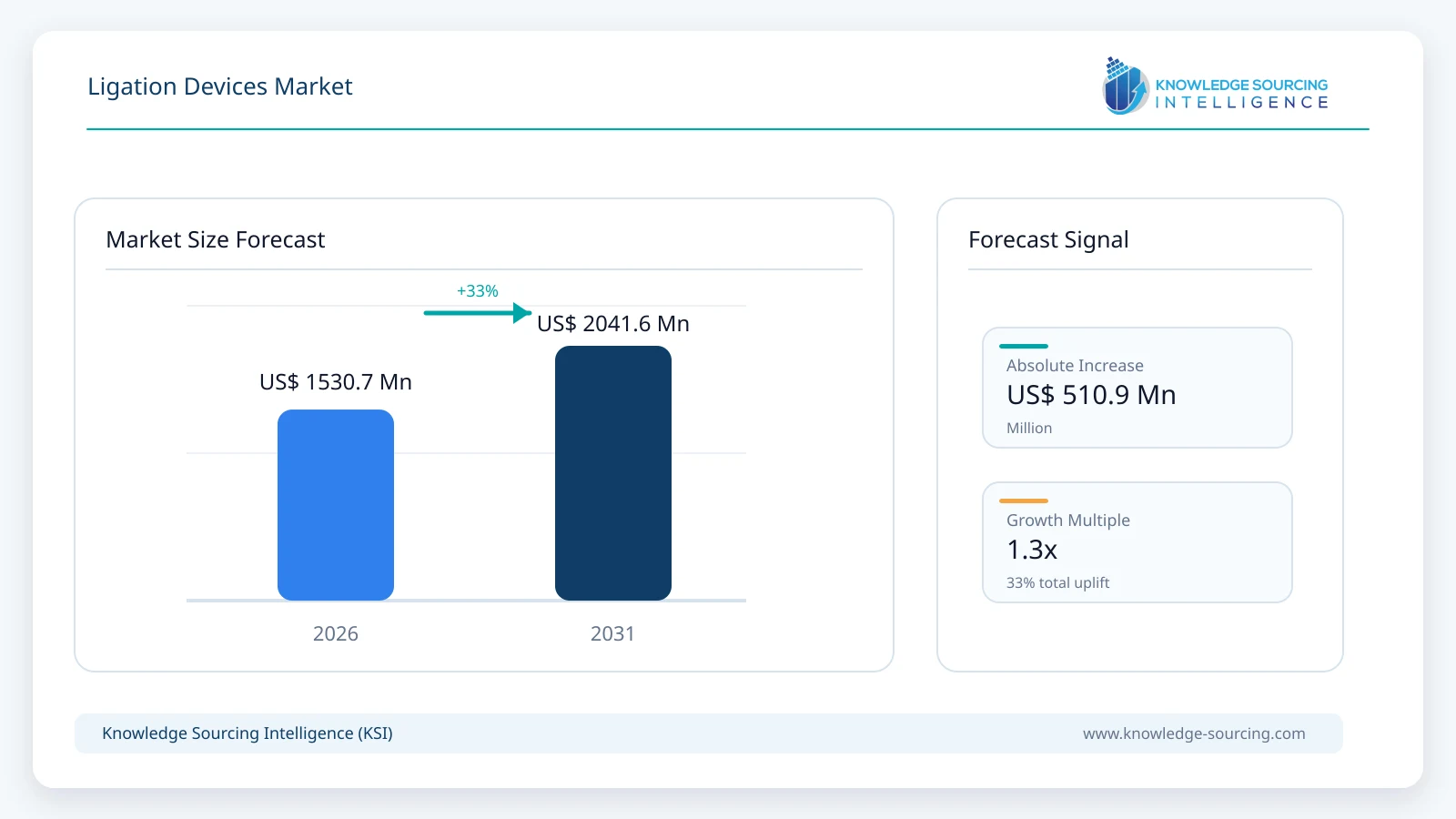
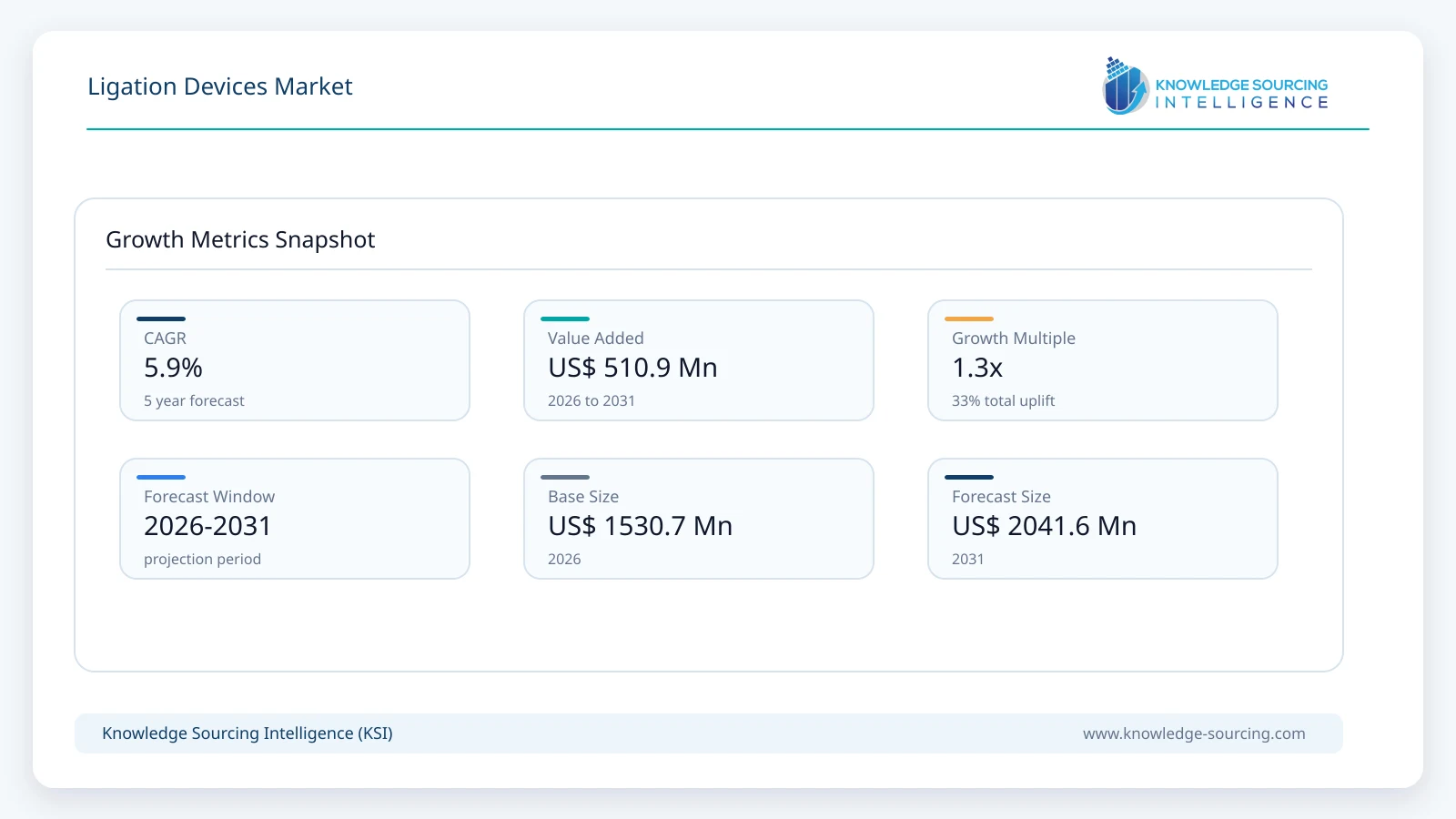
The Ligation Devices Market is projected to expand at a 5.9% CAGR, attaining USD 2,041.6 million in 2031 from USD 1,530.7 million in 2026.
Highlights:
- 1Rising surgical volumes continue to expand demand for vessel occlusion and tissue ligation devices.
- 2Minimally invasive surgery adoption is shifting purchasing preferences toward advanced ligation systems.
- 3Hospitals remain the primary procurement channel due to procedure volume and clinical complexity.
- 4Cardiovascular, gastrointestinal, gynecological, and urological procedures account for a large share of device utilization.
- 5Regulatory scrutiny on device safety, clip migration, and procedural outcomes influences product development.
- 6Asia Pacific is attracting manufacturing, distribution, and hospital infrastructure investment across surgical device categories.
Market Overview
Commercial demand is closely linked to surgical procedure volumes rather than discretionary healthcare spending. Global healthcare systems continue to expand access to surgical care, while aging populations, rising cancer incidence, cardiovascular disease prevalence, and increasing rates of metabolic disorders are sustaining procedural demand. The need for vessel sealing and ligation extends across both routine and highly specialized surgical interventions, creating a broad customer base that includes hospitals, ambulatory surgical centers, and specialty surgical facilities.
Procurement decisions are increasingly influenced by operating-room efficiency, procedural safety, compatibility with minimally invasive platforms, and surgeon familiarity. Buyers evaluate ligation systems not only on unit cost but also on clip retention performance, ease of deployment, procedural speed, sterilization requirements, and compatibility with laparoscopic workflows. Hospitals managing large surgical volumes often prioritize device reliability and clinical outcomes over marginal price differences.
Value creation within the market is distributed across manufacturers of clip appliers, ligation accessories, disposable cartridges, and procedure-specific instruments. Recurring revenue is generated through consumables and accessories, while competition increasingly centers on ergonomic design, procedural precision, regulatory compliance, and integration with minimally invasive surgical platforms. As surgical departments seek to reduce operating times and postoperative complications, demand is gradually shifting toward devices that support standardized and reproducible surgical workflows.
Key Market Indicators
Indicator | Latest Evidence | Commercial Meaning |
Global surgical access benchmark | 5,000 procedures per 100,000 population annually, as recommended by the Lancet Commission on Global Surgery | Indicates long-term expansion potential where surgical access remains underdeveloped. |
Surgical volume gap | Many high-income countries perform 7,000–15,000 procedures per 100,000 population, while numerous low-income countries remain below 500 | Highlights uneven demand distribution and future market penetration opportunities. |
Population aging | WHO projects the global population aged 60 years and older to reach 2 billion by 2050 | Expands the patient pool requiring cardiovascular, gastrointestinal, and urological interventions. |
U.S. surgical activity | Approximately 50 million surgical procedures annually are reported across the U.S. healthcare system | Demonstrates the procedural base supporting recurring ligation device demand. |
Minimally invasive surgery adoption | Minimally invasive techniques account for a growing share of surgical procedures in developed healthcare systems | Supports demand for laparoscopic-compatible ligation systems. |
Sources: World Bank surgical indicators, Lancet Commission benchmarks, WHO demographic projections, and surgical procedure data reported by surgical associations.
Higher procedural intensity directly increases recurring demand for disposable ligation accessories and clip systems.
Market Drivers
Expansion of minimally invasive surgical procedures.
Laparoscopic and endoscopic techniques require precise vessel control within confined operating fields. Ligation devices reduce bleeding while supporting procedural efficiency, making them integral to minimally invasive workflows. Hospitals expanding laparoscopic programs are increasingly standardizing around advanced clip appliers and compatible accessory systems, strengthening recurring demand across gastrointestinal, gynecological, and urological procedures.
Growing burden of cardiovascular and gastrointestinal disease.
Cardiovascular disease remains one of the largest contributors to surgical intervention globally, while gastrointestinal disorders continue to generate substantial procedural volumes. Vessel occlusion and tissue management are fundamental requirements in these procedures. As healthcare systems expand treatment capacity for chronic disease, ligation devices benefit from higher procedure counts and broader utilization across surgical specialties.
Demographic aging and higher surgical utilization.
The increasing proportion of older adults is altering healthcare demand patterns. Older patients experience higher rates of cardiovascular disease, cancer, gastrointestinal disorders, and urological conditions that frequently require surgery. WHO projections showing continued expansion of the elderly population indicate a sustained increase in surgical case volumes over the forecast period.
Shift toward operating-room efficiency and standardization.
Hospital administrators face pressure to improve throughput while maintaining clinical outcomes. Modern ligation systems can shorten procedural steps compared with traditional suturing techniques in selected applications. This operational benefit is encouraging adoption among institutions seeking to reduce procedure duration, optimize operating-room utilization, and improve workflow consistency.
Expansion of ambulatory surgical infrastructure.
Procedures once performed primarily in hospitals are increasingly moving toward ambulatory surgical centers. These facilities emphasize procedural efficiency, shorter patient stays, and predictable outcomes. Ligation devices that simplify vessel control and support minimally invasive approaches align closely with these operating requirements, creating an additional demand channel beyond traditional hospital settings.
Market Restraints and Challenges
Device safety concerns and adverse-event scrutiny.
Regulatory databases continue to document adverse-event reports involving surgical clips and ligation systems, including clip migration and procedural complications. Safety concerns increase documentation requirements, extend validation processes, and raise the burden of post-market surveillance for manufacturers. Persistent scrutiny can also influence surgeon preferences and procurement decisions.
Stringent regulatory approval requirements.
Ligation devices are used in procedures where device failure may result in serious patient harm. Consequently, manufacturers face extensive testing, clinical validation, quality-system requirements, and post-market monitoring obligations. Regulatory compliance increases development costs and lengthens commercialization timelines, particularly for smaller manufacturers entering regulated markets.
Pricing pressure from healthcare providers.
Group purchasing organizations, public healthcare systems, and large hospital networks continue to negotiate aggressively on surgical consumables. While clinicians may prioritize reliability and ease of use, procurement teams increasingly evaluate total procedural cost. This pressure can compress margins, particularly for suppliers competing in standardized clip and accessory categories.
Long surgeon adoption and qualification cycles.
Surgical device adoption depends heavily on physician confidence and procedural familiarity. New ligation systems often require training, workflow adjustments, and clinical validation before widespread use. These requirements can slow product penetration even when technical advantages are demonstrated.
Dependence on specialized manufacturing and sterilization processes.
Ligation devices require precise manufacturing tolerances, biocompatible materials, and validated sterilization procedures. Supply disruptions affecting medical-grade polymers, metals, sterilization capacity, or specialized production components can affect lead times and increase operating costs. These challenges became more visible across the broader surgical device industry during recent supply-chain disruptions.
Major Segment Analysis
Hospitals
Among end-user categories, hospitals represent the most commercially important segment because they conduct the largest volume of complex surgical procedures requiring vessel management and tissue ligation. Cardiovascular, gastrointestinal, gynecological, oncological, and transplant procedures are concentrated within hospital settings, creating consistent demand for both reusable appliers and disposable accessories. Hospitals also maintain purchasing relationships with multiple surgical specialties, making them a central source of recurring revenue for manufacturers.
Purchasing criteria within hospitals extend beyond device price. Surgical departments evaluate reliability, procedural efficiency, surgeon familiarity, compatibility with existing laparoscopic platforms, sterilization requirements, and clinical outcomes. Large academic and tertiary-care institutions frequently prioritize products supported by extensive clinical evidence, while community hospitals may place greater emphasis on cost containment and procedural standardization.
Competition within the hospital segment increasingly reflects broader operating-room economics. Suppliers capable of supporting surgeon training, clinical education, inventory management, and integrated procedural solutions often gain an advantage over manufacturers competing solely on device specifications. Performance within this segment influences overall market dynamics, pricing structures, and product-development priorities.
Regional Analysis
Region | Main Demand Signal | Principal Constraint |
North America | High surgical procedure volume and advanced minimally invasive surgery adoption | Cost containment and procurement pressure |
Europe | Mature healthcare systems and strong regulatory standards | Lengthy approval and reimbursement processes |
Asia Pacific | Expanding hospital infrastructure and surgical access | Uneven healthcare access across countries |
Middle East and Africa | Healthcare investment and specialty-care expansion | Workforce and infrastructure limitations |
South America | Growing procedural capacity in major urban centers | Budget constraints and import dependence |
North America
The region benefits from high procedural intensity, advanced surgical infrastructure, and widespread adoption of minimally invasive techniques. The United States remains the largest contributor because of its large surgical base, extensive hospital network, and early adoption of advanced surgical technologies. Procurement increasingly emphasizes procedural efficiency and measurable clinical outcomes.
Europe
Demand is supported by established healthcare systems, aging populations, and substantial surgical activity across Germany, France, the United Kingdom, Spain, and Italy. Regulatory oversight under the Medical Device Regulation (MDR) framework has increased compliance requirements for manufacturers. While these requirements raise market-entry costs, they also strengthen quality expectations and create barriers for new entrants.
Asia Pacific
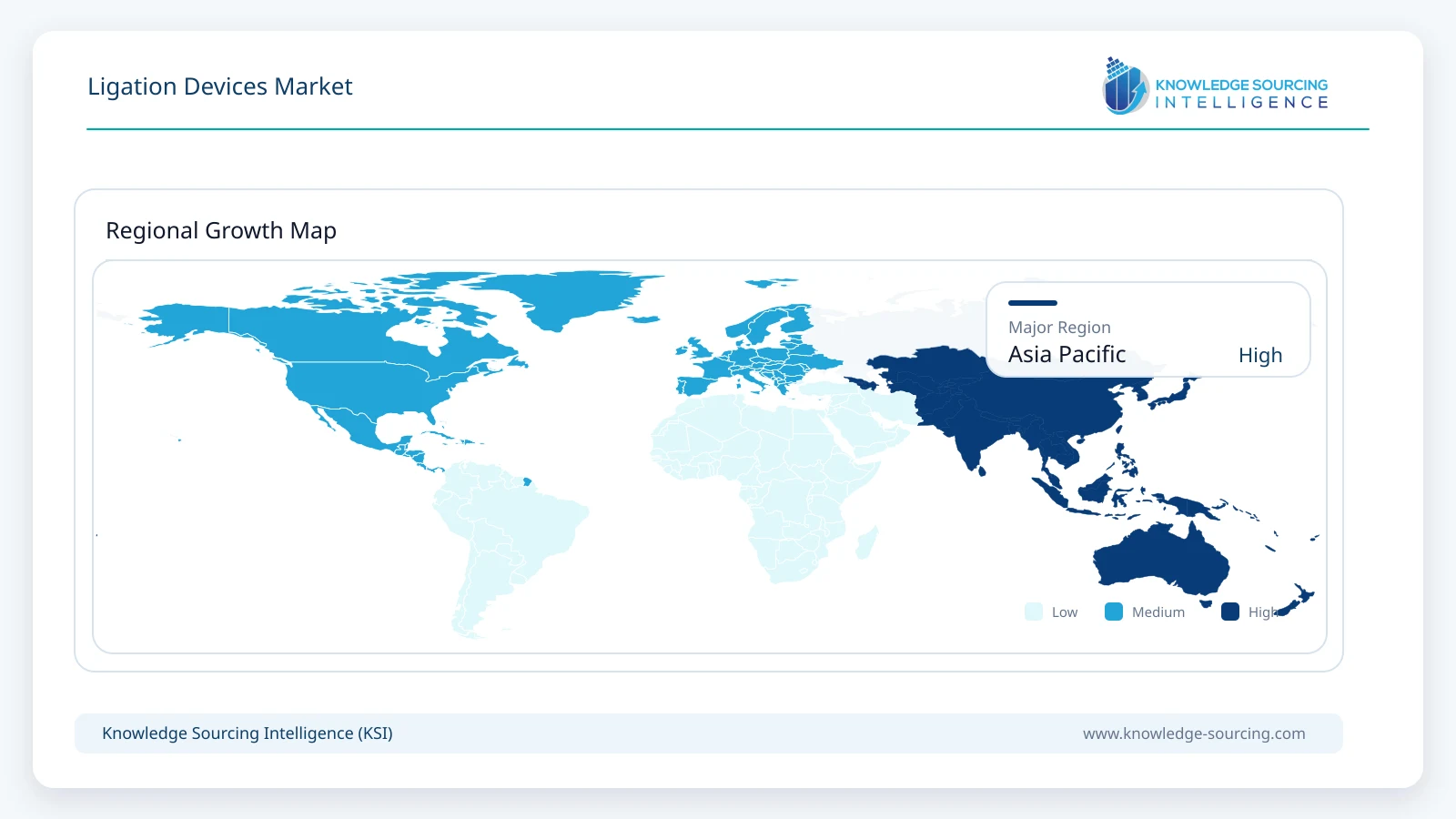
China, India, Japan, South Korea, Indonesia, and Thailand are expanding surgical capacity through hospital construction, healthcare investment, and broader access to specialized procedures. Rising adoption of laparoscopic surgery is increasing demand for modern ligation systems. The region also continues to attract manufacturing investment due to large patient populations and expanding healthcare expenditure.
Middle East and Africa
Saudi Arabia and the United Arab Emirates are investing heavily in healthcare modernization and specialty surgical services. Demand is strongest in urban referral centers and private healthcare networks. However, disparities in surgical access, workforce availability, and infrastructure continue to limit adoption across several countries.
South America
Brazil remains the largest regional market due to its extensive hospital network and growing surgical capacity. Argentina and other regional markets continue to expand access to minimally invasive procedures, although economic volatility and healthcare budget constraints can affect purchasing patterns and capital investment decisions.
Competitive Landscape
The ligation devices market exhibits characteristics of a moderately concentrated surgical-device segment, with competition led by established multinational manufacturers possessing broad surgical portfolios, regulatory expertise, and global distribution networks.
Medtronic plc competes through extensive surgical instrumentation offerings, broad hospital relationships, and integration across minimally invasive surgery platforms. Johnson & Johnson benefits from deep surgeon familiarity, large-scale distribution capabilities, and a long-established position in surgical closure and tissue management products.
Olympus Corporation leverages its endoscopy franchise and strong presence in minimally invasive procedures. B. Braun SE competes through surgical instrumentation expertise and hospital-focused distribution networks. Teleflex Incorporated maintains a notable position through its Weck ligation clip portfolio, which remains widely used across multiple surgical specialties.
CONMED Corporation, CooperSurgical, Boston Scientific Corporation, Leo Medical Co., Ltd., and Welfare Medical Ltd. compete through niche specialization, regional market access, procedure-specific products, and targeted clinical relationships.
Competitive differentiation increasingly depends on:
Product reliability and clip retention performance
Regulatory compliance and clinical evidence
Compatibility with minimally invasive surgical platforms
Global distribution and hospital relationships
Surgeon training and procedural support
Manufacturing quality and supply continuity
Barriers to entry remain substantial due to regulatory requirements, surgeon preference patterns, hospital qualification processes, and the need for validated manufacturing systems.
Recent Developments
April 2026: Olympus expanded its advanced bipolar electrosurgical portfolio by receiving FDA 510(k) clearance for the POWERSEAL Open Extended Jaw sealer/divider, designed for secure ligation of large vessels.
October 2025: Olympus unveiled THUNDERBEAT II, a next-generation hybrid energy device for vessel sealing, hemostatic cutting, and tissue dissection. The platform improves sealing performance and surgical efficiency in laparoscopic and open procedures.
September 2025: Medtronic launched its next-generation Valleylab FT10 energy platform in India. It features smart TissueFect sensing algorithms to deliver precise, automated energy during vessel ligation procedures
May 2025: WellCare presented its latest hemorrhoid-treatment and ligation-related devices at HOSPITALAR 2025. The portfolio highlighted minimally invasive treatment innovations aimed at improving procedural outcomes and expanding colorectal intervention capabilities.
Regulatory and Policy Environment
Regulation remains a central determinant of competitive positioning in the ligation devices market. In the United States, manufacturers must comply with FDA quality-system regulations, device reporting requirements, and post-market surveillance obligations. Product modifications may require additional submissions depending on the nature of the design change and associated risk profile.
Across Europe, Medical Device Regulation (MDR) requirements have increased scrutiny of clinical evidence, technical documentation, and lifecycle monitoring. These requirements have raised compliance costs but also reinforced quality expectations among healthcare providers.
Many Asia Pacific jurisdictions are simultaneously strengthening device approval pathways while expanding domestic medical-device manufacturing capabilities. Local-content initiatives and procurement preferences in certain markets may influence supplier strategies during the forecast period.
Outlook and Strategic Implications
Demand fundamentals for ligation devices remain closely tied to surgical activity rather than short-term economic cycles. Rising procedural volumes, demographic aging, increasing chronic disease burden, and broader adoption of minimally invasive surgery are expected to sustain purchasing activity throughout the 2026–2031 forecast period.
Several factors are likely to shape competitive outcomes:
Hospitals will continue prioritizing procedural efficiency and clinical reliability.
Regulatory compliance costs will favor manufacturers with established quality systems.
Minimally invasive surgery adoption will increase demand for advanced ligation platforms.
Emerging markets will contribute a larger share of incremental procedure growth.
Post-market safety monitoring will remain a critical differentiator in supplier selection.
For manufacturers, commercial success will depend less on expanding product catalogs and more on demonstrating clinical performance, maintaining regulatory compliance, ensuring supply reliability, and supporting increasingly complex surgical workflows. Organizations capable of combining product quality, procedural support, and global distribution reach are expected to retain the strongest competitive positions during the forecast period.
Ligation Devices Market Scope:
| Report Metric | Details |
|---|---|
| Total Market Size in 2026 | USD 1,530.7 million |
| Total Market Size in 2031 | USD 2,041.6 million |
| Forecast Unit | Million |
| Growth Rate | 5.9% |
| Study Period | 2021 to 2031 |
| Historical Data | 2021 to 2024 |
| Base Year | 2025 |
| Forecast Period | 2026 – 2031 |
| Segmentation | Type, Application, End-user, Geography |
| Companies |
|
Market Segmentation
By Type
Appliers
Accessories
By Application
Cardiovascular Surgery
Gynecological Surgery
Gastrointestinal Surgery
Urological Surgery
Others
By End-User
Hospitals
Ambulatory Surgical Centers
Others
By Geography
North America
USA
Canada
Mexico
South America
Brazil
Argentina
Others
Europe
Germany
France
United Kingdom
Spain
Others
Middle East and Africa
Saudi Arabia
UAE
Others
Asia Pacific
China
India
Japan
South Korea
Indonesia
Thailand
Others
Table of Contents
1. EXECUTIVE SUMMARY
2. MARKET SNAPSHOT
2.1. Market Overview
2.2. Market Definition
2.3. Scope of the Study
2.4. Market Segmentation
3. BUSINESS LANDSCAPE
3.1. Market Drivers
3.2. Market Restraints
3.3. Market Opportunities
3.4. Porter’s Five Forces Analysis
3.5. Industry Value Chain Analysis
3.6. Policies and Regulations
3.7. Strategic Recommendations
4. TECHNOLOGICAL OUTLOOK
5. LIGATION DEVICES MARKET BY TYPE
5.1. Introduction
5.2. Appliers
5.3. Accessories
6. LIGATION DEVICES MARKET BY APPLICATION
6.1. Introduction
6.2. Cardiovascular Surgery
6.3. Gynecological Surgery
6.4. Gastrointestinal Surgery
6.5. Urological Surgery
6.6. Others
7. LIGATION DEVICES MARKET BY END-USER
7.1. Introduction
7.2. Hospitals
7.3. Ambulatory Surgical Centers
7.4. Others
8. LIGATION DEVICES MARKET BY GEOGRAPHY
8.1. Introduction
8.2. North America
8.2.1. USA
8.2.2. Canada
8.2.3. Mexico
8.3. South America
8.3.1. Brazil
8.3.2. Argentina
8.3.3. Others
8.4. Europe
8.4.1. Germany
8.4.2. France
8.4.3. United Kingdom
8.4.4. Spain
8.4.5. Others
8.5. Middle East and Africa
8.5.1. Saudi Arabia
8.5.2. UAE
8.5.3. Others
8.6. Asia Pacific
8.6.1. China
8.6.2. India
8.6.3. Japan
8.6.4. South Korea
8.6.5. Indonesia
8.6.6. Thailand
8.6.7. Others
9. COMPETITIVE ENVIRONMENT AND ANALYSIS
9.1. Major Players and Strategy Analysis
9.2. Market Share Analysis
9.3. Mergers, Acquisitions, Agreements, and Collaborations
9.4. Competitive Dashboard
10. COMPANY PROFILES
10.1. Medtronic Plc
10.2. Johnson & Johnson
10.3. Olympus Corporation
10.4. B. Braun SE
10.5. Teleflex Incorporated
10.6. CONMED Corporation
10.7. CooperSurgical
10.8. Leo Medical Co., Ltd.
10.9. Boston Scientific Corporation
10.10. Welfare Medical Ltd.
11. APPENDIX
11.1. Currency
11.2. Assumptions
11.3. Base and Forecast Years Timeline
11.4. Key benefits for the stakeholders
11.5. Research Methodology
11.6. Abbreviations
Navigate
Trusted by the world's leading organizations











