
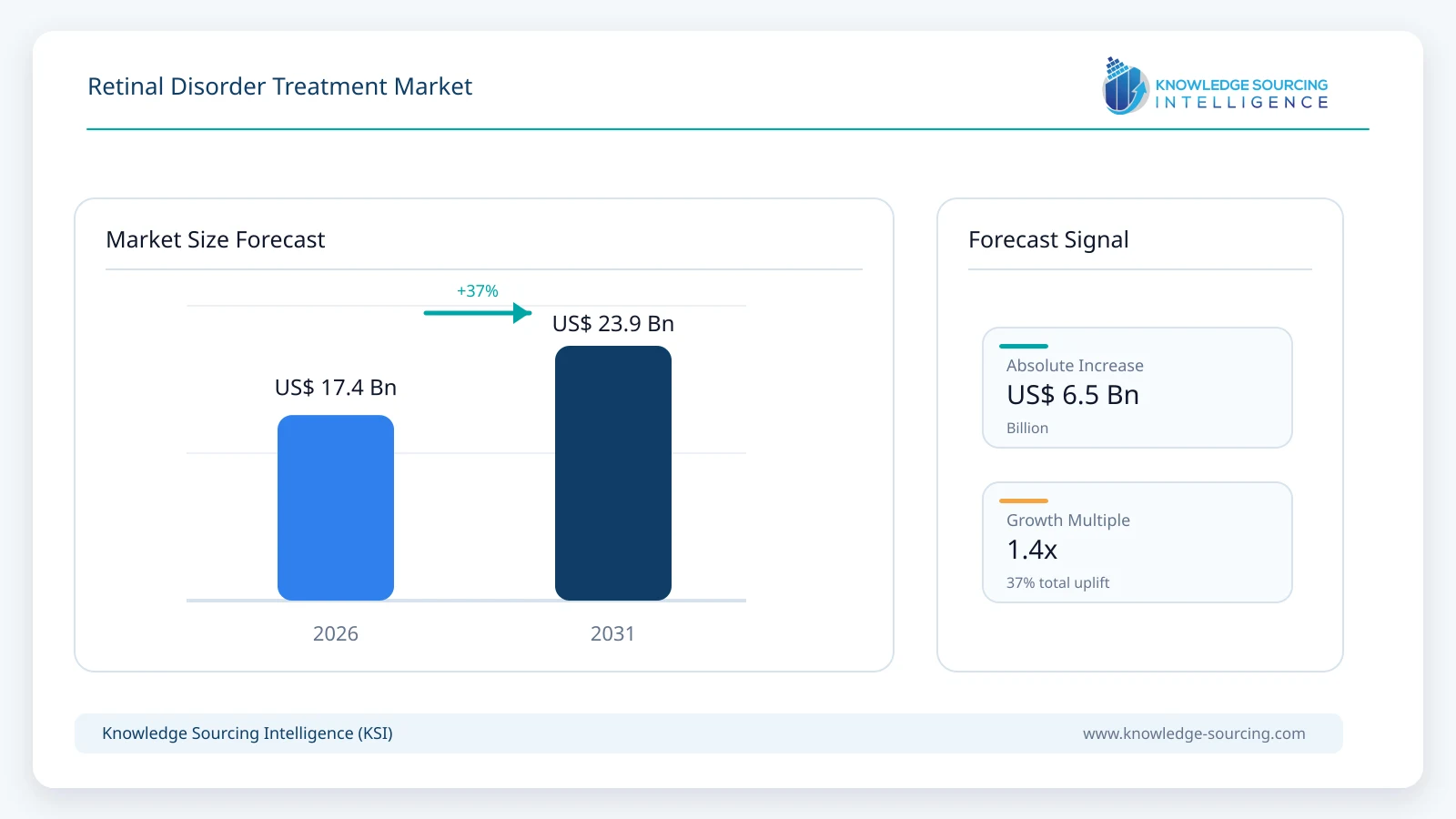
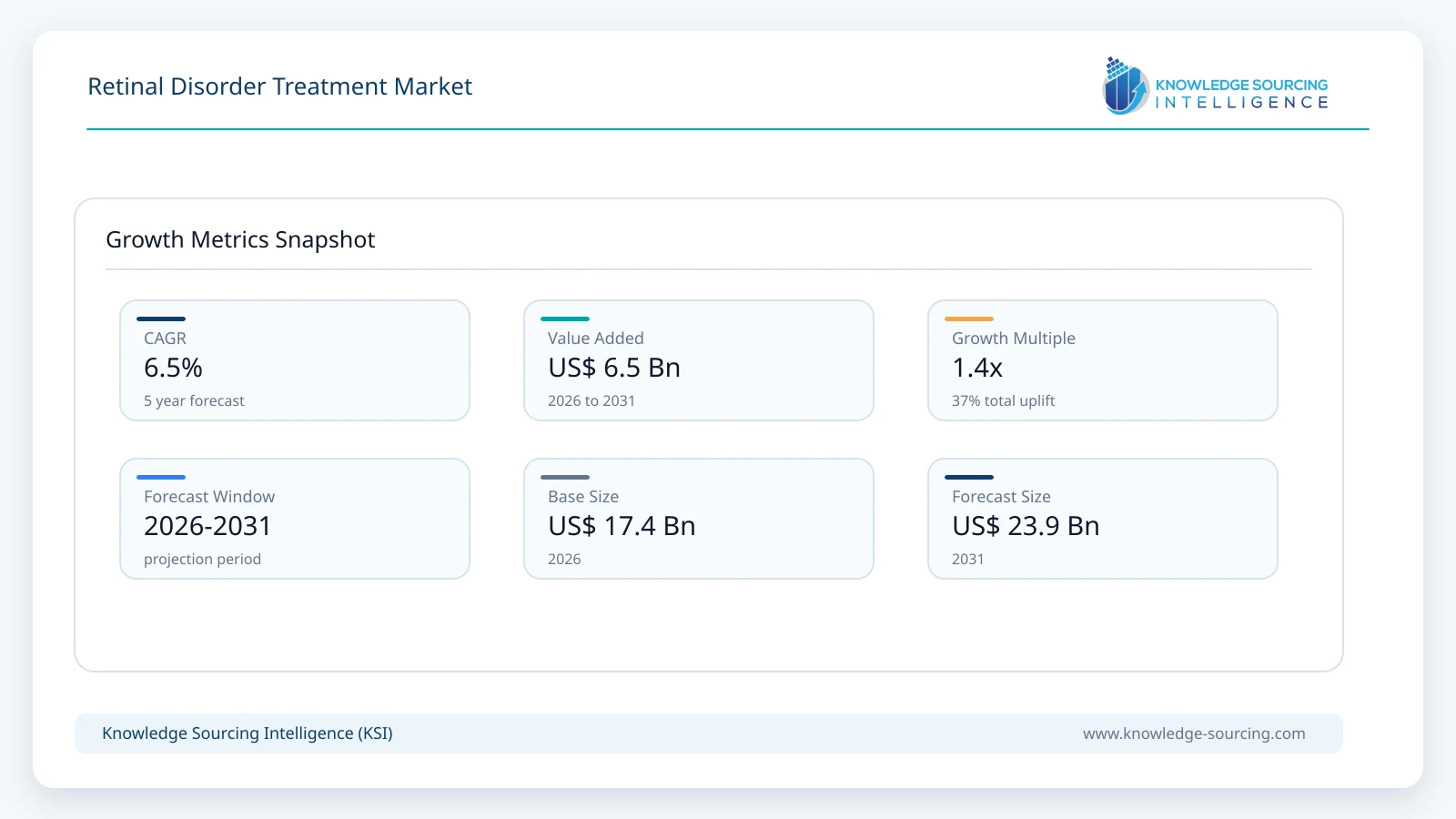
The Retinal Disorder Treatment Market is forecast to grow at a CAGR of 6.5%, reaching USD 23.9 billion in 2031 from USD 17.4 billion in 2026.
Highlights:
- 1Ageing populations and diabetes prevalence are sustaining the underlying patient pool for retinal disease diagnosis and treatment.
- 2Pharmacological therapies represent the commercially important treatment segment, supported by repeated use of intravitreal medicines for major retinal disorders.
- 3North America remains commercially important because of advanced ophthalmic infrastructure, established reimbursement mechanisms, specialist availability, and substantial pharmaceutical adoption.
- 4Biosimilar entry is changing procurement economics, particularly for established anti-VEGF products used across multiple retinal indications.
- 5Longer dosing intervals and continuous or sustained drug delivery are becoming important product-selection considerations, as providers seek to reduce injection frequency and treatment burden.
- 6Regulatory agencies are expanding the treatment options available for retinal disease, while safety, clinical evidence, manufacturing quality, and post-approval monitoring continue to determine commercial access.
The Retinal Disorder Treatment Market covers medicines, procedures, and treatment technologies used to manage retinal diseases that impair or threaten vision. Within the scope of this report, the market is segmented by retinal condition type into macular degeneration, diabetic retinopathy, and others; by treatment type into pharmacological therapies, laser therapies, and others; and by distribution channel into hospital pharmacy, retail pharmacy, and others.
The commercial importance of retinal treatment stems from the chronic nature of major retinal disorders and the consequences of delayed intervention. Age-related macular degeneration (AMD) and diabetic retinopathy are particularly important because they affect central or functional vision and often require repeated monitoring and treatment. The World Health Organization reported in February 2026 that at least 2.2 billion people globally have near or distance vision impairment, with age-related macular degeneration and diabetic retinopathy among the leading causes. WHO also estimates that at least 1 billion cases of vision impairment could have been prevented or remain unaddressed.
Retinal disorders therefore create demand across several healthcare purchasing points. Ophthalmologists determine treatment selection, hospitals and ambulatory eye-care facilities procure medicines and procedure-related supplies, pharmacies support prescription fulfillment, and public and private insurers influence product access through reimbursement policies. Patients also influence demand because treatment frequency, travel requirements, injection burden, expected visual outcomes, and out-of-pocket costs affect treatment continuation.
The demand environment is increasingly shaped by the transition from predominantly procedure-oriented retinal care toward pharmacological disease management. Anti-vascular endothelial growth factor (VEGF) therapies remain central to treatment for several retinal vascular conditions, while newer approaches are targeting additional biological pathways. FDA-approved aflibercept products, for example, are used for wet AMD, diabetic macular edema, retinal vein occlusion-related macular edema, and diabetic retinopathy.
A major commercial consideration is that retinal pharmacotherapy frequently involves repeat administration. Consequently, market revenue does not depend only on the number of diagnosed patients. It also reflects treatment persistence, injection frequency, dosing intervals, disease severity, bilateral treatment, switching between therapies, and the availability of products with longer dosing intervals.
Treatment delivery infrastructure has become equally important. Intravitreal administration requires trained ophthalmic professionals, appropriate sterile procedures, patient monitoring, and diagnostic imaging. The purchasing decision therefore evaluates more than drug efficacy. Providers also consider administration frequency, storage requirements, preparation time, safety profile, reimbursement, and clinic capacity.
The market is being influenced by demographic ageing and the increasing prevalence of diabetes. WHO reported that the number of people living with diabetes increased from 200 million in 1990 to 830 million in 2022, with prevalence rising faster in low- and middle-income countries than in high-income countries. Diabetes can cause blindness and requires screening and treatment of complications to reduce avoidable vision loss.
The United States provides a clear illustration of the treatment-access challenge. The U.S. Centers for Disease Control and Prevention estimates that 93 million U.S. adults have a high risk for serious vision loss, while only about half visited an eye doctor during the preceding 12 months. The CDC also states that early detection and treatment can prevent or delay vision loss from diabetic retinopathy, with 90% of diabetes-related blindness considered preventable.
The market's commercial trajectory will depend on the expansion of diagnosed patient pools, treatment persistence, product differentiation, biosimilar penetration, reimbursement conditions, and adoption of therapies designed to reduce treatment burden. No market-size value or CAGR was supplied in the input data; therefore, this RD does not introduce an independently estimated market value or CAGR.
Market Drivers
Growing Burden of Age-Related Retinal Disease
Population ageing is a structural demand driver for retinal treatment. AMD is associated with ageing and primarily affects the macula, which provides detailed central vision. The National Eye Institute identifies AMD as a leading cause of vision loss among older adults and estimates that approximately 11 million people in the United States have AMD.
The commercial mechanism is straightforward: a larger older population increases the number of people requiring retinal examinations, diagnostic imaging, disease monitoring, and treatment. Wet AMD can require recurring pharmacological intervention, creating a continuing treatment market rather than a one-time procedure market.
For suppliers, the opportunity increasingly depends on demonstrating durable disease control alongside acceptable safety. Ophthalmologists must balance clinical outcomes with injection frequency and patient adherence. Products that reduce the number of annual treatment visits can therefore create economic value for both providers and patients, particularly in healthcare systems facing specialist shortages.
Increasing Diabetes-Related Retinal Care
Diabetes is another major demand source. Chronic exposure to elevated blood glucose can damage retinal blood vessels, resulting in diabetic retinopathy and diabetic macular edema. WHO identifies blindness among the major complications of diabetes and emphasizes screening and treatment for diabetes-related complications.
The buyer base extends beyond ophthalmology. Primary-care physicians, endocrinologists, diabetes clinics, hospitals, and public-health programs all influence the identification and referral of patients at risk of retinal complications.
This creates an important commercial link between diabetes management and ophthalmic treatment. Greater diabetes prevalence can increase the potential patient pool, but treatment demand depends on screening coverage and referral effectiveness. CDC data indicate that only about two-thirds of people with diabetes follow the recommendation for annual dilated eye examinations, demonstrating the difference between disease prevalence and effectively treated retinal disease.
Demand for Lower Treatment Burden
Repeated intravitreal injections create a practical burden for patients and ophthalmology providers. Each administration requires clinical capacity, patient travel, preparation, injection procedures, monitoring, and follow-up.
This has shifted competitive attention toward products capable of maintaining disease control for longer periods. Roche's Vabysmo, for example, has generated clinical data supporting extended dosing in nAMD, while its Susvimo platform uses an ocular implant for continuous delivery over months.
The commercial implication is substantial. A product that delivers comparable clinical control with fewer treatment visits can influence physician preference, patient persistence, clinic scheduling, and total treatment economics. Suppliers therefore compete not only on pharmacological efficacy but also on dosing convenience.
Expansion of Biosimilar Competition
The introduction of retinal biosimilars is altering purchasing decisions for established biologic therapies. In the United States, the FDA approved Yesafili and Opuviz as interchangeable biosimilars to Eylea in 2024. Both products cover several retinal indications, including wet AMD, diabetic macular edema, and diabetic retinopathy.
European regulatory activity has continued to expand the biosimilar pool. EMA authorised Eyluxvi in September 2025 and Rexatilux in June 2026, with indications covering retinal conditions such as wet AMD, diabetic macular edema, and retinal vein occlusion-related macular edema.
For buyers, biosimilars can increase negotiating options and place greater pressure on treatment costs. Originator companies, meanwhile, have an incentive to defend share through dosing convenience, delivery systems, clinical evidence, physician familiarity, and differentiated indications.
Expansion of Retinal Treatment Pathways
Retinal care is no longer concentrated around a single therapeutic mechanism. Anti-VEGF medicines remain important, but complement inhibition and sustained delivery approaches are expanding treatment choices.
The approval and commercialization of therapies for geographic atrophy illustrate this development. Astellas reported U.S. sales of IZERVAY for geographic atrophy secondary to AMD of ¥15.9 billion, equivalent to $110 million, during the first quarter of FY2025.
This broadening of therapeutic pathways increases the addressable treatment environment and creates new purchasing decisions for ophthalmologists. Suppliers that can establish differentiated clinical benefits in specific retinal subtypes may obtain opportunities beyond the established anti-VEGF market.
Market Restraints and Challenges
High Treatment and Administration Costs
Retinal treatment can generate substantial cumulative costs because many patients require repeated administration over extended periods. Drug expenditure is only one component. Diagnostic imaging, specialist consultations, injection procedures, facility costs, and follow-up visits add to total treatment expenditure.
The impact is particularly important in markets where insurance coverage is incomplete. CDC data indicate that cost or lack of awareness accounted for non-use of eye care among more than half of U.S. adults who did not seek eye care, highlighting the role of affordability in treatment access.
Manufacturers can mitigate this pressure through patient-support programs, evidence supporting longer dosing intervals, and differentiated formulations. Payers, however, may increasingly compare products on total treatment economics rather than acquisition price alone.
Treatment Adherence and Patient Burden
Repeated intravitreal treatment requires patients to maintain frequent appointments. Older patients may depend on family members or caregivers for transportation, while patients in rural areas may face long travel distances.
Missed appointments can reduce treatment effectiveness and increase the risk of disease progression. Providers therefore have a commercial incentive to select treatment strategies that improve persistence without compromising outcomes.
The challenge also affects clinic economics. Injection-heavy treatment models require sufficient ophthalmologist time and diagnostic capacity. Where specialist availability is constrained, demand for treatment may exceed practical delivery capacity.
Uneven Access to Specialist Infrastructure
The availability of retinal specialists, diagnostic imaging, sterile procedure facilities, and reimbursed treatment varies substantially between countries. WHO reports that the burden of vision impairment is disproportionately high in low- and middle-income regions and emphasizes access and affordability as major determinants of eye-care outcomes.
This creates a gap between theoretical disease burden and commercial treatment penetration. Manufacturers entering under-served markets must account for physician availability, reimbursement, cold-chain requirements, distribution infrastructure, and patient awareness.
Regulatory and Safety Requirements
Intravitreal medicines are administered directly into the eye, making product quality and sterile manufacturing essential. Regulatory authorities require evidence covering clinical efficacy, safety, manufacturing quality, and appropriate post-marketing surveillance.
For biosimilars, regulatory approval can expand competition, but substitution and prescribing practices still depend on local rules and physician acceptance. In the United States, the FDA maintains a dedicated biosimilar framework, while CMS administers reimbursement mechanisms for physician-administered Part B medicines.
These requirements increase development and compliance costs but also protect product quality and help establish confidence among providers.
Major Segment Analysis:
Pharmacological Therapies
Pharmacological therapies represent the most commercially important treatment segment because medicines can address several high-value retinal conditions and often require recurring administration.
The segment includes anti-VEGF agents, complement-pathway inhibitors, and other drug-based approaches used for retinal disorders. The FDA notes that aflibercept inhibits VEGF and is used for several retinal indications, including wet AMD, diabetic macular edema, and diabetic retinopathy.
Demand within this segment is influenced by the number of eligible patients, treatment initiation rates, persistence, dosing schedules, and physician preference. Unlike a one-time surgical intervention, pharmacological treatment can generate recurring revenue across multiple treatment cycles.
Buyer requirements are increasingly multidimensional. Ophthalmologists assess visual outcomes, anatomical response, durability, adverse-event profile, dosing flexibility, and ease of administration. Hospital procurement departments add price, supply reliability, reimbursement status, storage requirements, and product availability to the evaluation.
The competitive structure is consequently moving toward differentiated value propositions. Established anti-VEGF therapies face competition from biosimilars, while branded suppliers are introducing products and delivery technologies designed to extend dosing intervals. FDA-approved interchangeable aflibercept biosimilars demonstrate how mature retinal products can attract price-oriented competition.
At the premium end, suppliers seek differentiation through treatment durability and alternative delivery methods. Roche's Susvimo, for example, uses a refillable ocular implant designed to continuously deliver ranibizumab over months, creating a different procurement proposition from conventional intravitreal injections.
The segment's revenue outlook therefore depends on a balance between expanding patient treatment and pricing pressure. Biosimilar adoption can reduce unit prices, while longer-duration branded products may protect value through lower administration frequency and differentiated clinical positioning.
Regional Analysis
North America
North America represents a major commercial center because of its developed ophthalmology infrastructure, high diagnostic capacity, established specialist networks, and comparatively sophisticated reimbursement systems.
The United States has a large addressable patient population. CDC estimates that 93 million U.S. adults are at high risk for serious vision loss, while diabetic retinopathy remains a major preventable cause of blindness.
The procurement environment is shaped heavily by reimbursement. Medicare Part B payment limits are updated quarterly, and manufacturers report average sales price data to CMS. These mechanisms influence the economics of physician-administered retinal medicines.
Competition is also moving toward biosimilars and treatment-duration differentiation. Suppliers need to demonstrate either economic value or clinically meaningful convenience to maintain physician and payer preference.
Canada has established public healthcare infrastructure but operates under provincial reimbursement systems. Mexico presents a different opportunity profile, with private ophthalmology and public healthcare channels operating alongside disparities in specialist availability and treatment access.
Europe
Europe has a large ageing population and established retinal care capabilities, but reimbursement and procurement structures differ across countries. National and regional health authorities can exert substantial influence over medicine selection and reimbursement.
A notable feature of the European market is the increasing regulatory availability of retinal biosimilars. EMA authorised Eyluxvi in September 2025 and Rexatilux in June 2026, both covering multiple retinal indications.
This increases treatment choice while placing pressure on established biologic products. Suppliers must therefore compete through clinical differentiation, supply reliability, dosing convenience, and economic value.
The United Kingdom, Germany, France, and Spain provide substantial opportunities because of established ophthalmology services, although budget controls and country-specific reimbursement decisions can affect product uptake. Smaller European markets may offer more limited volumes but remain relevant for geographic expansion.
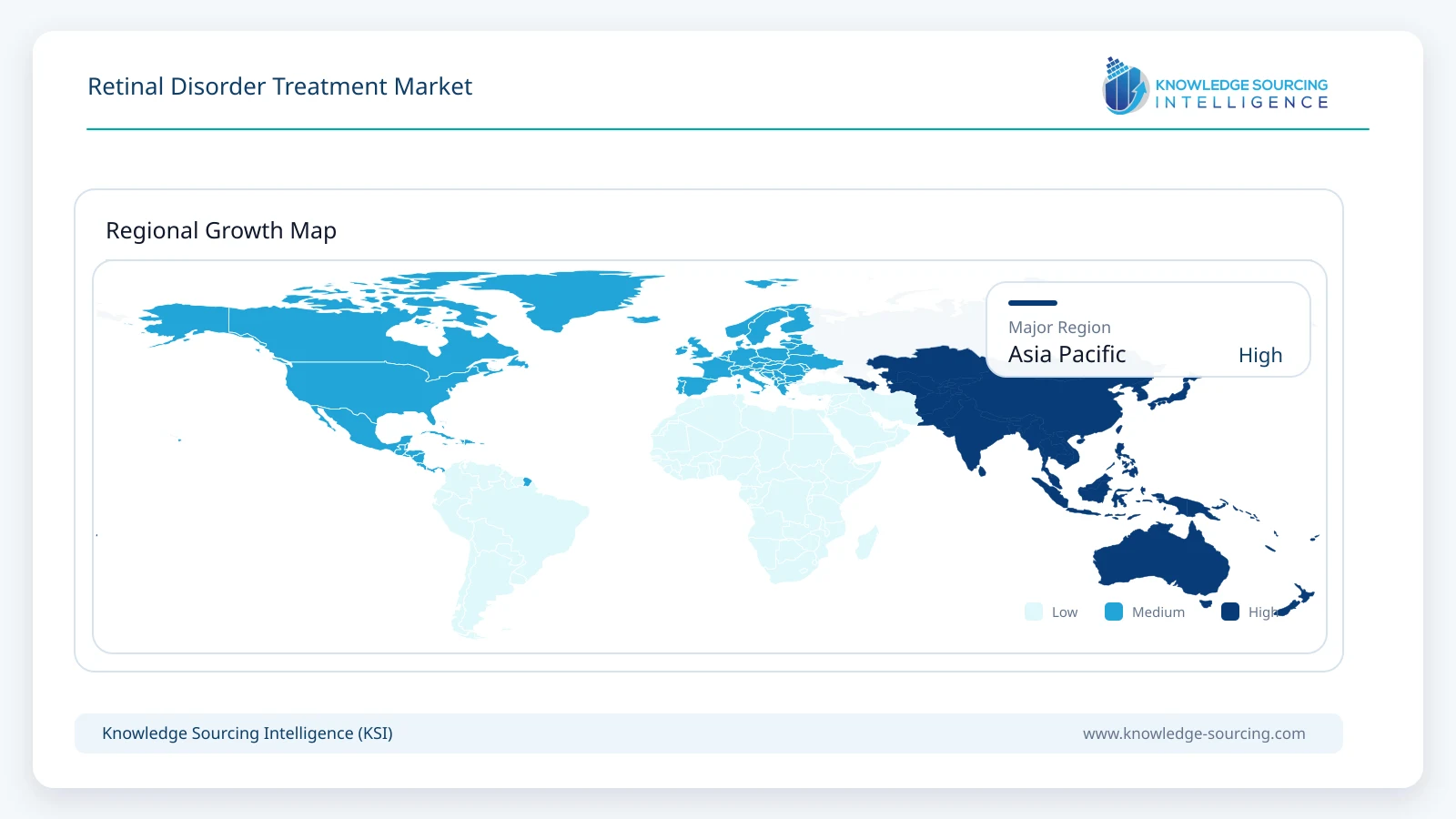
Asia Pacific
Asia Pacific combines substantial patient populations with considerable variation in healthcare access. China, Japan, India, South Korea, Indonesia, and Thailand differ significantly in reimbursement, specialist availability, pharmaceutical procurement, and private healthcare penetration.
The region has particular strategic relevance for nAMD and diabetic retinal diseases. Roche's SALWEEN study included patients from China, India, Japan, South Korea, Thailand, and other Asian markets, specifically examining Vabysmo in polypoidal choroidal vasculopathy, a subtype of nAMD that is particularly relevant in Asian populations.
Roche reported in August 2026 that, by the second year of SALWEEN, 61% of patients were assigned to a 20-week treatment interval. Such evidence is commercially relevant because treatment frequency is a major consideration in markets where specialist capacity and patient travel can constrain access.
Japan combines advanced ophthalmology infrastructure with a mature pharmaceutical market. China offers substantial volume potential but involves complex reimbursement and procurement considerations. India and Southeast Asia offer long-term demand potential, although affordability and specialist availability remain important constraints.
Middle East and Africa
The Middle East and Africa region has diverse treatment economics. Saudi Arabia and the United Arab Emirates have invested substantially in specialist healthcare infrastructure, supporting demand for advanced ophthalmic treatments.
Private hospitals and specialist centers can support adoption of branded retinal therapies, particularly where patients have insurance coverage or private healthcare access. However, affordability and specialist concentration remain barriers in lower-income markets.
The commercial opportunity therefore depends heavily on urban healthcare infrastructure. Suppliers seeking regional expansion must often combine distributor relationships with specialist education, reimbursement engagement, and reliable product supply.
South America
Brazil represents the largest commercial opportunity within South America because of its population size and developed private and public healthcare systems. Argentina also has established specialist care, although economic conditions can influence pharmaceutical purchasing and treatment affordability.
Across the region, the primary constraints include uneven specialist availability, reimbursement limitations, currency volatility, and differences between private and public procurement. Suppliers that can maintain predictable supply and competitive pricing are better positioned to expand treatment access.
Competitive Landscape
The competitive landscape comprises Regeneron Pharmaceuticals Inc., Roche Group, Novartis, Apellis Pharmaceuticals, Astellas Pharma, Belite Bio, Kodiak Sciences, jCyte Inc., EyePoint Pharmaceuticals, and Ocugen.
Competition spans several strategic dimensions rather than a single product category. Established pharmaceutical companies compete through approved retinal medicines, physician familiarity, clinical evidence, regulatory reach, manufacturing scale, and distribution relationships. Emerging and specialist biotechnology companies compete by developing differentiated mechanisms, sustained-delivery systems, cell therapies, or approaches aimed at retinal diseases with limited treatment options.
Anti-VEGF products remain a major competitive battleground because of their established use across wet AMD and diabetic retinal disease. The arrival of biosimilars increases price competition, requiring originator suppliers to demonstrate advantages through durability, delivery systems, clinical evidence, or broader indications.
Complement inhibition represents another competitive axis in geographic atrophy. Apellis reported $150.9 million in U.S. SYFOVRE net product revenue in the third quarter of 2025 and stated that the product held more than 60% estimated market share in geographic atrophy during that quarter.
Delivery technology is also becoming commercially relevant. Roche's Susvimo provides a refillable ocular implant, while EyePoint has been developing sustained-release retinal drug-delivery approaches. EyePoint reported positive Phase 2 results for its DME program and planned regulatory discussions concerning a pivotal development program.
The resulting competitive model favors companies that can combine clinical efficacy with lower treatment burden, reliable manufacturing, regulatory execution, reimbursement access, and specialist acceptance. Geographic expansion will remain important, but local reimbursement and healthcare infrastructure can determine whether regulatory approval converts into commercial uptake.
Recent Developments
September 2026: Ocugen announced the first patient dosing in its Phase 3 ArMaDa3 trial of OCU410, a one-time modifier gene therapy for geographic atrophy secondary to dry AMD.
August 2026: Roche reported two-year SALWEEN data for Vabysmo in polypoidal choroidal vasculopathy, with 61% of patients assigned to 20-week dosing intervals by year two. The results strengthen the commercial case for extended treatment schedules in Asian retinal care.
July 2026: Outlook Therapeutics announced FDA approval of LYTENAVA, becoming the first and only FDA-approved ophthalmic bevacizumab formulation for neovascular age-related macular degeneration.
July 2026: Roche announced that the European Medicines Agency’s CHMP recommended approval of Susvimo for neovascular AMD, supporting continuous delivery through a refillable ocular implant.
November 2025: Regeneron announced FDA approval of EYLEA HD 8 mg for macular edema following retinal vein occlusion, with an option for dosing every eight weeks after an initial monthly period. The approval broadens the product's retinal indication base while addressing treatment frequency.
Regulatory and Policy Environment
Retinal treatment is subject to stringent pharmaceutical and medical-device regulation because many therapies are administered directly into the eye. In the United States, the FDA evaluates retinal medicines through established drug and biologic approval pathways, while applicable ophthalmic products must meet requirements covering clinical evidence, manufacturing quality, safety, labeling, and post-market monitoring.
Biosimilars have become an important regulatory and commercial component. The FDA's biosimilar framework includes interchangeability determinations, while its product information database identifies approved biosimilars and their reference products. The approval of interchangeable aflibercept biosimilars expanded competition for retinal medicines used in wet AMD, diabetic macular edema, diabetic retinopathy, and retinal vein occlusion.
European regulation similarly supports biosimilar competition. EMA describes biosimilars as biological medicines highly similar to an already authorised reference medicine. Recent approvals such as Rexatilux and Eyluxvi demonstrate the continued expansion of biosimilar options in retinal indications.
Reimbursement policy is equally important. In the United States, CMS publishes quarterly Medicare Part B payment-limit files, while manufacturers report average sales prices under defined reporting requirements. These mechanisms influence the economics of physician-administered retinal therapies and can affect provider purchasing decisions.
Sterile manufacturing and administration standards also influence the supply chain. FDA maintains oversight of registered 503B outsourcing facilities, including inspection and registration information, demonstrating the regulatory emphasis on compounded sterile products and manufacturing controls.
Public-health policy increasingly emphasizes early diagnosis and integration of eye care into broader healthcare systems. WHO's current vision-health framework identifies access, affordability, primary-care integration, and coordinated eye-care services as important components of addressing preventable and unaddressed vision impairment.
For suppliers, regulatory approval is therefore only the first commercial milestone. Market access also depends on reimbursement, local prescribing rules, procurement processes, physician training, product availability, and post-market safety requirements.
Outlook and Strategic Implications
The 2026–2031 outlook for the Retinal Disorder Treatment Market will be shaped by the interaction of disease prevalence, ageing, treatment persistence, reimbursement, and therapeutic innovation. The underlying clinical need is substantial because AMD and diabetic retinopathy remain important causes of vision loss, while population ageing and diabetes prevalence continue to expand the population requiring retinal monitoring.
Investment priorities are likely to concentrate on treatment durability, alternative delivery mechanisms, disease-specific mechanisms, and therapies addressing previously underserved retinal conditions. The commercial objective is increasingly to improve disease control while reducing the number of clinic visits required.
Pharmacological therapies should remain central because they offer recurring treatment opportunities across several retinal disorders. However, the segment will face stronger pricing pressure as biosimilar competition expands. Suppliers with mature products will need to defend market position through evidence, dosing flexibility, delivery technology, manufacturing reliability, and reimbursement support.
Procurement behavior will also become more economically analytical. Hospitals and ophthalmology networks are likely to evaluate products according to total treatment burden rather than acquisition cost alone. A medicine with a higher unit price may remain commercially attractive if it reduces administration frequency, improves clinic capacity, or supports better treatment persistence.
Technology direction will favor longer-duration treatment and targeted biological mechanisms. Roche's extended-dosing data and ocular delivery platform illustrate the commercial importance of reducing treatment frequency, while complement-targeted therapies demonstrate how retinal treatment is expanding beyond conventional VEGF inhibition.
Regional strategies will need to differ. North America will reward clinical differentiation, reimbursement positioning, and economic evidence. Europe will require careful navigation of national reimbursement and increasing biosimilar competition. Asia Pacific offers substantial patient-volume opportunities but places greater emphasis on affordability, specialist availability, and treatment convenience. Middle Eastern markets will depend heavily on specialist healthcare investment, while South America will require strategies adapted to public-private healthcare structures and economic variability.
The principal risks include reimbursement pressure, biosimilar price erosion, treatment discontinuation, manufacturing constraints, regulatory delays, and uneven access to specialist care. Companies with pipeline assets must also manage clinical-development risk because retinal therapies require convincing evidence of visual and anatomical benefit alongside acceptable safety.
Strategically, the strongest opportunities will emerge where suppliers can address both clinical effectiveness and healthcare-system economics. Longer dosing intervals can reduce patient and provider burden. Biosimilars can improve affordability and broaden treatment access. New mechanisms can create additional treatment options for patients who respond inadequately to established therapies.
The market should therefore be assessed not simply by the number of retinal patients, but by the proportion diagnosed, treated, retained in care, and able to access repeated therapy. That distinction will remain central to commercial forecasting through 2031.
From an executive perspective, suppliers should prioritize five areas: durable treatment platforms, differentiated retinal mechanisms, evidence-based reimbursement strategies, reliable regional supply, and partnerships that expand specialist access. Providers and payers will increasingly compare therapies on clinical outcomes, administration requirements, and cumulative treatment economics.
The long-term commercial opportunity remains linked to an unresolved healthcare problem: vision loss frequently becomes more difficult and costly to manage when diagnosis and treatment are delayed. WHO's 2026 evidence that at least 1 billion cases of global vision impairment are preventable or yet to be addressed reinforces the importance of expanding access alongside pharmaceutical innovation.
Accordingly, the 2026–2031 period should favor companies capable of converting scientific advances into practical treatment pathways. Regulatory approval, clinical efficacy, pricing, physician adoption, patient adherence, and healthcare infrastructure will collectively determine which technologies achieve sustained commercial penetration.
Retinal Disorder Treatment Market Scope:
| Report Metric | Details |
|---|---|
| Total Market Size in 2026 | USD 17.4 billion |
| Total Market Size in 2031 | USD 23.9 billion |
| Forecast Unit | Billion |
| Growth Rate | 6.5% |
| Study Period | 2021 to 2031 |
| Historical Data | 2021 to 2024 |
| Base Year | 2025 |
| Forecast Period | 2026 – 2031 |
| Segmentation | Retinal Condition Type, Treatment Type, Distribution Channel, Geography |
| Companies |
|
Market Segmentation
By Retinal Condition Type
By Treatment Type
By Distribution Channel
By Geography
Table of Contents
1. EXECUTIVE SUMMARY
2. MARKET SNAPSHOT
2.1. Market Overview
2.2. Market Definition
2.3. Scope of the Study
2.4. Market Segmentation
3. BUSINESS LANDSCAPE
3.1. Market Drivers
3.2. Market Restraints
3.3. Market Opportunities
3.4. Porter’s Five Forces Analysis
3.5. Industry Value Chain Analysis
3.6. Policies and Regulations
3.7. Strategic Recommendations
4. TECHNOLOGICAL OUTLOOK
5. RETINAL DISORDER TREATMENT MARKET BY RETINAL CONDITION TYPE
5.1. Introduction
5.2. Macular Degeneration
5.3. Diabetic Retinopathy
5.4. Others
6. RETINAL DISORDER TREATMENT MARKET BY TREATMENT TYPE
6.1. Introduction
6.2. Pharmacological Therapies
6.3. Laser Therapies
6.4. Others
7. RETINAL DISORDER TREATMENT MARKET BY DISTRIBUTION CHANNEL
7.1. Introduction
7.2. Hospital Pharmacy
7.3. Retail Pharmacy
7.4. Others
8. RETINAL DISORDER TREATMENT MARKET BY GEOGRAPHY
8.1. Introduction
8.2. North America
8.2.1. United States
8.2.2. Canada
8.2.3. Mexico
8.3. South America
8.3.1. Brazil
8.3.2. Argentina
8.3.3. Others
8.4. Europe
8.4.1. United Kingdom
8.4.2. Germany
8.4.3. France
8.4.4. Spain
8.4.5. Others
8.5. Middle East and Africa
8.5.1. Saudi Arabia
8.5.2. United Arab Emirates
8.5.3. Others
8.6. Asia Pacific
8.6.1. China
8.6.2. Japan
8.6.3. India
8.6.4. South Korea
8.6.5. Indonesia
8.6.6. Thailand
8.6.7. Others
9. COMPETITIVE ENVIRONMENT AND ANALYSIS
9.1. Major Players and Strategy Analysis
9.2. Market Share Analysis
9.3. Mergers, Acquisitions, Agreements, and Collaborations
9.4. Competitive Dashboard
10. COMPANY PROFILES
10.1. Regeneron Pharmaceuticals Inc.
10.2. Roche Group
10.3. Novartis
10.4. Apellis Pharmaceuticals
10.5. Astellas Pharma
10.6. Belite Bio
10.7. Kodiak Sciences
10.8. jCyte Inc.
10.9. EyePoint Pharmaceuticals
10.10. Ocugen
11. APPENDIX
11.1. Currency
11.2. Assumptions
11.3. Base and Forecast Years Timeline
11.4. Key Benefits for the Stakeholders
11.5. Research Methodology
11.6. Abbreviations
LIST OF FIGURES
LIST OF TABLES
Navigate
Trusted by the world's leading organizations











