The collision avoidance system market is expected to grow at a 9.34% CAGR from $...
The collision avoidance system market is expected to grow at a 9.34% CAGR from $10.997 billion in 2020 to $20.542 billion by 2027.
A collision avoidance sensor system is used to identify objects or impediments in their path and assist them in avoiding a collision. The global market for collision avoidance sensors is expanding due to increased demand in the industrial, construction, and automotive industries. Because of the growth in global accidents and the advent of automated car assistance systems, there is a larger demand for improved sensory technologies. Suppliers have begun to introduce element-specific car sensors to provide the maximum level of precision. The worldwide collision avoidance system market is expected to rise due to reasons such as a surge in demand for sports utility vehicles (SUVs) and high-end luxury cars and utility vehicles, as well as an increase in demand for automated vehicles.
The increasing adoption of high-speed rail by emerging nations is driving market expansion for train accident avoidance systems, while obstacles such as significant initial capital investment in railroads may stymie market growth.
However, the worldwide collision avoidance system market is hampered by the cyclical nature of automobile sales and manufacturing, as well as high installation costs. On the contrary, rising automotive safety standards, more electronic integration in automobiles, and the installation of advanced driver assistance systems in passenger vehicles are likely to generate lucrative possibilities for the collision avoidance system sector.
The initiatives taken by the government in addition with companies to implementing collision avoidance systems will propel market growth.
The rising initiatives taken by governments and companies to implement collision avoidance systems have significantly impacted the market size. For instance, the East Central Railway (ECR) zone of Indian Railways established the 'Kawach' system in February 2022 to ensure the smooth operation of trains passing through the zone. A tender for the installation of the system has been issued for Rs 151 crore. In Budget 2022, Finance Minister Nirmala Sitharaman announced the implementation of 'Kawach,' an indigenously designed anti-collision technology.
Additionally, Toposens, a Munich-based high-tech firm, introduced the Toposens 3D COLLISION AVOIDANCE SYSTEM for mobile robots in July 2022, based on the unique Toposens 3D ultrasonic echolocation technology. Toposens PROCESSING UNIT and Toposens 3D Ultrasonic Echolocation Sensor ECHO ONE with advanced filters for 3D collision avoidance are now available, having undergone extensive commercial testing in real-life industrial applications with prominent mobile robotic firms.
Furthermore, Project iRASTE, a collaboration between the Telangana Government, INAI, Intel India, IIIT-Hyderabad, Mahindra & Mahindra, Central Road Research Institute, and Nagpur Municipal Corporation (NMC), promotes safer driving behaviors and would help reduce accidents. The project intelligent solutions for road safety via technology and engineering (iRASTE) seeks to make roadways safer. The AI-powered Collision Avoidance System (CAS) kept a constant eye on the road ahead. It warned drivers of probable pedestrian accidents, lane deviations, and forward collisions. In consideration of this, collision avoidance systems have been put on 50 buses in Nagpur for a pilot study to determine their usefulness in increasing public transportation bus safety. The system advised drivers to maintain an appropriate distance from the car in front of them. These real-time alerts shortened the driver's reaction time.
The increasing demand for collision avoidance systems in the automotive industry is anticipated to surge the market trend.
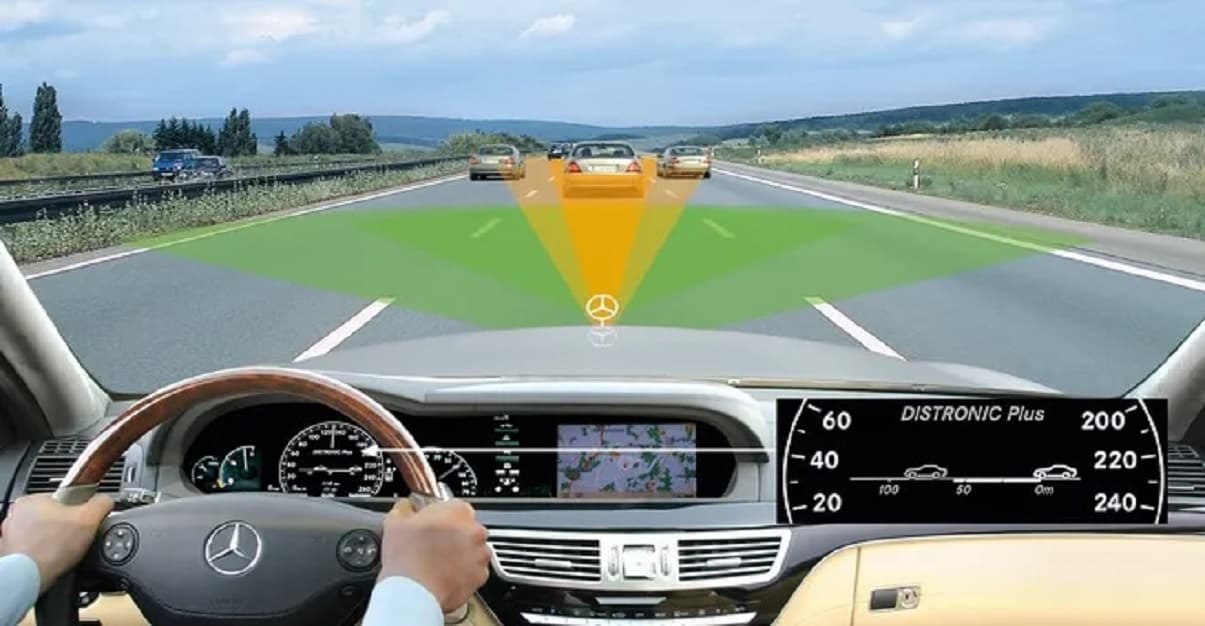
Collision avoidance systems that may either assist the driver in avoiding a collision or prevent an accident both on the front and rear sides of the car are therefore becoming increasingly important. Reduced insurance prices for automobiles equipped with collision avoidance systems are also driving the global market for collision avoidance systems. There appear to be more accidents in rush-hour traffic due to a variety of circumstances, including driver attention, exhaustion, insufficient coordination, and some others, that can result in crashes and threaten the lives of others. To provide road safety and reduce the number of car accidents, automotive companies have launched products that have in-built collision avoidance systems which have majorly contributed to the market revenue and profitability. For instance, ZF launched its new Collision Mitigation System (CMS) for city buses in April 2022. The technology uses active braking to assist avoid head-on collisions with other road users such as automobiles, bicycles, and pedestrians. It also helps mitigate the harmful impact of the braking moment on passengers. The technology is suitable for both electric and internal fuel engines. ZF first introduced its City Bus CMS in Europe to sell it globally.
Moreover, Hyundai Motor India Limited (HMIL) debuted the Hyundai IONIQ 5 in India at Auto Expo - The Motor Show 2023 in January 2023. The Hyundai IONIQ 5 will be the company's first dedicated EV model for consumers who wish to take control of a better, more sustainable future. Furthermore, the Hyundai IONIQ 5 provides Level Next Safety including over 60 safety technologies such as Electric Parking Brake (EPB) and Multi collision-avoidance brake (MCB), assuring maximum customer safety.
At the Safety Pioneers Conference, which was initiated by Union Minister for Road Transport and Highways Nitin Gadkari, Intel brought together leading organizations such as new tech and transport companies, vehicle makers, academic institutions, and authorities to collaborate and bring solutions to tackle road safety-related challenges. To illustrate its commitment to using technology to improve road safety, Intel demonstrated Intel's Onsite Fleet Services, an AI-powered vehicle safety solution for commercial vehicles, in June 2022. Collision Avoidance system (CAS), Driver Monitoring system (DMS), fleet health, and fuel efficiency are among the characteristics.
During the forecast period, the collision avoidance system market in the European region is foreseen to have a dominating stake.
The collision avoidance system market is divided into five areas based on geography: North America, South America, Europe, the Middle East, Africa, and the Asia Pacific. During the forecast period, Europe is anticipated to account for a significant amount of the market share. Vehicles in the European Union must already have automated emergency braking systems, lane departure warning systems, electronic control stabilizers, and automatic braking systems.
Moreover, according to the European Automobile Manufacturers' Association, the EU passenger car fleet increased by 1.2% in 2021 compared to 2020, with approximately 250 million automobiles on the road. Therefore, due to the developments in the automotive sector in the region, the market is anticipated to flourish during the projected period.
Collision Avoidance System Market Scope:
| Report Metric | Details |
| Market Size Value in 2020 | US$10.997 billion |
| Market Size Value in 2027 | US$20.542 billion |
| Growth Rate | CAGR of 9.34% from 2020 to 2027 |
| Base Year | 2020 |
| Forecast Period | 2022–2027 |
| Forecast Unit (Value) | USD Billion |
| Segments Covered | Type, Technology, Industry Vertical, And Geography |
| Regions Covered | North America, South America, Europe, Middle East and Africa, Asia Pacific |
| Companies Covered | Robert Bosch Gmbh, Denso Corporation, Autoliv Inc., ZF Friedrichshafen AG, Becker Mining, Collins Aerospace, A United Technologies Company, Hexagon AB, Continental AG, Infineon Technologies AG, Panasonic Holdings Corporation, Hyundai Motor Company, Mossy Toyota |
| Customization Scope | Free report customization with purchase |
Have questions?
More Thought Articles
How EV Charger Manufacturers Can Capitalize on India’s Home Charging Revolution
India’s residential EV charging opportunity is expanding as policy support, EV adoption, and private parking infrastructure develop. Manufacturers can capture value beyond AC chargers through installation, smart charging, load management, solar integration, software, and after-sales services. Housing societies, automakers, and property developers offer scalable routes to residential charging customers.
Second-Life EV Battery Market in India: What Is Driving Demand from Manufacturers?
India’s second-life EV battery market is gaining relevance as electric vehicle adoption expands and batteries retain useful capacity after automotive service. Growing stationary-storage demand, battery data, refurbishment capabilities, EPR obligations, and critical-mineral policies are encouraging manufacturers to extend battery value through reuse before eventual recycling within India’s emerging circular battery ecosystem.
The Rise of Locally Manufactured Battery Separators in India’s EV Ecosystem
India’s battery industry is progressing from pack assembly toward domestic cell and material manufacturing, creating opportunities for lithium-ion battery separators. Policy support, ACC capacity expansion and R&D initiatives are strengthening the ecosystem. However, technical complexity, manufacturing yields, qualification requirements and economics mean localisation will likely advance gradually through coatings, testing and finishing.