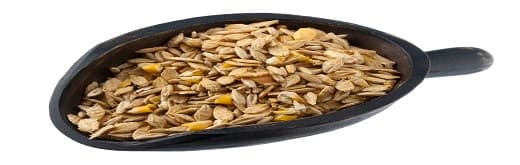
Animal feed is fundamental to animal health and welfare which results in the production of quality and safe products of animal origin. Additionally, the increased demand for proteins d...
Animal feed is fundamental to animal health and welfare which results in the production of quality and safe products of animal origin. Additionally, the increased demand for proteins derived from animals has led to an intensification of livestock production. The issue of feed safety has also achieved prominence due to an increasing trend of clean label consumption trends as well as the need to prevent and control hazards like dioxin, aflatoxins, and other undesirable substances. The aforementioned factors are collectively responsible for increasing demand for animal feed.
The current general production scenarios as per FAO is that the global meat production in 2020 is expected to fall by 333 million tons (carcass weight equivalent), 1.7 % lower than that of 2019. Also, pig meat production is expected to fall duet to African swine fever (ASF) that is largely concentrated in Asian countries. On the contrary, the global poultry meat production is estimated to grow. Also, with a growth output of modest nature, ovine meat production is expected to grow. Further world milk production is forecasted to grow by 0.8 % to 859 million tons. The factors that are responsible for growth are increasing in production in Asia and North America, with modest growth in the Caribbean, Oceania, Central America, and Africa. Additionally, despite the economic difficulties due to COVID-19 along with logistical hindrances, and a sharp decline in sales of food and beverage due to the closure of food and beverage establishment, the demand for dairy and meat products has been met through an increased eCommerce purchase which sustained the food and beverage industry during the lockdown measures. Moreover, post world normalization the demand for meat and dairy is going to rise.
Further, increasing modernization of farms in China and the engagement of village cooperatives in India are sustaining milk output growth in Asia. On the other hand, there is a reported increase in milk output in the Russian Federation which is largely driven by a modern dairy farm. At the same time, the international meat trade is anticipated to increase to 37 million tons in 2020, up 2.4% year-on-year. Much of the trade momentum is expected to be provided by China, as imports are seen rising by 24 % year-on-year. The demand for meat imports which is projected to rise is expected to be met mainly through increased exports by the USA, the United Kingdom of Great Britain, the European Union 27 member countries (EU), Northern Ireland (the UK), and Brazil. The aforesaid is a snapshot that further reaffirms the importance of feed safety to ensure food security. This supports the need for the same degree of quality assurance that is observed in the case of food production, thereby potentially contributing to the anticipated organic feed market growth.
According to a recent report by the Research Institute of Organic Agriculture (FiBL)as of 2018, 186 countries around the world have been partaking in organic activities, the global organic market registered value of 96.7 billion euros and above all, there were 103 countries with organic regulations as compared to 93 countries in 2017. Additionally, in Europe, the highest organic shares were for sheep and cattle. Due to the high demand for eggs, the organic share for poultry witnessed the greatest increase. Accounting for 4.85 million heads in Europe, the largest numbers of bovine animals are present in Germany, France, and Austria. With an overall share that is more than 20%, the highest organic shares are in Latvia, Liechtenstein, Sweden, and Austria. The highest organic shares that are more than 40% encompasses the Baltic countries of Estonia, Latvia and Lithuania, and the Czech Republic. Moreover, the European organic cow’s milk product as of 2018 was to the tune of 5.4 million metric tons constituting 3.4 % of the European Union’s milk production from dairy cows. The report also notes that with the aid of increasing availability of organic feed, organic livestock is projected to grow significantly for pigs and poultry, with the possibility of the share of organic poultry doubling to 5%. Further, facilitated by increasing organic cheese production, the growth of organic dairy is expected to grow. Thus, with such a well-developed European organic livestock farming, among others and the expectation of growth in organic demand mentioned in a new publication on the agricultural outlook 2019-2030, Europe is expected to hold a robust share of the organic feed market. According to the Commission, the EU organic area is projected to reach 18 million hectares by 2030, i.e. 10 % of the total agricultural land, representing growth in land use of 3 % per year.
Thus, despite the characteristic high labor input associated with organic production the aforementioned reaffirms with the estimated upward trajectory of organic feed market in the coming few years. Further, a variety of standards, legislation, and policy support are expected to augment the growth of the same. Thus, again revisiting the aspects of the EU, it was reported that Regulation (EC) No 834/2007, on the basis which the region had gained considerable experience, will be repealed and replaced by the new Regulation (EC) No 2018/848 from the 1st of January 2021. Contained with the regulation the intention of ensuring the integrity of organic production at all stages of the production and processing and distribution processes of animal feed, among others, has been mentioned. Earlier, in April 2019, a Memorandum of Understanding on Organic Products was reportedly implemented between Brazil and Chile to facilitate trade in organic products in both countries through the mutual recognition of their certification and control systems. The negotiations were executed between the Ministry of Agriculture, Chile through the Agricultural and Livestock Service (SAGI) and the Coordination of Agroecology and Organic Production of the Ministry of Agriculture, Livestock and Supply of Brazil (COAGRE-MAPA). Thus, with such initiatives implemented by the government, it can be stated with certitude that the environment is gradually becoming more conducive for the use of organic feed.
Garuav Singh
ContributorHave questions?
More Blogs
Clinical Decision Support Diagnostic Systems Market: Why the U.S. Healthcare System Is Quietly Rebuilding Diagnosis Around Algorithms
The U.S. clinical decision support diagnostic systems market is rapidly evolving as hospitals adopt AI-driven tools to manage rising diagnostic complexity, workforce shortages, and operational pressures. Growth is fueled by demand for faster, accurate diagnoses, workflow efficiency, interoperability, and value-based care, while physician trust, cybersecurity, and regulatory compliance increasingly determine long-term market success.
Top U.S. Healthcare Industry Trends to Watch in 2026 for the Global Healthcare Market
The global healthcare industry in 2026 is shifting toward AI-driven efficiency, stronger cybersecurity, outpatient care expansion, and domestic pharmaceutical manufacturing. U.S. healthcare leaders are prioritizing workforce support, operational resilience, value-based care, and integrated digital systems to improve patient outcomes while controlling costs.
How AI Is Reshaping the American Healthcare Industry
The U.S. healthcare industry is rapidly integrating artificial intelligence across clinical, administrative, and pharmaceutical operations. AI is improving diagnostics, automating workflows, reducing clinician burden, accelerating drug discovery, and enhancing personalized care. With strong adoption by hospitals and tech companies, AI is transforming healthcare delivery while driving the U.S. AI healthcare market toward significant growth by 2031.