A new analysis report on the capacitance meter market, which is forecasted between 2023 and 2028, has been published by Knowledge Sourcing Intelligence. The prime factors propelling the market growth of the...
A new analysis report on the capacitance meter market, which is forecasted between 2023 and 2028, has been published by Knowledge Sourcing Intelligence.
The prime factors propelling the market growth of the capacitance meter market are the increasing demand for electronic components in various industries, including consumer electronics, automotive, and telecommunications, driving the need for precise capacitance measurement tools.
As per the report, the capacitance meter market is expected to grow at a significant pace.
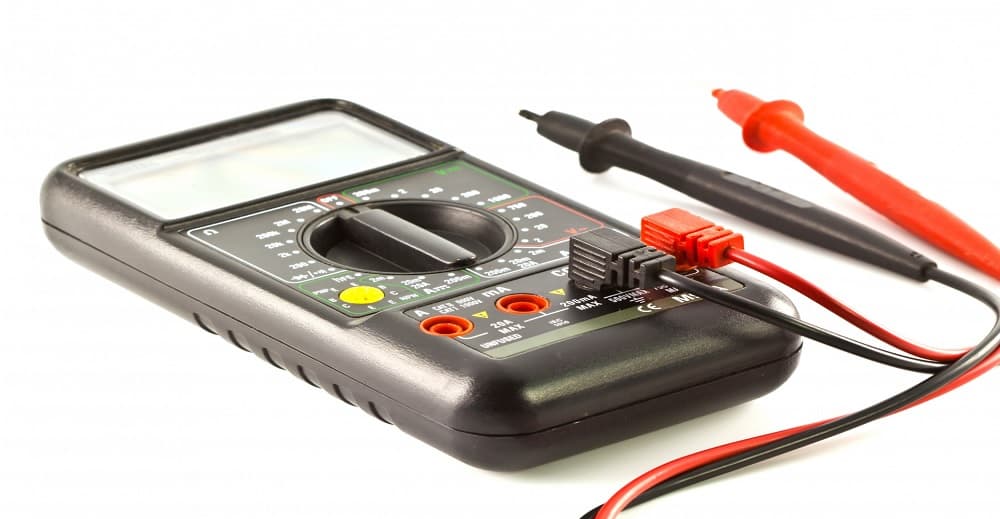
A capacitance meter, also known as a capacitance tester or capacitance measuring device, is an electronic instrument used to measure the electrical capacitance of a component or device. It quantifies the ability of an object to store an electrical charge, typically expressed in units called farads (F). Capacitance meters are commonly employed in electronics, engineering, and quality control to assess and verify the capacitance values of capacitors, electronic components, and circuitry, ensuring proper functionality and adherence to specifications.
The market is witnessing multiple collaborations and technological advancements, for instance in April 2022 An apprentice's final project, the Arduino Automatic Capacitance Meter, was successfully completed within a 120-hour timeframe, meeting Swiss legal requirements for original work. It utilizes an Arduino Nano Every to manage capacitor charging, pulse counting, and discharging, with precision components for range selection. The project includes a 64 MHz oscillator and a D-Sub-9 connector for Envico System integration.
Based on method type the market is divided into DC charge method, AC response method and bridge method. Among these segments, the DC charge method is experiencing significant growth due to its compatibility with modern electronic systems and its ability to provide precise and rapid measurements in various applications. The DC charge method's efficiency and accuracy in assessing electrical resistance make it increasingly essential for industries such as electronics, telecommunications, and automotive, where precision is paramount for quality control and performance optimization.
Based on application the capacitance meter market is divided into semiconductor manufacturing, industrial processing, aircraft maintenance and others. Within these segments, the semiconductor manufacturing segment is experiencing substantial growth due to the increasing demand for electronic components and semiconductors in various devices, including smartphones, IoT devices, and electric vehicles. As semiconductor technology advances, the need for precise capacitance measurements becomes critical for quality control and production efficiency in manufacturing processes. Capacitance meters are indispensable tools in semiconductor fabrication, aiding in the assessment of electronic components' performance and reliability, thus driving significant growth in this application segment.
Based on Geography the Asia Pacific region is witnessing remarkable growth in the capacitance meter market due to the rapid expansion of electronics manufacturing industries, the proliferation of consumer electronics, and the increasing adoption of advanced technologies like 5G and IoT. The region's robust semiconductor manufacturing sector, coupled with rising investments in industrial automation, drives the demand for capacitance meters for precise quality control and component testing. Moreover, the Asia Pacific's growing aerospace and defense sectors further contribute to the uptake of capacitance meters for aircraft maintenance and electronics testing applications, solidifying its significant market growth.
As a part of the report, the major players operating in the capacitance meter market, that have been covered are Metravi Instruments Pvt Ltd., Sivananda Electronics, Hoyt Electrical Instrument Works Inc., Keysight Technologies and B&K Precise Corporation.
View a sample of the report or purchase the complete study at: https://www.knowledge-sourcing.com/report/capacitance-meter-marketThese analytics report segments the capacitance meter market on the following basis:
- By Method Type
- DC Charge Method
- AC Response Method
- Bridge Method
- By Application
- Semiconductor Manufacturing
- Industrial Processing
- Aircraft Maintenance
- Others
- By Geography
- North America
- USA
- Canada
- Mexico
- South America
- Brazil
- Argentina
- Others
- Europe
- Germany
- UK
- France
- Spain
- Others
- Middle East and Africa
- Saudi Arabia
- UAE
- Others
- Asia Pacific
- China
- Japan
- South Korea
- India
- Australia
- Others
- North America
Have questions?
More Press Releases
EV Traction Motor Market to Reach USD 20.6 Billion by 2031 as Integrated E-Axles Gain Momentum
The global EV traction motor market is expanding as automakers adopt integrated e-axles, compact drivetrain architectures, and advanced propulsion technologies. Rising electric vehicle production, improved motor efficiency, power electronics innovation, and manufacturing optimization are creating opportunities for suppliers developing scalable, reliable, and space-efficient electric drive systems across passenger and commercial vehicle segments.
Semiconductor Test Socket Market Projected to Reach USD 3.55 Billion by 2032, Driven by AI and HPC Demand
The semiconductor test socket market is expanding as AI processors, high-performance computing, advanced packaging, and high-speed memory increase testing requirements. Growing semiconductor complexity is driving demand for reliable electrical contacts, improved signal integrity, and thermal management. Automotive electronics and power semiconductors are further creating opportunities for specialized test socket technologies.
Hydrogen Energy Storage Market to Reach USD 25.40 Billion by 2032 as Demand for Long-Duration Storage Grows
The hydrogen energy storage market is expanding as renewable energy integration, industrial hydrogen demand, and infrastructure investment drive adoption. Advancements in compressed gas, liquid hydrogen, underground geological, and solid-state storage technologies are creating opportunities across utilities, industrial applications, and grid-scale energy systems, while cost efficiency and infrastructure readiness remain critical challenges.