Regulatory reforms and government-backed digital health initiatives are transforming clinical decision support systems. AI-based SaMD solutions with interoperability, explainability, and compliance are driving adoption. Integrated CDSS and diagnostic support lead growth, while North America dominates and Asia Pacific rapidly expands, supported by digital infrastructure, regulatory frameworks, and increasing deployment of machine learning models.
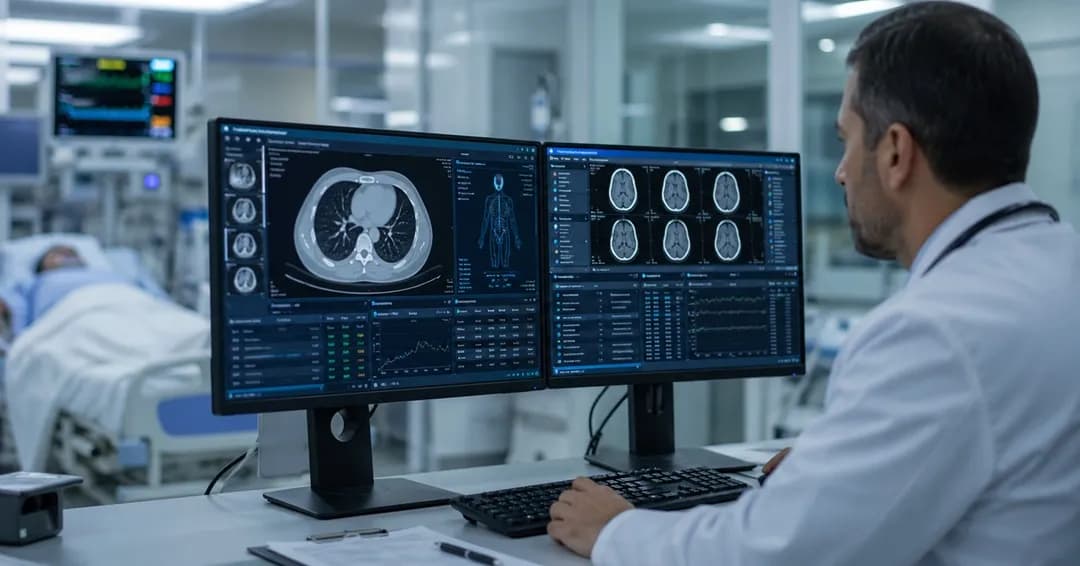
According to a research study published by Knowledge Sourcing Intelligence (KSI), the clinical decision support diagnostic systems market will expand from USD 2.7 billion in 2026 to USD 4.3 billion in 2031 at a CAGR of 9.8% during the forecast period.
The clinical decision support diagnostic systems market is expected to experience strong growth because the increasing prevalence of chronic illnesses, an aging global demographic, and the expanding volume of clinical data drive the demand for these tools.
Access sample report or view details: https://www.knowledge-sourcing.com/report/clinical-decision-support-diagnostic-systems-market
Key Market Insight & Emerging Trends:
In order to improve the current market for clinical decision support (CDS) systems, particularly those that use AI-based software as a medical device (SaMD), new regulatory changes will influence how diagnostic systems are developed and utilized between 2025 and 2026. As the Central Drugs Standard Control Organisation (CDSCO) creates new policy guidance for software as medical devices in India in 2025, existing standalone diagnostic systems will begin to lose market share as there will be an increase in systems that have been created using regulatory compliant architectures. An important market trend is that there will be an increase in the use of government-backed infrastructure to deliver CDS systems. Under the Ayushman Bharat Digital Mission, large amounts of health data are being integrated with interoperability standards so that CDS systems can be implemented seamlessly within established clinical workflows. At the same time, the eSanjeevani telemedicine platform is creating opportunities for the use of AI enabled CDS in telemedicine consultations by introducing diagnostic protocols to all public health facilities.
Emerging trends suggest that SaMD-based CDS systems will experience rapid adoption within healthcare settings because they all utilize some form of explainable artificial intelligence (AI), audit trails, and performance measurement. Government-supported projects such as the Secure AI in Health Initiative are facilitating the validation of CDS systems through sandbox testing environments for vendors, allowing them immediate testing and regulatory compliance in the governmental national ecosystem.
North America maintained market leadership in 2026 due to strong enforcement of AI-enabled Software as a Medical Device (SaMD) frameworks by the U.S. Food and Drug Administration, alongside mature EHR penetration and federal interoperability mandates (21st Century Cures Act implementation).
Integrated CDSS (with EHR/EMR) segment is expected to witness the highest growth due to nationwide interoperability enforcement and embedding of CDS within clinical workflows under programs like the Office of the National Coordinator for Health Information Technology interoperability rules.
Software, Integrated CDSS, and Diagnostic Decision Support segments are dominant due to regulatory prioritization of clinically validated, interoperable, and workflow-integrated solutions, particularly under SaMD classification and real-world performance monitoring requirements.
Diagnostic Decision Support application segment is anticipated to grow due to increasing regulatory approvals and deployment of AI-based diagnostic tools in imaging, triage, and early disease detection, supported by validation pathways defined by regulators including the Central Drugs Standard Control Organisation and global counterparts.
From 2025 onward, an increased deployment of machine learning models is anticipated. These models will analyze complex patterns across images, lab data, and longitudinal electronic health record data to suggest potential diagnoses or treatment options.
Component Insights: Software as Core Infrastructure
Software functions as the core infrastructure, as CDS is formally regulated as Software as a Medical Device by the Central Drugs Standard Control Organisation and the U.S. Food and Drug Administration. Services support integration, validation, and compliance, while hardware remains limited to backend infrastructure rather than primary value creation.
Technology Insights: Integrated CDSS Leading Adoption
Integrated CDSS is leading adoption, as embedding within EHR/EMR systems is mandated by interoperability frameworks from the Office of the National Coordinator for Health Information Technology and the Ayushman Bharat Digital Mission. This integration enables real-time clinical decision workflows and supports regulatory-compliant deployment of AI-driven diagnostic tools.
Application Insights: Diagnostic decision support Driving Maximum Demand
Diagnostic decision support is driving maximum demand due to regulatory expansion of AI-based diagnostics approved by agencies including the U.S. Food and Drug Administration. Increasing use in imaging, early disease detection, and triage, combined with government-backed digital health data ecosystems, is accelerating large-scale clinical adoption across healthcare systems.
Regional Highlights: North America Leading, Asia Pacific Emerging
North America leads due to mature EHR infrastructure, strict SaMD regulation by the U.S. Food and Drug Administration, and nationwide interoperability enforcement. Asia Pacific is emerging rapidly, driven by large-scale digital health programs such as the Ayushman Bharat Digital Mission and expanding regulatory frameworks for AI-based CDS deployment.
Competitive Landscape
Major players in the clinical decision support diagnostic systems market include Cerner Corporation, Epic Systems, Wolters Kluwer, GE HealthCare, Siemens Healthineers, Philips Healthcare, Allscripts Healthcare Solutions, and NextGen Healthcare.
These companies are actively engaged in product innovation, partnerships, and technological advancements to expand their clinical decision support capabilities and strengthen integration within digital health ecosystems.
Market Segmentation
The report segments the Clinical decision support diagnostic systems market as follows:
By Component
Software
Hardware
Services
By Technology
Standalone CDSS
Integrated CDSS (with EHR/EMR)
By Application
Drug Interaction Alerts
Clinical Guidelines & Protocols
Diagnostic Decision Support
Chronic Disease Management
Preventive Care
By Geography
North America
USA
Canada
Mexico
South America
Brazil
Argentina
Others
Europe
United Kingdom
Germany
France
Spain
Others
Middle East and Africa
Saudi Arabia
UAE
Others
Asia Pacific
China
India
Japan
South Korea
Indonesia
Thailand
Others
Companies Profiled:
Cerner Corporation
Epic Systems
IBM
Wolters Kluwer
McKesson Corporation
Philips Healthcare
Siemens Healthineers
Allscripts Healthcare Solutions
GE HealthCare
NextGen Healthcare
Explore More Reports:
Need specialized data cuts or competitive intelligence?
Our analyst team provides bespoke market sizing, supplier audits, and country-level feasibility reports tailored to your enterprise roadmap.
Speak With an Industry Analyst →Ask an Industry Analyst
Have questions regarding this briefing or market projections? Inquire with our sector lead.
Related Press Releases
View All →
ADC Manufacturing & CDMO Market is expected to reach USD 10.49 billion by 2031
Aug 7, 2026
Lifestyle-Associated Cancer Epidemiology Market is expected to reach USD 13.12 billion by 2031
Aug 5, 2026
Psycho-Oncology Digital Health Market is anticipated to surpass USD 290.01 million in 2031 at a CAGR of 8.5%
Jul 30, 2026
Intratumoral Injection Therapy Market is expected to reach USD 630.39 million by 2031
Jul 24, 2026
Palliative Care in Oncology Market is expected to reach USD 244.1 billion by 2031
Jul 22, 2026More Press Releases
Oncology Drug Resistance Testing Market is projected to reach USD 3.41 billion in 2031 at a CAGR of 6.6 %
The oncology drug resistance testing market is expanding due to rising cancer prevalence, increasing drug resistance, and growing adoption of precision oncology. Advances in NGS-based testing, companion diagnostics, and targeted therapies, alongside FDA approvals and investments in personalized medicine, are accelerating demand for effective resistance monitoring across hospitals and clinical diagnostics worldwide.
TROP-2 Targeted Therapy Market is anticipated to surpass USD 3.29 billion in 2031 at a CAGR of 8.6 %
The TROP-2 Targeted Therapy market is expanding rapidly due to increasing precision oncology adoption, rising cancer prevalence, and growing use of antibody-drug conjugates. North America leads the market, while Asia Pacific shows the fastest growth. Continuous clinical trials, regulatory approvals, and strategic collaborations are accelerating innovation and commercial adoption worldwide.
Second Primary Cancer Prevention Market is expected to reach USD 24.7 billion by 2031
The Second primary cancer prevention refers to strategies aimed at reducing the risk of developing a new, unrelated cancer in individuals with a prior cancer diagnosis. Growing cancer survivorship, advances in treatment, and increasing awareness of long-term health outcomes have heightened the importance of prevention and surveillance programs. Key approaches include routine screening, genetic risk assessment, lifestyle modification, and long-term follow-up care. Government agencies and healthcare organisations increasingly emphasise survivorship care plans and evidence-based screening protocols to detect new malignancies at earlier stages. Continued investments in early detection technologies and personalised risk assessment are expected to support advancements in second primary cancer prevention.