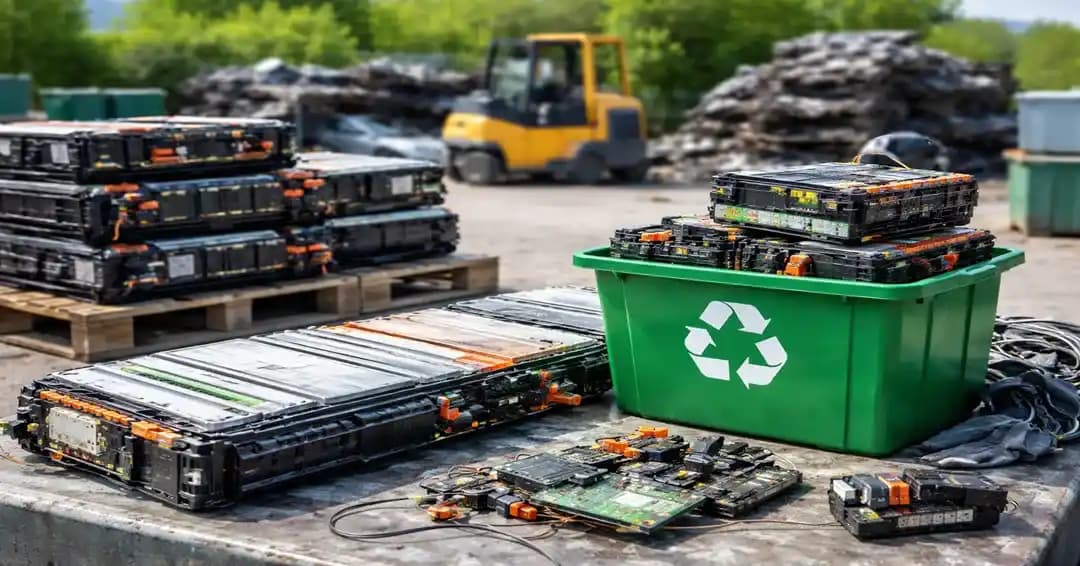
An increase in the number of electric vehicle (EV) battery suppliers is driving market growth. As they recycle batteries, they can help lower the material costs and reduce environmental damage through what is called “battery recycling.” This has increased the demand for EVs. After a battery has been used once, it needs to be reused in two ways: by upgrading recycling centers, and by obtaining recycled materials from the batteries to use them as feedstock in a new battery manufacturer. Adding batteries to our stationary energy storage units will prolong their use and create revenue through the sale of stored electricity. Recycling infrastructure is now being established at many collection points, making it easier for consumers to convert a wide variety of recyclable materials into new products.
EV Battery Recycling Market Trends & Forecast
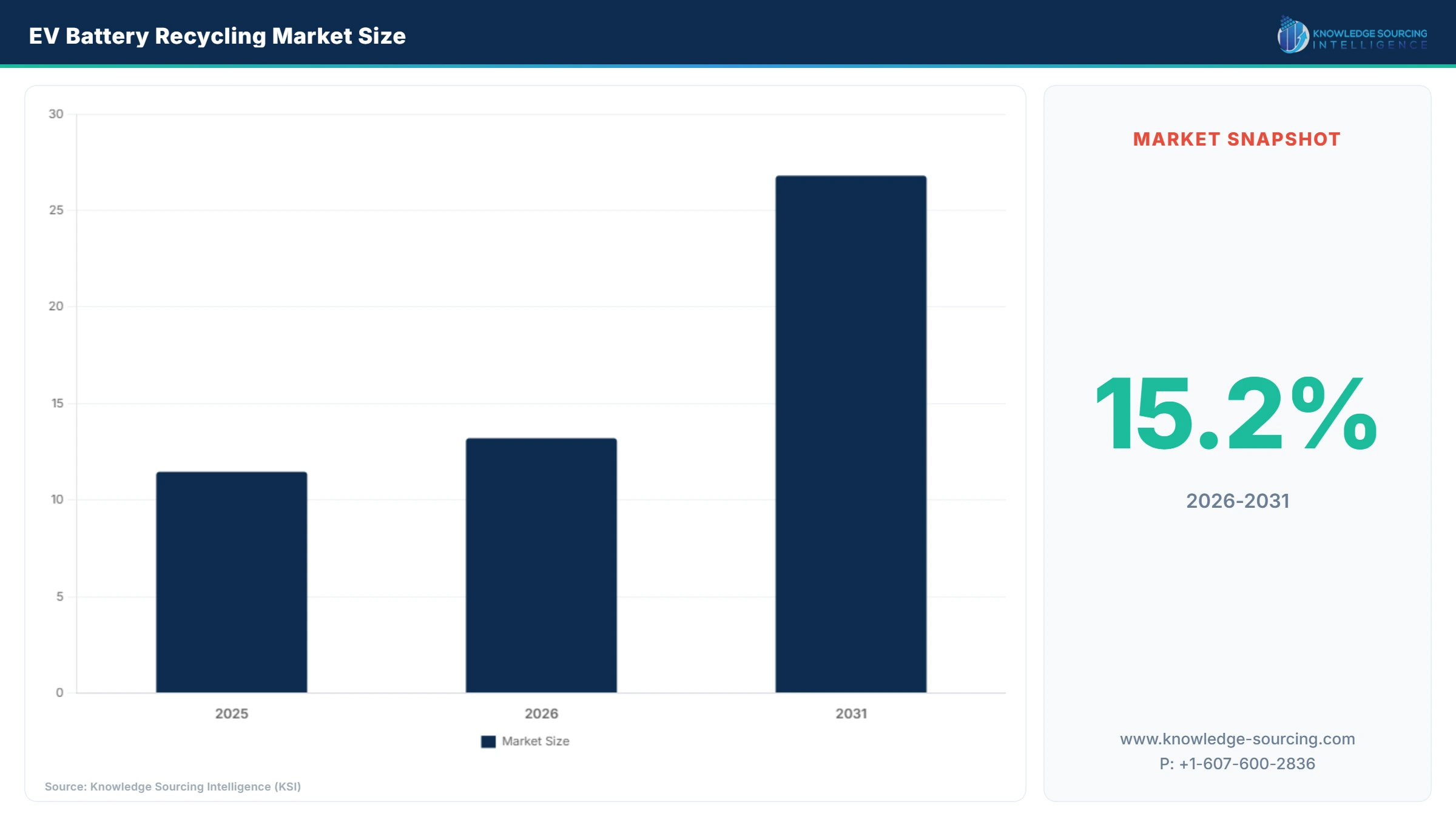
According to a research study published by Knowledge Sourcing Intelligence (KSI), the EV battery recycling market will expand from USD 13.2 billion in 2026 to USD 26.8 billion in 2031 at a CAGR of 15.2% during the forecast period.
The market for electric vehicle (EV) battery recycling focuses primarily on extracting the various metals, including lithium, cobalt, nickel, and manganese, from used EV batteries. In light of the rapid rise in the global use of EVs, managing the end-of-life phase of EV batteries is becoming increasingly important. Thus, recycling EV batteries has a significant positive impact on the environment, reduces reliance on new mining operations for raw material supply, and encourages the establishment of a circular economy within the EV ecosystem. With the rising number of retired EV batteries and the growing regulatory pressure for sustainable disposal of those batteries, the market for recycling EV batteries is becoming a high-activity area. In addition, many governments and environmental agencies are imposing stringent regulations regarding how batteries should be recycled, encouraging the establishment of a recycling chain for EV batteries to ensure that recovered materials are reused.
Request a free sample copy or view the report summary: EV Battery Recycling Market Report
EV Battery Recycling Market Highlights
Due to the rapid increase in the adoption of electric vehicles, the number of batteries at the end-of-life stage continues to rise. Many EV manufacturers state that EV batteries should last between eight (8) and fifteen (15) years, but due to the retirement of many first-generation electric vehicles, the volume of spent batteries is rising significantly. Therefore, there is an increasing need for environmentally responsible recycling solutions, meaning there will be an increased demand for effective ways to recycle EV batteries. The recycling of spent EV batteries will reduce the risk of environmental harm from improper methods of disposal and ultimately help support the continued use of critical metals. As EV adoption continues to grow, the amount of recyclable raw materials from EV batteries will also rise; therefore, the demand for recycling solutions will exceed the supply.
EV battery recycling plays a crucial role in recovering critical raw materials such as lithium, cobalt, and nickel, which are essential for battery production. These materials are limited in supply and subject to geopolitical and environmental challenges in mining. Recycling reduces reliance on raw material extraction and stabilizes supply chains for battery manufacturers. Advanced recycling technologies are improving the efficiency of material recovery, enabling higher yields and better-quality output. As demand for electric vehicles grows, securing a stable and sustainable supply of battery materials is becoming increasingly important, making material recovery a key highlight of the market.
Report Coverage
Total Market Size in 2026 | USD 13.2 billion |
Total Market Size in 2031 | USD 26.8 billion |
Growth Rate | 15.2% |
Drivers |
|
Restraints |
|
Segmentation | Battery Type, Recycling Process, Vehicle Type, Geography |
Companies |
|
EV Battery Recycling Market Growth Drivers and Restraints
Growth Drivers:
Rapid Growth of Electric Vehicle Adoption: The global electric vehicle adoption is accelerating the EV battery recycling market. To encourage the use of electric vehicles, many governments worldwide provide incentives or subsidies and enact stricter emissions regulations, resulting in more electric vehicles being sold in the coming years. The growing number of electric vehicles (EVs) on our roads means there will be an increasing need for battery recycling now and in the future. This creates a continuous demand for recycling infrastructure and services. Additionally, many automotive manufacturers are actively working to establish a sustainable lifecycle for their vehicle batteries, further driving the need for EV battery recycling. Overall, the entire electric vehicle ecosystem is contributing to an escalating demand for effective battery recycling solutions.
Stringent Environmental Regulations: To ensure safe and proper recycling or disposal of EV batteries, governments and other regulatory bodies have implemented very stringent policies. If electric vehicle manufacturers do not properly dispose of their lithium-ion batteries, they could potentially lead to environmental disasters like soil and water contamination, among others. Governments and regulatory agencies are requiring manufacturers to develop responsible means to recycle batteries through extended producer responsibility programs. These policies and regulations will drive more investments into recycling infrastructure and increase the adoption of advanced recycling technologies. Therefore, compliance with environmental regulations will be more important than ever before to companies involved in the EV supply chain. This will further accelerate the development and growth of the EV battery recycling market worldwide.
Restraints:
High Recycling Costs and Complex Processes: While recycling electric vehicle (EV) batteries does provide an opportunity to extract materials that can be reused, the current methods require specialised infrastructure. There are also high costs associated with transporting, collecting, and processing waste EV batteries, making it difficult for recyclers to achieve any profit and therefore discouraging investment in large-scale and/or highly sophisticated recycling facilities in all geographic regions, particularly those without well-developed infrastructure and/or expertise in battery processing/recycling.
Lack of Standardized Recycling Infrastructure: The EV battery recycling industry lacks standardisation of infrastructure and processes, which leads to a more complex recycling process due to the variety of EV battery chemistry and shapes. In addition, the available collection networks and recycling infrastructure are limited, therefore hindering the proper disposal of EV batteries and decreasing the overall growth of the EV battery recycling market. This also delays the creation and implementation of an efficient EV battery recycling infrastructure.
EV Battery Recycling Market Key Development
August 2025: Umicore NV Reports Solid H1 Results; Recycling Business Stable. Umicore published its half-year 2025 results: revenues of €1.8 billion, adjusted EBITDA up ~10 %, and noted that its Recycling business reported earnings broadly in line with the prior year.
EV Battery Recycling Market Segmentation
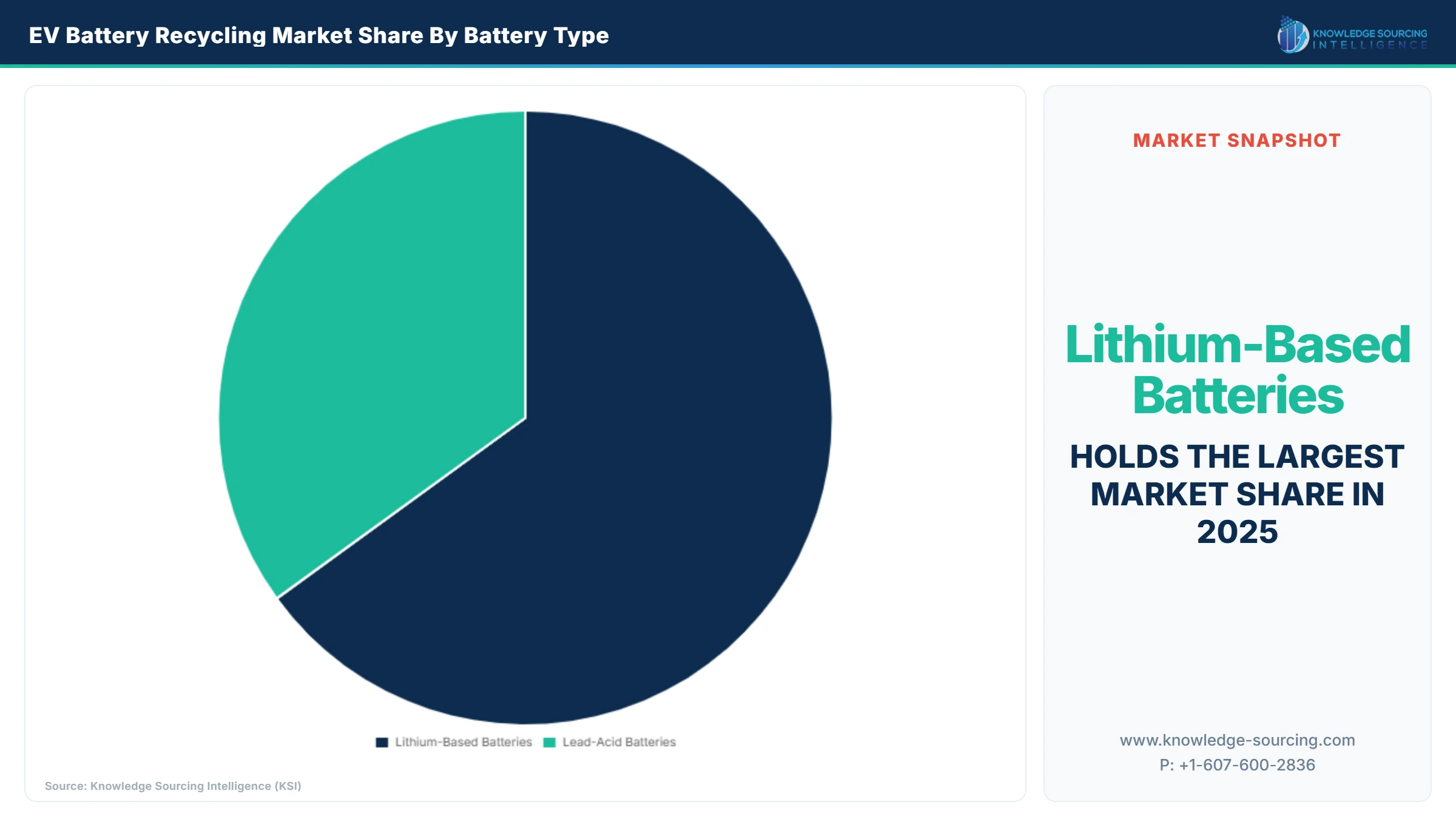
Knowledge Sourcing Intelligence has segmented the EV battery recycling market based on Battery type, recycling process, vehicle type and geography:
EV Battery Recycling Market, By Battery Type
Lead-Acid Batteries
Flooded Lead-Acid Batteries
Valve-Regulated Lead-Acid (VRLA) Batteries
Lithium-Based Batteries
Lithium-Ion Batteries
Lithium Polymer Batteries
Lithium Iron Phosphate (LiFePO4) Batteries
Others
EV Battery Recycling Market By Recycling Process
Pyrometallurgical
Hydrometallurgical
Others
Mechanical
Others
EV Battery Recycling Market, By Vehicle Type
Passenger Vehicles
Commercial Vehicles
EV Battery Recycling Market, By Geography
North America
USA
Canada
Mexico
Europe
Germany
France
UK
Spain
Others
Asia Pacific
China
Japan
India
South Korea
Others
South America
Brazil
Argentina
Others
Middle East and Africa (MEA)
Saudi Arabia
Israel
Others
EV Battery Recycling Market Key Players
Umicore N.V.
Robert Bosch GmbH
ACCUREC-Recycling GmbH
Li-Cycle Holdings Corp.
Neometals Ltd.
Gopher Resource LLC
Terrapure BR Ltd.
Ecobat Technologies Ltd.
Call2Recycle, Inc.
Exide Technologies, LLC
Contemporary Amperex Technology Co., Ltd.
Fortum Oyj
Redwood Materials Inc.
Need specialized data cuts or competitive intelligence?
Our analyst team provides bespoke market sizing, supplier audits, and country-level feasibility reports tailored to your enterprise roadmap.
Speak With an Industry Analyst →Ask an Industry Analyst
Have questions regarding this briefing or market projections? Inquire with our sector lead.
Related Press Releases
View All →
ADC Manufacturing & CDMO Market is expected to reach USD 10.49 billion by 2031
Aug 7, 2026
Lifestyle-Associated Cancer Epidemiology Market is expected to reach USD 13.12 billion by 2031
Aug 5, 2026
Psycho-Oncology Digital Health Market is anticipated to surpass USD 290.01 million in 2031 at a CAGR of 8.5%
Jul 30, 2026
Intratumoral Injection Therapy Market is expected to reach USD 630.39 million by 2031
Jul 24, 2026
Palliative Care in Oncology Market is expected to reach USD 244.1 billion by 2031
Jul 22, 2026More Press Releases
Oncology Drug Resistance Testing Market is projected to reach USD 3.41 billion in 2031 at a CAGR of 6.6 %
The oncology drug resistance testing market is expanding due to rising cancer prevalence, increasing drug resistance, and growing adoption of precision oncology. Advances in NGS-based testing, companion diagnostics, and targeted therapies, alongside FDA approvals and investments in personalized medicine, are accelerating demand for effective resistance monitoring across hospitals and clinical diagnostics worldwide.
TROP-2 Targeted Therapy Market is anticipated to surpass USD 3.29 billion in 2031 at a CAGR of 8.6 %
The TROP-2 Targeted Therapy market is expanding rapidly due to increasing precision oncology adoption, rising cancer prevalence, and growing use of antibody-drug conjugates. North America leads the market, while Asia Pacific shows the fastest growth. Continuous clinical trials, regulatory approvals, and strategic collaborations are accelerating innovation and commercial adoption worldwide.
Second Primary Cancer Prevention Market is expected to reach USD 24.7 billion by 2031
The Second primary cancer prevention refers to strategies aimed at reducing the risk of developing a new, unrelated cancer in individuals with a prior cancer diagnosis. Growing cancer survivorship, advances in treatment, and increasing awareness of long-term health outcomes have heightened the importance of prevention and surveillance programs. Key approaches include routine screening, genetic risk assessment, lifestyle modification, and long-term follow-up care. Government agencies and healthcare organisations increasingly emphasise survivorship care plans and evidence-based screening protocols to detect new malignancies at earlier stages. Continued investments in early detection technologies and personalised risk assessment are expected to support advancements in second primary cancer prevention.