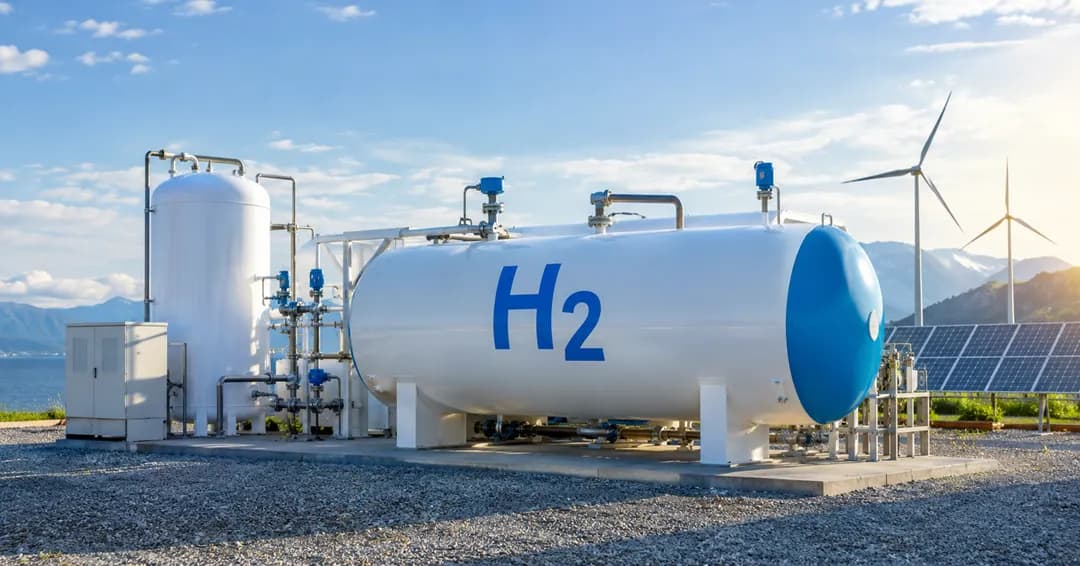
The hydrogen energy storage market is expanding as renewable energy integration, industrial hydrogen demand, and infrastructure investment drive adoption. Advancements in compressed gas, liquid hydrogen, underground geological, and solid-state storage technologies are creating opportunities across utilities, industrial applications, and grid-scale energy systems, while cost efficiency and infrastructure readiness remain critical challenges.
Knowledge Sourcing Intelligence (KSI) has published its latest analysis of the Hydrogen Energy Storage Market, examining market forecasts, technology developments, regional opportunities, and competitive dynamics through 2032. The study projects growth from USD 12.60 billion in 2026 to USD 25.40 billion in 2032 at a 12.4% CAGR. It assesses how renewable electricity integration, industrial hydrogen requirements, and infrastructure investment are influencing opportunities across energy and industrial applications.
Market Overview
Hydrogen energy storage is gaining attention as energy systems accommodate increasing volumes of variable renewable electricity. Electrolysis uses electricity to produce hydrogen, which can be stored and subsequently used in industrial processes, power generation, and other applications. This approach connects renewable electricity production with sectors that require hydrogen as a fuel or industrial feedstock.
Hydrogen also offers potential for long-duration and seasonal storage, particularly where energy must remain available beyond conventional daily storage cycles. However, commercial viability depends on electricity prices, conversion efficiency, storage infrastructure, and dependable end-user demand. These factors influence project economics and determine where hydrogen storage can compete with alternative technologies.
Key Growth Drivers
Renewable Energy Integration
Increasing wind and solar generation is creating demand for flexible solutions that can absorb surplus electricity and help balance supply during periods of lower renewable output. Hydrogen can store this energy for later industrial use or conversion back into electricity, creating opportunities in grid balancing and seasonal storage. Commercial adoption will depend on renewable power costs and the value of extended energy storage.
Expansion of Underground Hydrogen Storage
Salt caverns and suitable geological formations offer the potential to store hydrogen at scale. These facilities could support industrial supply networks, hydrogen hubs, and energy systems requiring substantial storage volumes. Development depends on geological suitability, engineering requirements, permitting, and connections to production and distribution infrastructure.
Advancements in Storage Technologies
Compressed gas vessels, liquid hydrogen systems, metal hydrides, and other solid-state technologies address different storage requirements. Research and development focus on improving storage density, safety, operating efficiency, and system costs. Commercial suitability varies according to application, storage duration, transportation requirements, and project scale.
Industrial Demand and Infrastructure Investment
Chemical manufacturing, refining, and other hydrogen-intensive industries require dependable supplies. Storage can help balance production and consumption while supporting supply continuity. Investment in pipelines, distribution networks, and integrated hydrogen production facilities could expand market opportunities. However, competitive hydrogen prices and long-term offtake agreements remain important to project viability.
Request a free sample copy or view the report summary: Hydrogen Energy Storage Market Report
Industry Developments
September 2026: EWE awarded Bilfinger a contract for H2Dry hydrogen treatment equipment at Huntorf, marking the technology’s first commercial-scale deployment within planned cavern-storage infrastructure.
August 2026: Ballard completed its GeoPura acquisition, combining fuel-cell systems, hydrogen production, distribution, and Hydrogen Power Units into an integrated zero-emission energy-service offering business.
August 2026: CB&I completed the first fill of its 20-cubic-metre non-vacuum-insulated liquid-hydrogen demonstration tank at NASA’s Marshall facility, advancing lower-cost large-scale cryogenic storage and repeated thermal cycling.
Market Segmentation and Regional Outlook
The study segments the market by storage technology, including compressed gaseous, liquid, underground geological, and solid-state storage; system configuration, covering standalone storage and integrated power-to-hydrogen or hydrogen-to-power systems; and application, spanning industrial supply, renewable energy storage, seasonal storage, backup power, and microgrids.
End users include utilities, independent power producers, industrial gas suppliers, chemical manufacturers, heavy industry, and hydrogen infrastructure developers.
North America offers opportunities through established industrial hydrogen demand and large-scale infrastructure development. Europe is pursuing hydrogen deployment linked to industrial decarbonisation and energy-system integration, while Asia-Pacific presents opportunities associated with industrial consumption and clean energy investment. Growth across these regions will depend on policy frameworks, electricity costs, infrastructure readiness, and commercial demand.
Competitive Landscape
Companies and industry participants covered in the study include Linde Engineering, Air Liquide, Baker Hughes, NPROXX, CIMC Enric, GRZ Technologies, GKN Hydrogen, ACES Delta, and H2MOF. Their activities span industrial gas systems, high-pressure storage vessels, cryogenic equipment, underground storage infrastructure, and emerging solid-state solutions.
The report examines company positioning, technology portfolios, and strategic opportunities across industrial, grid-scale, and distributed storage applications.
Analyst Perspective
“Hydrogen energy storage offers a pathway to address long-duration storage needs and connect renewable electricity with industrial demand. However, market expansion will depend on lower production costs, efficient conversion technologies, supportive policies, and infrastructure investment backed by credible long-term offtake agreements.”
What The Study Covers
The Hydrogen Energy Storage Market Size, Share & Growth Forecast (2026–2032) report provides market estimates and forecasts, growth drivers, restraints, technology trends, regional analysis, competitive intelligence, company profiles, and industry developments across North America, Europe, Asia-Pacific, and the Rest of the World.
Have questions?
More Press Releases
How Lincotek’s SportLinc FDA Clearance Could Impact the Sports Medicine Market, Expected to Reach USD 9.45 Billion by 2031
Lincotek Medical announced FDA 510(k) clearance for its SportLinc Syndesmosis Device in April 2026, adding a cleared option for stabilizing syndesmotic ankle trauma. The sterile, single-use implant uses an ultra-high-molecular-weight polyethylene (UHMWPE) suture tensioned between two low-profile titanium alloy buttons, and is offered to OEM partners for private labeling. The clearance adds another fixation option for sports-related ankle injuries, where implant design, surgical handling, and stabilization requirements influence product selection. According to Knowledge Sourcing Intelligence (KSI), the global sports medicine market is projected to grow at a CAGR of 6.25%, reaching USD 9.45 billion in 2031 from USD 6.98 billion in 2026.
X-Ray Inspection Systems Market to Cross USD 1.98 Billion by 2031, Driven by Product Launches from Rigaku, 3DX-RAY, and Eagle
X-ray inspection technology is advancing through higher-resolution 3D imaging, intelligent material identification, and faster inline inspection. Recent launches from Rigaku, 3DX-RAY, and Eagle Product Inspection demonstrate expanding applications across electronics, batteries, food production, security, and manufacturing, supporting more detailed defect detection, quality control, and non-destructive inspection.
How JenaValve’s Trilogy THV System FDA Approval Could Impact the Global Heart Valve Replacement Procedures Market
JenaValve Technology received FDA approval for its Trilogy Transcatheter Heart Valve System to treat symptomatic severe native aortic regurgitation in high-risk surgical patients. The technology uses leaflet-based locator technology for anchoring, expanding transcatheter treatment options beyond aortic stenosis and influencing competition across the heart valve replacement procedures market.