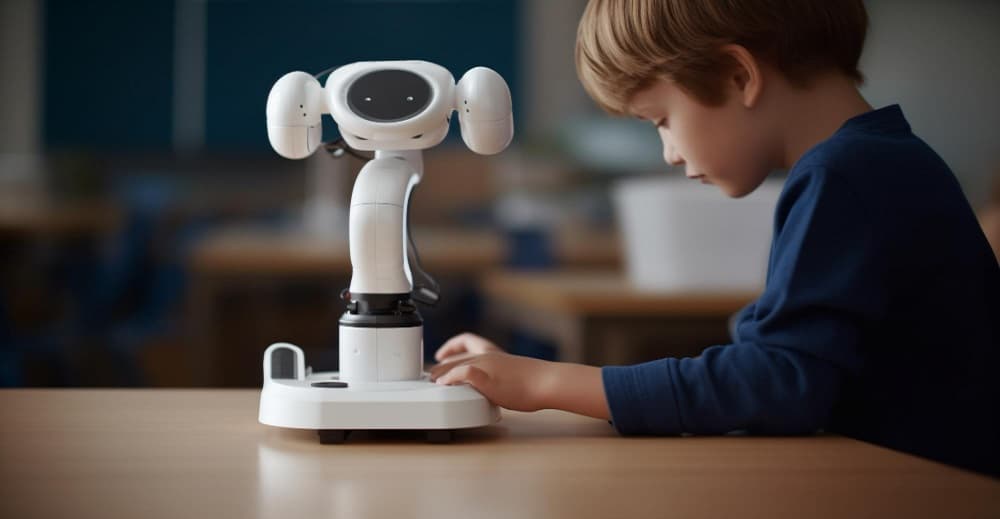
A new analysis report on the global telepresence robot market, which is forecasted between 2021 and 2028, has been published by Knowledge Sourcing Intelligence. The prime factors propelling the global...
A new analysis report on the global telepresence robot market, which is forecasted between 2021 and 2028, has been published by Knowledge Sourcing Intelligence.
The prime factors propelling the global telepresence robot market growth are increasing demand for remote work and collaboration, growing adoption of telemedicine, advances in technology, and government initiatives.
The global telepresence robot market was US$327.611 million in 2021, and it is expected to reach US$729.509 million by 2028, growing at a CAGR of 12.12% over the forecast period.
Telepresence robots are remote-controlled robots that allow users to interact with their environment from a distance. They are typically equipped with cameras, microphones, and speakers, and can be used for a variety of purposes, such as attending meetings, giving presentations, and providing customer service. Telepresence robots have the potential to revolutionize the way we work, learn, and receive healthcare. As these robots become more sophisticated and affordable, they are expected to gain even wider adoption in the coming years.
The market is witnessing multiple collaborations and technological advancements, for instance, in March 2022, the Dallas Cowboys introduced the Cowboys Starbot, a unique telepresence robot. This robot allows Dallas Cowboys players, cheerleaders, alumni, executives, and others to visit patients remotely in a safe and innovative way.
Based on type, the global telepresence robot market is segmented into stationary and mobile. The mobile telepresence robot market is expected to have higher growth in the coming years. Mobile telepresence robots can be moved around freely, making them more versatile than stationary robots. This makes them ideal for a wider range of applications, such as remote inspections, customer service, and healthcare. It allows users to participate in meetings and other events from anywhere in the world, without having to travel.
Based on components, the global telepresence robot market is divided into camera, display, speaker and microphone, power source, sensor and control system, and others. The camera component is expected to have the highest growth in the global telepresence robot market in the coming years due to increasing demand for high-quality video conferencing and remote collaboration, development of new camera technologies, such as 4K and 8K cameras, which offer sharper and more detailed images, integration of artificial intelligence (AI) and machine learning (ML) into cameras, which enables new features such as facial recognition and object tracking.
Based on end users industry, the global telepresence robot market is divided into healthcare, education, homecare, enterprise, and others. The healthcare industry is expected to be the largest end-user industry for telepresence robots in the coming years. By enabling remote care, telepresence robots can make healthcare more accessible and affordable for patients in rural and underserved areas. Telepresence robots can also help to reduce the workload on healthcare professionals and improve the quality of care.
Based on Geography, Asia Pacific is expected to capture a significant share of the global telepresence robot market. Telemedicine is becoming increasingly popular in the Asia Pacific, and telepresence robots are being used to provide remote healthcare services to patients in rural and underserved areas. Telepresence robots are also being used in education in Asia Pacific, to provide remote instruction and collaboration between students and teachers. Governments in the Asia Pacific are supporting the development and adoption of telepresence robots, recognizing the potential benefits of these technologies for productivity, healthcare, and education.
As a part of the report, the major players operating in the global telepresence robot market, that have been covered are Ava Robotics Inc., AMY Robotics, Blue Ocean Robotics, Mantaro Networks Inc., Double Robotics, VGo Communications Inc., OhmniLabs, Inc., SuperDroid Robots, Inbot Technology Ltd., Wicron, AXYN Robotics.
View a sample of the report or purchase the complete study at https://www.knowledge-sourcing.com/report/global-telepresence-robot-marketThis analytics report segments the global telepresence robot market on the following basis:
- By Type
- Stationary
- Mobile
- By Component
- Camera
- Display
- Speaker and Microphone
- Power Source
- Sensor and Control System
- Others
- By End-User Industry
- Healthcare
- Education
- Homecare
- Enterprise
- Others
- By Geography
- North America
- United States
- Canada
- Mexico
- South America
- Brazil
- Argentina
- Others
- Europe
- United Kingdom
- Germany
- France
- Spain
- Others
- Middle East and Africa
- Saudi Arabia
- UAE
- Israel
- Others
- Asia Pacific
- Japan
- China
- India
- South Korea
- Indonesia
- Thailand
- Others
- North America
- Social Robots Market Share
- Medical Robots Market Share
- Robotics As A Service Market Size
Have questions?
More Press Releases
Lifestyle-Associated Cancer Epidemiology Market is expected to reach USD 13.12 billion by 2031
The worldwide market for lifestyle-associated cancer epidemiology is expected to expand rapidly, owing to the rising global awareness of modifiable risk factors such as tobacco use, obesity, poor diet, alcohol consumption, and physical inactivity, which together contribute significantly to cancer incidence. Health organizations, along with research institutions, are investing in enhanced surveillance, behavioral risk monitoring, cancer registries, and prevention strategies to address the growing burden of preventable cancers. In recent years, the World Health Organization and several national bodies have emphasized data-driven epidemiology. These initiatives support targeted interventions, policy measures, and screening programs. Additionally, the widespread adoption of digital epidemiology tools, precision prevention approaches, and AI-powered analytics is fueling the demand for robust epidemiology infrastructure worldwide.
Psycho-Oncology Digital Health Market is anticipated to surpass USD 290.01 million in 2031 at a CAGR of 8.5%
The psycho-oncology digital health market is expanding as healthcare providers increasingly integrate digital mental health solutions into cancer care. Growing demand for AI-driven platforms, digital cognitive behavioral therapy, telehealth, and mobile applications is improving access to psychological support. North America leads the market, while Asia Pacific is expected to witness the fastest growth.
Intratumoral Injection Therapy Market is expected to reach USD 630.39 million by 2031
The worldwide market for Intratumoral Injection Therapy is expected to experience substantial growth in the market due to the increasing demand for localized cancer treatments that are essential in enhancing therapeutic efficacy while also minimizing systemic toxicity. Intramural injection therapy is often involved with direct administration of therapeutic agents into tumors, which enables high local drug concentrations and targets immune activation. Growing interest in gene therapies, cancer immunotherapy, and on-politic viruses, including cytokine-based therapies are also accelerating market expansion.