The Growth in the wearables diagnostic biosensor market is driven by increased prevalence of chronic diseases; a shift toward using remote patient monitoring technologies; and a greater integration of AI-enabled healthcare technologies into wearable devices. According to WHO, 43 million people die from noncommunicable diseases every year, accounting for 75% of deaths worldwide in 2025. The FDA expanded its approvals in 2025 for continuous glucose monitoring and cardiac monitoring devices that use biosensors, facilitating clinical adoption. Moreover, the European Commission reported that European investment in digital health infrastructure and wearable medical devices grew through the EU4Health Programme in 2025, accelerating commercialization and integration of wearable biosensor diagnostics into healthcare systems around the world.
Wearable Diagnostic Biosensors Market Trends & Forecast
According to a research study published by Knowledge Sourcing Intelligence (KSI), the wearable diagnostic biosensors market will expand from USD 18.4 billion in 2026 to USD 42.9 billion in 2031 at a CAGR of 18.4% during the forecast period.
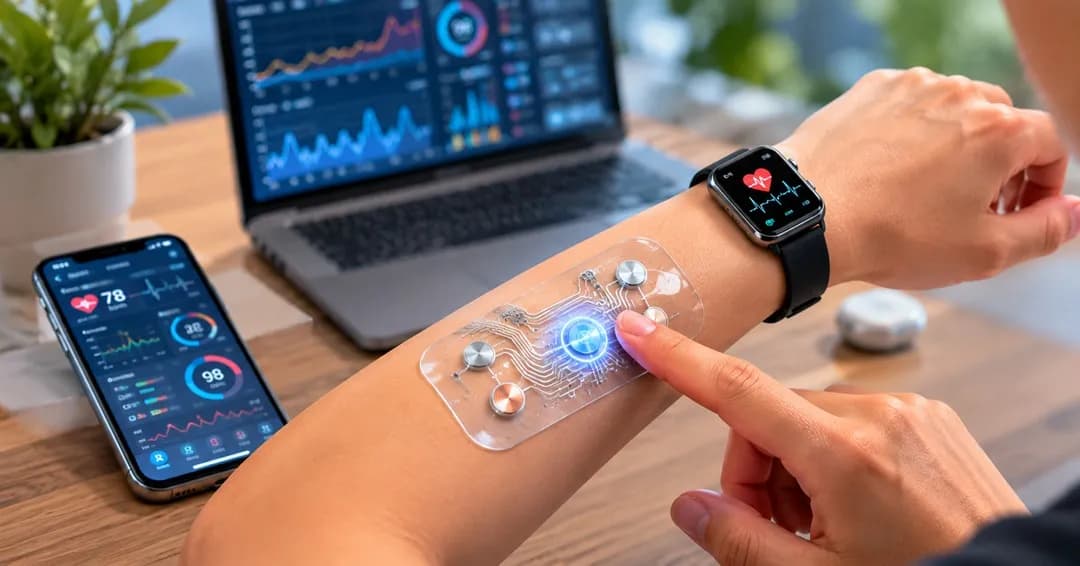
Wearable diagnostic biosensors are portable medical devices that continuously measure physiological and biochemical characteristics via built-in sensing technologies. The most common applications of these devices are glucose monitoring and cardiac diagnosis, but they can also be used for tracking oxygen saturation, monitoring hydration status, and managing illnesses. The growing diabetic population in India is significantly increasing demand for wearable diagnostic biosensors, particularly continuous glucose monitoring devices. According to international diabetes estimates, the number of adults aged 20–79 years with diabetes in India is projected to increase from 89.8 million in 2024 to 156.7 million by 2050, supporting long-term adoption of wearable health monitoring technologies. Similarly, the NHS in the UK launched new initiatives to increase the number of remote patient monitoring programs using wearable biosensors in 2025 to help relieve pressure on hospitals and support preventative care. Advances in technology, such as miniaturisation, wireless communications, and AI-based data analytics, will continue to support growth in this market.
Request a free sample copy or view the report summary: Wearable Diagnostic Biosensors Market Report
Wearable Diagnostic Biosensors Market Report Highlights
FDA approvals for wearable continuous glucose monitoring systems increased significantly during 2025, supporting broader diagnostic biosensor adoption globally.
Wearable biosensors are now being integrated with artificial intelligence and analytics technologies for predictive health insights for physicians in order to educate themselves on how to monitor disease progression and personalise treatment.
European Union digital health investments under EU4Health 2025 accelerated wearable biosensor research, commercialisation, and healthcare system integration activities.
Healthcare facilities are using wearable biosensors more often for remote monitoring allowing hospitals to collect patient data in real-time without being inside a facility by providing access to telehealth and reducing any burden on the healthcare delivery system.
Wearable Diagnostic Biosensors Market Growth Drivers and Restraints
Growth Drivers:
The Remote patient monitoring programs and digital healthcare infrastructure are causing increased growth in the wearable biosensor market. The EU4Health Programme will invest nearly €9 billion in 2025 to enhance the digital health ecosystem and connected health technologies will help significantly advance the growth of wearable diagnostic devices in Europe over the next three years. There has also been an ongoing expansion of virtual wards and remote patient monitoring using wearable diagnostic devices by the NHS in the UK to help patients manage their chronic illnesses. By 2025, the FDA in the U.S. will continue to approve wearable ECG's, glucose monitoring systems and other types of biosensor-enabled healthcare solutions as well. The advancement of wireless connectivity, AI-based analytics tools, cloud-based health systems and smartphone connectivity will help increase the efficiency, effectiveness and integration of wearable biosensors at scale into healthcare systems around the world.
The rising rates of chronic illnesses is driving up the worldwide usage of diagnostics biosensors.By 2050, projections show that 1 in 8 adults, approximately 853 million, will be living with diabetes, an increase of 46%. Wearable biosensors allow for continuous real-time monitoring of a patient's condition, which can help detect diseases at an early stage and allow patients to intervene. Governments and health organisations are continuing to implement digital health solutions in order to lower the costs associated with hospital readmissions and improve patients' ability to manage their chronic illnesses.
Restraints:
High device costs, cybersecurity concerns, and regulatory compliance challenges continue limiting wearable diagnostic biosensor adoption. Government healthcare agencies in 2025 highlighted increasing concerns regarding patient data privacy, interoperability standards, and clinical validation requirements. Limited reimbursement coverage and technical inaccuracies in continuous monitoring systems also restrict wider adoption across developing healthcare markets.
Wearable Diagnostic Biosensors Market Key Development
In January 2026, Medtronic partnered with Abbott to integrate continuous glucose monitoring technology with smart insulin delivery systems.
In March 2025, Philips Healthcare expanded its remote patient monitoring portfolio through collaboration with hospital networks for wearable biosensor integration.
In April 2025, Masimo introduced an advanced wearable biosensor device featuring continuous oxygen saturation and respiratory monitoring capabilities.
September 2025: Masimo announced the expansion of its strategic partnership with Philips. This significant partnership expansion is designed to accelerate the integration of Masimo’s monitoring technologies, such as industry-leading SET® pulse oximetry, into a variety of Philips multi-parameter patient monitors through 2026 and beyond.
Wearable Diagnostic Biosensors Market Segmentation
Knowledge Sourcing Intelligence has segmented the Wearable Diagnostic Biosensors Market based on product type, service type, application, and region:
Wearable Diagnostic Biosensors Market, By Product Type
Wearable Biosensor Devices
Sensor Patches
Smartwatches & Fitness Bands
Implantable Biosensors
Wearable Diagnostic Biosensors Market By Service Type
Electrochemical Biosensors
Optical Biosensors
Piezoelectric Biosensors
Thermal Biosensors
Wearable Diagnostic Biosensors Market, By Application
Glucose Monitoring
Cardiac Monitoring
Respiratory Monitoring
Activity & Fitness Tracking
Sleep Monitoring
Wearable Diagnostic Biosensors Market By Region
North America
USA
Canada
Mexico
Europe
United Kingdom
Germany
France
Spain
Others
Asia Pacific
China
India
Japan
South Korea
Indonesia
Thailand
Others
South America
Brazil
Argentina
Others
Middle East and Africa (MEA)
Saudi Arabia
UAE
Others
Wearable Diagnostic Biosensors Market Key Players
Medtronic
Abbott Laboratories
Dexcom
Philips Healthcare
GE HealthCare
Garmin
Fitbit (Google)
Apple
Biotronik
Masimo
Need specialized data cuts or competitive intelligence?
Our analyst team provides bespoke market sizing, supplier audits, and country-level feasibility reports tailored to your enterprise roadmap.
Speak With an Industry Analyst →Ask an Industry Analyst
Have questions regarding this briefing or market projections? Inquire with our sector lead.
Related Press Releases
View All →
ADC Manufacturing & CDMO Market is expected to reach USD 10.49 billion by 2031
Aug 7, 2026
Lifestyle-Associated Cancer Epidemiology Market is expected to reach USD 13.12 billion by 2031
Aug 5, 2026
Psycho-Oncology Digital Health Market is anticipated to surpass USD 290.01 million in 2031 at a CAGR of 8.5%
Jul 30, 2026
Intratumoral Injection Therapy Market is expected to reach USD 630.39 million by 2031
Jul 24, 2026
Palliative Care in Oncology Market is expected to reach USD 244.1 billion by 2031
Jul 22, 2026More Press Releases
Oncology Drug Resistance Testing Market is projected to reach USD 3.41 billion in 2031 at a CAGR of 6.6 %
The oncology drug resistance testing market is expanding due to rising cancer prevalence, increasing drug resistance, and growing adoption of precision oncology. Advances in NGS-based testing, companion diagnostics, and targeted therapies, alongside FDA approvals and investments in personalized medicine, are accelerating demand for effective resistance monitoring across hospitals and clinical diagnostics worldwide.
TROP-2 Targeted Therapy Market is anticipated to surpass USD 3.29 billion in 2031 at a CAGR of 8.6 %
The TROP-2 Targeted Therapy market is expanding rapidly due to increasing precision oncology adoption, rising cancer prevalence, and growing use of antibody-drug conjugates. North America leads the market, while Asia Pacific shows the fastest growth. Continuous clinical trials, regulatory approvals, and strategic collaborations are accelerating innovation and commercial adoption worldwide.
Second Primary Cancer Prevention Market is expected to reach USD 24.7 billion by 2031
The Second primary cancer prevention refers to strategies aimed at reducing the risk of developing a new, unrelated cancer in individuals with a prior cancer diagnosis. Growing cancer survivorship, advances in treatment, and increasing awareness of long-term health outcomes have heightened the importance of prevention and surveillance programs. Key approaches include routine screening, genetic risk assessment, lifestyle modification, and long-term follow-up care. Government agencies and healthcare organisations increasingly emphasise survivorship care plans and evidence-based screening protocols to detect new malignancies at earlier stages. Continued investments in early detection technologies and personalised risk assessment are expected to support advancements in second primary cancer prevention.