
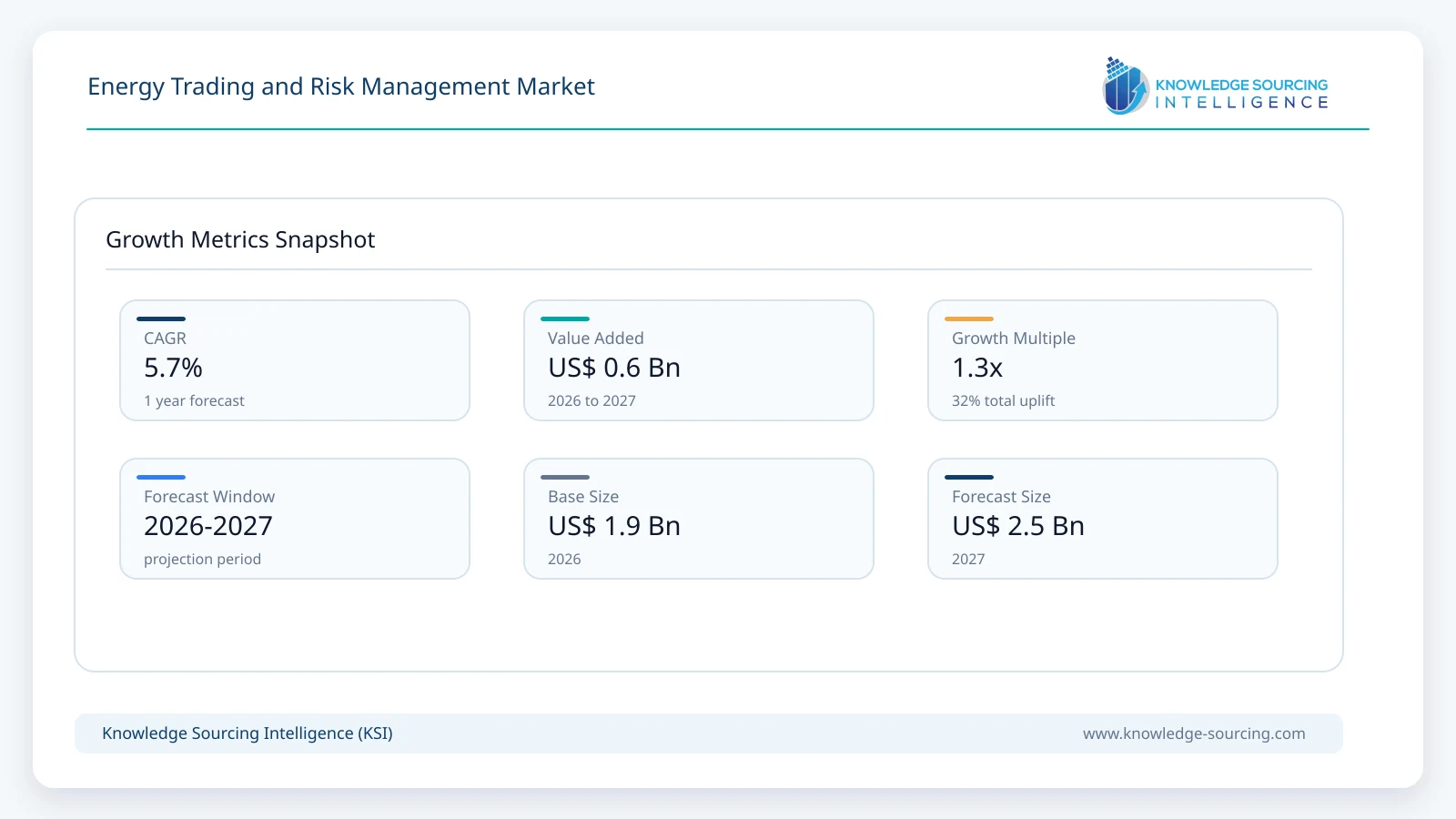
The Energy Trading and Risk Management market is forecast to grow at a CAGR of 5.7%, reaching USD 2.49 billion in 2031 from USD 1.88 billion in 2026.
Highlights:
- 1There is a growing trend of consolidating front-office trading, middle-office risk management, and back-office settlement into a common workflow at the ETRM platform level.
- 2Energy companies are increasingly turning to cloud deployment to scale trading systems, integrate market-data feeds, and ease their consumption of required infrastructure management resources.
- 3The intermittency and variability of renewable generation lead to corresponding temporal characteristics in production that need to be incorporated into portfolio valuation, forecasting, hedging, scheduling, and risk management.
- 4Integration of AI in ETRM workflows for power-price forecasting, renewable-generation forecasting, load forecasting, and risk analysis has been a growing trend.
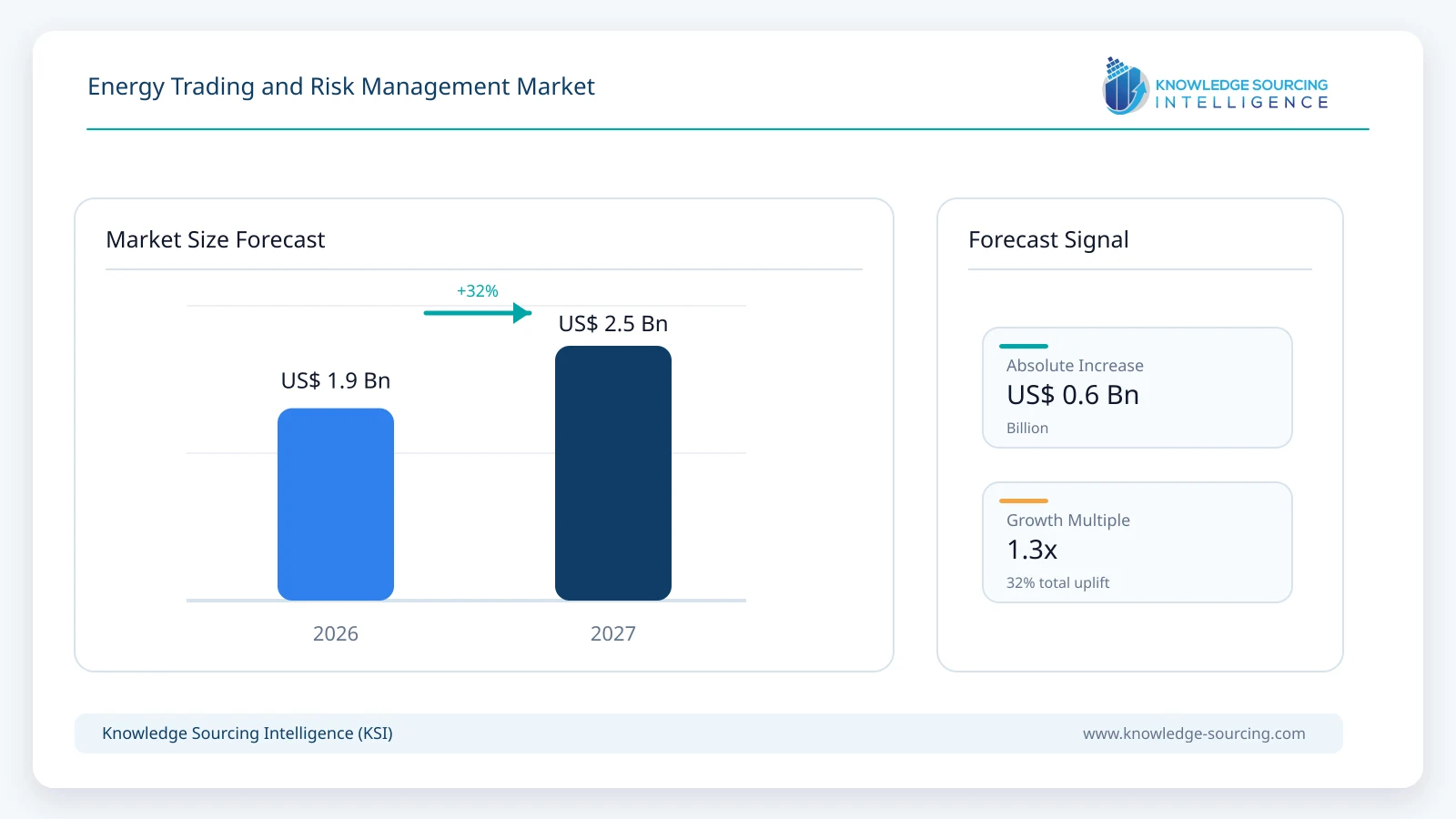
Energy Trading and Risk Management Market extends software and technology platforms that help the entire lifecycle of energy commodity trading. ETRM solutions usually encompass trade capture, contract management, position management, pricing and market-risk analysis, credit and counterparty management, scheduling and logistics, settlement processing and invoicing, accounting activities, in addition to regulatory reporting.
Energy markets are growing ever more intricate, with physical commodity trading becoming more integrated with financial derivatives, renewable assets, environmental products and storage, transmission-capacity- and flexible-generation sector.
Electricity trading is data-heavy in nature as market participants are required to manage hourly or sub-hourly positions, generation forecasts, transmission constraints, balancing obligations and market prices. Natural gas trading has some extra functionalities for pipeline nominations, storage and transportation capacity, and inventory management that are beyond the main scope of trade management systems.
The FIS's ETRM platform offers components for power, gas, LNG, refined products, fuels, and emissions, as well as weather derivatives across the continuum, with integrated real-time mark-to-market analytics, pipeline nominations, and storage inventory management, power scheduling, and spot bidding.
The other aspect of the developing market is integrated risk management. Modern ETRM systems are often also able to calculate market exposure, value-at-risk (VaR), credit exposure, mark-to-market (MTM), potential future exposure, stress scenarios, P&L, and liquidity measures.
Market Dynamics
Market Drivers
Higher Volatility for Energy Prices, Greater Complexity for Commodity Markets: Energy firms are traded on massive exchanges where prices for electricity, pure gasoline, crude oil, refined merchandise, emissions, and renewable certificates can transfer by sizeable quantities. Electricity prices, in addition, are affected by weather, generation availability, transmission constraints, and fuel procurement, which remain the same due to demand fluctuations, then in market equipotential and production penetration.
Increase of Renewable Energy and distributed Energy trading: The growing complexity of energy portfolios is due to the addition of wind, solar, battery storage, and distributed generation. Renewable assets produce an output that is variable with weather and operational conditions, needing deeper forecasting processes and portfolio optimization. Molecule handles renewable-energy portfolios, from power purchase agreements to renewable certificates and granular generation positions; ION's Allegro allows users to manage power, renewables, and environmental products.
Growing Regulatory and Compliance Requirements: Emphasis on compliance with complex reporting and market rules across jurisdictions faced by energy trading companies. ETRM systems automate processes such as regulatory reporting, audit trails, trade confirmations, settlement records, and internal risk controls that are often manually intensive. Hitachi Energy's ETRM integrates regulatory reporting and includes support for REMIT, EMIR, MiFID II, and Dodd-Frank frameworks along with built-in controls and audit trails.
Rise in Demand for Real-Time Risk Management: Energy traders are requiring live data on positions P&L, market exposure, credit exposure, liquidity, collateral, and portfolio performance. Molecule provides real-time exposure visibility and automated P&L reporting with its cloud-native ETRM, along with exchange connectivity and APIs for market data and trade flows on the platform. Real-time risk visibility provides traders and risk managers with the ability to act faster on market movements and portfolio changes.
Market Restraints & Opportunities
Integrating with your suite of solutions means that ETRM implementations need to talk to market-data providers, exchanges, ERP systems, accounting platforms, scheduling systems, logistics systems, and existing trading applications. This may lead to long implementation cycles, high data migration volumes, and extensive configuration for larger organizations.
The larger utilities and trading organizations are often based upon legacy ETRM environments that have become tightly linked with internal processes. Operational risk can arise from changing these systems as trading, settlement, and regulatory processes have to carry on unabated.
Along the lines of traditional ETRM Software Licensing, implementation, data integration, cybersecurity, maintenance, and upgrading to new versions, among others. Subsequently, this means smaller energy traders may favor subscription-based software (SaaS) and modular solutions that minimize upfront infrastructure investment.
With the emergence of cloud-native ETRM, smaller utilities, renewables developers, independent power producers (IPPs), and new entrants into energy markets can seize opportunities in the market in the coming years.
Key Developments
July 2026: Hitachi Energy showcased a suite of integrated, data-driven energy-trading and risk-management software applications that allow power companies to make faster decisions in increasingly volatile electricity markets. A cloud-native platform weaving together trade capture, portfolio and position management, forecasting, scheduling, bid-to-bill automation, risk analysis, settlement, as well as compliance and sustainability reporting.
Market Segmentation
The market is segmented by risk type, deployment model, application, end user, and geography.
By Risk Type: Market Risk
The market risk category is the major segment of the risk type, as energy traders are exposed to market prices of electricity, gas, oil, refined products, and environmental commodities that constantly change.
ETRM platforms are used to compute mark-to-market valuations, position exposures, sensitivities, VaR, stress scenarios, and other risk metrics based on potential market conditions that would impact general finances.
The platform supports stochastic valuation methods such as VaR, CFaR, EaR, PFE, CVA and DVA using Hitachi Energy's price-curve management system for MTM/P&L reporting. The commodity-risk functionality also supports commodity futures, forwards, swaps and options while leaving open the opportunity for businesses to evaluate commodity price risk.
This segment is thus headed for real-time market-risk analytics directly integrated with trading and portfolio-management workflows instead of periodic risk reporting through stand-alone spreadsheets.
By Deployment Model: Cloud
Cloud is a big growth area in the deployment model, with energy traders needing adaptable infrastructure, quicker software releases, access from anywhere, and market-data systems for integration with enterprise systems
FIS also positions itself as a cloud-native ETRM platform in its Energy Trading, Risk and Logistics Platform, helping enterprises supporting real-time market-to-market calculations for multiple commodities and energy-trading operations.
Hitachi Energy refers to its ETRM platform as cloud-native and supports API-based integration, Excel and Power BI connectivity, and configurable workflows/processes that can be automated.
By Application: Power/Electricity
Power/Electricity is the largest application as electricity markets need very fine-grained trading, scheduling, forecasting, and risk-management capabilities.
Generation assets, PPAs, retail loads, transmission positions, financial derivatives and renewable certificates, and battery-storage assets can form part of power portfolios.
Allegro by ION is targeted primarily at utilities and energy companies trading and managing power and renewables, with a focus on real-time position visibility, risk management, deal capture and regulatory compliance.
Likewise, Molecule's platform supports multiple dimensions of complexity. It is suitable for more complex power portfolios with granular power positions, PPAs, renewable certificates, FTR management, and ISO/TSO connectivity.
Thus, the segment is heading toward ETRM platforms that integrate trading, forecasting, asset optimization, and scheduling with risk and settlement, such as back-office functions, into a single environment.
Regional Analysis
North America Market Analysis
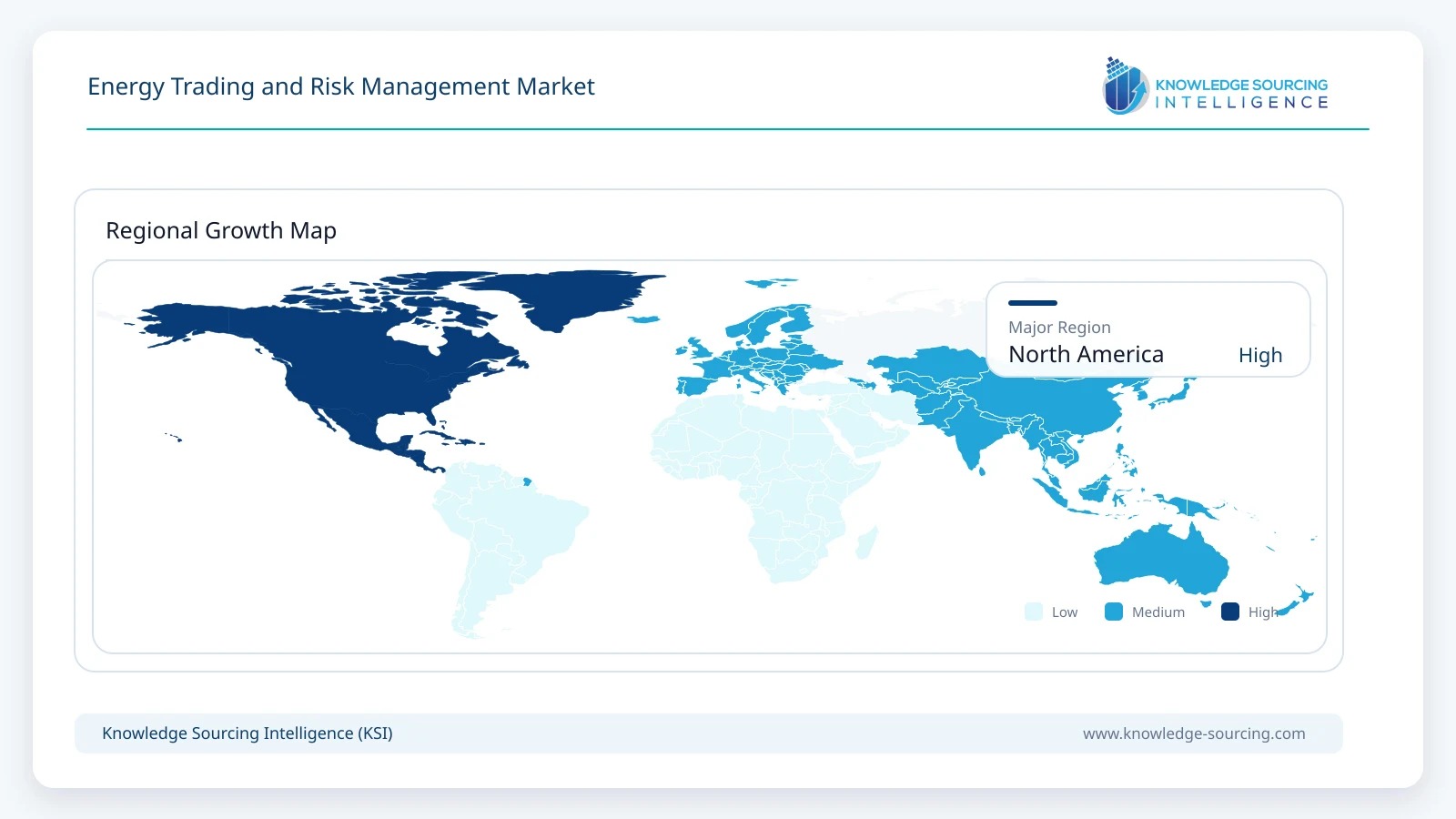
North America is a resilient ETRM market with developed electricity markets, large utility and energy-trading organizations, and comprehensive natural-gas trading infrastructure. The most important market is the United States, with organized power markets, natural-gas hubs, independent system operators, renewable energy trading, and higher levels of difficult-to-manage financial hedging.
South America Market Analysis
South America is emerging as a new ETRM region as electricity markets mature and renewable generation expands. Brazil is the biggest opportunity as it combines hydroelectric generation with rapidly growing capacity in wind and solar, providing a need for advanced generation forecasting, whole portfolio management, and power trading.
Europe Market Analysis
Europe, as the region manages an advanced ETRM market due to the combined resourcing of various aspects, including interconnected electricity markets and natural-gas hubs, renewable-energy trading, carbon markets, and stringent regulatory requirements. Germany, the UK, France, Spain and Italy as well as the Nordic markets are major power and environmental-commodity traded regions.
Middle East and Africa Market Analysis
The Middle East & Africa ETRM market is upscaling as the demand for ETRM is continuously soaring in the utilities, energy producers, oil and gas companies, trading organizations, and renewable-energy developers. The Middle East continues to be a strong oil and gas trading hub, as well as Saudi Arabia and the UAE boosting renewable-energy finance and diversifying their energy portfolios.
Asia Pacific Market Analysis
Asia Pacific is one of the highest potential ETRM markets globally due to growing electricity demand along with strong renewable generation, rapid LNG trading developments, maturing commodity markets and rising energy-market digitalisation across the region. Australia and New Zealand are fairly mature ETRM markets, with Energy One providing SimEnergy and EOT for electricity, environmental certificates, gas, oil and other energy commodities.
List of Companies
Hitachi Energy
ION Group
SAP SE
FIS
Quoreka
Energy One
Enuit LLC
KYOS
Molecule Software, Inc.
Aurora Systems AS
Hitachi Energy
Hitachi Energy, a leading ETRM provider, is providing an Energy Trading and Risk Management Software Solution which includes front-to-back functionality across trade capture, position management, risk analysis, scheduling, settlements, and regulatory reporting. It has a platform for power, natural gas, renewables, carbon, and other energy commodities.
ION Group
IoN Group has Allegro, an ETRM platform for utilities and energy companies trading power, renewables, natural gas, liquid hydrocarbons, and environmental products. Allegro links physical and financial trading with risk management and regulatory compliance while bridging front-, mid-, and back-office processes.
SAP SE
SAP has traction in commodity and energy risk management with SAP Commodity Risk Management as well as bigger Treasury and Risk Management capabilities. SAP offers support for commodity futures, forwards, swaps, and options as well as commodity-risk analytics to assess the impact of commodity price movements.
Analyst View
The global shift of the Energy Trading and Risk Management (ETRM) Market is growing towards cloud native, front-to-back platforms as energy-price volatility, renewable integration & regulatory complexity increase. The main zero is still power, and the major risk management need is market risk. The vendor landscape is increasingly being differentiated by AI forecasting, automated trade capture, and renewable-commodity functionality, while the SaaS deployment model opens up options for new types of end users.
Energy Trading and Risk Management Market Scope:
| Report Metric | Details |
|---|---|
| Total Market Size in 2026 | USD 1.88 billion |
| Total Market Size in 2027 | USD 2.49 billion |
| Forecast Unit | USD Billion |
| Growth Rate | 5.7% |
| Study Period | 2021 to 2027 |
| Historical Data | 2021 to 2024 |
| Base Year | 2025 |
| Forecast Period | 2026 – 2027 |
| Segmentation | Risk Type, Deployment Mode, Application, Operational Type, Geography |
| Companies |
|
Market Segmentation
By Risk Type
Market Risk
Credit & Counterparty Risk
Liquidity Risk
Others
By Deployment Mode
On-Premise
Cloud
By Application
Power/Electricity
Natural Gas
Oil and Refined Products
Others
By Operational Type
Front Office
Middle Office
Back Office
By Geography
North America
USA
Canada
Mexico
South America
Brazil
Argentina
Others
Europe
United Kingdom
Germany
France
Others
Middle East and Africa
Saudi Arabia
UAE
Others
Asia Pacific
China
Japan
India
South Korea
Others
Table of Contents
1. EXECUTIVE SUMMARY
2. MARKET SNAPSHOT
2.1. Market Overview
2.2. Market Definition
2.3. Scope of the Study
2.4. Market Segmentation
3. MARKET DYNAMIC
3.1. Market Drivers
3.2. Market Restraints
3.3. Market Opportunities
3.4. Porter’s Five Forces Analysis
3.5. Industry Value Chain Analysis
4. BUSINESS LANDSCAPE
4.1. Regulatory and Cybersecurity Standards Landscape
4.2. Utility Cybersecurity Investment, Procurement and Pricing Analysis
4.3 Cybersecurity Vendor Ecosystem, Supply Chain and Third-Party Risk Analysis
4.4. Import/ Export Analysis
4.5. Strategic Recommendations
5. TECHNOLOGICAL OUTLOOK
5.1. OT/ICS, SCADA and Industrial Control System Security Technologies
5.2. Identity, Access Control, Data and Zero-Trust Security Technologies
5.3. Threat Intelligence, Security Analytics and AI-Enabled Cybersecurity Technologies
5.4. Cloud, Edge, DER and Next-Generation Utility Security Technologies
6. ENERGY TRADING AND RISK MANAGEMENT MARKET BY RISK TYPE
6.1. Introduction
6.2. Market Risk
6.3. Credit & Counterparty Risk
6.4. Liquidity Risk
6.5. Others
7. ENERGY TRADING AND RISK MANAGEMENT MARKET BY DEPLOYMENT MODE
7.1. Introduction
7.2. On-Premise
7.3. Cloud
8. ENERGY TRADING AND RISK MANAGEMENT MARKET BY APPLICATION
8.1. Introduction
8.2. Power/Electricity
8.3. Natural Gas
8.4. Oil and Refined Products
8.5. Others
9. ENERGY TRADING AND RISK MANAGEMENT MARKET BY OPERATIONAL TYPE
9.1. Introduction
9.2. Front Office
9.3. Middle Office
9.4. Back Office
10. ENERGY TRADING AND RISK MANAGEMENT MARKET BY GEOGRAPHY
10.1. Introduction
10.2. North America
10.2.1. USA
10.2.2. Canada
10.2.3. Mexico
10.3. South America
10.3.1. Brazil
10.3.2. Argentina
10.3.3. Others
10.4. Europe
10.4.1. United Kingdom
10.4.2. Germany
10.4.3. France
10.4.4. Others
10.5. Middle East and Africa
10.5.1. Saudi Arabia
10.5.2. UAE
10.5.3. Others
10.6. Asia Pacific
10.6.1. China
10.6.2. Japan
10.6.3. India
10.6.4. South Korea
10.6.5. Others
11. COMPETITIVE ENVIRONMENT AND ANALYSIS
11.1. Major Players and Strategy Analysis
11.2. Market Share Analysis
11.3. Mergers, Acquisitions, Agreements, and Collaborations
11.4. Competitive Dashboard
12. COMPANY PROFILES
12.1. Hitachi Energy
12.2. ION Group
12.3. SAP SE
12.4. FIS
12.5. Quoreka
12.6. Energy One
12.7. Enuit LLC
12.8. KYOS
12.9. Molecule Software, Inc.
12.10. Aurora Systems AS
13. APPENDIX
13.1. Currency
13.2. Assumptions
13.3. Base and Forecast Years Timeline
13.4. Key benefits for the stakeholders
13.5. Research Methodology
13.6. Abbreviations
Navigate
Trusted by the world's leading organizations











