
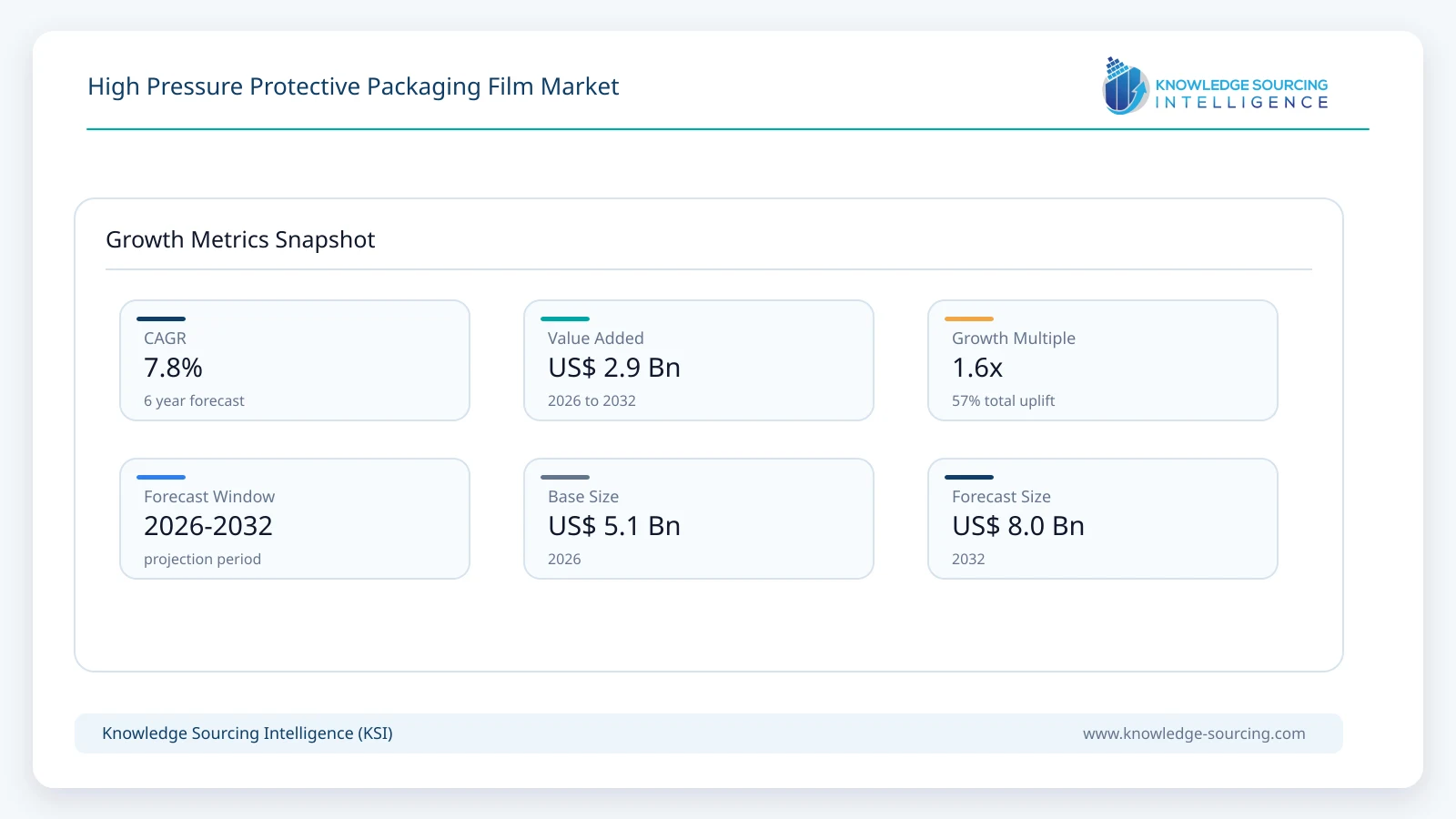
The high pressure protective packaging film market is projected to expand from USD 5.07 billion in 2026 to USD 7.95 billion by 2032, representing a 7.8% CAGR during the forecast period.
Highlights:
- 1Bubble cushioning film represents approximately 35.8% of 2026 market revenue, supported by broad use in fragile-goods wrapping and protective carton liners.
- 2The air-pillow void-fill film category is projected to reach US$2.662 billion by 2032 as fulfillment operators expand on-demand inflation at packing stations.
- 3Inflatable quilted cushioning film is anticipated to grow at 10.29% CAGR during 2026–2032, reflecting applications that require more consistent impact absorption and wrapping flexibility.
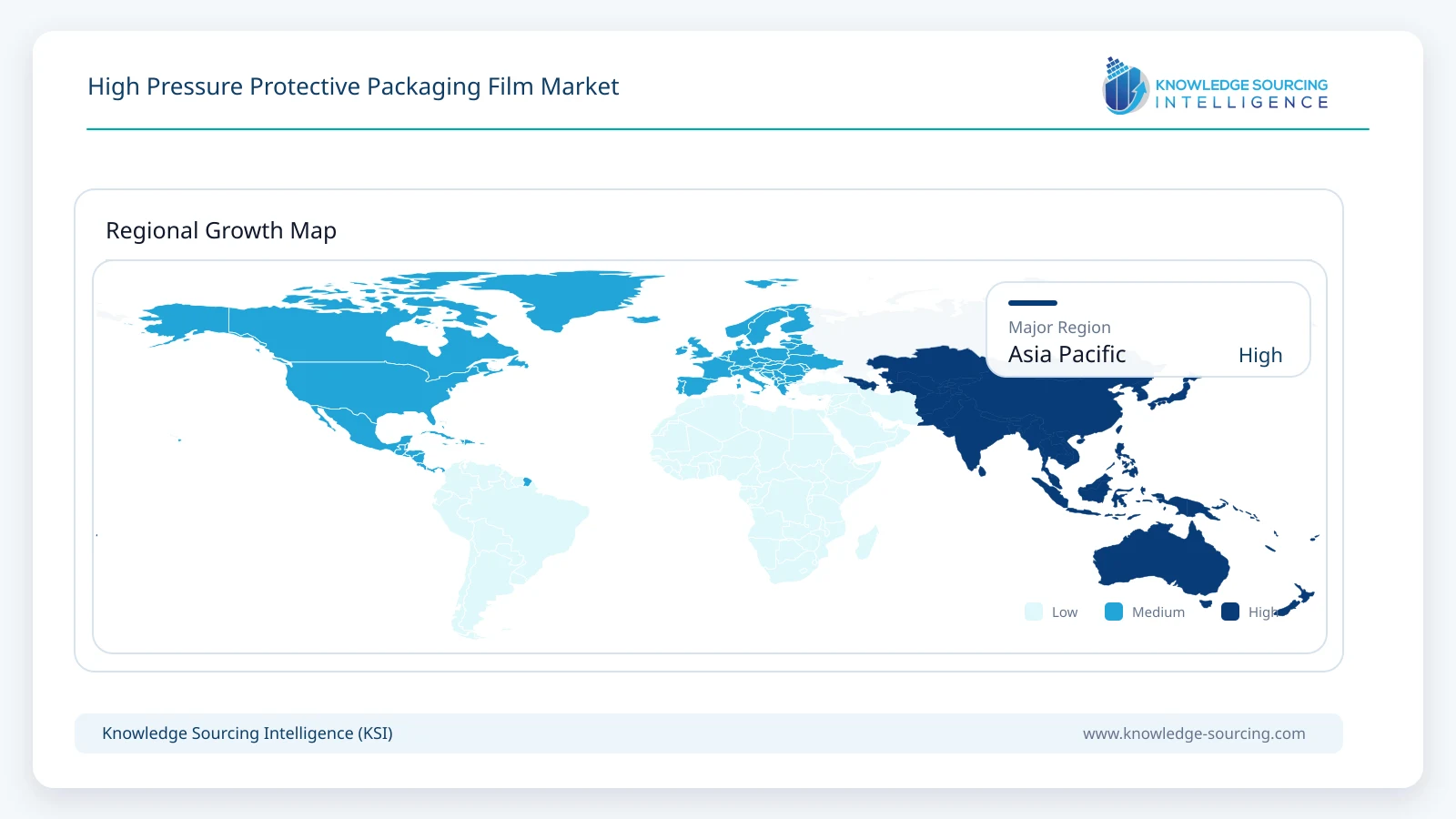
- 4Asia Pacific is a major manufacturing and demand center, while recycled-content specifications and end-of-life compliance increasingly influence purchasing in Europe and North America.
- 5The adoption of automated packaging systems is strengthening the relationship between film consumables, machine compatibility and repeat purchase contracts.
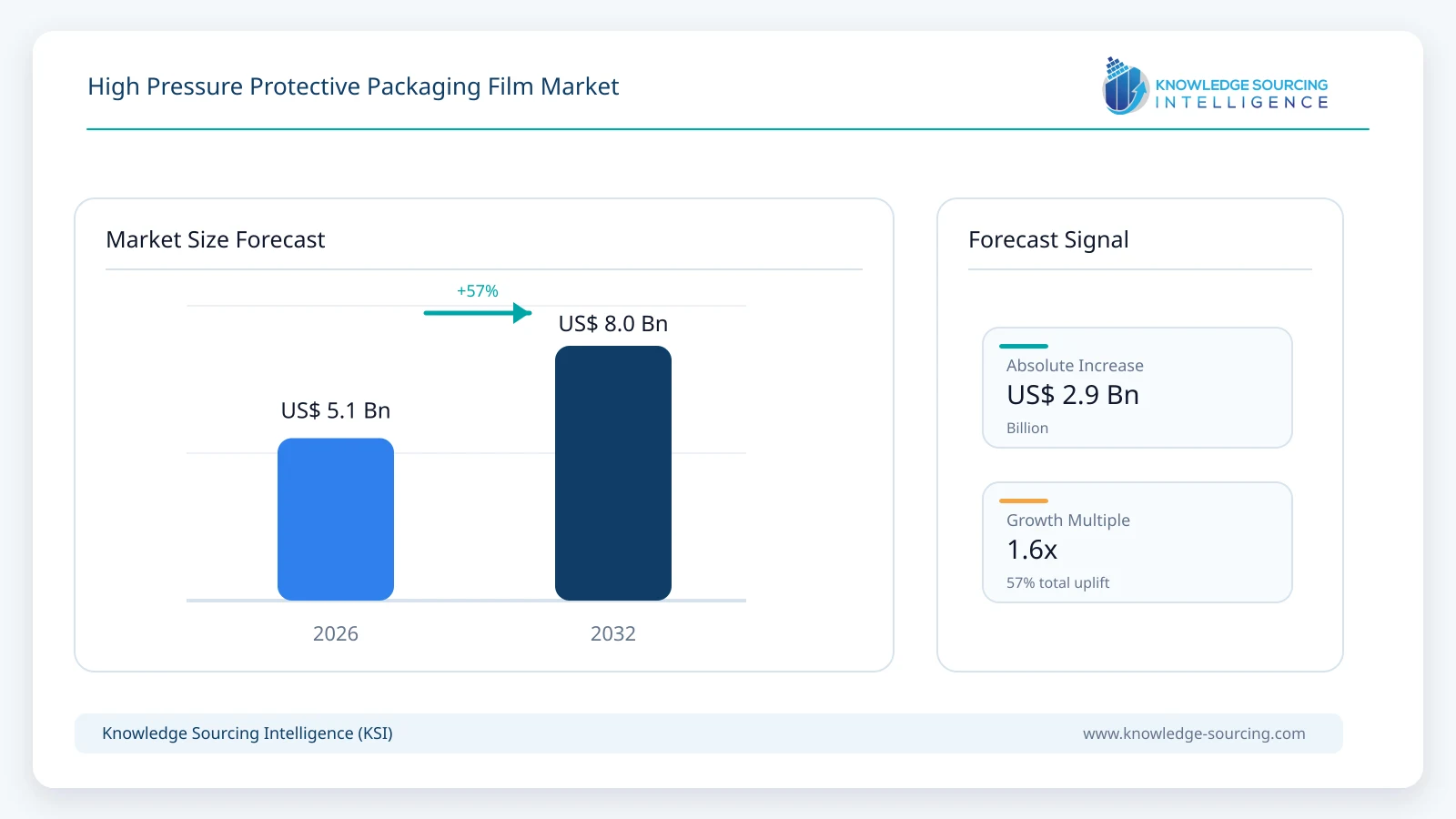
Demand is concentrated in air-cushioning films used to protect products from impact, vibration, compression and movement during transportation. The market includes pre-inflated bubble cushioning sheets, on-demand air-pillow film, inflatable quilted cushioning and heavy-duty inflatable protective structures.
The transition from conventional protective wraps to on-demand inflatable formats is changing how converters compete. Fulfillment operators increasingly purchase protection as a connected combination of material performance, packing-station productivity and freight efficiency. Film that uses less resin but suffers inconsistent sealing or air retention can raise the rate of product damage and rework. Conversely, high-performance films that sustain protective pressure can reduce material consumption and carton size, supporting attractive economics despite higher per-kilogram prices.
Plastic air-cushion film remains exposed to polyethylene resin price changes and regional packaging-waste requirements. The strongest suppliers are therefore combining thin-gauge film engineering, high recycled-content formulations, reliable heat-seal performance and compatible inflation equipment. Demand is not interchangeable with finished food-barrier packaging, stretch pallet wrap or general industrial film.
High Pressure Protective Packaging Film Market Trends
Packaging performance is being evaluated at the shipment level rather than by film thickness alone
Warehouse purchasing teams face a difficult trade-off: a heavier film may improve puncture resistance, but it also increases purchased plastic content, inbound handling and waste obligations. Very thin films reduce weight yet become commercially unattractive if seam failures allow cushions to collapse during multi-stage distribution. Testing therefore focuses on inflation stability, impact attenuation, seal strength and product damage rates across realistic shipping cycles.
Pregis illustrates this shift through hybrid cushioning with a square air-cell structure designed to distribute repeated shocks. Its high post-consumer-recycled-content products show how suppliers are competing on both cushioning performance and resin composition. A technically qualified film can help prevent the cost of damaged electronics, glassware or high-value manufactured parts, whereas packaging that fails protection tests risks being rejected regardless of its lower purchase price.
On-demand inflation is changing warehouse storage economics
Air-cushion films are commonly shipped as compact, uninflated rolls and inflated at the packing station. This avoids transporting and storing large volumes of air-filled material before use. The associated investment is no longer limited to a roll of packaging. Buyers assess inflator uptime, speed, compatibility, operator training, film changeover time and integration with sorting or automated bagging lines.
Sealed Air's universal inflation platform runs multiple bubble and pillow film types through a shared system, reducing the need for separate machines when a warehouse handles mixed orders. Such flexibility is particularly valuable in fulfillment centers with fluctuating parcel profiles. For suppliers, equipment installations can support recurring film purchases. For buyers, however, restricted material compatibility creates a countervailing risk of consumable dependence and should be assessed against the overall cost per protected shipment.
Recycled content and paper substitutes are reshaping competitive economics
The European Union's Packaging and Packaging Waste Regulation began applying in August 2026, increasing scrutiny of packaging design and waste performance. Manufacturers are introducing high-recycled-content films, but the technical challenge is substantial. Recovered resin can vary in contamination, melt behavior and seal performance, making formulation and quality assurance central to commercial competitiveness.
Storopack has obtained RecyClass certification across a range of recycled-content AIRplus and AIRmove films, while Sealed Air offers inflatable cushioning with substantial recycled content. At the same time, paper cushioning alternatives are moving into applications previously served by bubble film. Suppliers increasingly must demonstrate that their product offers the appropriate combination of damage protection, material reduction and recovery options, rather than relying on a generic sustainability claim.
High Pressure Protective Packaging Film Market Growth Drivers
E-commerce parcel handling raises the value of consistent damage prevention
The US Census Bureau reported that e-commerce represented 17.1% of total retail sales in the second quarter of 2026 on a seasonally adjusted basis. Rising parcel intensity increases the importance of protecting goods through sorting, loading, last-mile delivery and returns channels. Particularly for fragile or high-value products, insufficient cushioning can turn a minor packaging saving into a much larger replacement and reverse-logistics cost.
Fulfillment centers are therefore extending standardized packing specifications across product groups. Air pillows provide efficient blocking and bracing for items with lower cushioning requirements, while wrapped bubble and quilted films can distribute impact forces around delicate products. This difference creates a commercial opening for multi-format film suppliers that can match performance to the specific product rather than applying one material to every shipment.
Automated packing lines increase recurring consumable demand
High-throughput sites increasingly require film that inflates consistently at machine speed. Packaging failures generate work stoppages and can affect the number of completed orders per labor hour. Suppliers that provide a reliable seal at lower gauge, stable roll winding, machine-compatible dimensions and predictable material feed gain an advantage over low-cost alternatives with inconsistent line performance.
The relationship between machines and materials also changes distribution channels. Conventional rolls can be sourced through merchants and industrial distributors; automated inflation sites often require ongoing technical support and inventory agreements. This shifts competition toward service coverage and installed equipment relationships, as well as price. Small operators may still select lower-cost standalone machines and distributor film, producing a more fragmented market structure.
Electronics and industrial shipments support specialist grades
Fragile electronics, electrical instruments, glass, machinery parts and automotive components present different protection requirements. An electronics shipment may need low-static-charge material and reliable corner protection, while heavy metal components require more durable films with higher puncture strength and longer air retention. A film specification suited to lightweight apparel accessories is not automatically suitable for high-value industrial goods.
The result is growing differentiation between standard void-fill films and premium cushioning products. The latter require tighter quality control and technical qualification but can command better prices in applications where damage consequences are meaningful. Suppliers capable of combining films with performance testing and application design may defend margins more successfully than businesses competing only on film weight.
High Pressure Protective Packaging Film Market Restraints
Protective air-film suppliers face three structural constraints. First, resin volatility changes converter input costs faster than many annual customer contracts can be renegotiated. Second, packaging-rightsizing initiatives may reduce the quantity of void-fill film consumed per parcel even while overall shipment activity expands. Third, paper cushioning, reusable transit protection and molded-fiber alternatives compete for applications where plastic air cushions are not essential.
Regulatory compliance is also moving from material marketing toward documented composition and end-of-life performance. Incorporating recycled polyethylene without sacrificing seal consistency can require additional formulation work, testing and supplier qualification. These costs particularly affect smaller converters that lack dedicated material-development resources. Meanwhile, fulfillment buyers may prefer fewer packaging SKUs and simpler equipment fleets, placing additional pressure on specialty suppliers to demonstrate measurable operational benefits.
High Pressure Protective Packaging Film Market Segmentation Analysis
By Product Format: Bubble Cushioning Film
Bubble cushioning film remains the largest product category, with estimated revenue of US$1.812 billion in 2026. Its position reflects widespread use in product wrapping, carton lining, protection of irregular shapes and separation of fragile goods. Unlike basic void-fill pillows, bubble-sheet formats can protect broad surfaces and distribute localized contact pressure across a larger area. This makes them useful for electronics, decorative glass, small appliances and selected industrial components.
The key commercial distinction is between conventional pre-inflated bubble rolls and on-demand inflatable cushioning films. Pre-inflated products are familiar, easy to apply and compatible with manual packing operations, but their stored volume creates freight and warehouse-space costs. On-demand bubble films carry higher machine-dependence but arrive compactly wound and can be produced close to the point of use. The appropriate choice depends on order volumes, labor availability, site layout and the fragility profile of the shipped products.
Manufacturers are investing in seal technology, film-gauge optimization and gas-retention performance to improve the cost per protected parcel. Pregis' hybrid cushioning systems illustrate the technical emphasis on surface geometry and repeated-impact protection. Sealed Air's inflatable film portfolio also includes recycled-content variants designed to preserve performance while reducing virgin-plastic usage. These developments put pressure on conventional bubble-wrap converters to improve both the material efficiency and the operational economics of their products.
Competition extends beyond nominal film thickness. A heavier product can resist punctures but consume more resin and raise waste fees. A thinner alternative may reduce plastic costs, but its advantages disappear if inflated cells fail during transit. Large accounts therefore use product-drop trials, package-design testing and shipping outcomes to compare materials. This favors suppliers able to document a balanced result across protection, packing speed, film consumption and return rates.
The category is forecast to expand at approximately 5.37% annually through 2032. Growth remains supported by fragile-goods logistics, but advances in source reduction and substitutions in simpler parcel formats constrain material-volume expansion. The strongest revenue opportunities are associated with qualified high-performance film, equipment-assisted conversion and specialty protective applications rather than indiscriminate increases in plastic consumption.
By Product Format: Air-Pillow Void-Fill Film
Air-pillow film increasingly serves parcel operations where merchandise requires stabilization rather than full-surface cushioning. The ability to inflate pillows on demand reduces the storage burden of traditional pre-filled materials and allows packers to fill varying carton geometries. The economics depend on film cost, line speed, pillow size and the amount of empty space remaining after carton rightsizing. Higher throughput favors suppliers that can maintain reliable sealing and predictable film-feed performance.
By Product Format: Inflatable Quilted and Heavy-Duty Films
Quilted films are used for wrapping and protection where multiple linked air cells help absorb impact over irregular surfaces. Their value is strongest in fragile goods and mixed-shape consignments. Heavy-duty inflatable protective film serves equipment and industrial components exposed to higher localized loads or repeated handling. Procurement requires attention to puncture strength, air retention and application-specific testing rather than comparisons with general void-fill films.
By Material Architecture
Standard polyethylene structures retain the largest revenue base because they offer established film-processing economics, flexibility and a broad supplier network. Co-extruded structures offer additional scope to optimize puncture resistance, heat sealing and gauge. Specialty polymers remain more selective in use, with higher prices and more limited manufacturing availability. Across these categories, recycled-content percentage is a formulation attribute rather than an independent polymer family, allowing buyers to compare protection and composition without confusing the classification.
By End-User Industry
E-commerce and retail fulfillment represent the principal consumption base. Demand is also supported by consumer electronics, industrial machinery, automotive components and fragile glass products, each of which requires different cushioning performance. Electronics can justify premium films where replacement costs are high; automotive and machinery shipments favor stronger protection against movement and concentrated loading. Healthcare uses are more selective and often require disciplined packaging validation and product-integrity controls.
High Pressure Protective Packaging Film Market Geographical Outlook
Asia Pacific
Asia Pacific accounts for an estimated US$1.728 billion of the market in 2026, reflecting a large regional base of electronics manufacturing, industrial exports, local logistics and converter capacity. China remains the region's principal demand and production center, while India and Southeast Asian markets are increasing the sophistication of fulfillment operations. Cost-sensitive products coexist with higher-specification films for electronics and industrial shipments, making the region important for both volume and formulation innovation.
North America
North America combines high parcel throughput, advanced distribution centers and broad adoption of automated packing stations. The regional market is estimated to reach US$2.564 billion in 2032. Fulfillment operators frequently evaluate packaging cost against shipment damage, labor and dimensional-weight charges. Film suppliers with integrated equipment, technical service and national distribution networks benefit from this buying structure, while increasing recycled-content requirements create differentiation opportunities.
Europe
Europe's purchasing environment is increasingly shaped by packaging-waste regulation, collection compatibility and the economics of high-quality recycled polymers. Traditional air cushioning retains technical advantages in fragile-goods shipping, but paper alternatives create competition in basic void fill. The need to balance repeatable cushioning performance with regulatory compliance favors suppliers that can document material composition and protection outcomes. Germany, the United Kingdom and France provide substantial opportunities through industrial supply chains, consumer logistics and established packaging-conversion networks.
South America and Middle East & Africa
Demand across South America is supported by e-commerce fulfillment, electronics distribution and industrial equipment handling, with Brazil accounting for a significant share. The Middle East and Africa market is more concentrated around import distribution, large urban logistics hubs and packaging for sensitive components. Saudi Arabia, the United Arab Emirates, South Africa and Egypt are important commercial markets, although fragmented converter capacity and the availability of alternative packing materials influence adoption rates.
High Pressure Protective Packaging Film Market Competitive Landscape
Pregis, Sealed Air, Storopack, FROMM and FLOETER compete through a combination of film performance, inflation equipment, product testing and distribution capability. Intertape Polymer Group's Polyair portfolio addresses air-pillow and cushion applications, while specialist converters and regional packaging suppliers serve customers requiring standard films or smaller purchasing lots. RAJA Group and Zeus Packaging participate in distribution and channel supply rather than necessarily manufacturing every branded film they market.
Competitive advantage depends on retaining air over an entire transit cycle while minimizing the film used per shipment. Companies with proprietary film structures, equipment integration, recycled-resin expertise and on-site packaging support are positioned to defend technical relationships with large fulfillment and manufacturing customers. The market also faces increasing substitution from engineered paper cushioning in applications that do not require the same film-based performance.
Recent Developments
September 2026: Pregis announced that its PACK EXPO International 2026 showcase would feature AirSpeed Renew PCR inflatable cushioning containing 80% post-consumer recycled material.
August 2026: The European Union began applying its Packaging and Packaging Waste Regulation, strengthening packaging design, waste and materials-compliance obligations.
June 2026: Storopack launched PAPERwrap as a recyclable paper alternative to conventional bubble wrapping for sensitive products.
December 2025: Sealed Air introduced its BUBBLE WRAP universal inflation system, supporting more than 80 types of inflatable packaging consumables.
October 2025: Pregis disclosed a retailer project using high-pressure AirSpeed HC Renew PCR cushioning to support an 80% recycled-content packaging target.
High Pressure Protective Packaging Film Market Scope
| Report Metric | Details |
|---|---|
| Total Market Size in 2026 | USD 5.07 billion |
| Total Market Size in 2032 | USD 7.95 billion |
| Forecast Unit | Billion |
| Growth Rate | 7.8% |
| Study Period | 2021 to 2032 |
| Historical Data | 2021 to 2024 |
| Base Year | 2025 |
| Forecast Period | 2026 – 2032 |
| Segmentation | Product Format, Material Architecture, End-User Industry, Geography |
| Companies |
|
| Customization Scope | 15% Free Customization included with purchase — Request Custom Breakdown → |
| Sample & Data Access | PDF Sample, Excel Databook & Analyst Briefing — Download Free Sample → |
Market Segmentation
By Product Format
Bubble cushioning film
Air-pillow void-fill film
Inflatable quilted cushioning film
Heavy-duty inflatable protective film
By Material Architecture
Standard polyethylene films
Performance multilayer polyolefin films
Other specialty polymer films
By End-User Industry
E-commerce and retail fulfillment
Electronics and electrical appliances
Industrial components and machinery
Automotive components
Glass and ceramics
Pharmaceuticals and healthcare
Other end users
By Geography
North America
United States
Canada
Mexico
South America
Brazil
Argentina
Chile
Other South America
Europe
Germany
United Kingdom
France
Italy
Spain
Poland
Other Europe
Middle East and Africa
Saudi Arabia
United Arab Emirates
South Africa
Egypt
Other Middle East and Africa
Asia Pacific
China
India
Japan
South Korea
Indonesia
Thailand
Australia
Other Asia Pacific
Table of Contents
1. INTRODUCTION
1.1. Research Scope and Definitions
1.2. Research Methodology
1.3. Base Year and Forecast Timeline
1.4. Currency and Assumptions
2. EXECUTIVE SUMMARY
2.1. Market Size and Growth Outlook, 2026–2032
2.2. Principal Market Findings
2.3. Material and Format Trends
3. MARKET DYNAMICS
3.1. Market Drivers
3.1.1. E-commerce Parcel Protection and Damage Prevention
3.1.2. On-Demand Packaging Automation
3.1.3. Fragile Goods and Industrial Logistics
3.1.4. Recycled-Content Film Innovation
3.1.5. Growth in Omnichannel Distribution
3.2. Market Restraints
3.2.1. Packaging Source Reduction and Substitution
3.2.2. Polymer Resin Price Volatility
3.2.3. Recycling and Regulatory Compliance
3.2.4. Technical Qualification and Film Failures
3.2.5. Equipment–Consumable Compatibility
3.3. Market Opportunities
3.4. Value Chain and Porter’s Five Forces
3.5. Regulatory and Materials Outlook
4. HIGH PRESSURE PROTECTIVE PACKAGING FILM MARKET BY PRODUCT FORMAT
4.1. Bubble cushioning film
4.2. Air-pillow void-fill film
4.3. Inflatable quilted cushioning film
4.4. Heavy-duty inflatable protective film
5. HIGH PRESSURE PROTECTIVE PACKAGING FILM MARKET BY MATERIAL ARCHITECTURE
5.1. Standard polyethylene films
5.2. Performance multilayer polyolefin films
5.3. Other specialty polymer films
6. HIGH PRESSURE PROTECTIVE PACKAGING FILM MARKET BY END-USER INDUSTRY
6.1. E-commerce and retail fulfillment
6.2. Electronics and electrical appliances
6.3. Industrial components and machinery
6.4. Automotive components
6.5. Glass and ceramics
6.6. Pharmaceuticals and healthcare
6.7. Other end users
7. HIGH PRESSURE PROTECTIVE PACKAGING FILM MARKET BY GEOGRAPHY
7.1. North America
7.1.1. United States
7.1.2. Canada
7.1.3. Mexico
7.2. South America
7.2.1. Brazil
7.2.2. Argentina
7.2.3. Chile
7.2.4. Other South America
7.3. Europe
7.3.1. Germany
7.3.2. United Kingdom
7.3.3. France
7.3.4. Italy
7.3.5. Spain
7.3.6. Poland
7.3.7. Other Europe
7.4. Middle East and Africa
7.4.1. Saudi Arabia
7.4.2. United Arab Emirates
7.4.3. South Africa
7.4.4. Egypt
7.4.5. Other Middle East and Africa
7.5. Asia Pacific
7.5.1. China
7.5.2. India
7.5.3. Japan
7.5.4. South Korea
7.5.5. Indonesia
7.5.6. Thailand
7.5.7. Australia
7.5.8. Other Asia Pacific
8. COMPETITIVE ENVIRONMENT AND ANALYSIS
8.1. Competitive Dashboard and Positioning
8.2. Product and Technology Comparison
8.3. Partnerships, Investments and Acquisitions
8.4. Regional Manufacturing and Distribution Presence
9. COMPANY PROFILES
9.1. Pregis LLC
9.2. Sealed Air Corporation
9.3. Storopack Hans Reichenecker GmbH
9.4. FROMM Packaging Systems
9.5. FLOETER Verpackungs-Service GmbH
9.6. Intertape Polymer Group / Polyair
9.7. RAJA Group
9.8. Zeus Packaging Group
9.9. Ameson Packaging
9.10. U-Pack
10. APPENDIX
10.1. Currency and Units
10.2. Scope Definitions
10.3. Market Estimation Methodology
10.4. Abbreviations
10.5. Data Sources and References





Frequently asked questions
What is the projected market size for high pressure protective packaging film?
Market projected to reach USD 7.95 billion by 2032 at 7.8% CAGR.
Which film type holds the largest market share in 2026?
Bubble cushioning film represents 35.8% of 2026 market revenue.
What is the fastest-growing segment in protective packaging film?
Inflatable quilted cushioning film anticipates 10.29% CAGR during 2026–2032.
Which region is a major hub for high pressure protective packaging film?
Asia Pacific is a major manufacturing and demand center.
What are key drivers for high pressure protective packaging film demand?
Automated packaging and on-demand inflatable formats are key drivers.
What influences purchasing in Europe and North America?
Recycled-content specifications and end-of-life compliance influence purchasing.
Cite this report
Knowledge Sourcing Intelligence. (Oct 2026). High Pressure Protective Packaging Film Market - Strategic Insights and Forecasts (2026-2032). https://www.knowledge-sourcing.com/report/high-pressure-protective-packaging-film-market