
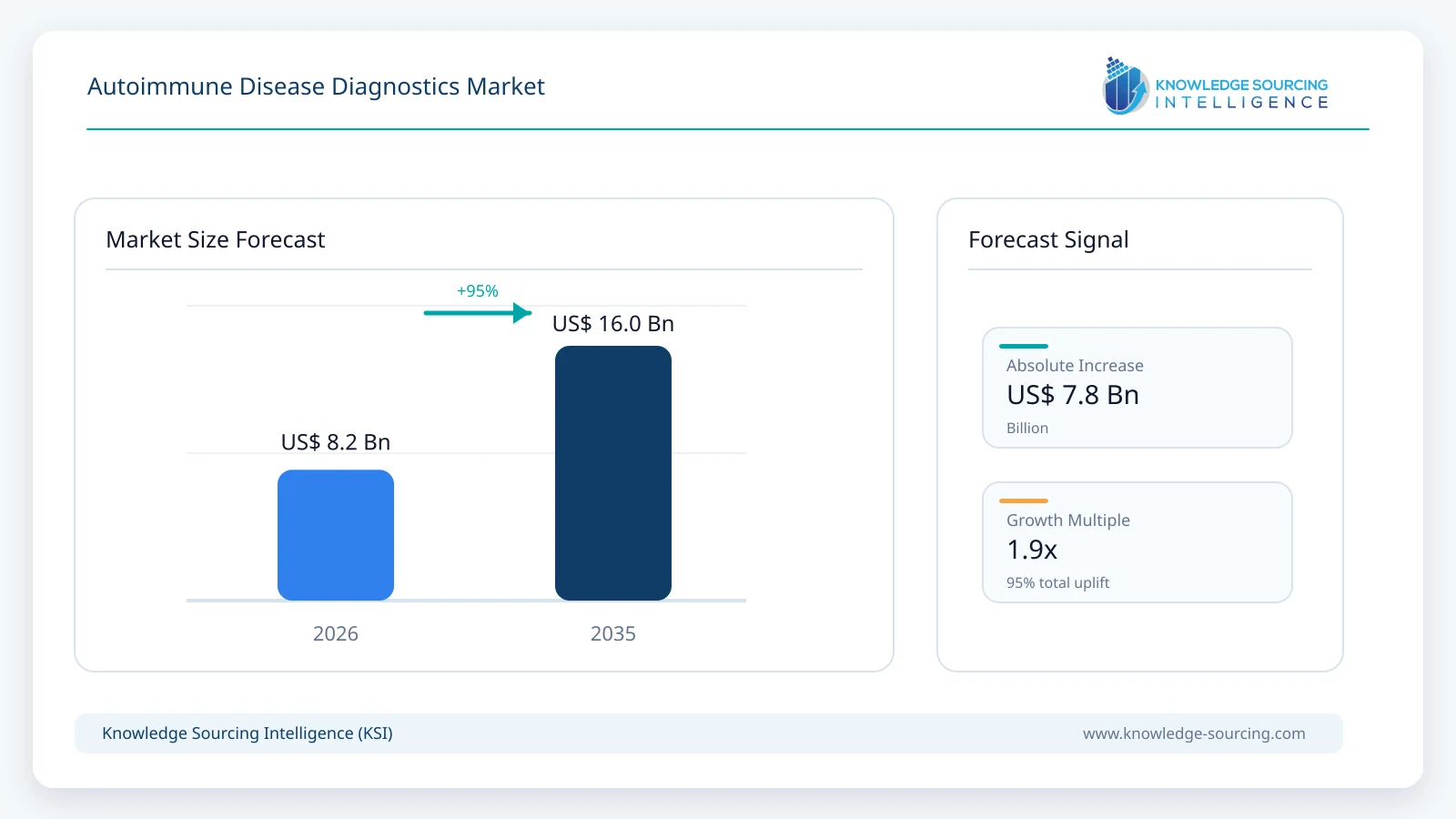
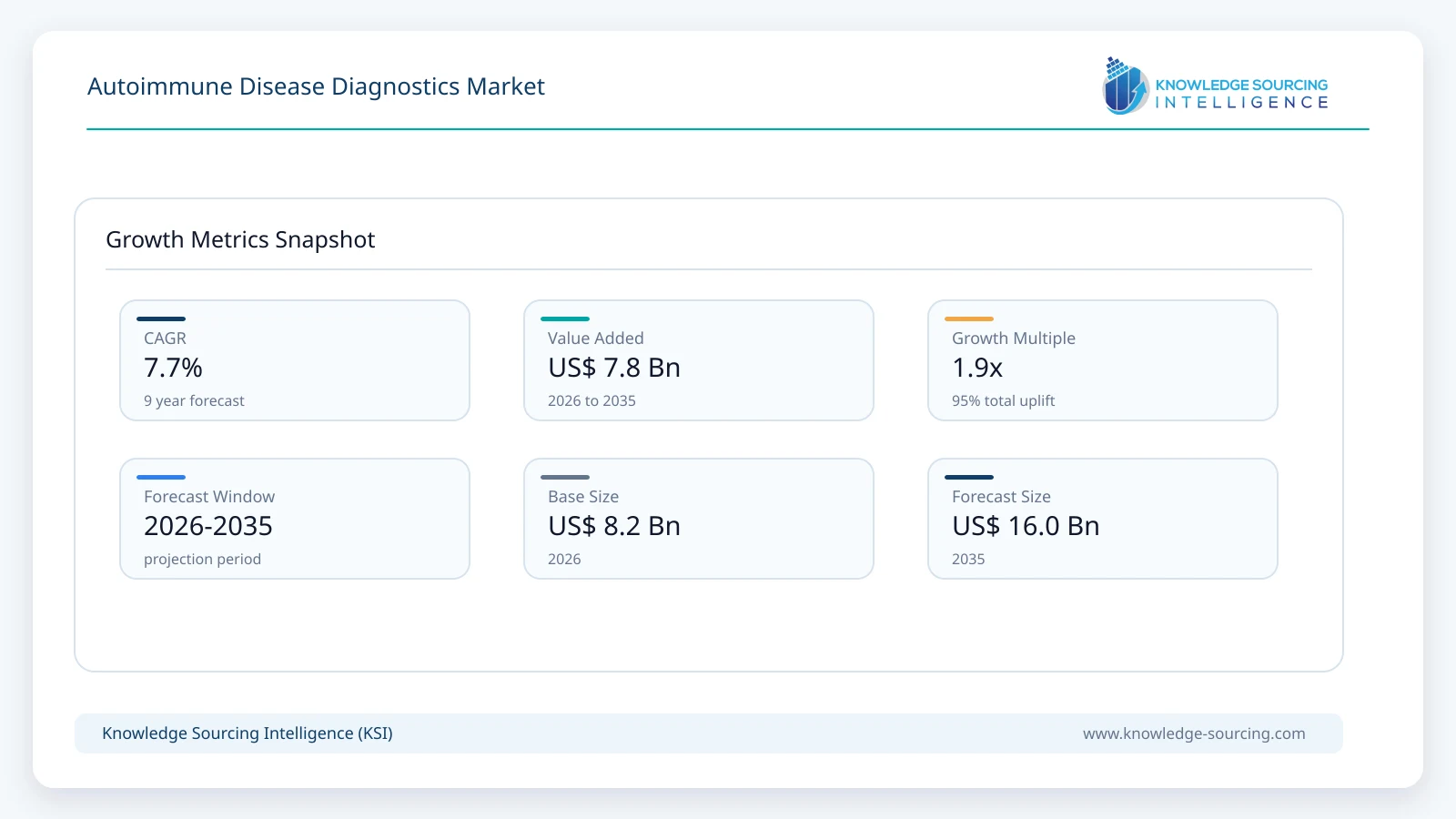
The Autoimmune Disease Diagnostics Market is forecast to grow at a CAGR of 7.7%, reaching USD 16.03 billion in 2035 from USD 8.23 billion in 2026.
Highlights:
- 1Increasing autoimmune disease prevalence is expanding demand for early laboratory confirmation, supporting wider adoption of multiplex immunodiagnostic assays.
- 2Growing utilization of biologic and targeted immunotherapies is increasing the need for precise biomarker identification that guides patient selection and therapeutic monitoring.
- 3Laboratory automation is improving testing throughput and reproducibility, encouraging healthcare providers to consolidate autoimmune testing onto integrated diagnostic platforms.
- 4Regulatory harmonization for in vitro diagnostics is strengthening assay quality requirements, prompting manufacturers to invest in standardized validation and clinical evidence generation.
Autoimmune disease diagnostics provide laboratory evidence that complements clinical evaluation by detecting disease-specific autoantibodies, inflammatory biomarkers, genetic markers, and immune system abnormalities. These diagnostic tools support physicians in differentiating autoimmune disorders from infectious, metabolic, and inflammatory diseases while enabling disease classification and longitudinal monitoring. Standardized testing also facilitates personalized treatment decisions by identifying disease activity and therapeutic response.
The growing prevalence of autoimmune disorders is increasing demand for earlier and more comprehensive diagnostic evaluation because delayed diagnosis often results in irreversible organ damage and higher healthcare utilization. Clinical laboratories are expanding automated immunology testing capabilities to accommodate rising testing volumes while improving turnaround times. Healthcare systems are also integrating digital laboratory management platforms that enhance result interpretation and reduce inter-laboratory variability.
Advances in multiplex immunoassays, next-generation sequencing, machine learning-assisted interpretation, and biomarker discovery are strengthening diagnostic precision across complex autoimmune diseases. Pharmaceutical companies developing targeted biologics are supporting biomarker research because patient stratification increasingly influences clinical trial enrollment and treatment optimization. These interconnected developments position advanced autoimmune diagnostics as an essential component of precision medicine.
Market Dynamics
Market Drivers
Rising Burden of Autoimmune Diseases is Increasing Demand for Early Diagnostic Testing: Autoimmune diseases represent a significant and growing clinical burden because many conditions remain underdiagnosed during their early stages. Healthcare providers are increasingly requesting comprehensive antibody profiling to establish earlier diagnoses before irreversible tissue damage develops. Diagnostic laboratories therefore continue expanding autoimmune testing capabilities across hospital and reference laboratory settings. Earlier laboratory confirmation improves therapeutic decision-making and supports long-term disease management through timely intervention.
Multiplex Immunoassays are Transforming Diagnostic Workflows: Clinical laboratories require efficient methods to evaluate multiple biomarkers because autoimmune disorders frequently involve overlapping antibody signatures. Manufacturers are introducing multiplex assay platforms that simultaneously detect numerous autoantibodies from a single patient specimen. This approach reduces laboratory workload while improving diagnostic confidence across complex disease presentations. Integrated testing workflows also optimize resource utilization and shorten diagnostic timelines.
Expansion of Precision Medicine is Increasing Biomarker Utilization: Precision medicine depends on accurate patient stratification before targeted therapies are prescribed. Pharmaceutical companies are increasingly incorporating biomarker-based enrollment strategies into autoimmune clinical development programs. Diagnostic developers therefore continue validating novel biomarkers that distinguish disease subtypes and predict therapeutic response. These advances strengthen long-term demand for advanced autoimmune diagnostic technologies.
Laboratory Automation is Supporting High-Volume Autoimmune Testing: Healthcare systems require scalable laboratory operations because autoimmune testing volumes continue increasing across chronic disease management programs. Laboratories are adopting fully automated analyzers that improve analytical consistency while reducing manual intervention. Manufacturers are integrating software-driven workflow management to enhance operational efficiency and quality assurance. These investments strengthen diagnostic capacity without proportionally increasing laboratory staffing requirements.
Market Restraints
High capital investment for automated immunodiagnostic systems limits technology adoption among smaller laboratories and resource-constrained healthcare facilities.
Clinical variability across autoimmune diseases complicates biomarker standardization, reducing diagnostic consistency between laboratories.
Reimbursement differences across healthcare systems continue limiting routine utilization of advanced multiplex and molecular autoimmune diagnostic assays.
Market Opportunities
Novel Biomarker Discovery is Expanding Future Diagnostic Applications: Research institutions continue identifying disease-specific antibodies, cytokine signatures, genetic markers, and immune-cell biomarkers that improve diagnostic specificity. Manufacturers are incorporating these discoveries into next-generation assay panels that support earlier disease identification. Expanded biomarker portfolios also improve disease differentiation among clinically similar autoimmune disorders. These innovations create opportunities for premium diagnostic solutions.
Artificial Intelligence is Enhancing Clinical Interpretation: Complex autoimmune laboratory results often require integration of multiple biomarkers with patient history and clinical findings. Artificial intelligence platforms are supporting laboratory professionals by identifying diagnostic patterns across large datasets. Healthcare providers are increasingly evaluating decision-support software that improves interpretation consistency and reduces diagnostic uncertainty. This trend expands opportunities for software-integrated diagnostic platforms.
Emerging Markets are Expanding Immunodiagnostic Infrastructure: Healthcare investments across developing economies continue improving access to advanced laboratory services. Governments are strengthening diagnostic capacity through hospital modernization initiatives and expanded specialty care networks. Diagnostic manufacturers are responding by increasing regional distribution partnerships and localized service capabilities. Infrastructure expansion supports sustained adoption of autoimmune diagnostic technologies.
Companion Diagnostics are Supporting Targeted Autoimmune Therapies: The development of targeted biologics requires improved patient stratification throughout clinical development and commercial treatment pathways. Diagnostic companies are collaborating with pharmaceutical sponsors to validate predictive biomarkers alongside investigational therapies. These partnerships strengthen the strategic importance of companion diagnostics within autoimmune disease management while creating new commercialization opportunities.
Disease & Epidemiology Analysis
Autoimmune diseases comprise more than 80 chronic disorders that result from dysregulated immune responses against self-antigens. Disease burden varies considerably by geography, ethnicity, age, and sex, although women account for the majority of diagnosed patients across many autoimmune conditions. This epidemiological diversity is increasing demand for disease-specific diagnostic algorithms because a single biomarker rarely provides sufficient clinical certainty. Healthcare providers are therefore integrating serological, molecular, and clinical findings to improve diagnostic precision and reduce delays in treatment initiation.
Rheumatoid arthritis remains one of the most extensively diagnosed autoimmune diseases because persistent synovial inflammation progressively impairs joint function when treatment is delayed. Clinical laboratories are increasingly utilizing anti-cyclic citrullinated peptide (anti-CCP) antibodies together with rheumatoid factor and inflammatory biomarkers to improve diagnostic specificity during early disease stages. Disease activity monitoring also depends on repeated laboratory assessment, which sustains recurring demand for immunodiagnostic testing. The expanding availability of biologic disease-modifying therapies further reinforces the importance of accurate patient classification before treatment escalation.
Systemic lupus erythematosus (SLE) presents significant diagnostic complexity because clinical manifestations involve multiple organ systems and fluctuate over time. Physicians are increasingly combining antinuclear antibody (ANA) screening with anti-double-stranded DNA, anti-Smith antibodies, complement measurements, and additional serological markers to establish diagnostic confidence. Diagnostic manufacturers are expanding multiplex autoimmune panels that evaluate several biomarkers simultaneously, enabling laboratories to improve workflow efficiency while supporting differential diagnosis across connective tissue disorders.
Treatment Guidelines Landscape
Disease | Primary Diagnostic Recommendation | Key Biomarkers/Tests | Guideline Organization |
Rheumatoid Arthritis | Clinical evaluation supported by serology | Anti-CCP, Rheumatoid Factor, ESR, CRP | American College of Rheumatology (ACR), EULAR |
Systemic Lupus Erythematosus | Multidisciplinary laboratory assessment | ANA, Anti-dsDNA, Anti-Sm, Complement C3/C4 | EULAR, ACR |
Sjögren's Syndrome | Autoantibody testing with objective gland assessment | Anti-SSA/Ro, Anti-SSB/La, ANA | ACR, EULAR |
Multiple Sclerosis | MRI with laboratory confirmation | CSF Oligoclonal Bands, IgG Index | McDonald Criteria, European Academy of Neurology |
Market Segmentation
By Product Type
Reagents and assay kits constitute the largest source of recurring demand because autoimmune disease diagnosis depends on repeated laboratory testing throughout disease identification and monitoring. Healthcare providers are increasingly requesting comprehensive antibody panels that improve diagnostic sensitivity across heterogeneous patient populations. Manufacturers continue expanding assay menus with disease-specific biomarkers that strengthen laboratory differentiation and clinical confidence. The recurring consumption of reagents creates stable revenue streams while supporting continuous innovation in multiplex immunodiagnostic technologies.
By Disease Indication
Rheumatoid arthritis generates substantial diagnostic demand because early therapeutic intervention reduces irreversible joint destruction and long-term disability. Rheumatologists are increasingly utilizing combinations of anti-CCP antibodies, rheumatoid factor, inflammatory markers, and imaging findings to establish earlier diagnoses. Diagnostic manufacturers continue improving assay specificity that minimizes false-positive findings in clinically challenging patients. These developments strengthen demand for standardized immunodiagnostic platforms capable of supporting routine disease monitoring throughout treatment.
By Sample Type
Cerebrospinal fluid remains an essential diagnostic specimen for neurological autoimmune disorders because blood-based biomarkers alone often fail to provide adequate clinical certainty. Neurology specialists are increasingly incorporating CSF oligoclonal band analysis and immunoglobulin profiling into multiple sclerosis diagnostic pathways. Laboratory automation continues improving analytical reproducibility for CSF testing despite relatively lower testing volumes compared with serum-based assays. The expanding investigation of neuroimmunological biomarkers supports continued innovation in specialized CSF diagnostic solutions.
Regional Analysis
North America Market Analysis
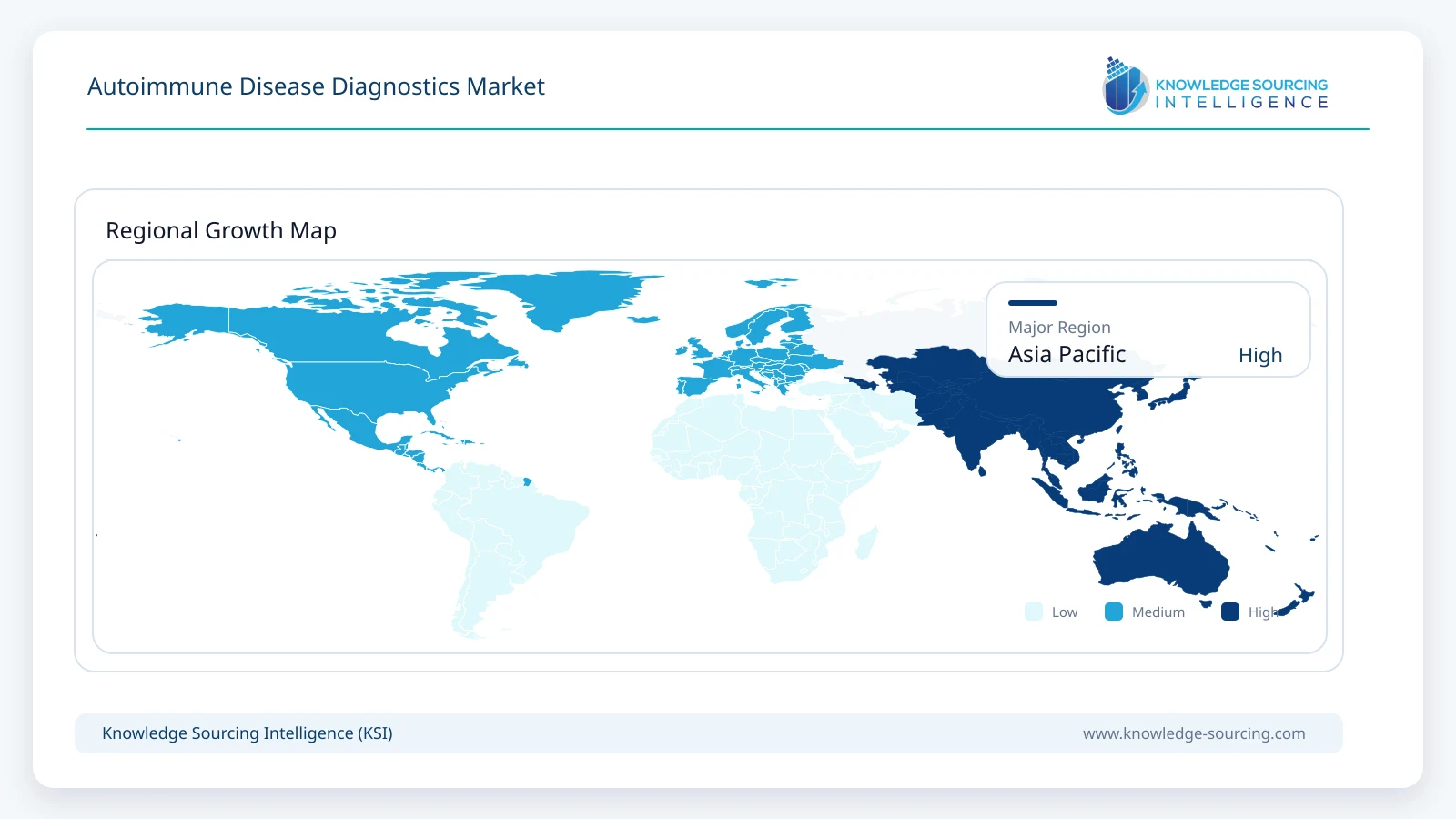
North America represents the most established market for autoimmune disease diagnostics because the region combines advanced laboratory infrastructure with broad access to specialty healthcare services. The growing prevalence of autoimmune disorders is increasing demand for comprehensive immunodiagnostic testing across hospitals, commercial laboratories, and academic medical centers. Clinical societies continue updating diagnostic recommendations, which encourages laboratories to adopt standardized autoantibody panels and high-throughput immunoassay platforms. Diagnostic manufacturers are responding by expanding assay portfolios and integrating digital laboratory management systems that improve workflow efficiency and analytical consistency. The widespread availability of biologic therapies also increases the need for accurate patient stratification because treatment selection depends on reliable biomarker identification. Pharmaceutical companies are strengthening collaborations with diagnostic developers to validate biomarkers that support clinical trial enrollment and treatment monitoring. Regulatory oversight from the U.S. Food and Drug Administration and Health Canada reinforces analytical quality, encouraging continuous investment in assay validation and automation.
Europe Market Analysis
Europe maintains a mature autoimmune diagnostics landscape because harmonized clinical guidelines and strong public healthcare systems support routine laboratory evaluation. Hospitals are increasingly adopting automated immunology platforms that improve testing efficiency while ensuring standardized diagnostic quality across healthcare networks. The implementation of the In Vitro Diagnostic Regulation (IVDR) is strengthening clinical evidence requirements, prompting manufacturers to expand analytical validation and post-market performance studies before commercialization. Laboratories are modernizing testing workflows to comply with evolving regulatory expectations while maintaining operational efficiency. Growing research activity across Germany, France, Italy, Spain, and the Nordic countries is supporting biomarker discovery that enhances diagnostic specificity for systemic autoimmune diseases. Healthcare providers continue integrating multiplex immunoassays because complex autoimmune disorders frequently require simultaneous evaluation of multiple antibodies. Pharmaceutical companies are expanding precision medicine programs that depend on validated biomarkers for patient stratification, reinforcing collaboration between diagnostic developers and therapeutic sponsors.
Asia Pacific Market Analysis
Asia Pacific is emerging as one of the fastest-evolving regions for autoimmune disease diagnostics because healthcare infrastructure investment and laboratory modernization continue expanding across major economies. Governments are strengthening diagnostic capacity through hospital upgrades and national healthcare initiatives, increasing access to advanced immunology testing. Clinical laboratories are adopting automated analyzers that improve testing throughput while addressing the growing burden of chronic immune-mediated diseases. Rising physician awareness is encouraging earlier autoimmune disease screening, reducing diagnostic delays that historically limited treatment outcomes. Academic institutions and biotechnology companies are increasing biomarker research to better understand regional disease characteristics and genetic variability. International diagnostic manufacturers are expanding distribution partnerships and localized manufacturing capabilities because demand for high-quality laboratory testing continues rising. Private diagnostic chains are also broadening specialized autoimmune testing services to meet increasing referrals from rheumatologists, neurologists, endocrinologists, and immunologists.
Rest of the World
The Rest of the World market continues expanding as healthcare systems improve access to specialized laboratory diagnostics across Latin America, the Middle East, and Africa. Public health authorities are investing in laboratory infrastructure because earlier diagnosis reduces disease-related disability and long-term healthcare expenditure. Reference laboratories are increasing availability of autoimmune antibody testing, reducing dependence on overseas sample processing. International diagnostic companies are strengthening regional partnerships that improve product availability, technical support, and laboratory training. Clinical awareness campaigns are encouraging physicians to recognize autoimmune diseases earlier, supporting increased utilization of confirmatory laboratory testing. Healthcare providers are gradually introducing automated immunoassay systems that improve diagnostic reproducibility while addressing workforce limitations. Economic disparities continue influencing adoption rates across countries, although government investments and private healthcare expansion are improving accessibility.
Regulatory Landscape
Autoimmune disease diagnostics are regulated as in vitro diagnostic (IVD) medical devices, requiring manufacturers to demonstrate analytical performance, clinical validity, and manufacturing quality before commercialization. Regulatory agencies are strengthening evidence requirements because autoimmune diseases often involve complex biomarker interpretation and direct treatment decisions. Manufacturers are therefore expanding clinical validation studies and post-market surveillance activities to maintain regulatory compliance while supporting physician confidence.
The U.S. Food and Drug Administration (FDA) regulates autoimmune diagnostic assays through pathways including 510(k), De Novo, and Premarket Approval (PMA), depending on device classification and intended clinical use. The European Union In Vitro Diagnostic Regulation (EU IVDR 2017/746) is increasing requirements for clinical evidence, performance evaluation, and post-market monitoring. These frameworks are encouraging manufacturers to strengthen quality management systems while investing in long-term clinical validation.
Regulatory agencies across Japan, China, Australia, and other Asia-Pacific countries are aligning portions of their regulatory frameworks with internationally recognized quality standards. Diagnostic developers are increasingly pursuing multi-region regulatory strategies because simultaneous product launches improve commercial efficiency and accelerate global market access. Harmonized regulatory expectations are supporting broader adoption of standardized autoimmune diagnostic technologies.
Pipeline Analysis
The autoimmune disease diagnostics pipeline is increasingly focusing on next-generation biomarkers, multiplex immunoassays, molecular diagnostics, and artificial intelligence-assisted interpretation because conventional autoantibody testing does not consistently capture disease heterogeneity. Academic institutions and commercial developers are validating biomarker combinations that improve sensitivity while reducing false-positive results across systemic autoimmune diseases. These efforts are supporting earlier diagnosis and improved patient stratification for targeted therapies.
Pipeline activity is expanding around Rheumatoid Arthritis, Systemic Lupus Erythematosus, Sjögren's Syndrome, Multiple Sclerosis, and Type 1 Diabetes, where unmet diagnostic needs remain significant. Several investigational assays are evaluating cytokine signatures, interferon-response biomarkers, B-cell activation markers, circulating nucleic acids, and multi-omics approaches that complement traditional serological testing. Digital algorithms are also being incorporated into diagnostic workflows to improve interpretation of complex biomarker profiles and support clinical decision-making.
Pharmaceutical sponsors are increasingly collaborating with diagnostic manufacturers because biomarker-guided clinical trials improve patient selection and therapeutic response assessment. Companion diagnostic strategies are gaining importance for emerging biologics and precision immunotherapies targeting specific immune pathways. These collaborations are accelerating biomarker qualification while strengthening the long-term integration of diagnostics into autoimmune disease management.
Reimbursement Landscape
Reimbursement policies significantly influence the adoption of autoimmune diagnostics because advanced multiplex assays and molecular tests often carry higher costs than conventional serological methods. Public and private payers generally reimburse well-established diagnostic biomarkers when supported by recognized clinical guidelines and demonstrated clinical utility. Laboratories therefore prioritize validated assays that align with reimbursement policies while maintaining operational sustainability.
Healthcare systems are gradually evaluating value-based reimbursement models that emphasize earlier diagnosis, reduced disease progression, and improved treatment selection. Diagnostic manufacturers are generating additional health-economic evidence to demonstrate that comprehensive autoimmune testing reduces unnecessary procedures, shortens diagnostic pathways, and supports more efficient use of high-cost biologic therapies. These developments are strengthening the long-term reimbursement outlook for advanced autoimmune diagnostic technologies.
Competitive Landscape
Thermo Fisher Scientific Inc.
Thermo Fisher Scientific Inc. differentiates itself through its broad life sciences ecosystem that combines specialty diagnostics, molecular biology, laboratory automation, analytical instruments, and clinical laboratory solutions under a single operating platform. The company continues expanding autoimmune disease diagnostics by integrating immunoassays, molecular testing technologies, laboratory information management solutions, and advanced reagent portfolios that improve diagnostic workflow efficiency.
F. Hoffmann-La Roche Ltd.
F. Hoffmann-La Roche Ltd. maintains a strong competitive position through its integrated pharmaceutical and diagnostics business model, enabling close alignment between therapeutic innovation and biomarker development. The company continues expanding its Elecsys immunodiagnostic portfolio because clinical laboratories increasingly require automated, high-throughput autoimmune testing with strong analytical reproducibility.
Siemens Healthineers AG
Siemens Healthineers AG differentiates itself through integrated laboratory diagnostics, medical imaging, digital health technologies, and healthcare workflow optimization. The company is strengthening autoimmune disease diagnostics by expanding automated immunoassay capabilities that improve laboratory throughput and result consistency.
Danaher Corporation
Danaher Corporation competes through its diversified life sciences and diagnostics portfolio led by Beckman Coulter Diagnostics and other healthcare technology businesses. The company continues advancing autoimmune disease diagnostics by expanding automated immunoassay systems, laboratory informatics, and workflow optimization technologies.
Abbott Laboratories
Abbott Laboratories maintains a significant presence in autoimmune disease diagnostics through its comprehensive immunoassay platforms, global laboratory network, and continuous investment in automated diagnostic technologies. The company is expanding the capabilities of its Alinity platform because laboratories increasingly require scalable systems capable of supporting diverse diagnostic workloads.
Grifols S.A.
Grifols S.A. differentiates itself through its expertise in immunology, transfusion medicine, plasma science, and specialized diagnostic technologies. The company continues strengthening autoimmune diagnostics by developing advanced immunoassays and laboratory solutions that improve detection of immune-mediated disorders. Grifols is expanding research collaborations because emerging biomarkers are increasing opportunities for earlier diagnosis and personalized disease management.
Key Developments
January 2026: 10x Genomics announced a collaboration with Brigham and Women’s Hospital to analyze peripheral blood samples from patients with rheumatoid arthritis, systemic lupus erythematosus, and giant cell arteritis. Using single-cell profiling, the study aims to identify immune signatures linked to disease activity, flare, remission, and therapeutic response, and to support a future clinical report for autoimmune disease care.
February 2025: Revvity announced a program with Sanofi to expand its Type 1 diabetes testing offering with a population-scale early-detection assay. The plan includes a new T1D 4-plex IVD assay and expansion of access to its existing lab-developed test through Revvity Omics.
Strategic Insights and Future Market Outlook
The autoimmune disease diagnostics market is transitioning toward integrated diagnostic ecosystems that combine multiplex immunoassays, molecular testing, laboratory automation, and digital decision-support tools. Healthcare providers are demanding greater diagnostic accuracy because targeted immunotherapies require precise disease classification and continuous monitoring. Diagnostic manufacturers are responding by expanding biomarker portfolios, validating novel immune signatures, and strengthening software capabilities that improve interpretation of complex laboratory findings. These developments are positioning advanced diagnostics as a critical component of precision medicine.
Pipeline innovation is increasingly focusing on multi-omics biomarkers, artificial intelligence-assisted interpretation, and companion diagnostic strategies that support personalized treatment selection. Pharmaceutical companies are collaborating with diagnostic developers because biomarker-guided clinical trials improve patient stratification and therapeutic outcomes. Regulatory agencies are simultaneously strengthening evidence requirements, encouraging manufacturers to generate robust analytical and clinical validation data before commercialization. This trend is raising the scientific standard for future autoimmune diagnostic products while improving physician confidence.
Growing laboratory automation, increasing awareness of autoimmune diseases, and expanding investment in biomarker research are strengthening long-term market fundamentals. Companies that successfully combine high-throughput automation, validated biomarker panels, digital informatics, and global regulatory expertise are likely to maintain competitive leadership as healthcare systems continue shifting toward earlier diagnosis and precision-based disease management.
The autoimmune disease diagnostics market remains strategically important because earlier and more accurate diagnosis directly influences treatment selection, disease progression, and long-term healthcare outcomes. Continued collaboration among diagnostic manufacturers, pharmaceutical sponsors, research institutions, and healthcare providers is expected to accelerate biomarker innovation while supporting broader adoption of standardized, high-quality autoimmune diagnostic solutions.
Autoimmune Disease Diagnostics Market Scope:
| Report Metric | Details |
|---|---|
| Total Market Size in 2026 | USD 8.23 billion |
| Total Market Size in 2035 | USD 16.03 billion |
| Forecast Unit | Billion |
| Growth Rate | 7.7% |
| Study Period | 2021 to 2035 |
| Historical Data | 2021 to 2024 |
| Base Year | 2025 |
| Forecast Period | 2026 – 2035 |
| Segmentation | Product Type, Technology, Biomarker Type, Disease Indication, Sample Type, End User, Geography |
| Companies |
|
Market Segmentation
Product Type
Technology
Biomarker Type, Disease Indication, Sample Type, End User
Geography
- North America
- South America
- Europe
- Middle East and Africa
- Asia Pacific
Table of Contents
1. EXECUTIVE SUMMARY
1.1. Market Snapshot
1.2. Key Findings
1.3. Analyst Insights
1.4. Strategic Recommendations
2. RESEARCH METHODOLOGY
2.1. Research Design
2.2. Data Collection Methodology
2.3. Market Size Estimation
2.4. Forecasting Model
2.5. Assumptions & Limitations
3. AUTOIMMUNE DISEASE DIAGNOSTICS MARKET OVERVIEW, SIZE & FORECAST
3.1. Market Definition & Scope
3.2. Autoimmune Disease Overview
3.3. Classification of Autoimmune Diseases
3.4. Industry Evolution
3.5. Diagnostic Pathway for Autoimmune Diseases
3.6. Disease Burden & Unmet Clinical Needs
3.7. Epidemiology & Prevalence Analysis
3.7.1. Disease Prevalence
3.7.2. Diagnosed Patient Population
3.8. Current Diagnostic Landscape
3.9. Testing Volume Analysis
3.10. Key Market Trends
3.11. Historical Market Size Analysis (2021–2025)
3.12. Market Forecast Analysis (2026–2035)
4. MARKET DYNAMICS
4.1. Market Drivers
4.2. Market Restraints
4.3. Market Opportunities
4.4. Market Challenges
5. INDUSTRY LANDSCAPE
5.1. Industry Value Chain Analysis
5.2. Pricing Analysis
5.3. Reimbursement Landscape
6. INNOVATION LANDSCAPE
6.1. Emerging Diagnostic Technologies
6.2. Product Innovation Analysis
6.3. Pipeline Diagnostics Analysis
6.4. Clinical Trial Analysis
6.5. Multiplex & High-Throughput Testing Technologies
6.6. Biomarker Discovery & Validation Trends
6.7. Artificial Intelligence & Machine Learning Integration in Autoimmune Diagnostics
6.8. Digital Health Integration for Autoimmune Disease Management
7. REGULATORY LANDSCAPE
7.1. Regulatory Framework
7.2. Approval Pathways
7.3. Compliance Requirements
8. AUTOIMMUNE DISEASE DIAGNOSTICS MARKET LANDSCAPE ANALYSIS
8.1. Analysis by Technology
8.2. Analysis by Biomarker Type
8.3. Analysis by Sample Type
8.4. Analysis by Clinical Application
8.5. Analysis by Disease Indication
8.6. Analysis by End User
9. AUTOIMMUNE DISEASE DIAGNOSTICS MARKET SEGMENT ANALYSIS (2021–2035)
9.1. By Product Type
9.1.1. Instruments
9.1.2. Reagents & Assay Kits
9.1.3. Software & Informatics
9.1.4. Services
9.2. By Technology
9.2.1. Indirect Immunofluorescence Assays (IFA)
9.2.2. Enzyme-Linked Immunosorbent Assay (ELISA)
9.2.3. Chemiluminescence Immunoassay (CLIA)
9.2.4. Multiplex Immunoassays
9.2.5. Next-Generation Sequencing (NGS)
9.2.6. Polymerase Chain Reaction (PCR)
9.2.7. Others
9.3. By Biomarker Type
9.3.1. Autoantibodies
9.3.2. Cytokines & Chemokines
9.3.3. Genetic Biomarkers
9.3.4. Inflammatory Biomarkers
9.3.5. Other Biomarkers
9.4. By Disease Indication
9.4.1. Rheumatoid Arthritis
9.4.2. Systemic Lupus Erythematosus
9.4.3. Sjögren's Syndrome
9.4.4. Multiple Sclerosis
9.4.5. Type 1 Diabetes
9.4.6. Autoimmune Thyroid Diseases
9.4.7. Other Autoimmune Diseases
9.5. By Sample Type
9.5.1. Liquid Biopsy
9.5.2. Cerebrospinal Fluid (CSF)
9.5.3. Tissue Biopsy
9.5.4. Saliva & Urine
9.5.5. Other Sample Types
9.6. By End User
9.6.1. Hospitals
9.6.2. Diagnostic Laboratories
9.6.3. Specialty Clinics
9.6.4. Other End Users
10. AUTOIMMUNE DISEASE DIAGNOSTICS MARKET GEOGRAPHICAL ANALYSIS (2021–2035)
10.1. North America
10.2. Europe
10.3. Asia-Pacific
10.4. South America
10.5. Middle East & Africa
11. AUTOIMMUNE DISEASE DIAGNOSTICS MARKET COUNTRY ANALYSIS (2021–2035)
11.1. United States
11.2. Canada
11.3. Germany
11.4. United Kingdom
11.5. France
11.6. Italy
11.7. Spain
11.8. Japan
11.9. China
11.10. India
11.11. South Korea
11.12. Australia
11.13. Brazil
11.14. Mexico
11.15. Saudi Arabia
11.16. South Africa
12. COMPETITIVE LANDSCAPE
12.1. Market Share Analysis
12.2. Strategic Developments
12.3. Mergers & Acquisitions, Partnerships & Collaborations
12.4. Product Launches
13. COMPANY PROFILES
13.1. Thermo Fisher Scientific Inc.
13.1.1. Company Overview
13.1.2. Financials
13.1.3. Product Portfolio
13.1.4. Recent Developments
13.2. F. Hoffmann-La Roche Ltd.
13.3. Siemens Healthineers AG
13.4. Danaher Corporation
13.5. Abbott Laboratories
13.6. Grifols S.A.
13.7. Bio-Rad Laboratories, Inc.
13.8. Werfen S.A.
13.9. Hologic Inc.
13.10. INOVA Diagnostics, Inc.
14. AUTOIMMUNE DISEASE DIAGNOSTICS MARKET COMMERCIAL FORECAST ANALYSIS
14.1. Autoantibody Testing
14.2. Antinuclear Antibody (ANA) Testing
14.3. Rheumatoid Arthritis Diagnostic Testing
14.4. Systemic Lupus Erythematosus Diagnostic Testing
14.5. Autoimmune Thyroid Disease Testing
14.6. Celiac Disease Testing
14.7. Multiple Sclerosis Diagnostic Testing
14.8. Multiplex Autoimmune Panels
14.9. Molecular Autoimmune Diagnostics
15. INVESTMENT & FUNDING ANALYSIS
15.1. Venture Capital Trends
15.2. Government Funding
15.3. R&D Investments
16. FUTURE OUTLOOK
16.1. Key Growth Opportunities
16.2. Future Industry Trends
Navigate
Trusted by the world's leading organizations











