
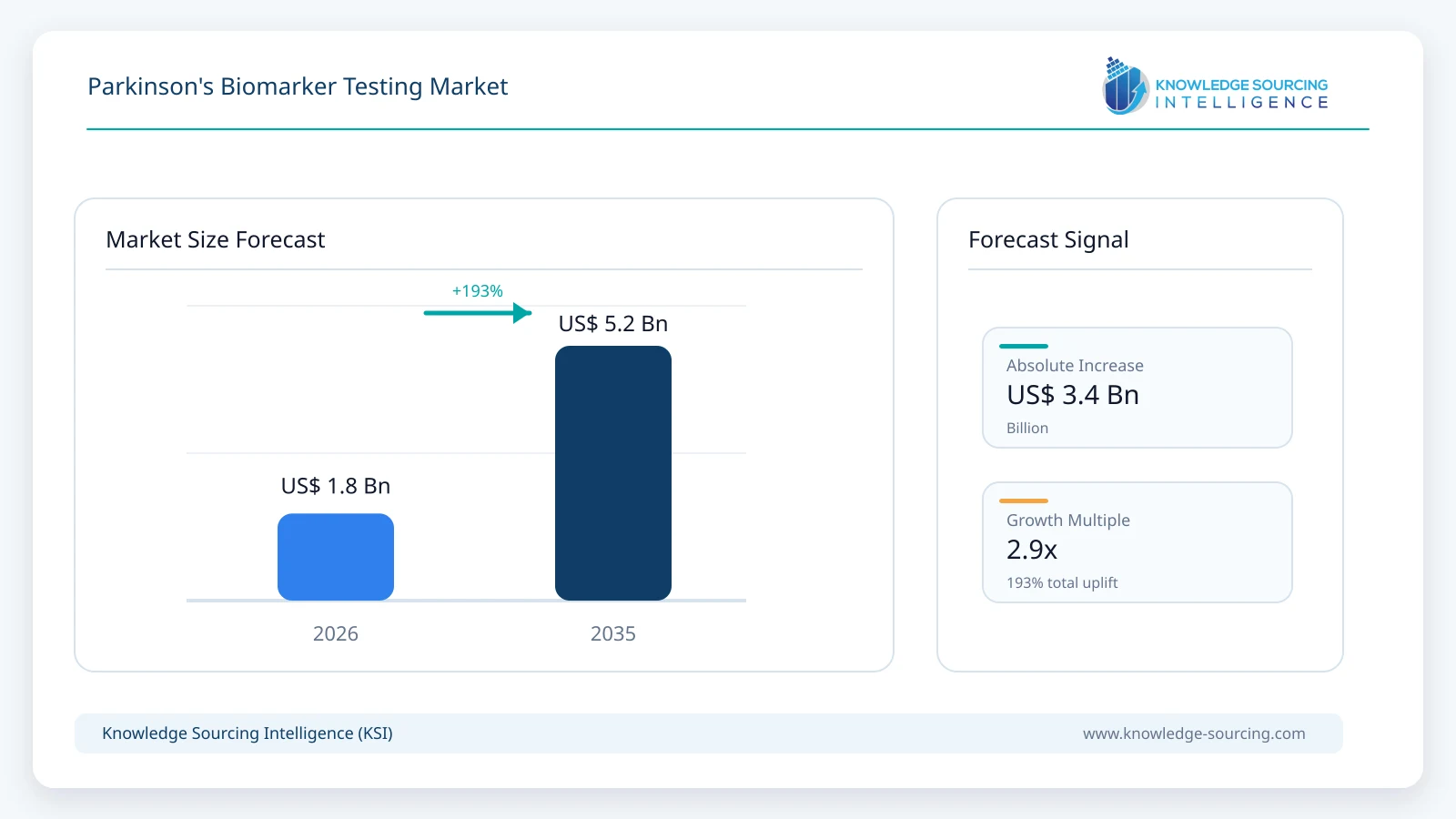
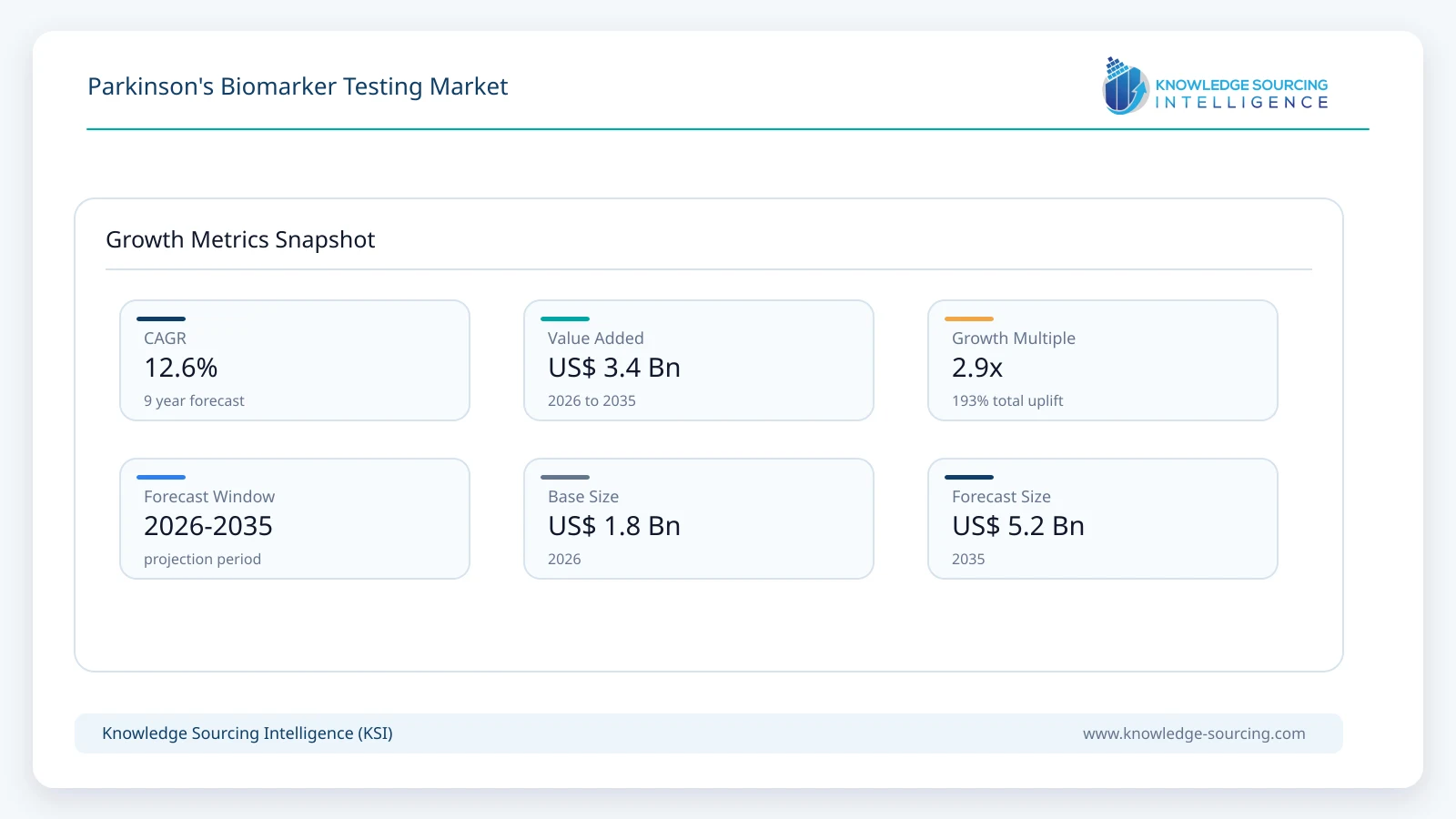
The Parkinson's Biomarker Testing Market is forecast to grow at a CAGR of 12.6%, reaching USD 5.15 billion in 2035 from USD 1.76 billion in 2026.
Highlights:
- 1Rising demand for earlier Parkinson's disease identification is driving investment in protein and genetic biomarker validation because objective biological evidence reduces diagnostic uncertainty during early clinical presentation.
- 2Pharmaceutical sponsors are expanding biomarker-guided clinical trials as disease-modifying therapies require biologically defined patient populations that improve trial efficiency and endpoint reliability.
- 3Advances in ultrasensitive analytical technologies are increasing detection capabilities for low-abundance neurological biomarkers, supporting broader adoption in translational research and longitudinal disease monitoring.
- 4Regulatory agencies continue to encourage biomarker qualification frameworks, which strengthen confidence in standardized assay development and accelerate integration into therapeutic research.
Parkinson's biomarker testing encompasses laboratory and imaging approaches that detect biological indicators associated with neurodegeneration, alpha-synuclein pathology, genetic susceptibility, inflammatory responses, mitochondrial dysfunction, and neuronal injury. These biomarkers support earlier diagnosis, differential diagnosis, disease staging, treatment response evaluation, and patient selection for clinical research. The market includes assay development, laboratory testing platforms, analytical reagents, and companion research solutions deployed across hospitals, diagnostic laboratories, and academic institutions.
Demand is increasing because the prevalence of neurodegenerative disorders continues to rise alongside aging populations, creating pressure for earlier and more accurate diagnosis. Clinical examination remains the diagnostic cornerstone, yet symptom overlap with multiple system atrophy, progressive supranuclear palsy, corticobasal degeneration, and dementia with Lewy bodies limits diagnostic precision during early disease stages. Biomarker testing therefore addresses a persistent clinical gap by providing objective biological evidence that strengthens diagnostic confidence.
Drug development strategies increasingly depend on biomarker-guided patient identification because disease-modifying therapies require enrollment of biologically homogeneous patient populations. Pharmaceutical companies are integrating protein biomarkers, genetic markers, neurofilament light chain measurements, alpha-synuclein assays, and multimodal biomarker panels into clinical development programs to improve endpoint sensitivity and treatment evaluation. This dependency is strengthening collaboration between diagnostic manufacturers, biotechnology companies, pharmaceutical sponsors, and academic research organizations.
Regulatory initiatives also influence market development by promoting biomarker qualification programs, standardized analytical validation, and harmonized clinical evidence generation. Scientific consortia are establishing shared repositories of biological samples and longitudinal datasets that accelerate biomarker verification while improving reproducibility across institutions. These developments position biomarker testing as an increasingly strategic component of Parkinson's disease research and future precision neurology.
Market Dynamics
Market Drivers
Increasing Focus on Early Disease Detection: Earlier diagnosis improves opportunities for therapeutic intervention and clinical trial enrollment before extensive neuronal degeneration occurs. Healthcare providers are seeking objective diagnostic tools because motor symptoms frequently appear after substantial dopaminergic neuron loss has already developed. This limitation increases dependence on protein, genetic, and metabolomic biomarkers capable of identifying biological changes during prodromal and early disease stages. The resulting demand strengthens investment in assay development, longitudinal validation studies, and standardized laboratory testing.
Expansion of Disease-Modifying Therapy Development: Pharmaceutical innovation increasingly targets disease modification rather than symptomatic management. Clinical sponsors are incorporating biomarker-based enrollment strategies because homogeneous patient populations improve statistical power and treatment evaluation. Biomarkers therefore become essential for identifying eligible patients, monitoring pharmacodynamic effects, and supporting mechanism-based therapeutic development. This relationship accelerates collaboration between diagnostic developers and pharmaceutical companies while expanding commercial opportunities for validated testing platforms.
Advancements in Ultra-Sensitive Detection Technologies: Analytical sensitivity determines whether neurological biomarkers can be measured consistently at clinically meaningful concentrations. Technology developers are introducing highly sensitive immunoassays, digital detection systems, and multiplex analytical platforms that improve reproducibility while reducing sample volume requirements. These innovations enable broader biomarker characterization across cerebrospinal fluid, plasma, and other biological specimens, increasing research adoption and supporting future clinical implementation.
Growing Precision Medicine Initiatives in Neurology: Precision medicine relies on biological characterization that differentiates patient populations beyond clinical symptoms alone. Research organizations are developing integrated biomarker frameworks combining molecular signatures, imaging findings, and genetic information to improve individualized disease management. This evolution increases demand for comprehensive biomarker testing solutions while supporting personalized therapeutic development across neurodegenerative diseases.
Market Restraints
Limited clinical standardization across biomarker assays reduces comparability between laboratories and delays widespread clinical implementation.
High analytical validation requirements increase development costs while extending timelines for regulatory acceptance and routine diagnostic adoption.
Biological heterogeneity across Parkinson's disease populations limits universal biomarker applicability and necessitates extensive multicenter validation studies.
Market Opportunities
Expansion of Blood-Based Biomarker Testing: Blood-based biomarkers are creating significant commercial opportunities because they offer a less invasive alternative to cerebrospinal fluid sampling while supporting routine clinical implementation. Healthcare providers are adopting plasma-based testing approaches as improvements in ultrasensitive assay technologies increase analytical accuracy and reproducibility. This transition is encouraging diagnostic companies to develop scalable laboratory solutions that can facilitate earlier disease detection, longitudinal monitoring, and broader patient access.
Increasing Integration of Biomarkers into Disease-Modifying Clinical Trials: The growing pipeline of disease-modifying Parkinson's therapies is increasing demand for validated biomarkers that support patient selection, pharmacodynamic assessment, and treatment response evaluation. Pharmaceutical sponsors are incorporating biomarker-driven trial designs to reduce patient heterogeneity and improve clinical endpoint sensitivity. This trend creates opportunities for diagnostic manufacturers, contract research organizations, and laboratory service providers to establish long-term partnerships with drug developers.
Growth of Multi-Omics and Artificial Intelligence-Based Biomarker Platforms: Advances in genomics, proteomics, metabolomics, and machine learning are enabling comprehensive analysis of Parkinson's disease biology beyond individual biomarkers. Research organizations are developing integrated multi-omics platforms that combine molecular signatures with clinical and imaging data to improve diagnostic precision and disease stratification. This evolution supports the commercialization of advanced decision-support tools and strengthens opportunities for companies offering data-driven precision neurology solutions.
Expansion of Collaborative Biomarker Validation Programs: Large-scale international research initiatives are generating standardized biospecimen repositories and longitudinal clinical datasets that accelerate biomarker qualification. Academic institutions, biotechnology companies, and pharmaceutical sponsors are forming collaborative validation networks to establish reproducible analytical standards and regulatory-ready evidence. These partnerships reduce development risk while creating opportunities for companies that can provide standardized assays, reference laboratory services, and validated biomarker testing platforms.
Disease & Epidemiology Analysis
Parkinson's disease is a progressive neurodegenerative disorder characterized by the degeneration of dopaminergic neurons in the substantia nigra and the accumulation of misfolded alpha-synuclein aggregates throughout the central and peripheral nervous systems. The disease primarily manifests with bradykinesia, resting tremor, rigidity, and postural instability, while non-motor symptoms such as cognitive impairment, autonomic dysfunction, sleep disturbances, depression, anosmia, and constipation often precede motor manifestations by several years. This prolonged prodromal phase creates demand for biomarker testing because conventional clinical diagnosis frequently occurs after substantial neuronal loss has already taken place.
The global disease burden continues to increase as populations age and life expectancy improves. Healthcare systems are experiencing greater demand for neurological services because Parkinson's disease prevalence rises significantly among older adults. Age remains the strongest risk factor, yet genetic susceptibility, environmental exposures, mitochondrial dysfunction, oxidative stress, neuroinflammation, and impaired protein clearance collectively influence disease development. This multifactorial pathogenesis limits the diagnostic value of individual biomarkers and is driving research toward multimodal biomarker panels that combine protein, genetic, metabolomic, and imaging data. The resulting shift supports more accurate disease characterization while improving differentiation from atypical parkinsonian disorders.
Clinical diagnosis primarily depends on neurological examination and symptom progression, although overlapping clinical features with multiple system atrophy, progressive supranuclear palsy, corticobasal degeneration, and dementia with Lewy bodies continue to challenge diagnostic accuracy during early disease stages. Biomarker testing therefore addresses an important unmet clinical need by providing objective biological evidence that complements neurological assessment. Research is increasingly validating alpha-synuclein seed amplification assays, neurofilament light chain measurements, lysosomal pathway biomarkers, inflammatory markers, and genetic variants associated with LRRK2, GBA1, PRKN, PINK1, and SNCA. These biomarkers improve patient stratification while supporting disease progression monitoring and therapeutic response evaluation.
Treatment Guidelines Landscape
Organization | Latest Guideline Focus | Role of Biomarkers | Clinical Impact |
National Institute for Health and Care Excellence (NICE, UK) | Clinical diagnosis, symptomatic treatment, multidisciplinary care | Biomarkers remain investigational and are not recommended as standalone diagnostic tools | Supports standardized clinical diagnosis while encouraging research into objective biomarkers |
American Academy of Neurology (AAN) | Diagnostic evaluation, management of motor and non-motor symptoms | Biomarkers may complement research but require further validation before routine use | Reinforces evidence-based neurological assessment while supporting future biomarker integration |
International Parkinson and Movement Disorder Society (MDS) | Diagnostic criteria, prodromal Parkinson's disease research, disease classification | Encourages incorporation of validated biomarkers into research frameworks | Accelerates biomarker qualification for future precision medicine approaches |
European Medicines Agency (EMA) | Biomarker qualification within drug development programs | Supports biomarker utilization for patient enrichment and pharmacodynamic endpoints when adequately validated | Improves clinical trial efficiency and regulatory acceptance of novel therapies |
Market Segmentation
By Biomarker Type
Protein biomarkers represent the leading segment because they directly reflect pathological mechanisms associated with neuronal degeneration, alpha-synuclein aggregation, neuroinflammation, and axonal injury. Demand is increasing as clinical research prioritizes minimally invasive blood-based assays capable of replacing or complementing cerebrospinal fluid testing. Analytical sensitivity remains a critical requirement since many neurological proteins circulate at extremely low concentrations, encouraging adoption of digital immunoassays and multiplex analytical platforms. This technological evolution supports broader utilization across pharmaceutical research, translational medicine, and future routine clinical practice while strengthening commercialization opportunities for validated protein biomarker assays.
By Workflow
Early disease detection constitutes the fastest-evolving clinical application because neuroprotective and disease-modifying therapies depend on intervention before irreversible neuronal damage occurs. Healthcare providers are seeking objective biological indicators that identify Parkinson's disease during prodromal stages when motor symptoms remain limited or absent. Clinical uncertainty continues to delay diagnosis, creating demand for integrated biomarker panels capable of improving diagnostic confidence. As validation studies expand across diverse patient populations, early detection testing supports more efficient referral pathways, earlier therapeutic intervention, and improved enrollment into biomarker-driven clinical trials.
By Application
Diagnostic laboratories represent a major end-user segment because they possess the analytical infrastructure required for complex neurological biomarker testing and assay standardization. Laboratories are investing in highly sensitive immunoassay platforms, molecular diagnostics, and automated analytical workflows to meet increasing research and clinical demand. Regulatory compliance and quality assurance requirements continue to shape laboratory adoption strategies, encouraging investment in standardized testing protocols and validated analytical methods. Their expanding role in multicenter clinical trials and translational research strengthens their position as primary providers of Parkinson's biomarker testing services while supporting broader commercialization of advanced diagnostic technologies.
Regional Analysis
North America Market Analysis
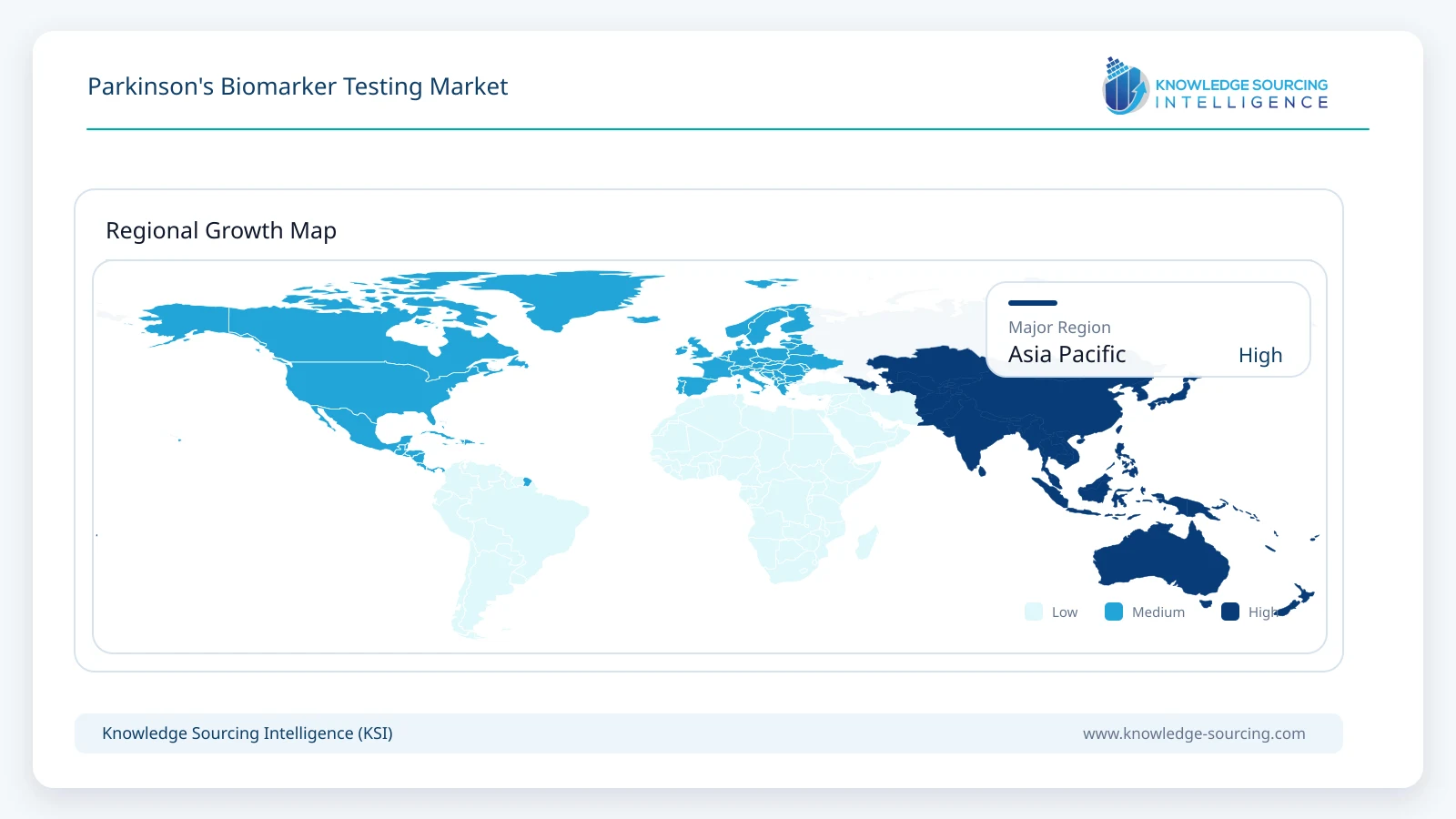
North America represents the largest market for Parkinson's biomarker testing because it combines advanced neurological care infrastructure with strong investment in translational neuroscience research. Pharmaceutical companies, academic medical centers, and biotechnology firms are expanding biomarker-driven clinical programs as disease-modifying therapies move through clinical development and require objective patient stratification. This demand increases adoption of ultrasensitive protein assays, genetic testing, and multimodal biomarker platforms capable of supporting both clinical research and future diagnostic applications. The region also benefits from extensive collaboration between industry and non-profit organizations, including large longitudinal cohort studies that generate standardized biospecimens and disease progression data. Regulatory agencies continue to support biomarker qualification initiatives, encouraging assay developers to produce clinically validated and analytically reproducible tests. Healthcare providers increasingly recognize the limitations of symptom-based diagnosis during early disease stages, which is driving investment in blood-based biomarkers and less invasive diagnostic approaches.
Europe Market Analysis
Europe maintains a significant position in the Parkinson's biomarker testing market because coordinated neurological research programs and supportive regulatory frameworks encourage multicenter biomarker validation. Academic institutions are collaborating across national borders to establish harmonized biobanks, standardized analytical protocols, and longitudinal patient registries that improve reproducibility of clinical evidence. This coordinated approach reduces variability in biomarker assessment while accelerating translation from research settings to regulated clinical applications. Pharmaceutical companies increasingly integrate European research centers into global clinical trials because these institutions provide well-characterized patient cohorts and extensive experience in neurodegenerative disease research. The European Medicines Agency continues supporting biomarker qualification within defined contexts of use, encouraging diagnostic developers to align analytical validation with regulatory expectations.
Asia Pacific Market Analysis
Asia Pacific is emerging as the fastest-growing regional market because demographic aging and expanding healthcare infrastructure are increasing the burden of Parkinson's disease across major economies. Governments and healthcare institutions are investing in neurological research capabilities while improving access to advanced diagnostic technologies that support earlier disease identification. Japan remains a regional leader due to its established neuroscience research ecosystem, large elderly population, and active participation in biomarker-driven clinical studies. China is expanding precision medicine initiatives and translational research investments, creating substantial opportunities for biomarker assay manufacturers and pharmaceutical sponsors. South Korea, Australia, Singapore, and India are strengthening academic collaborations focused on neurodegenerative disease biomarkers while increasing participation in multinational clinical trials. Despite this progress, differences in laboratory standardization, reimbursement availability, and access to specialized neurological services continue to influence market penetration.
Rest of the World
The Rest of the World market is developing gradually as awareness of neurodegenerative diseases increases and healthcare systems expand access to specialized neurological services. Countries in Latin America, the Middle East, and parts of Africa are strengthening diagnostic capabilities through investments in tertiary care hospitals, academic partnerships, and laboratory modernization. These improvements increase opportunities for biomarker testing, although adoption remains concentrated within major urban healthcare centers because advanced analytical infrastructure is not uniformly available. International pharmaceutical companies continue incorporating selected countries into global Parkinson's disease clinical trials, which promotes technology transfer and expands experience with biomarker-guided patient selection. Healthcare providers increasingly recognize the need for objective diagnostic tools that differentiate Parkinson's disease from related movement disorders, encouraging gradual adoption of molecular and protein biomarker assays.
Regulatory Landscape
Regulatory oversight for Parkinson's biomarker testing is evolving from analytical validation toward clinical qualification because regulators increasingly recognize biomarkers as important tools for precision medicine and neurological drug development. The U.S. Food and Drug Administration (FDA) and the European Medicines Agency (EMA) evaluate biomarkers according to their intended context of use rather than treating all biomarkers as universally applicable diagnostic tools. This approach is encouraging developers to generate robust analytical performance data, longitudinal clinical evidence, and multicenter validation studies before seeking regulatory acceptance. Consequently, assay developers are prioritizing standardized protocols, reproducibility studies, and harmonized specimen handling to satisfy regulatory expectations while improving confidence among healthcare providers and pharmaceutical sponsors.
Companion biomarker strategies are also gaining importance because disease-modifying Parkinson's therapies increasingly require biologically defined patient populations. Regulatory agencies support biomarker qualification for patient enrichment, pharmacodynamic assessment, and disease progression monitoring when sufficient scientific evidence demonstrates clinical relevance. International initiatives such as the FDA Biomarker Qualification Program and the EMA Qualification of Novel Methodologies procedure continue to provide structured pathways for biomarker developers, reducing uncertainty during clinical development. These frameworks strengthen collaboration among diagnostic manufacturers, academic institutions, and pharmaceutical companies while accelerating translation of validated biomarkers into therapeutic research.
Global regulatory expectations continue to converge around analytical standardization, quality management, and clinical evidence generation, although regional approval pathways still differ. Laboratory-developed tests and in vitro diagnostic assays are undergoing increasing scrutiny regarding assay reproducibility, reference standards, and real-world clinical utility. The European Union In Vitro Diagnostic Regulation (IVDR) has raised evidence requirements for diagnostic manufacturers, while agencies across Asia-Pacific are strengthening quality and performance evaluation frameworks. This regulatory progression supports long-term market credibility by ensuring that commercially deployed biomarker assays demonstrate consistent analytical performance across diverse clinical settings.
Pipeline Analysis
The Parkinson's biomarker testing pipeline is transitioning from discovery-focused research toward clinical validation because pharmaceutical companies increasingly require objective biological endpoints to support disease-modifying therapies. Alpha-synuclein seed amplification assays (SAAs) have emerged as one of the most promising biomarker technologies due to their ability to detect misfolded alpha-synuclein aggregates associated with Parkinson's disease. Clinical investigators are expanding multicenter validation studies to establish assay sensitivity, specificity, and reproducibility across diverse patient populations. This shift strengthens confidence in biomarker-guided diagnosis while supporting earlier identification of prodromal disease.
Beyond alpha-synuclein, sponsors are evaluating complementary biomarker panels that combine neurofilament light chain (NfL), lysosomal pathway markers, inflammatory proteins, metabolomic signatures, and genetic variants including LRRK2, GBA1, and SNCA. These multimodal approaches address biological heterogeneity that limits the performance of individual biomarkers while improving patient stratification for clinical trials. Longitudinal initiatives such as the Parkinson's Progression Markers Initiative (PPMI) continue generating standardized biospecimens and clinical datasets that support biomarker qualification and facilitate cross-study comparisons. The increasing availability of plasma-based biomarkers also reduces dependence on cerebrospinal fluid sampling, improving patient acceptance and scalability.
Clinical development is increasingly aligning biomarker validation with therapeutic pipelines because sponsors require objective pharmacodynamic endpoints alongside conventional clinical outcome measures. Companies developing disease-modifying therapies are integrating biomarker testing into Phase II and Phase III programs to monitor target engagement, disease progression, and treatment response. This strategy improves trial efficiency by enriching patient populations most likely to demonstrate measurable biological benefit. As regulatory agencies continue recognizing qualified biomarkers within defined contexts of use, the pipeline is expected to evolve toward standardized companion diagnostic and disease-monitoring solutions that support precision neurology.
Reimbursement Landscape
Reimbursement for Parkinson's biomarker testing remains limited because most biomarker assays are still positioned within research and clinical development rather than routine diagnostic practice. Public and private healthcare payers require strong evidence demonstrating that biomarker-guided diagnosis improves patient outcomes, reduces unnecessary healthcare utilization, or enables more effective therapeutic decision-making. This evidence requirement is encouraging diagnostic developers to generate health economic data alongside analytical and clinical validation studies. Consequently, reimbursement adoption currently varies according to healthcare system maturity, research funding availability, and national coverage policies.
Coverage prospects are improving as disease-modifying therapies advance through late-stage development because objective biomarkers become increasingly important for patient selection and treatment monitoring. Health technology assessment organizations are evaluating the clinical utility of blood-based biomarker assays that reduce invasive procedures while supporting earlier intervention strategies. As standardized testing protocols and regulatory-qualified biomarkers become available, reimbursement frameworks are expected to expand gradually across developed healthcare markets. Long-term commercial adoption will therefore depend not only on analytical performance but also on demonstrating measurable clinical and economic value within routine neurological care.
Competitive Landscape
F. Hoffmann-La Roche Ltd.
F. Hoffmann-La Roche maintains a leading strategic position through its combination of global diagnostics expertise, neurological research capabilities, and extensive pharmaceutical portfolio. The company is strengthening its neurodegenerative disease strategy by integrating biomarker discovery with therapeutic development, enabling coordinated advancement of precision medicine solutions.
Quanterix Corporation
Quanterix differentiates itself through its proprietary Simoa® (Single Molecule Array) technology, which enables ultra-sensitive detection of low-abundance protein biomarkers. The company is expanding applications of its digital immunoassay platform across neurodegenerative diseases, supporting research involving alpha-synuclein, neurofilament light chain, glial fibrillary acidic protein, and additional neurological biomarkers.
Bio-Rad Laboratories, Inc.
Bio-Rad Laboratories leverages decades of expertise in life science research, molecular biology, and clinical diagnostics to support neurological biomarker discovery. The company is developing highly reproducible laboratory solutions that improve assay consistency across research institutions and pharmaceutical development programs. Its portfolio includes reagents, quality control materials, digital PCR technologies, immunoassays, and laboratory automation systems that facilitate biomarker validation and genetic analysis.
Abbott Laboratories
Abbott Laboratories combines extensive diagnostic capabilities with a diversified global healthcare portfolio that supports neurological biomarker research and clinical laboratory testing. The company is investing in automated immunoassay systems, molecular diagnostics, and digital health technologies that improve workflow efficiency and analytical performance.
Thermo Fisher Scientific Inc.
Thermo Fisher Scientific occupies a strategic position by supplying research instruments, molecular diagnostic technologies, sequencing platforms, mass spectrometry systems, and laboratory reagents used throughout biomarker discovery and validation. The company is supporting neurological research through integrated analytical workflows that enable comprehensive characterization of protein, genetic, and metabolomic biomarkers. Its technologies are widely utilized across pharmaceutical companies, academic institutions, and contract research organizations conducting Parkinson's disease studies.
GE HealthCare Technologies Inc.
GE HealthCare Technologies differentiates itself through advanced medical imaging and digital healthcare solutions that complement molecular biomarker research. The company is integrating artificial intelligence, quantitative imaging, and advanced visualization technologies to improve neurological disease assessment and support multimodal biomarker development.
Key Developments
June 2026: Neuropacs reported a study comparing its MRI-based imaging biomarker for Parkinson’s disease with the CSF alpha-synuclein seed amplification assay. The findings suggest the two approaches may capture different aspects of disease biology and could be complementary in diagnosis and characterization.
November 2025: Two researchers from the WEHI Parkinson’s Disease Research Centre joined an international effort to identify a blood-based biomarker for Parkinson’s disease, supported by a $1.77 million grant from the Michael J. Fox Foundation. The work aims to improve earlier detection and monitoring through a more accessible blood test.
Strategic Insights and Future Market Outlook
The Parkinson's biomarker testing market is transitioning from exploratory biomarker discovery to clinically validated testing because therapeutic innovation increasingly depends on objective measures of disease biology rather than symptom-based assessment alone. Pharmaceutical sponsors are aligning diagnostic development with disease-modifying therapeutic pipelines to improve patient selection, monitor target engagement, and generate measurable clinical endpoints. This integration reduces variability in clinical trials while strengthening the probability of demonstrating therapeutic benefit. As validation evidence continues to expand, biomarker testing is expected to evolve from a research-supporting function into an essential component of precision neurology.
Blood-based biomarker technologies are expected to reshape competitive dynamics because they provide a less invasive alternative to cerebrospinal fluid analysis while supporting broader clinical accessibility. Diagnostic manufacturers are investing in ultrasensitive immunoassays, multiplex analytical platforms, and artificial intelligence-enabled data interpretation to improve diagnostic performance across heterogeneous patient populations. At the same time, multimodal biomarker strategies that combine protein, genetic, metabolomic, and imaging information are becoming increasingly important because no individual biomarker consistently captures the complexity of Parkinson's disease pathology. This evolution favors companies capable of integrating multiple diagnostic modalities within standardized clinical workflows.
Regulatory qualification, analytical standardization, and reimbursement evidence will determine the pace of commercial adoption over the forecast period. Developers are generating longitudinal clinical evidence that demonstrates reproducibility, clinical utility, and health economic value, enabling healthcare systems to justify broader implementation. Strategic collaborations among diagnostic companies, pharmaceutical manufacturers, academic institutions, and international research consortia are expected to accelerate biomarker qualification while reducing development risks. These partnerships will remain central to establishing globally accepted testing standards and expanding access to validated biomarker technologies.
The market therefore represents a fundamental shift in Parkinson's disease management, where biological characterization increasingly complements clinical evaluation throughout diagnosis, therapeutic development, and disease monitoring. Organizations that combine robust analytical capabilities, regulatory readiness, and strong collaborative networks are expected to strengthen their competitive position as precision medicine becomes an increasingly integral component of neurological care.
Parkinson's Biomarker Testing Market Scope:
| Report Metric | Details |
|---|---|
| Total Market Size in 2026 | USD 1.76 billion |
| Total Market Size in 2035 | USD 5.15 billion |
| Forecast Unit | Billion |
| Growth Rate | 12.6% |
| Study Period | 2021 to 2035 |
| Historical Data | 2021 to 2024 |
| Base Year | 2025 |
| Forecast Period | 2026 – 2035 |
| Segmentation | Biomarker Type, Technology Platform, Sample Type, Clinical Application, End User, Geography |
| Companies |
|
Market Segmentation
Biomarker Type
Technology Platform
End User
Geography
- North America
- South America
- Europe
- Middle East and Africa
- Asia Pacific
Table of Contents
1. EXECUTIVE SUMMARY
1.1 Market Snapshot
1.2 Key Findings
1.3 Analyst Insights
1.4 Strategic Recommendations
2. RESEARCH METHODOLOGY
2.1 Research Design
2.2 Data Collection Methodology
2.3 Market Size Estimation
2.4 Forecasting Model
2.5 Assumptions & Limitations
3. GLOBAL PARKINSON'S BIOMARKER TESTING MARKET OVERVIEW, SIZE & FORECAST
3.1 Market Definition & Scope
3.2 Parkinson's Disease Overview
3.3 Evolution of Parkinson's Biomarker Testing
3.4 Key Market Trends
3.5 Historical Market Size Analysis (2021–2025)
3.6 Market Forecast (2026–2035)
3.7 Disease Burden & Unmet Clinical Needs
3.8 Epidemiology & Prevalence Analysis
3.9 Diagnosed Patient Population Analysis
3.10 Biomarker Testing Adoption Analysis
3.11 Current Diagnostic Pathway & Role of Biomarkers
3.12 Clinical Utility of Biomarker Testing Across Disease Stages
4. MARKET DYNAMICS
4.1 Market Drivers
4.2 Market Restraints
4.3 Market Opportunities
4.4 Market Challenges
5. INDUSTRY LANDSCAPE
5.1 Industry Value Chain Analysis
5.2 Pricing Analysis
5.3 Reimbursement Landscape
6. INNOVATION LANDSCAPE
6.1 Emerging Biomarker Technologies
6.2 Product Innovation Analysis
6.3 Clinical Trial Analysis
6.4 Pipeline Analysis
6.5 Multi-Omics & Precision Neurology Developments
6.6 Artificial Intelligence & Machine Learning Integration in Biomarker Discovery
6.7 Digital Biomarkers & Wearable Device Integration
6.8 Technology Roadmap
7. REGULATORY LANDSCAPE
7.1 Regulatory Framework
7.2 Approval Pathways
7.3 Compliance Requirements
8. GLOBAL PARKINSON'S BIOMARKER TESTING MARKET LANDSCAPE ANALYSIS
8.1 Analysis by Technology Platform
8.2 Analysis by Biomarker Type
8.3 Analysis by Sample Type
8.4 Analysis by Testing Methodology
8.5 Analysis by Clinical Application
8.6 Analysis by End User
9. GLOBAL PARKINSON'S BIOMARKER TESTING MARKET SEGMENT ANALYSIS (2021–2035)
9.1 By Biomarker Type
9.1.1 Protein Biomarkers
9.1.2 Genetic Biomarkers
9.1.3 Metabolomic Biomarkers
9.1.4 Lipid Biomarkers
9.1.5 Others
9.2 By Technology Platform
9.2.1 Immunoassays
9.2.2 Molecular Diagnostics
9.2.3 Mass Spectrometry
9.2.4 Next-Generation Sequencing (NGS)
9.2.5 PCR-Based Technologies
9.2.6 Other Analytical Technologies
9.3 By Sample Type
9.3.1 Cerebrospinal Fluid (CSF)
9.3.2 Blood
9.3.3 Plasma & Serum
9.3.4 Saliva
9.3.5 Urine
9.3.6 Tissue & Other Biological Samples
9.4 By Clinical Application
9.4.1 Early Disease Detection
9.4.2 Differential Diagnosis
9.4.3 Disease Progression Monitoring
9.4.4 Patient Stratification
9.4.5 Others
9.5 By End User
9.5.1 Hospitals
9.5.2 Diagnostic Laboratories
9.5.3 Academic & Research Institutes
9.5.4 Others
10. GLOBAL PARKINSON'S BIOMARKER TESTING MARKET GEOGRAPHICAL ANALYSIS (2021–2035)
10.1 North America
10.2 Europe
10.3 Asia-Pacific
10.4 South America
10.5 Middle East & Africa
11. GLOBAL PARKINSON'S BIOMARKER TESTING MARKET COUNTRY ANALYSIS (2021–2035)
11.1 United States
11.2 Canada
11.3 Germany
11.4 United Kingdom
11.5 France
11.6 Italy
11.7 Spain
11.8 Japan
11.9 China
11.10 South Korea
11.11 Australia
11.12 India
11.13 Brazil
11.14 Saudi Arabia
12. COMPETITIVE LANDSCAPE
12.1 Market Share Analysis
12.2 Strategic Developments
12.3 Mergers & Acquisitions, Partnerships & Collaborations
12.4 Product Launches
13. COMPANY PROFILES
13.1 F. Hoffmann-La Roche
13.1.1 Company Overview
13.1.2 Financials
13.1.3 Product Portfolio
13.1.4 Recent Developments
13.2 Quanterix Corporation
13.3 Bio-Rad Laboratories, Inc.
13.4 Abbott Laboratories
13.5 Thermo Fisher Scientific Inc.
13.6 Herantis Pharma Plc
13.7 Revvity, Inc.
13.8 Sysmex Corporation
13.9 GE HealthCare Technologies Inc.
13.10 Sysmex Corporation
14. GLOBAL PARKINSON'S BIOMARKER TESTING MARKET COMMERCIAL FORECAST ANALYSIS
14.1 Alpha-Synuclein Biomarker Testing
14.2 Neurofilament Light Chain (NfL) Testing
14.3 Genetic Biomarker Testing
14.4 Multi-Biomarker Panel Testing
14.5 Cerebrospinal Fluid Biomarker Testing
14.6 Blood-Based Biomarker Testing
14.7 Digital Biomarker Solutions
15. INVESTMENT & FUNDING ANALYSIS
15.1 Venture Capital Trends
15.2 Government Funding
15.3 R&D Investments
16. FUTURE OUTLOOK
16.1 Key Growth Opportunities
16.2 Future Industry Trends
Navigate
Trusted by the world's leading organizations











