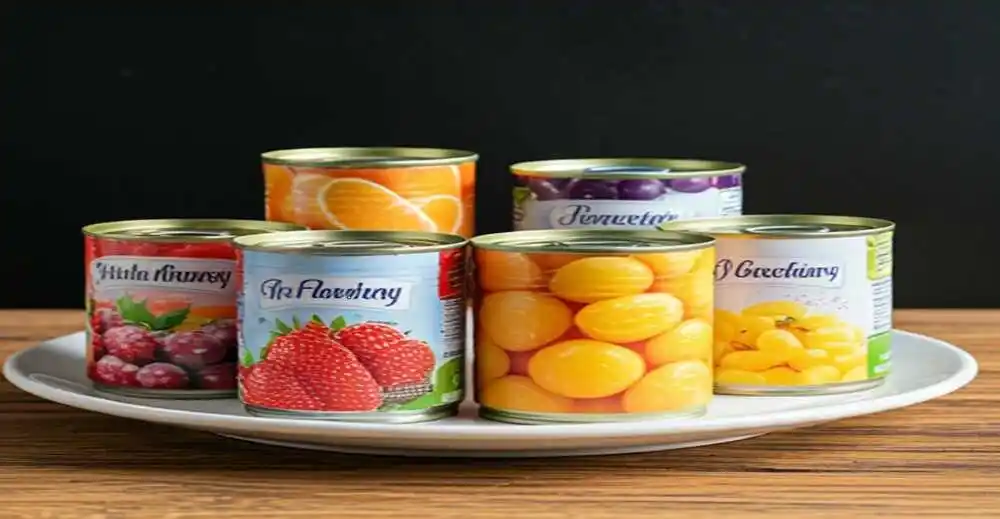
The canned fruits market is valued at US$12 billion in 2025 and is expected to grow at a CAGR of 5.41% over the forecast period to reach a total market size of US$16 billion by 2030. Canned fruits are the easiest a...
The canned fruits market is valued at US$12 billion in 2025 and is expected to grow at a CAGR of 5.41% over the forecast period to reach a total market size of US$16 billion by 2030.
Canned fruits are the easiest and most lasting methods of sensing taste along with nutrition in fresh fruits. The canning process includes heating fruits and then storing them in a sealed container such as a tin can, which can keep the taste, texture, and nutrient value of the fruit for an extended period. Such canned fruits include peaches, pineapples, cherries, pears, and applesauce. Some advantages of canned fruits are convenience, long shelf life, nutritional value, and low-cost affordability. They can be eaten directly without preparation, storing most nutrients from fresh fruits. They are also much cheaper than fresh fruits, especially in the off-season, since they can be sold on a seasonal basis.
Factors like convenience, long shelf life, health and wellness trends, and urbanization have increased the growth of the canned fruits market. Canned fruits have relatively longer shelf lives hence, food waste is reduced, while there is availability throughout the year. Modern canning methods preserve essential vitamins and minerals, making canned fruits a healthy alternative. Besides, they cater to diverse tastes since canned fruits are produced for varied types of diets. Urbanization has increased the demand for convenience and already prepared types of foods such as canned fruits. Consumers are preferring increasingly healthy, easy, and cost-effective food options, thus matching perfectly with canned fruits. Manufacturers are launching new products such as organic and low-sugar exotic fruits and advancing their packaging technology.
Since the rise of the canned fruits market, many companies are working to launch new products and technologies in the market to attract greater customers. For instance, in November 2022, Del Monte®, the biggest canned fruit brand in the UK, partnered with Lisa Faulkner, cookery author, and celebrity, to give shoppers some inspiring recipes using delicious and convenient canned fruit. The initiative is an appeal to the goodness of canned fruit, the benefits of eating it, and its nutritional value as part of everyday meals.
By product type, the canned fruits market is segmented into five major categories, canned peaches, canned cherries, canned pineapples, canned mandarin oranges, and others. Canned peach, which is popularly known to have health benefits, versatility, and yummy taste, is anticipated to have the biggest share among the five categories. Many recipes can incorporate the fruit, and as conscious consumers realize the health potential, they choose to incorporate the product in meals they enjoy with perhaps even fewer concerns about easy handling in a diet. Canned cherries, pineapples, and mandarin oranges also appear to be well-favored since they are rich in nutrients and are available. Moreover, with busy lifestyles, canned fruits such as peaches serve the consumer well.
The canned fruits market by distribution channel is segmented into grocery stores, supermarkets, and online. Supermarkets constitute the largest market share of canned fruits due to their extensive reach, varied product offerings, and established loyalty among customers. These are major channels for distribution since they provide services to a wider coverage of customers to purchase products such as canned fruits. They offer a variety of food products, including canned fruits, making it very convenient for customers to buy along with the grocery items. Thus, this makes it a reliable source of canned fruits.
Based on geography, the Asia Pacific region of the canned fruits market is growing significantly, because canned fruits are easier to handle and ready to use for consumers. Society has been changing rapidly in this region, and thus demand for processed meals like canned fruits is also growing. Shorter preparation times and rapid population growth are some of the most profound contributors to the demand for canned fruits. The Asia Pacific region countries moreover have been looking for healthier alternatives processed for long shelf life, with increasingly growing needs for ready-to-eat meals like canned fruits, thus promoting the regional market in the coming years.
As a part of the report, the major players operating in the canned fruits market that have been covered as Tropical Food Industries Co., Ltd., Del Monte Food Inc., Princes Limited, Rhodes Food Group, Langeberg & Ashton Foods, Dole Packaged Foods LLC, Vidya Sagar Food Pvt Ltd., and Jutai Foods Group Ltd, among others.
View a sample of the report or purchase the complete study at https://www.knowledge-sourcing.com/report/canned-fruits-market
The market analytics report segments the canned fruits market as follows:- By Product Type
- Canned peaches
- Canned cherries
- Canned pineapples
- Canned Mandarin Oranges
- Others
- By Distribution Channel
- Grocery Stores
- Supermarkets
- Online
- By Geography
- North America
- USA
- Canada
- Mexico
- South America
- Brazil
- Argentina
- Others
- Europe
- Germany
- France
- UK
- Italy
- Others
- Middle East and Africa
- Saudi Arabia
- UAE
- Others
- Asia Pacific
- China
- Japan
- India
- Indonesia
- Taiwan
- Thailand
- Others
- North America
- Frozen Food Market Size
- Global Fruit Juice Market Size
- Canned Tuna Market Size
Have questions?
More Press Releases
How Potensic's Atom 3 Launch Could Impact the Consumer Drones Market, Expected to Reach USD 21.4 Billion by 2031
Potensic brought its ATOM 3 camera drone to IFA 2026 in Berlin, returning to the show for a third consecutive year to showcase the sub-249-gram drone under the theme “SEE BEYOND.” The ATOM 3 combines a 1/1.3-inch sensor and 48mm dual-focal camera with 4K/60fps HDR video, AI Follow 2.0 subject tracking, and up to 16km of video transmission, positioning it within the lightweight consumer camera-drone segment alongside competing entry-level models. According to Knowledge Sourcing Intelligence (KSI), the global consumer drones market is expected to reach USD 12.0 billion by 2026 and is forecast to reach USD 21.4 billion by 2031.
How Sonos, JBL, and 1MORE’s Latest Audio Launches Will Impact the Home Audio Equipment Market, Expected to Reach USD 46.1 Billion by 2031
Sonos, JBL, and 1MORE are advancing home and personal audio with connected ecosystems, Dolby Atmos, AI-powered sound optimization, adaptive noise cancellation, spatial audio, and longer battery life. Their 2026 launches reflect demand for immersive wireless listening, supporting growth in the Home Audio Equipment Market toward USD 46.1 billion by 2031.
How Reliance's Bombay Creamery Launch Will Shake Up the Global Ice Cream Market, Expected to Reach USD 98.3 Billion by 2031
Reliance Consumer Products Limited (RCPL) has launched Bombay Creamery, an accessible-premium dairy ice cream brand made with real dairy cream and priced from as low as Rs 10, marking its dedicated entry into India's ice cream category. The launch, supported by the nationwide network of Reliance and a brisk marketing move, puts RCPL in the competition of some established brand names like Amul, Kwality Wall's, Mother Dairy, Vadilal and global brands like Magnum, Baskin-Robbins etc. The shift is a reflection of the premiumisation and innovation trends outlined in a new report by Knowledge Sourcing Intelligence, according to which the global ice cream market is worth USD 74.9 billion by 2026, and USD 98.3 billion by 2031.