The security screening market is expected to grow at a CAGR of 9.66% with a market valuation of US$7,862.590 million in 2021 and is expected to reach a market value of US$14,995.386 million by 2028. The market for...
The security screening market is expected to grow at a CAGR of 9.66% with a market valuation of US$7,862.590 million in 2021 and is expected to reach a market value of US$14,995.386 million by 2028.
The market for security screening market is significantly impacted favorably by the growing number of air passengers and smart city initiatives
As per the report, the market for security screening is projected to upsurge during the forecast period.
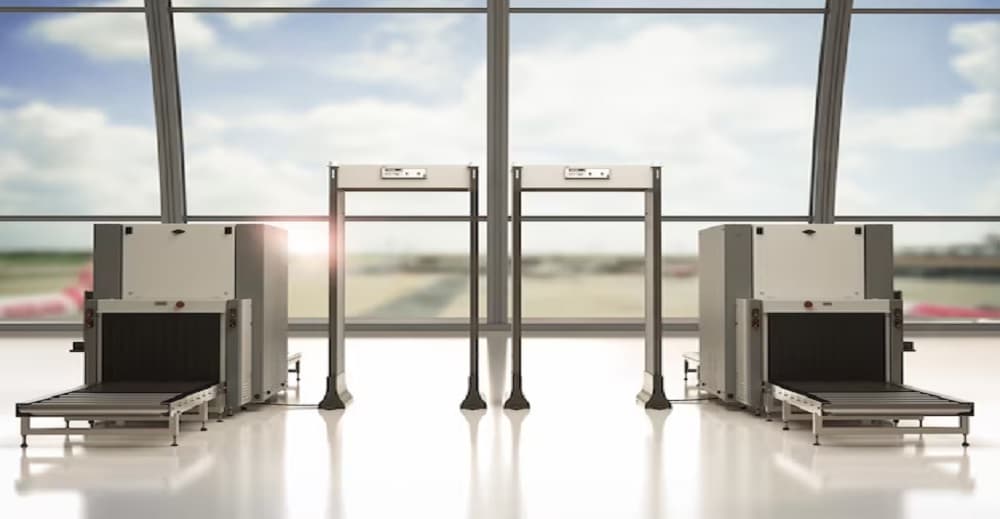
Security screening is an intensive method used to ensure safety and reduce risks in a variety of environments. It entails systematically inspecting individuals, items, or areas to identify potential security threats such as prohibited objects, weapons, or dangerous substances. This process is critical for securing public spaces, transportation systems, workplaces, and events. Security screening employs a variety of advanced technologies, including X-ray scanners, metal detectors, explosive trace detectors, and biometric systems, to efficiently detect security risks.
The increasing number of air passengers is a major driving force behind the growth of the security screening market. For instance, according to the U.S. Department of Transportation, U.S. Airlines carried 83.1 million scheduled passengers (domestic and international) in August 2023 an increase of 1.7% compared to July 2023 and U.S. airlines carried 194 million additional passengers in 2022 than in 2021, a 30% increase year on year. Additionally, according to the Statistics Germany data, in 2022, over 155 million air passengers used major German airports, more than doubling the number of passengers recorded in the previous year.
The security screening market has been categorized based on product, application, and geography
As per the product type category, the market has been classified into X-ray screening, biometric systems, electromagnetic detectors, and others. X-ray screening is widely used in security screening due to its superior effectiveness in identifying potential threats and ensuring public safety. This technology allows security personnel to thoroughly inspect items and luggage without conducting invasive searches or disruptions. X-ray screening is a non-intrusive and time-saving method for detecting prohibited or dangerous objects such as weapons, explosives, and contraband materials and accounts for a major share of the security screening market.
Based on the application, the classification has been done into airports, borders, government institutions, hotels, railway stations, tourist attractions, and others. Security screening is widely used in airports for several important reasons, including ensuring the safety and well-being of passengers and aviation personnel. Airports can reduce the risk of terrorism and criminal activity by implementing comprehensive security measures that deter and detect potential threats, such as prohibited items or dangerous substances. Security screening in airports is an indispensable component of modern air travel, prioritizing safety, building trust, and maintaining international compliance and accounting for a major portion of the security screening market.
By region, Asia Pacific is expected to account for a significant share of the security screening market due to the increasing number of air passengers and airports in the major countries of the region such as India. For instance, according to the Press Information Bureau data, domestic airlines carried an impressive 1190.62 lakh passengers between January and August 2023, representing a 38.27% increase over the same period last year. Additionally, according to the Ministry of Civil Aviation, the number of airports increased from 74 in 2014 to 147 in 2022. Moreover, according to the International Air Transport Association, Asia-Pacific Airlines' international traffic in 2022 increased by 363.3% over 2021, sustaining the region's strongest year-over-year growth rate.
As a part of the report, Analogic Corporation, OSI Systems, Inc., L3Harris Security & Detection Systems, Smiths Detection Group Ltd., Nuctech Company Limited, Astrophysics Inc., 3DX-RAY, and Leidos are the major players in the security screening market.
View a sample of the report or purchase the complete study at https://www.knowledge-sourcing.com/report/security-screening-market
This security screening market has been analyzed into the following segments:
- By Product
- X-Ray Screening Systems
- Body Scanners
- Baggage Scanners
- Others
- Biometric System
- Electromagnetic Detectors
- Others
- X-Ray Screening Systems
- By Application
- Airports
- Borders
- Government Institutions
- Hotels
- Railway Stations
- Tourist Attractions
- Others
- By Geography
- North America
- United States
- Canada
- Mexico
- South America
- Brazil
- Argentina
- Others
- Europe
- Germany
- France
- United Kingdom
- Spain
- Others
- Middle East and Africa
- Saudi Arabia
- UAE
- Israel
- Others
- Asia Pacific
- Japan
- China
- India
- South Korea
- Indonesia
- Others
- North America
- Data Center Security Market Analysis
- Security as a Service Market Analysis
- Security Analytics Market Report
Have questions?
More Press Releases
Lifestyle-Associated Cancer Epidemiology Market is expected to reach USD 13.12 billion by 2031
The worldwide market for lifestyle-associated cancer epidemiology is expected to expand rapidly, owing to the rising global awareness of modifiable risk factors such as tobacco use, obesity, poor diet, alcohol consumption, and physical inactivity, which together contribute significantly to cancer incidence. Health organizations, along with research institutions, are investing in enhanced surveillance, behavioral risk monitoring, cancer registries, and prevention strategies to address the growing burden of preventable cancers. In recent years, the World Health Organization and several national bodies have emphasized data-driven epidemiology. These initiatives support targeted interventions, policy measures, and screening programs. Additionally, the widespread adoption of digital epidemiology tools, precision prevention approaches, and AI-powered analytics is fueling the demand for robust epidemiology infrastructure worldwide.
Psycho-Oncology Digital Health Market is anticipated to surpass USD 290.01 million in 2031 at a CAGR of 8.5%
The psycho-oncology digital health market is expanding as healthcare providers increasingly integrate digital mental health solutions into cancer care. Growing demand for AI-driven platforms, digital cognitive behavioral therapy, telehealth, and mobile applications is improving access to psychological support. North America leads the market, while Asia Pacific is expected to witness the fastest growth.
Intratumoral Injection Therapy Market is expected to reach USD 630.39 million by 2031
The worldwide market for Intratumoral Injection Therapy is expected to experience substantial growth in the market due to the increasing demand for localized cancer treatments that are essential in enhancing therapeutic efficacy while also minimizing systemic toxicity. Intramural injection therapy is often involved with direct administration of therapeutic agents into tumors, which enables high local drug concentrations and targets immune activation. Growing interest in gene therapies, cancer immunotherapy, and on-politic viruses, including cytokine-based therapies are also accelerating market expansion.