The tumor ablation market is expected to grow at a CAGR of 11.13%, reaching a market size of US$2.125 billion in 2030 from US$1.575 billion in 2025. Tumor ablation is an image-guided technology that is used for tre...
The tumor ablation market is expected to grow at a CAGR of 11.13%, reaching a market size of US$2.125 billion in 2030 from US$1.575 billion in 2025.
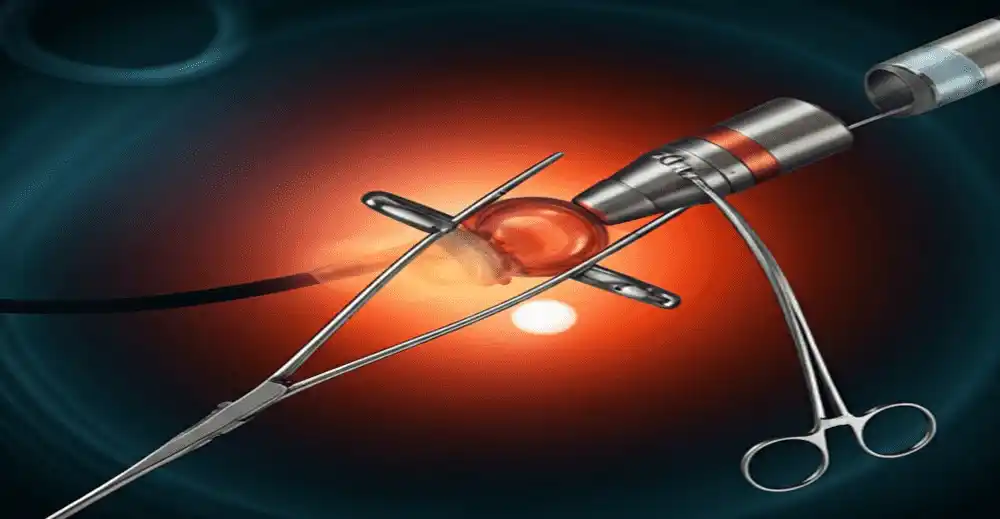
Tumor ablation is an image-guided technology that is used for treating tumors and cancer of the lungs, kidneys, liver, bone, etc. This technique offers efficiency in the diagnosis and prevention of tumors in their early stages. It is a minimally invasive procedure where thermal energy is used for heating and cooling the tissue to cytotoxic levels. Radiofrequency, microwave, laser, and cryoablation are common tumor ablation technology.
-
Growth Drivers of the Tumor Ablation Market
The rising cases of cancer and the increasing number of cancer patients are one of the major factors driving the global tumor ablation market growth. The lifestyle and modern diet of people have increased the rate of tumors and cancers in people, resulting in the growing demand for treatment and diagnosis methods like tumor ablation in the global market. Also, the technological advancements and up-gradation in research and development techniques employed in ablation devices are stimulating the global tumor ablation market growth. The high research and development investments made by several companies are raising the market share of the global tumor ablation market in the global healthcare and medical sector.
-
Segmentation of the Tumor Ablation Market
The tumor ablation market is driven by continued innovation in technology. There are increasing advancements in radiofrequency (RF) ablation, microwave ablation and other merging technologies that are offering more efficiency in diagnosis and tumor treatments. For example, in July 2024, AngioDynamics partnered with Immunophotonics to explore synergies in the combination of tumor ablation techniques and immunotherapy. The two companies are seeking to study how immunotherapy can amplify the immune response induced by tumor ablation, thus hopefully leading to better patient outcomes and a stronger anti-tumor effect.
The tumor ablation market is segmented, by technology, into radiofrequency (rf) ablation, microwave ablation, cryoablation, and other technologies. Radiofrequency ablation refers to using high-frequency electrical currents to generate heat that destroys abnormal tissues. Microwave ablation uses electromagnetic waves to generate heat which targets the diseased tissue, offering higher temperature production resulting in faster and effective treatment. Cryoablation refers to using extreme cold to destroy abnormal or diseased tissue. During the forecast period, although radiofrequency ablation will continue to dominate the market as it is well-established in clinical practices, microwave ablation will be growing significantly too as it is offering more effective treatment.
The tumor ablation market is segmented by application into Liver Cancer, Lung Cancer, Kidney Cancer, Bone Metastasis, and Other Applications. Tumor ablation is used to diagnose and treat liver cancer by using RF and microwave technology to destroy the abnormal tissue. This market is growing due to the increasing incidence of liver cancer. In lung cancer, tumor ablation is used with RF and microwave ablation technology to target abnormal tissue. During the forecast period, lung cancer and liver cancer segment will be growing significantly due to more efficiency offered by ablation technology and also the growing prevalence of liver and lung cancer.
Based on geography, the North American region is expected to dominate the global tumor ablation market in the forecasted years. The increasing investments made by government organisations along with advanced healthcare infrastructure and several companies in this region in cancer treatment and diagnosis techniques are one of the factors boosting tumor ablation market growth.
-
Key Players in the Tumor Ablation Market
The report includes the major players operating in the tumor ablation market are Healthtronics, Inc., Medtronic, PLC, Sonacare Medical, Boston Scientific Corporation, Edap TMS S.A., Misonix, Inc., Galil Medical, Inc., Neuwave Medical, Inc., Mermaid Medical A/S, and Angiodynamics, Inc.
View a sample of the report or purchase the complete study at: https://www.knowledge-sourcing.com/report/tumor-ablation-market
The Tumor Ablation Market is analyzed into the following segments:
- By Technology
- Radiofrequency (Rf) Ablation
- Microwave Ablation
- Cryoablation
- Other Technologies
- By Mode of Treatment
- Surgical Ablation
- Laparoscopic Ablation
- Percutaneous Ablation
- By Application
- Liver Cancer
- Lung Cancer
- Kidney Cancer
- Bone Metastasis
- Other Applications
- By Geography
- North America
- USA
- Canada
- Mexico
- South America
- Brazil
- Argentina
- Others
- Europe
- Germany
- France
- UK
- Others
- Middle East and Africa
- Saudi Arabia
- UAE
- Others
- Asia Pacific
- China
- India
- Japan
- South Korea
- Taiwan
- Thailand
- Indonesia
- Others
- North America
- T-Cell Immunotherapy Market Report
- Cancer Cachexia Market Size
- Cancer Gene Therapy Market Report
Have questions?
More Press Releases
Semiconductor Test Socket Market Projected to Reach USD 3.55 Billion by 2032, Driven by AI and HPC Demand
The semiconductor test socket market is expanding as AI processors, high-performance computing, advanced packaging, and high-speed memory increase testing requirements. Growing semiconductor complexity is driving demand for reliable electrical contacts, improved signal integrity, and thermal management. Automotive electronics and power semiconductors are further creating opportunities for specialized test socket technologies.
Hydrogen Energy Storage Market to Reach USD 25.40 Billion by 2032 as Demand for Long-Duration Storage Grows
The hydrogen energy storage market is expanding as renewable energy integration, industrial hydrogen demand, and infrastructure investment drive adoption. Advancements in compressed gas, liquid hydrogen, underground geological, and solid-state storage technologies are creating opportunities across utilities, industrial applications, and grid-scale energy systems, while cost efficiency and infrastructure readiness remain critical challenges.
Thermal Energy Storage Market to Reach USD 10.20 Billion by 2032, Driven by Renewable Energy Integration and Industrial Heat Electrification
The thermal energy storage market is advancing as renewable energy integration, industrial electrification, and energy cost management drive demand. Innovations in sensible heat, latent heat, and thermochemical storage are expanding applications across industrial heating, cooling, concentrated solar power, and commercial buildings, creating opportunities for technology providers across major regional markets worldwide.