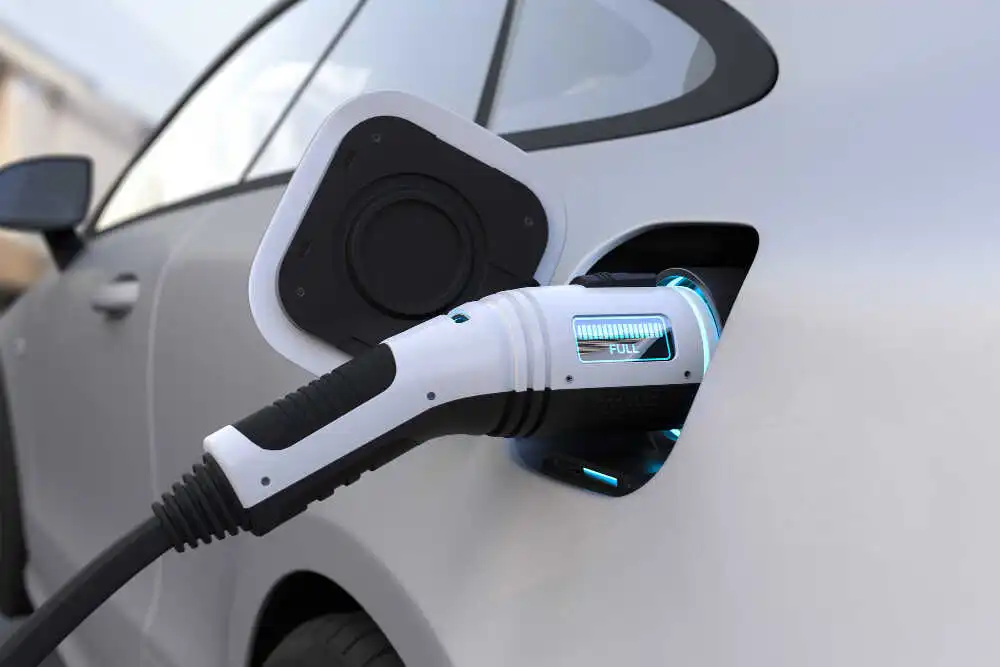
Starting the electric car journey is an exciting step towards a better future. However, with this new technology, there is a lot to learn especially when it comes to charging electric cars. The guidelines have significant importance to charge effectively in the correct way with the help of best prac...
|
Tax Law/Policy |
Authority | Came into Effect Date |
Description |
|
Batteries, Battery Components and Parts, and Critical Minerals |
The White House |
14 May 2024 |
The tariff rate for lithium-ion batteries will increase from 7.5% to 25% in 2024. While the tariff rate for lithium-ion non-EV batteries will increase from 7.5% to 25% in 2026. |
|
American Battery Technology Company |
U.S. Department of Treasury and Internal Revenue Service |
April 2024 |
After receiving a $20 million tax credit under the Qualifying Advanced Energy Project Tax Credit (48C), American Battery Technology Company again has been granted an additional $40.5 million. |
 Source: afdc.energy.gov
Public charging stations are particularly important for people who go about their business often. Yet, one has to be very cautious about the importance of the perceived differences. Regarding charging networks, one must investigate several of them, check charges, and learn about the locations. Some networks offer additional options, for instance, the ability to charge for session notifications or manage the application. Also, the sort of the charging station should be taken into consideration. As for large numbers of people and long distances, one can use a high-power DC quick charge; however, the constant use of the charging method can lead to battery degradation. Level 2 public chargers are often more suited for everyday charging needs.
Tip 4: Monitor Battery Temperature
Battery temperature is one of the key indicators known to affect the performance and durability of an EV’s battery. The potential difference is highly sensitive to high temperatures and charging systems deteriorate at low temperatures.
BYD company based in Shenzhen, China, introduced a Blade Battery that complies with all the EV safety standards, and according to the company’s statements, the Blade Battery was unleashed to Unsheathed to Safeguard the World. This battery while undergoing the nail penetration test emitted neither smoke nor fire after being penetrated, and the battery’s surface temperature only reached from 30 degrees Celsius to 60 degrees Celsius. Under this same circumstance, a battery made from lithium would reach 500 degrees Celsius and would have burnt violently. This battery blade is far more susceptible to catching fire, even when it is severely damaged.
Nonetheless, to improve battery performance, consumers must avoid charging EVs in extremely hot or cold temperatures. High temperatures can accelerate battery breakdown, shortening its lifespan. In contrast, cold conditions can reduce charging efficiency and decrease the battery's usable capacity.
Many current EVs have battery preconditioning technologies. This technology enables to warm or cool the battery before charging, which improves charging speed and battery life. The Chinese manufacturer GAC Group in April 2024, has broken several obstacles regarding the durability, and safety of “all-solid-state” batteries, and is expected to be the future rollout of technology that offers a range of over 620 miles per charge by 2026. All solid-state batteries are promising solutions to address the limitations of traditional lithium-ion batteries.
To sum it up, by monitoring battery temperature and utilizing existing technology, one may considerably extend the life of an EV's battery while maintaining top performance.
Tip 5: Practice Good Charging Habits
Developing proper charging habits is important for increasing EV's battery life and performance. Extreme charging cycles must be avoided. Instead of continually charging to 100% or draining to 0%, one must attempt to keep the battery's level of charge between 20% and 80%. This approach helps to maintain battery health and durability.
Regular, shorter charging periods are often preferred over rare deep discharges. Maintaining a consistent charging regimen might help to reduce stress on the battery cells. Furthermore, it is recommended to limit the number of times one plug and unplugs the charging cord. Excessive connections may strain the charging port. Following these instructions will dramatically improve EV's battery life and overall performance.
Tip 6: Planning Trips
Proper travel planning is vital for a stress-free and joyful electric vehicle driving experience. Understanding the charging infrastructure on the journey is vital. According to Electric Vehicle Charging and Infrastructure, shortly the number of EVE's ports with power output ranging from 250 kW to 349 kW is expected to increase, as there are possibilities of newer cars that need this kind of power supplies are expected to be launched.
Knowing the existing charging stations and whether they are compatible with cars or are located nearby, can help avoid range anxiety. This implies charging time has to be considered in the trip plan. When planning the route, it is also important to determine the distance to the subsequent charging points, the charge rate of the e-car, and the state of the battery.
Further, using navigation applications with built-in charging station information may greatly improve trip planning and route optimization.
Tip 7: Maximize Charging Efficiency
Evaluating the charging efficiency plays a central role whereby one looks forward to achieving maximum efficiency of the battery on the electric vehicles while at the same time having minimal charging times. This is why charging wires must also be properly taken care of as they are also very important to use. The cables must also be checked for signs of wear and tear, damage like developing cracks, signs of fray, or if any of the wires is exposed.
The charging environment also influences efficiency. One must avoid charging EVs in very dusty or rainy situations. These components can build up on the charging port and connections, thereby reducing charging efficiency.
It is recommended to check the EV’s charging system more often to prevent and resolve potential issues. An experienced person is capable of identifying weaknesses on time preventing complicated issues in the future and ensuring maximum charging efficiency. These tips may help to keep the charging efficiency at a high level and preserve the charging components of EVs.
Tip 8: Understanding Charging Costs
Understanding the financial consequences of charging EVs is crucial for planning and optimizing cost savings. The first step is to familiarise oneself with power rates. Different time-of-use plans and pricing structures might also have a substantial influence on billing charges.
It is common to find that charging stations within most networks contain certain costs since they are not all direct currents that are free of charge; the costs differ depending on the specific charging network and its region. As per the NREL, by 2030, private charging will compound 52% of the national investments in the national charging network which supports 33 million light-duty PEVs.
Figure 2: National Charging Network Supporting 33 Million Light-duty Pevs by 2030, in Percentage of the National Investment
Source: afdc.energy.gov
Public charging stations are particularly important for people who go about their business often. Yet, one has to be very cautious about the importance of the perceived differences. Regarding charging networks, one must investigate several of them, check charges, and learn about the locations. Some networks offer additional options, for instance, the ability to charge for session notifications or manage the application. Also, the sort of the charging station should be taken into consideration. As for large numbers of people and long distances, one can use a high-power DC quick charge; however, the constant use of the charging method can lead to battery degradation. Level 2 public chargers are often more suited for everyday charging needs.
Tip 4: Monitor Battery Temperature
Battery temperature is one of the key indicators known to affect the performance and durability of an EV’s battery. The potential difference is highly sensitive to high temperatures and charging systems deteriorate at low temperatures.
BYD company based in Shenzhen, China, introduced a Blade Battery that complies with all the EV safety standards, and according to the company’s statements, the Blade Battery was unleashed to Unsheathed to Safeguard the World. This battery while undergoing the nail penetration test emitted neither smoke nor fire after being penetrated, and the battery’s surface temperature only reached from 30 degrees Celsius to 60 degrees Celsius. Under this same circumstance, a battery made from lithium would reach 500 degrees Celsius and would have burnt violently. This battery blade is far more susceptible to catching fire, even when it is severely damaged.
Nonetheless, to improve battery performance, consumers must avoid charging EVs in extremely hot or cold temperatures. High temperatures can accelerate battery breakdown, shortening its lifespan. In contrast, cold conditions can reduce charging efficiency and decrease the battery's usable capacity.
Many current EVs have battery preconditioning technologies. This technology enables to warm or cool the battery before charging, which improves charging speed and battery life. The Chinese manufacturer GAC Group in April 2024, has broken several obstacles regarding the durability, and safety of “all-solid-state” batteries, and is expected to be the future rollout of technology that offers a range of over 620 miles per charge by 2026. All solid-state batteries are promising solutions to address the limitations of traditional lithium-ion batteries.
To sum it up, by monitoring battery temperature and utilizing existing technology, one may considerably extend the life of an EV's battery while maintaining top performance.
Tip 5: Practice Good Charging Habits
Developing proper charging habits is important for increasing EV's battery life and performance. Extreme charging cycles must be avoided. Instead of continually charging to 100% or draining to 0%, one must attempt to keep the battery's level of charge between 20% and 80%. This approach helps to maintain battery health and durability.
Regular, shorter charging periods are often preferred over rare deep discharges. Maintaining a consistent charging regimen might help to reduce stress on the battery cells. Furthermore, it is recommended to limit the number of times one plug and unplugs the charging cord. Excessive connections may strain the charging port. Following these instructions will dramatically improve EV's battery life and overall performance.
Tip 6: Planning Trips
Proper travel planning is vital for a stress-free and joyful electric vehicle driving experience. Understanding the charging infrastructure on the journey is vital. According to Electric Vehicle Charging and Infrastructure, shortly the number of EVE's ports with power output ranging from 250 kW to 349 kW is expected to increase, as there are possibilities of newer cars that need this kind of power supplies are expected to be launched.
Knowing the existing charging stations and whether they are compatible with cars or are located nearby, can help avoid range anxiety. This implies charging time has to be considered in the trip plan. When planning the route, it is also important to determine the distance to the subsequent charging points, the charge rate of the e-car, and the state of the battery.
Further, using navigation applications with built-in charging station information may greatly improve trip planning and route optimization.
Tip 7: Maximize Charging Efficiency
Evaluating the charging efficiency plays a central role whereby one looks forward to achieving maximum efficiency of the battery on the electric vehicles while at the same time having minimal charging times. This is why charging wires must also be properly taken care of as they are also very important to use. The cables must also be checked for signs of wear and tear, damage like developing cracks, signs of fray, or if any of the wires is exposed.
The charging environment also influences efficiency. One must avoid charging EVs in very dusty or rainy situations. These components can build up on the charging port and connections, thereby reducing charging efficiency.
It is recommended to check the EV’s charging system more often to prevent and resolve potential issues. An experienced person is capable of identifying weaknesses on time preventing complicated issues in the future and ensuring maximum charging efficiency. These tips may help to keep the charging efficiency at a high level and preserve the charging components of EVs.
Tip 8: Understanding Charging Costs
Understanding the financial consequences of charging EVs is crucial for planning and optimizing cost savings. The first step is to familiarise oneself with power rates. Different time-of-use plans and pricing structures might also have a substantial influence on billing charges.
It is common to find that charging stations within most networks contain certain costs since they are not all direct currents that are free of charge; the costs differ depending on the specific charging network and its region. As per the NREL, by 2030, private charging will compound 52% of the national investments in the national charging network which supports 33 million light-duty PEVs.
Figure 2: National Charging Network Supporting 33 Million Light-duty Pevs by 2030, in Percentage of the National Investment
 Source: NREL.gov
Furthermore, consumers must pay attention to these costs and incorporate them into the billing system. The long-term advantages of generating electricity for EVs over the cost of petrol for a conventional automobile could be established by comparing the total cost of charging the car. When consumers determine charging prices and study for chances to cut costs, they can make rational decisions about EV possession and accrue the monetary advantages of electric driving.
Tip 9: Safety First
When charging an electric car, safety should always come first. Choosing well-lit and safe charging places decreases the likelihood of theft or vandalism. Consumers must avoid charging in dimly lit or isolated regions and instead use stations in public places or well-monitored areas.
Consequently, the correct cable management is essential when it comes to limited or no accidents. One of the major tripping causes is the excess cable therefore it should be cleaned, neatly coiled, and kept off the traffic area. All the cables should be properly laid in a manner that does not expose them to mechanical breakdown by people or cars. It is therefore advisable to write down the phone numbers of car manufacturers, roadside assistance services, and agencies.
Tip 10: Stay Informed
The electric car landscape is constantly evolving and new technologies, charging points, and laws are being released almost daily. Chinese Central Government, for instance, supports the introduction of charging stations for EVs as part of its national policy. The Government also required all new communities and workspaces to have EV chargers installed. The China Electric Vehicle Charging Infrastructure Promotion Alliance reported the addition of 7,16,000 charging piles during the January-March period marking an increase of 13.2% over the previous year.
Also, it may be useful to learn about the government schemes that are available for consumers and purchasers of electric vehicles and charging. These incentives differ with time, therefore being abreast with them makes sure that one does not miss a prospective incentive. They are self-driven methods that if followed will enable consumers to get the best out of their electric car as well as promote a sustainable environment.
In line with this, the table below represents the investments for EV charging made by the US Department of Energy in 2021:
Table 2: Investments for EV Charging by the US Department of Energy, 2021
Source: NREL.gov
Furthermore, consumers must pay attention to these costs and incorporate them into the billing system. The long-term advantages of generating electricity for EVs over the cost of petrol for a conventional automobile could be established by comparing the total cost of charging the car. When consumers determine charging prices and study for chances to cut costs, they can make rational decisions about EV possession and accrue the monetary advantages of electric driving.
Tip 9: Safety First
When charging an electric car, safety should always come first. Choosing well-lit and safe charging places decreases the likelihood of theft or vandalism. Consumers must avoid charging in dimly lit or isolated regions and instead use stations in public places or well-monitored areas.
Consequently, the correct cable management is essential when it comes to limited or no accidents. One of the major tripping causes is the excess cable therefore it should be cleaned, neatly coiled, and kept off the traffic area. All the cables should be properly laid in a manner that does not expose them to mechanical breakdown by people or cars. It is therefore advisable to write down the phone numbers of car manufacturers, roadside assistance services, and agencies.
Tip 10: Stay Informed
The electric car landscape is constantly evolving and new technologies, charging points, and laws are being released almost daily. Chinese Central Government, for instance, supports the introduction of charging stations for EVs as part of its national policy. The Government also required all new communities and workspaces to have EV chargers installed. The China Electric Vehicle Charging Infrastructure Promotion Alliance reported the addition of 7,16,000 charging piles during the January-March period marking an increase of 13.2% over the previous year.
Also, it may be useful to learn about the government schemes that are available for consumers and purchasers of electric vehicles and charging. These incentives differ with time, therefore being abreast with them makes sure that one does not miss a prospective incentive. They are self-driven methods that if followed will enable consumers to get the best out of their electric car as well as promote a sustainable environment.
In line with this, the table below represents the investments for EV charging made by the US Department of Energy in 2021:
Table 2: Investments for EV Charging by the US Department of Energy, 2021
|
Investment Amount |
Details |
|
$10 Million |
This investment is made for researching and developing innovative designs and technologies to reduce the cost of electric vehicle supply equipment as they will be needed in large quantities to support large volumes of EVs. |
|
$20 Million |
This investment is made to accelerate clean energy jobs or provide new electric transportation solutions to under-served communities and accelerate the adoption of commercially available plug-in electric vehicles. |
|
$4 Million |
This investment is made to increase workplace charging regionally or nationally and increase PEV ownership for consumers in underserved communities. |
Have questions?
More Thought Articles
How EV Charger Manufacturers Can Capitalize on India’s Home Charging Revolution
India’s residential EV charging opportunity is expanding as policy support, EV adoption, and private parking infrastructure develop. Manufacturers can capture value beyond AC chargers through installation, smart charging, load management, solar integration, software, and after-sales services. Housing societies, automakers, and property developers offer scalable routes to residential charging customers.
Second-Life EV Battery Market in India: What Is Driving Demand from Manufacturers?
India’s second-life EV battery market is gaining relevance as electric vehicle adoption expands and batteries retain useful capacity after automotive service. Growing stationary-storage demand, battery data, refurbishment capabilities, EPR obligations, and critical-mineral policies are encouraging manufacturers to extend battery value through reuse before eventual recycling within India’s emerging circular battery ecosystem.
The Rise of Locally Manufactured Battery Separators in India’s EV Ecosystem
India’s battery industry is progressing from pack assembly toward domestic cell and material manufacturing, creating opportunities for lithium-ion battery separators. Policy support, ACC capacity expansion and R&D initiatives are strengthening the ecosystem. However, technical complexity, manufacturing yields, qualification requirements and economics mean localisation will likely advance gradually through coatings, testing and finishing.