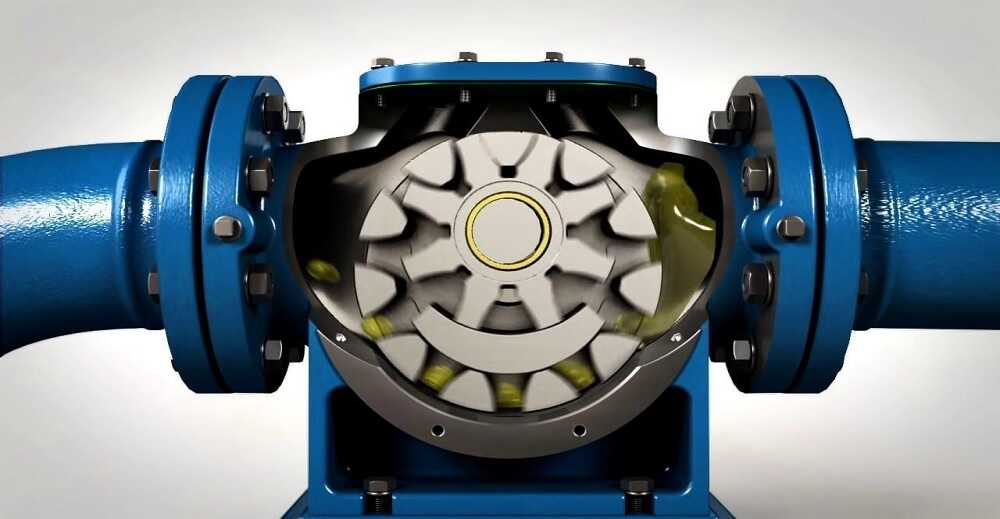
The gear pumps are used for transferring liquids across different industrial applications and can be used to transfer different types of liquids that have different viscosity and need to be maintained at different temperatures using these technologically advanced gear pumps. These gear pumps can tra...
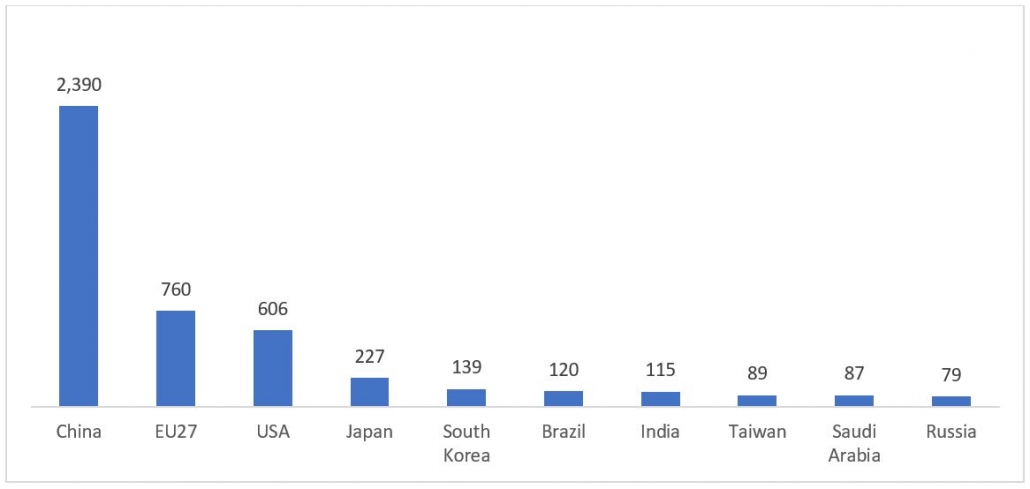 Source: Cefic Chemdata International
The growth in the food & beverage industry is prominent across the globe and is growing rapidly with the growing global population. The food & beverage industry includes packaged foods and beverages which are growing in demand as it is convenient and easy for customers to order and eat these packaged foods. The gear pumps play a crucial role in the production process of this packaged food and beverage industry to transfer and handle different types of liquid products like sauces, syrups, milk, and other dairy products.
The gear pumps make it easy and convenient for manufacturers to perform different operations like dosing, filling, and mixing of these liquid products using gear pumps that further increase its demand in the food & beverage industry. Also, these gear pumps preserve food integrity and handle the products with hygiene which makes them appealing to food and beverage industry manufacturers and is adopted by them which in turn grows the gear pump market.
Types of Gear Pumps:
The gear pump industry is divided into two types which are internal gear pumps and external gear pumps each has its unique abilities and functions in the wide range of applications in different end-user industries to cater to their different needs as internal gear pumps are used to handle high-viscosity liquids and are majorly efficient in the metering of different kinds of liquids while transferring them from inlet to the outlet of the gear pump. These gear pumps are highly efficient and smooth for high-pressure liquids and are widely used in different industrial applications including hydraulic and lubrication systems.
On the other hand, in the external gear pumps there are two or more gears that are rotating and are working together to pump liquids to transfer them across from the inlet to the outlet of the gear pump. These pumps are known for their simplicity and compact size and are widely used in fuel transfer and chemical processing in the industry which further propels the growth of gear pumps in the market over the forecast period.
Regional growth prospects:
The growth is projected to be prominent in the Asia Pacific region for the gear pump market which is driven by several factors such as the fast industrialization and urbanization across different countries in the region especially in China, India, and Japan which are considered manufacturing hubs and China being one of the largest production hubs in the world is expected to drive the demand for gear pumps in the Asia Pacific region. There are different applications of gear pumps in industries like food & beverages and oil & gas that are rapidly growing in demand in the region which is expected to positively impact the market growth of gear pumps in the Asia Pacific region.
In addition, the need for gear pumps in the agriculture industry for efficient farming and good yield by improving irrigation systems coupled with the massive growth of automotive production in the Asia Pacific region with key players like Honda, Toyota, and TATA Motors that manufacture vehicles need gear pumps to provide efficient and large-scale vehicle production
Moreover, the significant investments made by government and private organizations to automate the production process and improve the existing technology in manufacturing with growing economies and improving GDPs of several countries in the Asia Pacific region are contributing to grow the gear pumps market in the Asia Pacific region over the forecast period.
At last, concluding that the gear pumps market is predicted to have several innovations and growth opportunities over the forecast period with growth in different industry verticals like the food & beverage processing industry. These sectors drive market demand because they depend on gear pumps for effective fluid handling, transfer, and processing applications. The market is also growing as a result of technical developments that enhance performance, longevity, and material compatibility. A strong rise in infrastructure and industrialization is driving regions such as Asia Pacific. Overall, the gear pump market is expected to continue growing and innovating in the upcoming years due to the growing demand for dependable and effective fluid-handling solutions across a variety of sectors.
Key Developments:
Source: Cefic Chemdata International
The growth in the food & beverage industry is prominent across the globe and is growing rapidly with the growing global population. The food & beverage industry includes packaged foods and beverages which are growing in demand as it is convenient and easy for customers to order and eat these packaged foods. The gear pumps play a crucial role in the production process of this packaged food and beverage industry to transfer and handle different types of liquid products like sauces, syrups, milk, and other dairy products.
The gear pumps make it easy and convenient for manufacturers to perform different operations like dosing, filling, and mixing of these liquid products using gear pumps that further increase its demand in the food & beverage industry. Also, these gear pumps preserve food integrity and handle the products with hygiene which makes them appealing to food and beverage industry manufacturers and is adopted by them which in turn grows the gear pump market.
Types of Gear Pumps:
The gear pump industry is divided into two types which are internal gear pumps and external gear pumps each has its unique abilities and functions in the wide range of applications in different end-user industries to cater to their different needs as internal gear pumps are used to handle high-viscosity liquids and are majorly efficient in the metering of different kinds of liquids while transferring them from inlet to the outlet of the gear pump. These gear pumps are highly efficient and smooth for high-pressure liquids and are widely used in different industrial applications including hydraulic and lubrication systems.
On the other hand, in the external gear pumps there are two or more gears that are rotating and are working together to pump liquids to transfer them across from the inlet to the outlet of the gear pump. These pumps are known for their simplicity and compact size and are widely used in fuel transfer and chemical processing in the industry which further propels the growth of gear pumps in the market over the forecast period.
Regional growth prospects:
The growth is projected to be prominent in the Asia Pacific region for the gear pump market which is driven by several factors such as the fast industrialization and urbanization across different countries in the region especially in China, India, and Japan which are considered manufacturing hubs and China being one of the largest production hubs in the world is expected to drive the demand for gear pumps in the Asia Pacific region. There are different applications of gear pumps in industries like food & beverages and oil & gas that are rapidly growing in demand in the region which is expected to positively impact the market growth of gear pumps in the Asia Pacific region.
In addition, the need for gear pumps in the agriculture industry for efficient farming and good yield by improving irrigation systems coupled with the massive growth of automotive production in the Asia Pacific region with key players like Honda, Toyota, and TATA Motors that manufacture vehicles need gear pumps to provide efficient and large-scale vehicle production
Moreover, the significant investments made by government and private organizations to automate the production process and improve the existing technology in manufacturing with growing economies and improving GDPs of several countries in the Asia Pacific region are contributing to grow the gear pumps market in the Asia Pacific region over the forecast period.
At last, concluding that the gear pumps market is predicted to have several innovations and growth opportunities over the forecast period with growth in different industry verticals like the food & beverage processing industry. These sectors drive market demand because they depend on gear pumps for effective fluid handling, transfer, and processing applications. The market is also growing as a result of technical developments that enhance performance, longevity, and material compatibility. A strong rise in infrastructure and industrialization is driving regions such as Asia Pacific. Overall, the gear pump market is expected to continue growing and innovating in the upcoming years due to the growing demand for dependable and effective fluid-handling solutions across a variety of sectors.
Key Developments:
- In January 2024, Performance curve documents for each of the internal gear pump models were released by Blackmer. The following items were covered by these documents: V Series Asphalt Gear Pump, E Series Magnetic Drive Gear Pump, and G Series Internal Gear Pump. For every size gear pump, these performance curve documents include both driving power and flow rate curves. They also offer curves for up to seven distinct viscosity levels and for various pump building materials, such as iron steel and stainless steel (where applicable).
- In December 2022, Dover announced the completion of its purchase of Witte Pumps & Technology GmbH ("Witte"), a precision gear pump manufacturer. Witte was integrated into Dover's Pumps & Process Solutions sector as a business unit called Maag.
Have questions?
More Thought Articles
From Data Centers to EV Charging: Where Low-Voltage DC Distribution Is Making an Impact
Low-voltage DC distribution is gaining relevance as AI data centers, EV charging hubs, solar systems, and battery storage increase demand for efficient power architectures. The article examines 800 VDC standardization, conversion losses, protection challenges, and greenfield opportunities, highlighting why hybrid AC/DC systems could become increasingly important across high-power infrastructure applications.
How EV Charger Manufacturers Can Capitalize on India’s Home Charging Revolution
India’s residential EV charging opportunity is expanding as policy support, EV adoption, and private parking infrastructure develop. Manufacturers can capture value beyond AC chargers through installation, smart charging, load management, solar integration, software, and after-sales services. Housing societies, automakers, and property developers offer scalable routes to residential charging customers.
Second-Life EV Battery Market in India: What Is Driving Demand from Manufacturers?
India’s second-life EV battery market is gaining relevance as electric vehicle adoption expands and batteries retain useful capacity after automotive service. Growing stationary-storage demand, battery data, refurbishment capabilities, EPR obligations, and critical-mineral policies are encouraging manufacturers to extend battery value through reuse before eventual recycling within India’s emerging circular battery ecosystem.