
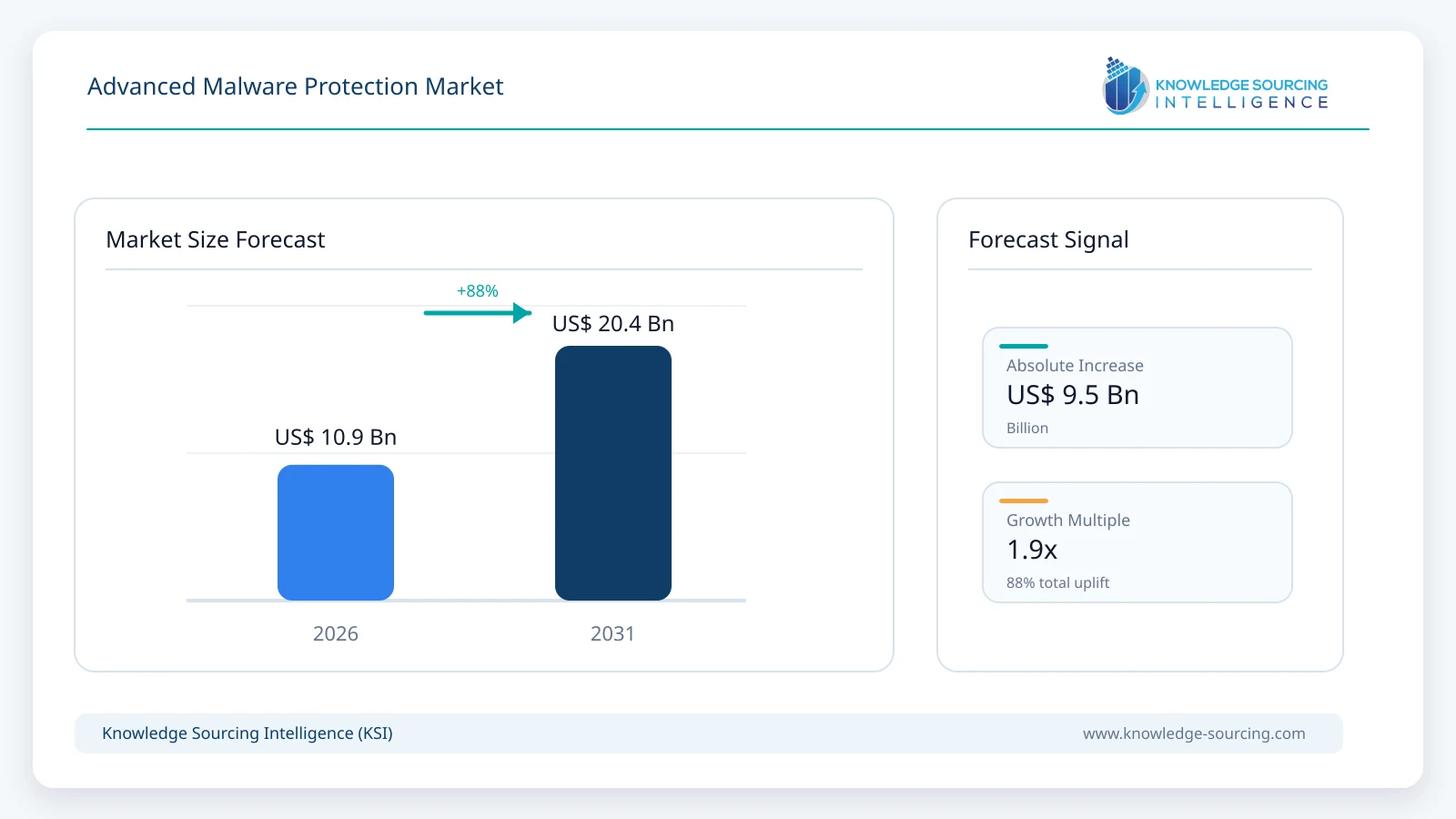
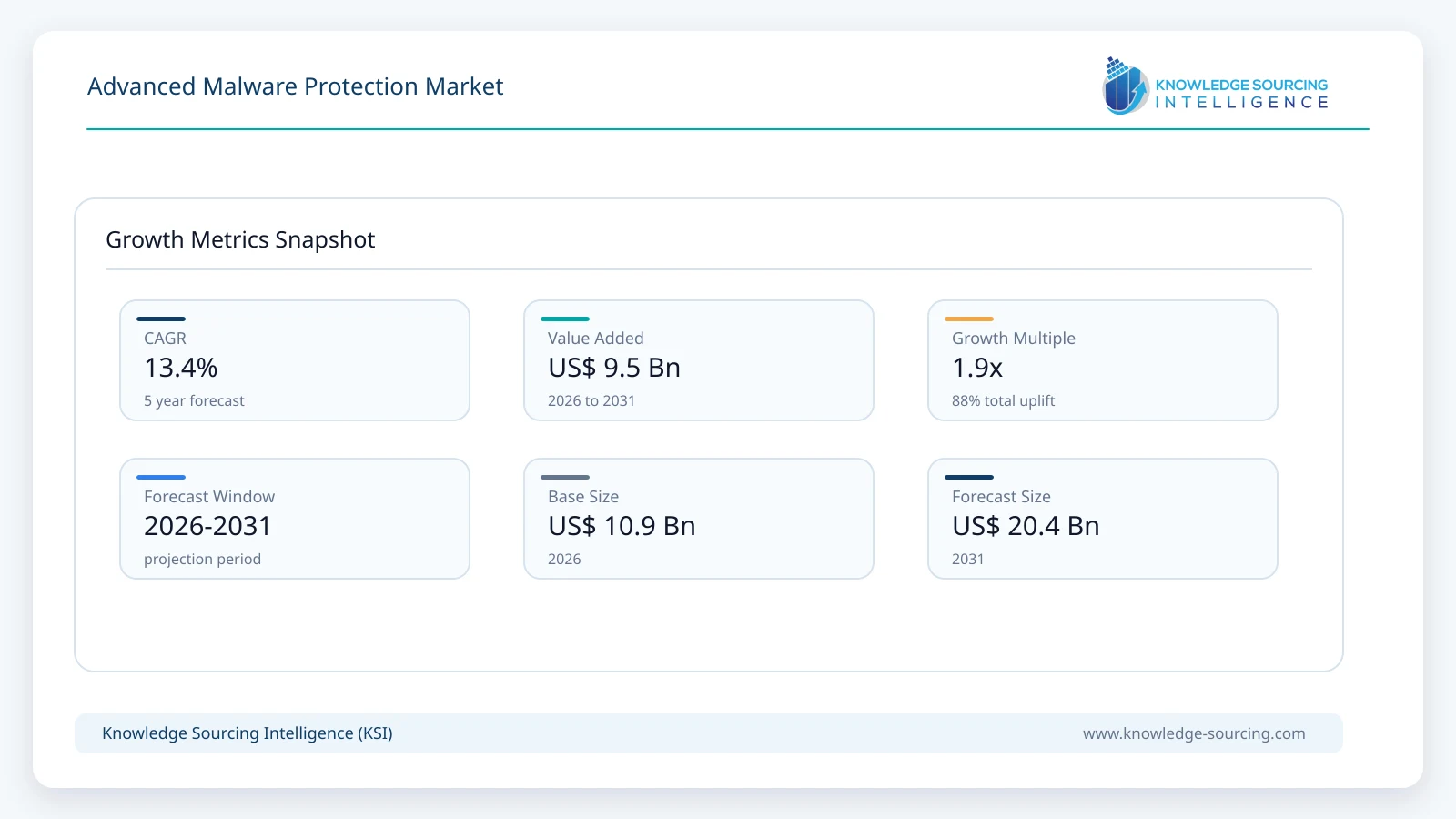
The Advanced Malware Protection Market is forecast to grow at a CAGR of 13.4%, reaching USD 20.41 billion in 2031 from USD 10.88 billion in 2026.
Highlights:
- 1Ransomware, credential compromise, and stealthier malware techniques are strengthening demand for behavioral detection and automated containment.
- 2Cloud-based deployment is gaining commercial relevance as organizations distribute workloads and endpoints across hybrid environments.
- 3Large enterprises remain important buyers because of extensive endpoint estates, complex infrastructure, and higher consequences from security incidents.
- 4Fileless and behavior-based threats are increasing the value of memory inspection, endpoint telemetry, application control, and behavioral analytics.
- 5Regulatory requirements are raising cybersecurity expectations for critical infrastructure, digital services, financial institutions, and manufacturers.
- 6Vendors are competing through platform consolidation, managed services, AI-assisted detection, threat intelligence, and cross-environment visibility.
The Advanced Malware Protection Market covers cybersecurity solutions and associated services designed to identify, prevent, contain, investigate, and remediate malicious software that can evade conventional signature-based antivirus controls. The market includes technologies that use behavioral analysis, machine learning, endpoint telemetry, sandboxing, threat intelligence, exploit detection, application control, memory analysis, and automated response to address malware that changes its characteristics or operates without relying on conventional executable files.
Advanced malware protection is used across endpoints, servers, cloud workloads, email environments, networks, and other enterprise computing assets. Its commercial scope extends beyond the detection of known malicious files. Modern deployments increasingly address ransomware, spyware, fileless malware, credential theft, malicious scripts, remote-access payloads, and post-compromise activity. Consequently, purchasing decisions increasingly evaluate how effectively a platform can identify suspicious behavior across several stages of an attack rather than simply measuring malware signatures blocked.
Demand is being supported by the financial consequences of ransomware, the expansion of cloud and hybrid infrastructure, greater use of remote access, and the ability of attackers to combine legitimate administrative tools with malicious activity. CISA's ransomware guidance recommends capabilities including phishing-resistant multifactor authentication, identity and access management, zero-trust controls, incident response planning, and protection of critical services. These requirements reinforce the need for security architectures capable of detecting malicious activity after an attacker has obtained legitimate credentials or bypassed perimeter defenses.
The threat environment also affects the economics of procurement. Security teams are increasingly assessing the cost of an undetected incident against the recurring expense of protection platforms. A malware incident can produce downtime, recovery expenditure, regulatory reporting obligations, data-loss exposure, and reputational damage. This encourages buyers to consider prevention and response as a combined investment rather than purchasing malware detection as an isolated antivirus function.
Ransomware remains an important demand catalyst. Microsoft's 2025 Digital Defense Report identifies industrial products and services, engineering and construction, retail and distribution, healthcare, technology, and financial services among industries affected by ransomware activity. The report also shows that organizations across several revenue bands were targeted, demonstrating that malware protection requirements extend beyond the largest corporations.
The buyer base is consequently broad. Large enterprises typically require centralized policy management, endpoint telemetry, threat hunting, integration with security information and event management systems, and automated containment. Smaller organizations often place greater weight on deployment simplicity, managed services, predictable pricing, and low administrative requirements. This distinction influences the balance between the Solutions and Services segments.
The market also reflects a shift in deployment economics. Cloud-based protection can reduce infrastructure requirements and facilitate centralized policy management across distributed endpoints. On-premises deployment remains relevant where organizations require greater control over security infrastructure, operate sensitive environments, or face data-residency and operational constraints. Hybrid architectures are particularly relevant for large enterprises operating combinations of legacy infrastructure, private cloud, public cloud, and remote endpoints.
Competitive differentiation is moving toward the quality of telemetry, behavioral detection, automated investigation, threat intelligence, response speed, and integration with broader security platforms. Cisco, Fortinet, CrowdStrike, SentinelOne, Microsoft, IBM, Acronis, Mimecast, Forcepoint, Akamai, Tata Communications, Vircom, and other suppliers in the defined competitive set therefore compete across overlapping but not identical technology and service models.
The market's revenue structure is also becoming more recurring. Subscription-based endpoint protection, managed detection, cloud security services, threat intelligence, and security operations support allow vendors to generate continuing revenue after initial deployment. This model also aligns with buyers' preference for continuously updated detection capabilities because malware techniques and indicators change faster than traditional software replacement cycles.
Market Drivers
Increasing Ransomware Exposure and Recovery Costs
Ransomware is creating a direct economic reason for organizations to strengthen malware protection. Modern ransomware operations can involve credential compromise, vulnerability exploitation, lateral movement, data theft, and encryption rather than a single malicious file appearing on an endpoint. This reduces the effectiveness of protection strategies based only on known file signatures.
The June 2025 joint advisory from the FBI, CISA, and Australian Signals Directorate's Australian Cyber Security Centre concerning Play ransomware illustrates this shift. The advisory noted exploitation of vulnerabilities, credential-related access, anti-security-tool activity, data exfiltration, and double-extortion practices. As of May 2025, the FBI was aware of approximately 900 affected entities associated with the Play ransomware actors.
For buyers, the implication is straightforward: malware protection must identify suspicious behavior before encryption or exfiltration occurs. Organizations therefore evaluate endpoint detection, process monitoring, behavioral analytics, automated isolation, and threat hunting capabilities alongside conventional malware blocking.
Vendors are responding by integrating prevention and response. FortiEDR, for example, combines endpoint detection with behavior-based protection and automated response capabilities within Fortinet's broader security architecture.
Commercially, ransomware exposure supports higher-value security subscriptions because customers increasingly expect prevention, investigation, and remediation from the same technology environment.
Expansion of Fileless and Behavior-Based Attacks
Fileless malware creates a different technical requirement from traditional malware protection. Instead of depending entirely on a malicious executable stored on disk, attackers can use legitimate interpreters, scripts, memory-resident code, stolen credentials, and administrative utilities.
This attack pattern increases the importance of process behavior, command-line analysis, memory inspection, identity telemetry, and contextual correlation. A system that only scans files can miss malicious activity that uses legitimate operating-system components.
The commercial effect is particularly relevant to enterprises with large Windows environments, extensive administrative tooling, and complex application estates. Security teams require controls capable of distinguishing legitimate administrative activity from abnormal execution patterns.
Vendors therefore compete on behavioral detection and automated response. FortiEDR's capabilities, for example, include behavioral analysis and controls intended to stop malicious execution and post-exploitation activity.
As organizations adopt more application programming interfaces, automation tools, cloud management platforms, and scripting environments, the boundary between normal administrative behavior and malicious activity becomes harder to define. This supports demand for contextual malware detection rather than static signature matching.
Growth of Hybrid and Cloud Infrastructure
Cloud adoption changes the location and operating model of enterprise workloads. Employees may access applications from managed and unmanaged devices, workloads may span multiple cloud providers, and security teams may need to monitor endpoints outside the traditional corporate network.
Cloud deployment of malware protection can simplify policy distribution, centralized telemetry collection, and security operations across geographically dispersed assets. It also reduces the need for customers to maintain dedicated security management infrastructure.
The commercial case is strongest among organizations with distributed workforces and mixed infrastructure. Cloud-based protection can shorten deployment cycles and provide centralized visibility, while managed services can compensate for shortages of specialist security personnel.
At the same time, cloud deployment does not eliminate the need for endpoint controls. Stolen credentials, malicious applications, exposed interfaces, and compromised workloads can still facilitate malware delivery. This supports integrated platforms combining endpoint, identity, cloud, and network telemetry.
Increasing Use of AI-Assisted Attack Techniques
Artificial intelligence is affecting both sides of the cybersecurity equation. Attackers can use AI to accelerate malicious-code development, generate convincing phishing content, automate reconnaissance, and modify attack techniques. Tata Communications' threat intelligence reporting for late 2025 identified AI-enabled cyber operations and described cases involving AI-generated malware components and AI-assisted command-and-control experimentation.
This development increases the value of detection systems that can recognize behavior rather than relying exclusively on previously catalogued malware samples.
For security buyers, the relevant question is shifting from whether a product knows a particular malware family to whether it can identify abnormal activity when the payload has not previously been observed. Machine learning, behavioral models, threat intelligence, sandboxing, and automated response therefore become more important components of procurement decisions.
Vendors are also incorporating AI into security operations to reduce analyst workload. CrowdStrike, for example, introduced AI Detection and Response capabilities in December 2025, extending its platform toward AI-related detection and response across enterprise environments.
Rising Security Requirements Across Critical Industries
Cybersecurity requirements are becoming more formalized across sectors where malware incidents can disrupt essential services or expose sensitive information. Financial institutions, telecommunications operators, defense organizations, manufacturers, healthcare providers, retailers, and digital service companies all maintain valuable systems that can become targets.
The European Union's NIS2 framework is an important example. It expands cybersecurity requirements across 18 critical sectors and introduces risk-management, incident-reporting, supervision, and enforcement provisions. Covered sectors include finance, healthcare, digital infrastructure, public electronic communications, manufacturing, and public administration.
These requirements influence procurement because organizations need documented security controls, incident detection processes, reporting mechanisms, and risk-management programs. Advanced malware protection becomes part of a broader compliance architecture rather than an optional endpoint purchase.
Market Restraints and Challenges
High Total Cost of Advanced Security Operations
Advanced malware protection can require more than software licensing. Enterprises may need endpoint agents, cloud infrastructure, telemetry storage, security operations staff, managed services, threat intelligence, incident-response capabilities, and integration with existing platforms.
For smaller enterprises, these costs can limit adoption of advanced capabilities. Buyers may select managed security services instead of operating sophisticated detection infrastructure internally. This creates an opportunity for service providers but also places pressure on vendors to offer scalable pricing and simplified administration.
Alert Volume and Security-Team Capacity
Advanced detection systems can generate large volumes of alerts. If security teams cannot investigate alerts promptly, the theoretical detection capability does not translate into equivalent operational protection.
This problem is especially pronounced in smaller organizations with limited security staff. Vendors therefore need to reduce false positives, prioritize alerts, automate investigation, and provide guided remediation. Managed detection and response services can address this constraint by shifting some operational responsibilities from customers to specialized providers.
Integration with Legacy Infrastructure
Large organizations often operate heterogeneous technology estates accumulated over many years. Legacy applications, older operating systems, specialized manufacturing equipment, and proprietary infrastructure may not support modern endpoint agents or cloud-based security architectures.
Replacing such infrastructure solely for cybersecurity purposes is often economically impractical. Advanced malware protection vendors therefore need compatibility with existing environments and integration through APIs, network telemetry, security information and event management platforms, and other controls.
Data Privacy and Residency Requirements
Cloud-based security platforms may process endpoint telemetry, user identifiers, application information, and other sensitive data. Organizations operating across multiple jurisdictions must consider privacy rules, data-residency requirements, contractual controls, and cross-border data transfers.
These requirements can influence deployment selection. Some buyers may favor regional hosting, private cloud arrangements, or on-premises components where sensitive telemetry cannot be transferred freely.
Detection Evasion and Rapid Malware Modification
Attackers continually alter malware, delivery methods, command-and-control infrastructure, and execution techniques. Detection models can therefore lose effectiveness if they depend too heavily on static indicators.
Vendors must continually update detection models, threat intelligence, behavioral rules, and response mechanisms. This creates continuing research, infrastructure, and engineering costs that can affect margins and increase the importance of recurring subscription revenue.
Major Segment Analysis
By Deployment: Cloud
The cloud deployment segment represents a commercially important portion of the Advanced Malware Protection Market because enterprise computing is increasingly distributed across public cloud, private cloud, SaaS applications, remote endpoints, and hybrid infrastructure.
The principal buyer advantage is operational centralization. Security teams can manage policies, collect telemetry, investigate incidents, and distribute detection updates through a centrally administered environment. This is particularly valuable for enterprises operating thousands of endpoints across several countries.
Cloud deployment also changes procurement economics. Instead of purchasing and maintaining dedicated security infrastructure, organizations can subscribe to protection capabilities and scale capacity according to endpoint requirements. This model aligns with recurring cybersecurity budgets and reduces the need for customers to forecast hardware requirements years in advance.
The segment is particularly relevant to large enterprises, telecommunications companies, technology firms, financial institutions, and retailers with distributed operations. These organizations frequently operate multiple security domains and need centralized visibility across locations.
Cloud-based advanced malware protection also supports integration with adjacent cybersecurity technologies. Endpoint telemetry can be correlated with identity activity, network events, cloud workload behavior, email security, and threat intelligence. This creates a broader context for identifying suspicious activity.
Buyer requirements, however, extend beyond basic cloud availability. Enterprises evaluate data residency, service availability, incident response, integration capabilities, identity controls, API support, and the vendor's ability to maintain detection quality at scale.
The competitive model is therefore shifting from a standalone malware product toward an integrated security platform. CrowdStrike's expansion across endpoint, cloud, identity, data, and AI security illustrates this direction. Its 2025 product announcements emphasized unified protection across endpoints, cloud environments, SaaS, GenAI, and identity-related attack surfaces.
Cloud deployment should consequently remain commercially important through 2031 because it aligns with distributed infrastructure, subscription-based procurement, centralized security operations, and the need for continuous detection updates. Its growth will nevertheless be moderated by organizations that require local processing, operate sensitive systems, or face restrictive data-governance requirements.
Regional Analysis
North America
North America represents a major demand center because of its concentration of large enterprises, cloud infrastructure, financial institutions, technology companies, defense organizations, and managed security providers. The United States accounts for the largest share of regional commercial activity within the defined geography.
Ransomware exposure is a major purchasing factor. Federal agencies including CISA and the FBI continue to publish detailed ransomware advisories and defensive guidance, encouraging organizations to adopt stronger identity controls, multifactor authentication, patch management, backup strategies, and incident-response capabilities.
U.S. buyers also place considerable emphasis on integration with security operations centers. Large organizations increasingly want endpoint protection to feed broader detection and response workflows instead of operating as a separate antivirus system.
Canada has similar requirements across financial services, government, telecommunications, energy, and other critical sectors. Mexico presents opportunities as enterprises modernize infrastructure and strengthen security controls, although price sensitivity and shortages of specialized cybersecurity personnel can constrain advanced deployment.
Europe
Europe combines strong regulatory pressure with a mature enterprise technology base. NIS2 is particularly relevant because it expands cybersecurity risk-management requirements across critical sectors and requires covered organizations to report significant incidents.
Germany, France, the United Kingdom, Spain, and other European markets therefore represent demand opportunities where compliance requirements reinforce cybersecurity investment.
European procurement is also sensitive to data governance and sovereignty. Buyers may evaluate where security telemetry is stored, how it is processed, and which subcontractors can access it. These considerations can influence cloud deployment decisions.
The European Commission proposed targeted NIS2 amendments in January 2026 to simplify compliance and improve legal clarity, including measures relating to ransomware data collection and cross-border supervision.
The regulatory environment supports demand but can also increase implementation costs for vendors and customers. Suppliers need to demonstrate compliance capabilities while supporting different national implementation approaches.
Asia Pacific
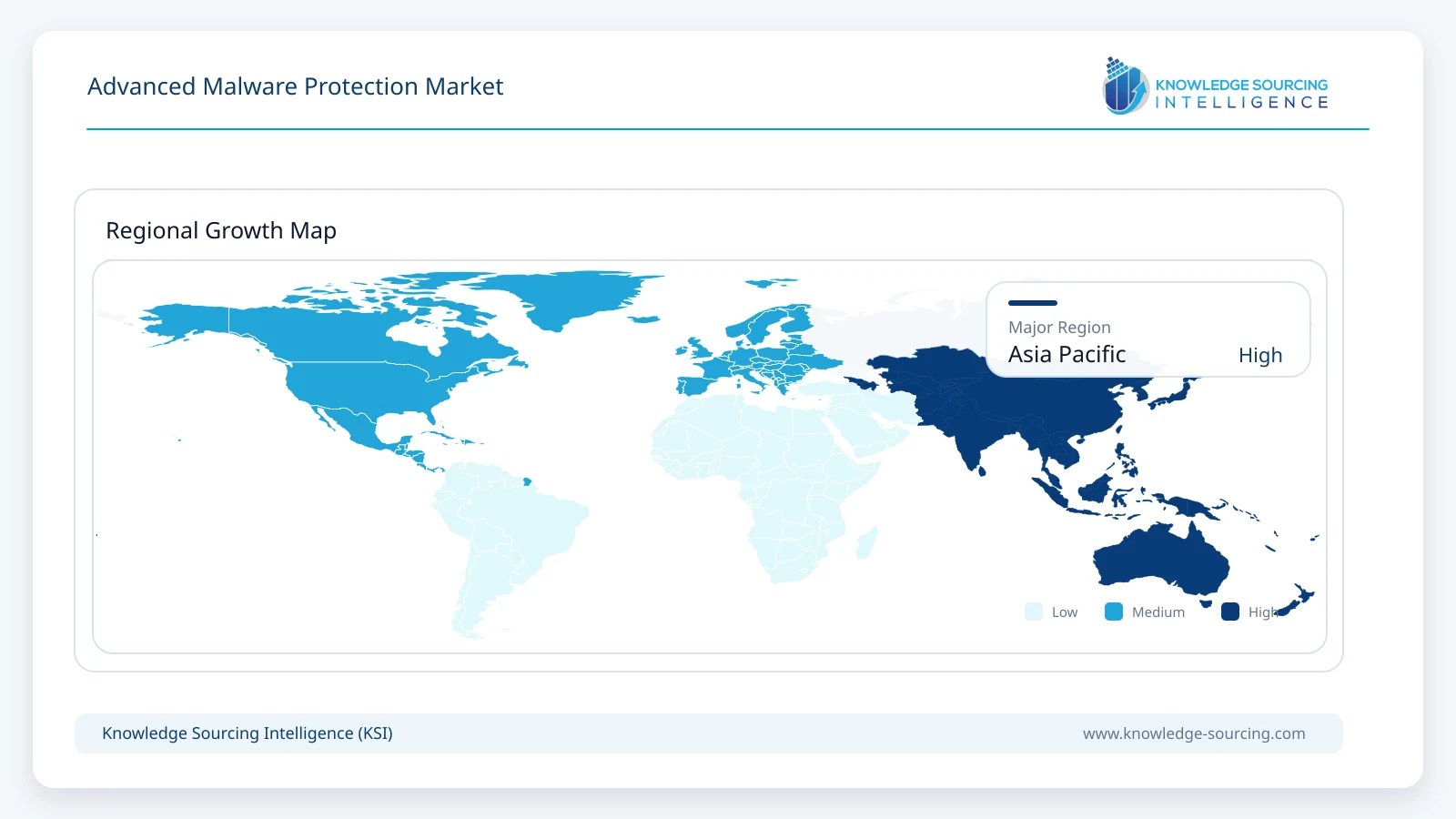
Asia Pacific offers a broad demand base because of expanding cloud usage, manufacturing digitization, telecommunications infrastructure, financial technology adoption, and increasing digital service penetration.
China, Japan, India, South Korea, Indonesia, and Thailand differ considerably in regulatory maturity, procurement structures, and cybersecurity spending. Japan and South Korea have mature enterprise security markets and strong technology ecosystems, while India and Southeast Asian economies offer expanding demand as enterprises move workloads to cloud environments.
India is particularly relevant because of its large IT services sector, financial infrastructure, telecommunications networks, and government digitization programs. Tata Communications' threat intelligence reporting has highlighted malware and cyber-espionage activity targeting Indian defense, government, and critical infrastructure environments.
Price sensitivity remains an important factor across several developing markets. Buyers may prefer managed security services, bundled cybersecurity products, and cloud-based subscriptions that reduce capital requirements.
Middle East and Africa
The Middle East and Africa market is supported by investments in digital infrastructure, financial services, telecommunications, government systems, energy, and smart infrastructure. Saudi Arabia and the UAE are particularly important due to large-scale digital infrastructure programs and high-value enterprise systems.
Cybersecurity procurement in these markets often emphasizes centralized monitoring, threat intelligence, managed security operations, and protection of critical infrastructure.
The region also faces specialized risks associated with geopolitical tensions and state-linked cyber activity. Tata Communications' threat intelligence reporting has identified espionage and malware activity affecting government, defense, and critical infrastructure organizations.
Budget availability differs considerably across countries. Gulf markets can support sophisticated security deployments, while many African organizations face limitations in security staffing and technology budgets. This creates demand for managed services and cloud-delivered protection.
South America
South America presents demand opportunities across banking, telecommunications, retail, manufacturing, government, and energy. Brazil is the largest market in the defined regional structure, supported by a large digital economy and substantial enterprise technology infrastructure.
Ransomware and credential-related attacks encourage organizations to strengthen endpoint and email protection. However, budget constraints, shortages of specialist security professionals, and fragmented technology environments can slow advanced adoption.
Managed services can help address these limitations because organizations can access monitoring, threat intelligence, and incident response without building large internal security teams. Vendors with regional partners and localized support models can therefore gain an advantage.
Competitive Landscape
The competitive environment consists of global cybersecurity platforms, infrastructure vendors, specialist endpoint security providers, email-security companies, telecommunications security providers, and managed-service businesses.
The defined competitive set includes Cisco Systems, Inc., Acronis International GmbH, Mimecast Services Limited, Fortinet, Inc., Forcepoint, Tata Communications, IBM, Vircom, Microsoft Corporation, SentinelOne, Inc., Akamai Technologies, Inc., and CrowdStrike Holdings, Inc.
Competition is increasingly based on platform breadth rather than malware signatures alone. Endpoint protection is being connected with identity security, cloud workload security, email security, data protection, network analytics, threat intelligence, and security operations.
Large platform vendors can use existing enterprise relationships to cross-sell malware protection into broader security contracts. Cisco's 2025 annual report, for example, describes its security and trust organization and its collaboration with Talos and external organizations to monitor and respond to cybersecurity threats.
Specialist endpoint providers compete through detection accuracy, behavioral analytics, automated response, threat hunting, and security operations integration. CrowdStrike's 2025 announcements show a strategy centered on extending endpoint capabilities across identity, cloud, data, and AI-related security.
SentinelOne differentiates through behavioral AI, automated endpoint response, and integration between endpoint and identity security. Fortinet combines endpoint security with its wider Security Fabric, while its FortiEDR offering emphasizes behavioral detection and response.
Microsoft benefits from its extensive enterprise software and cloud ecosystem, allowing security controls to be integrated with existing identity, endpoint, productivity, and cloud environments.
Acronis, Mimecast, Forcepoint, Vircom, IBM, Akamai, and Tata Communications address specific combinations of endpoint, email, data, network, managed security, and cyber-protection requirements. This creates a market in which differentiation depends heavily on integration, service delivery, installed customer base, threat intelligence, geographic coverage, and total cost of ownership.
Partnerships are strategically important because enterprise buyers rarely deploy malware protection in isolation. Integration with SIEM, SOAR, identity platforms, cloud infrastructure, network controls, backup systems, and managed security operations can materially influence procurement decisions.
Recent Developments
July 2026: The European Commission published new guidance supporting implementation of the Cyber Resilience Act, helping manufacturers, developers, and businesses prepare for mandatory cybersecurity requirements and reporting obligations. The development strengthens regulatory incentives for security controls across connected products and software ecosystems.
February 2026: Fortinet reported a major increase in ransomware victims in its 2026 Global Threat Landscape Report, identifying 7,831 confirmed victims compared with approximately 1,600 in its previous report and highlighting AI-enabled cybercrime activity. The findings reinforce demand for behavioral detection and automated ransomware protection.
December 2025: CrowdStrike announced general availability of Falcon AI Detection and Response, extending its security platform to the AI prompt and agent interaction layer. The development expands advanced threat detection beyond conventional endpoint malware and supports platform consolidation across emerging AI environments.
Regulatory and Policy Environment
Regulation is becoming an important factor in advanced malware protection procurement because organizations are being required to demonstrate that cybersecurity risks are actively managed.
In the European Union, NIS2 establishes a common cybersecurity framework covering 18 critical sectors. It requires covered organizations to implement cybersecurity risk-management measures and report significant incidents. The framework directly affects finance, healthcare, digital infrastructure, electronic communications, manufacturing, public administration, and other sectors relevant to advanced malware protection demand.
The European Commission's implementing regulation provides technical and methodological requirements for certain digital infrastructure and service providers, including cloud computing providers, data-center providers, content delivery networks, managed service providers, managed security service providers, and other digital platforms.
In January 2026, the European Commission proposed targeted amendments to NIS2 intended to simplify compliance and clarify cybersecurity requirements. The proposal includes measures related to ransomware reporting and supervision of cross-border entities.
The EU Cyber Resilience Act is also relevant because it introduces cybersecurity requirements for products with digital elements. The Commission published implementation guidance in July 2026, providing additional direction for organizations preparing for mandatory requirements and reporting obligations.
In the United States, CISA and the FBI continue to publish operational guidance and advisories addressing ransomware and malware threats. The June 2025 Play ransomware advisory emphasized vulnerability remediation, multifactor authentication, offline backups, recovery planning, and software updates. These measures reinforce the role of advanced malware protection within a broader defensive architecture.
Regulatory requirements therefore influence purchasing in two ways. First, organizations need technical controls that reduce the probability and impact of incidents. Second, they need evidence that security processes are documented, monitored, and capable of supporting incident reporting and governance obligations.
Outlook and Strategic Implications
The Advanced Malware Protection Market is expected to be shaped by the convergence of endpoint security, identity protection, cloud workload security, threat intelligence, and automated security operations through 2031.
The strongest procurement opportunities will be associated with platforms capable of identifying attacks that bypass traditional antivirus controls. Behavioral detection, memory analysis, endpoint telemetry, automated isolation, threat hunting, and cross-domain correlation will therefore remain central technology requirements.
Cloud delivery should continue gaining relevance because enterprises want centrally managed security controls that can support distributed endpoints and hybrid infrastructure. However, suppliers will need to accommodate organizations with strict data-residency requirements and sensitive operational environments. Flexible architectures that combine cloud management with local enforcement are likely to address a broader range of buyers.
Ransomware will remain an important budget justification, but buyers are likely to evaluate protection more broadly. Infostealers, spyware, credential theft, malicious scripts, supply-chain compromise, and fileless techniques can create substantial risk even when no traditional ransomware payload is deployed.
AI will influence the market from both the offensive and defensive sides. Attackers can use AI to increase malware development speed and customize campaigns, while security vendors can apply AI to anomaly detection, alert triage, threat investigation, and automated response. The commercial advantage will depend less on the presence of an AI label and more on measurable improvements in detection quality, analyst productivity, response time, and operational cost.
Procurement will also continue moving toward platform consolidation. Security teams managing numerous point products face integration expenses, duplicated telemetry, inconsistent policies, and fragmented incident workflows. Vendors that connect advanced malware protection with identity, cloud, network, data, email, and security operations capabilities can address this problem more effectively.
Services will remain important because many organizations lack sufficient security personnel to operate advanced detection technologies continuously. Managed detection and response, incident response, threat hunting, security monitoring, and professional services can therefore complement software subscriptions.
For smaller enterprises, affordability and simplicity will remain decisive. Vendors that provide managed protection, automated remediation, transparent pricing, and rapid deployment can address barriers created by limited security staffing.
Large enterprises will prioritize architectural integration, detection performance, operational resilience, policy control, regulatory support, and global scalability. Their procurement cycles are longer, but contract values can be higher because advanced malware protection is often incorporated into broader security-platform agreements.
Geographically, North America and Europe will remain important due to mature enterprise cybersecurity spending and strong regulatory or institutional pressure. Asia Pacific offers substantial expansion opportunities as cloud adoption, manufacturing technology, telecommunications infrastructure, and digital financial services expand. The Middle East will benefit from critical infrastructure investment and national cybersecurity programs, while South America will increasingly rely on cloud and managed security models to address skills and cost constraints.
The principal strategic risk for suppliers is technological commoditization. Basic malware detection is becoming embedded within broader endpoint and cloud platforms, reducing differentiation for standalone products. Vendors therefore need to demonstrate superior behavioral detection, faster response, better threat intelligence, stronger integrations, or specialized services.
Another risk is customer consolidation. Enterprises may prefer fewer strategic cybersecurity suppliers, creating pressure on smaller specialists to demonstrate distinctive capabilities or establish partnerships with larger platform providers.
For investors and technology suppliers, the most attractive opportunities are likely to sit where advanced malware protection intersects with cloud security, identity protection, managed detection, ransomware resilience, AI-assisted security operations, and regulatory compliance.
Overall, the market's direction will be determined by the economic cost of successful malware attacks, the technical limitations of conventional antivirus controls, enterprise migration toward distributed infrastructure, cybersecurity regulation, and the ability of vendors to convert large volumes of security telemetry into timely and reliable defensive action. The commercial winners through 2031 will be those that can combine high-quality detection with manageable operating costs, broad integration, continuous threat intelligence, and deployment models suited to both large enterprises and resource-constrained organizations.
Advanced Malware Protection Market Scope:
| Report Metric | Details |
|---|---|
| Total Market Size in 2026 | USD 10.88 billion |
| Total Market Size in 2031 | USD 20.41 billion |
| Forecast Unit | Billion |
| Growth Rate | 13.4% |
| Study Period | 2021 to 2031 |
| Historical Data | 2021 to 2024 |
| Base Year | 2025 |
| Forecast Period | 2026 – 2031 |
| Segmentation | Component, Deployment, Malware Type, Enterprise Size, End User, Geography |
| Companies |
|
Market Segmentation
By Component
By Deployment
By Malware Type
By Enterprise Size
By End User
By Geography
Table of Contents
1. EXECUTIVE SUMMARY
2. MARKET SNAPSHOT
2.1. Market Overview
2.2. Market Definition
2.3. Scope of the Study
2.4. Market Segmentation
3. BUSINESS LANDSCAPE
3.1. Market Drivers
3.2. Market Restraints
3.3. Market Opportunities
3.4. Porter’s Five Forces Analysis
3.5. Industry Value Chain Analysis
3.6. Policies and Regulations
3.7. Strategic Recommendations
4. TECHNOLOGICAL OUTLOOK
5. ADVANCED MALWARE PROTECTION MARKET BY COMPONENT
5.1. Introduction
5.2. Solutions
5.3. Services
6. ADVANCED MALWARE PROTECTION MARKET BY DEPLOYMENT
6.1. Introduction
6.2. Cloud
6.3. On-Premises
7. ADVANCED MALWARE PROTECTION MARKET BY MALWARE TYPE
7.1. Introduction
7.2. Ransomware
7.3. Spyware
7.4. Fileless Malware
7.5. Others
8. ADVANCED MALWARE PROTECTION MARKET BY ENTERPRISE SIZE
8.1. Introduction
8.2. Small & Medium-Sized Enterprises
8.3. Large Enterprises
9. ADVANCED MALWARE PROTECTION MARKET BY END USER
9.1. Introduction
9.2. BFSI
9.3. IT & Telecommunications
9.4. Military & Defense
9.5. Retail
9.6. Manufacturing
9.7. Others
10. ADVANCED MALWARE PROTECTION MARKET BY GEOGRAPHY
10.1. Introduction
10.2. North America
10.2.1. USA
10.2.2. Canada
10.2.3. Mexico
10.3. South America
10.3.1. Brazil
10.3.2. Argentina
10.3.3. Others
10.4. Europe
10.4.1. Germany
10.4.2. France
10.4.3. United Kingdom
10.4.4. Spain
10.4.5. Others
10.5. Middle East and Africa
10.5.1. Saudi Arabia
10.5.2. UAE
10.5.3. Others
10.6. Asia Pacific
10.6.1. China
10.6.2. India
10.6.3. Japan
10.6.4. South Korea
10.6.5. Indonesia
10.6.6. Thailand
10.6.7. Others
11. COMPETITIVE ENVIRONMENT AND ANALYSIS
11.1. Major Players and Strategy Analysis
11.2. Market Share Analysis
11.3. Mergers, Acquisitions, Agreements, and Collaborations
11.4. Competitive Dashboard
12. COMPANY PROFILES
12.1. Cisco Systems, Inc.
12.2. Acronis International GmbH
12.3. Mimecast Services Limited
12.4. Fortinet, Inc.
12.5. Forcepoint
12.6. Tata Communications
12.7. IBM
12.8. Vircom
12.9. Microsoft Corporation
12.10. SentinelOne, Inc.
12.11. Akamai Technologies, Inc.
12.12. CrowdStrike Holdings, Inc.
13. APPENDIX
13.1. Currency
13.2. Assumptions
13.3. Base and Forecast Years Timeline
13.4. Key Benefits for Stakeholders
13.5. Research Methodology
13.6. Abbreviations
LIST OF FIGURES
LIST OF TABLES
Navigate
Trusted by the world's leading organizations











