
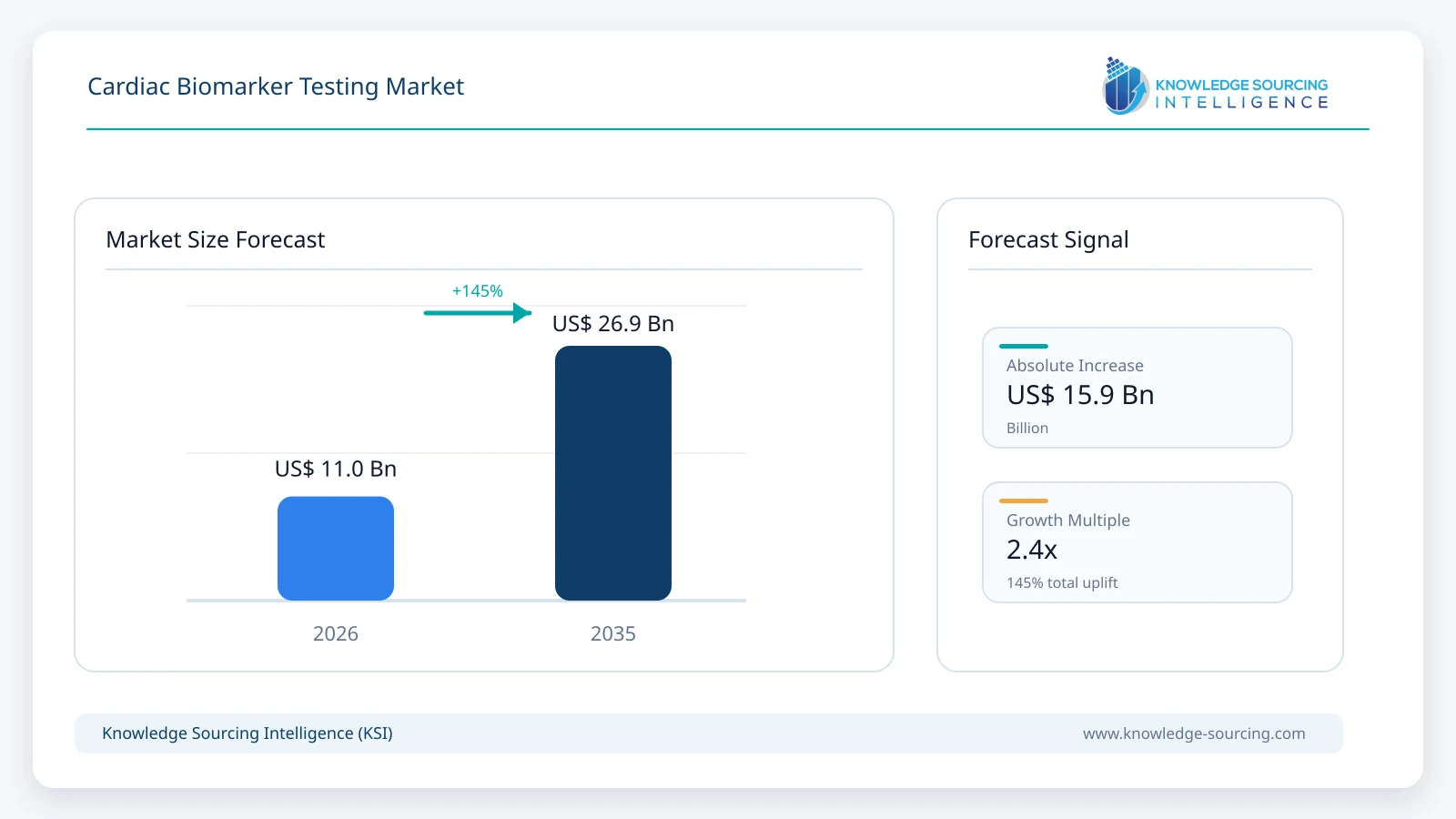
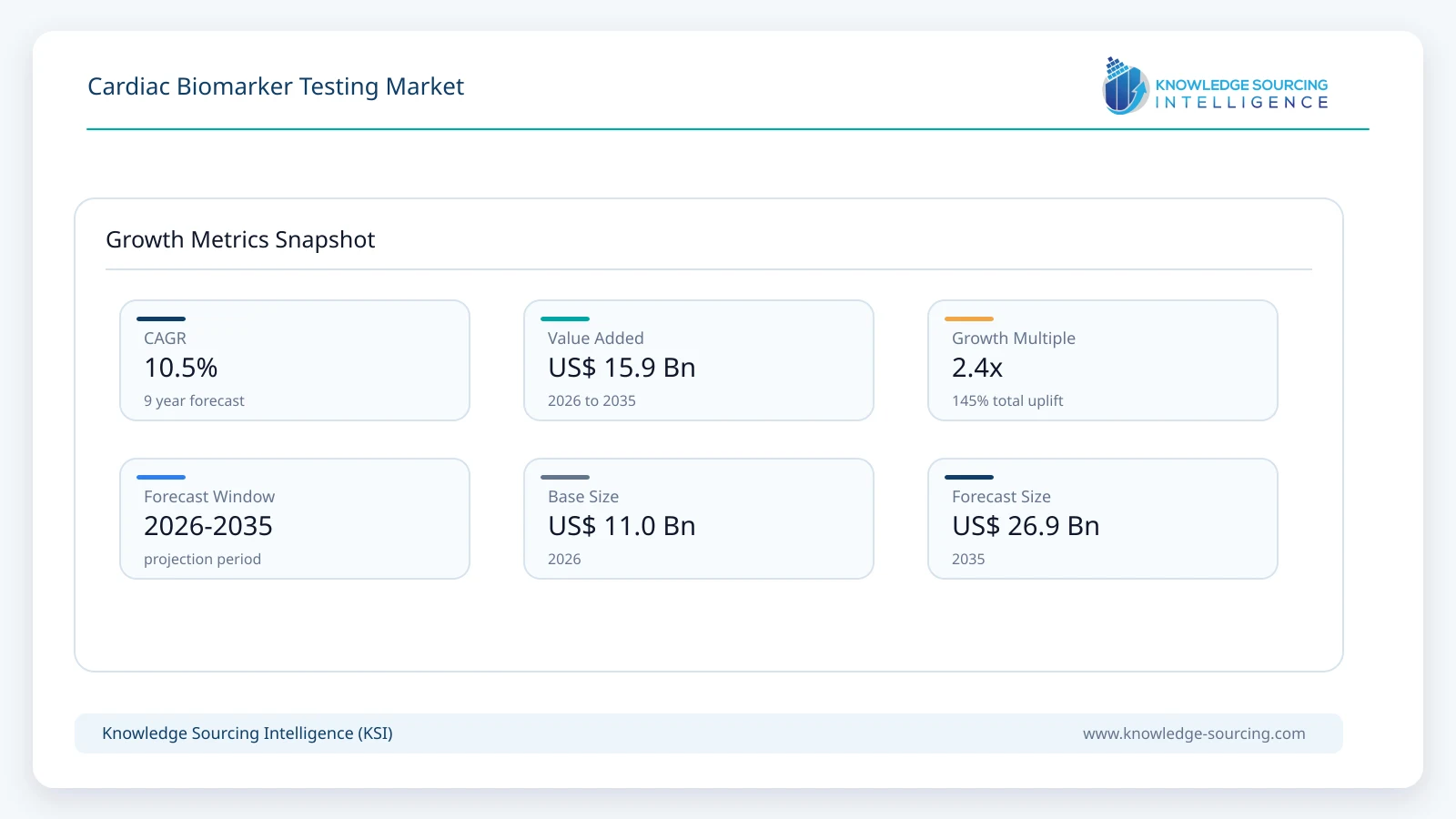
The Cardiac Biomarker Testing Market is expected to grow at a CAGR of 10.5% from a market value of USD 11.0 billion in 2026 to USD 26.9 billion in 2035.
Highlights:
- 1Rising cardiovascular disease prevalence is increasing emergency diagnostic volumes, which strengthens demand for high-sensitivity cardiac biomarker assays across hospital laboratories.
- 2Clinical guidelines increasingly recommend high-sensitivity cardiac troponin testing, accelerating replacement of conventional biomarker assays in routine cardiovascular diagnosis.
- 3Healthcare providers are expanding point-of-care diagnostic capabilities because faster clinical decisions reduce emergency department congestion and improve treatment initiation.
- 4Diagnostic manufacturers are investing in multiplex biomarker panels and automated analytical platforms, supporting greater diagnostic accuracy while improving laboratory efficiency.
Cardiac biomarker testing provides objective biochemical evidence of myocardial injury, cardiac dysfunction, and ischemic events that support clinical diagnosis across emergency, inpatient, and outpatient settings. The market primarily relies on biomarkers such as cardiac troponins, creatine kinase-MB, myoglobin, and emerging complementary biomarkers that improve diagnostic confidence for cardiovascular conditions.
The increasing burden of ischemic heart disease, heart failure, and acute coronary syndrome is driving continuous demand for rapid and highly accurate diagnostic assays. Healthcare systems are expanding emergency diagnostic capacity because shorter diagnostic turnaround directly influences treatment selection, hospital resource utilization, and patient prognosis. High-sensitivity cardiac troponin assays are replacing conventional testing protocols as clinicians seek earlier rule-in and rule-out strategies for myocardial infarction.
Regulatory agencies continue strengthening analytical validation requirements for in vitro diagnostic products, while professional cardiovascular societies regularly update clinical practice recommendations supporting evidence-based biomarker utilization. Manufacturers are investing in assay sensitivity improvements, laboratory automation, digital reporting systems, and decentralized testing platforms because healthcare providers increasingly require standardized diagnostic performance across diverse clinical environments.
Market Dynamics
Market Drivers
Growing Adoption of High-Sensitivity Cardiac Troponin Assays: High-sensitivity cardiac troponin represents the clinical standard for diagnosing myocardial injury. Hospitals are increasingly replacing conventional cardiac biomarker assays because earlier biomarker detection improves emergency department triage and reduces unnecessary hospital admissions. Clinical guideline alignment continues supporting procurement decisions, leading diagnostic manufacturers to expand high-sensitivity assay portfolios and automated laboratory compatibility.
Rising Global Burden of Cardiovascular Diseases: Cardiovascular disease remains one of the largest contributors to mortality and healthcare expenditure worldwide. Healthcare systems are increasing investments in early cardiovascular diagnosis because delayed detection significantly increases treatment complexity and long-term costs. Growing patient volumes therefore continue supporting routine adoption of cardiac biomarker testing across emergency medicine, cardiology, and intensive care settings.
Expansion of Point-of-Care Diagnostics: Point-of-care testing provides faster clinical information during emergency care and decentralized healthcare delivery. Hospitals and ambulatory care facilities are expanding bedside diagnostic capabilities because shorter turnaround times improve therapeutic decision-making. Diagnostic manufacturers are developing compact analyzers with improved analytical sensitivity, strengthening demand for portable cardiac biomarker testing solutions.
Increasing Laboratory Automation and Digital Integration: Clinical laboratories rely on automated workflows to improve testing consistency and operational efficiency. Healthcare organizations are integrating digital laboratory information systems with automated immunoassay platforms because increasing diagnostic volumes require scalable analytical capacity. Manufacturers continue introducing connected diagnostic solutions that support standardized reporting and rapid physician access to test results.
Market Restraints
High-sensitivity cardiac biomarker assays require advanced analytical instrumentation and rigorous quality control, which limits adoption among smaller healthcare facilities with constrained laboratory budgets.
Biomarker concentrations may be influenced by renal dysfunction, chronic cardiac conditions, or other comorbidities, increasing the need for clinical correlation and reducing reliance on a single diagnostic result.
Regulatory approval pathways continue requiring extensive analytical and clinical validation for new biomarker assays, extending product development timelines and delaying commercialization of emerging diagnostic technologies.
Market Opportunities
Expansion of Multiplex Cardiac Biomarker Panels: Cardiac biomarker testing increasingly supports comprehensive cardiovascular assessment rather than single-marker diagnosis. Healthcare providers are adopting multiplex testing because combining biomarkers improves diagnostic confidence across diverse clinical presentations. Diagnostic developers are expanding integrated immunoassay panels that simultaneously evaluate myocardial injury, cardiac stress, and inflammatory responses, strengthening future demand for advanced testing platforms.
Growth of Decentralized and Near-Patient Testing: Healthcare delivery increasingly extends beyond centralized hospital laboratories. Community hospitals, emergency medical services, and outpatient facilities are adopting portable diagnostic systems because immediate biomarker availability shortens clinical decision-making. Manufacturers are developing compact analyzers with laboratory-level analytical performance, creating opportunities for broader adoption across decentralized healthcare environments.
Integration of Artificial Intelligence with Cardiac Diagnostics: Digital healthcare platforms increasingly combine laboratory data with clinical decision-support systems. Healthcare organizations are implementing artificial intelligence algorithms because integrated interpretation improves patient risk stratification and supports standardized treatment pathways. Diagnostic companies are developing connected solutions that combine biomarker results with electronic medical records, creating opportunities for precision cardiovascular care.
Emerging Biomarker Research Beyond Troponins: Current cardiac diagnosis primarily relies on cardiac troponins, yet researchers continue identifying complementary biomarkers that improve prognostic assessment. Clinical research programs are evaluating inflammatory, metabolic, and fibrosis-related biomarkers because cardiovascular diseases involve multiple biological pathways. Diagnostic manufacturers are expanding research collaborations that support future commercialization of next-generation biomarker panels.
Disease & Epidemiology Analysis
ardiovascular disease remains the leading global cause of mortality and continues driving sustained demand for cardiac biomarker testing. Acute myocardial infarction, acute coronary syndrome, and heart failure require rapid biochemical assessment because early diagnosis directly influences treatment selection and clinical outcomes. Growing population aging increases cardiovascular disease prevalence, resulting in larger patient populations requiring emergency diagnostic evaluation. Healthcare systems are strengthening acute cardiac care pathways because early identification reduces mortality, hospital length of stay, and healthcare expenditure.
High-sensitivity cardiac troponin testing increasingly supports standardized emergency department protocols because guideline-directed algorithms improve diagnostic efficiency. Physicians are incorporating serial biomarker measurements alongside electrocardiography and clinical assessment, reducing unnecessary admissions while enabling earlier intervention for high-risk patients. Hospitals continue optimizing chest pain pathways since faster diagnostic exclusion improves emergency department capacity and patient flow.
Heart failure is creating additional demand for biomarker-based disease management because recurrent hospitalizations require continuous clinical monitoring. Researchers are investigating complementary biomarkers that improve long-term prognosis, disease progression assessment, and therapeutic response evaluation. Diagnostic innovation therefore extends beyond acute myocardial infarction toward broader cardiovascular disease management across multiple healthcare settings.
Treatment Guidelines Landscape
Organization | Guideline | Key Recommendation | Impact on Cardiac Biomarker Testing |
American Heart Association (AHA) & American College of Cardiology (ACC) | 2021 Chest Pain Guideline | Recommends high-sensitivity cardiac troponin as the preferred biomarker for suspected myocardial infarction | Accelerates adoption of standardized high-sensitivity troponin assays |
European Society of Cardiology (ESC) | Acute Coronary Syndrome Guidelines | Supports rapid 0/1-hour and 0/2-hour high-sensitivity troponin algorithms | Increases demand for highly sensitive laboratory and point-of-care assays |
International Federation of Clinical Chemistry (IFCC) | Cardiac Biomarker Recommendations | Promotes assay standardization and analytical quality requirements | Encourages harmonization across diagnostic manufacturers |
National Institute for Health and Care Excellence (NICE) | Chest Pain and Acute Coronary Syndrome Guidance | Supports validated high-sensitivity troponin testing within structured diagnostic pathways | Expands utilization across emergency and acute care settings |
Market Segmentation
By Biomarker Type
Cardiac troponin represents the clinical reference standard for detecting myocardial injury because of its superior specificity and sensitivity compared with traditional cardiac biomarkers. Hospitals are increasingly adopting high-sensitivity cardiac troponin assays as international clinical guidelines recommend accelerated diagnostic algorithms for suspected acute myocardial infarction. The transition requires laboratories to upgrade analytical platforms and validate standardized testing protocols across emergency departments. Diagnostic manufacturers are expanding high-sensitivity assay portfolios with improved analytical precision and broader automation compatibility. Cardiac troponin therefore continues to account for the largest share of demand within the cardiac biomarker testing market.
By Testing Method
Point-of-care testing enables clinicians to obtain cardiac biomarker results close to the patient, reducing diagnostic turnaround time during emergency evaluation. Healthcare providers are expanding POCT deployment because rapid clinical decisions improve patient triage, shorten emergency department stays, and support earlier therapeutic intervention. Portable testing systems require analytical performance comparable to centralized laboratory platforms, encouraging manufacturers to improve assay sensitivity and connectivity. Companies are integrating wireless data transfer and electronic medical record compatibility into POCT devices, strengthening decentralized cardiovascular diagnostics across hospitals, ambulances, and outpatient care facilities.
By Clinical Application
Acute myocardial infarction remains the primary clinical application for cardiac biomarker testing because treatment outcomes depend heavily on rapid diagnosis. Emergency departments are increasingly implementing serial high-sensitivity troponin protocols that support accelerated rule-in and rule-out strategies for suspected myocardial infarction. Accurate interpretation requires standardized laboratory performance together with electrocardiographic and clinical assessment, reinforcing demand for validated diagnostic assays. Diagnostic companies continue optimizing assay precision and turnaround time, making cardiac biomarker testing an indispensable component of evidence-based myocardial infarction management.
Regional Analysis
North America Market Analysis
North America represents the most mature market for cardiac biomarker testing because advanced healthcare infrastructure, high cardiovascular disease prevalence, and widespread adoption of evidence-based clinical guidelines sustain consistent diagnostic demand. Hospitals are increasingly implementing high-sensitivity cardiac troponin assays following recommendations from the American Heart Association and the American College of Cardiology, accelerating replacement of conventional cardiac biomarkers. The transition requires healthcare providers to modernize laboratory platforms while maintaining strict analytical quality standards across integrated healthcare networks. Diagnostic manufacturers are strengthening collaborations with hospital systems and reference laboratories through continuous assay innovation, automation, and digital laboratory integration. Regulatory oversight from the U.S. Food and Drug Administration supports high analytical performance and clinical validation, reinforcing physician confidence in approved diagnostic products. Growing investments in emergency care modernization, laboratory automation, and decentralized testing continue expanding opportunities for both centralized immunoassay platforms and point-of-care cardiac diagnostics.
Europe Market Analysis
Europe maintains a strong position in the cardiac biomarker testing market because harmonized clinical practice guidelines and well-established public healthcare systems encourage standardized cardiovascular diagnosis. Healthcare providers are increasingly adopting high-sensitivity cardiac troponin testing following recommendations from the European Society of Cardiology, supporting accelerated acute coronary syndrome assessment pathways. This transition increases demand for highly standardized assays capable of delivering consistent analytical performance across multiple healthcare settings. Diagnostic companies are expanding clinical evidence generation and laboratory automation solutions to address growing testing volumes while maintaining regulatory compliance under the European In Vitro Diagnostic Regulation (IVDR). Healthcare institutions continue investing in integrated laboratory information systems and automated immunoassay analyzers that improve workflow efficiency and result traceability. Research collaborations between academic medical centers and diagnostic manufacturers also continue evaluating emerging cardiac biomarkers for prognosis and disease monitoring.
Asia Pacific Market Analysis
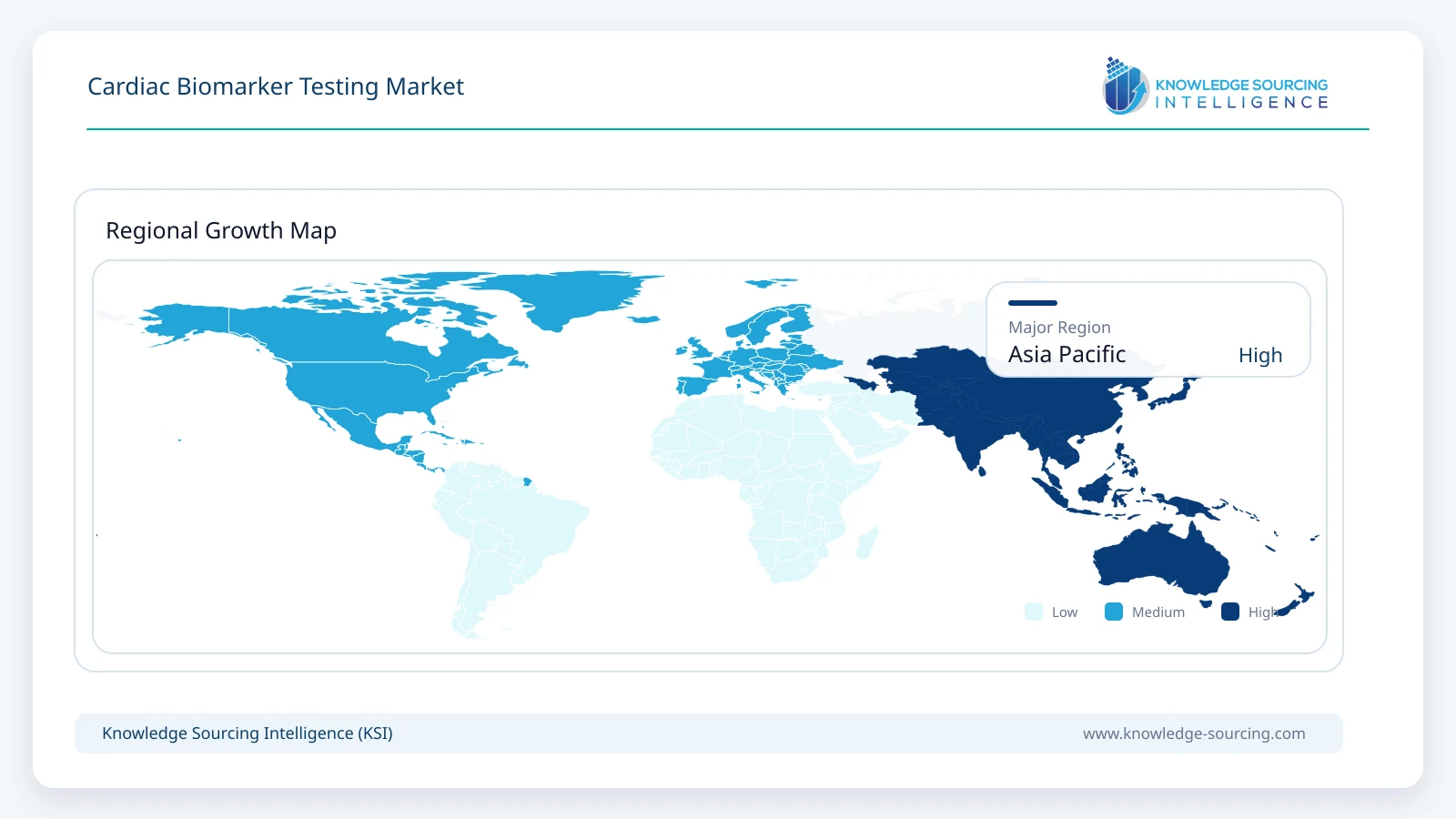
Asia Pacific demonstrates substantial growth potential because expanding healthcare infrastructure, increasing cardiovascular disease burden, and improving diagnostic accessibility are strengthening demand for cardiac biomarker testing. Governments are investing in hospital modernization and laboratory capacity as cardiovascular disorders become a growing public health challenge across both developed and emerging economies. Healthcare providers are increasing adoption of automated immunoassay systems and point-of-care diagnostic platforms to improve emergency cardiac care in urban as well as secondary healthcare facilities. Diagnostic manufacturers continue expanding regional manufacturing capabilities, distribution partnerships, and clinical education initiatives because healthcare systems require broader access to standardized cardiac diagnostics. Growing awareness of early cardiovascular disease detection encourages physicians to incorporate biomarker testing into routine emergency care pathways. Increasing healthcare expenditure, expanding insurance coverage, and ongoing improvements in diagnostic infrastructure continue supporting long-term market development throughout the region.
Rest of the World
The Rest of the World market continues expanding as healthcare systems improve access to cardiovascular diagnostics across Latin America, the Middle East, and Africa. Countries are strengthening emergency healthcare services because cardiovascular diseases increasingly contribute to morbidity and mortality. Healthcare providers are adopting automated laboratory analyzers alongside portable diagnostic systems to improve timely diagnosis despite infrastructure limitations. Resource constraints require cost-effective testing solutions, encouraging manufacturers to introduce scalable diagnostic platforms suitable for both tertiary hospitals and decentralized healthcare settings. International health organizations and regional governments continue supporting investments in laboratory quality improvement and workforce training, strengthening diagnostic capabilities across developing healthcare systems. Manufacturers are expanding strategic partnerships with regional distributors and healthcare institutions to improve product accessibility while complying with local regulatory requirements. The regional market therefore presents long-term opportunities as healthcare modernization, diagnostic awareness, and cardiovascular disease management continue advancing.
Regulatory Landscape
Cardiac biomarker testing is regulated as an in vitro diagnostic (IVD) category because assay performance directly influences clinical decisions for acute cardiovascular conditions. Regulatory agencies require manufacturers to demonstrate analytical sensitivity, specificity, precision, reproducibility, and clinical validity before commercialization. High-sensitivity cardiac troponin assays are increasingly becoming the regulatory benchmark for acute myocardial infarction diagnosis, encouraging manufacturers to generate robust multicenter clinical evidence that supports guideline adoption. These requirements increase development costs but strengthen physician confidence in approved diagnostic products and improve consistency across healthcare systems.
The regulatory environment is also evolving toward lifecycle quality management and post-market performance monitoring. The U.S. Food and Drug Administration continues evaluating cardiac biomarker assays under its medical device framework, while the European Union Medical Device Regulation (EU MDR) and In Vitro Diagnostic Regulation (IVDR) require enhanced clinical evidence, risk classification, and post-market surveillance for diagnostic manufacturers. Regulatory authorities in Japan, China, Canada, and Australia are also strengthening evidence requirements for cardiovascular diagnostics, prompting sponsors to conduct larger validation studies across diverse patient populations. This regulatory evolution is supporting higher analytical standards while encouraging manufacturers to invest in assay standardization and quality assurance.
Pipeline Analysis
The development pipeline for cardiac biomarker testing is shifting from single-analyte diagnostics toward multi-biomarker strategies that improve diagnostic accuracy and long-term cardiovascular risk assessment. While high-sensitivity cardiac troponin remains the established standard for detecting myocardial injury, researchers are evaluating complementary biomarkers associated with inflammation, myocardial remodeling, fibrosis, oxidative stress, and neurohormonal activation. These programs aim to improve differentiation between acute myocardial infarction, heart failure, myocarditis, and other cardiovascular disorders where troponin alone provides limited prognostic information.
Several sponsors are advancing assays that combine established biomarkers with emerging candidates such as copeptin, heart-type fatty acid-binding protein (H-FABP), growth differentiation factor-15 (GDF-15), soluble ST2 (sST2), galectin-3, and inflammatory biomarkers including high-sensitivity C-reactive protein (hs-CRP). Most of these biomarkers are progressing through analytical validation and prospective clinical evaluation rather than late-stage regulatory submissions. Clinical studies are increasingly assessing multiplex biomarker panels because integrated biological information may improve patient risk stratification, reduce unnecessary admissions, and support individualized therapeutic decisions across emergency and chronic cardiovascular care.
Diagnostic sponsors are increasingly aligning development strategies with international clinical guidelines and regulatory expectations. Manufacturers are conducting multicenter clinical validation studies using diverse patient populations to demonstrate analytical performance across different healthcare settings. Strategic collaborations among diagnostic companies, academic medical centers, and cardiovascular research networks continue accelerating evidence generation for next-generation biomarkers.
Reimbursement Landscape
Reimbursement for cardiac biomarker testing primarily depends on demonstrated clinical utility, evidence-based guideline recommendations, and national healthcare payment policies. High-sensitivity cardiac troponin testing is widely incorporated into reimbursement pathways because international clinical guidelines recognize it as the preferred biomarker for suspected acute myocardial infarction. Public and private healthcare payers increasingly support reimbursement for guideline-directed diagnostic testing that reduces unnecessary hospital admissions, shortens emergency department stays, and enables earlier therapeutic intervention.
Coverage decisions are increasingly emphasizing value-based healthcare outcomes rather than individual laboratory test utilization. Healthcare providers are adopting standardized cardiac biomarker testing protocols because consistent diagnostic pathways improve reimbursement predictability while supporting quality-of-care initiatives. Manufacturers are generating health-economic evidence demonstrating reductions in downstream healthcare costs, which strengthens reimbursement discussions with national health systems and commercial insurers. Continued expansion of value-based care models is expected to support broader reimbursement for advanced cardiac biomarker panels as additional evidence confirms improvements in clinical decision-making and patient management.
Competitive Landscape
Abbott Laboratories
Abbott Laboratories maintains a leading position in the cardiac biomarker testing market through its comprehensive immunoassay portfolio, global installed base of automated analyzers, and strong clinical evidence supporting high-sensitivity cardiac troponin testing. The company differentiates itself by integrating cardiac biomarker assays across the ARCHITECT, Alinity, and related laboratory platforms, allowing healthcare providers to standardize testing workflows from medium-sized laboratories to high-volume reference centers.
F. Hoffmann-La Roche AG
F. Hoffmann-La Roche AG remains strategically differentiated through its extensive immunodiagnostics expertise and strong integration of cardiac biomarkers within the Elecsys testing portfolio. The company focuses on delivering highly standardized assays that support accurate diagnosis of myocardial injury and cardiovascular risk assessment across centralized laboratory environments.
Siemens Healthineers
Siemens Healthineers distinguishes itself through integrated laboratory automation and advanced immunoassay technologies that support high-throughput cardiovascular diagnostics. The company combines its Atellica Solution and ADVIA Centaur platforms with high-sensitivity cardiac biomarker assays, enabling healthcare providers to improve analytical efficiency while maintaining standardized diagnostic quality.
bioMérieux
bioMérieux differentiates itself through its strong expertise in in vitro diagnostics, microbiology, immunoassays, and integrated laboratory solutions that support timely clinical decision-making. Although the company has historically maintained a stronger presence in infectious disease diagnostics, it continues strengthening its immunoassay capabilities that complement cardiovascular testing workflows within hospital laboratories.
QuidelOrtho Corporation
QuidelOrtho Corporation maintains a competitive position through its diversified portfolio of laboratory-based and point-of-care diagnostic solutions, enabling healthcare providers to deliver rapid clinical decisions across emergency and decentralized care settings. The company differentiates itself by combining Ortho Clinical Diagnostics' laboratory expertise with Quidel's rapid diagnostic capabilities following their merger.
Danaher Corporation
Danaher Corporation maintains a strong strategic position through its life sciences and diagnostics portfolio, supported by subsidiaries that provide advanced laboratory instruments, immunoassay technologies, and automation solutions. The company differentiates itself by leveraging the Danaher Business System (DBS), which emphasizes continuous innovation, operational efficiency, and customer-focused product development.
Key Developments
April 2026: UCLA researchers developed an AI-powered portable diagnostic platform for rapid, multiplexed detection of key cardiac biomarkers. The system measures cTnI, CK-MB, and NT-proBNP in about 23 minutes, using dual-mode optical sensing plus neural network analysis to support point-of-care cardiovascular testing.
Strategic Insights and Future Market Outlook
Cardiac biomarker testing continues to evolve from a single-marker diagnostic approach toward integrated cardiovascular risk assessment supported by highly sensitive assays, laboratory automation, and digital clinical decision support. Healthcare providers are increasingly implementing high-sensitivity cardiac troponin protocols because earlier and more accurate diagnosis improves patient outcomes while reducing unnecessary hospital admissions. This transition is encouraging diagnostic manufacturers to strengthen assay precision, analytical standardization, and interoperability with hospital information systems, reinforcing long-term demand for advanced immunoassay platforms.
Innovation is increasingly focusing on multiplex biomarker panels, decentralized testing, and artificial intelligence-assisted interpretation rather than incremental improvements in conventional assays. Diagnostic companies are investing in clinical validation programs that demonstrate improvements in prognostic assessment, workflow efficiency, and health-economic value because regulators and healthcare payers increasingly require evidence beyond analytical performance alone. Strategic collaborations among manufacturers, academic institutions, and cardiovascular research networks continue accelerating the translation of emerging biomarkers into routine clinical practice.
The market therefore remains structurally dependent on continuous scientific validation, evolving clinical guidelines, and regulatory compliance. Companies that successfully combine highly sensitive biomarker assays with automated laboratory ecosystems, digital connectivity, and strong clinical evidence are expected to strengthen their competitive positions throughout the forecast period. Continued investment in innovation, quality management, and global market expansion is likely to sustain demand for cardiac biomarker testing across both centralized laboratories and point-of-care settings.
Cardiac Biomarker Testing Market Scope:
| Report Metric | Details |
|---|---|
| Total Market Size in 2026 | USD 11.0 billion |
| Total Market Size in 2035 | USD 26.9 billion |
| Forecast Unit | Billion |
| Growth Rate | 10.5% |
| Study Period | 2021 to 2035 |
| Historical Data | 2021 to 2024 |
| Base Year | 2025 |
| Forecast Period | 2026 – 2035 |
| Segmentation | Biomarker Type, Technology Platform, Testing Method, Sample Type, Clinical Application, End User, Geography |
| Companies |
|
Market Segmentation
Biomarker Type
Technology Platform
End User
Geography
- North America
- South America
- Europe
- Middle East and Africa
- Asia Pacific
Table of Contents
1. EXECUTIVE SUMMARY
1.1 Market Snapshot
1.2 Key Findings
1.3 Analyst Insights
1.4 Strategic Recommendations
2. RESEARCH METHODOLOGY
2.1 Research Design
2.2 Data Collection Methodology
2.3 Market Size Estimation
2.4 Forecasting Model
2.5 Assumptions & Limitations
3. GLOBAL CARDIAC BIOMARKER TESTING MARKET OVERVIEW, SIZE & FORECAST
3.1 Market Definition & Scope
3.2 Industry Overview
3.3 Industry Evolution
3.4 Key Market Trends
3.5 Historical Market Size Analysis (2021–2025)
3.6 Market Forecast (2026–2035)
3.7 Disease Burden & Clinical Importance of Cardiac Biomarkers
3.8 Epidemiology of Cardiovascular Diseases
3.8.1 Disease Prevalence
3.8.2 Diagnosed Patient Population
3.9 Testing Volume Analysis
3.10 Clinical Testing Workflow
3.11 Biomarker Utilization in Acute and Chronic Cardiac Conditions
3.12 Clinical Practice Guidelines and Testing Recommendations
4. MARKET DYNAMICS
4.1 Market Drivers
4.2 Market Restraints
4.3 Market Opportunities
4.4 Market Challenges
5. INDUSTRY LANDSCAPE
5.1 Industry Value Chain Analysis
5.2 Pricing Analysis
5.3 Reimbursement Landscape
6. INNOVATION LANDSCAPE
6.1 Emerging Biomarker Technologies
6.2 Product Innovation
6.3 Clinical Trial Analysis
6.4 Pipeline Analysis
6.5 Multiplex and High-Sensitivity Assay Development
6.6 AI Integration in Cardiac Biomarker Interpretation
6.7 Digital Health Integration and Connected Diagnostics
7. REGULATORY LANDSCAPE
7.1 Regulatory Framework
7.2 Approval Pathways
7.3 Compliance Requirements
8. GLOBAL CARDIAC BIOMARKER TESTING MARKET LANDSCAPE ANALYSIS
8.1 Analysis by Biomarker Type
8.2 Analysis by Technology Platform
8.3 Analysis by Sample Type
8.4 Analysis by Clinical Application
8.5 Analysis by Testing Methodology
8.6 Analysis by Testing Setting
9. GLOBAL CARDIAC BIOMARKER TESTING MARKET SEGMENT ANALYSIS (2021–2035)
9.1 By Biomarker Type
9.1.1 Cardiac Troponin (cTnI & cTnT)
9.1.2 Creatine Kinase-MB (CK-MB)
9.1.3 Myoglobin
9.1.4 Ischemia-Modified Albumin (IMA)
9.1.5 Other Cardiac Biomarkers
9.2 By Technology Platform
9.2.1 Immunoassays
9.2.2 Clinical Chemistry
9.2.3 Molecular Diagnostics
9.2.4. Other Technologies
9.3 By Testing Method
9.3.1 Laboratory-Based Testing
9.3.2 Point-of-Care Testing (POCT)
9.4 By Sample Type
9.4.1 Whole Blood
9.4.2 Serum
9.4.3 Plasma
9.5 By Clinical Application
9.5.1 Acute Myocardial Infarction
9.5.2 Acute Coronary Syndrome
9.5.3 Heart Failure
9.5.4 Risk Stratification
9.5.5 Other Cardiovascular Conditions
9.6 By End User
9.6.1 Hospitals
9.6.2 Clinical Laboratories
9.6.3 Emergency Care Settings
9.6.4 Others
10. GLOBAL CARDIAC BIOMARKER TESTING MARKET GEOGRAPHICAL ANALYSIS (2021–2035)
10.1 North America
10.2 Europe
10.3 Asia-Pacific
10.4 South America
10.5 Middle East & Africa
11. GLOBAL CARDIAC BIOMARKER TESTING MARKET COUNTRY ANALYSIS (2021–2035)
11.1 United States
11.2 Canada
11.3 Germany
11.4 United Kingdom
11.5 France
11.6 Italy
11.7 Spain
11.8 Japan
11.9 China
11.10 India
11.11 South Korea
11.12 Australia
11.13 Brazil
11.14 Mexico
11.15 Saudi Arabia
12. COMPETITIVE LANDSCAPE
12.1 Market Share Analysis
12.2 Strategic Developments
12.3 Mergers & Acquisitions, Partnerships & Collaborations
12.4 Product Launches
13. COMPANY PROFILES
13.1 Abbott Laboratories
13.1.1 Company Overview
13.1.2 Financials
13.1.3 Product Portfolio
13.1.4 Recent Developments
13.2 F. Hoffmann-La Roche AG
13.3 Siemens Healthineers
13.4 Chembio Diagnostics
13.5 bioMérieux
13.6 QuidelOrtho Corporation
13.7 Abcam plc
13.8 LumiraDx Limited
13.9 Danaher Corporation
13.10 Thermo Fisher Scientific
14. GLOBAL CARDIAC BIOMARKER TESTING MARKET COMMERCIAL FORECAST ANALYSIS
14.1 Cardiac Troponin Testing
14.2 BNP Testing
14.3 NT-proBNP Testing
14.4 CK-MB Testing
14.5 Myoglobin Testing
14.6 Multiplex Cardiac Biomarker Panels
14.7 Point-of-Care Cardiac Biomarker Testing
14.8 High-Sensitivity Cardiac Biomarker Testing
15. INVESTMENT & FUNDING ANALYSIS
15.1 Venture Capital Trends
15.2 Government Funding
15.3 R&D Investments
16. FUTURE OUTLOOK
16.1 Key Growth Opportunities
16.2 Future Industry Trends
Navigate
Trusted by the world's leading organizations











