
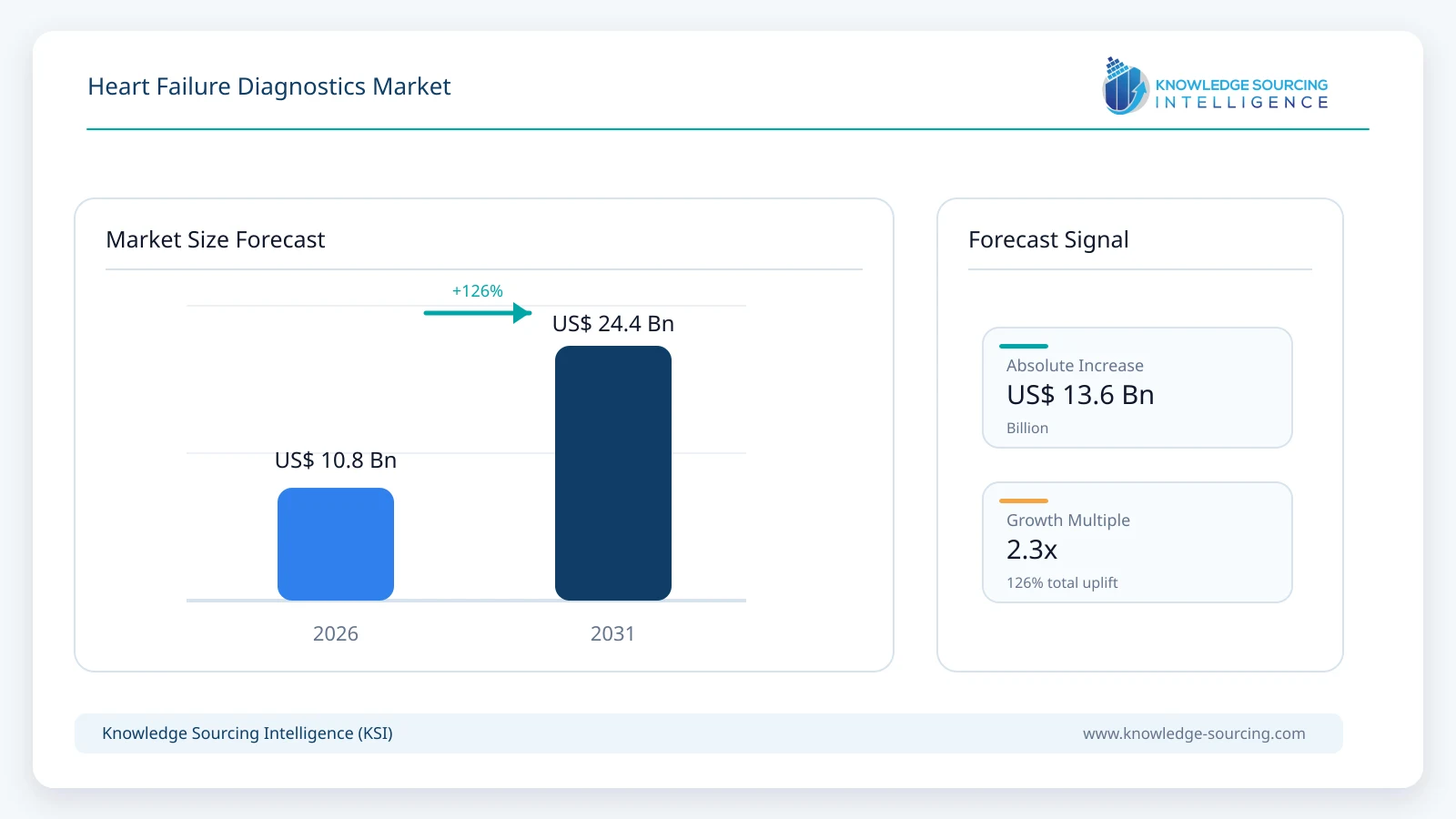
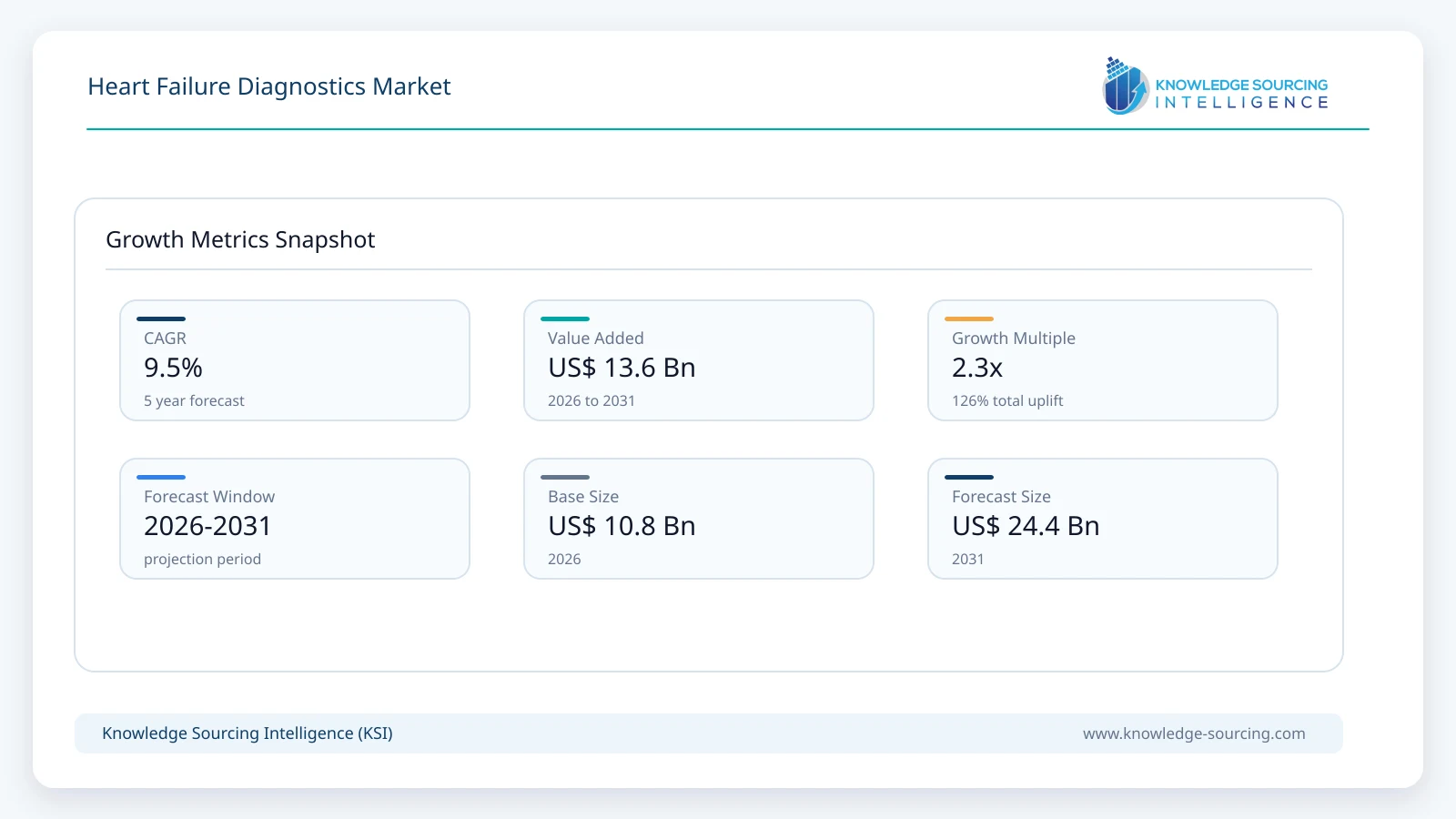
The Heart Failure Diagnostics Market is forecast to grow at a CAGR of 9.5%, reaching USD 24.35 billion in 2031 from USD 10.78 billion in 2026.
Highlights:
- 1Rising heart failure prevalence is increasing demand for biomarker-based diagnostics because earlier identification enables faster therapeutic intervention and improved patient outcomes.
- 2Growing adoption of natriuretic peptide testing is strengthening routine clinical diagnosis by improving differentiation between heart failure and other causes of respiratory symptoms.
- 3Expansion of advanced cardiac imaging technologies is improving diagnostic precision because structural and functional abnormalities can be evaluated more comprehensively.
The Heart Failure Diagnostics Market consists of diagnostic instruments, laboratory assays, imaging systems, software platforms, and clinical services designed to detect and evaluate heart failure in patients presenting with cardiovascular symptoms. Diagnostic evaluation includes measurement of circulating cardiac biomarkers, assessment of cardiac structure and function through imaging technologies, and continuous monitoring of disease progression to support individualized treatment strategies. These diagnostic tools enable clinicians to distinguish heart failure from other cardiopulmonary disorders while providing objective information regarding disease severity and prognosis.
Demand is increasing because heart failure remains one of the leading causes of hospitalization among older adults worldwide, while demographic aging and increasing prevalence of hypertension, diabetes, obesity, and coronary artery disease continue expanding the at-risk population. Clinical examination alone frequently lacks sufficient specificity during early disease presentation, increasing dependence on biomarker testing and advanced imaging for timely diagnosis. Healthcare institutions are strengthening multidisciplinary cardiovascular programs by integrating laboratory diagnostics with comprehensive cardiac imaging to improve diagnostic efficiency and clinical outcomes.
Regulatory agencies and professional cardiovascular societies continue supporting standardized diagnostic algorithms that incorporate natriuretic peptide testing and evidence-based imaging modalities. Updated clinical guidelines are encouraging earlier biomarker assessment for patients presenting with suspected heart failure because rapid diagnosis enables timely therapeutic intervention and reduces avoidable hospital admissions. Diagnostic manufacturers are responding by expanding automated assay availability, improving imaging technologies, and enhancing interoperability between laboratory information systems and electronic health records.
Market Dynamics
Market Drivers
Rising Global Burden of Heart Failure: Heart failure represents one of the most significant cardiovascular diseases affecting healthcare systems worldwide because aging populations and increasing prevalence of hypertension, ischemic heart disease, diabetes, and obesity continue expanding the patient population. Demand is increasing for accurate diagnostic solutions as clinicians seek to identify heart failure before irreversible cardiac dysfunction develops. Conventional clinical assessment provides limited certainty during early disease stages, creating greater reliance on laboratory biomarkers and advanced cardiac imaging. Healthcare providers are expanding diagnostic capacity to improve early intervention and reduce recurrent hospitalizations. This structural shift strengthens long-term demand for comprehensive heart failure diagnostics.
Increasing Clinical Adoption of Natriuretic Peptide Testing: Natriuretic peptide testing forms the cornerstone of modern heart failure diagnosis because BNP and NT-proBNP biomarkers provide objective evidence of cardiac stress and ventricular dysfunction. Clinical guidelines recommend biomarker assessment for patients presenting with symptoms suggestive of heart failure, increasing routine utilization across emergency departments and outpatient cardiology services. Diagnostic laboratories are expanding automated immunoassay platforms to accommodate higher testing volumes while improving analytical consistency. Standardized biomarker interpretation supports more confident clinical decision-making and strengthens evidence-based cardiovascular care.
Expansion of Advanced Cardiac Imaging: Cardiac imaging provides essential information regarding ventricular function, structural abnormalities, and disease severity that cannot be obtained through laboratory testing alone. Healthcare institutions are investing in echocardiography, cardiac MRI, CT imaging, and AI-assisted diagnostic software to improve diagnostic accuracy and treatment planning. Increasing availability of high-resolution imaging systems supports earlier disease characterization while reducing diagnostic uncertainty. Comprehensive imaging capabilities strengthen multidisciplinary heart failure management across hospitals and specialty cardiac centers.
Technological Advancements in Diagnostic Platforms: Diagnostic innovation continues improving analytical sensitivity, workflow automation, and digital integration across cardiovascular diagnostics. Manufacturers are introducing highly sensitive biomarker assays, portable point-of-care testing devices, and artificial intelligence-enabled imaging solutions that accelerate diagnosis without compromising clinical accuracy. Laboratory automation and digital reporting systems improve operational efficiency while supporting faster treatment decisions. These technological advancements reinforce the transition toward precision-based cardiovascular diagnostics.
Market Restraints
High capital investment required for advanced cardiac imaging systems limits adoption among smaller healthcare facilities and resource-constrained regions.
Variability in access to specialized cardiology services and imaging expertise creates disparities in diagnostic availability across healthcare systems.
Reimbursement limitations for advanced diagnostic procedures restrict broader utilization despite increasing clinical evidence supporting comprehensive heart failure assessment.
Market Opportunities
Expansion of Point-of-Care Heart Failure Testing: Point-of-care diagnostics are enabling faster biomarker assessment within emergency departments, ambulatory settings, and community healthcare facilities where immediate clinical decisions are essential. Demand is increasing for portable testing platforms because earlier diagnosis shortens treatment initiation time and improves patient triage. Diagnostic manufacturers are developing compact analytical systems that deliver rapid and reliable biomarker measurements while reducing dependence on centralized laboratories. Greater accessibility is expanding diagnostic coverage beyond tertiary care hospitals.
Integration of Artificial Intelligence into Cardiac Imaging: Artificial intelligence is improving interpretation of echocardiography, cardiac MRI, and CT images by supporting automated quantification of cardiac function and structural abnormalities. Healthcare providers are implementing AI-assisted diagnostic workflows to improve consistency, reduce interpretation variability, and optimize physician productivity. Continuous software innovation strengthens clinical confidence while enabling more standardized cardiovascular assessment across healthcare networks. This technological evolution creates significant opportunities for imaging platform developers.
Growth of Preventive Cardiovascular Care: Healthcare systems are emphasizing earlier identification of individuals at elevated cardiovascular risk to reduce long-term disease burden and healthcare expenditures. Preventive screening programs are expanding utilization of biomarker testing and non-invasive imaging because timely diagnosis supports earlier pharmacological intervention and lifestyle modification. Hospitals and outpatient cardiology clinics are strengthening integrated diagnostic pathways that improve disease detection before advanced heart failure develops. This preventive approach supports sustained growth in cardiovascular diagnostics.
Increasing Healthcare Investment in Emerging Economies: Developing healthcare systems are expanding cardiovascular diagnostic infrastructure to address the growing burden of chronic cardiovascular disease. Governments and private healthcare providers are investing in modern laboratory platforms, imaging technologies, and specialist cardiac services that improve diagnostic accessibility. International diagnostic manufacturers are strengthening regional partnerships to support technology transfer and laboratory modernization. Expanding healthcare capacity is creating long-term opportunities for heart failure diagnostic solutions.
Supply Chain Analysis
The heart failure diagnostics supply chain begins with manufacturers producing diagnostic instruments, assay reagents, antibodies, imaging components, software platforms, quality control materials, and laboratory consumables required for cardiovascular diagnostics. These manufacturers supply automated immunoassay analyzers, clinical chemistry systems, ultrasound imaging equipment, cardiac magnetic resonance imaging (MRI) systems, computed tomography (CT) scanners, and point-of-care testing devices to hospitals, diagnostic laboratories, and specialty cardiology centers. Consistent manufacturing quality and regulatory compliance remain essential because analytical accuracy directly influences diagnosis, treatment selection, and long-term patient management.
Hospitals, reference laboratories, and outpatient diagnostic facilities receive patient samples or imaging requests before performing biomarker analysis, cardiac imaging, quality verification, and clinical interpretation. Diagnostic laboratories are expanding automation and digital connectivity to improve testing throughput while reducing analytical variability. Imaging departments are integrating artificial intelligence-assisted software with hospital information systems to improve workflow efficiency and support standardized interpretation. This operational integration is enabling faster diagnosis and facilitating multidisciplinary collaboration among cardiologists, laboratory physicians, and radiologists.
Clinical decision-making represents the final stage of the value chain because laboratory biomarkers and imaging findings must be interpreted alongside patient symptoms, medical history, and cardiovascular risk factors. Cardiologists are increasingly combining natriuretic peptide testing with echocardiography and advanced imaging modalities to improve diagnostic confidence and monitor disease progression. Pharmaceutical companies developing novel heart failure therapies are collaborating with diagnostic manufacturers to identify appropriate patient populations and evaluate therapeutic response, strengthening long-term integration between diagnostics and precision cardiovascular medicine.
Treatment Guidelines Landscape
Region | Regulatory Authority | Regulatory Focus |
United States | U.S. Food and Drug Administration (FDA); Centers for Medicare & Medicaid Services (CLIA) | Approval of in vitro diagnostic devices, laboratory quality standards, clinical validation, post-market surveillance |
European Union | European Commission (IVDR); National Competent Authorities | In Vitro Diagnostic Regulation (IVDR), conformity assessment, performance evaluation, quality management |
United Kingdom | Medicines and Healthcare products Regulatory Agency (MHRA) | Registration of diagnostic devices, clinical performance, laboratory compliance |
Japan | Pharmaceuticals and Medical Devices Agency (PMDA) | Diagnostic device approval, quality assurance, clinical evaluation |
Market Segmentation
By Diagnostic Type
Natriuretic peptide testing represents the largest diagnostic segment because BNP and NT-proBNP remain the recommended biomarkers for evaluating patients with suspected heart failure. Clinical guidelines continue supporting their routine use due to their ability to differentiate heart failure from non-cardiac causes of dyspnea and estimate disease severity. Hospitals are expanding automated immunoassay capacity to accommodate increasing emergency department and outpatient testing volumes. Growing physician confidence in biomarker-guided diagnosis is strengthening adoption across both acute and chronic heart failure management. Continued development of standardized assays and faster analytical platforms is reinforcing the clinical importance of this segment.
By Technology
Immunoassays dominate the technology landscape because they provide highly sensitive and standardized quantification of natriuretic peptides and cardiac troponins. Diagnostic manufacturers continue enhancing assay performance through improved antibodies, automation, and high-throughput analyzers. Broad compatibility with hospital laboratory infrastructure supports sustained market leadership.
By End-User
Hospitals represent the largest end-user segment because they manage acute heart failure admissions, emergency cardiovascular care, and long-term disease monitoring. Healthcare institutions are expanding laboratory automation and advanced imaging capabilities to improve diagnostic efficiency and patient outcomes. Multidisciplinary heart failure programs continue increasing demand for integrated diagnostic pathways.
Regional Analysis
North America
North America represents the largest market for heart failure diagnostics because the region combines advanced healthcare infrastructure, widespread access to cardiovascular specialists, and established clinical practice guidelines supporting early diagnosis. Hospitals routinely incorporate natriuretic peptide testing and echocardiography into the diagnostic pathway for patients presenting with symptoms of heart failure, creating sustained demand for laboratory assays and advanced imaging technologies. The increasing prevalence of obesity, diabetes, hypertension, and coronary artery disease is expanding the population at risk of developing heart failure, placing greater pressure on healthcare systems to improve early detection. Healthcare providers are investing in automated immunoassay platforms, AI-assisted cardiac imaging, and integrated electronic health record systems to improve diagnostic efficiency while reducing unnecessary hospital admissions. Strong reimbursement mechanisms, continuous clinical research, and ongoing regulatory approvals encourage manufacturers to introduce innovative diagnostic solutions. These structural advantages position North America as the leading regional market for heart failure diagnostics.
Europe
Europe maintains a significant share of the heart failure diagnostics market because public healthcare systems emphasize evidence-based cardiovascular disease management and preventive healthcare. Clinical guidelines issued by the European Society of Cardiology (ESC) recommend biomarker testing alongside cardiac imaging for patients with suspected heart failure, supporting consistent diagnostic practices across the region. Aging demographics and increasing survival rates following myocardial infarction are expanding demand for long-term cardiovascular monitoring, creating additional pressure on hospitals and diagnostic laboratories. Healthcare providers are modernizing laboratory infrastructure and implementing high-throughput immunoassay platforms to improve turnaround times while complying with the European Union's In Vitro Diagnostic Regulation (IVDR). Manufacturers are introducing AI-enabled imaging software and advanced ultrasound systems to improve diagnostic precision and workflow efficiency. Continued investment in digital health, standardized laboratory quality, and cardiovascular research supports sustainable market expansion across major European countries.
Asia-Pacific
Asia-Pacific is experiencing the fastest market growth because cardiovascular disease prevalence is increasing alongside rapid urbanization, aging populations, and changing lifestyle patterns. Healthcare systems are expanding diagnostic capacity to manage growing numbers of patients with hypertension, diabetes, obesity, and ischemic heart disease, all of which contribute significantly to heart failure incidence. Governments are investing in hospital modernization, laboratory automation, and advanced diagnostic imaging to improve access to specialized cardiovascular care. Private healthcare providers are adopting automated biomarker analyzers and portable ultrasound systems to strengthen outpatient and emergency diagnostic capabilities. International diagnostic manufacturers are expanding regional partnerships and manufacturing operations to improve product availability while supporting technology transfer. Increasing physician awareness, rising healthcare expenditure, and broader access to modern cardiovascular diagnostics continue strengthening long-term market growth across China, Japan, India, South Korea, and Southeast Asia.
Rest of the World
The Rest of the World, including Latin America, the Middle East, and Africa, is gradually expanding adoption of heart failure diagnostics as healthcare systems strengthen cardiovascular disease management programs. Non-communicable diseases are becoming a larger public health burden, increasing demand for accurate and timely diagnosis of heart failure across both public and private healthcare facilities. Diagnostic laboratories are improving analytical capabilities through investment in automated immunoassay systems and digital laboratory infrastructure, while tertiary hospitals are expanding access to echocardiography and advanced cardiac imaging. Resource limitations and unequal healthcare access continue restricting widespread implementation in several countries, creating variability in diagnostic availability between urban and rural regions. International collaborations, government healthcare initiatives, and private sector investment are improving laboratory quality and expanding specialist cardiovascular services. Progressive modernization of healthcare infrastructure is supporting steady long-term growth throughout these emerging markets.
Regulatory Landscape
Heart failure diagnostics operate within a highly regulated environment because laboratory biomarkers and cardiac imaging directly influence treatment decisions, patient safety, and long-term disease management. Regulatory authorities require manufacturers to demonstrate analytical accuracy, clinical validity, and consistent product performance before diagnostic assays and imaging systems receive market authorization. Hospitals and diagnostic laboratories depend on standardized diagnostic performance because inaccurate biomarker measurements or imaging interpretation may delay treatment or result in inappropriate clinical management. Regulatory oversight therefore strengthens confidence in diagnostic technologies while supporting consistent clinical practice across healthcare systems.
Regulatory requirements are becoming more comprehensive as cardiovascular diagnostics incorporate artificial intelligence, digital health platforms, and increasingly sensitive biomarker assays. The European Union's In Vitro Diagnostic Regulation (IVDR) is strengthening clinical evidence requirements and post-market surveillance obligations, while the U.S. Food and Drug Administration continues evaluating new cardiovascular diagnostic devices through risk-based regulatory pathways. Clinical laboratories operating under CLIA quality standards maintain rigorous quality assurance procedures to ensure reproducible diagnostic performance. Similar regulatory frameworks implemented by PMDA in Japan and NMPA in China continue emphasizing manufacturing quality, laboratory accreditation, and clinical validation for cardiovascular diagnostic products.
Professional societies also contribute to the regulatory landscape by publishing evidence-based clinical guidelines that standardize diagnostic algorithms for suspected heart failure. Recommendations from organizations such as the American College of Cardiology (ACC), American Heart Association (AHA), and European Society of Cardiology encourage broader adoption of validated biomarkers and advanced imaging technologies. Harmonization of laboratory standards, quality control programs, and diagnostic protocols continues improving consistency across international healthcare systems while supporting wider clinical adoption of innovative heart failure diagnostic solutions.
Competitive Landscape
F. Hoffmann-La Roche Ltd.
F. Hoffmann-La Roche Ltd. maintains a strategically differentiated position in the heart failure diagnostics market through its comprehensive cardiovascular biomarker portfolio and integrated laboratory diagnostics ecosystem. The company's Elecsys® immunoassays for NT-proBNP and cardiac troponins are widely utilized in hospitals and reference laboratories because they provide high analytical sensitivity, reproducibility, and compatibility with automated cobas® analyzers. Demand is increasing for standardized biomarker testing as healthcare providers seek faster and more reliable diagnosis of acute and chronic heart failure. Roche is continuously enhancing laboratory automation, digital connectivity, and workflow integration to improve testing efficiency while reducing operational complexity. The company also supports precision medicine initiatives by developing assays that enable accurate patient stratification and treatment monitoring. Its extensive global service network, strong regulatory expertise, and long-standing partnerships with healthcare institutions reinforce its leadership across cardiovascular diagnostics. Continued investment in research, automation, and digital laboratory solutions enables Roche to maintain a competitive advantage as healthcare systems increasingly prioritize early diagnosis and value-based cardiovascular care.
Abbott Laboratories
Abbott Laboratories differentiates itself through a broad portfolio of cardiovascular biomarkers, automated immunoassay systems, and point-of-care diagnostic technologies. The company's Alinity and ARCHITECT platforms support high-volume BNP, NT-proBNP, and cardiac troponin testing while enabling standardized diagnostic workflows across hospital laboratories. Healthcare providers are expanding utilization of these platforms because rapid biomarker analysis improves emergency department triage and accelerates clinical decision-making. Abbott continues investing in assay sensitivity, workflow automation, and laboratory connectivity to improve operational efficiency while maintaining analytical consistency. The company also benefits from a strong global commercial presence and established relationships with hospitals, diagnostic laboratories, and integrated healthcare networks. Continuous product development and regulatory approvals strengthen Abbott's position within cardiovascular diagnostics. Its balanced combination of laboratory diagnostics, digital health capabilities, and clinical evidence supports sustained competitiveness as demand grows for comprehensive heart failure diagnostic solutions.
Siemens Healthineers AG
Siemens Healthineers has established a strong position in heart failure diagnostics by integrating laboratory medicine, advanced imaging, and digital health technologies into a unified cardiovascular diagnostic portfolio. The company's Atellica® clinical laboratory systems and advanced cardiac imaging platforms enable healthcare providers to combine biomarker testing with structural and functional cardiac assessment. Demand is shifting toward integrated diagnostic workflows because clinicians increasingly require comprehensive evaluation rather than isolated test results. Siemens is enhancing artificial intelligence capabilities across imaging platforms to improve interpretation accuracy and reduce reporting variability. Continuous investment in automation, interoperability, and cloud-based healthcare solutions strengthens laboratory productivity while improving patient management. Strong relationships with academic medical centers, hospitals, and cardiovascular specialists support widespread adoption of Siemens technologies. Its ability to combine laboratory diagnostics, imaging, and digital innovation positions the company among the leading providers of integrated heart failure diagnostic solutions.
Beckman Coulter, Inc. (Danaher Corporation)
Beckman Coulter Diagnostics distinguishes itself through high-performance clinical chemistry and immunoassay systems designed for large-scale cardiovascular testing. The company's automated laboratory platforms support accurate measurement of natriuretic peptides and cardiac biomarkers while enabling efficient workflow management within hospital and reference laboratories. Healthcare organizations are increasing investment in automation because rising cardiovascular disease prevalence continues expanding testing volumes. Beckman Coulter is strengthening analytical performance through continuous improvements in assay development, quality assurance, and laboratory software integration. As part of Danaher Corporation, the company benefits from significant research resources, operational excellence, and global distribution capabilities that support rapid commercialization of innovative diagnostic technologies. Long-term collaboration with healthcare providers and diagnostic laboratories reinforces customer confidence while enabling continuous product optimization. These strategic strengths maintain Beckman Coulter's competitive position within advanced cardiovascular laboratory diagnostics.
bioMérieux SA
bioMérieux SA leverages its expertise in in vitro diagnostics and clinical laboratory automation to support cardiovascular biomarker testing within integrated diagnostic environments. The company focuses on delivering reliable analytical performance, quality management solutions, and efficient laboratory workflows that improve clinical decision-making. Demand is increasing for standardized diagnostic platforms because healthcare providers require consistent biomarker measurements to guide heart failure diagnosis and patient monitoring. bioMérieux continues expanding digital laboratory solutions that enhance connectivity, quality assurance, and operational efficiency across diagnostic laboratories. Collaboration with healthcare institutions and research organizations strengthens clinical validation of its diagnostic technologies while supporting future product innovation. Its emphasis on laboratory excellence, automation, and regulatory compliance contributes to sustained competitiveness within the evolving cardiovascular diagnostics market.
QuidelOrtho Corporation
QuidelOrtho Corporation differentiates itself by combining immunodiagnostics expertise with point-of-care and centralized laboratory testing capabilities. The company's cardiovascular diagnostic portfolio supports rapid biomarker analysis that enables clinicians to evaluate patients presenting with suspected acute heart failure more efficiently. Healthcare providers are adopting rapid diagnostic solutions because shorter turnaround times improve emergency department workflows and accelerate therapeutic intervention. QuidelOrtho continues enhancing assay performance, automation, and instrument connectivity to meet growing demand for high-quality cardiovascular diagnostics. Strategic investment in innovation and integration across laboratory platforms supports broader adoption within hospitals and diagnostic laboratories. Its balanced portfolio of centralized and decentralized testing solutions strengthens the company's competitive position in heart failure diagnostics.
Fujirebio Holdings, Inc.
Fujirebio Holdings specializes in high-quality immunoassay development and biomarker innovation, positioning the company as an important contributor to cardiovascular diagnostics. The company focuses on developing highly sensitive assays that support accurate detection of clinically relevant biomarkers associated with heart failure and other cardiovascular diseases. Healthcare providers are demanding improved analytical precision because early disease detection increasingly influences treatment outcomes. Fujirebio continues investing in research collaborations, assay standardization, and laboratory automation to expand its diagnostic capabilities while supporting precision medicine initiatives. Strong scientific expertise and partnerships with academic institutions enable continuous biomarker innovation and clinical validation. These capabilities strengthen Fujirebio's strategic role within specialized cardiovascular diagnostics.
Sysmex Corporation
Sysmex Corporation maintains a competitive position by integrating clinical laboratory diagnostics, automation, and digital healthcare solutions into comprehensive diagnostic workflows. The company focuses on improving laboratory efficiency through automated analytical platforms, intelligent workflow management, and advanced quality control systems. Hospitals and diagnostic laboratories are expanding automation because increasing cardiovascular testing volumes require faster processing and standardized performance. Sysmex is enhancing digital connectivity between laboratory instruments and healthcare information systems to improve data accessibility and clinical decision-making. Continuous investment in innovation, laboratory informatics, and precision diagnostics supports expansion into advanced cardiovascular applications. Its strong global presence, technological expertise, and commitment to laboratory modernization position Sysmex as an important participant in the heart failure diagnostics market.
Key Developments
In February 2026, Abbott announced the U.S. Food and Drug Administration (FDA) has approved the company’s CardioMEMS™ HERO device – a next-generation pulmonary artery (PA) pressure reader to support the care of people living with heart failure.
Strategic Insights and Future Market Outlook
The heart failure diagnostics market is evolving from symptom-based evaluation toward integrated diagnostic pathways that combine biomarkers, advanced imaging, and digital clinical decision support. Healthcare providers are recognizing that early identification of ventricular dysfunction improves long-term patient outcomes while reducing avoidable hospitalizations and healthcare costs. This transition is increasing demand for highly sensitive biomarker assays, standardized imaging protocols, and automated diagnostic workflows capable of supporting faster and more accurate clinical decisions.
Artificial intelligence, laboratory automation, and digital health integration are becoming fundamental drivers of market transformation because healthcare systems require greater efficiency while managing increasing cardiovascular disease prevalence. Diagnostic manufacturers are expanding investment in multimarker testing, AI-assisted image interpretation, and interoperable healthcare platforms that connect laboratory diagnostics with imaging data and electronic health records. These innovations are strengthening precision medicine by enabling clinicians to identify disease earlier, monitor progression more effectively, and personalize treatment strategies based on objective diagnostic evidence.
Future market growth will depend on continued technological innovation, broader implementation of preventive cardiovascular screening, and expanding access to advanced diagnostics in emerging healthcare markets. Companies that combine strong clinical evidence, regulatory compliance, integrated product portfolios, and global service capabilities are expected to maintain competitive leadership. As novel heart failure therapies continue entering clinical practice, reliable diagnostic solutions will play an increasingly important role in patient selection, therapeutic monitoring, and long-term disease management.
Heart failure diagnostics are expected to become an increasingly indispensable component of modern cardiovascular care as healthcare systems shift toward earlier intervention, precision medicine, and outcome-driven clinical management. Continuous advances in biomarker science, imaging technologies, artificial intelligence, and laboratory automation will strengthen diagnostic accuracy while improving accessibility across diverse healthcare settings. These structural changes position the market for sustained long-term development while supporting better clinical outcomes for patients living with heart failure.
Heart Failure Diagnostics Market Scope:
| Report Metric | Details |
|---|---|
| Total Market Size in 2026 | USD 10.78 billion |
| Total Market Size in 2031 | USD 24.35 billion |
| Forecast Unit | USD Billion |
| Growth Rate | 9.5% |
| Study Period | 2021 to 2031 |
| Historical Data | 2021 to 2024 |
| Base Year | 2025 |
| Forecast Period | 2026 – 2031 |
| Segmentation | Diagnostic Test, Technology, End User, Geography |
| Companies |
|
Market Segmentation
Diagnostic Test
Technology
End User
Geography
- North America
- South America
- Europe
- Middle East and Africa
- Asia Pacific
Table of Contents
1. EXECUTIVE SUMMARY
1.1 Market Snapshot
1.2 Key Findings
1.3 Analyst Insights
1.4 Strategic Recommendations
2. RESEARCH METHODOLOGY
2.1 Research Design
2.2 Data Collection Methodology
2.3 Market Size Estimation
2.4 Forecasting Model
2.5 Assumptions & Limitations
3. HEART FAILURE DIAGNOSTICS MARKET OVERVIEW, SIZE & FORECAST
3.1 Market Definition & Scope
3.2 Industry Overview
3.3 Industry Evolution
3.4 Key Market Trends
3.5 Historical Market Size Analysis (2021–2025)
3.6 Market Forecast (2026–2035)
3.7 Heart Failure Classification
3.8 Disease Burden & Unmet Clinical Needs
3.9 Epidemiology & Prevalence Analysis
3.10 Diagnosed Patient Population Analysis
3.11 Diagnostic Testing Volume Analysis
3.12 Heart Failure Diagnostic Pathway
4. MARKET DYNAMICS
4.1 Market Drivers
4.2 Market Restraints
4.3 Market Opportunities
4.4 Market Challenges
5. INDUSTRY LANDSCAPE
5.1 Industry Value Chain Analysis
5.2 Pricing Analysis
5.3 Reimbursement Landscape
6. INNOVATION LANDSCAPE
6.1 Emerging Diagnostic Technologies
6.2 Product Innovation
6.3 Biomarker Innovation
6.4 AI Integration in Heart Failure Diagnosis
6.5 Digital Health Integration
6.6 Technology Roadmap
7. REGULATORY LANDSCAPE
7.1 Regulatory Framework
7.2 Approval Pathways
7.3 Compliance Requirements
8. HEART FAILURE DIAGNOSTICS MARKET LANDSCAPE ANALYSIS
8.1 Analysis by Diagnostic Modality
8.2 Analysis by Biomarker
8.3 Analysis by Technology Platform
8.4 Analysis by Clinical Application
8.5 Analysis by End User
9. HEART FAILURE DIAGNOSTICS MARKET SEGMENT ANALYSIS (2021–2035)
9.1 By Diagnostic Test
9.1.1 Natriuretic Peptide Tests (BNP & NT-proBNP)
9.1.2 Cardiac Troponin Tests
9.1.3 Echocardiography
9.1.4 Electrocardiography (ECG)
9.1.5 Cardiac Magnetic Resonance Imaging (Cardiac MRI)
9.1.6 Computed Tomography (CT)
9.1.7 Chest X-ray
9.1.8 Point-of-Care Heart Failure Testing
9.2 By Technology
9.2.1 Immunoassays
9.2.2 Clinical Chemistry Analyzers
9.2.3 Molecular Diagnostics
9.2.4 Ultrasound Imaging Systems
9.2.5 AI-enabled Diagnostic Platforms
9.3 By End User
9.3.1 Hospitals
9.3.2 Diagnostic Laboratories
9.3.3 Cardiology Clinics
9.3.4 Ambulatory Care Centers
9.3.5 Academic & Research Institutes
10. HEART FAILURE DIAGNOSTICS MARKET GEOGRAPHICAL ANALYSIS (2021–2035)
10.1 North America
10.2 Europe
10.3 Asia-Pacific
10.4 South America
10.5 Middle East & Africa
11. HEART FAILURE DIAGNOSTICS MARKET COUNTRY ANALYSIS (2021–2035)
11.1 United States
11.2 Canada
11.3 Germany
11.4 United Kingdom
11.5 France
11.6 Italy
11.7 Spain
11.8 Japan
11.9 China
11.10 India
11.11 South Korea
11.12 Australia
11.13 Brazil
11.14 Saudi Arabia
11.15 South Africa
12. COMPETITIVE LANDSCAPE
12.1 Market Share Analysis
12.2 Strategic Developments
12.3 Mergers & Acquisitions, Partnerships & Collaborations
12.4 Product Launches
13. COMPANY PROFILES
13.1 F. Hoffmann-La Roche Ltd.
13.2 Abbott Laboratories
13.3 Siemens Healthineers AG
13.4 Beckman Coulter, Inc. (Danaher Corporation)
13.5 bioMérieux SA
13.6 QuidelOrtho Corporation
13.7 Fujirebio Holdings, Inc.
13.8 Sysmex Corporation
13.9 Becton, Dickinson and Company (BD)
13.10 Thermo Fisher Scientific Inc.
13.11 Quest Diagnostics Incorporated
13.12 Labcorp Holdings Inc.
13.13 Koninklijke Philips N.V.
13.14 GE HealthCare Technologies Inc.
13.15 Canon Medical Systems Corporation
14. HEART FAILURE DIAGNOSTICS MARKET COMMERCIAL FORECAST ANALYSIS
14.1 Natriuretic Peptide Tests (BNP & NT-proBNP)
14.2 Cardiac Troponin Tests
14.3 Echocardiography
14.4 Electrocardiography (ECG)
14.5 Cardiac Magnetic Resonance Imaging (Cardiac MRI)
14.6 Point-of-Care Heart Failure Testing
15. INVESTMENT & FUNDING ANALYSIS
15.1 Venture Capital Trends
15.2 Government Funding
15.3 R&D Investments
16. FUTURE OUTLOOK
16.1 Key Growth Opportunities
16.2 Future Industry Trends
Navigate
Trusted by the world's leading organizations











