
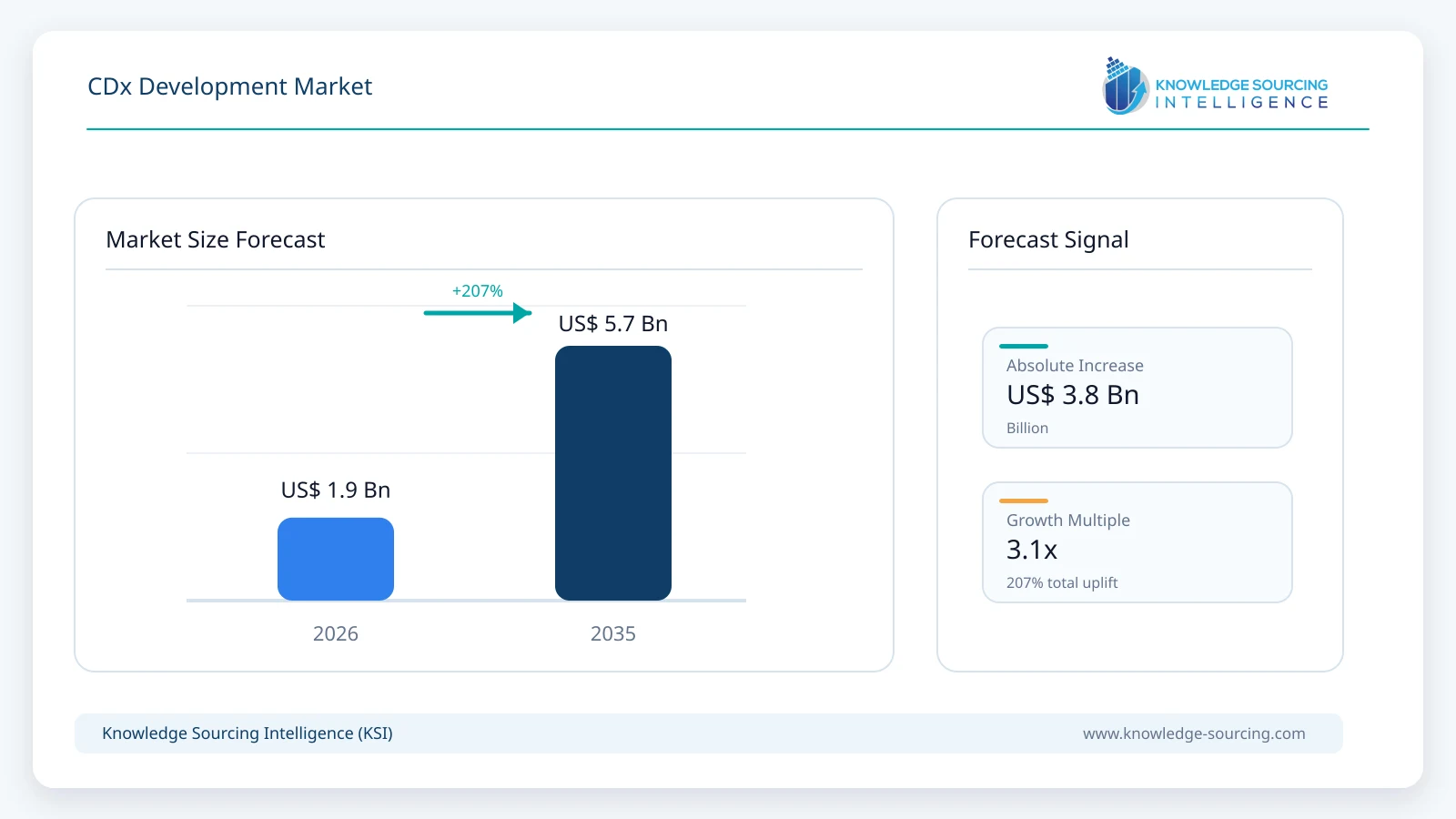
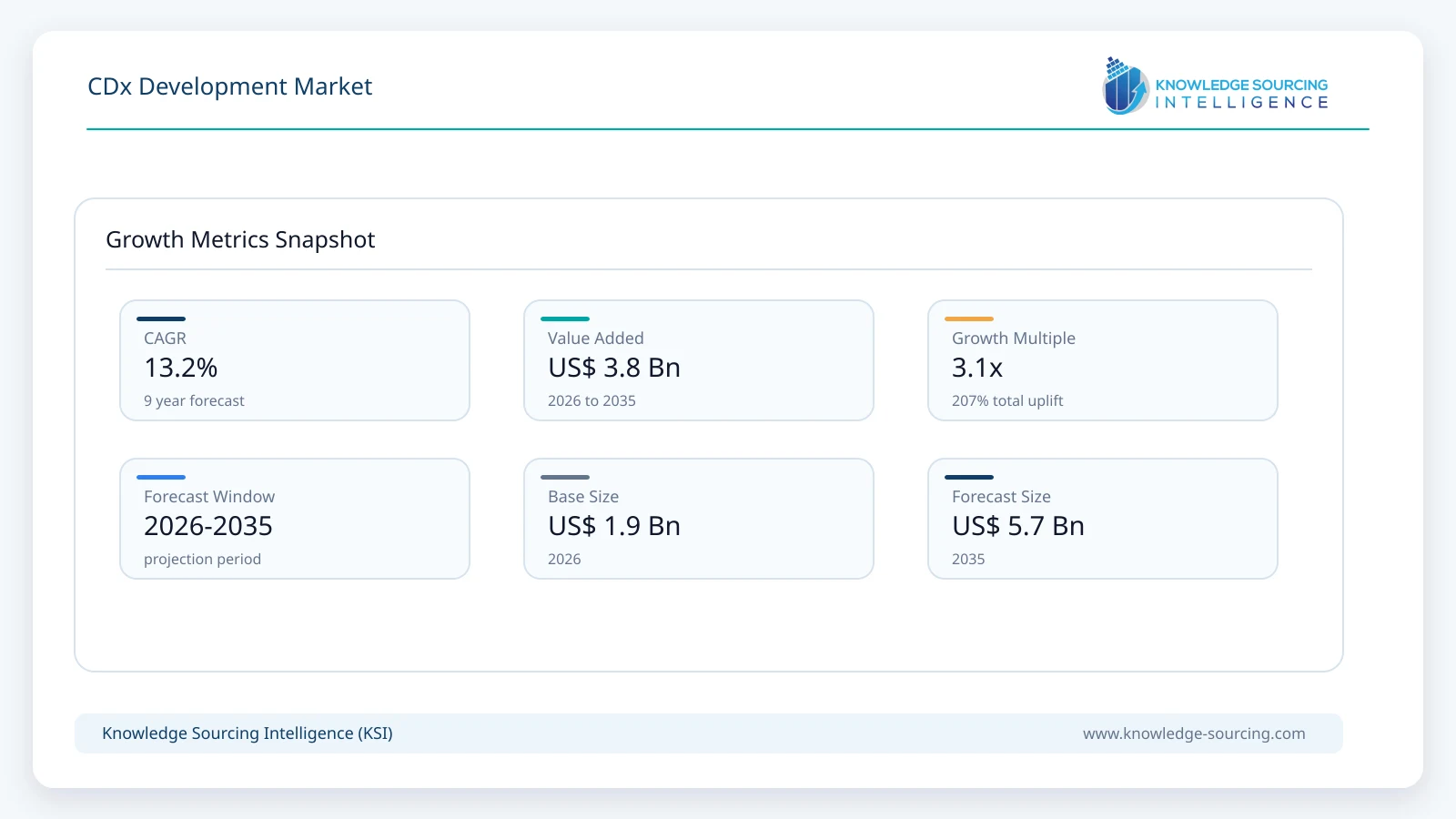
The CDx Development Market is expected to increase at a CAGR of 13.2% from a market value of USD 1.86 billion in 2026 to USD 5.71 billion in 2035.
Highlights:
- 1Rising approvals of biomarker-targeted therapies are increasing demand for companion diagnostic co-development because regulatory agencies require validated patient selection strategies to maximize clinical benefit.
- 2Pharmaceutical companies are integrating diagnostics earlier during clinical development because biomarker-guided trial enrollment improves response rates and strengthens regulatory evidence packages.
- 3Next-generation sequencing platforms are replacing multiple single-gene assays because multiplex genomic profiling supports expanding targeted therapy portfolios across diverse disease indications.
- 4Liquid biopsy technologies are gaining strategic importance because minimally invasive testing enables longitudinal disease monitoring and identification of acquired resistance mutations during treatment.
The CDx Development Market encompasses the research, design, validation, regulatory approval, and commercialization of companion diagnostics that guide therapeutic decision-making through biomarker identification. Companion diagnostics determine patient eligibility, predict therapeutic response, identify resistance mechanisms, or monitor treatment effectiveness across multiple therapeutic areas including oncology, neurology, infectious diseases, immunology, and rare diseases.
Demand originates primarily from pharmaceutical companies developing targeted therapeutics because regulatory authorities increasingly require clinically validated biomarkers to support precision medicine approvals. This dependency expands collaborative development programs between drug sponsors and diagnostic manufacturers, allowing simultaneous optimization of therapeutic efficacy and diagnostic performance. Clinical development therefore increasingly incorporates biomarker-driven enrollment strategies that reduce heterogeneous patient populations while strengthening evidence supporting treatment benefit.
Rapid advances in next-generation sequencing, digital pathology, multiplex PCR, liquid biopsy, artificial intelligence-assisted biomarker interpretation, and spatial biology are transforming companion diagnostic development by enabling simultaneous evaluation of multiple genomic, transcriptomic, and proteomic biomarkers. These technological improvements reduce analytical limitations associated with traditional single-analyte testing while increasing diagnostic accuracy for increasingly complex therapeutic indications.
Regulatory harmonization remains strategically important because global pharmaceutical launches increasingly require coordinated diagnostic availability across multiple jurisdictions. Manufacturers are investing in standardized analytical validation, quality management systems, and international clinical evidence generation since regulatory consistency reduces commercialization delays and expands geographic adoption.
Market Dynamics
Market Drivers
Expansion of Precision Medicine Therapeutics: Precision medicine establishes the primary foundation for companion diagnostic development because targeted therapeutics require validated biomarkers to identify responsive patient populations. Pharmaceutical pipelines are increasingly incorporating biomarker-driven development strategies as molecular characterization becomes integral to therapeutic differentiation. Broader biomarker integration increases demand for highly sensitive molecular diagnostic platforms that support clinical decision-making throughout drug development. Diagnostic manufacturers are expanding assay development capabilities to align with increasingly complex therapeutic pipelines. This integrated development approach strengthens regulatory acceptance while improving treatment outcomes.
Increasing Biomarker-Driven Clinical Trial Design: Clinical trials increasingly depend on biomarker-defined enrollment because genetically heterogeneous patient populations reduce statistical power for targeted therapies. Sponsors are incorporating molecular testing during early-phase development to improve patient stratification and accelerate proof-of-concept studies. Limited availability of clinically validated biomarkers creates development challenges that require collaborative evidence generation between therapeutic and diagnostic developers. Pharmaceutical and diagnostic partnerships are expanding translational research investments that improve assay validation before pivotal clinical studies. Stronger biomarker evidence supports efficient regulatory review and increases confidence among healthcare providers.
Adoption of Next-Generation Sequencing Technologies: Next-generation sequencing supports simultaneous evaluation of numerous genomic alterations because modern oncology and rare disease therapies frequently target multiple molecular pathways. Healthcare systems are increasingly adopting comprehensive genomic profiling as targeted therapeutic options continue expanding across disease indications. Large genomic datasets introduce interpretation complexity that requires standardized analytical workflows and clinical evidence generation. Technology developers are improving sequencing chemistry, bioinformatics pipelines, and automation capabilities to enhance reproducibility across clinical laboratories. Multiplex molecular testing becomes a central component of companion diagnostic development.
Regulatory Support for Diagnostic–Therapeutic Co-development: Regulatory agencies recognize companion diagnostics as essential components of precision medicine because therapeutic safety and efficacy frequently depend on accurate biomarker identification. Global regulatory frameworks are evolving to provide clearer expectations regarding analytical validation, clinical evidence, and post-market surveillance. Regulatory complexity continues influencing multinational development strategies due to regional differences in approval pathways. Diagnostic developers are strengthening quality systems and global clinical validation programs to satisfy evolving regulatory expectations.
Market Restraints
Clinical validation requires extensive multi-center evidence generation, increasing development timelines and overall program costs.
Variability in regulatory pathways across regions complicates simultaneous global approval of therapeutics and companion diagnostics.
Limited reimbursement consistency for advanced molecular diagnostics constrains routine clinical adoption despite demonstrated analytical performance.
Market Opportunities
Expansion Beyond Oncology: Companion diagnostics increasingly address neurological, infectious, autoimmune, and rare diseases because biomarker-driven therapeutic development extends beyond oncology. Drug developers are validating disease-specific molecular signatures that improve patient stratification across emerging precision medicine applications. Limited biomarker standardization continues restricting broader implementation in several therapeutic areas. Research organizations are expanding translational biomarker programs to establish clinically actionable evidence. These developments diversify long-term market opportunities beyond traditional oncology applications.
Growth of Liquid Biopsy-Based Companion Diagnostics: Liquid biopsy enables non-invasive molecular assessment because circulating tumor DNA and other biomarkers provide dynamic information regarding disease progression and treatment resistance. Clinical studies are increasingly evaluating blood-based companion diagnostics alongside targeted therapeutics to reduce dependence on tissue biopsies. Analytical sensitivity remains a critical technical challenge for early-stage disease detection. Technology developers are improving sequencing depth, error correction algorithms, and assay standardization to enhance clinical reliability. Continuous monitoring capabilities expand the strategic value of companion diagnostics throughout treatment pathways.
Integration of Artificial Intelligence in Biomarker Interpretation: Artificial intelligence improves the interpretation of complex molecular datasets because multi-omic analysis exceeds conventional analytical workflows. Clinical laboratories are incorporating machine learning algorithms to support variant interpretation and biomarker prioritization. Algorithm transparency and regulatory validation continue influencing adoption across healthcare systems. Diagnostic companies are developing explainable AI solutions that integrate clinical evidence with molecular data. Enhanced analytical efficiency supports scalable precision medicine implementation.
Increasing Pharmaceutical–Diagnostic Partnerships: Companion diagnostics become more valuable when therapeutic and diagnostic development proceed simultaneously because synchronized evidence generation reduces regulatory uncertainty. Pharmaceutical companies are expanding strategic alliances with molecular diagnostics firms to accelerate biomarker validation throughout clinical development. Intellectual property alignment and data-sharing requirements continue influencing partnership structures.
Disease & Epidemiology Analysis
Companion diagnostics (CDx) development is directly linked to the increasing prevalence of diseases in which therapeutic efficacy depends on molecular or immunological biomarkers. Oncology represents the largest demand center because targeted therapies require validated biomarker testing before treatment initiation. Precision medicine is expanding into neurology and infectious diseases as disease biology becomes better characterized through genomic, transcriptomic, and proteomic research. This transition increases the need for diagnostic assays capable of accurately identifying treatment-responsive patient populations. CDx development therefore remains closely aligned with therapeutic innovation rather than disease prevalence alone.
Cancer continues to account for the largest proportion of companion diagnostic development because biomarker-directed therapies are becoming standard across multiple tumor types. Pharmaceutical sponsors are integrating biomarker testing during early clinical development because targeted enrollment improves trial efficiency and regulatory outcomes. The growing number of approved targeted therapies is reinforcing demand for multiplex diagnostic platforms capable of detecting several clinically actionable biomarkers simultaneously.
Neurological disorders are emerging as a strategic growth area because disease-modifying therapies increasingly depend on molecular characterization. Alzheimer's disease development programs are evaluating biomarkers, including amyloid-beta and phosphorylated tau, for patient selection and treatment monitoring. Sponsors are validating blood-based and cerebrospinal fluid biomarkers as clinical evidence continues expanding for precision neurology. Standardization of neurological biomarkers remains less mature than oncology, creating opportunities for companion diagnostic innovation. This evolution supports broader application of precision medicine beyond traditional oncology markets.
Treatment Guidelines Landscape
Organization | Therapeutic Area | Guideline Focus | Impact on CDx Development |
National Comprehensive Cancer Network (NCCN) | Oncology | Recommends molecular biomarker testing before initiating multiple targeted therapies. | Continues driving routine adoption of companion diagnostics in clinical practice. |
American Society of Clinical Oncology (ASCO) | Oncology | Supports evidence-based biomarker testing for treatment selection. | Encourages integration of validated CDx assays into oncology care pathways. |
European Society for Medical Oncology (ESMO) | Oncology | Recommends comprehensive genomic profiling for selected advanced cancers. | Expands demand for NGS-based companion diagnostics across Europe. |
U.S. Food and Drug Administration (FDA) | Multiple therapeutic areas | Requires approved or cleared companion diagnostics when therapeutic labeling specifies biomarker testing. | Strengthens co-development of therapeutics and diagnostics. |
Market Segmentation
By Development Stage
The development stage determines the technical and regulatory maturity of companion diagnostics because each phase generates evidence supporting analytical validity, clinical performance, and commercial readiness. Clinical development currently represents the highest-value segment as pharmaceutical companies are integrating biomarker testing into Phase II and Phase III studies to improve patient stratification. Regulatory expectations require progressively stronger analytical and clinical evidence before commercialization, increasing investment across validation activities. Diagnostic developers are strengthening translational research capabilities to reduce late-stage development risk. This progression positions clinical-stage companion diagnostics as the primary driver of future commercial launches.
By Technology Platform
Technology platforms define analytical capability because biomarker complexity increasingly exceeds the capacity of conventional single-analyte testing. Next-generation sequencing is gaining greater adoption as targeted therapies require simultaneous evaluation of multiple genomic alterations across diverse tumor types. PCR continues serving applications requiring rapid and highly sensitive mutation detection, while immunohistochemistry and in situ hybridization remain essential for protein expression and gene amplification analysis. Diagnostic manufacturers are expanding multiplex molecular technologies to improve clinical efficiency and laboratory workflow. The market continues shifting toward integrated multi-platform diagnostic solutions.
By Application
Oncology dominates companion diagnostic development because targeted cancer therapies depend extensively on validated molecular biomarkers. Neurology is emerging as biomarker research increasingly supports disease-modifying therapeutic development, particularly for neurodegenerative disorders. Infectious diseases are incorporating molecular diagnostics to improve pathogen identification and treatment selection in response to antimicrobial resistance challenges. Pharmaceutical sponsors are diversifying precision medicine investments beyond oncology as biomarker science matures across additional therapeutic areas. This expansion broadens long-term commercial opportunities for companion diagnostic developers while reducing dependence on a single disease category.
Regional Analysis
North America Market Analysis
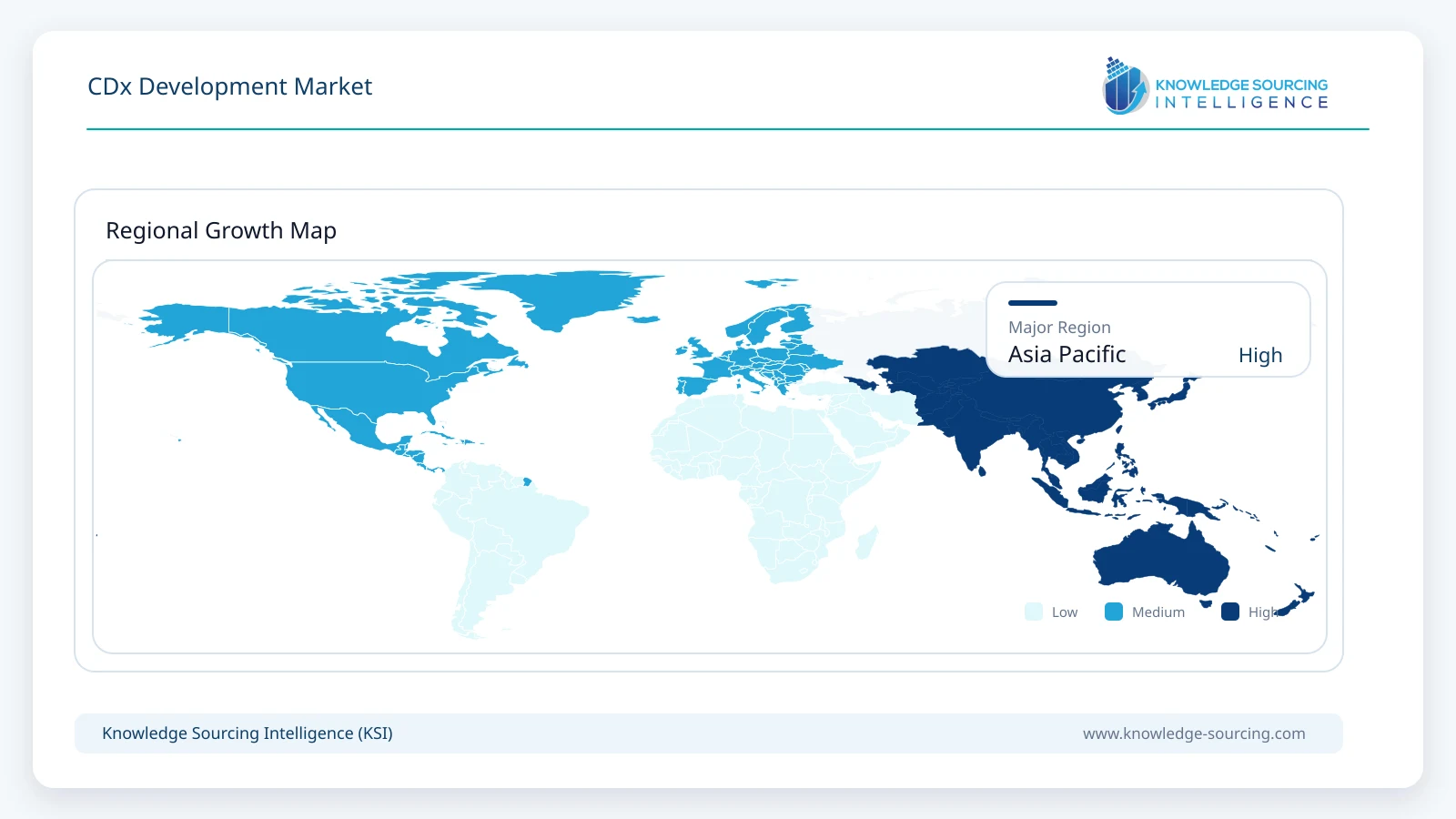
North America represents the largest market for companion diagnostic (CDx) development because the region combines advanced molecular diagnostics infrastructure with a strong pipeline of precision therapeutics. The United States is continuing to generate the highest number of biomarker-driven clinical programs as pharmaceutical companies increasingly integrate companion diagnostics into early-stage drug development. Regulatory requirements requiring validated biomarkers for numerous targeted therapies create sustained demand for diagnostic co-development throughout the product lifecycle. Diagnostic manufacturers are expanding partnerships with biotechnology companies, academic medical centers, and contract research organizations to accelerate assay validation and commercialization. This ecosystem positions North America as the primary innovation hub for companion diagnostics. The U.S. Food and Drug Administration (FDA) remains a major driver of regional growth because it provides established regulatory pathways for the co-development of therapeutics and companion diagnostics.
Europe Market Analysis
Europe maintains a strong position in companion diagnostic development because regulatory harmonization, established healthcare systems, and collaborative research networks support precision medicine adoption. Demand is increasing as oncology treatment guidelines continue recommending comprehensive biomarker testing before initiating targeted therapies. The implementation of the In Vitro Diagnostic Regulation (IVDR) is strengthening analytical and clinical evidence requirements, increasing development complexity while improving diagnostic quality. Manufacturers are investing in expanded clinical validation programs to comply with evolving regulatory expectations. This regulatory transition supports long-term confidence in companion diagnostic performance across European markets. Countries including Germany, France, the United Kingdom, Italy, and Spain continue expanding national precision medicine initiatives through investments in genomic sequencing infrastructure and cancer research programs.
Asia Pacific Market Analysis
Asia Pacific is becoming one of the fastest-evolving regions for companion diagnostic development because governments are expanding precision medicine programs alongside rapidly growing pharmaceutical research activities. China, Japan, South Korea, Australia, and Singapore are increasing investments in genomic medicine as targeted therapeutics gain wider clinical adoption. Pharmaceutical companies are conducting more biomarker-driven clinical trials throughout the region due to large patient populations and expanding research capabilities. Diagnostic manufacturers are localizing assay development and regulatory strategies to address country-specific approval requirements. These investments are strengthening the regional precision medicine ecosystem. China continues expanding genomic sequencing capacity through collaborations among biotechnology companies, hospitals, and research institutes. National initiatives supporting cancer genomics and molecular diagnostics are increasing the demand for next-generation sequencing-based companion diagnostics.
Rest of the World
The Rest of the World region is gradually adopting companion diagnostics as precision medicine expands across Latin America, the Middle East, and Africa. Demand remains concentrated within tertiary hospitals and specialized cancer centers because advanced molecular testing infrastructure is still developing in many healthcare systems. Governments are increasing investment in oncology services and genomic research to improve access to targeted therapies. Diagnostic manufacturers are establishing regional partnerships that expand laboratory capabilities while supporting technology transfer. These initiatives are improving the availability of precision diagnostic services. Latin American countries, including Brazil and Mexico, are increasing participation in international oncology clinical trials because pharmaceutical companies seek genetically diverse patient populations for biomarker validation.
Regulatory Landscape
Companion diagnostics operate within one of the most closely regulated segments of in vitro diagnostics because clinical decisions directly influence therapeutic safety and efficacy. The U.S. Food and Drug Administration (FDA) requires companion diagnostics to demonstrate analytical validity, clinical validity, and clinical utility before approval when therapeutic labeling specifies mandatory biomarker testing. Pharmaceutical sponsors are increasingly coordinating regulatory submissions with diagnostic manufacturers to achieve simultaneous approval of therapeutics and companion diagnostics. This synchronized development approach reduces commercialization delays while supporting immediate clinical implementation of precision therapies.
Europe is transitioning toward a more rigorous regulatory environment under the In Vitro Diagnostic Regulation (IVDR), which became fully applicable in 2022 with phased implementation timelines. Companion diagnostic manufacturers are generating additional clinical evidence and strengthening quality management systems to satisfy enhanced conformity assessment requirements involving notified bodies. Although compliance requirements increase development costs, the regulatory framework improves confidence in diagnostic performance and patient safety. Harmonized evidence standards also facilitate broader acceptance of precision medicine across European healthcare systems.
Several Asia-Pacific regulatory authorities, including Japan's Pharmaceuticals and Medical Devices Agency (PMDA) and China's National Medical Products Administration (NMPA), continue refining approval pathways for companion diagnostics as precision medicine expands. Sponsors are adapting regional regulatory strategies to address differences in clinical evidence requirements while maintaining globally consistent development programs. This evolving regulatory landscape is encouraging earlier engagement between therapeutic developers and diagnostic companies, strengthening integrated product development throughout the CDx market.
Pipeline Analysis
The companion diagnostics (CDx) pipeline is expanding alongside precision therapeutics because pharmaceutical companies are integrating biomarker strategies from early drug discovery through regulatory approval. Oncology continues to account for most development activity, while neurology and infectious diseases are increasingly entering biomarker-driven clinical programs. Sponsors are prioritizing assays that can identify actionable genomic, transcriptomic, and protein biomarkers with high analytical accuracy. This trend is shifting development toward multiplex platforms capable of supporting multiple therapeutic indications instead of single-drug assays.
Mechanisms of action (MoA) underlying CDx development remain closely linked to targeted therapies. Diagnostic assays identify biomarkers such as EGFR, HER2, KRAS, BRAF, BRCA1/2, ALK, ROS1, RET, MET, NTRK, PIK3CA, PD-L1, MSI-H/dMMR, and Claudin 18.2, enabling patient selection for tyrosine kinase inhibitors, monoclonal antibodies, antibody-drug conjugates (ADCs), PARP inhibitors, immune checkpoint inhibitors, and other precision therapies. Pipeline activity is also expanding into circulating tumor DNA (ctDNA)-based liquid biopsy assays that monitor treatment response and detect resistance mutations during therapy, reducing reliance on repeat tissue biopsies.
Clinical trial progression increasingly follows a synchronized drug-diagnostic co-development model. Biomarker assays are incorporated during Phase I and II trials for patient enrichment and are analytically validated before pivotal Phase III studies to support simultaneous regulatory submissions. Pharmaceutical sponsors, including Roche, AstraZeneca, Merck, Bristol Myers Squibb, Pfizer, Novartis, and Johnson & Johnson, continue collaborating with diagnostic developers such as Foundation Medicine, Guardant Health, QIAGEN, Thermo Fisher Scientific, and Illumina to ensure companion diagnostics are available at therapeutic launch.
Reimbursement Landscape
Companion diagnostic reimbursement depends on demonstration of clinical utility because payers increasingly require evidence that biomarker testing improves treatment outcomes while reducing unnecessary therapy. In the United States, Medicare provides coverage for several FDA-approved companion diagnostics and National Coverage Determinations support reimbursement for next-generation sequencing in eligible patients with advanced cancer. Commercial insurers are expanding coverage for guideline-recommended biomarker testing, although reimbursement policies continue varying according to therapeutic indication and supporting clinical evidence.
European reimbursement decisions remain country-specific despite harmonized regulatory requirements under the IVDR. Health technology assessment (HTA) agencies are increasingly evaluating the combined clinical and economic value of therapeutics and companion diagnostics before determining reimbursement. In Asia-Pacific, Japan maintains relatively mature reimbursement pathways for precision oncology diagnostics, while China, South Korea, and Australia continue expanding reimbursement for selected molecular tests through national healthcare programs. Broader reimbursement adoption is expected to depend on the continued generation of real-world evidence demonstrating improved patient outcomes and healthcare resource utilization.
Competitive Landscape
F. Hoffmann-La Roche Ltd.
Roche maintains one of the broadest companion diagnostic portfolios through integration of its pharmaceutical and diagnostics businesses, enabling synchronized development of targeted therapies and CDx assays. Its VENTANA tissue diagnostics and Foundation Medicine capabilities strengthen leadership in precision oncology.
QIAGEN N.V.
QIAGEN focuses on PCR- and NGS-based companion diagnostics through long-term collaborations with global pharmaceutical companies. The company continues expanding regulatory-approved assays supporting precision oncology and rare disease therapies.
Thermo Fisher Scientific Inc.
Thermo Fisher provides end-to-end molecular diagnostic solutions, including NGS workflows, PCR platforms, and clinical laboratory technologies that support companion diagnostic development. Strategic pharmaceutical partnerships continue broadening its biomarker testing portfolio.
Illumina, Inc.
Illumina remains a global leader in next-generation sequencing technology, providing sequencing platforms widely used for companion diagnostic development and comprehensive genomic profiling. The company continues supporting precision medicine through expanded oncology sequencing applications.
Guardant Health, Inc.
Guardant Health specializes in liquid biopsy-based companion diagnostics using circulating tumor DNA analysis. Its Guardant360 CDx platform continues gaining additional regulatory indications supporting targeted oncology therapies.
Foundation Medicine, Inc.
Foundation Medicine develops comprehensive genomic profiling assays integrated with multiple pharmaceutical development programs. The company continues expanding companion diagnostic claims linked to precision oncology therapeutics through collaborations with global drug developers.
Key Developments
May 2026: Indica Labs expanded its CDx capabilities with an AI-driven digital pathology offering designed to accelerate drug development and companion diagnostic co-development. The framework supports scalable biomarker analysis, multiplexed workflows, and regulatory-grade deployment for pharma partners.
May 2026: Leica Biosystems and CellCarta expand their collaborative CDx development model. The expanded model is meant to support parallel execution across clinical development, assay development, and global launch planning.
Strategic Insights and Future Market Outlook
The CDx Development Market is evolving from individual diagnostic assays toward integrated precision medicine platforms because therapeutic pipelines increasingly depend on molecular characterization throughout the patient journey. Drug developers are incorporating biomarker discovery earlier in clinical development to improve trial efficiency, reduce development risk, and strengthen regulatory evidence. This shift is increasing investment in next-generation sequencing, liquid biopsy, spatial biology, and multi-omics technologies capable of identifying multiple clinically actionable biomarkers within a single assay.
Regulatory agencies are encouraging synchronized therapeutic and diagnostic development through clearer co-development frameworks, while healthcare providers are adopting comprehensive genomic profiling to support precision treatment decisions. Artificial intelligence is improving biomarker interpretation, and real-world evidence is strengthening post-market validation of companion diagnostics. These developments are expanding opportunities beyond oncology into neurology, infectious diseases, autoimmune disorders, and rare diseases, broadening the long-term addressable market.
Strategic collaborations between pharmaceutical companies, diagnostic manufacturers, academic institutions, and clinical laboratories are expected to remain the primary competitive differentiator through 2031. Organizations capable of combining robust biomarker discovery, scalable assay development, regulatory expertise, and global commercialization infrastructure are likely to achieve stronger adoption as precision medicine becomes increasingly embedded in routine clinical practice.
Companion diagnostics are becoming an essential component of precision healthcare because targeted therapies increasingly depend on validated biomarker identification to optimize clinical outcomes. Continued advances in molecular technologies, expanding therapeutic pipelines, supportive regulatory frameworks, and growing pharmaceutical–diagnostic partnerships are strengthening the strategic importance of CDx development across the healthcare ecosystem.
CDx Development Market Scope:
| Report Metric | Details |
|---|---|
| Total Market Size in 2026 | USD 1.86 billion |
| Total Market Size in 2035 | USD 5.71 billion |
| Forecast Unit | Billion |
| Growth Rate | 13.2% |
| Study Period | 2021 to 2035 |
| Historical Data | 2021 to 2024 |
| Base Year | 2025 |
| Forecast Period | 2026 – 2035 |
| Segmentation | Development Stage, Technology Platform, Biomarker Type, Sample Type, Therapeutic Area, End User, Geography |
| Companies |
|
Market Segmentation
Development Stage
Technology Platform
End User
Geography
- North America
- South America
- Europe
- Middle East and Africa
- Asia Pacific
Table of Contents
1. EXECUTIVE SUMMARY
1.1 Market Snapshot
1.2 Key Findings
1.3 Analyst Insights
1.4 Strategic Recommendations
2. RESEARCH METHODOLOGY
2.1 Research Design
2.2 Data Collection Methodology
2.3 Market Size Estimation
2.4 Forecasting Model
2.5 Assumptions & Limitations
3. GLOBAL CDX DEVELOPMENT MARKET OVERVIEW, SIZE & FORECAST
3.1 Market Definition & Scope
3.2 Companion Diagnostics Industry Overview
3.3 Evolution of the CDx Development Ecosystem
3.4 Key Market Trends
3.5 Historical Market Size Analysis (2021–2025)
3.6 Market Forecast (2026–2035)
3.7 Precision Medicine Landscape
3.8 Biomarker Discovery and Validation Overview
3.9 Drug–Diagnostic Co-development Landscape
3.10 Companion Diagnostic Development Workflow
3.11 Regulatory Co-development Framework
3.12 Clinical Development and Validation Landscape
4. MARKET DYNAMICS
4.1 Market Drivers
4.2 Market Restraints
4.3 Market Opportunities
4.4 Market Challenges
5. INDUSTRY LANDSCAPE
5.1 Industry Value Chain Analysis
5.2 Pricing Analysis
5.3 Reimbursement Landscape
6. INNOVATION LANDSCAPE
6.1 Emerging Technologies in CDx Development
6.2 Biomarker Innovation Trends
6.3 Next-Generation Sequencing (NGS) Integration
6.4 Artificial Intelligence in Companion Diagnostic Development
6.5 Digital Pathology and Multi-omics Integration
6.6 Clinical Trial Analysis
6.7 Companion Diagnostic Pipeline Analysis
6.8 Technology Roadmap
7. REGULATORY LANDSCAPE
7.1 Regulatory Framework
7.2 Approval Pathways
7.3 Compliance Requirements
8. GLOBAL CDX DEVELOPMENT MARKET LANDSCAPE ANALYSIS
8.1 Analysis by Development Stage
8.2 Analysis by Biomarker Type
8.3 Analysis by Technology Platform
8.4 Analysis by Sample Type
8.5 Analysis by Therapeutic Area
8.6 Analysis by End User
9. GLOBAL CDX DEVELOPMENT MARKET SEGMENT ANALYSIS (2021–2035)
9.1 By Development Stage
9.1.1 Discovery Stage
9.1.2 Preclinical Development
9.1.3 Clinical Development
9.1.4 Regulatory Approval Stage
9.1.5 Post-commercialization
9.2 By Technology Platform
9.2.1 Polymerase Chain Reaction (PCR)
9.2.2 Next-Generation Sequencing (NGS)
9.2.3 Immunohistochemistry (IHC)
9.2.4 In Situ Hybridization (ISH)
9.2.5 Other Molecular Technologies
9.3 By Biomarker Type
9.3.1 Genomic Biomarkers
9.3.2 Proteomic Biomarkers
9.3.3 Transcriptomic Biomarkers
9.3.4 Others
9.4 By Sample Type
9.4.1 Tissue
9.4.2 Blood (Liquid Biopsy)
9.4.3 Other Biological Samples
9.5 By Therapeutic Area
9.5.1 Oncology
9.5.2 Neurology
9.5.3 Infectious Diseases
9.5.4 Autoimmune Diseases
9.5.5 Cardiovascular Diseases
9.5.6 Other Therapeutic Areas
9.6 By End User
9.6.1 Pharmaceutical & Biotechnology Companies
9.6.2 Companion Diagnostic Developers
9.6.3 Contract Research Organizations (CROs)
9.6.4 Others
10. GLOBAL CDX DEVELOPMENT MARKET GEOGRAPHICAL ANALYSIS (2021–2035)
10.1 North America
10.2 Europe
10.3 Asia-Pacific
10.4 South America
10.5 Middle East & Africa
11. GLOBAL CDX DEVELOPMENT MARKET COUNTRY ANALYSIS (2021–2035)
11.1 United States
11.2 Canada
11.3 Germany
11.4 United Kingdom
11.5 France
11.6 Italy
11.7 Spain
11.8 Japan
11.9 China
11.10 South Korea
11.11 India
11.12 Australia
11.13 Brazil
12. COMPETITIVE LANDSCAPE
12.1 Market Share Analysis
12.2 Strategic Developments
12.3 Mergers & Acquisitions, Partnerships & Collaborations
12.4 Product Launches
13. COMPANY PROFILES
13.1 F. Hoffmann-La Roche Ltd.
13.1.1 Company Overview
13.1.2 Financials
13.1.3 Product Portfolio
13.1.4 Recent Developments
13.2 Agilent Technologies, Inc.
13.3 QIAGEN N.V.
13.4 Thermo Fisher Scientific Inc.
13.5 Illumina, Inc.
13.6 BioMérieux
13.7 Exact Sciences
13.8 Guardant Health, Inc.
13.9 Foundation Medicine, Inc.
13.10 Abbott Laboratories
14. GLOBAL CDX DEVELOPMENT MARKET COMMERCIAL FORECAST ANALYSIS
14.1 By Technology Platform
14.2 By Development Phase
14.3 By Therapeutic Area
14.4 By Biomarker Type
14.5 By End User
15. INVESTMENT & FUNDING ANALYSIS
15.1 Venture Capital Trends
15.2 Government Funding
15.3 R&D Investments
16. FUTURE OUTLOOK
16.1 Key Growth Opportunities
16.2 Future Industry Trends
Navigate
Trusted by the world's leading organizations











