
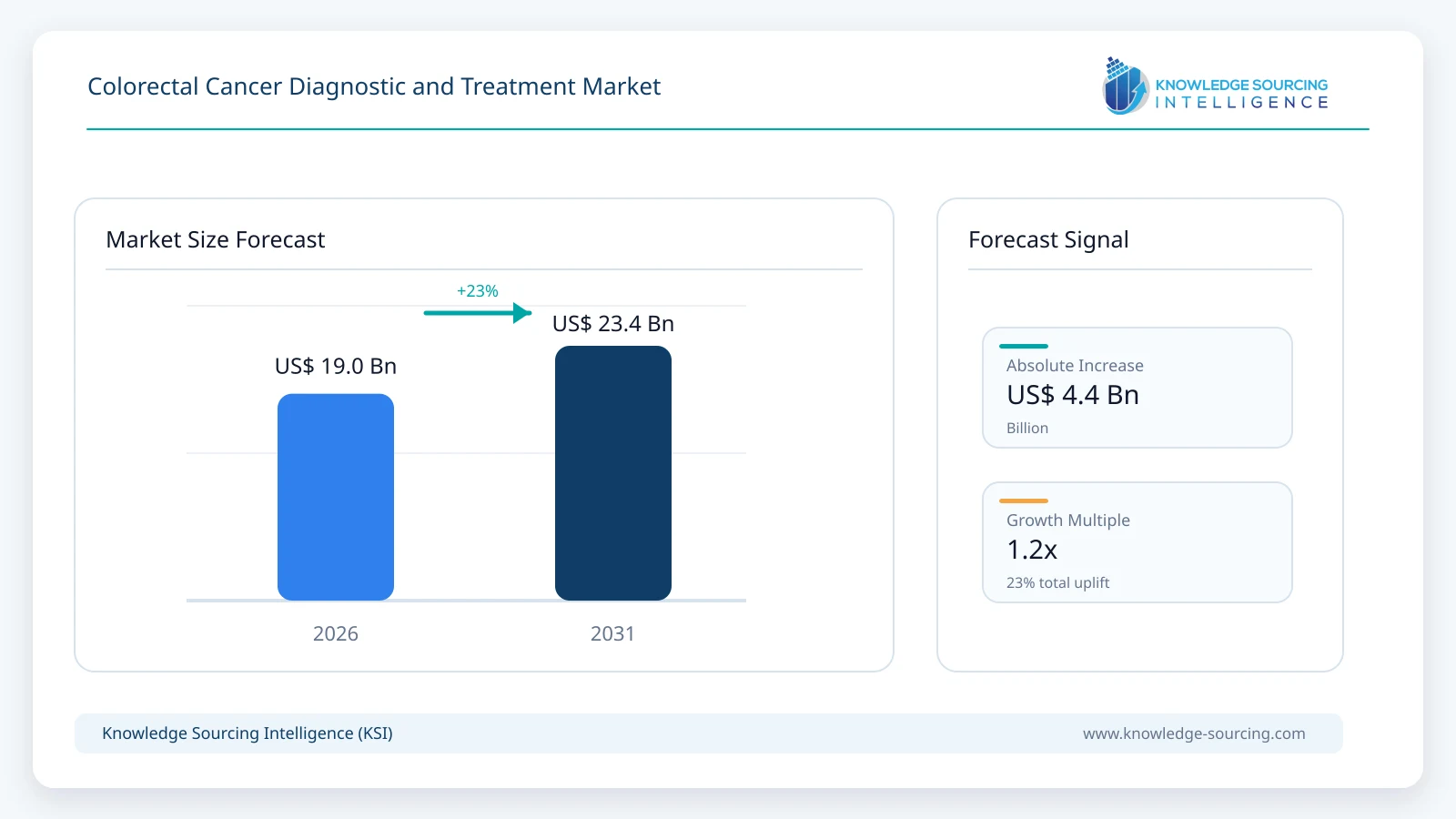
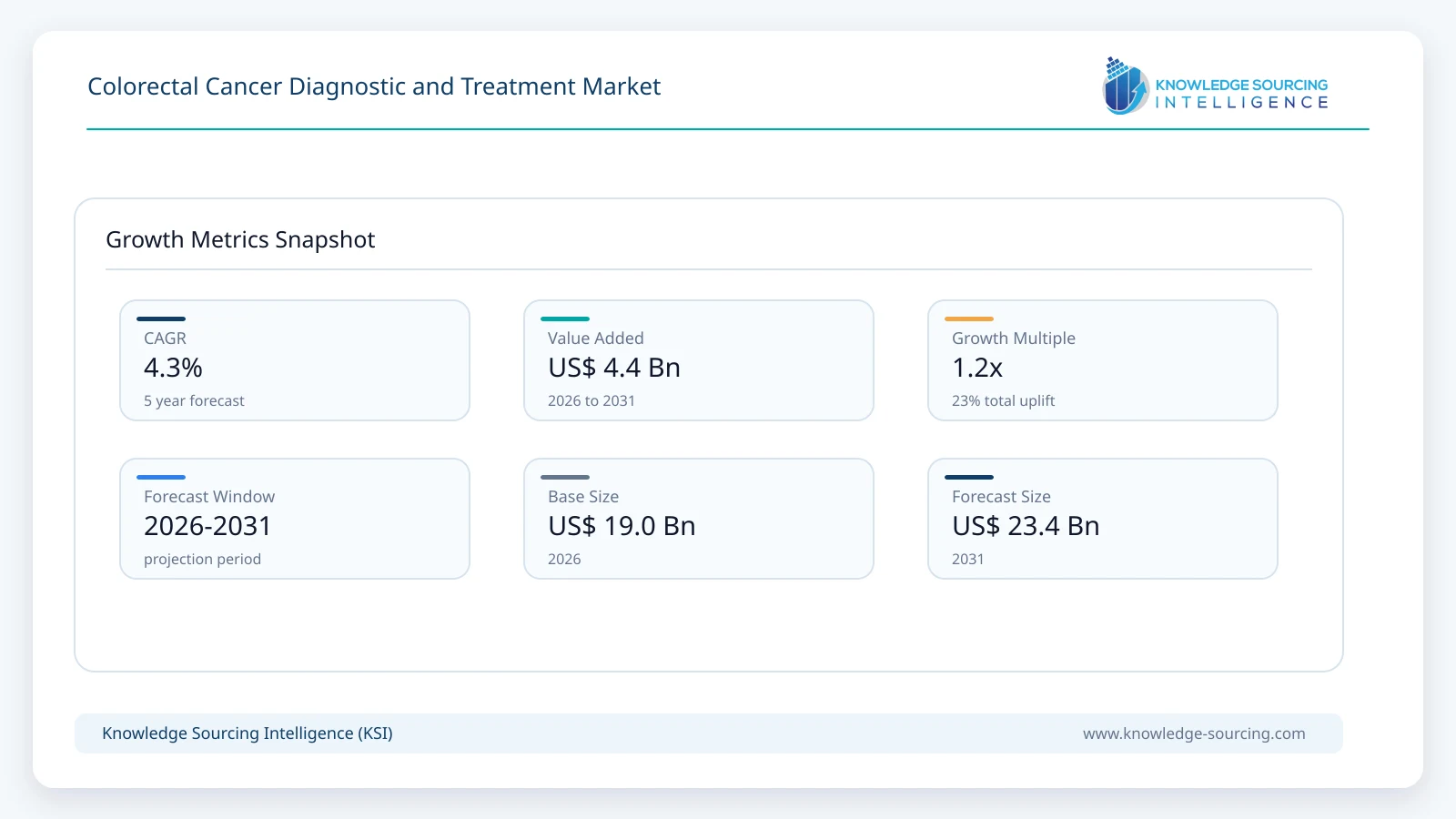
The colorectal cancer diagnostic and treatment market is forecast to grow at a CAGR of 4.3%, reaching USD 23.4 billion in 2031 from USD 19.0 billion in 2026.
Highlights:
- 1Screening participation is a central demand catalyst, with governments and healthcare providers seeking methods that improve completion among adults who avoid invasive procedures.
- 2Colonoscopy remains commercially important because it provides direct visualization, enables biopsy or polyp removal, and serves as the required follow-up after many positive non-invasive screening results.
- 3Blood-based and molecular testing are expanding the diagnostic opportunity, with regulatory authorization creating a new pathway for patients who prefer physician-administered blood screening.
- 4Precision oncology is increasing the value of biomarker testing, as therapies for molecularly defined colorectal cancer populations require validated diagnostic information.
- 5North America remains a major commercial market because of established screening infrastructure, reimbursement mechanisms, oncology capacity, and rapid adoption of new diagnostic technologies.
- 6Regulatory decisions are directly shaping product economics, particularly where approvals connect diagnostic tests with treatment selection or establish new screening options.
The Colorectal Cancer Diagnostic and Treatment Market covers products, procedures, technologies, and clinical services used to detect, diagnose, stage, monitor, and treat cancers of the colon and rectum. The market spans screening technologies such as colonoscopy, stool-based tests, blood-based tests, imaging, biopsy, and molecular diagnostics, together with therapeutic interventions including surgery, radiation therapy, chemotherapy, targeted therapy, immunotherapy, and local ablation.
The commercial importance of this market is closely linked to the large global disease burden and the clinical value of earlier diagnosis. The International Agency for Research on Cancer estimates that colorectal cancer accounted for approximately 1.9 million new cases and more than 900,000 deaths worldwide in 2022. The World Health Organization identifies colorectal cancer as the third most common cancer globally and the second leading cause of cancer-related mortality.
Demand is therefore generated through two distinct but connected channels. The first is population and opportunistic screening, where healthcare systems seek greater participation among eligible adults. The second is disease management, where hospitals and oncology providers purchase diagnostic and therapeutic products according to cancer stage, molecular profile, treatment history, and expected clinical benefit.
Screening policy is an important determinant of commercial demand. In the United States, average-risk adults are generally recommended to begin colorectal cancer screening at age 45, while screening between ages 76 and 85 is individualized. Available approaches include colonoscopy, CT colonography, flexible sigmoidoscopy, FIT, stool DNA testing, and other approved methods.
The purchasing decision differs substantially between diagnostic and treatment products. Hospitals evaluate endoscopy equipment, pathology services, imaging systems, laboratory assays, and oncology medicines through clinical performance, reimbursement, workflow compatibility, service requirements, and total cost of care. Physicians also consider test completion rates because a technically strong screening method has limited population value if patients do not complete it.
This factor is supporting interest in non-invasive screening. Home-based stool testing removes some logistical barriers associated with colonoscopy, while blood-based screening can integrate into routine physician visits. The commercial opportunity is not necessarily based on replacing colonoscopy. Rather, newer tests can expand the number of people entering the screening pathway, after which positive results may require colonoscopic confirmation. The FDA's authorization of Guardant Health's Shield illustrates this model: the blood test is intended for average-risk adults aged 45 years and older, while positive results require diagnostic colonoscopy.
The treatment side is becoming more dependent on biological classification. Molecular testing can identify biomarkers that influence therapy selection, particularly in metastatic disease. FDA-authorized companion diagnostic listings include plasma-based testing for BRAF V600E in colorectal cancer, illustrating the direct commercial connection between diagnostic testing and targeted treatment selection.
For the 2026–2031 forecast period, the market's direction will therefore depend on several interconnected variables: screening participation, diagnostic capacity, cancer incidence, reimbursement, laboratory infrastructure, oncology treatment access, biomarker testing, and the introduction of therapies supported by molecularly defined patient populations.
Market Drivers
Expansion of Screening Eligibility and Participation
The expansion of screening recommendations creates a larger addressable population for diagnostic suppliers. In the United States, the recommended starting age for average-risk adults is 45 years, creating a sizeable screening cohort that extends beyond the historical 50-year threshold. The CDC reported in 2025 that approximately seven in ten U.S. adults aged 50 to 75 were up to date with colorectal cancer screening, demonstrating both established demand and a substantial participation gap.
Healthcare systems therefore have two purchasing priorities: maintain capacity for established screening methods and add options capable of reaching people who remain unscreened. Providers may favor tests that require less preparation, fewer facility resources, or less time away from work.
For suppliers, this changes the commercial proposition from simply improving diagnostic accuracy to improving screening completion. Companies with validated home-based, stool-based, blood-based, or molecular technologies can compete on accessibility, workflow, patient acceptance, and follow-up requirements alongside analytical performance.
Rising Burden of Colorectal Cancer and Earlier-Onset Disease
The global disease burden supports sustained demand for both diagnostic and therapeutic services. WHO reports that colorectal cancer predominantly affects older adults but also identifies a rising burden among adults aged 30 to 50 in some settings.
The increase in younger patients creates challenges for screening systems because conventional age-based programmes may not capture all individuals who develop disease. It also increases demand for diagnostic evaluation among symptomatic younger adults and patients with familial or genetic risk.
For oncology suppliers, a broader patient population can increase demand across surgery, systemic treatment, molecular profiling, and disease monitoring. However, the commercial impact varies by geography because screening policies, cancer registries, reimbursement, and specialist capacity differ substantially.
Greater Use of Molecular Classification in Treatment Decisions
Colorectal cancer treatment increasingly depends on identifying clinically relevant molecular characteristics. Biomarker information can determine whether patients are eligible for specific targeted or immune-based treatments.
The FDA's 2026 traditional approval of encorafenib in combination with cetuximab and fluorouracil-based chemotherapy for metastatic colorectal cancer with BRAF V600E mutation demonstrates how therapeutic expansion can create corresponding diagnostic demand. The indication requires the mutation to be detected by an FDA-authorized test.
This model benefits laboratories and diagnostic companies that can provide validated tissue or liquid-biopsy testing. It also encourages oncology providers to integrate molecular testing earlier into treatment planning, especially when the results can materially alter drug selection.
Development of Less Invasive Screening Technologies
Patient convenience is becoming a commercial consideration in screening procurement. Stool-based tests can be completed at home, while blood-based tests can be administered during routine clinical encounters. The American Cancer Society's 2026 guideline includes blood-based screening among recommended options while continuing to prefer visual and stool-based approaches because blood tests are less effective at detecting precancerous growths and early-stage disease.
This distinction is commercially important. New tests do not need to displace every established modality to create incremental demand. They can target individuals who are reluctant to complete colonoscopy or stool-based testing.
Suppliers must consequently demonstrate clinical utility, appropriate testing intervals, physician acceptance, reimbursement, and effective follow-up pathways. Adoption depends on the entire screening pathway rather than the test alone.
Expansion of Precision Oncology
The therapeutic market is generating demand for diagnostics that identify patients suitable for targeted and immune-based treatments. The 2025 FDA approval of nivolumab plus ipilimumab for unresectable or metastatic MSI-H or dMMR colorectal cancer provides a clear example. The indication specifically identifies a molecularly defined patient population.
This creates a linked purchasing cycle. Oncology providers need reliable biomarker testing before selecting certain treatments, while pharmaceutical companies require validated diagnostic pathways to support appropriate patient identification.
The commercial opportunity therefore extends beyond standalone laboratory testing. Molecular diagnostics can influence drug utilization, clinical trial recruitment, treatment sequencing, and monitoring decisions.
Market Restraints and Challenges
Uneven Screening Infrastructure
Screening capacity varies widely between countries and healthcare systems. Colonoscopy requires trained clinicians, endoscopy rooms, anesthesia or sedation capabilities where used, pathology support, sterilization processes, and follow-up capacity.
In lower-resource settings, limited specialist availability can restrict screening even when clinical guidelines recommend it. The resulting constraint affects both equipment suppliers and diagnostic companies because test adoption depends on the ability of healthcare systems to manage abnormal findings.
Mitigation requires investment in primary-care referral pathways, laboratory capacity, endoscopy infrastructure, workforce training, and organized screening programmes.
Follow-Up Requirements for Positive Non-Invasive Tests
Non-invasive screening does not eliminate the need for diagnostic colonoscopy. The CDC notes that positive or abnormal results from several non-colonoscopy screening methods require colonoscopy to complete the evaluation.
This creates a capacity bottleneck. If screening participation increases faster than endoscopy capacity, waiting times may lengthen and the clinical benefit of early detection can be weakened.
For diagnostic suppliers, this means commercial success depends partly on the availability of downstream services. Healthcare systems may need coordinated procurement covering screening, referral, endoscopy, pathology, and treatment rather than purchasing tests in isolation.
Reimbursement and Budget Constraints
New diagnostic and therapeutic products must demonstrate sufficient value for healthcare payers. Hospitals and public systems assess reimbursement status, clinical utility, procedure costs, staffing requirements, and downstream resource utilization.
A more expensive test may be commercially viable if it improves adherence or reduces unnecessary procedures, but the evidence must support that economic proposition. Similarly, high-cost oncology therapies can face formulary restrictions when clinical benefit does not justify incremental expenditure.
Suppliers therefore need evidence that connects clinical performance with healthcare utilization and patient outcomes.
Complexity of Molecular Testing
Molecular testing requires appropriate specimen collection, laboratory expertise, quality controls, interpretation, and reporting. Liquid biopsy can simplify sample acquisition but introduces analytical requirements involving circulating tumour DNA and other molecular signals.
The need for validated assays and companion diagnostic compliance can slow adoption. Laboratories must also manage sample quality, turnaround time, reimbursement, and interoperability with oncology workflows.
Companies can mitigate these constraints through standardized workflows, centralized testing networks, validated laboratory processes, and clear clinical reporting.
Geographic Differences in Treatment Access
Access to surgery, radiotherapy, chemotherapy, targeted therapy, and immunotherapy varies substantially by country. High-income healthcare systems generally provide broader access to specialized oncology services, while lower-resource systems may prioritize basic diagnosis and surgery.
This produces different commercial opportunities. Suppliers targeting emerging markets may need lower-cost testing models and scalable treatment pathways, whereas mature markets place greater emphasis on precision diagnostics, combination therapies, and treatment optimization.
Major Segment Analysis
Colonoscopy and Endoscopy
Colonoscopy and endoscopy represent the most clinically integrated diagnostic segment because the procedure can identify lesions, obtain tissue, and enable intervention within the same care pathway.
The commercial value of colonoscopy extends beyond screening. It is also used to investigate symptoms, evaluate positive stool or blood-based tests, obtain biopsy samples, conduct surveillance after previous disease, and support therapeutic removal of selected lesions.
The procedure therefore occupies a structurally important position even as non-invasive testing expands. The CDC identifies colonoscopy as a screening option performed every ten years for average-risk individuals and also as the follow-up procedure after abnormal findings from several other screening approaches.
Buyer requirements are consequently broader than instrument quality. Hospitals evaluate endoscope durability, image quality, service contracts, reprocessing requirements, procedure throughput, accessory availability, physician familiarity, and total ownership cost.
Demand is also influenced by endoscopy capacity. A healthcare system that increases FIT, stool DNA, or blood-based screening without expanding colonoscopy capacity can create a downstream bottleneck. This makes procedure capacity a limiting factor for the broader diagnostic market.
Competition in this segment is shaped by equipment performance, workflow integration, service networks, accessories, and clinical confidence. Suppliers that can support high procedure volumes while controlling maintenance and reprocessing costs have an advantage in institutional procurement.
The segment also retains strategic relevance because positive results from newer screening technologies generally feed into colonoscopic confirmation. Consequently, growth in non-invasive testing can generate additional rather than purely substitutional demand for colonoscopy.
Over 2026–2031, procurement decisions are likely to increasingly consider endoscopy throughput, patient access, procedure quality, and integration with organized screening programmes. Hospitals will need to balance investment in established endoscopic infrastructure with newer diagnostic technologies that expand the screening funnel.
Regional Analysis
North America
North America has a mature colorectal cancer diagnostic and treatment infrastructure supported by organized screening recommendations, established reimbursement systems, specialized oncology centres, and extensive laboratory capacity.
The United States is particularly important because screening begins at age 45 for average-risk adults, while multiple testing modalities are recognized. The CDC's 2026 guidance lists colonoscopy, CT colonography, stool-based testing, and other approaches, creating a diversified procurement environment.
The region is also an important launch market for molecular and blood-based diagnostics. FDA authorization of Shield created a new regulated category for blood-based CRC screening, while 2026 changes to the Shield authorization demonstrate continued regulatory activity around assay design and manufacturing.
Canada has established screening programmes and specialist oncology services, while Mexico combines private-sector diagnostic capacity with public healthcare programmes. Regional growth constraints include unequal access, insurance differences, endoscopy capacity, and affordability.
Europe
Europe has a strong foundation of population-based cancer screening programmes, although implementation differs by country. European guidance places substantial emphasis on FIT-based screening and organized invitation systems.
The European Commission's Joint Research Centre reported a June 2025 recommendation addressing screening ages, test frequency, and comparisons between FIT, flexible sigmoidoscopy, and colonoscopy.
The European Code Against Cancer also identifies FIT as a widely adopted population-based screening method in Europe.
Germany, France, the United Kingdom, Italy, and other Western European countries offer substantial demand for diagnostics, oncology medicines, pathology, and imaging. Procurement is strongly influenced by health technology assessment, public reimbursement, clinical guidelines, and cost-effectiveness.
The principal constraint is variation in programme implementation and healthcare budgets. Suppliers must demonstrate evidence that fits national reimbursement frameworks rather than assuming uniform adoption across the region.
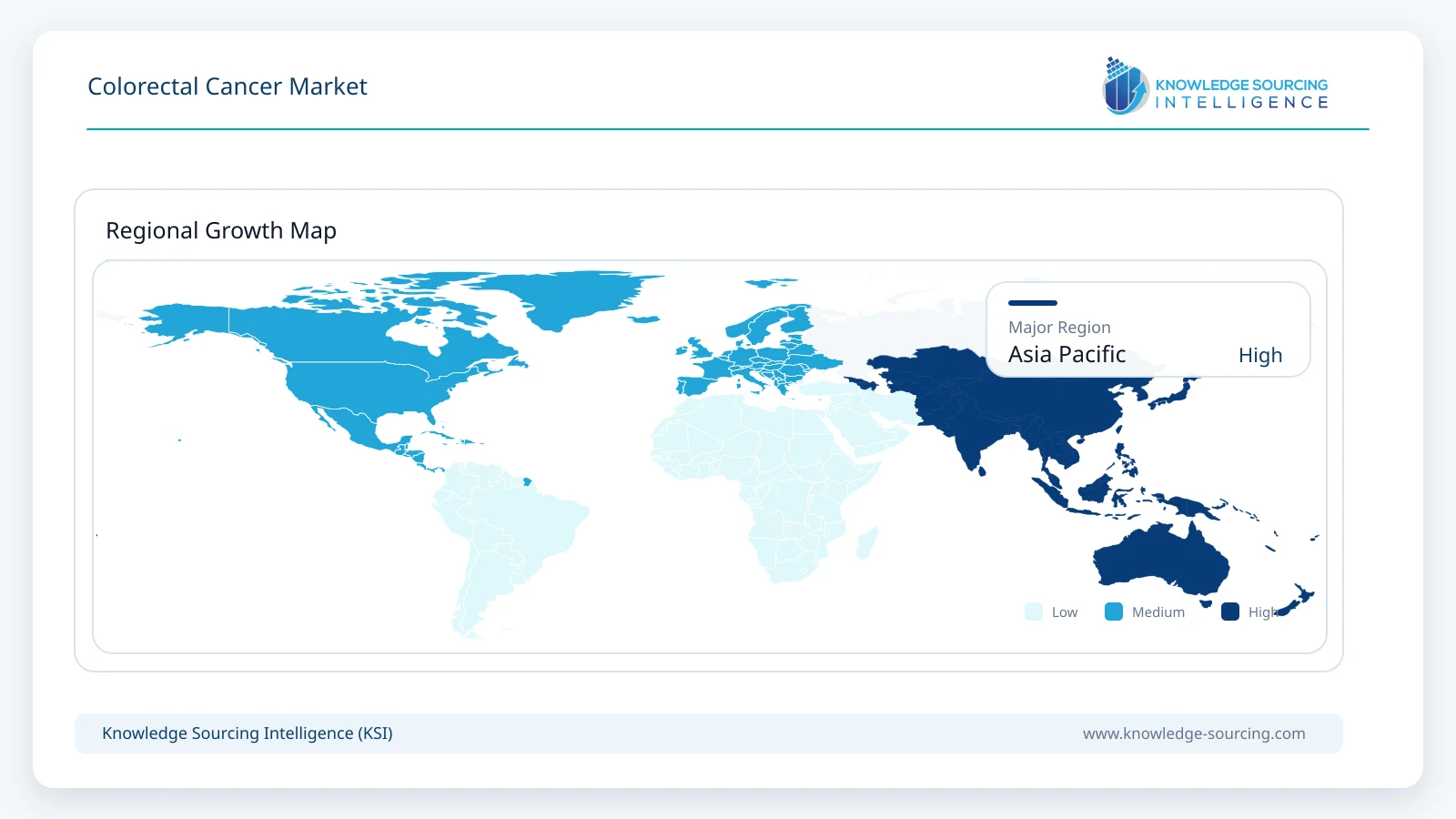
Asia Pacific
Asia Pacific offers substantial long-term demand because of population size, changing demographic structures, improving diagnostic infrastructure, and the growing burden of colorectal cancer in several countries.
Japan and South Korea have comparatively developed cancer screening and treatment systems, while China and India represent large patient populations with substantial differences between metropolitan and lower-resource healthcare settings.
IARC added validated screening data from 12 Asian countries, including China, India, Indonesia, and Thailand, to its CanScreen5 repository in 2025. This reflects growing emphasis on evaluating and strengthening cancer screening programmes across the region.
India is also developing standardized approaches to colorectal cancer management. Government treatment guidance addresses surveillance colonoscopy and identifies higher-risk populations requiring earlier or more intensive evaluation.
Commercial constraints include limited specialist capacity, uneven reimbursement, rural access, diagnostic affordability, and differences in screening infrastructure. Suppliers entering these markets must therefore align technology with local laboratory and clinical capabilities.
Middle East and Africa
The Middle East and Africa represent a heterogeneous market. Saudi Arabia, the United Arab Emirates, and Israel have comparatively advanced healthcare systems and specialist cancer centres, while many other countries face constraints involving diagnostics, oncology workforce availability, equipment investment, and reimbursement.
Demand in the Gulf countries is supported by hospital modernization, private healthcare investment, and specialist medical infrastructure. Israel has a strong clinical research and diagnostic ecosystem.
The wider African market faces more substantial infrastructure constraints. Commercial expansion therefore depends on scalable laboratory models, centralized testing, public-sector programmes, training, and improved referral systems.
South America
South America is led commercially by Brazil, followed by Argentina and other countries with developing oncology infrastructure. Demand is supported by urban hospital networks, private healthcare providers, pathology laboratories, and public cancer-control initiatives.
Brazil offers the largest patient and healthcare-services base in the region, while Argentina maintains established oncology and diagnostic capabilities despite economic constraints.
The main market barriers are healthcare budget pressure, uneven access between urban and rural populations, reimbursement differences, and limited availability of specialized molecular diagnostics outside major centres.
Competitive Landscape
The competitive structure includes pharmaceutical companies, oncology specialists, molecular diagnostic developers, screening-test providers, and biotechnology companies. The supplied competitive set comprises Bristol Myers Squibb, Eli Lilly and Company, Amgen, AstraZeneca, F. Hoffmann-La Roche Ltd., Biocon, Exact Sciences Corporation, Guardant Health, Inc., Clinical Genomics, and Servier.
Competition is not uniform across the value chain. Pharmaceutical companies compete through clinical efficacy, treatment-line positioning, biomarker-defined indications, regulatory approvals, combination regimens, and reimbursement access. Diagnostic companies compete through analytical performance, clinical validation, patient convenience, turnaround time, laboratory workflow, reimbursement, and evidence of improved screening participation.
The intersection between diagnostics and therapeutics is becoming particularly important. FDA approvals increasingly specify molecular characteristics or require authorized testing for treatment selection. This makes partnerships between drug developers, diagnostic laboratories, and assay providers commercially relevant.
Screening companies compete through test convenience and clinical performance. Exact Sciences, for example, expanded its non-invasive CRC screening portfolio with the launch of Cologuard Plus in March 2025. Guardant Health occupies a different position through blood-based screening and liquid-biopsy technologies.
The competitive environment therefore rewards companies capable of building clinical evidence and reimbursement pathways rather than relying solely on product availability. Geographic expansion also depends on regulatory approvals, local laboratory infrastructure, distribution, and healthcare-provider adoption.
Recent Developments
July 2026: The U.S. FDA approved a modification to Guardant Health's Shield assay, allowing a change to its EP1 classification model and a methylation-only workflow that removes fragmentomic and somatic components. The authorization demonstrates continued regulatory refinement of blood-based colorectal cancer screening technology.
June 2026: Roche announced FDA Priority Review for Tecentriq with chemotherapy in stage III dMMR/MSI-H colon cancer, following positive Phase III ATOMIC results.
May 2026: Guardant Health announced American Cancer Society guideline inclusion of Shield, adding the FDA-approved blood test as a colorectal cancer screening option for eligible adults.
February 24, 2026: Pfizer announced full FDA approval of BRAFTOVI with cetuximab and fluorouracil-based chemotherapy for first-line BRAF V600E-mutant metastatic colorectal cancer.
Regulatory and Policy Environment
Regulation strongly influences both sides of the market because colorectal cancer diagnostics range from conventional procedures to regulated in-vitro diagnostic devices and companion diagnostics.
In the United States, the FDA requires evidence supporting the safety and effectiveness of regulated screening tests. Guardant Shield received FDA approval for average-risk adults aged 45 years and older, with explicit labeling that positive results should be followed by colonoscopy.
The regulatory framework also connects diagnostics with therapeutics. The FDA's authorized companion diagnostic list identifies tests that are required or relevant for selecting patients for specific treatments. The inclusion of colorectal cancer BRAF V600E testing illustrates how diagnostic authorization can directly affect therapeutic eligibility.
Screening guidelines influence demand even when they are not regulatory approvals. The American Cancer Society's 2026 guideline continues to recommend screening from age 45 through age 75 for average-risk adults with appropriate life expectancy. It also includes blood-based screening while distinguishing it from preferred visual and stool-based approaches.
Europe is governed by national healthcare systems within a broader EU policy environment. European colorectal cancer screening guidance considers FIT, flexible sigmoidoscopy, and colonoscopy, while national programmes determine implementation, invitation processes, reimbursement, and procurement.
In India, government treatment guidance addresses colorectal cancer surveillance and high-risk populations, including colonoscopy after previous colorectal cancer or adenoma.
Regulatory requirements create both barriers and competitive protection. Clinical validation, manufacturing controls, laboratory quality systems, companion-diagnostic requirements, post-market monitoring, and reimbursement evidence can increase development costs. At the same time, regulatory clearance can establish credibility and reduce uncertainty for healthcare buyers.
Outlook and Strategic Implications
The 2026–2031 outlook for the colorectal cancer diagnostic and treatment market will be shaped less by a single technology than by the integration of screening, diagnosis, molecular classification, and treatment.
Screening suppliers are likely to prioritize patient participation and workflow simplicity. The commercial question will increasingly be whether a test reaches people who would otherwise remain unscreened. Blood-based and home-based approaches can address this gap, although their long-term adoption will depend on clinical evidence, guideline positioning, reimbursement, and appropriate follow-up.
Colonoscopy will remain strategically important because it occupies both screening and diagnostic roles. New screening technologies can increase referral volumes rather than eliminate endoscopy demand. Healthcare systems will therefore need to evaluate diagnostic capacity alongside investments in non-invasive screening.
Molecular diagnostics will become more closely linked with therapeutic purchasing. As oncology approvals become more dependent on biomarkers, laboratories will need reliable testing pathways that provide results within treatment decision windows. Companion diagnostics and liquid biopsy can consequently influence the commercial value of targeted and immune-based therapies.
Procurement is also likely to become more evidence-driven. Hospitals and payers will increasingly assess diagnostic products according to total pathway economics, including test completion, follow-up colonoscopy, unnecessary procedures, laboratory workload, and treatment consequences.
For pharmaceutical suppliers, the priority will remain differentiation through clinically meaningful outcomes, biomarker-defined populations, treatment sequencing, and regulatory expansion. For diagnostic companies, clinical validation and reimbursement will be as important as analytical innovation.
Geographically, North America should remain a major innovation and commercialization centre, while Europe will emphasize organized screening and cost-effectiveness. Asia Pacific presents a broad expansion opportunity because of population scale and improving healthcare infrastructure, but suppliers must adapt to wide differences in affordability and clinical capacity. Middle Eastern markets will remain selective and infrastructure-driven, while South America will depend heavily on public-private healthcare investment.
The principal strategic risk is fragmentation. A high-performance diagnostic test may have limited commercial impact if physicians lack follow-up capacity or payers do not reimburse it. Likewise, an effective therapy may face restricted uptake if molecular testing is unavailable or treatment centres lack the necessary infrastructure.
The strongest commercial opportunities will therefore emerge where suppliers can connect products to complete care pathways. Screening companies can benefit from partnerships with healthcare providers and payers. Diagnostic developers can strengthen their position through companion-diagnostic relationships and laboratory networks. Pharmaceutical companies can expand treatment access by aligning biomarker testing, clinical evidence, regulatory approvals, and reimbursement strategies.
Overall, the market's next five years will be defined by earlier detection, broader screening participation, molecularly guided treatment, and closer integration between diagnostic and therapeutic decisions. The commercial winners are likely to be companies that demonstrate measurable clinical utility while fitting the operational and economic requirements of healthcare systems.
Colorectal Cancer Diagnostic And Treatment Market Scope:
| Report Metric | Details |
|---|---|
| Total Market Size in 2026 | USD 19.0 billion |
| Total Market Size in 2031 | USD 23.4 billion |
| Forecast Unit | Billion |
| Growth Rate | 4.3% |
| Study Period | 2021 to 2031 |
| Historical Data | 2021 to 2024 |
| Base Year | 2025 |
| Forecast Period | 2026 – 2031 |
| Segmentation | Diagnostics, Therapeutics, Geography |
| Companies |
|
Market Segmentation
By Diagnostics
- Colonoscopy and Endoscopy
- Biopsy
- Stool-Based Tests
- Blood-Based Tests
- Imaging Tests
- Molecular and Biomarker Testing
- Others
By Therapeutics
- Surgery
- Radiation Therapy
- Chemotherapy
- Targeted Therapy
- Immunotherapy
- Local Ablation
- Others
By Geography
- North America
- United States
- Canada
- Mexico
- South America
- Brazil
- Argentina
- Others
- Europe
- United Kingdom
- France
- Germany
- Italy
- Others
- Middle East and Africa
- Saudi Arabia
- United Arab Emirates
- Israel
- Others
- Asia Pacific
- Japan
- China
- India
- South Korea
- Thailand
- Taiwan
- Indonesia
- Others
Table of Contents
1. INTRODUCTION
1.1. Market Definition
1.2. Market Segmentation
2. RESEARCH METHODOLOGY
2.1. Research Data
2.2. Assumptions
3. EXECUTIVE SUMMARY
3.1. Research Highlights
4. MARKET DYNAMICS
4.1. Market Drivers
4.2. Market Restraints
4.3. Porter's Five Forces Analysis
4.3.1. Bargaining Power of Suppliers
4.3.2. Bargaining Power of Buyers
4.3.3. Threat of New Entrants
4.3.4. Threat of Substitutes
4.3.5. Competitive Rivalry in the Industry
4.4. Industry Value Chain Analysis
5. GLOBAL COLORECTAL CANCER DIAGNOSTICS & TREATMENT MARKET ANALYSIS, BY DIAGNOSTICS
5.1. Introduction
5.2. Colonoscopy and Endoscopy
5.3. Biopsy
5.4. Stool-Based Tests
5.5. Blood-Based Tests
5.6. Imaging Tests
5.7. Molecular and Biomarker Testing
5.8. Others
6. GLOBAL COLORECTAL CANCER DIAGNOSTICS & TREATMENT MARKET ANALYSIS, BY THERAPEUTICS
6.1. Introduction
6.2. Surgery
6.3. Radiation Therapy
6.4. Chemotherapy
6.5. Targeted Therapy
6.6. Immunotherapy
6.7. Local Ablation
6.8. Others
7. GLOBAL COLORECTAL CANCER DIAGNOSTICS & TREATMENT MARKET ANALYSIS, BY GEOGRAPHY
7.1. Introduction
7.2. North America
7.2.1. United States
7.2.2. Canada
7.2.3. Mexico
7.3. South America
7.3.1. Brazil
7.3.2. Argentina
7.3.3. Others
7.4. Europe
7.4.1. United Kingdom
7.4.2. France
7.4.3. Germany
7.4.4. Italy
7.4.5. Others
7.5. Middle East and Africa
7.5.1. Saudi Arabia
7.5.2. United Arab Emirates
7.5.3. Israel
7.5.4. Others
7.6. Asia Pacific
7.6.1. Japan
7.6.2. China
7.6.3. India
7.6.4. South Korea
7.6.5. Thailand
7.6.6. Taiwan
7.6.7. Indonesia
7.6.8. Others
8. COMPETITIVE ENVIRONMENT AND ANALYSIS
8.1. Major Players and Strategy Analysis
8.2. Emerging Players and Market Opportunities
8.3. Mergers, Acquisitions, Agreements, and Collaborations
8.4. Competitive Positioning Matrix
9. COMPANY PROFILES
9.1. Bristol Myers Squibb
9.2. Eli Lilly and Company
9.3. Amgen
9.4. AstraZeneca
9.5. F. Hoffmann-La Roche Ltd.
9.6. Biocon
9.7. Exact Sciences Corporation
9.8. Guardant Health, Inc.
9.9. Clinical Genomics
9.10. Servier
Navigate
Trusted by the world's leading organizations











