
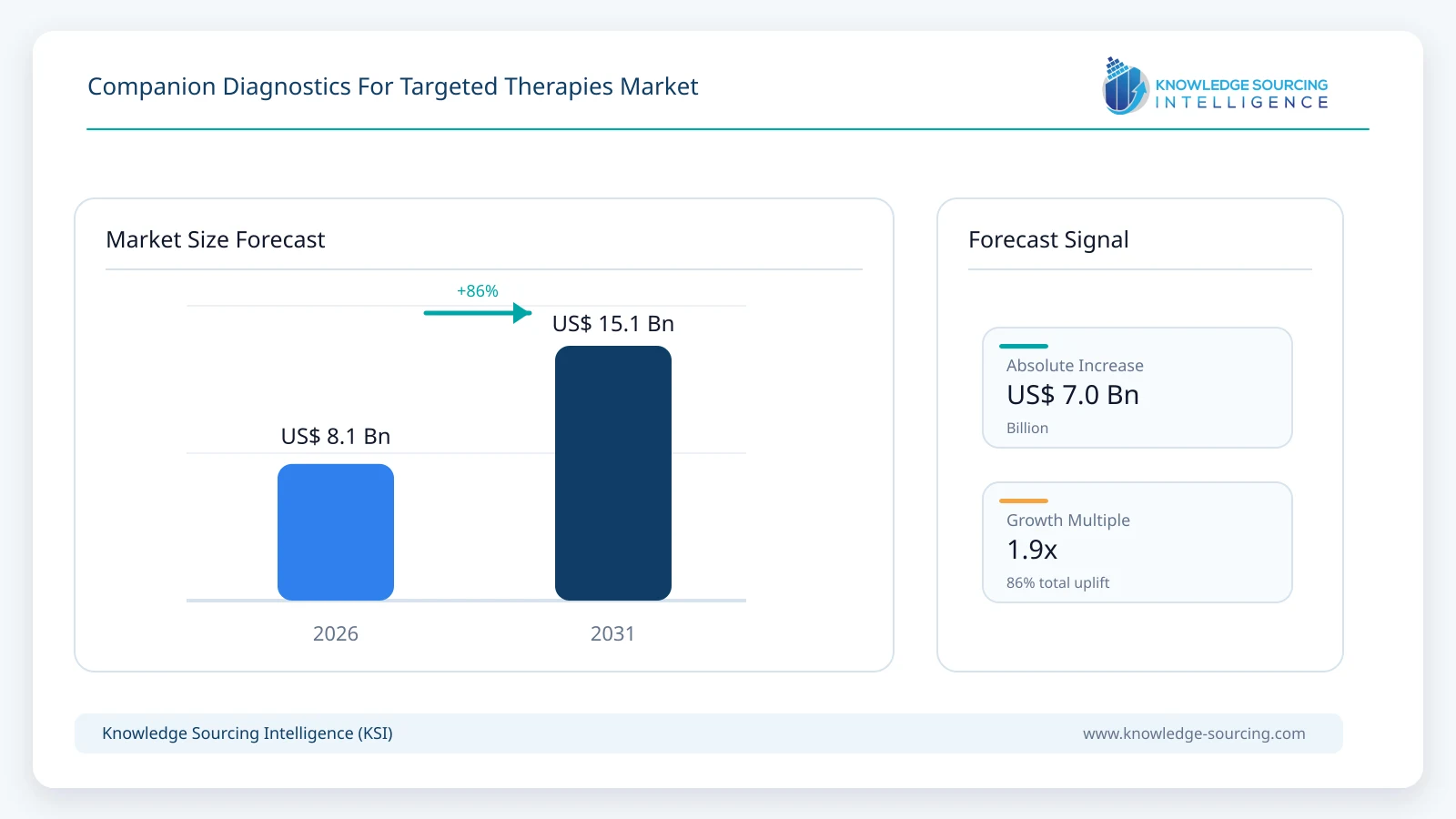
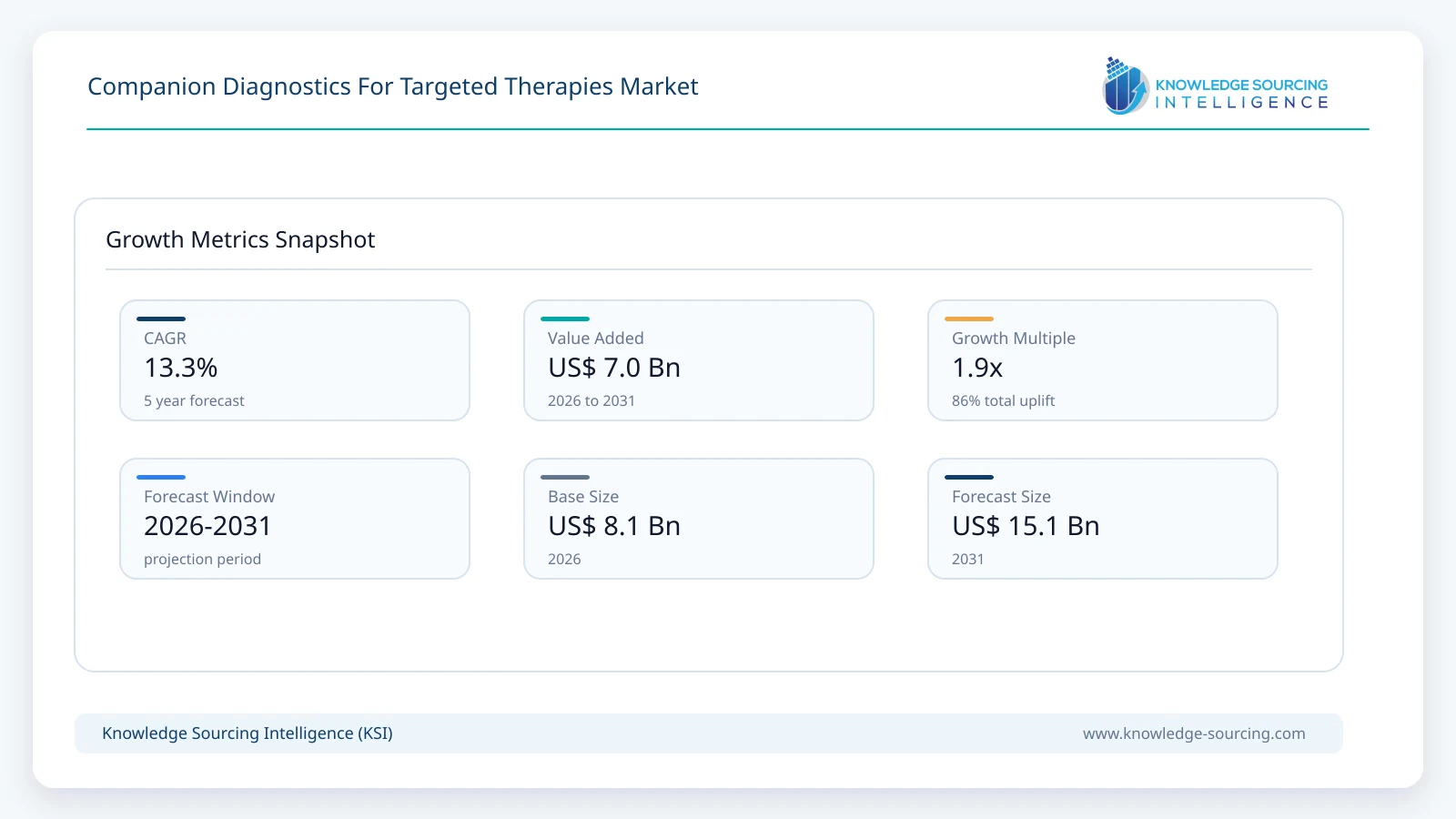
The Companion Diagnostics for Targeted Therapies market is projected to expand at a CAGR of 13.3%, attaining USD 15.1 billion in 2031 from USD 8.1 billion in 2026.
Highlights:
- 1Targeted oncology therapies remain the principal commercial demand source because treatment selection increasingly depends on validated molecular and protein biomarkers.
- 2NGS is gaining strategic importance where pharmaceutical sponsors and laboratories require multi-biomarker testing from limited tissue or blood samples.
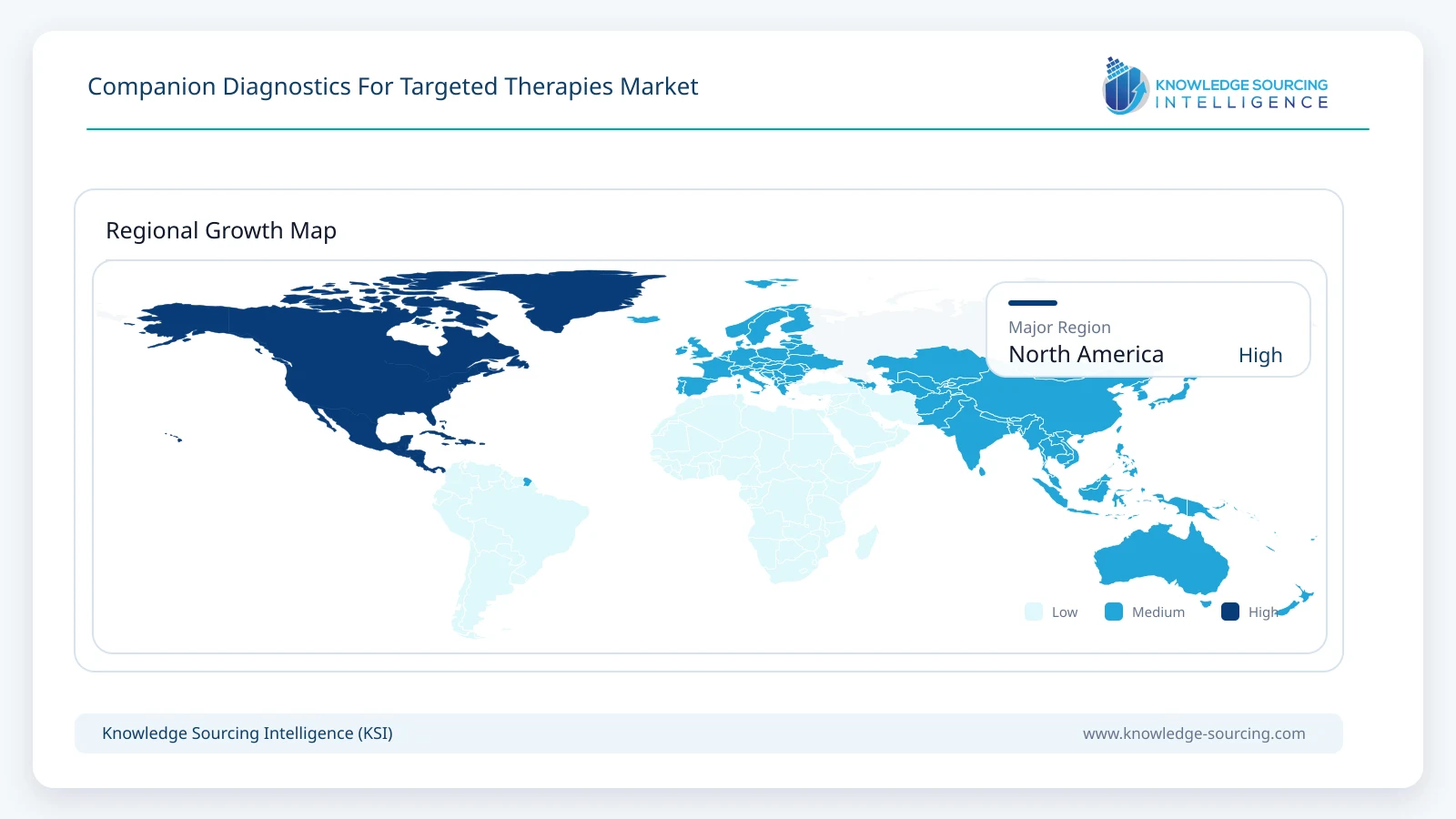
- 3North America remains an important commercial center because of its established precision-medicine infrastructure, regulatory pathways, pharmaceutical pipeline, and diagnostic reimbursement ecosystem.
- 4Europe is undergoing continued implementation of the IVDR framework, increasing the importance of conformity assessment, notified-body involvement, and documented clinical evidence for companion diagnostics.
- 5Liquid biopsy is creating new testing opportunities by allowing biomarker assessment from blood when tissue is unavailable, inadequate, or difficult to obtain.
- 6Competition is increasingly based on integrated diagnostic ecosystems, pharmaceutical partnerships, regulatory capabilities, assay menus, workflow efficiency, and access to clinical laboratories rather than standalone assay performance.
The Companion Diagnostics for Targeted Therapies Market covers diagnostic tests, associated reagents, instruments, software, and services used to identify patients who are suitable for, or should be excluded from, specific targeted therapies. These diagnostics connect molecular or protein-level patient information with treatment decisions. Their commercial role extends beyond laboratory testing because a companion diagnostic can become an essential condition for prescribing a corresponding medicine.
The market is closely linked to precision medicine, particularly in oncology, where therapies increasingly depend on defined genetic mutations, gene amplifications, gene fusions, protein expression levels, and immune-related biomarkers. The FDA defines a companion diagnostic as an in vitro diagnostic device that provides information essential for the safe and effective use of a corresponding therapeutic product. FDA records also show that companion diagnostics can support specific medicines as well as defined groups of oncology therapies.
Commercial demand therefore comes from several interconnected buyer groups. Pharmaceutical and biotechnology companies purchase or co-develop diagnostic capabilities during clinical development to demonstrate that an investigational therapy reaches the intended biomarker-defined population. Clinical laboratories and hospital systems purchase assays, instruments, reagents, software, and workflow services to provide treatment-selection testing. Pathology laboratories represent another important buyer group, particularly for immunohistochemistry and in situ hybridization assays. Academic medical centers and specialized reference laboratories also influence technology adoption through validation requirements and clinical testing practices.
Buyer priorities differ according to the stage of the therapeutic lifecycle. During drug development, pharmaceutical sponsors prioritize analytical validity, clinical validity, turnaround time, regulatory alignment, specimen availability, and the ability to generate evidence across multiple trial sites. After approval, laboratories place greater emphasis on workflow compatibility, reagent availability, instrument utilization, automation, reimbursement, quality control, and test volume. Hospitals additionally consider capital expenditure, staffing requirements, maintenance, interoperability, and the breadth of biomarkers supported by a platform.
The commercial structure is consequently broader than the sale of a diagnostic kit. Revenue can originate from assay and reagent consumption, instrument placement, software, interpretation tools, laboratory services, validation support, companion diagnostic development, regulatory support, and recurring testing. Platform suppliers can benefit from recurring consumables after initial instrument placement, while laboratory-service providers compete on testing access, turnaround time, geographic coverage, and clinical interpretation.
Technology selection depends heavily on the biomarker being measured. PCR remains commercially relevant where laboratories require targeted detection of known mutations or alterations with relatively established workflows. NGS becomes more attractive when clinicians need to assess multiple genes or biomarkers from limited tissue. IHC remains important for protein expression and tissue-based treatment selection, while ISH provides a complementary approach for gene amplification and related molecular abnormalities. Gene expression profiling and other emerging approaches extend the diagnostic toolkit into increasingly complex biological signatures.
The market is also being shaped by a shift from single-drug diagnostic relationships toward broader biomarker and therapy-class applications. FDA guidance allows, where evidence supports it, companion diagnostics to carry labeling for a specific group of oncology therapeutic products rather than only one medicine. This can expand the commercial addressable use of an assay and reduce unnecessary duplication of testing across therapies targeting similar biomarkers.
The forecast period from 2026 to 2031 is therefore expected to be influenced less by simple testing-volume expansion and more by the number and complexity of targeted therapies entering clinical use. Liquid biopsy, comprehensive genomic profiling, increasingly sensitive biomarker detection, computational pathology, and multimodal testing can change both the economics and technical requirements of companion diagnostics.
Market Drivers
Expansion of Biomarker-Defined Targeted Therapies
The principal demand mechanism is the growing use of therapies whose clinical value depends on identifying a molecularly defined patient population. Drug developers need reliable methods to demonstrate that their treatment reaches patients carrying the relevant alteration, while clinicians need practical testing routes after approval.
This creates demand before and after commercialization. During clinical trials, pharmaceutical sponsors need validated testing strategies across multiple sites. Following approval, laboratories must convert those testing requirements into routine clinical workflows. A successful companion diagnostic therefore creates a continuing relationship between therapeutic adoption and diagnostic utilization.
The commercial implication is important for suppliers. Diagnostic companies that can participate early in drug development have an opportunity to influence assay design, specimen requirements, validation methods, and regulatory strategy. The resulting relationship can extend into commercialization through testing kits, instruments, software, or laboratory services.
Increasing Complexity of Molecular Testing
Biomarker testing is moving beyond single alterations toward broader genomic and multimarker assessment. A patient may require information on several genes before a clinician can select among targeted therapies, immunotherapies, or clinical trials.
This environment favors platforms capable of testing multiple biomarkers while conserving tissue and maintaining clinically useful turnaround times. NGS is particularly relevant because one sample can support the assessment of multiple alterations. However, PCR remains economically attractive when the clinical question involves a limited number of well-defined variants.
For buyers, the decision is therefore not simply whether NGS is technically more comprehensive. Laboratories compare the number of biomarkers required, expected test volume, specimen quality, capital costs, bioinformatics requirements, turnaround time, reimbursement, and regulatory status.
Greater Use of Precision Oncology in Routine Care
Precision oncology is moving from specialized academic centers toward broader hospital and community-based cancer care. This increases the need for standardized testing that can be performed outside highly specialized molecular laboratories.
The commercial opportunity extends beyond test manufacturers. Hospitals require instruments, reagents, interpretation software, quality-control systems, laboratory training, and technical support. Pharmaceutical companies also benefit when diagnostic infrastructure allows more eligible patients to be identified without requiring treatment centers to establish entirely new workflows.
The Illumina-Labcorp collaboration announced in March 2026 illustrates this commercial direction. The companies said their expanded collaboration would pursue distributed oncology testing, including tissue and liquid-biopsy solutions, with the objective of bringing biomarker testing closer to hospitals and community health systems.
Development of Liquid Biopsy and Blood-Based Testing
Tissue remains a central specimen type, but blood-based testing can address practical limitations associated with tissue acquisition. Repeat biopsies can be invasive, tissue may be insufficient, and disease characteristics can change during treatment.
Liquid biopsy therefore creates demand for assays capable of detecting low-frequency alterations in circulating tumor DNA or other analytes. Pharmaceutical sponsors have an incentive to establish blood-based companion diagnostics when they can improve patient screening, support treatment monitoring strategies, or expand testing access.
The commercial challenge is maintaining sufficient analytical sensitivity and clinical validity. Suppliers must demonstrate that a blood-based result reliably supports the intended therapeutic decision. Successful adoption can nevertheless expand the number of patients who can receive biomarker testing without requiring another tissue procedure.
Regulatory Integration of Diagnostics and Therapeutics
Companion diagnostics operate at the intersection of pharmaceutical and medical-device regulation. In the United States, FDA guidance emphasizes coordinated development of a therapeutic product and its companion diagnostic, particularly when the diagnostic is essential for safe and effective use.
This regulatory linkage creates demand for suppliers with experience in analytical validation, clinical evidence, labeling, submissions, and post-market requirements. Pharmaceutical sponsors increasingly need diagnostic partners that understand the regulatory expectations of both the therapy and the diagnostic.
The commercial consequence is a higher barrier to entry than for conventional laboratory tests. Technical performance alone does not guarantee commercial success; regulatory evidence, clinical integration, manufacturing consistency, and post-approval support can determine whether a diagnostic becomes part of routine treatment pathways.
Market Restraints and Challenges
High Development and Validation Costs
Companion diagnostics require evidence that connects test results to a therapeutic decision. Developing such evidence can require substantial analytical studies, clinical trial coordination, specimen collection, assay optimization, manufacturing controls, and regulatory interaction.
The cost burden affects smaller diagnostic developers most strongly. Pharmaceutical sponsors may finance development through partnerships, but the economic relationship must remain viable across clinical development and commercialization.
Suppliers can mitigate the burden by developing modular platforms, using established analytical technologies, expanding existing assays to additional therapeutic indications, and establishing standardized validation processes.
Limited and Variable Clinical Specimens
Tissue availability remains a practical constraint in oncology. Small biopsies may contain insufficient material for multiple tests, while fixation and sample handling can affect molecular or protein measurements.
This creates pressure to reduce sample consumption and improve assay sensitivity. It also encourages laboratories to consider integrated testing approaches rather than sequential single-biomarker assays.
The commercial impact extends to instrument utilization and reagent economics. A platform that can extract more clinically relevant information from limited material may be preferred even when its upfront cost is higher.
Regulatory Complexity Across Geographies
Diagnostic developers face different regulatory frameworks across major markets. In the United States, companion diagnostics may require FDA authorization linked to therapeutic labeling. In Europe, IVDR introduced a new classification system and conformity-assessment requirements for companion diagnostics, including notified-body involvement.
The European framework creates additional documentation and evidence requirements, particularly for manufacturers transitioning legacy products into the newer regulatory system. Transitional provisions have established different deadlines depending on IVD classification.
For multinational suppliers, maintaining multiple regulatory dossiers can increase development costs and lengthen commercialization planning.
Reimbursement and Testing Economics
A clinically useful companion diagnostic still requires an economically viable testing pathway. Laboratories consider reimbursement levels, test volumes, instrument utilization, consumable costs, staffing, send-out testing alternatives, and payer requirements.
A test may therefore have regulatory authorization but limited routine use if reimbursement is uncertain or if hospitals cannot justify implementation costs. Suppliers increasingly need to consider the total economics of testing rather than the assay price alone.
Fragmentation of Testing Infrastructure
Precision diagnostics are not uniformly available across regions or healthcare systems. Large academic centers may have extensive sequencing and pathology infrastructure, while smaller hospitals may rely on external laboratories.
This fragmentation creates uneven access to testing and can affect pharmaceutical therapy uptake. Suppliers can address the issue through centralized testing, distributed IVD models, partnerships with reference laboratories, and standardized assay workflows.
Major Segment Analysis
Next-Generation Sequencing (NGS)
NGS represents a commercially important technology segment because targeted therapies increasingly involve multiple genomic alterations rather than isolated biomarkers. Its value proposition is strongest when clinicians need broad genomic information from a limited specimen and when several treatment decisions may depend on the same molecular profile.
Pharmaceutical companies have a direct incentive to use NGS-based companion diagnostics when a drug-development program requires detection of several alterations or when the therapeutic landscape contains multiple biomarker-defined options. A broader panel can also reduce the need for sequential testing, helping preserve limited tissue.
Laboratories evaluate NGS platforms on several dimensions. These include analytical sensitivity, specificity, throughput, specimen compatibility, turnaround time, automation, sequencing economics, bioinformatics performance, regulatory status, and integration with existing laboratory infrastructure. The availability of validated workflows can be as important as raw sequencing performance.
NGS also supports the movement toward comprehensive genomic profiling. Instead of ordering separate tests for individual mutations, a laboratory can generate a broader molecular profile in one workflow. This approach can improve the probability of identifying actionable alterations, although the economic value depends on reimbursement and whether clinicians can act on the additional information.
The technology also supports blood-based testing. Liquid biopsy panels can identify circulating genomic alterations when tissue is unavailable or when a minimally invasive test is preferred. The commercial opportunity is particularly relevant to advanced cancer care, where repeat tissue acquisition may be difficult.
Recent industry activity demonstrates how pharmaceutical collaboration is shaping the NGS segment. In September 2025, Illumina announced partnerships with multiple pharmaceutical companies to develop companion diagnostics on its TruSight Oncology Comprehensive genomic profiling platform, initially focusing on KRAS alterations.
QIAGEN also announced a June 2025 collaboration with Incyte to develop an NGS-based multimodal panel for clinically relevant gene alterations in myeloproliferative neoplasms. The planned panel was to be validated on the Illumina NextSeq 550Dx platform using whole-blood samples.
These developments indicate that competition in NGS-based companion diagnostics extends beyond sequencing instruments. Suppliers compete for pharmaceutical development partnerships, assay placement, regulatory claims, laboratory adoption, and recurring consumables.
NGS will nevertheless not displace PCR, IHC, or ISH across all applications. Where a single biomarker has a well-established clinical pathway, targeted testing may offer lower cost, simpler workflows, and faster results. NGS is therefore most commercially compelling where breadth of information offsets its greater infrastructure and analytical requirements.
Regional Analysis
North America
North America represents an important market because the United States combines a large pharmaceutical development base, advanced cancer-treatment infrastructure, specialized molecular laboratories, and an established regulatory framework for companion diagnostics.
The FDA maintains an active list of authorized companion diagnostic devices covering specific therapeutic products and group-labeled oncology indications. This regulatory infrastructure gives manufacturers a defined pathway for connecting diagnostic claims with treatment decisions.
Buyer behavior in the United States is strongly influenced by clinical utility, turnaround time, reimbursement, and compatibility with hospital laboratory workflows. Large reference laboratories and health systems can support broad molecular testing, while community providers may depend on distributed or centralized testing models.
Canada benefits from established cancer-care infrastructure and public healthcare systems, but procurement and reimbursement considerations differ from the United States. Mexico represents an emerging opportunity as private healthcare investment and access to molecular diagnostics expand, although affordability and infrastructure remain constraints.
Europe
Europe has a large precision-medicine base but operates under a more complex regulatory structure following implementation of the IVDR. Companion diagnostics require conformity assessment by a notified body, and certain products require scientific input from EMA regarding suitability for the corresponding medicinal product.
The regulatory environment is continuing to mature. The European Commission has issued additional guidance on classification, transitional provisions, and the interaction between medical-device rules and artificial-intelligence requirements.
Germany, the United Kingdom, France, and Spain provide important demand centers because of their pharmaceutical activity, cancer treatment infrastructure, pathology networks, and diagnostic laboratories. However, procurement remains influenced by national healthcare systems, reimbursement rules, and laboratory organization.
European suppliers also face an opportunity to standardize diagnostic offerings across multiple countries. Products with clear regulatory documentation and scalable manufacturing can gain an advantage where hospitals seek dependable supply and compliance support.
Asia Pacific
Asia Pacific combines high population volumes with substantial differences in healthcare infrastructure. China, Japan, South Korea, India, Indonesia, and Thailand each have distinct regulatory, reimbursement, laboratory, and procurement environments.
China and Japan are particularly important for pharmaceutical development, advanced diagnostics, and oncology treatment. Japan's established healthcare system supports adoption of molecular diagnostics, while China's large patient population provides substantial demand potential for targeted cancer testing.
India represents a major long-term opportunity because cancer diagnostics are expanding alongside private hospital networks, specialized laboratories, and precision-medicine services. However, affordability, uneven access to advanced laboratory infrastructure, and reimbursement constraints can limit routine use.
South Korea has strong biotechnology and advanced healthcare capabilities, while Southeast Asian markets are more heterogeneous. Suppliers may therefore need different commercial models, including centralized testing, laboratory partnerships, and instrument-plus-consumable arrangements.
Middle East and Africa
The Middle East and Africa market is shaped by differences in healthcare expenditure, laboratory infrastructure, oncology capacity, and access to advanced molecular diagnostics.
Saudi Arabia and the United Arab Emirates are the principal commercial centers within the supplied segmentation because of healthcare modernization programs, investment in specialized hospitals, and increasing interest in precision medicine.
Demand is more concentrated in major hospitals and reference laboratories than in decentralized community facilities. Suppliers can therefore compete through institutional partnerships, centralized testing, technical training, and service agreements.
Across many African markets, high capital costs and limited specialist laboratory capacity remain constraints. Centralized regional testing can offer a more practical model than installing sophisticated molecular platforms in every hospital.
South America
Brazil represents the principal regional demand center because of its population size, healthcare infrastructure, pharmaceutical activity, and growing access to molecular testing. Argentina also provides an established clinical and laboratory base.
The region faces affordability and reimbursement constraints that can slow adoption of advanced diagnostic platforms. Suppliers must therefore balance technology sophistication with testing economics.
Reference laboratories and major hospitals are likely to remain important adoption points because they can consolidate sample volumes and spread instrument and staffing costs across larger testing programs.
Competitive Landscape
The competitive structure includes diversified diagnostics companies, life-science technology suppliers, molecular diagnostic specialists, pathology companies, and laboratory-focused businesses. The supplied competitive set includes Roche Diagnostics, Abbott Laboratories, Thermo Fisher Scientific, Agilent Technologies, QIAGEN, Illumina, Danaher Corporation, Bio-Rad Laboratories, Myriad Genetics, and Hologic.
Competition is based on several layers rather than one product characteristic. Diagnostic companies compete on assay sensitivity and specificity, instrument installed base, regulatory status, assay menus, turnaround time, sample requirements, laboratory workflow, software capabilities, and commercial relationships with pharmaceutical developers.
Pharmaceutical partnerships are particularly important because companion diagnostics can be embedded in drug-development programs before commercial demand is established. A supplier that participates in clinical development can gain insight into biomarker strategy, trial requirements, specimen characteristics, and eventual regulatory claims.
Roche demonstrates the importance of integrating pathology, IHC, digital pathology, and pharmaceutical-linked diagnostics. In April 2025, Roche announced FDA Breakthrough Device Designation for its VENTANA TROP2 RxDx Device, combining an IHC assay with a digital pathology algorithm for treatment selection in non-small cell lung cancer.
Agilent illustrates another competitive route through regulatory expansion of established pathology assays. In April 2025, the company announced European IVDR certification for PD-L1 IHC 22C3 pharmDx as a companion diagnostic for identifying gastric or gastroesophageal-junction adenocarcinoma patients who may be eligible for pembrolizumab treatment.
NGS suppliers compete through installed sequencing platforms and pharmaceutical development relationships. Laboratory service partnerships can further extend geographic reach by connecting centralized technology platforms with hospitals and community healthcare providers.
The resulting market structure favors companies capable of combining assay development, regulatory expertise, manufacturing, clinical evidence generation, and laboratory distribution. Pure technology differentiation is less decisive when customers require an end-to-end validated pathway from specimen collection to treatment decision.
Recent Developments
August 2026: Roche received FDA approval for expanded PATHWAY HER2 and VENTANA HER2 Dual ISH companion diagnostics, identifying HER2-positive gastroesophageal cancers eligible for ZIIHERA.
July 2026: Agilent received European Union certification for PD-L1 IHC 22C3 pharmDx as a companion diagnostic supporting KEYTRUDA treatment decisions in ovarian cancers.
June 2026: Guardant Health announced FDA approval of Guardant360 CDx as a companion diagnostic for HERNEXEOS, identifying HER2-mutant NSCLC patients eligible for targeted zongertinib treatment.
March 2026: Illumina and Labcorp expanded their precision-oncology collaboration to develop distributed testing and broaden access to tissue and liquid-biopsy assays, including opportunities for companion diagnostic development. The move supports wider deployment of advanced biomarker testing beyond major specialist centers.
June 2025: QIAGEN and Incyte announced a collaboration to develop an NGS-based companion diagnostic panel for mutant CALR-expressing myeloproliferative neoplasms using whole-blood samples. The agreement strengthens the role of molecular diagnostics in hematology-focused targeted therapy development.
Regulatory and Policy Environment
Regulation has a direct effect on companion diagnostic economics because authorization is frequently connected to the labeling and use of a corresponding therapeutic product. In the United States, FDA's companion diagnostic framework addresses situations where an IVD is essential to the safe and effective use of a therapy. The agency generally expects the diagnostic and therapeutic products to be authorized contemporaneously when the diagnostic is essential to the labeled treatment.
FDA also provides a pathway for group labeling of oncology companion diagnostics when sufficient evidence demonstrates that a test is appropriate for a defined group of therapeutic products. This approach can reduce unnecessary restrictions associated with linking an assay to only one medicine and can broaden the commercial utility of validated biomarker tests.
The FDA's oncology framework has already supported numerous companion diagnostic authorizations. The agency's oncology information notes that companion diagnostics have been used for biomarkers including BRAF variants, KRAS alterations, mismatch-repair deficiency, and other treatment-selection markers.
In Europe, Regulation (EU) 2017/746, the IVDR, governs in vitro diagnostic medical devices and introduced a new classification and conformity-assessment structure for companion diagnostics. For certain medicinal products under the centralized authorization procedure, notified bodies must obtain an EMA scientific opinion regarding the suitability of the companion diagnostic for the medicinal product.
The European regulatory environment continues to be refined. The European Commission has issued updated classification guidance and transitional provisions, while further policy work seeks to simplify aspects of the medical-device and IVD framework.
In 2025, the European Commission also issued an FAQ addressing the interaction between IVDR/MDR requirements and the Artificial Intelligence Act. This is commercially relevant for computational pathology and other companion diagnostics that incorporate algorithmic analysis.
For manufacturers, regulatory compliance increasingly affects product-development sequencing. Companies must consider intended use, biomarker definition, specimen type, analytical validation, clinical evidence, software controls, manufacturing quality, labeling, and post-market obligations at an early stage.
Outlook and Strategic Implications
The 2026–2031 period should be shaped by the convergence of targeted therapeutics, broader biomarker testing, liquid biopsy, computational pathology, and more integrated diagnostic workflows. The most commercially attractive opportunities will likely emerge where diagnostic adoption directly removes a treatment-selection bottleneck.
Investment priorities are expected to center on assays that can detect clinically meaningful alterations from limited specimens, multiplex testing platforms, scalable sequencing workflows, and software that converts complex molecular data into reproducible clinical outputs. Pharmaceutical sponsors will continue to influence investment because the diagnostic strategy can determine the size and accessibility of the eligible treatment population.
Procurement behavior is also likely to become more sophisticated. Hospitals will increasingly evaluate total testing economics rather than purchasing individual assays based solely on acquisition price. Instrument utilization, reagent contracts, maintenance, staffing, turnaround time, interoperability, and reimbursement will affect purchasing decisions.
NGS should retain a strong strategic position where multiple biomarkers must be assessed simultaneously. However, PCR, IHC, and ISH will remain commercially important where focused testing provides adequate clinical information at lower workflow complexity. The market is therefore unlikely to converge on one universal technology.
Liquid biopsy represents another important strategic direction. Blood-based testing can expand access when tissue is unavailable or inadequate, but suppliers must demonstrate sufficient analytical performance for treatment selection. The commercial winners will be those that combine technical sensitivity with regulatory evidence and practical laboratory workflows.
Computational pathology could create another layer of differentiation. Roche's 2025 FDA Breakthrough Device Designation for an AI-supported IHC companion diagnostic illustrates how digital image analysis can become part of a treatment-selection workflow rather than remaining a separate research application.
Competitive positioning will increasingly depend on partnerships. Pharmaceutical companies need diagnostic developers that can support biomarker discovery, assay development, clinical trials, regulatory submissions, and post-approval expansion. Diagnostic suppliers, meanwhile, need access to clinical specimens, pharmaceutical pipelines, laboratory networks, and reimbursement channels.
Geographic expansion will require localized commercial strategies. North America offers strong pharmaceutical and diagnostic infrastructure but demands evidence and reimbursement discipline. Europe requires careful IVDR planning. Asia Pacific offers large patient populations but contains substantial differences in infrastructure and affordability. The Middle East favors institutional projects and advanced hospital systems, while South America requires greater attention to testing economics and centralized laboratory models.
The principal risks remain regulatory delays, reimbursement uncertainty, limited specimen availability, assay standardization problems, laboratory capacity constraints, and changing biomarker definitions. Competition may also intensify as established diagnostic platforms expand their companion diagnostic claims and pharmaceutical companies seek multiple testing options for the same biomarker.
Strategically, suppliers should prioritize platforms that can support several therapeutic programs rather than relying exclusively on single-drug relationships. Broader labeling, reusable laboratory infrastructure, modular assay menus, distributed testing, and liquid-biopsy capabilities can improve commercial resilience.
For pharmaceutical companies, early diagnostic co-development remains important because the availability and performance of the test can influence clinical-trial recruitment, regulatory strategy, treatment eligibility, and post-launch access. For laboratories, investments should favor technologies with sufficient test volume, strong regulatory positioning, reliable consumable supply, and compatibility with existing pathology or molecular workflows.
Overall, the Companion Diagnostics for Targeted Therapies Market will be shaped by the economics of precision treatment rather than diagnostics alone. Demand will strengthen where a validated biomarker can materially influence therapy selection, reduce inappropriate treatment, or identify patients for a targeted medicine. Over 2026–2031, suppliers that combine analytical performance with regulatory evidence, pharmaceutical partnerships, scalable laboratory workflows, and broad geographic access will have the strongest basis for sustained commercial positioning.
Companion Diagnostics For Targeted Therapies Market Scope:
| Report Metric | Details |
|---|---|
| Total Market Size in 2026 | USD 8.1 billion |
| Total Market Size in 2031 | USD 15.1 billion |
| Forecast Unit | Billion |
| Growth Rate | 13.3% |
| Study Period | 2021 to 2031 |
| Historical Data | 2021 to 2024 |
| Base Year | 2025 |
| Forecast Period | 2026 – 2031 |
| Segmentation | Component, Technology, Application, Biomarker, Sample Type, Geography |
| Companies |
|
Market Segmentation
By Component
By Technology
By Application
By Biomarker
By Sample Type
By Geography
Table of Contents
1. EXECUTIVE SUMMARY
2. MARKET SNAPSHOT
2.1. Market Overview
2.2. Market Definition
2.3. Scope of the Study
2.4. Market Segmentation
3. BUSINESS LANDSCAPE
3.1. Market Drivers
3.2. Market Restraints
3.3. Market Opportunities
3.4. Porter’s Five Forces Analysis
3.5. Industry Value Chain Analysis
3.6. Regulatory and Policy Landscape
3.7. Strategic Recommendations
3.8. Companion Diagnostic Product Pipeline Analysis
3.9. Target Disease and Biomarker Landscape
3.10. Patent Analysis
4. TECHNOLOGICAL OUTLOOK
5. COMPANION DIAGNOSTICS FOR TARGETED THERAPIES MARKET BY COMPONENT
5.1. Introduction
5.2. Assays, Kits and Reagents
5.3. Instruments
5.4. Software and Services
6. COMPANION DIAGNOSTICS FOR TARGETED THERAPIES MARKET BY TECHNOLOGY
6.1. Introduction
6.2. Polymerase Chain Reaction (PCR)
6.3. Next-Generation Sequencing (NGS)
6.4. Immunohistochemistry (IHC)
6.5. In Situ Hybridization (ISH)
6.6. Gene Expression Profiling
6.7. Other Technologies
7. COMPANION DIAGNOSTICS FOR TARGETED THERAPIES MARKET BY APPLICATION
7.1. Introduction
7.2. Oncology
7.3. Infectious Diseases
7.4. Other Therapeutic Areas
8. COMPANION DIAGNOSTICS FOR TARGETED THERAPIES MARKET BY BIOMARKER
8.1. Introduction
8.2. Genetic Mutations
8.3. Gene Amplifications
8.4. Gene Fusions
8.5. Protein Biomarkers
8.6. Immune Biomarkers
8.7. Other Biomarkers
9. COMPANION DIAGNOSTICS FOR TARGETED THERAPIES MARKET BY SAMPLE TYPE
9.1. Introduction
9.2. Tissue
9.3. Blood
9.4. Other Biological Samples
10. COMPANION DIAGNOSTICS FOR TARGETED THERAPIES MARKET BY GEOGRAPHY
10.1. Introduction
10.2. North America
10.2.1. United States
10.2.2. Canada
10.2.3. Mexico
10.3. South America
10.3.1. Brazil
10.3.2. Argentina
10.3.3. Others
10.4. Europe
10.4.1. United Kingdom
10.4.2. Germany
10.4.3. France
10.4.4. Spain
10.4.5. Others
10.5. Middle East and Africa
10.5.1. Saudi Arabia
10.5.2. United Arab Emirates
10.5.3. Others
10.6. Asia Pacific
10.6.1. China
10.6.2. India
10.6.3. Japan
10.6.4. South Korea
10.6.5. Indonesia
10.6.6. Thailand
10.6.7. Others
11. COMPETITIVE ENVIRONMENT AND ANALYSIS
11.1. Major Players and Strategy Analysis
11.2. Market Share Analysis
11.3. Mergers, Acquisitions, Agreements, and Collaborations
11.4. Competitive Dashboard
12. COMPANY PROFILES
12.1. Roche Diagnostics
12.2. Abbott Laboratories
12.3. Thermo Fisher Scientific
12.4. Agilent Technologies
12.5. QIAGEN
12.6. Illumina
12.7. Danaher Corporation
12.8. Bio-Rad Laboratories
12.9. Myriad Genetics
12.10. Hologic
13. APPENDIX
13.1. Currency
13.2. Assumptions
13.3. Base and Forecast Years Timeline
13.4. Key Benefits for the Stakeholders
13.5. Research Methodology
13.6. Abbreviations
LIST OF FIGURES
LIST OF TABLES
Navigate
Trusted by the world's leading organizations











