
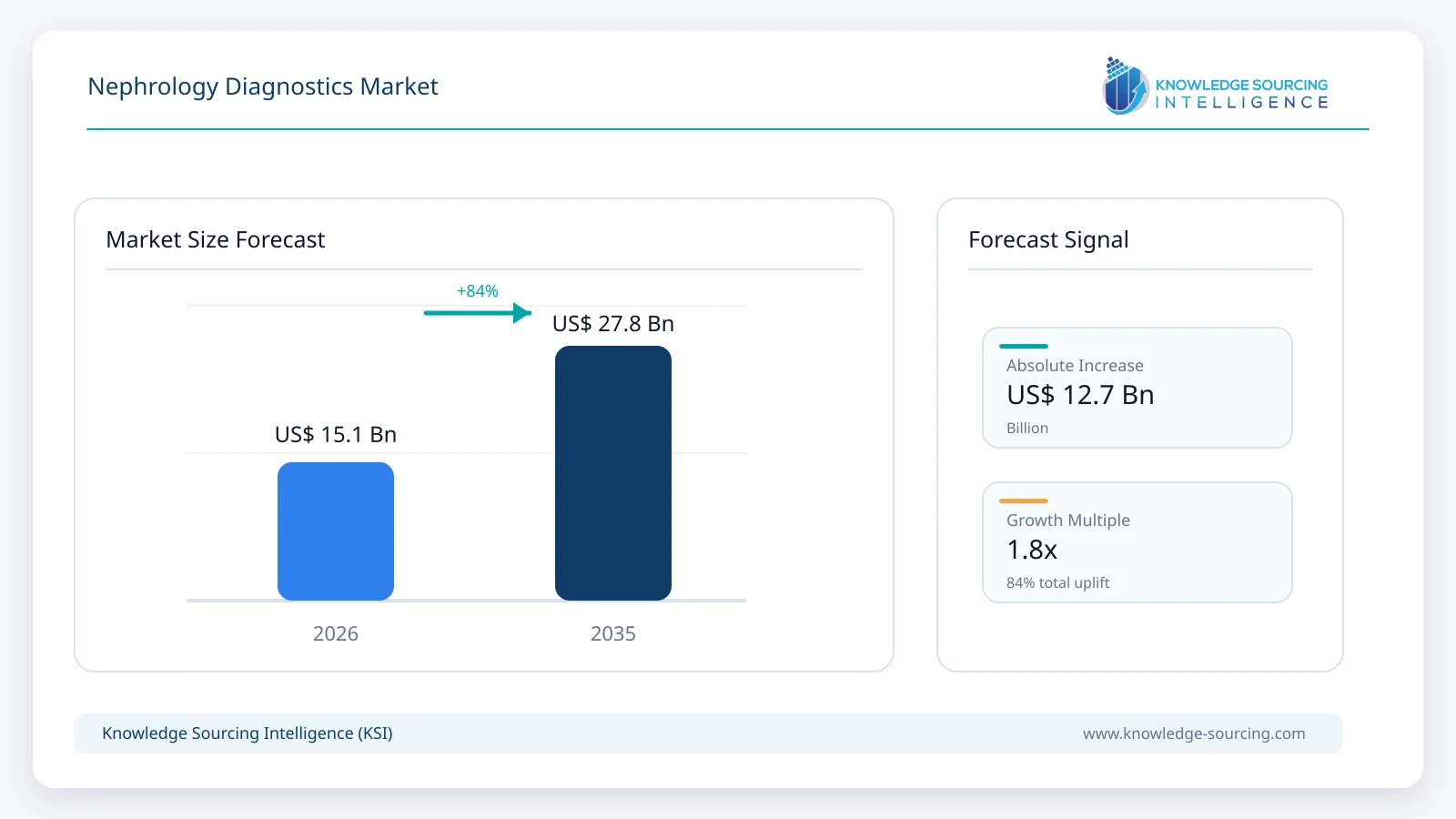
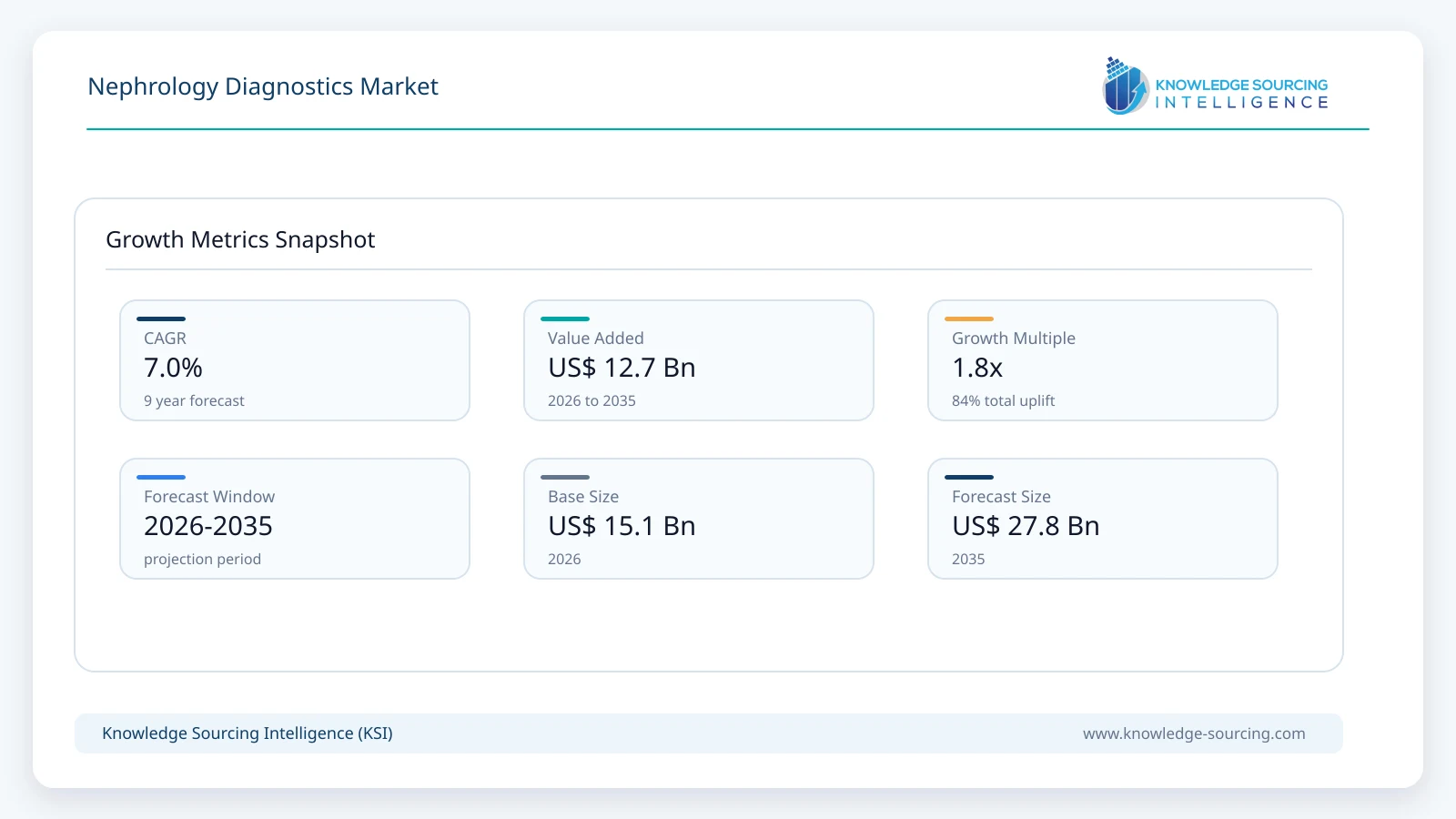
The Nephrology Diagnostics Market is forecast to grow at a CAGR of 7.0%, reaching USD 27.82 billion in 2035 from USD 15.12 billion in 2026.
Highlights:
- 1The increasing prevalence of diabetes and hypertension is expanding routine kidney screening programs, resulting in sustained demand for serum creatinine, eGFR, and urine-based diagnostic testing.
- 2Healthcare providers are adopting automated laboratory platforms because higher testing volumes require standardized workflows, improving operational efficiency across hospital and reference laboratories.
- 3Clinical practice guidelines continue emphasizing earlier chronic kidney disease detection, encouraging wider utilization of validated biomarkers that support timely therapeutic intervention.
- 4Diagnostic manufacturers are investing in novel biomarker assays because conventional kidney function markers often identify disease after substantial nephron loss has occurred.
Kidney diseases require continuous biochemical assessment because structural renal damage often progresses before clinical symptoms become evident. Diagnostic testing therefore remains central to disease identification, therapeutic monitoring, risk prediction, and long-term patient management. Traditional biomarkers such as serum creatinine, blood urea nitrogen (BUN), estimated glomerular filtration rate (eGFR), and urine protein measurements continue to define routine clinical practice, while novel biomarkers are improving diagnostic sensitivity during the earliest stages of kidney injury.
The growing global burden of diabetes, hypertension, obesity, aging populations, cardiovascular disease, and autoimmune disorders is increasing the number of individuals requiring periodic renal assessment. Earlier identification of declining kidney function reduces progression toward end-stage kidney disease and supports timely clinical intervention. Healthcare providers are consequently expanding routine screening programs among high-risk populations, increasing laboratory testing volumes across primary care, specialty nephrology clinics, and hospital networks.
Regulatory organizations and nephrology societies continue updating clinical practice recommendations that emphasize standardized laboratory measurements and validated biomarkers for chronic kidney disease management. Diagnostic manufacturers are responding by developing automated assays, high-throughput analyzers, integrated software platforms, and digital decision-support capabilities that improve laboratory efficiency while maintaining analytical consistency. This evolution is strengthening the strategic importance of nephrology diagnostics across preventive healthcare, precision medicine, and chronic disease management.
Market Dynamics
Market Drivers
Growing Global Burden of Chronic Kidney Disease Is Expanding Routine Diagnostic Testing: Chronic kidney disease remains one of the leading causes of long-term morbidity because disease progression frequently occurs without noticeable symptoms during its early stages. Healthcare systems are increasingly implementing routine kidney screening among patients with diabetes, hypertension, obesity, and cardiovascular disorders as preventive care receives greater clinical emphasis. Earlier diagnosis supports timely therapeutic intervention and reduces progression toward dialysis or kidney transplantation. This structural shift continues increasing demand for serum creatinine testing, eGFR calculation, urine biomarker analysis, and automated nephrology diagnostic platforms.
Expansion of Precision Biomarkers Is Improving Early Kidney Injury Detection: Traditional renal biomarkers primarily indicate functional decline after substantial nephron damage has already occurred. Clinical research is increasingly validating biomarkers such as cystatin C, kidney injury molecule-1 (KIM-1), neutrophil gelatinase-associated lipocalin (NGAL), tissue inhibitor of metalloproteinases-2 (TIMP-2), and insulin-like growth factor-binding protein 7 (IGFBP7) because earlier biological changes provide greater clinical utility. Diagnostic manufacturers are expanding assay portfolios that support risk stratification and individualized patient monitoring. This evolution strengthens demand for advanced nephrology diagnostics across intensive care units, nephrology clinics, and tertiary hospitals.
Automation of Clinical Laboratories Is Increasing Diagnostic Throughput: Healthcare laboratories require standardized workflows as diagnostic testing volumes continue expanding across chronic disease management programs. Hospitals and reference laboratories are integrating fully automated chemistry analyzers, laboratory information systems, middleware solutions, and digital quality control platforms to improve analytical consistency and reduce manual intervention. Higher operational efficiency supports rapid turnaround times while minimizing analytical variability across high-volume testing environments. Automated nephrology diagnostics therefore remain an essential component of modern laboratory infrastructure.
Clinical Guidelines Continue Strengthening Preventive Kidney Disease Screening: International nephrology organizations recommend routine kidney assessment for individuals with established risk factors because early intervention improves long-term clinical outcomes. Healthcare providers are incorporating periodic renal function testing into diabetes management pathways, cardiovascular risk assessment, and primary healthcare screening programs as preventive medicine receives greater policy support. This expanding clinical adoption reinforces sustained demand for standardized nephrology diagnostic assays throughout the patient care continuum.
Market Restraints
Limited clinical standardization for several emerging kidney injury biomarkers continues restricting widespread adoption across routine diagnostic laboratories.
High implementation costs associated with automated analyzers, specialized assays, and laboratory infrastructure reduce technology adoption among smaller healthcare facilities.
Variability in reimbursement policies for advanced nephrology diagnostics limits physician utilization despite growing clinical evidence supporting earlier disease detection.
Market Opportunities
Novel Biomarker Validation Is Expanding the Future Diagnostic Landscape: Clinical research continues identifying biomarkers capable of detecting kidney injury before measurable reductions in glomerular filtration occur. Academic institutions, biotechnology companies, and diagnostic manufacturers are validating multi-marker panels that improve disease staging and prognostic assessment. Earlier biological detection supports personalized treatment strategies while reducing long-term healthcare costs associated with advanced kidney disease. This scientific progress creates substantial opportunities for next-generation nephrology diagnostic platforms.
Artificial Intelligence Is Strengthening Clinical Decision Support: Healthcare organizations increasingly integrate artificial intelligence with laboratory information systems because clinicians require more accurate interpretation of complex diagnostic datasets. AI-assisted algorithms are supporting risk prediction, longitudinal disease monitoring, and automated patient stratification using biochemical and electronic health record data. Diagnostic software developers are expanding analytics capabilities that improve clinical decision-making without increasing laboratory complexity. This transition is positioning digital nephrology diagnostics as a core component of precision medicine.
Point-of-Care Kidney Diagnostics Are Improving Access to Early Testing: Primary care settings, emergency departments, and remote healthcare facilities increasingly require rapid renal assessment because immediate clinical decisions often depend on kidney function status. Manufacturers are developing compact diagnostic platforms capable of delivering faster biochemical results outside centralized laboratories. Greater accessibility supports earlier identification of acute kidney injury and chronic kidney disease while reducing delays in treatment initiation. This trend is expanding commercial opportunities for decentralized nephrology diagnostics.
Population Health Programs Are Increasing Long-Term Screening Demand: Governments and healthcare providers recognize chronic kidney disease as a major contributor to cardiovascular complications, hospitalization, and healthcare expenditure. National screening initiatives are expanding among high-risk populations because preventive diagnosis reduces disease progression and associated treatment costs. Diagnostic manufacturers are aligning commercial strategies with these public health initiatives through broader assay availability and integrated laboratory solutions. The resulting expansion of organized screening programs supports sustained demand across the nephrology diagnostics value chain.
Disease & Epidemiology Analysis
Chronic kidney disease (CKD) represents the largest source of demand for nephrology diagnostics because renal impairment often progresses silently until substantial nephron loss has occurred. Diabetes mellitus, hypertension, obesity, cardiovascular disease, autoimmune disorders, inherited kidney diseases, and population aging remain the primary epidemiological drivers that increase the frequency of renal function assessment. Healthcare providers are expanding routine biochemical screening among these high-risk populations because early identification of declining kidney function enables timely therapeutic intervention and slows progression toward end-stage kidney disease (ESKD). This structural transition is strengthening demand for standardized serum creatinine, estimated glomerular filtration rate (eGFR), urine albumin, and emerging biomarker assays across hospitals, diagnostic laboratories, and outpatient nephrology clinics.
Acute kidney injury (AKI) creates a distinct diagnostic challenge because kidney function can deteriorate rapidly during hospitalization, sepsis, major surgery, trauma, or exposure to nephrotoxic agents. Conventional biomarkers frequently detect injury after functional impairment has already developed, prompting clinical researchers and diagnostic manufacturers to validate earlier indicators of tubular damage such as neutrophil gelatinase-associated lipocalin (NGAL), kidney injury molecule-1 (KIM-1), tissue inhibitor of metalloproteinases-2 (TIMP-2), and insulin-like growth factor-binding protein 7 (IGFBP7). Hospitals are increasingly evaluating these biomarkers in critical care settings because earlier diagnosis supports preventive interventions and improves patient management. The resulting expansion of biomarker research is increasing demand for advanced nephrology diagnostic assays capable of identifying kidney injury before irreversible damage develops.
Diabetic nephropathy continues to increase diagnostic testing volumes because diabetes remains the leading cause of chronic kidney disease worldwide. Healthcare systems recommend periodic renal monitoring through eGFR estimation and urine albumin measurements to identify progressive nephropathy before significant renal dysfunction occurs. Glomerular diseases, autoimmune nephropathies, hereditary kidney disorders, and drug-induced nephrotoxicity also require repeated laboratory evaluation because disease progression varies considerably between patients.
Treatment Guidelines Landscape
Organization | Guideline | Diagnostic Recommendations | Market Impact |
KDIGO | 2024 Clinical Practice Guideline for CKD Evaluation and Management | Recommends CKD diagnosis using eGFR and albuminuria with risk-based patient stratification | Increases routine laboratory testing and standardized biomarker adoption |
National Kidney Foundation (NKF) | KDOQI Clinical Practice Guidelines | Supports periodic kidney function assessment among high-risk populations using serum creatinine, urine albumin, and eGFR | Expands screening demand across primary care and nephrology practices |
American Diabetes Association (ADA) | Standards of Care in Diabetes | Recommends annual kidney assessment for patients with diabetes using eGFR and urinary albumin testing | Sustains demand for diabetic nephropathy diagnostics |
European Renal Association (ERA) | CKD Clinical Practice Recommendations | Encourages early identification and longitudinal monitoring of CKD progression | Supports adoption of standardized nephrology diagnostic workflows |
Market Segmentation
By Product Type
Reagents and assay kits represent the foundation of nephrology diagnostics because every biochemical assessment depends on standardized analytical chemistry. Healthcare laboratories are increasing procurement of high-quality assay reagents as kidney disease screening programs continue expanding across primary care and specialty nephrology services. Analytical accuracy remains essential because treatment decisions rely on reproducible laboratory measurements obtained over extended monitoring periods. Manufacturers are developing high-sensitivity biomarker assays, multiplex testing solutions, and standardized calibration systems that improve diagnostic reliability across automated laboratory platforms. This evolution positions reagents and assay kits as the largest recurring revenue contributor within the nephrology diagnostics value chain.
By Diagnostic Test
Estimated glomerular filtration rate remains the primary indicator of kidney function because international clinical guidelines recommend its routine use for CKD diagnosis, staging, and longitudinal monitoring. Healthcare providers are increasing eGFR testing among patients with diabetes, hypertension, cardiovascular disease, and aging-related comorbidities as preventive nephrology becomes more widely adopted. Accurate kidney function estimation guides medication dosing, referral decisions, and disease progression assessment throughout the continuum of care. Diagnostic manufacturers continue improving analytical precision through standardized creatinine assays and cystatin C integration, strengthening the clinical utility of eGFR-based kidney evaluation.
By Disease Indication
Chronic kidney disease generates the greatest demand for nephrology diagnostics because affected individuals require repeated laboratory monitoring throughout disease progression. Healthcare systems are expanding screening initiatives among high-risk populations to identify kidney impairment before irreversible structural damage develops. Continuous monitoring enables physicians to evaluate treatment response, stratify disease risk, and delay progression toward end-stage kidney disease requiring dialysis or transplantation. Diagnostic companies are supporting this demand through automated analyzers, standardized biomarker panels, and integrated software solutions that improve laboratory efficiency while maintaining consistent analytical performance across large patient populations.
Regional Analysis
North America Market Analysis
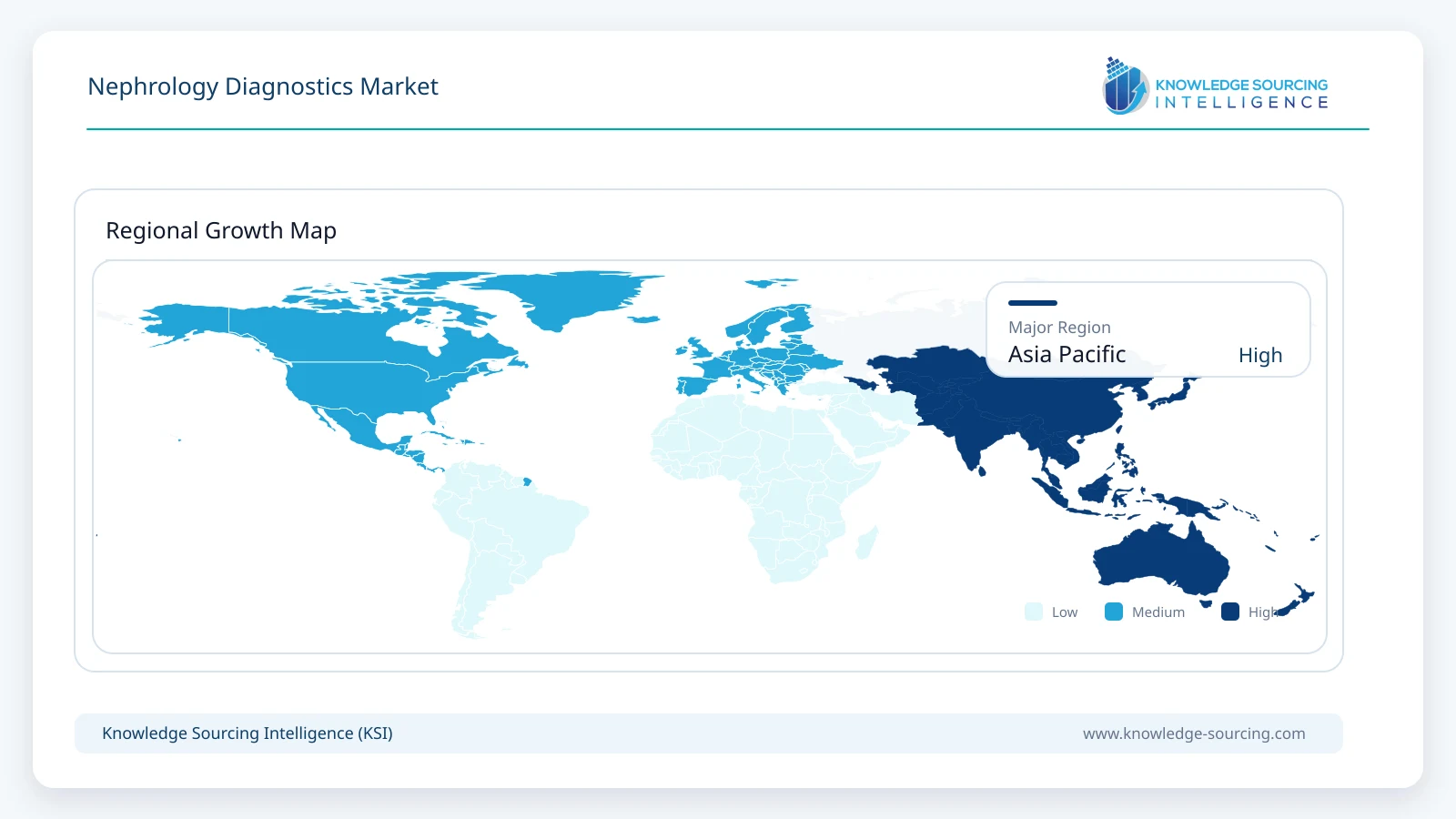
North America represents one of the most mature markets for nephrology diagnostics because the region combines a high prevalence of chronic kidney disease with advanced clinical laboratory infrastructure and well-established screening practices. Diabetes, hypertension, obesity, and an aging population continue driving routine renal function assessment across primary care, specialty nephrology clinics, and hospital networks. Healthcare providers are increasingly incorporating cystatin C testing and risk-based CKD stratification into clinical practice as guideline recommendations continue evolving toward earlier disease identification. Large integrated laboratory networks support high-volume biochemical testing, allowing diagnostic manufacturers to commercialize automated analyzers and standardized assay portfolios with broad clinical adoption. Regulatory oversight from the U.S. Food and Drug Administration (FDA) maintains rigorous quality requirements for in vitro diagnostic devices, strengthening confidence in standardized laboratory testing. Academic medical centers are validating novel kidney injury biomarkers that complement conventional serum creatinine and eGFR measurements because earlier detection improves therapeutic decision-making. Public awareness initiatives led by nephrology organizations continue encouraging kidney disease screening among high-risk populations, increasing outpatient diagnostic volumes.
Europe Market Analysis
Europe maintains a strong demand environment for nephrology diagnostics because harmonized clinical guidelines emphasize standardized kidney disease detection and long-term patient monitoring. Aging demographics, increasing diabetes prevalence, and cardiovascular disease continue expanding the population requiring periodic renal assessment across both primary and specialty care settings. Healthcare providers are adopting automated laboratory platforms as national health systems continue investing in diagnostic efficiency and standardized biochemical testing. The implementation of the In Vitro Diagnostic Regulation (IVDR) is increasing regulatory requirements for diagnostic manufacturers, encouraging stronger clinical evidence generation while improving product quality and analytical performance. Clinical laboratories are strengthening quality management systems to comply with evolving regulatory expectations, supporting greater confidence in nephrology testing across the region. Academic collaborations and multicenter validation studies continue advancing emerging kidney biomarkers that improve early disease identification beyond traditional creatinine-based measurements. National kidney disease prevention initiatives are increasing awareness of CKD screening among high-risk individuals, resulting in higher utilization of urine albumin, serum creatinine, and eGFR testing.
Asia Pacific Market Analysis
Asia Pacific represents the fastest-evolving regional market because rapid urbanization, increasing diabetes incidence, hypertension, and expanding healthcare access are significantly increasing the demand for kidney disease diagnostics. Large populations in China, India, Japan, South Korea, and Southeast Asia continue generating substantial testing volumes as governments strengthen chronic disease management programs. Healthcare infrastructure is expanding across both metropolitan and secondary cities, allowing hospitals and diagnostic laboratories to deploy automated chemistry analyzers capable of supporting high-throughput nephrology testing. Rising healthcare expenditure encourages greater investment in laboratory modernization, while national screening initiatives are promoting earlier diagnosis of chronic kidney disease among high-risk populations. Regional manufacturers are expanding their diagnostic portfolios alongside multinational companies, increasing competition in routine clinical chemistry and specialized biomarker assays. Medical centers are participating in international clinical validation studies evaluating novel kidney injury biomarkers because early diagnosis remains essential for reducing disease progression and healthcare costs. Growing adoption of laboratory information systems and digital analytics is improving workflow efficiency across centralized diagnostic laboratories.
Rest of the World
The Rest of the World market continues expanding because healthcare systems in Latin America, the Middle East, and Africa are recognizing chronic kidney disease as an increasing public health challenge. Diabetes, hypertension, infectious diseases, and limited early diagnosis contribute to rising kidney disease burdens across many developing healthcare systems. Governments are strengthening laboratory capacity through investments in hospital infrastructure, national diagnostic programs, and public health initiatives designed to improve access to essential clinical testing. International healthcare organizations continue supporting kidney disease awareness campaigns, encouraging earlier diagnosis among vulnerable populations. Diagnostic manufacturers are expanding regional distribution partnerships because laboratory modernization is increasing demand for automated chemistry analyzers and standardized renal function assays. Private diagnostic laboratory chains are also increasing investment in advanced clinical chemistry platforms that improve testing quality while expanding service availability. Resource limitations continue affecting adoption of specialized biomarkers in several lower-income markets, although routine creatinine, eGFR, and urine chemistry testing remain widely utilized.
Regulatory Landscape
Nephrology diagnostics operate within highly regulated in vitro diagnostic (IVD) frameworks because clinical decisions depend directly on analytical accuracy and reproducibility. Regulatory agencies including the U.S. Food and Drug Administration (FDA), the European Commission under the In Vitro Diagnostic Regulation (IVDR), Japan's Pharmaceuticals and Medical Devices Agency (PMDA), and China's National Medical Products Administration (NMPA) require manufacturers to demonstrate analytical validity, clinical performance, quality management compliance, and post-market surveillance before commercialization. These regulatory pathways are encouraging manufacturers to generate stronger clinical evidence for both conventional renal function assays and emerging kidney injury biomarkers.
The transition from the former European IVDD framework to IVDR (EU 2017/746) is increasing clinical evidence requirements for diagnostic manufacturers marketing nephrology assays within Europe. Companies are expanding performance evaluation studies, strengthening technical documentation, and enhancing post-market clinical follow-up because regulatory expectations now emphasize greater transparency and analytical reliability. Similar regulatory developments across Asia-Pacific and North America are promoting harmonized quality standards that improve confidence in laboratory testing while encouraging continuous product innovation.
Regulatory organizations are also supporting greater standardization of creatinine measurement, eGFR reporting, and laboratory quality assurance because consistent analytical performance improves patient outcomes across healthcare systems. This evolving regulatory environment continues favoring manufacturers with strong quality systems, established clinical evidence, and global regulatory expertise, creating competitive advantages for leading nephrology diagnostics companies.
Diagnostic Assay & Biomarker Pipeline Analysis
The nephrology diagnostics pipeline is increasingly focusing on biomarkers capable of identifying kidney injury before significant reductions in glomerular filtration become clinically apparent. Conventional renal function markers remain essential for disease staging; however, research institutions and diagnostic developers are validating biomarkers including NGAL (Neutrophil Gelatinase-Associated Lipocalin), KIM-1 (Kidney Injury Molecule-1), TIMP-2, IGFBP7, DKK3 (Dickkopf-related protein 3), suPAR (Soluble Urokinase Plasminogen Activator Receptor), and urinary proteomic signatures because they provide earlier biological evidence of tubular injury or disease progression. Clinical validation programs continue evaluating these biomarkers across chronic kidney disease, acute kidney injury, diabetic nephropathy, and transplant monitoring.
The scientific rationale for these biomarkers differs from conventional functional markers because many directly reflect tubular cell injury, inflammation, fibrosis, or cellular stress rather than delayed reductions in filtration capacity. Healthcare providers are evaluating multi-biomarker strategies that combine traditional chemistry assays with injury-specific biomarkers to improve diagnostic sensitivity and patient risk stratification. Several academic consortia and industry collaborations continue conducting multicenter validation studies to establish standardized clinical cutoffs, analytical reproducibility, and real-world clinical utility before broader guideline adoption.
Diagnostic manufacturers are aligning commercialization strategies with evolving clinical evidence by integrating novel biomarker assays into existing automated laboratory platforms instead of requiring entirely new instrumentation. This approach reduces implementation barriers for clinical laboratories while supporting gradual adoption of precision nephrology diagnostics. As regulatory evidence continues expanding, the nephrology diagnostics pipeline is expected to evolve toward multiplex biomarker panels, AI-assisted interpretation, and longitudinal risk prediction models that complement routine serum creatinine and eGFR testing.
Reimbursement Landscape
Reimbursement for nephrology diagnostics primarily supports established laboratory tests such as serum creatinine, blood urea nitrogen (BUN), urine albumin, urine protein assessment, and estimated glomerular filtration rate because these investigations are incorporated into routine clinical practice guidelines across major healthcare systems. Public and private healthcare payers generally recognize these tests as essential components of chronic kidney disease diagnosis, diabetes management, hypertension monitoring, and medication safety evaluation. Consequently, hospitals and diagnostic laboratories continue maintaining high testing volumes supported by established reimbursement pathways.
Coverage for emerging kidney injury biomarkers remains more variable because healthcare payers often require additional evidence demonstrating improved clinical outcomes and cost-effectiveness before expanding reimbursement policies. Diagnostic manufacturers and academic investigators are generating health economic evidence alongside clinical validation studies to demonstrate reductions in hospitalization, delayed disease progression, and improved patient management associated with earlier kidney injury detection. As this body of evidence continues growing, reimbursement policies are expected to gradually expand for advanced nephrology biomarker assays, particularly within high-risk patient populations requiring intensive monitoring.
Competitive Landscape
F. Hoffmann-La Roche Ltd.
Roche is strategically distinct through its combination of clinical diagnostics expertise, automated laboratory systems, and broad assay portfolio supporting disease monitoring across healthcare settings. The company is strengthening nephrology diagnostics through its clinical chemistry and immunodiagnostics platforms, which support measurements including serum creatinine, cystatin C, and related renal biomarkers used in kidney function assessment.
Abbott Laboratories
Abbott is strategically distinct through its global diagnostics presence, point-of-care capabilities, and ability to address both centralized laboratory and decentralized testing environments. The company supports nephrology diagnostics through clinical chemistry systems and diagnostic solutions that enable measurement of renal function indicators used in routine patient evaluation.
Siemens Healthineers AG
Siemens Healthineers is strategically distinct through its large installed base of laboratory automation systems, diagnostic analyzers, and digital healthcare technologies. The company supports nephrology diagnostics through integrated clinical chemistry platforms that enable high-volume testing of renal biomarkers including creatinine and related biochemical parameters.
Danaher Corporation
Danaher is strategically distinct through its diversified life sciences and diagnostics ecosystem, including laboratory technologies, clinical diagnostics platforms, and scientific innovation capabilities. Through its diagnostics businesses, the company supports renal testing workflows by providing laboratory instruments, reagents, and analytical solutions used across healthcare environments.
Fresenius SE & Co. KGaA
Fresenius is strategically distinct because of its integrated position across renal care services, dialysis management, medical products, and healthcare delivery. Unlike pure diagnostics-focused companies, Fresenius benefits from direct exposure to patients requiring long-term kidney disease management, creating strong clinical insight into renal care requirements.
Baxter International Inc.
Baxter is strategically distinct through its longstanding presence in renal care, dialysis technologies, and products supporting patients with kidney failure. The company’s renal care portfolio provides direct exposure to clinical challenges associated with advanced kidney disease management. Baxter’s expertise in dialysis and chronic renal therapies creates opportunities for integrating diagnostic insights into treatment monitoring pathways.
Key Developments
August 2026: Otsuka reported that VOYXACT (sibeprenlimab-szsi) stabilized kidney function decline in adults with primary IgA nephropathy over two years. The Phase 3 VISIONARY data showed a marked improvement in annualized eGFR slope versus placebo, supporting the drug’s disease-modifying profile.
May 2026: Renalytix and Carna Health announced a partnership to combine kidneyintelX.dkd with an AI-driven care platform for CKD screening and intervention. The goal is to bridge the gap between population screening and precision care for patients at risk of chronic kidney disease progression.
October 2025: Roche, in collaboration with KlinRisk, received CE Mark for an AI-based risk stratification tool that assesses progressive decline in kidney function. The algorithm is intended to help clinicians identify patients at risk of worsening renal function earlier.
Strategic Insights and Future Market Outlook
The Nephrology Diagnostics Market is transitioning from conventional renal function assessment toward predictive and precision-based diagnostic models because healthcare providers are increasingly prioritizing early identification of kidney injury rather than relying only on functional decline indicators. Serum creatinine, blood urea nitrogen, and eGFR continue supporting routine kidney disease evaluation, but limitations in detecting early biological damage are encouraging adoption of advanced biomarkers such as NGAL, KIM-1, TIMP-2, IGFBP7, cystatin C, and urinary protein signatures. Diagnostic developers are strengthening research collaborations and clinical validation programs because successful biomarker integration can improve patient risk stratification and support earlier clinical intervention.
Diagnostic companies are increasingly competing through integrated solutions that combine analytical instruments, reagents, software platforms, and laboratory automation capabilities. Healthcare laboratories are requiring scalable diagnostic ecosystems because rising chronic kidney disease prevalence is increasing testing volumes while operational constraints are limiting manual workflows. Companies with established installed laboratory networks, regulatory expertise, and strong assay development capabilities are maintaining competitive advantages because they can introduce innovations without requiring significant infrastructure changes across healthcare facilities.
The future direction of the market is being influenced by the convergence of diagnostics, digital health, and artificial intelligence-based analytics. Healthcare providers are adopting connected laboratory platforms because longitudinal kidney health monitoring requires integration of laboratory results, patient history, and clinical risk factors. Diagnostic manufacturers are developing data-driven solutions because predictive analytics can improve disease progression assessment, optimize resource allocation, and support personalized nephrology pathways. The expansion of value-based healthcare models is further increasing demand for diagnostic technologies that demonstrate measurable improvements in patient outcomes and healthcare efficiency.
Regulatory and reimbursement environments will continue determining the pace of advanced nephrology diagnostic adoption because emerging biomarkers require strong evidence of analytical validity, clinical utility, and economic benefit. Manufacturers are expanding clinical studies and health-economic evaluations because payers and healthcare systems are increasingly requiring proof that new diagnostic approaches reduce complications, hospitalization rates, or long-term treatment costs. Companies capable of aligning innovation with regulatory compliance and reimbursement strategies are expected to achieve stronger market positioning.
The Nephrology Diagnostics Market is expected to evolve toward a hybrid diagnostic framework where conventional kidney function tests remain essential while advanced biomarkers, automation, and digital analytics provide deeper clinical insights. Increasing disease burden, expanding screening initiatives, technological innovation, and demand for personalized disease management are collectively reshaping diagnostic strategies. The companies that successfully integrate scientific validation, scalable commercialization, and healthcare workflow optimization are positioned to influence the next phase of nephrology diagnostics development.
Nephrology Diagnostics Market Scope:
| Report Metric | Details |
|---|---|
| Total Market Size in 2026 | USD 15.12 billion |
| Total Market Size in 2035 | USD 27.82 billion |
| Forecast Unit | Billion |
| Growth Rate | 7.0% |
| Study Period | 2021 to 2035 |
| Historical Data | 2021 to 2024 |
| Base Year | 2025 |
| Forecast Period | 2026 – 2035 |
| Segmentation | Product Type, Diagnostic Test, Technology, Biomarker, Disease Indication, Sample Type, End User, Geography |
| Companies |
|
Table of Contents
1. EXECUTIVE SUMMARY
1.1 Market Snapshot
1.2 Key Findings
1.3 Analyst Insights
1.4 Strategic Recommendations
2. RESEARCH METHODOLOGY
2.1 Research Design
2.2 Data Collection Methodology
2.3 Market Size Estimation
2.4 Forecasting Model
2.5 Assumptions & Limitations
3. GLOBAL NEPHROLOGY DIAGNOSTICS MARKET OVERVIEW, SIZE & FORECAST
3.1 Market Definition & Scope
3.2 Kidney Disease Overview
3.3 Industry Evolution
3.4 Key Market Trends
3.5 Historical Market Size Analysis (2021–2025)
3.6 Market Forecast (2026–2035)
3.7 Disease Classification
3.8 Disease Burden & Unmet Clinical Needs
3.9 Epidemiology & Prevalence Analysis
3.9.1 Chronic Kidney Disease (CKD) Prevalence
3.9.2 Acute Kidney Injury (AKI) Incidence
3.9.3 End-Stage Kidney Disease (ESKD) Population
3.9.4 Diagnosed Patient Population
3.10 Diagnostic Testing Volume Analysis
3.11 Patient Journey Analysis
3.12 Current Diagnostic & Clinical Management Landscape
4. MARKET DYNAMICS
4.1 Market Drivers
4.2 Market Restraints
4.3 Market Opportunities
4.4 Market Challenges
5. INDUSTRY LANDSCAPE
5.1 Industry Value Chain Analysis
5.2 Pricing Analysis
5.3 Reimbursement Landscape
6. INNOVATION LANDSCAPE
6.1 Emerging Diagnostic Technologies
6.2 Biomarker Innovation Landscape
6.3 Molecular & Genomic Diagnostics
6.4 Artificial Intelligence & Digital Pathology Integration
6.5 Point-of-Care Testing Innovation
6.6 Pipeline Analysis for Emerging Nephrology Diagnostics
6.7 Clinical Trial Analysis
6.8 Technology Roadmap
7. REGULATORY LANDSCAPE
7.1 Regulatory Framework
7.2 Approval Pathways
7.3 Compliance Requirements
8. GLOBAL NEPHROLOGY DIAGNOSTICS MARKET LANDSCAPE ANALYSIS
8.1 Analysis by Technology
8.2 Analysis by Diagnostic Test Type
8.3 Analysis by Biomarker
8.4 Analysis by Sample Type
8.5 Analysis by Clinical Application
8.6 Analysis by Testing Methodology
9. GLOBAL NEPHROLOGY DIAGNOSTICS MARKET SEGMENT ANALYSIS (2021–2035)
9.1 By Product Type
9.1.1 Instruments
9.1.2 Reagents & Assay Kits
9.1.3 Consumables
9.1.4 Software & Analytics
9.2 By Diagnostic Test
9.2.1 Serum Creatinine Testing
9.2.2 Estimated Glomerular Filtration Rate (eGFR)
9.2.3 Blood Urea Nitrogen (BUN)
9.2.4 Urine Acid Test
9.2.5 Cystatin C Testing
9.2.6 Others
9.3 By Technology
9.3.1 Clinical Chemistry
9.3.2 Immunoassays
9.3.3 Polymerase Chain Reaction (PCR)
9.3.4 Next-Generation Sequencing
9.3.5 Others
9.4 By Biomarker
9.4.1 Creatinine
9.4.2 Cystatin C
9.4.3 Albumin
9.4.4 Neutrophil Gelatinase-Associated Lipocalin (NGAL)
9.4.5 Others
9.5 By Disease Indication
9.5.1 Chronic Kidney Disease
9.5.2 Acute Kidney Injury
9.5.3 Diabetic Nephropathy
9.5.4 Glomerular Diseases
9.5.5 Others
9.6 By Sample Type
9.6.1 Blood
9.6.2 Urine
9.6.3 Kidney Tissue
9.6.4 Others
9.7 By End User
9.7.1 Hospitals
9.7.2 Diagnostic Laboratories
9.7.3 Specialty Nephrology Clinics
9.7.4 Others
10. GLOBAL NEPHROLOGY DIAGNOSTICS MARKET GEOGRAPHICAL ANALYSIS (2021–2035)
10.1 North America
10.2 Europe
10.3 Asia-Pacific
10.4 South America
10.5 Middle East & Africa
11. GLOBAL NEPHROLOGY DIAGNOSTICS MARKET COUNTRY ANALYSIS (2021–2035)
11.1 United States
11.2 Canada
11.3 Germany
11.4 United Kingdom
11.5 France
11.6 Italy
11.7 Spain
11.8 Japan
11.9 China
11.10 India
11.11 South Korea
11.12 Australia
11.13 Brazil
11.14 Mexico
11.15 Saudi Arabia
11.16 South Africa
12. COMPETITIVE LANDSCAPE
12.1 Market Share Analysis
12.2 Strategic Developments
12.3 Mergers & Acquisitions, Partnerships & Collaborations
12.4 Product Launches
13. COMPANY PROFILES
13.1 F. Hoffmann-La Roche Ltd.
13.1.1 Company Overview
13.1.2 Financials
13.1.3 Product Portfolio
13.1.4 Recent Developments
13.2 Abbott Laboratories
13.3 Siemens Healthineers AG
13.4 Danaher Corporation
13.5 Fresenius SE & Co. KGaA
13.6 Baxter International Inc
13.7 Nipro Corporation
13.8 Sysmex Corporation
13.9 Medtronic plc
13.10 Siemens Healthcare Private Limited
14. GLOBAL NEPHROLOGY DIAGNOSTICS MARKET COMMERCIAL FORECAST ANALYSIS
14.1 Clinical Chemistry Diagnostics
14.2 Urinalysis Diagnostics
14.3 Kidney Injury Biomarker Diagnostics
14.4 Molecular & Genetic Kidney Diagnostics
14.5 Kidney Biopsy Diagnostics
14.6 Diagnostic Imaging for Kidney Disorders
14.7 Point-of-Care Kidney Diagnostics
15. INVESTMENT & FUNDING ANALYSIS
15.1 Venture Capital Trends
15.2 Government Funding
15.3 R&D Investments
16. FUTURE OUTLOOK
16.1 Key Growth Opportunities
16.2 Future Industry Trends
Navigate
Trusted by the world's leading organizations











