
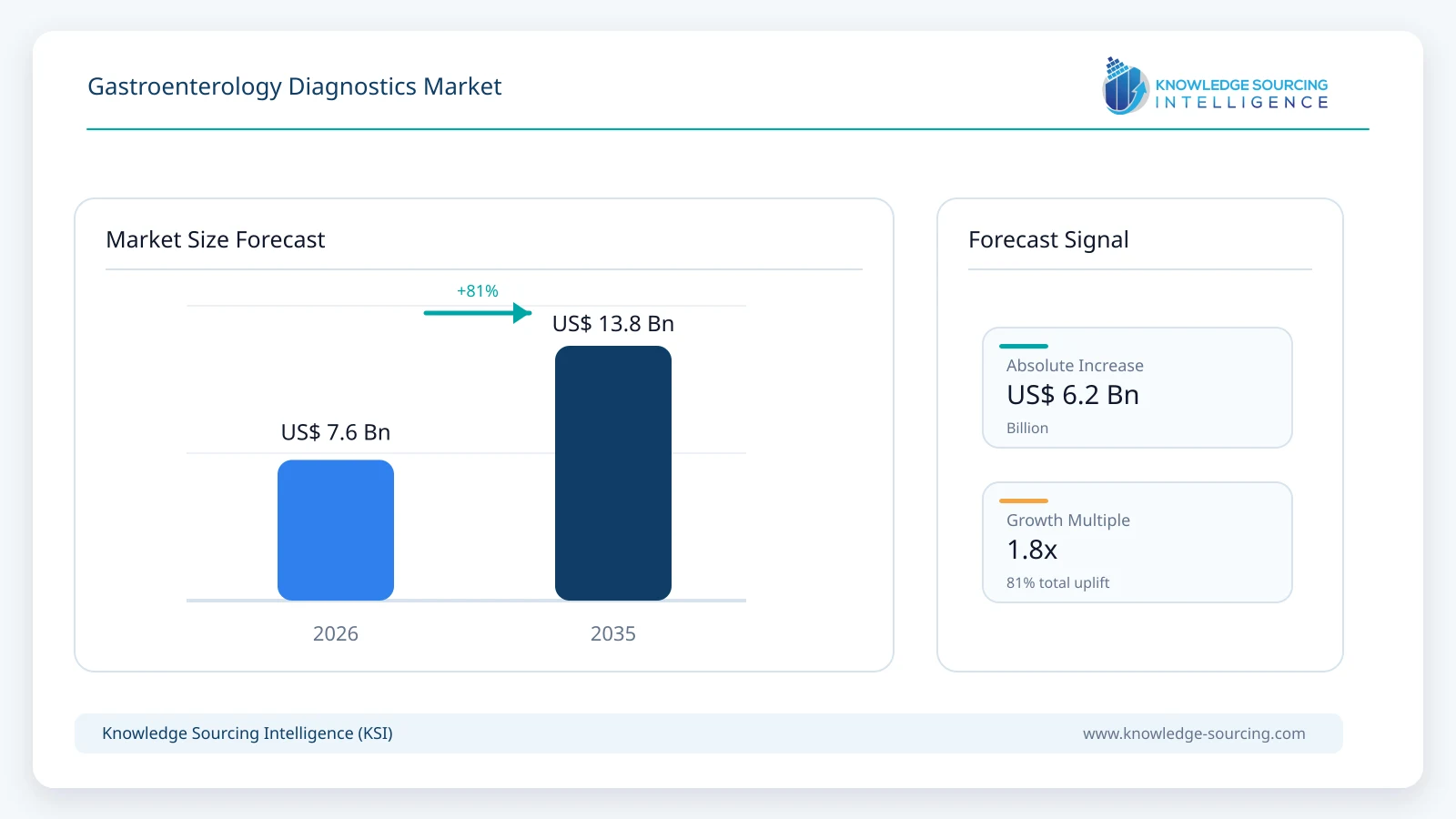
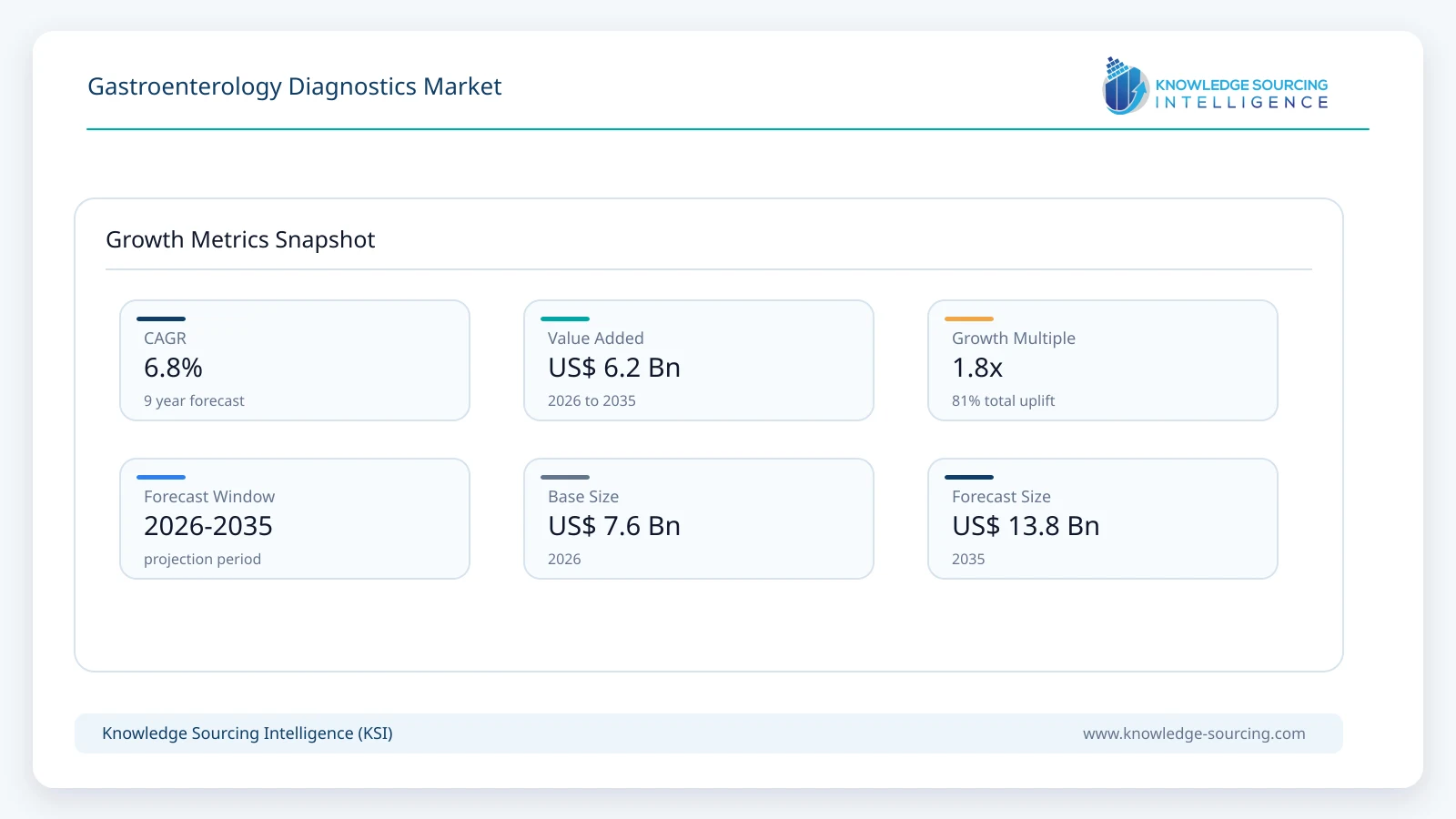
The Gastroenterology Diagnostics Market is forecast to grow at a CAGR of 6.8%, reaching USD 13.78 billion in 2035 from USD 7.61 billion in 2026.
Highlights:
- 1Growing incidence of inflammatory bowel disease and chronic liver disorders is expanding utilization of laboratory and molecular diagnostics because clinicians require earlier disease characterization and continuous monitoring.
- 2Artificial intelligence integration is improving diagnostic consistency by assisting physicians in identifying subtle gastrointestinal abnormalities during endoscopic procedures, thereby increasing adoption of digital imaging platforms.
- 3Disposable endoscopic accessories are gaining demand because infection prevention requirements are encouraging healthcare facilities to minimize cross-contamination risks.
- 4Precision medicine initiatives are increasing dependence on molecular biomarkers because treatment selection increasingly requires accurate disease stratification and biomarker-based clinical decision making.
The Gastroenterology Diagnostics Market provides technologies that enable the detection, confirmation, staging, and monitoring of gastrointestinal diseases through imaging, laboratory diagnostics, molecular analysis, and digital interpretation systems. The market supports clinical management of inflammatory bowel diseases, gastrointestinal cancers, liver disorders, pancreatic diseases, infectious gastrointestinal conditions, and functional digestive disorders. Diagnostic workflows increasingly combine endoscopy with pathology, biomarker assessment, and artificial intelligence to improve diagnostic precision while shortening clinical decision timelines.
Disease prevalence continues to influence diagnostic demand because colorectal cancer, chronic liver disease, inflammatory bowel disease, and gastrointestinal infections impose significant healthcare burdens across developed and emerging economies. Screening initiatives, aging populations, dietary changes, obesity, and metabolic disorders are increasing the volume of patients requiring diagnostic evaluation. Healthcare providers therefore prioritize technologies that improve lesion detection rates, reduce procedure variability, and support earlier therapeutic intervention.
Regulatory authorities continue expanding organized screening recommendations for colorectal cancer and strengthening quality requirements for diagnostic procedures, which increases adoption of validated instruments and standardized laboratory methods. Companies are investing in digital endoscopy, disposable accessories, molecular biomarkers, and AI-assisted diagnostic platforms because healthcare systems increasingly measure diagnostic performance through accuracy, workflow efficiency, and clinical outcomes. The market consequently remains strategically important for reducing disease burden, improving survival rates in gastrointestinal cancers, and supporting precision medicine across gastroenterology practice.
Market Dynamics
Market Drivers
Expansion of Colorectal Cancer Screening Programs: Artificial Intelligence Integration in Endoscopic Diagnostics: Artificial intelligence improves lesion recognition by assisting physicians during real-time endoscopic examinations. Healthcare providers are adopting AI-enabled imaging because diagnostic consistency directly influences clinical outcomes and procedure quality metrics. Technology developers are expanding software capabilities to identify polyps, characterize lesions, and reduce missed abnormalities, which increases demand for integrated hardware and digital analytics platforms.
Increasing Burden of Chronic Gastrointestinal and Liver Diseases: Inflammatory bowel disease, non-alcoholic fatty liver disease, chronic hepatitis, and pancreatic disorders require repeated diagnostic assessment throughout disease progression. Demand is increasing for laboratory diagnostics, biomarker testing, and advanced imaging because clinicians require objective evidence for treatment planning and long-term monitoring. Manufacturers therefore continue expanding diagnostic portfolios that support disease stratification and therapy optimization.
Growing Adoption of Infection Prevention Measures in Endoscopy: Healthcare facilities prioritize infection control because reusable endoscopic equipment requires stringent reprocessing protocols. Demand is shifting toward disposable components and enhanced sterilization-compatible instruments as hospitals seek to reduce procedure-associated infection risks. Manufacturers are introducing single-use technologies and redesigned accessories, which support recurring revenue opportunities while improving patient safety.
Market Restraints
High acquisition and maintenance costs of advanced endoscopic imaging systems restrict adoption among resource-constrained healthcare facilities.
Limited availability of experienced gastroenterologists and trained endoscopy professionals reduces utilization of sophisticated diagnostic technologies in several developing healthcare systems.
Complex regulatory approval requirements and reimbursement variability delay commercialization of innovative molecular and AI-enabled diagnostic platforms.
Market Opportunities
Expansion of AI-Enabled Gastrointestinal Diagnostic Platforms: Artificial intelligence is becoming an integral component of gastroenterology diagnostics because healthcare providers increasingly measure procedural quality through lesion detection accuracy and workflow efficiency. Demand is shifting toward software that supports real-time identification, characterization, and documentation of gastrointestinal abnormalities during endoscopic examinations. Clinical variability continues to challenge diagnostic consistency across healthcare settings, which encourages hospitals to procure validated AI-assisted platforms that standardize interpretation and reduce missed lesions. Technology developers are expanding collaborations with hospitals and academic centers to validate machine learning algorithms across broader patient populations. This transition strengthens recurring demand for integrated software, cloud-based analytics, and interoperable digital ecosystems that complement advanced endoscopic equipment.
Rising Adoption of Molecular and Biomarker-Based Diagnostics: Precision medicine increases dependence on molecular diagnostics because clinicians require objective biomarkers for disease classification, therapeutic selection, and recurrence monitoring. Demand is expanding for genetic assays, stool-based molecular tests, and circulating biomarkers as healthcare systems emphasize earlier detection of gastrointestinal malignancies and chronic inflammatory diseases. Conventional diagnostic pathways often require multiple investigations before confirming disease subtype, which prolongs treatment initiation. Diagnostic developers are introducing multiplex molecular platforms capable of evaluating multiple biomarkers from a single specimen, thereby improving laboratory efficiency. This evolution positions molecular diagnostics as a strategic growth opportunity across tertiary hospitals, reference laboratories, and cancer centers.
Digital Integration Across Gastroenterology Workflows: Healthcare organizations prioritize connected diagnostic environments because fragmented clinical information limits efficient patient management. Demand is increasing for software and informatics platforms that integrate endoscopic imaging, pathology, laboratory findings, and electronic health records into unified workflows. Independent diagnostic systems create reporting delays and reduce multidisciplinary collaboration, which affects treatment planning for complex gastrointestinal diseases. Vendors are enhancing interoperability, cloud connectivity, and automated reporting capabilities to simplify information exchange across departments. Integrated digital ecosystems consequently improve diagnostic efficiency while supporting long-term investments in enterprise gastroenterology platforms.
Growth of Preventive Gastrointestinal Screening Programs: National screening initiatives increase demand for scalable diagnostic infrastructure because larger populations require standardized evaluation pathways. Screening eligibility continues expanding in several countries as health authorities recognize the benefits of earlier colorectal cancer detection. Healthcare providers therefore require higher procedural capacity without compromising diagnostic quality. Manufacturers are introducing efficient imaging platforms, disposable accessories, and workflow automation technologies that improve procedural throughput. Organized screening programs consequently create sustained opportunities for diagnostic equipment suppliers, laboratory service providers, and software developers.
Disease & Epidemiology Analysis
Gastrointestinal diseases represent one of the largest contributors to global healthcare utilization because digestive disorders affect populations across every age group. Colorectal cancer, gastric cancer, pancreatic cancer, inflammatory bowel disease, chronic liver disease, and gastrointestinal infections collectively generate substantial diagnostic demand through screening, disease confirmation, therapeutic monitoring, and recurrence surveillance. Population aging, dietary transitions, obesity, alcohol consumption, viral hepatitis, and sedentary lifestyles continue increasing the number of individuals requiring diagnostic evaluation.
Colorectal cancer remains a major focus for gastroenterology diagnostics because organized screening programs consistently improve survival through earlier disease identification. Healthcare systems are expanding stool-based screening, colonoscopy referrals, and advanced imaging technologies as clinical guidelines increasingly emphasize preventive diagnosis before symptom onset. Similar demand patterns are emerging for inflammatory bowel disease, where long-term disease monitoring requires repeated laboratory testing, biomarker assessment, and endoscopic evaluation to guide treatment decisions.
Chronic liver diseases are increasing diagnostic complexity because metabolic dysfunction-associated steatotic liver disease (MASLD), viral hepatitis, cirrhosis, and hepatocellular carcinoma frequently require multimodal assessment. Clinicians increasingly combine laboratory biomarkers, imaging modalities, and endoscopic procedures to evaluate disease severity and complications. This integrated diagnostic approach strengthens demand for comprehensive gastroenterology diagnostic platforms capable of supporting continuous patient monitoring.
Treatment Guidelines Landscape
Organization | Disease Area | Current Guideline Direction | Impact on Diagnostic Demand |
American College of Gastroenterology (ACG) | Colorectal Cancer Screening | Recommends routine screening for average-risk adults beginning at age 45 using colonoscopy or validated stool-based tests. | Expands demand for endoscopy systems and laboratory diagnostics. |
U.S. Preventive Services Task Force (USPSTF) | Colorectal Cancer | Recommends screening for adults aged 45–75 years using multiple evidence-based approaches. | Supports sustained utilization of diagnostic technologies across healthcare systems. |
European Society of Gastrointestinal Endoscopy (ESGE) | Gastrointestinal Endoscopy | Promotes high-quality endoscopic procedures with emphasis on adenoma detection and standardized quality indicators. | Encourages adoption of high-definition imaging and AI-assisted endoscopy. |
American Gastroenterological Association (AGA) | Inflammatory Bowel Disease | Recommends biomarker monitoring together with endoscopic assessment for disease management. | Increases utilization of laboratory biomarkers and follow-up endoscopy. |
Market Segmentation
By Product Type
Diagnostic instruments account for the largest share of the Gastroenterology Diagnostics Market because endoscopic visualization remains the primary method for identifying gastrointestinal abnormalities. Demand is increasing for high-definition imaging systems, flexible endoscopes, video processors, and AI-enabled visualization platforms as healthcare providers emphasize earlier disease detection and improved procedural quality. Equipment acquisition requires substantial capital investment, which encourages manufacturers to introduce modular platforms with software upgrade capabilities. Hospitals are prioritizing integrated diagnostic systems that improve workflow efficiency while supporting multiple gastrointestinal applications. Instruments therefore remain the technological foundation of modern gastroenterology diagnostics.
By Diagnostic Type
Endoscopy-based diagnostics dominate clinical practice because direct visualization provides definitive assessment of mucosal abnormalities, bleeding sources, inflammatory conditions, and gastrointestinal malignancies. Demand is shifting toward enhanced imaging technologies, virtual chromoendoscopy, magnification imaging, and artificial intelligence-assisted lesion detection as clinicians seek greater diagnostic precision. Conventional white-light imaging presents limitations in detecting subtle lesions, which encourages healthcare providers to adopt advanced visualization systems. Manufacturers continue integrating digital software with imaging platforms to improve procedural consistency and reporting efficiency. Endoscopy consequently remains the central diagnostic modality across gastroenterology care pathways.
By Disease Indication
Gastrointestinal cancers represent one of the fastest-growing diagnostic segments because early diagnosis directly influences treatment outcomes and long-term survival. Demand is increasing for colonoscopy, molecular diagnostics, biomarker testing, and pathology-supported evaluation as organized screening programs expand worldwide. Disease heterogeneity requires multiple complementary diagnostic approaches before treatment selection, which strengthens demand for integrated diagnostic workflows. Healthcare providers are adopting precision diagnostic technologies that improve tumor characterization while supporting personalized treatment planning. Gastrointestinal cancer diagnostics therefore continue driving innovation across imaging, laboratory testing, and molecular analysis.
Regional Analysis
North America Market Analysis
North America represents the most technologically advanced regional market for gastroenterology diagnostics because organized screening programs, favorable healthcare infrastructure, and rapid adoption of digital health technologies sustain consistent diagnostic demand. Colorectal cancer screening remains embedded within preventive healthcare strategies, which creates recurring demand for colonoscopy systems, laboratory diagnostics, and molecular screening tests. Healthcare providers are increasingly integrating artificial intelligence into endoscopic procedures because quality indicators such as adenoma detection rates influence clinical performance and reimbursement. The need to improve procedural efficiency while managing growing patient volumes encourages hospitals to invest in high-definition visualization platforms and workflow automation. Regulatory agencies continue supporting innovation through structured medical device approval pathways, which enables manufacturers to commercialize advanced diagnostic technologies. Academic medical centers and integrated delivery networks are participating in multicenter clinical studies that validate AI-assisted diagnostics and novel biomarkers across diverse patient populations. Aging demographics, increasing obesity prevalence, and the rising incidence of inflammatory bowel disease continue expanding the number of patients requiring diagnostic evaluation. Market participants therefore prioritize software-enabled platforms, disposable endoscopy components, and interoperable diagnostic ecosystems that improve patient outcomes while reducing procedural variability.
Europe Market Analysis
Europe maintains strong demand for gastroenterology diagnostics because population-based colorectal cancer screening programs, harmonized quality standards, and universal healthcare systems encourage early disease detection. National health authorities continue expanding organized screening coverage, which increases utilization of endoscopic imaging, laboratory diagnostics, and pathology services. Healthcare providers are adopting artificial intelligence-assisted endoscopy because standardized quality benchmarks emphasize improved lesion detection and procedural consistency. Resource allocation across public healthcare systems creates pressure to maximize diagnostic efficiency, encouraging investment in digital reporting systems and integrated workflow platforms. Regulatory implementation under the European Union Medical Device Regulation (EU MDR) and In Vitro Diagnostic Regulation (IVDR) continues raising evidence requirements for manufacturers, which strengthens confidence in clinically validated diagnostic technologies while extending commercialization timelines. Research institutions and university hospitals are collaborating with industry partners to evaluate advanced imaging techniques, molecular biomarkers, and digital pathology applications that improve diagnostic accuracy.
Asia Pacific Market Analysis
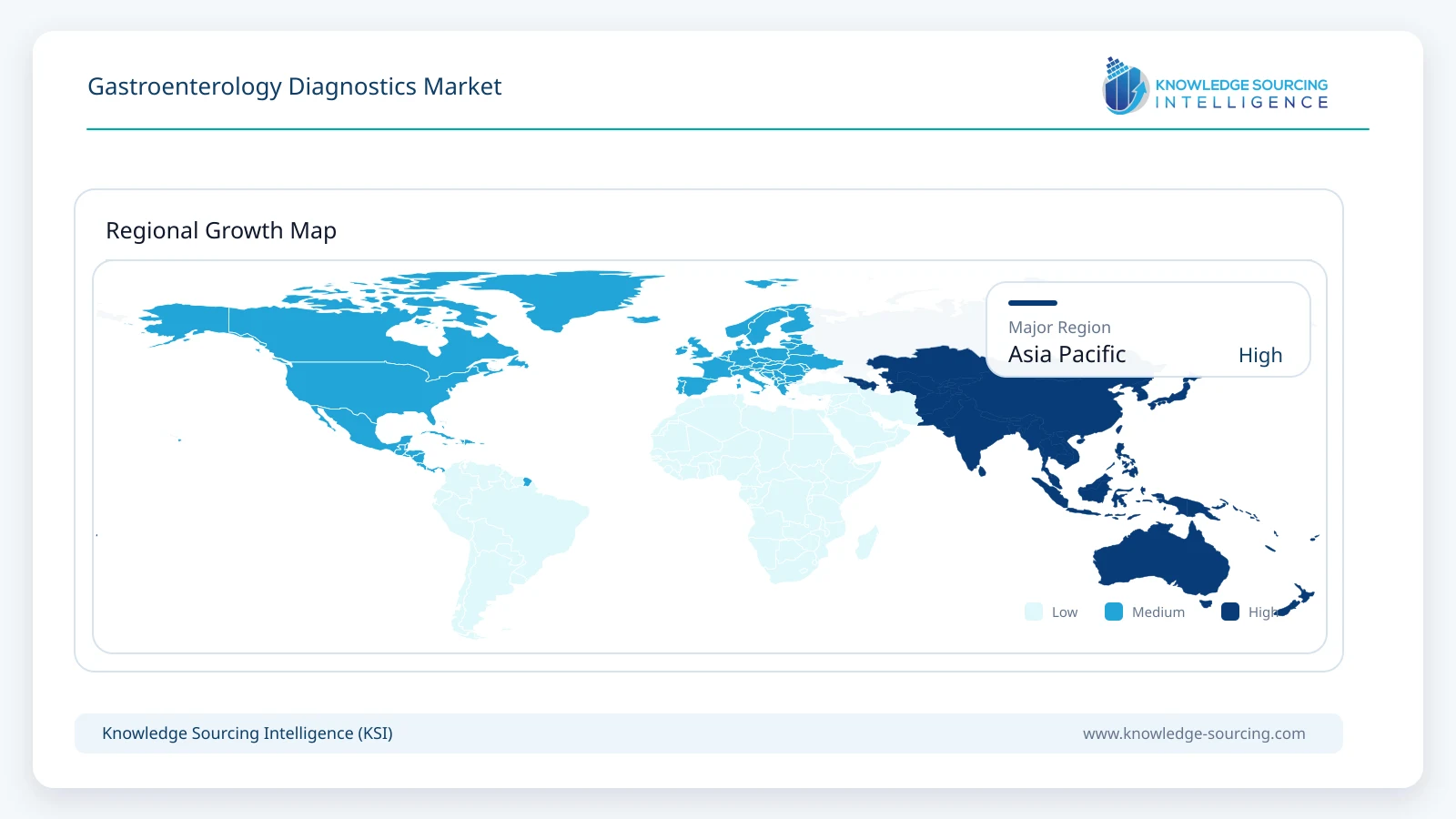
Asia Pacific is experiencing the fastest structural expansion in gastroenterology diagnostics because healthcare infrastructure investment, growing healthcare expenditure, and increasing awareness of preventive screening are improving diagnostic accessibility. Large population bases generate substantial demand for gastrointestinal disease diagnosis, particularly as urbanization, dietary transitions, and aging demographics increase the prevalence of colorectal cancer, liver disease, and metabolic disorders. Governments are strengthening national cancer control strategies, which encourages broader implementation of screening initiatives and investment in hospital diagnostic capacity. Healthcare providers are adopting high-definition endoscopy, molecular diagnostics, and digital workflow platforms as tertiary care centers modernize clinical services. Uneven distribution of specialist expertise continues limiting access in several rural regions, prompting manufacturers to introduce user-friendly technologies that improve procedural efficiency and support physician training. Domestic medical device manufacturers are expanding production capabilities while international companies continue strengthening regional partnerships and distribution networks.
Rest of the World
The Rest of the World region demonstrates gradual expansion in gastroenterology diagnostics because healthcare systems are increasing investment in diagnostic capacity while addressing rising burdens of gastrointestinal diseases. Countries across Latin America, the Middle East, and Africa continue strengthening cancer awareness programs and specialist healthcare services, which increases demand for endoscopic procedures and laboratory diagnostics. Healthcare providers are expanding access to minimally invasive diagnostic technologies because earlier disease identification reduces long-term treatment costs and improves patient outcomes. Budget limitations and shortages of trained gastroenterologists continue constraining widespread adoption of advanced diagnostic systems, encouraging healthcare organizations to prioritize scalable and cost-effective technologies. International collaborations, public health initiatives, and investments in tertiary hospitals are improving access to modern diagnostic infrastructure across several emerging economies. Manufacturers are expanding regional distribution networks while introducing durable and simplified diagnostic platforms that address local operational requirements.
Regulatory Landscape
Regulatory frameworks continue shaping the Gastroenterology Diagnostics Market because diagnostic accuracy, patient safety, and software reliability directly influence clinical decision-making. Regulatory agencies require manufacturers to demonstrate analytical validity, clinical performance, usability, and post-market surveillance before commercializing diagnostic systems. These requirements increase development timelines but strengthen physician confidence in approved technologies. Manufacturers are therefore investing in larger multicenter clinical studies and real-world evidence generation to support product registrations while reducing regulatory uncertainty across major healthcare markets.
In the United States, the U.S. Food and Drug Administration (FDA) regulates gastroenterology diagnostic instruments, endoscopy systems, molecular diagnostics, and software-based medical devices through established pathways including 510(k), De Novo, and Premarket Approval (PMA), depending on product risk classification. Artificial intelligence-enabled diagnostic software is receiving increasing regulatory attention because continuous algorithm performance, cybersecurity, and lifecycle management influence patient safety. The FDA also continues issuing guidance for Software as a Medical Device (SaMD), encouraging manufacturers to establish robust validation and post-market monitoring strategies. This regulatory direction is supporting commercialization of AI-assisted endoscopy platforms while maintaining evidence-based safety standards.
Within Europe, the European Union Medical Device Regulation (EU MDR 2017/745) and the In Vitro Diagnostic Regulation (IVDR 2017/746) continue strengthening clinical evidence requirements for diagnostic manufacturers. Companies are expanding clinical validation programs because notified bodies require comprehensive documentation covering safety, performance, risk management, and post-market clinical follow-up. Similar regulatory modernization is occurring across Asia-Pacific, where authorities in Japan, China, South Korea, and Australia continue aligning portions of their medical device frameworks with international standards while preserving country-specific approval requirements. These evolving regulations are encouraging global manufacturers to harmonize development strategies and prioritize regulatory planning early in product development.
Pipeline Analysis
Innovation within the Gastroenterology Diagnostics Market is increasingly concentrating on artificial intelligence, molecular diagnostics, advanced endoscopic imaging, and digital workflow integration because healthcare providers seek earlier diagnosis with greater procedural consistency. Product developers are expanding clinical validation studies that evaluate computer-assisted detection (CADe), computer-assisted diagnosis (CADx), high-definition imaging technologies, and biomarker-driven diagnostic assays across colorectal cancer, inflammatory bowel disease, Barrett's esophagus, and chronic liver disease. These pipeline activities reflect an industry-wide transition toward precision diagnostics rather than solely improving visualization hardware.
Several manufacturers continue advancing AI-enabled endoscopy platforms that assist physicians during real-time procedures by identifying polyps, characterizing lesions, and improving procedural documentation. Olympus Corporation, FUJIFILM Holdings Corporation, and Ambu A/S continue strengthening digital endoscopy portfolios through software integration, enhanced imaging technologies, and workflow optimization initiatives. Diagnostic developers are also evaluating stool DNA assays, circulating biomarkers, microbiome-based diagnostics, and multiplex molecular testing to reduce dependence on invasive procedures for selected patient populations. Academic collaborations remain central to validating these technologies across multicenter clinical studies before wider commercialization.
Reimbursement Landscape
Reimbursement policies significantly influence adoption of gastroenterology diagnostics because healthcare providers frequently base technology investments on long-term procedural sustainability rather than equipment capability alone. Public and private payers generally reimburse established diagnostic procedures such as colonoscopy, upper gastrointestinal endoscopy, biopsy analysis, and laboratory testing when supported by recognized clinical guidelines. Organized colorectal cancer screening programs continue strengthening reimbursement stability because preventive diagnosis reduces downstream treatment costs associated with advanced-stage disease. Consequently, hospitals remain more willing to invest in technologies that improve procedural quality while maintaining reimbursement eligibility.
Coverage for newer technologies, including artificial intelligence-assisted endoscopy and advanced molecular diagnostics, continues evolving as additional clinical evidence demonstrates improvements in diagnostic accuracy, workflow efficiency, and patient outcomes. Manufacturers are increasingly generating health-economic evidence alongside clinical validation because reimbursement authorities evaluate both clinical benefit and cost-effectiveness before expanding coverage decisions. This trend is encouraging companies to incorporate real-world evidence generation into commercialization strategies while supporting broader adoption of innovative gastroenterology diagnostic technologies.
Competitive Landscape
Olympus Corporation
Olympus Corporation remains strategically distinct because it has established one of the world's most comprehensive gastrointestinal endoscopy portfolios supported by continuous innovation in optical imaging and digital visualization technologies. The company continues strengthening its leadership through the EVIS X1 platform, which combines high-definition imaging with advanced visualization technologies designed to improve lesion detection and characterization during gastrointestinal procedures.
Boston Scientific Corporation
Boston Scientific Corporation differentiates itself by combining advanced endoscopic technologies with minimally invasive procedural solutions that support both diagnosis and intervention. The company continues expanding its gastroenterology portfolio because physicians increasingly prefer integrated platforms capable of improving procedural efficiency while reducing patient recovery time.
FUJIFILM Holdings Corporation
FUJIFILM Holdings Corporation maintains a strong competitive position through continuous advancement of image-enhanced endoscopy technologies and digital diagnostic solutions. The company's ELUXEO endoscopy platform incorporates advanced imaging capabilities that improve visualization of subtle gastrointestinal abnormalities and support earlier disease detection.
Ambu A/S
Ambu A/S distinguishes itself through its leadership in single-use endoscopy solutions that address growing infection prevention requirements within healthcare facilities. The company continues expanding its disposable gastrointestinal endoscope portfolio because hospitals increasingly seek technologies that eliminate reprocessing complexity while improving procedural availability.
Becton, Dickinson and Company
Becton, Dickinson and Company strengthens its market position by combining laboratory diagnostics, specimen management, and automation technologies that complement gastrointestinal disease diagnosis. The company continues enhancing laboratory efficiency because healthcare systems increasingly require faster and more standardized diagnostic workflows.
Johnson & Johnson
Johnson & Johnson maintains strategic relevance through continued investment in minimally invasive technologies, digital surgery, and advanced medical technology platforms that support gastrointestinal care pathways. The company continues integrating digital innovation with procedural technologies because healthcare providers increasingly seek connected solutions that improve clinical efficiency and patient outcomes.
Key Developments
August 2026: CapsoVision launched AI Highlights for the CapsoCam Plus system in international markets, including the European Union. The feature uses AI to flag frames with suspected clinically relevant findings during capsule endoscopy review, helping physicians work faster and more consistently.
January 2026: Cepheid received FDA clearance for Xpert GI Panel, a multiplex PCR assay that detects 11 gastrointestinal pathogens from stool. The test is designed to deliver faster syndromic GI pathogen results and support clinical decision-making.
July 2025: FUJIFILM India unveiled ENDOVEDA at Endocon 2025 as a digital endoscopy reporting platform developed in India. The system is designed to improve documentation, streamline workflows, and integrate with hospital systems such as PACS and HIS.
Strategic Insights and Future Market Outlook
The Gastroenterology Diagnostics Market is entering a period in which diagnostic accuracy is becoming increasingly dependent on digital intelligence rather than improvements in visualization alone. Artificial intelligence, molecular biomarkers, and integrated informatics are transforming conventional diagnostic pathways because clinicians require earlier disease detection, standardized interpretation, and faster clinical decision-making. Manufacturers are consequently investing in software-enabled ecosystems that combine imaging, laboratory diagnostics, pathology, and patient data into unified diagnostic platforms. This transition is strengthening recurring revenue opportunities through software upgrades, digital services, and workflow optimization while reducing dependence on capital equipment replacement cycles.
Healthcare systems are increasingly prioritizing preventive care because early diagnosis significantly reduces long-term treatment costs associated with gastrointestinal cancers and chronic digestive diseases. National screening initiatives, aging populations, and expanding awareness of gastrointestinal health continue supporting sustained demand for advanced diagnostic technologies across hospitals and specialty clinics. Companies that successfully integrate artificial intelligence, cloud connectivity, and precision diagnostics with evidence-based clinical validation are expected to strengthen their competitive positions during the forecast period. Continued regulatory harmonization and reimbursement expansion are also likely to accelerate commercialization of innovative diagnostic platforms across both developed and emerging healthcare markets.
The Gastroenterology Diagnostics Market therefore remains positioned for sustained technological evolution as healthcare providers continue emphasizing earlier diagnosis, operational efficiency, and personalized patient management. Manufacturers that combine imaging excellence, digital innovation, regulatory compliance, and clinically validated diagnostic performance are expected to define the next phase of market competition while supporting improved outcomes across the global burden of gastrointestinal disease.
Gastroenterology Diagnostics Market Scope:
| Report Metric | Details |
|---|---|
| Total Market Size in 2026 | USD 7.61 billion |
| Total Market Size in 2035 | USD 13.78 billion |
| Forecast Unit | Billion |
| Growth Rate | 6.8% |
| Study Period | 2021 to 2035 |
| Historical Data | 2021 to 2024 |
| Base Year | 2025 |
| Forecast Period | 2026 – 2035 |
| Segmentation | Product, Diagnostic Type, Disease Indication, Sample Type, Testing Setting, End User, Geography |
| Companies |
|
Market Segmentation
Product
Diagnostic Type
Disease Indication, Sample Type, Testing Setting, End User
Geography
- North America
- South America
- Europe
- Middle East and Africa
- Asia Pacific
Table of Contents
1. EXECUTIVE SUMMARY
1.1. Market Snapshot
1.2. Key Findings
1.3. Analyst Insights
1.4. Strategic Recommendations
2. RESEARCH METHODOLOGY
2.1. Research Design
2.2. Data Collection Methodology
2.3. Market Size Estimation
2.4. Forecasting Model
2.5. Assumptions & Limitations
3. GLOBAL GASTROENTEROLOGY DIAGNOSTICS MARKET OVERVIEW, SIZE & FORECAST
3.1. Market Definition & Scope
3.2. Gastrointestinal Disease Overview
3.3. Industry Evolution
3.4. Key Market Trends
3.5. Historical Market Size Analysis (2021–2025)
3.6. Market Forecast (2026–2035)
3.7. Disease Burden & Unmet Clinical Needs
3.8. Epidemiology and Prevalence Analysis
3.8.1. Gastrointestinal Disease Prevalence
3.8.2. Diagnosed Patient Population
3.9. Diagnostic Testing Volume Analysis
3.10. Diagnostic Pathway and Patient Journey Analysis
3.11. Current Diagnostic Landscape
4. MARKET DYNAMICS
4.1. Market Drivers
4.2. Market Restraints
4.3. Market Opportunities
4.4. Market Challenges
5. INDUSTRY LANDSCAPE
5.1. Industry Value Chain Analysis
5.2. Pricing Analysis
5.3. Reimbursement Landscape
6. INNOVATION LANDSCAPE
6.1. Emerging Diagnostic Technologies
6.2. Product Innovation
6.3. Clinical Trial Analysis
6.4. Diagnostic Pipeline Analysis
6.5. AI Integration in Gastroenterology Diagnostics
6.6. Digital Health Integration
7. REGULATORY LANDSCAPE
7.1. Regulatory Framework
7.2. Approval Pathways
7.3. Compliance Requirements
8. GLOBAL GASTROENTEROLOGY DIAGNOSTICS MARKET LANDSCAPE ANALYSIS
8.1. Analysis by Technology Platform
8.2. Analysis by Diagnostic Modality
8.3. Analysis by Sample Type
8.4. Analysis by Disease Indication
8.5. Analysis by Testing Setting
8.6. Analysis by End User
9. GLOBAL GASTROENTEROLOGY DIAGNOSTICS MARKET SEGMENT ANALYSIS (2021–2035)
9.1. By-Product
9.1.1. Instruments
9.1.2. Reagents & Consumables
9.1.3. Software & Informatics
9.2. By Diagnostic Type
9.2.1. Endoscopy-Based Diagnostics
9.2.2. Molecular Diagnostics
9.2.3. Laboratory Diagnostics
9.2.4. Others
9.3. By Disease Indication
9.3.1. Gastrointestinal Disorders
9.3.2. Gastrointestinal Cancers
9.3.3. Liver & Pancreatic Disorders
9.3.4. Others
9.4. By Sample Type
9.4.1. Blood
9.4.2. Stool
9.4.3. Tissue Biopsy
9.4.4. Gastric Fluid
9.4.5. Other Specimens
9.5. By Testing Setting
9.5.1. Laboratory-Based Testing
9.5.2. Point-of-Care Testing
9.6. By End User
9.6.1. Hospitals
9.6.2. Diagnostic Laboratories
9.6.3. Ambulatory Surgical Centers
9.6.4. Others
10. GLOBAL GASTROENTEROLOGY DIAGNOSTICS MARKET GEOGRAPHICAL ANALYSIS (2021–2035)
10.1. North America
10.2. Europe
10.3. Asia-Pacific
10.4. South America
10.5. Middle East & Africa
11. GLOBAL GASTROENTEROLOGY DIAGNOSTICS MARKET COUNTRY ANALYSIS (2021–2035)
11.1. United States
11.2. Canada
11.3. Germany
11.4. United Kingdom
11.5. France
11.6. Italy
11.7. Spain
11.8. Japan
11.9. China
11.10. India
11.11. South Korea
11.12. Australia
11.13. Brazil
11.14. Mexico
11.15. Saudi Arabia
12. COMPETITIVE LANDSCAPE
12.1. Market Share Analysis
12.2. Strategic Developments
12.3. Mergers & Acquisitions, Partnerships & Collaborations
12.4. Product Launches
13. COMPANY PROFILES
13.1. Olympus Corporation
13.1.1. Company Overview
13.1.2. Financials
13.1.3. Product Portfolio
13.1.4. Recent Developments
13.2. Ambu A/S
13.3. Stryker Corporation
13.4. Cook Group
13.5. Boston Scientific
13.6. Johnson & Johnson
13.7. Becton, Dickinson and Company
13.8. Micro-Tech
13.9. ConMed Corpration
13.10. Fujifilm Holdings Corporation
14. GLOBAL GASTROENTEROLOGY DIAGNOSTICS MARKET COMMERCIAL FORECAST ANALYSIS
14.1. Endoscopy-Based Diagnostics
14.2. Molecular Gastrointestinal Diagnostics
14.3. Fecal Biomarker Testing
14.4. Fecal Occult Blood & FIT Testing
14.5. Helicobacter pylori Diagnostics
14.6. Gastrointestinal Multiplex Molecular Panels
14.7. Capsule Endoscopy
14.8. Histopathology-Based Gastrointestinal Diagnostics
15. INVESTMENT & FUNDING ANALYSIS
15.1. Venture Capital Trends
15.2. Government Funding
15.3. R&D Investments
16. FUTURE OUTLOOK
16.1. Key Growth Opportunities
16.2. Future Industry Trends
Navigate
Trusted by the world's leading organizations











