
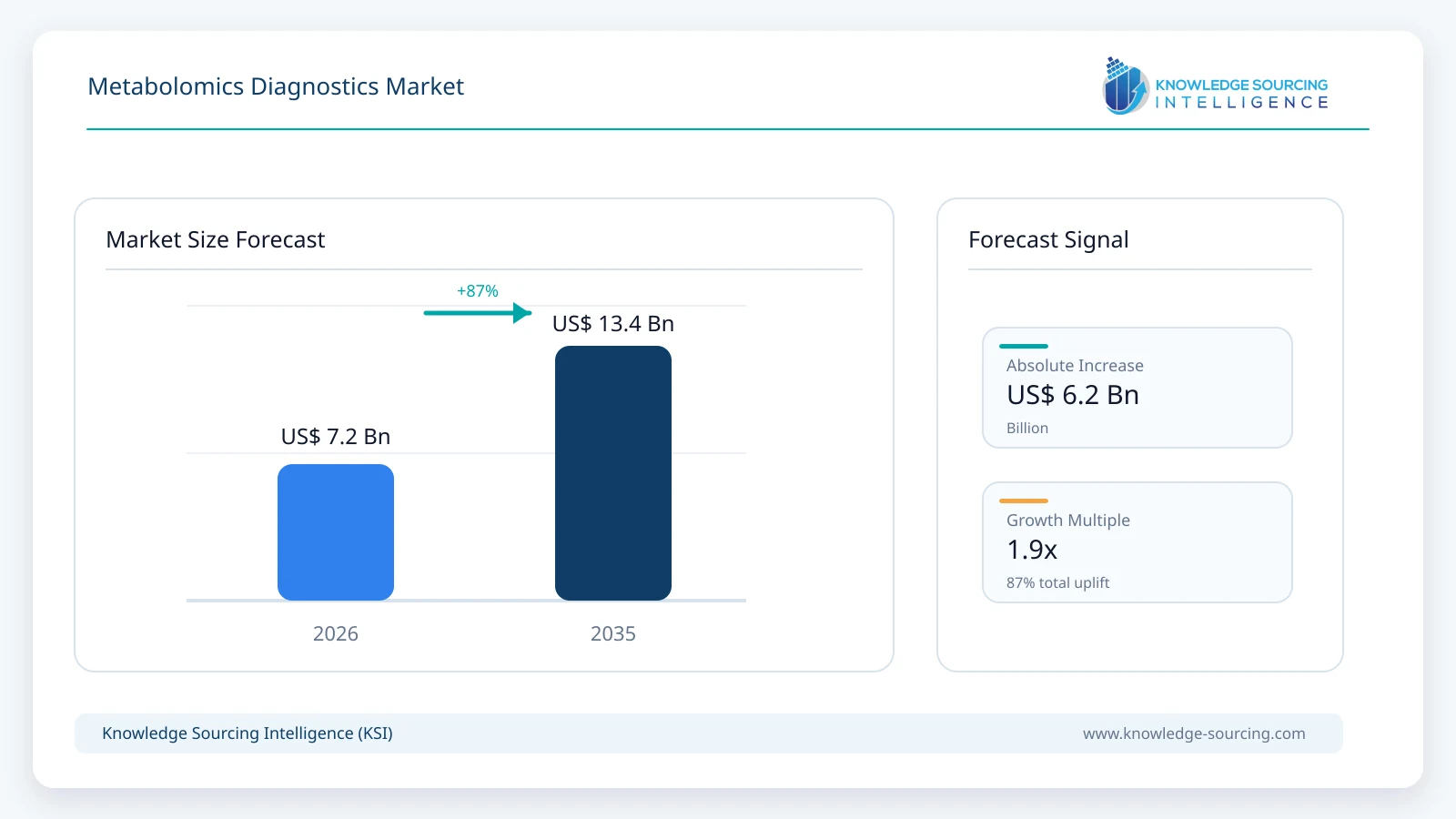
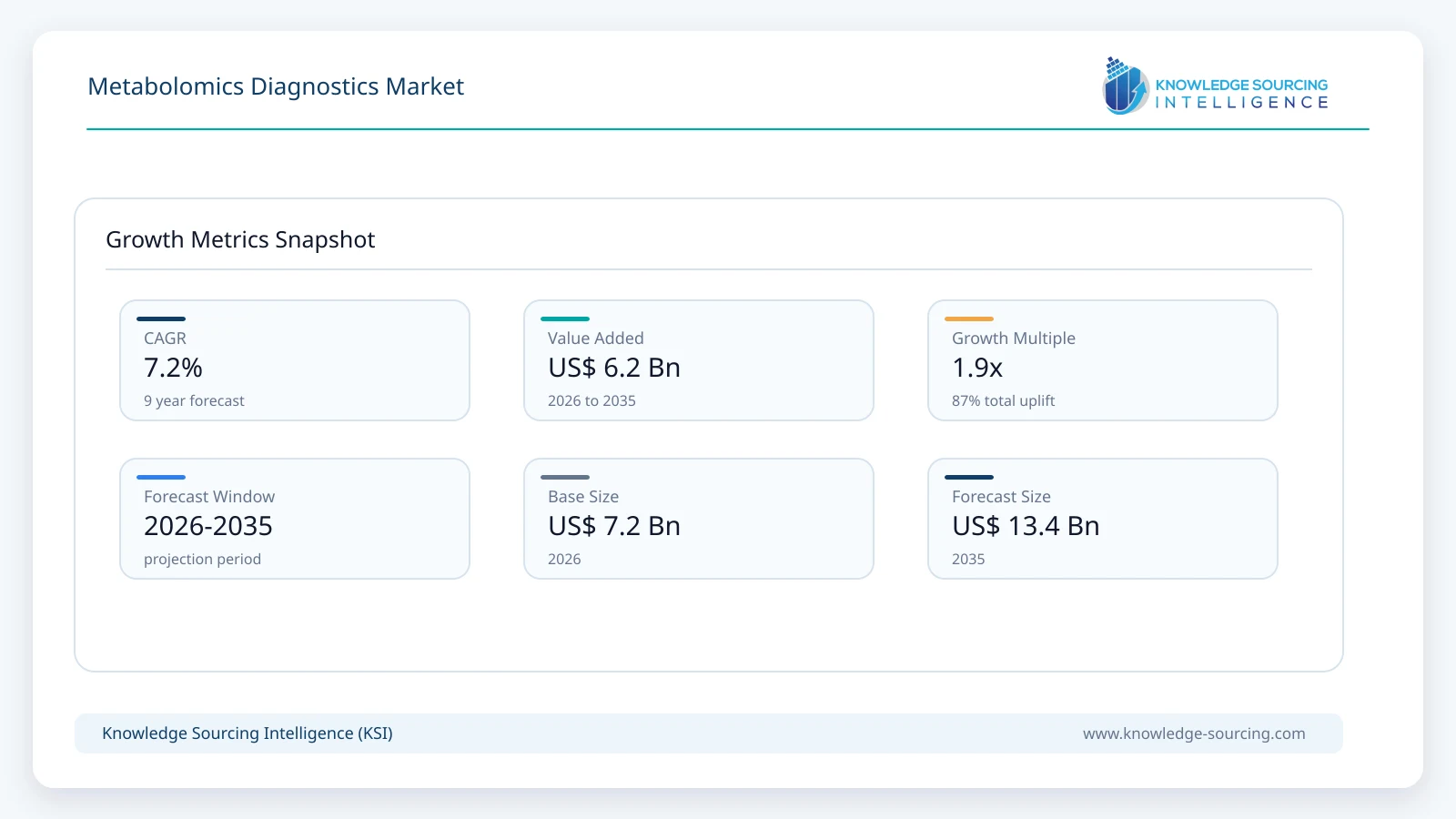
The Metabolomics Diagnostics Market is forecast to grow at a CAGR of 7.2%, reaching USD 13.41 billion in 2035 from USD 7.18 billion in 2026.
Highlights:
- 1Growing adoption of precision medicine is increasing demand for metabolomic biomarkers because clinicians require dynamic molecular information for individualized diagnosis and treatment monitoring.
- 2Expansion of high-resolution mass spectrometry and nuclear magnetic resonance technologies is improving analytical sensitivity, enabling detection of low-abundance metabolites with greater clinical relevance.
- 3Increasing pharmaceutical investment in biomarker-driven clinical development is accelerating metabolomics integration into drug discovery, patient stratification, and translational research.
- 4Regulatory agencies are strengthening analytical validation expectations, encouraging developers to establish standardized workflows that improve reproducibility and clinical confidence.
Metabolomics diagnostics identifies and quantifies endogenous and exogenous metabolites to detect disease-associated biochemical alterations that occur before anatomical or symptomatic changes become clinically evident. The market supports clinical diagnostics, pharmaceutical research, biomarker discovery, companion diagnostics, and population health initiatives by providing metabolic information that complements genomic, transcriptomic, and proteomic analyses.
Healthcare systems are increasing investments in precision diagnostics because chronic diseases, cancer, and neurodegenerative disorders require earlier and more accurate risk assessment. Conventional biomarkers frequently capture isolated molecular events, whereas metabolomic profiling reflects integrated biological responses influenced by genetics, environment, nutrition, microbiome composition, and therapeutic intervention. This broader biological perspective increases demand for metabolomics-based diagnostic solutions capable of supporting individualized clinical management.
Regulatory expectations continue to evolve as metabolomic assays transition from research laboratories into clinical practice. Analytical validation, standardized reference materials, laboratory accreditation, and software verification remain essential for regulatory acceptance. Industry participants are strengthening evidence generation through multicenter clinical studies, standardized analytical protocols, and digital data integration to support broader clinical adoption.
Pharmaceutical companies increasingly depend on metabolomics diagnostics throughout drug discovery and clinical development because metabolic biomarkers improve patient selection, toxicity assessment, pharmacodynamic monitoring, and treatment response evaluation. This integration is reinforcing the strategic importance of metabolomics across both diagnostic and therapeutic development ecosystems.
Market Dynamics
Market Drivers
Increasing Integration of Precision Medicine into Clinical Diagnostics: Precision medicine requires biomarkers that represent ongoing biological activity rather than static genetic information. Healthcare providers are adopting metabolomics because metabolic signatures reflect disease progression, treatment response, and physiological adaptation in real time. Clinical laboratories are expanding metabolomic testing capabilities to support personalized therapeutic decisions across oncology, cardiovascular diseases, neurological disorders, and inherited metabolic disorders. This integration strengthens demand for validated metabolomic diagnostic platforms that complement genomic and proteomic testing.
Rising Demand for Early Disease Detection Through Multi-Omics Biomarkers: Early diagnosis improves treatment effectiveness across numerous chronic and complex diseases. Clinical researchers are combining metabolomics with genomics, proteomics, transcriptomics, and microbiome analysis to identify highly specific biomarker panels capable of detecting disease before irreversible tissue damage occurs. Diagnostic developers are validating integrated biomarker signatures across multicenter studies to improve clinical accuracy. This transition increases demand for standardized metabolomic technologies capable of supporting routine diagnostic workflows.
Expanding Pharmaceutical Utilization of Metabolomic Biomarkers: Drug development depends on biomarkers that improve patient selection and therapeutic evaluation. Pharmaceutical companies are incorporating metabolomics into preclinical research and clinical development because metabolic profiling identifies pharmacodynamic responses, toxicity signals, and disease-specific biochemical pathways. Sponsors are investing in collaborative biomarker programs with diagnostic companies and academic institutions to accelerate clinical validation. This strategy expands commercial opportunities for metabolomics technology providers across the pharmaceutical value chain.
Advancements in High-Resolution Analytical Technologies: Clinical metabolomics depends on highly sensitive analytical instrumentation capable of detecting thousands of metabolites simultaneously. Continuous innovation in liquid chromatography-mass spectrometry (LC-MS), gas chromatography-mass spectrometry (GC-MS), capillary electrophoresis-mass spectrometry (CE-MS), and nuclear magnetic resonance spectroscopy is improving analytical throughput and reproducibility. Instrument manufacturers are integrating automated sample preparation, cloud-enabled data analysis, and artificial intelligence-assisted interpretation to simplify laboratory implementation.
Market Restraints
Limited analytical standardization across laboratories reduces inter-study reproducibility and slows regulatory acceptance of metabolomics-based diagnostic assays.
High capital investment requirements for advanced analytical instrumentation and specialized workforce training restrict adoption among resource-constrained healthcare institutions.
Clinical interpretation of complex metabolomic datasets remains challenging because biological variability, environmental influences, and dietary factors affect metabolite concentrations.
Market Opportunities
Expansion of Clinical Biomarker Validation Programs: Clinical implementation depends on biomarkers supported by robust evidence across diverse patient populations. Healthcare institutions are conducting multicenter validation studies to establish disease-specific metabolomic signatures with improved diagnostic performance. Diagnostic developers are expanding collaborations with academic medical centers to accelerate clinical qualification of novel biomarker panels. This trend creates substantial opportunities for companies offering standardized metabolomics workflows and analytical services.
Artificial Intelligence Integration into Metabolomic Data Interpretation: Metabolomic datasets contain thousands of interconnected molecular variables that require advanced computational analysis. Artificial intelligence platforms are improving biomarker identification, disease classification, and predictive modeling by recognizing complex metabolic patterns beyond conventional statistical approaches. Software developers are integrating machine learning algorithms into laboratory workflows to improve clinical usability. This evolution strengthens demand for integrated metabolomics informatics solutions.
Growth of Companion Diagnostics and Drug Development Partnerships: Precision therapeutics increasingly depend on companion diagnostics capable of identifying appropriate patient populations. Pharmaceutical sponsors are expanding partnerships with metabolomics companies to discover biomarkers supporting treatment selection and response monitoring. Diagnostic developers are aligning assay development with therapeutic pipelines to improve commercialization potential. This collaborative ecosystem increases long-term demand for clinically validated metabolomics platforms.
Increasing Adoption of Population Health and Preventive Medicine Programs: Healthcare systems emphasize preventive care to reduce long-term disease burden and healthcare expenditure. Population screening initiatives are evaluating metabolomic biomarkers capable of identifying individuals at elevated risk before clinical symptoms emerge. Research organizations are establishing longitudinal metabolomic databases to improve disease prediction across large populations. This trend expands future opportunities for scalable metabolomics diagnostics supporting preventive healthcare.
Disease & Epidemiology Analysis
Cancer, cardiovascular diseases, neurological disorders, metabolic diseases, and infectious diseases represent the largest clinical need for metabolomics diagnostics because these conditions involve dynamic biochemical alterations that often precede structural abnormalities. Disease management increasingly depends on biomarkers capable of reflecting ongoing physiological changes rather than isolated genetic variations. Healthcare providers are evaluating metabolomic signatures to improve risk assessment, disease classification, and therapeutic monitoring across diverse patient populations. This clinical requirement establishes metabolomics as a complementary technology within precision medicine workflows.
Cancer diagnosis increasingly incorporates multi-omics strategies because tumor metabolism changes continuously throughout disease progression and treatment. Researchers are validating metabolite panels that distinguish malignant from benign lesions, identify tumor subtypes, and predict therapeutic response. Clinical investigations are expanding across breast, colorectal, prostate, lung, pancreatic, ovarian, and hepatocellular cancers as metabolic biomarkers demonstrate potential to complement imaging and molecular pathology. This transition supports broader demand for metabolomics platforms capable of generating reproducible and clinically actionable biomarker profiles.
Cardiovascular disease diagnosis depends on identifying metabolic disturbances associated with inflammation, lipid metabolism, oxidative stress, and myocardial injury. Clinical studies are investigating circulating metabolites for earlier detection of heart failure, coronary artery disease, and cardiometabolic disorders before irreversible organ damage occurs. Diagnostic developers are integrating metabolomic profiling with conventional cardiac biomarkers to improve patient stratification. This combined approach increases the clinical relevance of metabolomics within preventive cardiology.
Neurological disorders present substantial diagnostic challenges because early pathological changes frequently occur years before symptoms become clinically apparent. Metabolomic research is identifying cerebrospinal fluid, plasma, and urine biomarkers associated with Alzheimer's disease, Parkinson's disease, multiple sclerosis, and amyotrophic lateral sclerosis. Clinical validation programs are expanding to improve disease differentiation and progression monitoring. These initiatives strengthen demand for sensitive analytical technologies capable of measuring subtle metabolic alterations.
Treatment Guidelines Landscape
Organization | Disease Area | Guidance Relevant to Metabolomics Diagnostics | Market Impact |
World Health Organization (WHO) | Noncommunicable Diseases | Encourages early diagnosis and biomarker-supported disease management where clinically validated. | Supports demand for advanced molecular diagnostics. |
National Comprehensive Cancer Network (NCCN) | Oncology | Recommends molecular profiling and biomarker testing across multiple cancers for treatment selection. | Expands opportunities for validated metabolomic biomarker integration. |
European Society for Medical Oncology (ESMO) | Oncology | Supports precision oncology through evidence-based biomarker testing. | Encourages development of clinically validated metabolomic assays. |
American Diabetes Association (ADA) | Diabetes | Promotes individualized disease management using advanced biomarkers alongside conventional clinical evaluation. | Creates opportunities for metabolomics-supported metabolic disease monitoring. |
Market Segmentation
By Sample Type
Liquid biopsy represents one of the fastest-evolving sample categories because minimally invasive testing enables repeated disease monitoring without surgical intervention. Clinical researchers are expanding metabolomic profiling of plasma and serum samples to identify biomarkers associated with cancer progression, cardiovascular disease, and neurological disorders. Analytical variability remains an important consideration because circulating metabolites are influenced by physiological and environmental factors. Technology developers are improving standardized collection protocols and automated analytical workflows to increase reproducibility. This evolution positions liquid biopsy as a major growth segment for clinical metabolomics diagnostics.
By Application
Oncology constitutes the largest application segment because tumor metabolism undergoes continuous biochemical adaptation during disease progression and treatment. Clinical validation studies are evaluating metabolomic signatures for early cancer detection, disease classification, treatment selection, recurrence monitoring, and therapeutic response assessment. Healthcare providers increasingly require complementary biomarkers alongside genomic testing to improve precision oncology decisions. Diagnostic developers are strengthening evidence through multicenter validation programs. This trend reinforces oncology as the leading commercial opportunity within metabolomics diagnostics.
By End User
Pharmaceutical and biotechnology companies represent a strategically important customer segment because biomarker-driven drug development increasingly depends on metabolomic profiling. Sponsors are integrating metabolomics throughout target discovery, pharmacodynamic evaluation, toxicology assessment, and clinical trial stratification. Drug developers require standardized analytical platforms capable of generating reproducible metabolic signatures across multinational clinical studies. Instrument manufacturers are expanding collaborative research partnerships and analytical service offerings to address these requirements. This integration continues strengthening commercial demand from pharmaceutical research organization.
Regional Analysis
North America Market Analysis
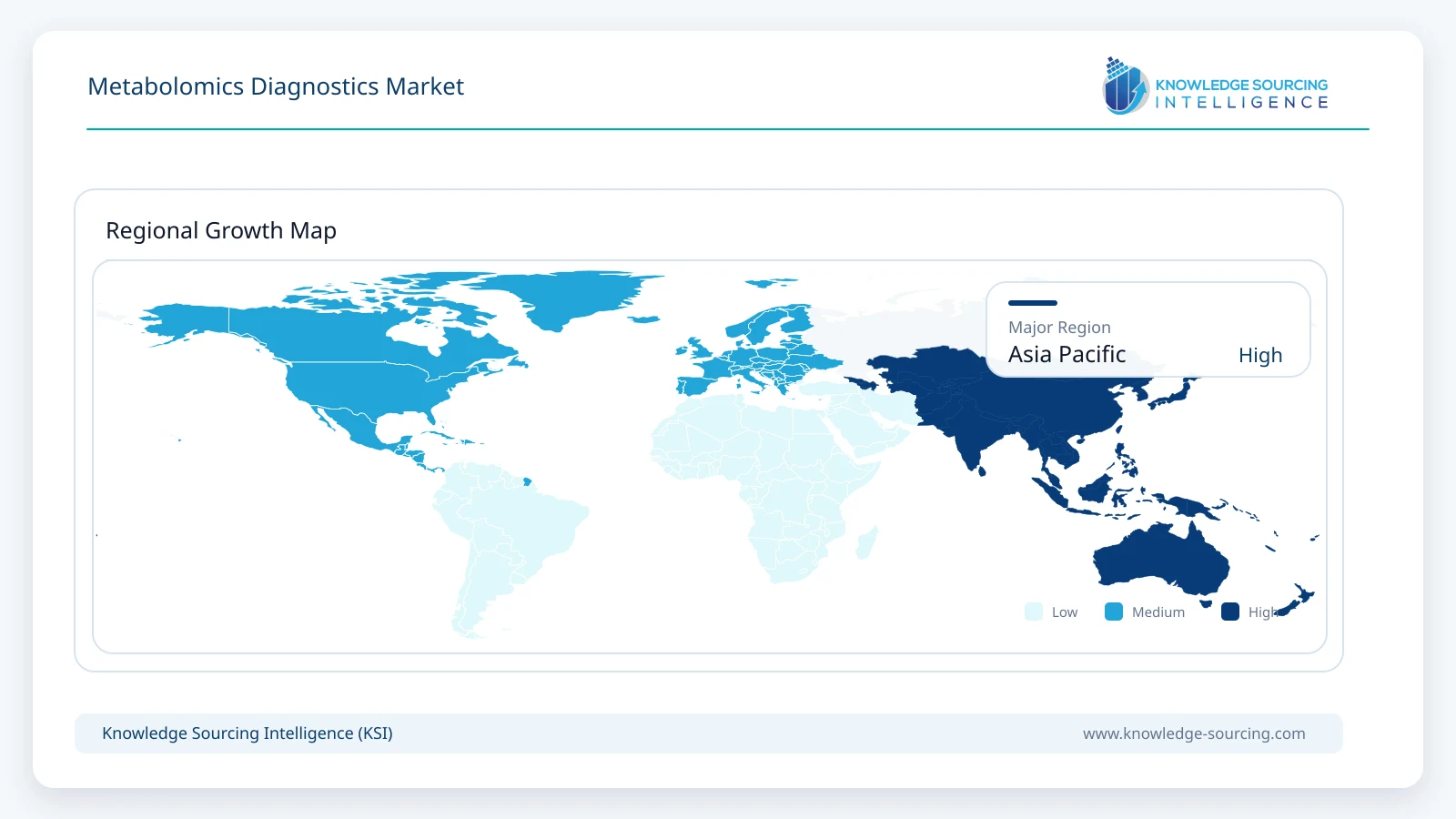
North America maintains leadership because the region combines advanced healthcare infrastructure, established precision medicine programs, strong pharmaceutical innovation, and extensive academic research capacity. Healthcare providers increasingly incorporate molecular diagnostics into routine clinical decision-making as chronic disease prevalence continues rising across aging populations. Government-funded precision medicine initiatives and cancer research programs are supporting biomarker validation through multicenter clinical investigations. Regulatory expectations emphasize analytical rigor, encouraging developers to generate robust clinical evidence before commercialization. Pharmaceutical companies are expanding collaborations with academic medical centers to integrate metabolomics into biomarker-driven clinical development, strengthening commercial demand for advanced analytical platforms. Major instrument manufacturers continue investing in laboratory automation, artificial intelligence-enabled data interpretation, and standardized workflows to improve clinical adoption.
Europe Market Analysis
European demand is driven by coordinated research funding, translational medicine initiatives, and regulatory harmonization supporting advanced molecular diagnostics. Healthcare systems increasingly prioritize personalized medicine because aging populations and chronic disease burdens require earlier intervention strategies. Academic research networks are validating metabolomic biomarkers across oncology, cardiometabolic diseases, and neurodegenerative disorders through multinational collaborative studies. Implementation of the European Union In Vitro Diagnostic Regulation (IVDR) is increasing evidence requirements for clinical diagnostics while simultaneously improving confidence in validated assays. Diagnostic manufacturers are strengthening quality management systems and analytical standardization to satisfy evolving regulatory expectations. Pharmaceutical collaborations with research institutes continue accelerating biomarker qualification across multiple therapeutic areas. These developments reinforce Europe's position as a major center for metabolomics innovation and clinical translation.
Asia Pacific Market Analysis
Asia Pacific demonstrates strong growth potential because healthcare expenditure, biomedical research investment, and precision medicine initiatives continue expanding across major economies. Governments are strengthening national biotechnology programs to improve domestic innovation in molecular diagnostics and personalized healthcare. Academic institutions are increasing metabolomics research across oncology, metabolic diseases, infectious diseases, and population health studies reflecting regional disease priorities. Pharmaceutical companies are expanding clinical research activities throughout the region, increasing demand for biomarker discovery technologies and standardized analytical platforms. Diagnostic laboratories continue adopting high-resolution mass spectrometry systems supported by improvements in laboratory infrastructure and skilled workforce development. Growing collaboration between global technology providers and regional research organizations is accelerating clinical validation activities.
Rest of the World
Healthcare modernization initiatives are increasing demand for advanced molecular diagnostics across Latin America, the Middle East, and Africa. Academic research organizations continue establishing collaborative partnerships with international institutions to improve access to metabolomics technologies and analytical expertise. Chronic diseases, cancer incidence, and infectious disease surveillance are increasing demand for biomarker-based diagnostic approaches capable of supporting earlier intervention. Budget limitations remain an important adoption constraint because high-end analytical instrumentation requires substantial capital investment and specialized technical expertise. International funding programs and collaborative research initiatives are improving access to advanced laboratory technologies while strengthening local research capabilities. These developments gradually expand future commercial opportunities despite persistent infrastructure disparities.
Regulatory Landscape
Metabolomics diagnostics is transitioning from a predominantly research-based discipline toward regulated clinical implementation, making analytical validation, reproducibility, and clinical evidence central regulatory priorities. Regulatory agencies require developers to demonstrate that metabolomic assays consistently generate accurate, reproducible, and clinically meaningful results before they can support patient management. Because metabolomic profiling involves large-scale biochemical datasets and advanced computational analysis, regulators are also increasing their scrutiny of software validation, algorithm transparency, and data integrity. These evolving expectations are encouraging manufacturers to integrate standardized analytical workflows, reference materials, and quality management systems into product development.
The U.S. Food and Drug Administration (FDA) continues applying risk-based regulatory pathways for in vitro diagnostics while increasing oversight of laboratory-developed tests (LDTs). Developers of metabolomics-based diagnostic assays are generating analytical validity, clinical validity, and clinical utility evidence through multicenter studies before pursuing commercialization. Companion diagnostics associated with targeted therapeutics require additional evidence demonstrating their ability to identify appropriate patient populations. These requirements are increasing collaboration between diagnostic developers, pharmaceutical companies, and clinical research organizations to establish regulatory-grade datasets supporting future submissions.
Within Europe, the In Vitro Diagnostic Regulation (IVDR) has significantly increased evidence requirements for diagnostic manufacturers. Companies are strengthening post-market surveillance, performance evaluation, risk management documentation, and quality assurance procedures to satisfy the regulation's lifecycle approach. Simultaneously, regulatory agencies across Japan, China, South Korea, and other Asia-Pacific countries are modernizing approval frameworks for innovative molecular diagnostics, encouraging broader commercialization of clinically validated metabolomics technologies while maintaining emphasis on analytical reliability and patient safety.
Pipeline Analysis
The metabolomics diagnostics pipeline is increasingly focusing on disease-specific biomarker panels rather than broad untargeted metabolic profiling. Developers are identifying metabolite signatures that support earlier diagnosis, patient stratification, prognosis, and treatment monitoring across oncology, cardiometabolic diseases, neurological disorders, and rare inherited metabolic conditions. Clinical validation studies are expanding because healthcare providers require biomarkers that demonstrate reproducibility across diverse patient populations and healthcare settings. This shift is moving metabolomics from exploratory biomarker discovery toward clinically actionable diagnostic solutions.
Oncology represents the most active development area because tumor metabolism changes dynamically throughout disease progression and therapeutic intervention. Multiple sponsors are evaluating metabolomic panels capable of supporting early cancer detection, recurrence monitoring, minimal residual disease assessment, and treatment response prediction. Pharmaceutical companies are simultaneously integrating metabolomic biomarkers into precision oncology clinical trials to improve patient selection and pharmacodynamic assessment. These collaborative development strategies are strengthening the commercial potential of metabolomics-enabled companion diagnostics.
Artificial intelligence and machine learning are becoming increasingly integrated into pipeline programs because large metabolomic datasets require sophisticated computational interpretation. Diagnostic developers are combining high-resolution LC-MS, GC-MS, NMR spectroscopy, and cloud-based analytics to identify reproducible metabolic signatures with improved diagnostic performance. Commercial sponsors are also expanding partnerships with academic medical centers, biobanks, and pharmaceutical companies to accelerate biomarker qualification and multicenter validation studies. This collaborative ecosystem is expected to increase the number of clinically validated metabolomics assays progressing toward regulatory submission during the forecast period.
Reimbursement Landscape
Reimbursement for metabolomics diagnostics continues evolving because most assays remain within translational research or specialized clinical laboratory settings rather than routine healthcare reimbursement frameworks. Public and private healthcare payers generally require strong evidence demonstrating clinical utility, cost-effectiveness, and improved patient outcomes before establishing broad reimbursement policies. Consequently, developers are investing in health economic studies alongside analytical and clinical validation programs to demonstrate the value of metabolomics-guided clinical decision-making.
Coverage opportunities are expanding first within high-value clinical applications such as oncology, inherited metabolic disorders, and rare diseases, where earlier diagnosis or improved patient stratification can reduce downstream healthcare costs. Pharmaceutical companies are supporting evidence generation through biomarker-driven clinical trials that demonstrate measurable therapeutic benefit associated with metabolomic testing. As additional clinical evidence becomes available and regulatory approvals increase, reimbursement frameworks are expected to expand gradually across broader disease areas, supporting wider clinical adoption of metabolomics diagnostics.
Competitive Landscape
Thermo Fisher Scientific Inc.
Thermo Fisher Scientific distinguishes itself through one of the industry's most comprehensive metabolomics ecosystems that integrates mass spectrometry instrumentation, chromatography systems, laboratory automation, analytical software, consumables, and contract research capabilities. This vertically integrated portfolio enables customers to implement standardized metabolomics workflows across discovery research, translational medicine, and emerging clinical applications.
Agilent Technologies, Inc.
Agilent Technologies maintains a strong competitive position through integrated chromatography, mass spectrometry, sample preparation, laboratory informatics, and analytical workflow solutions designed for high-quality metabolomics research. The company emphasizes analytical reproducibility because biomarker validation increasingly depends on standardized laboratory performance across multicenter clinical studies.
Danaher Corporation
Danaher differentiates itself through a diversified life sciences portfolio encompassing advanced analytical technologies, laboratory automation, molecular biology solutions, and digital laboratory management platforms across multiple operating companies. Rather than competing solely through individual metabolomics instruments, the company leverages integrated laboratory ecosystems supporting pharmaceutical development, translational medicine, and clinical diagnostics.
Bruker Corporation
Bruker Corporation has established a strong position in metabolomics through advanced nuclear magnetic resonance spectroscopy, high-resolution mass spectrometry, and ion mobility technologies that support comprehensive metabolic profiling. The company differentiates itself by delivering analytical platforms capable of detecting complex metabolite signatures with high sensitivity and reproducibility, making them suitable for biomarker discovery and translational research.
Shimadzu Corporation
Shimadzu Corporation remains a significant participant in metabolomics diagnostics by combining chromatography, mass spectrometry, spectroscopy, and laboratory automation technologies within integrated analytical workflows. The company emphasizes analytical reliability, instrument robustness, and operational efficiency, characteristics that remain important for clinical research laboratories performing large-scale metabolomics studies. .
Waters Corporation
Waters Corporation distinguishes itself through advanced liquid chromatography and mass spectrometry technologies designed to deliver high analytical performance across pharmaceutical research, clinical investigation, and biomarker discovery applications. The company focuses on workflow integration because laboratories increasingly require standardized analytical solutions that improve reproducibility while reducing operational complexity.
Key Developments
July 2026: Novogene Europe launched its Untargeted Metabolomics Service through the Cambridge Omics Centre. The service uses high-resolution LC-MS analysis to add metabolite-level insights to genomics, transcriptomics, microbiome, and broader multiomics research.
June 2026: Autism Diagnostics Lab launched the MDM Gut & Brain Health Test, a commercial urine-based screening tool that measures microbial-derived metabolites associated with autism. The test is offered through a CLIA-certified laboratory network for children aged two and older; it is a screening tool, not a standalone diagnosis.
April 2025: Metabolon launched a microbiome research solution combining a new microbiome metabolite panel, metagenomics sequencing, and multiomics bioinformatics tools. The platform is designed to connect microbial composition with metabolic activity and support deeper research into microbiome function.
Strategic Insights and Future Market Outlook
Metabolomics diagnostics is evolving from a specialized research discipline into an important component of precision healthcare because clinicians increasingly require biomarkers that capture dynamic biological activity rather than static molecular information. Healthcare providers are integrating metabolomic profiling with genomic, proteomic, and transcriptomic analyses to improve disease characterization, therapeutic selection, and longitudinal patient monitoring. This convergence supports broader adoption of multi-omics diagnostic strategies capable of generating clinically meaningful insights across oncology, cardiometabolic diseases, neurological disorders, infectious diseases, and rare disorders.
Commercial success will increasingly depend on clinical validation rather than analytical performance alone. Diagnostic developers are expanding multicenter validation studies because healthcare systems, regulatory authorities, and reimbursement agencies require robust evidence demonstrating clinical utility and economic value before routine implementation. Pharmaceutical companies are simultaneously incorporating metabolomic biomarkers into drug development programs to improve patient stratification and therapeutic response assessment, creating additional commercialization opportunities for technology providers. Artificial intelligence, cloud computing, and laboratory automation are further improving workflow efficiency, enabling metabolomics to transition toward higher-volume clinical laboratory environments.
Metabolomics diagnostics is expected to become an integral element of future precision medicine ecosystems as analytical technologies mature, regulatory frameworks evolve, and biomarker evidence continues expanding across multiple disease areas. Organizations capable of combining high-performance instrumentation, standardized analytical workflows, advanced bioinformatics, and strategic pharmaceutical collaborations will remain well positioned to capture long-term growth opportunities arising from the expanding adoption of biomarker-driven healthcare.
The market continues advancing toward clinically validated, data-driven diagnostic solutions that complement existing molecular testing technologies. Sustained investment in biomarker discovery, regulatory-quality evidence generation, artificial intelligence-assisted analytics, and cross-sector collaboration is strengthening the foundation for broader clinical adoption. As healthcare systems increasingly prioritize earlier diagnosis, individualized treatment, and value-based care, metabolomics diagnostics is expected to play a progressively larger role in supporting precision medicine across global healthcare markets.
Market Scope:
| Report Metric | Details |
|---|---|
| Total Market Size in 2026 | USD 7.18 billion |
| Total Market Size in 2035 | USD 13.41 billion |
| Forecast Unit | Billion |
| Growth Rate | 7.2% |
| Study Period | 2021 to 2035 |
| Historical Data | 2021 to 2024 |
| Base Year | 2025 |
| Forecast Period | 2026 – 2035 |
| Segmentation | Product & Service, Technology, Biomarker Type, Sample Type, Application, Testing Methodology, End User, Geography |
| Companies |
|
Market Segmentation
Product & Service
Technology
Biomarker Type, Sample Type, Application, Testing Methodology, End User
Geography
- North America
- South America
- Europe
- Middle East and Africa
- Asia Pacific
Table of Contents
1. EXECUTIVE SUMMARY
1.1 Market Snapshot
1.2 Key Findings
1.3 Analyst Insights
1.4 Strategic Recommendations
2. RESEARCH METHODOLOGY
2.1 Research Design
2.2 Data Collection Methodology
2.3 Market Size Estimation
2.4 Forecasting Model
2.5 Assumptions & Limitations
3. GLOBAL METABOLOMICS DIAGNOSTICS MARKET OVERVIEW, SIZE & FORECAST
3.1 Market Definition & Scope
3.2 Overview of Metabolomics Diagnostics
3.3 Industry Evolution
3.4 Key Market Trends
3.5 Historical Market Size Analysis (2021-2025)
3.6 Market Forecast (2026-2035)
3.7 Disease Burden and Unmet Clinical Needs
3.8 Clinical Applications of Metabolomics Diagnostics
3.9 Biomarker Discovery and Validation Landscape
3.10 Testing Workflow Analysis
3.11 Diagnostic Adoption Across Clinical Settings
4. MARKET DYNAMICS
4.1 Market Drivers
4.2 Market Restraints
4.3 Market Opportunities
4.4 Market Challenges
5. INDUSTRY LANDSCAPE
5.1 Industry Value Chain Analysis
5.2 Pricing Analysis
5.3 Reimbursement Landscape
6. INNOVATION LANDSCAPE
6.1 Emerging Technologies
6.2 Product Innovation
6.3 Clinical Trial Analysis
6.4 Pipeline Analysis
6.5 Artificial Intelligence and Machine Learning Integration
6.6 Multi-Omics Integration
6.7 Technology Roadmap
7. REGULATORY LANDSCAPE
7.1 Regulatory Framework
7.2 Approval Pathways
7.3 Compliance Requirements
8. GLOBAL METABOLOMICS DIAGNOSTICS MARKET LANDSCAPE ANALYSIS
8.1 Analysis by Technology Platform
8.2 Analysis by Biomarker Type
8.3 Analysis by Sample Type
8.4 Analysis by Clinical Application
8.5 Analysis by Testing Methodology
8.6 Analysis by End User
9. GLOBAL METABOLOMICS DIAGNOSTICS MARKET SEGMENT ANALYSIS (2021-2035)
9.1 By Product & Service
9.1.1 Instruments
9.1.2 Consumables & Reagents
9.1.3 Software & Services
9.2 By Technology
9.2.1 Mass Spectrometry (MS)
9.2.2 Nuclear Magnetic Resonance (NMR) Spectroscopy
9.2.3 Capillary Electrophoresis
9.2.4 Other Technologies
9.3 By Biomarker Type
9.3.1 Lipid Biomarkers
9.3.2 Amino Acid
9.3.3 Carbohydrate
9.3.4 Organic Acid
9.3.5 Others
9.4 By Sample Type
9.4.1 Liquid Biopsy
9.4.2 Urine
9.4.3 Tissue
9.4.4 Cerebrospinal Fluid
9.4.5 Other Biological Samples
9.5 By Application
9.5.1 Oncology
9.5.2 Cardiovascular Diseases
9.5.3 Neurological Disorders
9.5.4 Metabolic Disorders
9.5.5 Infectious Diseases
9.5.6 Rare Diseases
9.5.7 Other Clinical Applications
9.6 By Testing Methodology
9.6.1 Targeted Metabolomics
9.6.2 Untargeted Metabolomics
9.7 By End User
9.7.1 Hospitals & Diagnostic Laboratories
9.7.2 Academic & Research Institutes
9.7.3 Pharmaceutical & Biotechnology Companies
9.7.4 Other End Users
10. GLOBAL METABOLOMICS DIAGNOSTICS MARKET GEOGRAPHICAL ANALYSIS (2021-2035)
10.1 North America
10.2 Europe
10.3 Asia-Pacific
10.4 South America
10.5 Middle East & Africa
11. GLOBAL METABOLOMICS DIAGNOSTICS MARKET COUNTRY ANALYSIS (2021-2035)
11.1 United States
11.2 Canada
11.3 Germany
11.4 United Kingdom
11.5 France
11.6 Italy
11.7 Spain
11.8 Netherlands
11.9 Japan
11.10 China
11.11 India
11.12 South Korea
11.13 Australia
11.14 Brazil
11.15 Saudi Arabia
12. COMPETITIVE LANDSCAPE
12.1 Market Share Analysis
12.2 Strategic Developments
12.3 Mergers & Acquisitions, Partnerships & Collaborations
12.4 Product Launches
13. COMPANY PROFILES
13.1 Thermo Fisher Scientific Inc.
13.1.1 Company Overview
13.1.2 Financials
13.1.3 Product Portfolio
13.1.4 Recent Developments
13.2 Agilent Technologies, Inc.
13.3 Danaher Corporation
13.4 Bruker Corporation
13.5 Shimadzu Corporation
13.6 Waters Corporation
13.7 Bio-Rad Laboratories, Inc.
13.8 Human Metabolome Technologies Inc.
13.9 Metabolon, Inc.
13.10 Biocrates Life Sciences AG
14. GLOBAL METABOLOMICS DIAGNOSTICS MARKET COMMERCIAL FORECAST ANALYSIS
14.1 Forecast by Technology Platform
14.2 Forecast by Product & Service Category
14.3 Forecast by Clinical Application
14.4 Forecast by Testing Methodology
14.5 Forecast by End User
14.6 Regional Revenue Forecast
15. INVESTMENT & FUNDING ANALYSIS
15.1 Venture Capital Trends
15.2 Government Funding
15.3 R&D Investments
16. FUTURE OUTLOOK
16.1 Key Growth Opportunities
16.2 Future Industry Trends
Navigate
Trusted by the world's leading organizations











