
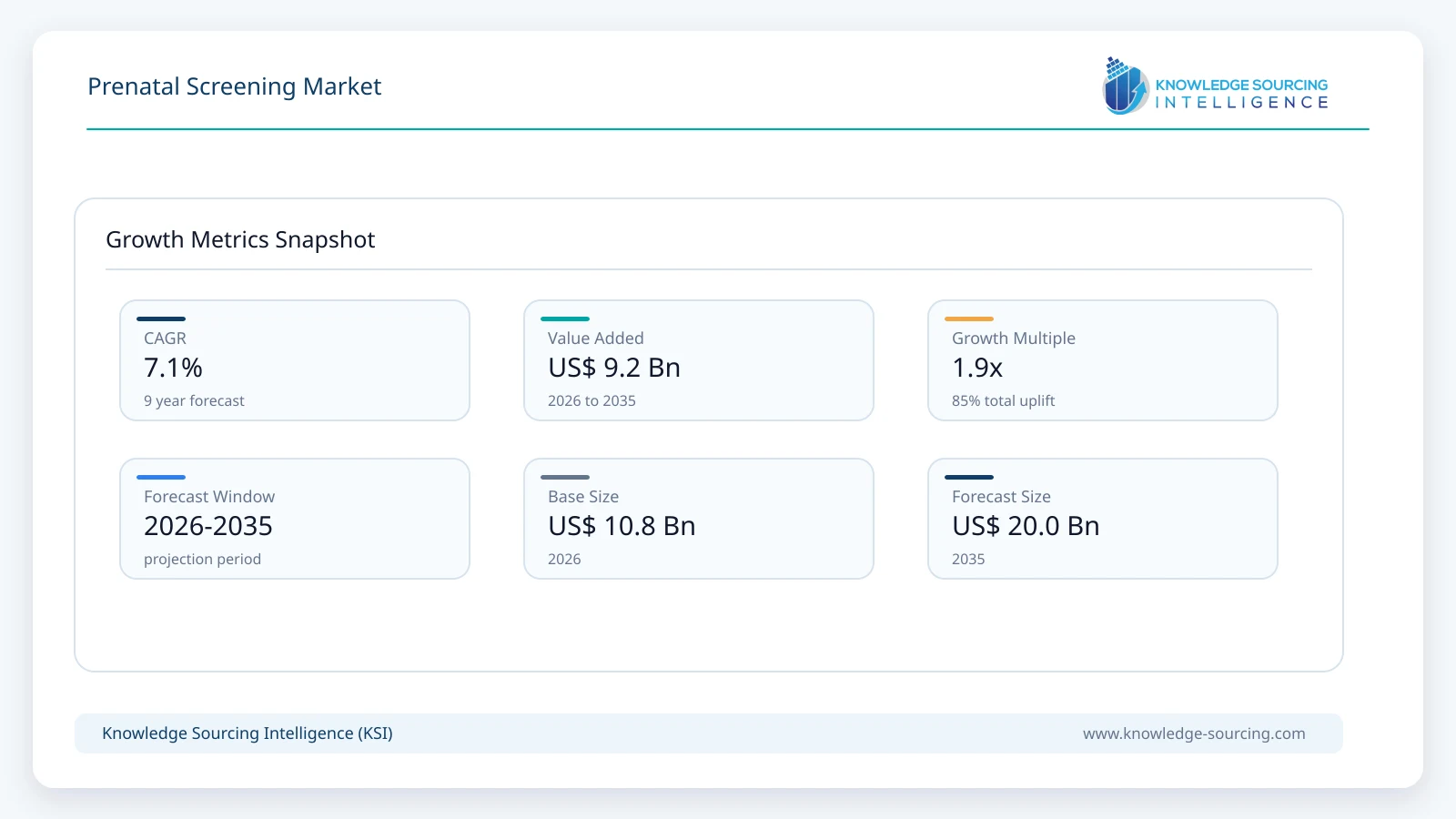
The Prenatal Screening Market is expected to grow at a CAGR of 7.1% from a market value of USD 10.8 billion in 2026 to USD 20.0 billion in 2035.
Highlights:
- 1Increasing maternal age is expanding the population at elevated risk for fetal chromosomal abnormalities, accelerating demand for earlier prenatal genetic screening.
- 2Clinical adoption is shifting toward non-invasive prenatal screening because higher analytical accuracy reduces unnecessary invasive diagnostic procedures.
- 3Next-generation sequencing platforms are improving laboratory throughput, enabling diagnostic providers to expand nationwide prenatal screening services.
- 4Updated professional guidelines are supporting broader clinical utilization of cell-free DNA screening across diverse pregnancy risk groups.
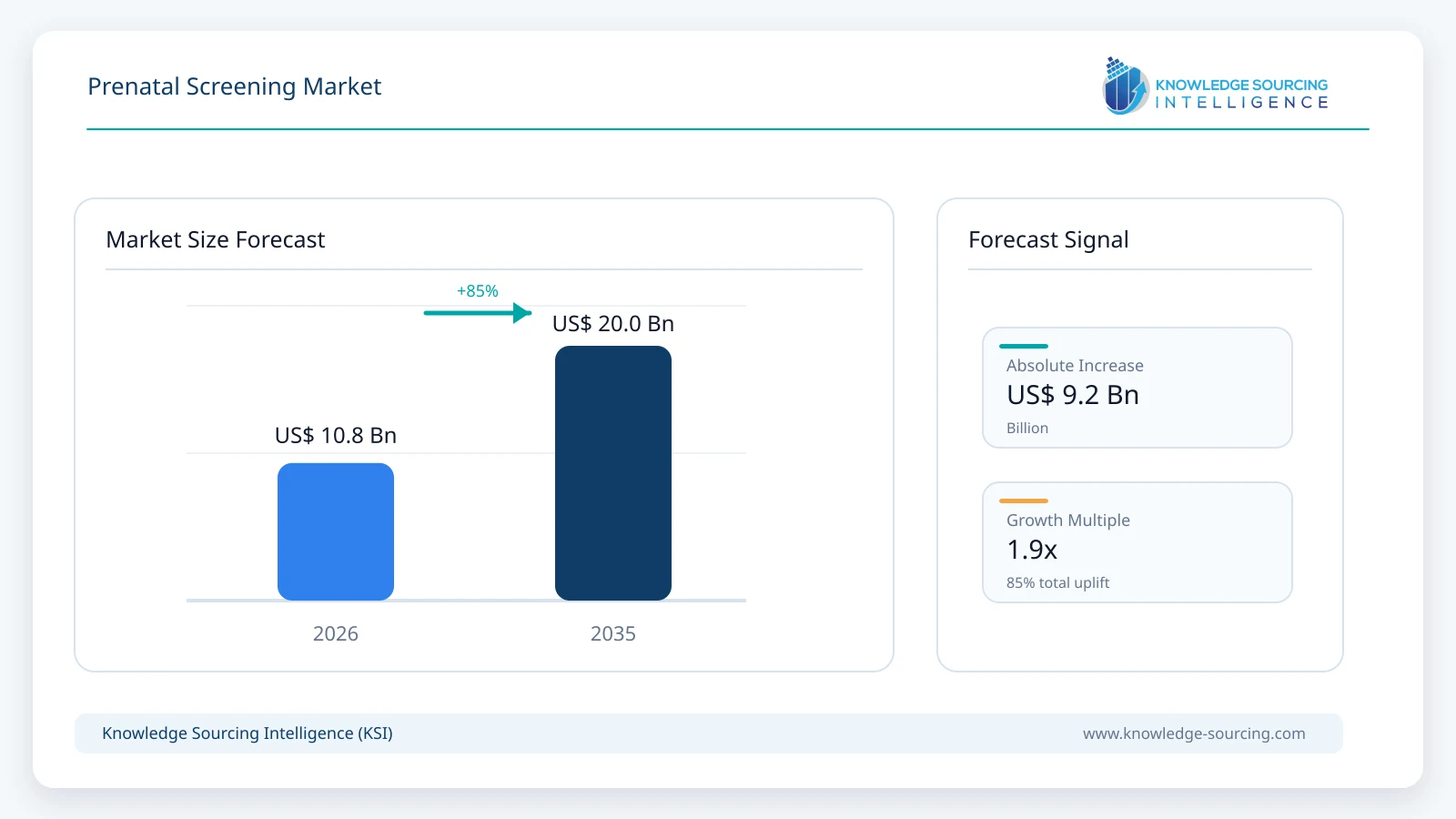
Prenatal screening identifies pregnancies with an elevated probability of fetal chromosomal abnormalities, inherited genetic disorders, and selected pregnancy-related complications before invasive diagnostic confirmation becomes necessary. The market relies on advances in genomic sequencing, molecular diagnostics, laboratory automation, and clinical genetics to improve detection accuracy while reducing unnecessary invasive procedures.
Demand continues shifting toward non-invasive screening because expectant parents and clinicians increasingly value earlier clinical decision-making supported by high analytical sensitivity and specificity. Growing maternal age, expanding awareness of genetic disorders, and improving access to prenatal counseling are increasing screening utilization across both public and private healthcare systems. This demand places greater emphasis on scalable laboratory infrastructure capable of processing large testing volumes while maintaining consistent quality standards.
Government agencies, professional medical societies, and regulatory organizations are continuously updating prenatal screening recommendations to reflect emerging clinical evidence. These evolving guidelines encourage broader implementation of validated screening technologies while strengthening quality assurance requirements for laboratories. As reimbursement policies gradually expand and sequencing costs continue declining, prenatal screening is becoming a fundamental component of population-level maternal healthcare strategies.
Market Dynamics
Market Drivers
Expanding Clinical Adoption of Non-Invasive Prenatal Screening: Non-invasive prenatal screening has become a preferred first-line genetic screening approach because it delivers high analytical sensitivity without exposing pregnancies to procedure-related risks. Clinical practice is increasingly transitioning toward cell-free DNA-based testing as healthcare providers seek earlier and more reliable fetal chromosomal assessment. This shift reduces reliance on invasive diagnostic procedures while improving patient acceptance of prenatal genetic evaluation. Diagnostic companies are expanding laboratory capacity and sequencing infrastructure to accommodate growing testing volumes. The market benefits from improved clinical confidence and broader integration of prenatal screening into routine obstetric care.
Rising Maternal Age Is Increasing Genetic Screening Demand: Advanced maternal age remains one of the strongest clinical risk factors for fetal chromosomal abnormalities. Many countries are experiencing delayed parenthood because educational attainment, workforce participation, and socioeconomic factors are influencing reproductive decisions. This demographic transition is increasing demand for comprehensive prenatal genetic assessment across both average-risk and high-risk pregnancies. Healthcare providers are incorporating molecular screening earlier during pregnancy to support informed clinical management. Diagnostic laboratories continue strengthening testing portfolios because higher-risk pregnancies require increasingly comprehensive genomic analysis.
Continuous Advances in Next-Generation Sequencing Technologies: Next-generation sequencing improves analytical accuracy by enabling comprehensive evaluation of fetal cell-free DNA with greater scalability than earlier molecular techniques. Sequencing platforms are becoming faster and more automated as manufacturers optimize workflow efficiency and bioinformatics integration. This technological progress reduces operational costs while supporting broader implementation across centralized laboratory networks. Diagnostic developers continue introducing upgraded sequencing chemistries and software because healthcare systems require higher throughput with consistent clinical performance. The market increasingly depends on genomic innovation that supports broader prenatal testing applications beyond common aneuploidies.
Expanding Government and Professional Support for Prenatal Genetic Screening: National healthcare organizations recognize prenatal genetic screening as an important component of maternal healthcare because early identification supports timely counseling and pregnancy management. Professional societies are continuously updating recommendations as new clinical evidence strengthens confidence in molecular screening technologies. Healthcare providers are increasingly standardizing prenatal genetic counseling within obstetric practice to improve informed patient decision-making. Public healthcare systems continue evaluating broader reimbursement pathways because earlier detection may reduce downstream clinical burden. The market gains long-term stability through guideline-driven adoption rather than isolated technological innovation.
Market Restraints
Limited reimbursement coverage across several developing healthcare systems restricts routine adoption of advanced prenatal genetic screening despite improving clinical evidence.
Ethical, legal, and social concerns surrounding prenatal genetic information continue influencing regulatory oversight and patient acceptance in several countries.
Unequal access to genetic counseling and specialized molecular diagnostic laboratories limits screening availability across rural and resource-constrained healthcare settings.
Market Opportunities
Expansion into Average-Risk Pregnancy Screening: Clinical evidence increasingly supports the use of non-invasive prenatal screening beyond traditionally high-risk pregnancies. Healthcare providers are incorporating broader screening pathways because improved analytical performance benefits larger obstetric populations. Diagnostic laboratories are expanding commercial testing capacity to address increasing routine prenatal screening demand. This transition strengthens long-term testing volumes while encouraging healthcare systems to reconsider reimbursement frameworks. The market gains sustainable growth through expanding population coverage rather than increasing testing frequency alone.
Integration of Artificial Intelligence into Genomic Interpretation: Artificial intelligence enhances genomic data interpretation by improving variant classification, quality assessment, and laboratory workflow efficiency. Sequencing laboratories are integrating advanced computational tools because larger testing volumes require faster clinical reporting. Automated bioinformatics reduces interpretation variability while supporting consistent laboratory performance. Diagnostic developers continue investing in digital infrastructure to improve clinical scalability. These capabilities strengthen precision prenatal medicine through more standardized genomic analysis.
Growth Opportunities Across Emerging Healthcare Markets: Healthcare infrastructure continues improving across Asia-Pacific, Latin America, and selected Middle Eastern countries because governments are prioritizing maternal and child health programs. Laboratory networks are expanding molecular diagnostic capacity to meet increasing prenatal screening demand. International diagnostic companies are strengthening regional partnerships to improve market access and laboratory capability. Growing healthcare expenditure supports adoption of advanced prenatal testing technologies. These developments diversify future revenue opportunities beyond mature healthcare markets.
Expansion of Screening for Additional Genetic Disorders: Research continues evaluating broader prenatal screening panels that include microdeletion syndromes, single-gene disorders, and additional inherited conditions. Clinical laboratories are expanding test menus because physicians increasingly request more comprehensive genomic information during pregnancy. Sequencing technologies support these expanded applications without fundamentally changing laboratory workflows. Diagnostic innovation continues improving clinical utility while strengthening product differentiation. Broader genomic coverage increases the strategic value of prenatal screening across maternal healthcare.
Disease & Epidemiology Analysis
Chromosomal abnormalities remain the primary clinical indication for prenatal screening because they account for a significant proportion of congenital disorders detected during pregnancy. Demand is increasingly concentrating on early identification of trisomy 21, trisomy 18, trisomy 13, and sex chromosome aneuploidies as obstetricians seek to reduce diagnostic uncertainty before invasive confirmatory procedures become necessary. This clinical focus places greater importance on highly sensitive molecular screening technologies that can reliably analyze fetal cell-free DNA from maternal blood. Diagnostic developers are continuously improving assay performance to support earlier gestational testing and lower false-positive rates. Prenatal screening therefore serves as the first step in a structured pathway that guides genetic counseling and confirmatory diagnostic testing rather than replacing diagnostic procedures.
The growing prevalence of pregnancies among women of advanced maternal age continues increasing the proportion of pregnancies considered at elevated genetic risk. Delayed childbearing raises the probability of meiotic nondisjunction, which increases the incidence of fetal chromosomal aneuploidies and strengthens demand for comprehensive prenatal genetic assessment. Healthcare systems are expanding access to non-invasive prenatal screening because earlier identification supports individualized pregnancy management while minimizing unnecessary invasive procedures. Clinical laboratories continue increasing testing capacity to accommodate this demographic transition. Prenatal screening consequently becomes more integrated into routine obstetric care across both high-risk and average-risk pregnancies.
Rare genetic disorders are also becoming clinically relevant because sequencing technologies now enable broader genomic evaluation without substantially increasing laboratory complexity. Physicians are increasingly requesting expanded prenatal screening panels when family history, ultrasound findings, or previous pregnancy outcomes indicate elevated genetic risk. This broader scope requires improved genetic counseling to ensure appropriate interpretation of screening results before diagnostic confirmation. Diagnostic companies are continuing to validate additional screening applications that strengthen the clinical utility of molecular testing.
Treatment Guidelines Landscape
Organization | Latest Guideline Position | Impact on Prenatal Screening Market |
American College of Obstetricians and Gynecologists (ACOG) | Recommends that prenatal genetic screening and diagnostic testing options be discussed and offered to all pregnant patients irrespective of age or risk status. | Expands demand for routine NIPS/NIPT and strengthens adoption across average-risk pregnancies. |
Society for Maternal-Fetal Medicine (SMFM) | Supports cfDNA screening as the most sensitive screening method for common fetal aneuploidies while emphasizing confirmatory diagnostic testing following positive results. | Increases physician confidence in molecular screening while preserving demand for diagnostic confirmation. |
International Society for Prenatal Diagnosis (ISPD) | Recommends evidence-based implementation of cell-free DNA screening with appropriate pre- and post-test genetic counseling. | Encourages standardized clinical practice and broader international laboratory adoption. |
American College of Medical Genetics and Genomics (ACMG) | Supports expanded prenatal genomic screening with emphasis on informed consent and clinical interpretation. | Promotes wider utilization of advanced genomic technologies and standardized reporting |
Market Segmentation
By Screening Type
Non-invasive prenatal screening represents the largest demand center because it combines high analytical performance with minimal clinical risk to both mother and fetus. Healthcare providers are increasingly recommending cell-free DNA screening as clinical evidence continues demonstrating superior sensitivity for common chromosomal aneuploidies compared with conventional serum-based approaches. This transition reduces unnecessary invasive diagnostic procedures while improving patient acceptance of prenatal genetic evaluation. Diagnostic laboratories are expanding sequencing capacity and automation because testing volumes continue increasing across both high-risk and average-risk pregnancies. NIPS therefore remains the principal growth engine shaping future investment, product development, and reimbursement expansion within the prenatal screening market.
By Technology Platform
Next-generation sequencing constitutes the leading technology platform because it enables comprehensive analysis of fetal cell-free DNA with high throughput and scalable laboratory workflows. Diagnostic providers are increasingly adopting advanced sequencing systems as lower sequencing costs and improved bioinformatics strengthen operational efficiency. This technological transition supports broader testing menus without substantially increasing laboratory complexity. Manufacturers continue improving sequencing chemistry, automation, and software integration to enhance analytical consistency across high-volume laboratories. NGS therefore establishes the technological foundation supporting the continued evolution of precision prenatal screening.
By Application
Chromosomal aneuploidy screening accounts for the largest clinical application because trisomy 21, trisomy 18, and trisomy 13 remain the primary indications for prenatal genetic assessment. Clinical demand is increasing as healthcare providers prioritize earlier identification of pregnancies requiring confirmatory diagnostic testing and specialized clinical management. This requirement encourages laboratories to optimize analytical sensitivity while minimizing false-positive findings that may increase patient anxiety. Diagnostic developers continue refining molecular assays to improve confidence across diverse pregnancy populations. Chromosomal aneuploidy screening therefore remains the central clinical application driving technological advancement and commercial investment across the prenatal screening market.
Regional Analysis
North America Market Analysis
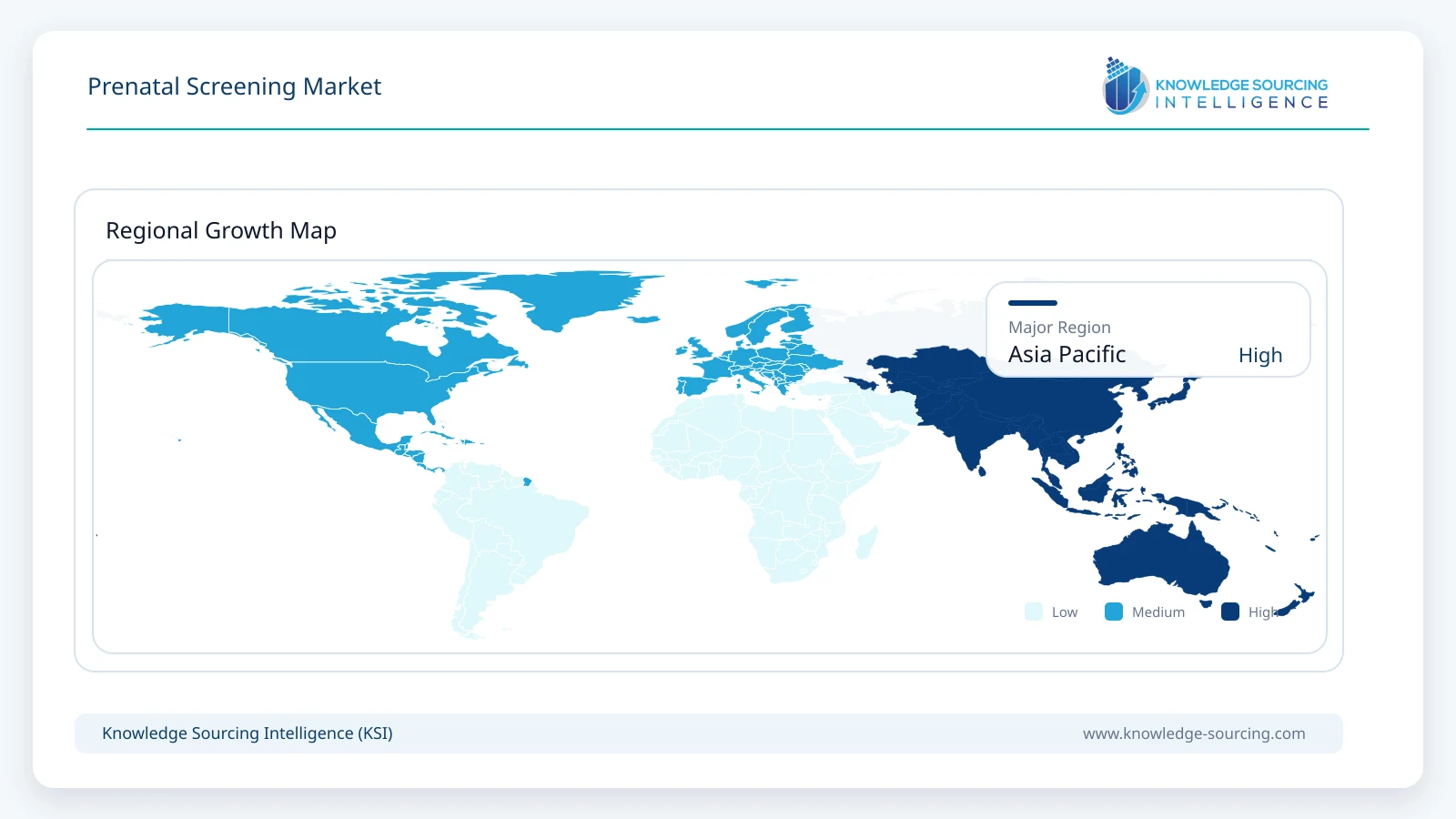
North America represents the most established prenatal screening market because it combines advanced molecular diagnostic infrastructure, favorable reimbursement pathways for selected indications, and broad clinical awareness. Healthcare providers are increasingly incorporating non-invasive prenatal screening into routine obstetric practice as professional organizations continue recommending discussion of prenatal genetic screening for all pregnancies. This expansion requires diagnostic laboratories to maintain high-throughput sequencing capacity while complying with rigorous laboratory quality standards. Leading commercial laboratories are continuing to strengthen genomic testing portfolios, expand digital reporting platforms, and integrate genetic counseling services to support growing testing volumes. The region therefore maintains a strong competitive environment characterized by continuous innovation and rapid commercialization of molecular technologies. The United States accounts for the largest regional demand because companies such as Natera, Labcorp, Quest Diagnostics, Roche, and Illumina have established extensive laboratory and sequencing capabilities.
Europe Market Analysis
Europe maintains a mature prenatal screening market because national healthcare systems integrate structured maternal health programs with evidence-based prenatal screening pathways. Demand is increasingly shifting toward non-invasive prenatal screening as clinical evidence continues demonstrating improved detection performance compared with conventional serum-based screening methods. This transition requires healthcare authorities to balance clinical benefits with population-level cost effectiveness before expanding reimbursement coverage. Public healthcare systems are continuously evaluating updated clinical evidence to optimize national prenatal screening programs while ensuring equitable patient access. The market therefore evolves through guideline-driven adoption supported by centralized healthcare delivery.
Asia Pacific Market Analysis
Asia Pacific represents the fastest-evolving regional market because improving healthcare infrastructure and rising awareness of prenatal genetic disorders are expanding demand for advanced molecular diagnostics. Governments are increasingly investing in maternal and child healthcare while diagnostic providers continue strengthening laboratory capabilities across major metropolitan centers. This expansion creates greater demand for scalable sequencing technologies capable of supporting growing prenatal testing volumes. International diagnostic companies are increasing regional collaborations to improve technology transfer, physician education, and laboratory quality standards. The market consequently benefits from both healthcare modernization and expanding private diagnostic investment.
Rest of the World
The Rest of the World market continues developing because healthcare systems across Latin America, the Middle East, and Africa are gradually strengthening maternal healthcare infrastructure. Demand is increasing as physician awareness of prenatal genetic screening improves alongside broader access to molecular diagnostic technologies. This transition remains constrained by limited laboratory capacity, reimbursement variability, and shortages of specialized genetic counseling services. International diagnostic companies are expanding distribution partnerships and reference laboratory collaborations to improve regional availability of prenatal screening solutions. These initiatives are gradually increasing access to advanced genetic testing while supporting healthcare system modernization.
Regulatory Landscape
Prenatal screening operates within a highly regulated diagnostic environment because laboratory-generated genetic information directly influences pregnancy management and subsequent clinical decision-making. Regulatory authorities require manufacturers and clinical laboratories to demonstrate analytical validity, clinical performance, and quality management before molecular screening technologies are incorporated into routine healthcare practice. These requirements are continuously evolving as sequencing technologies expand beyond common chromosomal abnormalities toward broader genomic applications. Diagnostic companies are strengthening clinical validation programs to maintain compliance while supporting physician confidence in increasingly comprehensive prenatal screening panels.
Professional organizations also shape the regulatory landscape by translating emerging clinical evidence into standardized screening recommendations. The American College of Obstetricians and Gynecologists (ACOG), Society for Maternal-Fetal Medicine (SMFM), International Society for Prenatal Diagnosis (ISPD), American College of Medical Genetics and Genomics (ACMG), and the National Institute for Health and Care Excellence (NICE) continue updating clinical guidance as additional evidence becomes available. Their recommendations encourage appropriate patient counseling, informed consent, and confirmatory diagnostic testing following positive screening results. This coordinated approach strengthens quality assurance while promoting responsible clinical implementation of prenatal genomic technologies.
Regulatory expectations are increasingly extending beyond laboratory accuracy toward data security, genomic interpretation, and reporting transparency. Laboratories are expanding digital quality management systems because genomic datasets require secure storage and standardized interpretation methodologies. Companies are continuing to invest in bioinformatics validation, laboratory accreditation, and clinician education to address these evolving requirements. The regulatory environment therefore supports sustainable market expansion while maintaining high standards of patient safety and clinical reliability.
Pipeline Analysis
The prenatal screening pipeline is increasingly focusing on expanding the clinical utility of non-invasive testing beyond common fetal aneuploidies. Developers are evaluating broader cell-free DNA applications capable of identifying microdeletion syndromes, single-gene disorders, and additional inherited conditions without requiring invasive sampling. This evolution reflects growing physician demand for more comprehensive prenatal genomic information while maintaining the safety advantages associated with maternal blood-based screening. Diagnostic companies are continuously validating these expanded panels through large multicenter clinical studies that assess analytical performance across diverse pregnancy populations. The pipeline therefore emphasizes clinical breadth rather than fundamental changes in sample collection methodologies.
Advances in sequencing chemistry, bioinformatics, and artificial intelligence are also strengthening product development pipelines. Manufacturers are integrating improved computational algorithms because larger genomic datasets require increasingly sophisticated interpretation tools capable of reducing analytical variability. Automation is simultaneously improving laboratory scalability while supporting shorter turnaround times for prenatal genetic reports. These innovations enhance operational efficiency and strengthen the commercial competitiveness of molecular diagnostic platforms used in reproductive health.
Several leading market participants continue investing in clinical evidence generation to support broader physician adoption and reimbursement expansion. Illumina is advancing sequencing platforms that improve laboratory throughput for reproductive health applications, while Natera continues generating clinical evidence supporting the Panorama™ non-invasive prenatal test across multiple pregnancy populations. Roche is expanding integrated molecular diagnostics capabilities supporting genomic testing workflows, and Revvity continues strengthening reproductive health technologies through molecular diagnostic innovation.
Reimbursement Landscape
Reimbursement remains one of the most significant factors influencing prenatal screening adoption because molecular genetic testing often carries higher direct costs than conventional biochemical screening. Coverage policies vary substantially across healthcare systems, creating differences in patient accessibility and laboratory testing volumes. Public and private payers are increasingly reviewing long-term clinical evidence as broader implementation of non-invasive prenatal screening demonstrates improved detection performance and reduced utilization of unnecessary invasive diagnostic procedures. This evaluation is encouraging gradual expansion of reimbursement eligibility in several developed healthcare markets.
Healthcare providers continue advocating for wider reimbursement because earlier identification of high-risk pregnancies supports informed clinical management and targeted diagnostic follow-up. Diagnostic companies are generating additional health economic evidence demonstrating the value of non-invasive prenatal screening within routine obstetric care. These studies strengthen discussions with healthcare payers while supporting integration into national maternal health programs. Although reimbursement remains heterogeneous across countries, expanding clinical evidence and evolving professional guidelines continue improving the long-term reimbursement outlook for advanced prenatal screening technologies.
Competitive Landscape
F. Hoffmann-La Roche Ltd.
Roche remains strategically distinct because it combines one of the world's largest in vitro diagnostics portfolios with extensive expertise in molecular diagnostics, PCR technologies, sequencing solutions, and automated laboratory systems. This integrated capability allows the company to support clinical laboratories across the complete prenatal testing workflow rather than supplying isolated diagnostic products.
Illumina, Inc.
Illumina maintains strategic leadership because its sequencing platforms serve as foundational technology for a substantial proportion of global prenatal genomic testing. The company focuses on advancing sequencing chemistry, automation, and bioinformatics integration to improve laboratory efficiency and analytical performance. Clinical laboratories are increasingly adopting Illumina platforms because higher throughput supports expanding demand for non-invasive prenatal screening while maintaining consistent quality standards.
Natera, Inc.
Natera differentiates itself through exclusive focus on cell-free DNA testing and proprietary molecular algorithms supporting reproductive health, oncology, and organ transplantation. The company has established strong physician recognition through extensive clinical validation of Panorama, making prenatal screening its core strategic business.
Revvity, Inc.
Revvity occupies a differentiated position because it combines reproductive health diagnostics with laboratory automation, life sciences, and genomic technologies. This diversified portfolio enables the company to support both clinical testing laboratories and research institutions involved in prenatal genetics.
Quest Diagnostics Incorporated
Quest Diagnostics distinguishes itself through one of the largest diagnostic laboratory networks in North America, enabling broad physician access to prenatal genetic testing. The company integrates prenatal screening within an extensive menu of clinical laboratory services, allowing healthcare providers to consolidate diagnostic workflows through a single laboratory partner.
Laboratory Corporation of America Holdings (Labcorp)
Labcorp remains strategically important because it combines nationwide diagnostic laboratory operations with specialized genomic testing services across reproductive health. The company's integrated logistics network enables efficient specimen collection and processing while supporting large-scale prenatal screening programs.
Key Developments
July 2026: Myriad Genetics launched FirstGene as a multiple prenatal screen that runs four prenatal genetic screens simultaneously as early as eight weeks gestation. The test is positioned as a broader prenatal screening option for earlier and more comprehensive fetal risk assessment.
July 2026: Gene Solutions presented evidence and clinical advances in prenatal genomics and women’s health at ISPD 2026 as a Premier Partner. The company highlighted NIPT-integrated carrier screening, AI-enabled pregnancy-risk assessment, and broader reproductive-health genomics innovation.
March 2026: EDAN introduced Nano OB Assist, an AI-enabled handheld ultrasound system designed to expand access to prenatal screening in low-resource and underserved settings. The launch highlights simplified obstetric imaging with AI-assisted blind sweep technology to reduce reliance on advanced operator training.
Strategic Insights and Future Market Outlook
The prenatal screening market is entering a phase where competitive advantage depends less on the availability of sequencing technology and more on the ability to integrate molecular diagnostics with clinical evidence, reimbursement support, and scalable laboratory operations. Demand is continuing to shift toward comprehensive non-invasive genomic screening because healthcare providers increasingly require earlier and more accurate fetal risk assessment while minimizing procedure-related complications. Diagnostic companies are responding by expanding test menus, improving sequencing workflows, and strengthening bioinformatics platforms that enhance clinical interpretation. These developments reinforce prenatal screening as a central component of precision maternal healthcare.
Healthcare systems are increasingly recognizing the long-term clinical value of early genetic risk identification because informed pregnancy management supports improved maternal and fetal outcomes. Professional societies continue updating clinical recommendations as additional evidence validates broader use of cell-free DNA screening across different pregnancy populations. Diagnostic laboratories are expanding automation and digital infrastructure to accommodate rising testing volumes while maintaining high analytical standards. These structural changes are supporting wider integration of prenatal genomic testing into routine obstetric care.
The market also presents substantial opportunities across emerging economies where healthcare infrastructure is improving and awareness of prenatal genetic disorders is increasing. Companies that combine validated molecular technologies with regional laboratory partnerships and physician education initiatives are likely to strengthen their competitive positions. Continued advances in sequencing, artificial intelligence, and genomic interpretation will expand the clinical scope of prenatal screening beyond common chromosomal abnormalities toward more comprehensive fetal genetic assessment.
Prenatal screening remains one of the fastest-evolving areas of molecular diagnostics because technological innovation, clinical evidence, and healthcare policy are collectively transforming the approach to maternal-fetal medicine. Companies that successfully align laboratory efficiency, regulatory compliance, reimbursement strategy, and genomic innovation will remain best positioned to support the growing global demand for precision prenatal care.
Prenatal Screening Market Scope:
| Report Metric | Details |
|---|---|
| Total Market Size in 2026 | USD 10.8 billion |
| Total Market Size in 2035 | USD 20.0 billion |
| Forecast Unit | Billion |
| Growth Rate | 7.1% |
| Study Period | 2021 to 2035 |
| Historical Data | 2021 to 2024 |
| Base Year | 2025 |
| Forecast Period | 2026 – 2035 |
| Segmentation | Screening Type, Technology Platform, Application, Sample Type, End User, Geography |
| Companies |
|
Market Segmentation
Screening Type
Technology Platform
End User
Geography
- North America
- South America
- Europe
- Middle East and Africa
- Asia Pacific
Table of Contents
1. EXECUTIVE SUMMARY
1.1 Market Snapshot
1.2 Key Findings
1.3 Analyst Insights
1.4 Strategic Recommendations
2. RESEARCH METHODOLOGY
2.1 Research Design
2.2 Data Collection Methodology
2.3 Market Size Estimation
2.4 Forecasting Model
2.5 Assumptions & Limitations
3. GLOBAL PRENATAL SCREENING MARKET OVERVIEW, SIZE & FORECAST
3.1 Market Definition & Scope
3.2 Pregnancy & Prenatal Screening Overview
3.3 Industry Evolution
3.4 Key Market Trends
3.5 Historical Market Size Analysis (2021–2025)
3.6 Market Forecast (2026–2035)
3.7 Disease Burden & Unmet Clinical Needs
3.8 Pregnancy Population & Birth Statistics Analysis
3.9 Maternal Age Demographics Analysis
3.10 Prenatal Screening Adoption Analysis
3.11 Screening Pathway & Patient Journey Analysis
3.12 Prenatal Screening Guidelines & Clinical Practice Overview
4. MARKET DYNAMICS
4.1 Market Drivers
4.2 Market Restraints
4.3 Market Opportunities
4.4 Market Challenges
5. INDUSTRY LANDSCAPE
5.1 Industry Value Chain Analysis
5.2 Pricing Analysis
5.3 Reimbursement Landscape
6. INNOVATION LANDSCAPE
6.1 Emerging Technologies
6.2 Product Innovation
6.3 Clinical Trial Analysis
6.4 Pipeline Analysis
6.5 Technology Roadmap
6.6 Artificial Intelligence Integration in Prenatal Screening
6.7 Digital Health Integration
7. REGULATORY LANDSCAPE
7.1 Regulatory Framework
7.2 Approval Pathways
7.3 Compliance Requirements
8. GLOBAL PRENATAL SCREENING MARKET LANDSCAPE ANALYSIS
8.1 Analysis by Screening Type
8.2 Analysis by Technology Platform
8.3 Analysis by Biomarker Type
8.4 Analysis by Sample Type
8.5 Analysis by Clinical Application
8.6 Analysis by Testing Methodology
8.7 Analysis by Risk Category
9. GLOBAL PRENATAL SCREENING MARKET SEGMENT ANALYSIS (2021–2035)
9.1 By Screening Type
9.1.1 Non-Invasive Prenatal Screening (NIPS/NIPT)
9.1.2 Conventional Prenatal Screening
9.1.2.1 First Trimester Screening
9.1.2.2 Second Trimester Screening
9.1.2.3 Integrated & Sequential Screening
9.2 By Technology Platform
9.2.1 Next-Generation Sequencing (NGS)
9.2.2 Microarray-Based Testing
9.2.3 PCR-Based Testing
9.2.4 Biochemical Immunoassays
9.3 By Application
9.3.1 Chromosomal Aneuploidies
9.3.2 Microdeletion Syndromes
9.3.3 Single-Gene Disorders
9.3.4 Neural Tube Defects & Other Pregnancy Conditions
9.4 By Sample Type
9.4.1 Maternal Blood
9.4.2 Maternal Serum
9.4.3 Other Sample Types
9.5 By End User
9.5.1 Hospitals
9.5.2 Diagnostic Laboratories
9.5.3 Specialty Clinics & Fertility Centers
9.5.4 Academic & Research Institutes
10. GLOBAL PRENATAL SCREENING MARKET GEOGRAPHICAL ANALYSIS (2021–2035)
10.1 North America
10.2 Europe
10.3 Asia-Pacific
10.4 South America
10.5 Middle East & Africa
11. GLOBAL PRENATAL SCREENING MARKET COUNTRY ANALYSIS (2021–2035)
11.1 United States
11.2 Canada
11.3 Germany
11.4 United Kingdom
11.5 France
11.6 Italy
11.7 Spain
11.8 Japan
11.9 China
11.10 India
11.11 South Korea
11.12 Australia
11.13 Brazil
11.14 Mexico
11.15 Saudi Arabia
11.16 South Africa
12. COMPETITIVE LANDSCAPE
12.1 Market Share Analysis
12.2 Strategic Developments
12.3 Mergers & Acquisitions, Partnerships & Collaborations
12.4 Product Launches
13. COMPANY PROFILES
13.1 F. Hoffmann-La Roche Ltd.
13.1.1 Company Overview
13.1.2 Financials
13.1.3 Product Portfolio
13.1.4 Recent Developments
13.2 Illumina, Inc.
13.3 Natera, Inc.
13.4 Revvity, Inc.
13.5 Quest Diagnostics Incorporated
13.6 Laboratory Corporation of America Holdings (Labcorp)
13.7 BGI Genomics Co., Ltd.
13.8 Myriad Genetics, Inc.
13.9 Eurofins Scientific SE
13.10 Agilent Technologies, Inc.
14. GLOBAL PRENATAL SCREENING MARKET COMMERCIAL FORECAST ANALYSIS
14.1 Commercial Forecast by Non-Invasive Prenatal Screening (NIPS/NIPT)
14.2 Commercial Forecast by First Trimester Screening
14.3 Commercial Forecast by Second Trimester Screening
14.4 Commercial Forecast by Integrated & Sequential Screening
14.5 Commercial Forecast by Carrier Screening
15. INVESTMENT & FUNDING ANALYSIS
15.1 Venture Capital Trends
15.2 Government Funding
15.3 R&D Investments
16. FUTURE OUTLOOK
16.1 Key Growth Opportunities
16.2 Future Industry Trends
Navigate
Trusted by the world's leading organizations











