
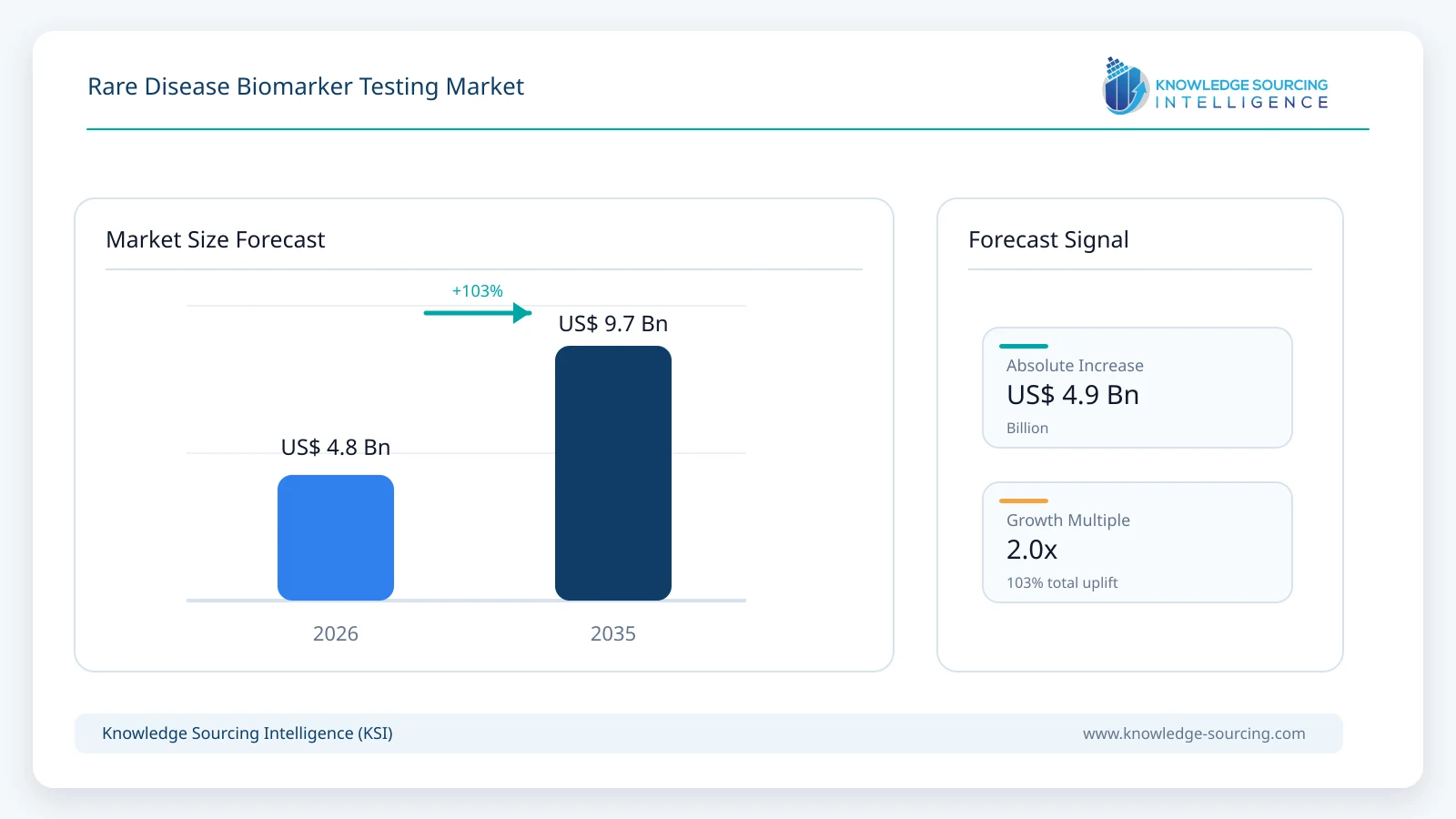
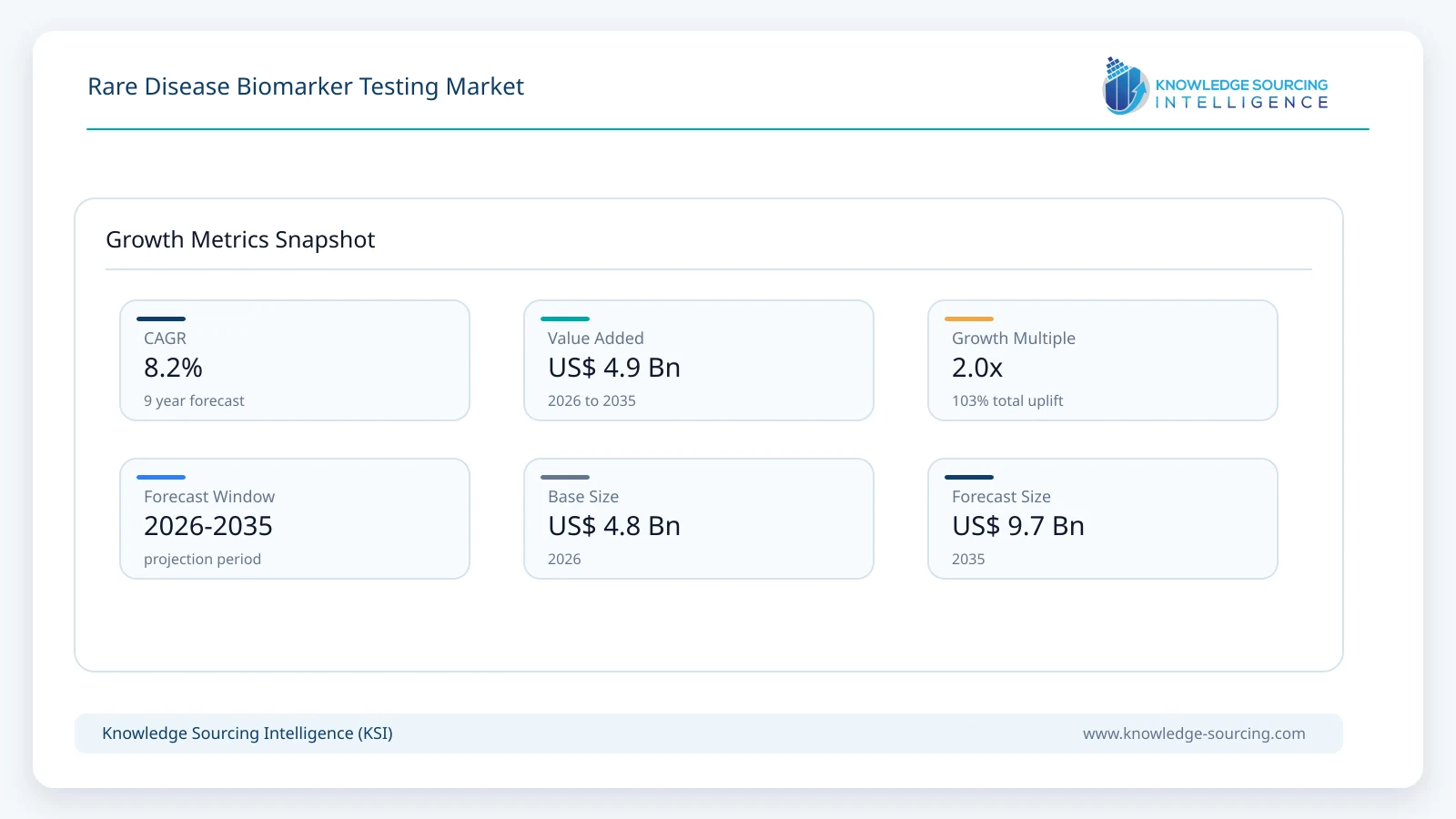
The Rare Disease Biomarker Testing Market is expected to grow at a CAGR of 8.2% from a market value of USD 4.78 billion in 2026 to USD 9.69 billion in 2035.
Highlights:
- 1Growing adoption of comprehensive genomic sequencing is reducing diagnostic uncertainty, increasing demand for high-sensitivity biomarker testing across rare genetic disorders.
- 2Expansion of orphan drug development is creating greater dependence on molecular diagnostics because clinical trials increasingly require genetically confirmed patient populations before enrollment.
- 3National genomic medicine programs are improving patient access to advanced testing, supporting earlier diagnosis and expanding utilization across tertiary healthcare systems.
- 4Pharmaceutical companies are increasing partnerships with diagnostic developers because biomarker-guided patient identification improves trial efficiency and treatment selection.
Rare disease biomarker testing identifies molecular, biochemical, genetic, or cellular indicators associated with diseases affecting relatively small patient populations. These biomarkers support disease detection, confirm diagnosis, predict therapeutic response, monitor disease progression, and facilitate patient stratification for targeted therapies. Technologies commonly include next-generation sequencing, polymerase chain reaction (PCR), chromosomal microarray analysis, whole-exome sequencing, whole-genome sequencing, RNA sequencing, metabolomic profiling, proteomic assays, and multiplex molecular diagnostics.
Demand is expanding because increasing numbers of orphan drugs require genetically confirmed patient populations before treatment initiation. Precision medicine programs are therefore strengthening dependence on validated biomarkers throughout clinical decision-making. Academic medical centers, specialty hospitals, and reference laboratories are consequently adopting broader sequencing panels that identify pathogenic variants across numerous rare disorders within a single diagnostic workflow.
Regulatory agencies continue supporting genomic medicine through accelerated orphan drug pathways, companion diagnostic guidance, and national genomic initiatives. These frameworks reduce uncertainty for diagnostic developers while encouraging pharmaceutical companies to integrate biomarker strategies during earlier stages of clinical development. Biomarker testing therefore serves both healthcare delivery and therapeutic innovation by linking molecular diagnosis with targeted treatment selection.
The market also plays a strategic role in reducing diagnostic delays that frequently extend across several years for patients with rare diseases. Comprehensive molecular testing shortens sequential testing approaches by simultaneously evaluating multiple disease-associated genes. This shift improves healthcare resource utilization while enabling clinicians to initiate disease-specific management before irreversible disease progression occurs.
Market Dynamics
Market Drivers
Increasing Integration of Precision Medicine into Rare Disease Management: Precision medicine relies on molecular characterization to match patients with targeted therapies, making biomarker testing an indispensable clinical tool. Healthcare providers are increasingly incorporating genomic testing into routine diagnostic pathways because many rare disorders share similar clinical symptoms despite distinct genetic origins. This transition reduces diagnostic ambiguity while enabling personalized treatment strategies. Pharmaceutical developers are simultaneously expanding targeted therapeutic portfolios, increasing demand for standardized biomarker assays that accurately identify eligible patient populations.
Expansion of Next-Generation Sequencing in Clinical Diagnostics: Next-generation sequencing enables simultaneous analysis of hundreds or thousands of genes associated with rare disorders. Clinical laboratories are increasingly replacing sequential single-gene testing with comprehensive sequencing panels because they improve diagnostic yield and reduce overall testing time. The growing affordability of sequencing technologies further supports broader adoption across tertiary hospitals and specialized diagnostic centers. These technological improvements strengthen demand for advanced bioinformatics platforms capable of interpreting increasingly complex genomic datasets.
Growing Rare Disease Drug Development Pipeline: The expanding orphan drug pipeline increases dependence on molecular diagnostics throughout therapeutic development. Sponsors are increasingly incorporating biomarker-defined inclusion criteria into clinical trials because genetically homogeneous patient populations improve treatment response evaluation. Companion diagnostic development therefore becomes strategically aligned with therapeutic commercialization. This integration supports sustained investment in biomarker discovery, assay validation, and regulatory approval activities.
Government-Supported Genomic Medicine Programs: National precision medicine initiatives promote earlier identification of inherited diseases through expanded genomic testing infrastructure. Governments are increasing investments in sequencing capabilities, national genomic databases, and rare disease registries because earlier diagnosis reduces long-term healthcare costs associated with delayed treatment. These programs encourage collaboration among research institutions, healthcare providers, and diagnostic manufacturers, strengthening adoption of standardized biomarker testing across public healthcare system.
Market Restraints
High costs associated with comprehensive genomic sequencing, specialized laboratory infrastructure, and advanced bioinformatics continue limiting widespread adoption in resource-constrained healthcare systems.
Limited clinical evidence for numerous ultra-rare disorders reduces biomarker validation, creating uncertainty in variant interpretation and diagnostic confidence.
Reimbursement variability across countries restricts patient access to advanced molecular diagnostics despite increasing clinical utility.
Market Opportunities
Expansion of Multi-Omics Biomarker Platforms: Rare diseases often involve complex molecular mechanisms extending beyond single-gene mutations. Diagnostic developers are increasingly integrating genomic, transcriptomic, proteomic, and metabolomic analyses into unified testing platforms because combined molecular insights improve disease characterization. These comprehensive approaches strengthen biomarker discovery while supporting more accurate patient stratification for targeted therapies.
Increasing Adoption of Artificial Intelligence in Variant Interpretation: Large-scale genomic sequencing generates substantial volumes of complex molecular data requiring sophisticated interpretation. Artificial intelligence platforms are increasingly supporting pathogenic variant classification, phenotype matching, and clinical reporting because automated analysis improves laboratory efficiency. Continuous refinement of machine learning algorithms further enhances diagnostic consistency across increasingly diverse patient populations.
Pharmaceutical-Diagnostic Co-Development Strategies: Biopharmaceutical companies increasingly recognize biomarker testing as a critical component of successful orphan drug commercialization. Diagnostic manufacturers are expanding strategic collaborations with therapy developers because synchronized development shortens regulatory timelines and facilitates companion diagnostic approvals. These partnerships strengthen long-term commercial opportunities across both clinical diagnostics and precision therapeutics.
Expansion of National Rare Disease Registries: Patient registries improve understanding of disease prevalence, genotype-phenotype relationships, and treatment outcomes. Governments and research organizations are increasingly establishing integrated rare disease databases that connect clinical information with genomic findings. These initiatives improve biomarker validation while supporting more efficient patient recruitment for clinical trials and long-term natural history studies.
Disease & Epidemiology Analysis
Rare diseases collectively affect a substantial global patient population despite the low prevalence of individual conditions. Most rare diseases originate from inherited genetic variants, making molecular biomarker testing the principal method for establishing definitive diagnoses and guiding clinical management. The expanding understanding of disease-associated genes is increasing the clinical value of comprehensive genomic testing because conventional symptom-based diagnosis often fails to distinguish disorders with overlapping phenotypes. This shift supports earlier intervention while improving the selection of targeted therapies where available.
Neurological and metabolic rare diseases account for a significant proportion of biomarker testing demand because these disorders frequently present during infancy or childhood and require rapid molecular confirmation. Healthcare providers are increasingly adopting next-generation sequencing panels and whole-exome sequencing because multiple neurological syndromes share similar clinical manifestations despite distinct genetic mechanisms. Earlier molecular diagnosis reduces prolonged diagnostic investigations while enabling genetic counseling and family screening, strengthening long-term utilization of biomarker testing.
Rare hematological, immunological, cardiovascular, and musculoskeletal disorders are also expanding the demand for validated biomarkers because emerging targeted therapies require genetically confirmed patient populations before treatment initiation. Pharmaceutical sponsors are increasingly incorporating biomarker-defined eligibility criteria into clinical studies, creating greater dependence on standardized molecular diagnostics. This integration improves patient stratification while accelerating enrollment into orphan drug clinical trials, reinforcing the role of biomarker testing throughout therapeutic development.
Treatment Guidelines Landscape
Organization | Disease Area | Guideline Focus | Biomarker Testing Role |
American College of Medical Genetics and Genomics (ACMG) | Rare Genetic Disorders | Clinical genetic evaluation and variant interpretation | Recommends comprehensive molecular testing for suspected inherited disorders |
European Society of Human Genetics (ESHG) | Rare Genetic Diseases | Diagnostic genomic sequencing | Supports exome and genome sequencing in undiagnosed rare diseases |
National Comprehensive Cancer Network (NCCN) | Hereditary Cancer Syndromes | Germline genetic testing | Uses validated biomarkers for inherited cancer risk assessment |
U.S. National Institutes of Health (NIH) | Rare Diseases | Precision medicine research | Encourages genomic characterization for diagnosis and clinical research |
Market Segmentation
By Disease Type
Neurological disorders represent one of the largest areas of biomarker testing because many inherited neurodevelopmental and neurodegenerative diseases share overlapping clinical presentations. Healthcare providers are increasingly utilizing comprehensive sequencing panels rather than sequential single-gene analysis because broader molecular evaluation improves diagnostic yield in clinically heterogeneous disorders. Diagnostic complexity continues driving adoption of integrated genomic and bioinformatics platforms that distinguish pathogenic variants from benign findings. This approach supports earlier intervention, facilitates enrollment into targeted clinical trials, and strengthens long-term disease management strategies.
By Sample Type
Blood remains the primary sample type because collection is minimally invasive and supports multiple molecular testing technologies, including DNA sequencing, RNA analysis, digital PCR, and biochemical biomarker assessment. Clinical laboratories are increasingly optimizing blood-based genomic workflows because standardized collection procedures improve analytical reproducibility across healthcare institutions. Expanding adoption of liquid biopsy technologies and cell-free nucleic acid analysis further broadens the clinical utility of blood samples for inherited disease diagnostics. These advantages maintain blood as the preferred specimen across routine clinical practice and pharmaceutical-sponsored research.
By End User
Clinical diagnostic laboratories constitute the leading end-user segment because they possess specialized sequencing infrastructure, molecular pathology expertise, and advanced bioinformatics capabilities required for complex genomic interpretation. Healthcare systems are increasingly referring patients with suspected rare diseases to accredited reference laboratories because centralized testing improves quality assurance and access to multidisciplinary expertise. Growing pharmaceutical collaborations are also increasing laboratory participation in companion diagnostic development and biomarker validation studies. This expanding role strengthens laboratory investment in high-throughput sequencing technologies, automation, and standardized variant interpretation frameworks.
Regional Analysis
North America Market Analysis
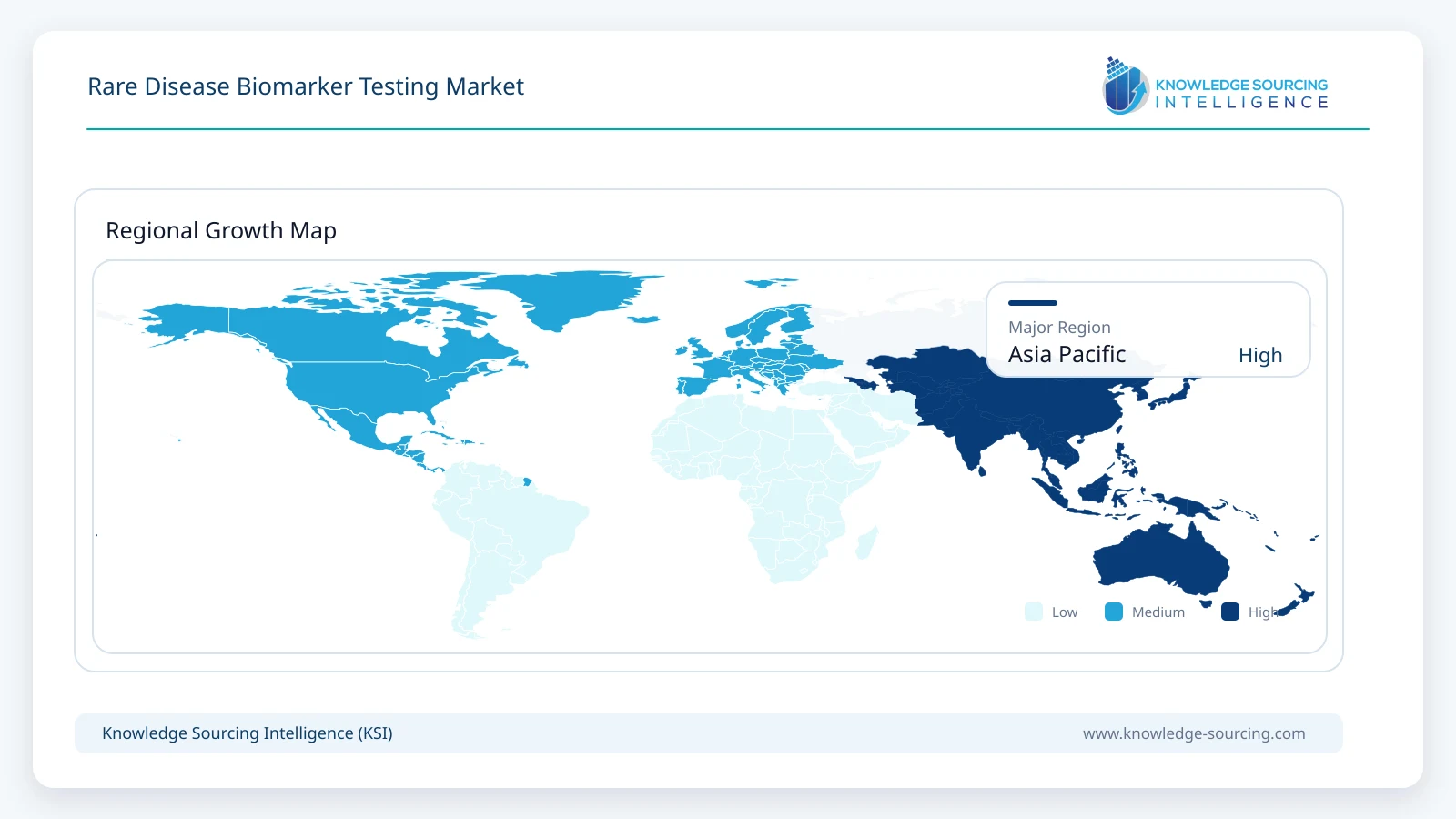
North America represents the most mature market for rare disease biomarker testing because it combines advanced genomic infrastructure, favorable regulatory pathways, strong research funding, and extensive pharmaceutical innovation. The region is increasingly integrating genomic sequencing into routine clinical practice as healthcare providers seek earlier molecular confirmation for patients with suspected inherited disorders. This transition reduces prolonged diagnostic investigations while improving access to precision therapies that require genetically verified patient populations. Academic medical centers, commercial laboratories, and biotechnology companies continue collaborating on biomarker discovery, strengthening translation from research into clinical diagnostics. The presence of orphan drug developers increases demand for validated biomarkers because patient stratification remains essential throughout clinical development and commercialization. National genomic initiatives, patient registries, and rare disease advocacy organizations further strengthen evidence generation by supporting longitudinal clinical data collection.
Europe Market Analysis
Europe maintains a strong position through coordinated rare disease policies, established reference networks, and increasing investment in genomic medicine. Healthcare systems are expanding access to molecular diagnostics because earlier diagnosis improves treatment planning for genetically heterogeneous disorders. The European Reference Networks (ERNs) strengthen collaboration among specialist centers, allowing complex cases to benefit from cross-border clinical expertise and standardized diagnostic approaches. Pharmaceutical companies continue aligning orphan drug development with biomarker-guided patient identification, increasing demand for validated genomic assays throughout clinical trials. Regulatory support from the European Medicines Agency encourages the integration of companion diagnostics into precision therapeutic strategies while maintaining rigorous clinical evidence requirements.
Asia Pacific Market Analysis
Asia Pacific is experiencing rapid expansion as governments increase investment in genomic medicine, precision healthcare, and rare disease awareness. Healthcare providers are adopting advanced molecular diagnostics because improvements in sequencing accessibility are reducing historical barriers to genetic testing. Countries including Japan, China, South Korea, Singapore, and Australia continue strengthening national genomic initiatives that support earlier identification of inherited disorders. Academic institutions and biotechnology companies are expanding collaborative research programs, improving biomarker discovery across ethnically diverse populations. Pharmaceutical sponsors are increasingly conducting regional clinical trials because growing patient registries improve identification of genetically confirmed participants. Diagnostic laboratories are simultaneously expanding sequencing capacity and bioinformatics expertise to address increasing testing demand.
Rest of the World
The Rest of the World market is developing gradually as healthcare systems strengthen diagnostic capabilities and improve awareness of rare genetic disorders. Countries in Latin America, the Middle East, and parts of Africa are expanding access to molecular diagnostics through collaborations with international research organizations and commercial diagnostic providers. Healthcare institutions are increasingly recognizing the clinical value of early molecular diagnosis because delayed identification frequently results in prolonged healthcare utilization and poorer patient outcomes. International rare disease programs continue supporting physician education, laboratory training, and technology transfer, improving diagnostic capacity across emerging healthcare systems. Pharmaceutical companies are also extending global clinical trial networks to improve patient recruitment for orphan drug development, increasing demand for standardized biomarker testing.
Regulatory Landscape
Rare disease biomarker testing operates within regulatory frameworks that increasingly recognize the importance of molecular diagnostics in precision medicine and orphan drug development. The U.S. Food and Drug Administration (FDA) continues supporting companion diagnostics through guidance documents that emphasize analytical validity, clinical validity, and clinical utility. Simultaneously, the FDA Office of Orphan Products Development (OOPD) encourages therapeutic innovation for rare diseases, increasing the demand for validated biomarkers that identify eligible patient populations.
The European Medicines Agency (EMA) supports biomarker-driven therapeutic development through orphan medicinal product regulations and encourages early integration of companion diagnostics into clinical development strategies. The In Vitro Diagnostic Regulation (IVDR) is also strengthening evidence requirements for diagnostic manufacturers, increasing emphasis on assay performance, risk classification, and post-market surveillance. These evolving requirements are encouraging companies to generate stronger clinical validation data before commercialization.
Across Asia Pacific, regulatory agencies are expanding genomic medicine frameworks while establishing quality standards for molecular diagnostics. Japan's Pharmaceuticals and Medical Devices Agency (PMDA), China's National Medical Products Administration (NMPA), and other regional authorities are increasing regulatory oversight of next-generation sequencing-based diagnostics. These evolving frameworks improve confidence in clinical testing while supporting broader adoption of precision medicine across regional healthcare systems.
Pipeline Analysis
The rare disease biomarker testing pipeline is expanding alongside advances in genomic technologies, multi-omics research, and precision therapeutics. Current development programs increasingly focus on identifying highly specific molecular biomarkers that improve diagnostic accuracy, predict disease progression, and enable earlier therapeutic intervention. Whole-genome sequencing, long-read sequencing, transcriptomic profiling, metabolomic analysis, and digital PCR platforms are continuing to broaden the range of detectable pathogenic variants, particularly for genetically heterogeneous disorders that remain difficult to diagnose using conventional approaches.
Pharmaceutical sponsors are increasingly integrating biomarker strategies into orphan drug development because genetically defined patient populations improve clinical trial efficiency and treatment response assessment. Gene therapies, antisense oligonucleotides, RNA-targeted therapeutics, enzyme replacement therapies, genome-editing platforms, and small-molecule precision medicines are all relying on molecular biomarkers for patient selection and longitudinal monitoring. This dependence is increasing collaboration between therapeutic developers and diagnostic manufacturers to establish validated companion diagnostic assays before regulatory submission.
Clinical trials are progressively incorporating adaptive study designs and genomic eligibility criteria because rare disease populations remain limited and geographically dispersed. Sponsors are expanding natural history studies and patient registries to strengthen biomarker validation while supporting regulatory evidence generation. Artificial intelligence-assisted variant interpretation and integrated bioinformatics platforms are also improving clinical trial enrollment by accelerating identification of genetically eligible participants. These trends indicate that biomarker testing is becoming a central component of rare disease drug development rather than a downstream diagnostic tool.
Reimbursement Landscape
Reimbursement policies remain one of the most influential factors determining patient access to rare disease biomarker testing because advanced molecular diagnostics often involve high sequencing, interpretation, and reporting costs. Public and private payers are increasingly recognizing that early genetic diagnosis reduces unnecessary investigations, inappropriate treatments, and prolonged hospital utilization. This shift is supporting broader reimbursement for clinically validated genomic tests that demonstrate clear diagnostic and therapeutic value. Coverage decisions, however, continue to depend on clinical evidence, disease indication, laboratory accreditation, and national healthcare policies, creating significant variation across regions.
In the United States, reimbursement is supported through a combination of Medicare, Medicaid, and private insurers for eligible molecular diagnostic tests that satisfy established clinical utility requirements. Several European countries are expanding reimbursement for next-generation sequencing within national healthcare systems as precision medicine programs mature and rare disease strategies evolve. Japan and selected Asia-Pacific countries are also broadening reimbursement for genetic testing in specific inherited disorders, although coverage remains heterogeneous across disease indications and healthcare systems. These developments are encouraging diagnostic laboratories to generate stronger health-economic evidence demonstrating that biomarker-guided diagnosis improves long-term clinical outcomes while reducing downstream healthcare expenditure.
Competitive Landscape
F. Hoffmann-La Roche Ltd.
Roche differentiates itself through the integration of pharmaceuticals, molecular diagnostics, and companion diagnostic development within a single precision medicine ecosystem. The company continues strengthening its rare disease biomarker portfolio by expanding next-generation sequencing capabilities, digital pathology solutions, and advanced molecular diagnostics that support patient identification throughout therapeutic development.
Illumina, Inc.
Illumina maintains strategic leadership through its comprehensive next-generation sequencing technology portfolio, which serves clinical laboratories, research institutions, and pharmaceutical developers worldwide. The company is continuously improving sequencing throughput, analytical accuracy, and workflow automation because healthcare providers increasingly require scalable genomic testing for rare diseases.
Thermo Fisher Scientific Inc.
Thermo Fisher Scientific distinguishes itself through its diversified molecular diagnostics, sequencing technologies, and laboratory workflow solutions. The company is expanding integrated genomic testing capabilities by combining Ion Torrent sequencing, real-time PCR, digital PCR, and bioinformatics software into standardized diagnostic workflows.
Myriad Genetics, Inc.
Myriad Genetics focuses on clinically validated genetic testing supported by extensive variant interpretation expertise and proprietary genomic databases. The company continues enhancing hereditary disease testing through advanced molecular assays and evidence-based reporting systems that improve physician confidence in clinical decision-making.
QIAGEN N.V.
QIAGEN differentiates itself by integrating molecular sample technologies, companion diagnostics, digital PCR, and bioinformatics solutions into comprehensive precision medicine workflows. The company continues developing highly sensitive molecular assays that improve detection of rare genetic variants and support clinical decision-making across inherited disorders.
Bio-Rad Laboratories, Inc.
Bio-Rad Laboratories has established a strong position through highly sensitive digital PCR technologies and molecular quality control solutions supporting rare disease diagnostics. The company continues improving assay precision because accurate detection of low-frequency variants remains essential for inherited disease confirmation and therapeutic monitoring.
Key Developments
July 2026: Anthropic launched its AI for Science rare disease research program, offering up to $50,000 in Claude API credits to researchers and early-stage biotech teams.
June 2026: Rare disease advocates urged the US FDA to rethink how it sets clinical endpoints, validates biomarkers, designs trials, and reforms advisory committees for small patient populations. The discussion centered on improving evidence standards so therapies for rare conditions can be evaluated more effectively.
Strategic Insights and Future Market Outlook
Rare disease biomarker testing is evolving into a foundational component of precision healthcare because therapeutic innovation increasingly depends on accurate molecular characterization. Healthcare systems are expanding genomic testing capabilities as earlier diagnosis demonstrates measurable improvements in clinical management, patient outcomes, and healthcare resource utilization. Pharmaceutical sponsors are simultaneously incorporating biomarker strategies into earlier stages of drug development, strengthening long-term demand for validated molecular diagnostics across orphan disease indications.
Technological innovation continues transforming the competitive landscape through advances in whole-genome sequencing, long-read sequencing, transcriptomics, proteomics, metabolomics, and artificial intelligence-assisted variant interpretation. Diagnostic manufacturers are investing in integrated multi-omics platforms because comprehensive molecular profiling improves diagnostic yield for genetically heterogeneous disorders. These developments are reducing diagnostic uncertainty while strengthening the relationship between precision diagnostics and targeted therapeutics.
Future market expansion will increasingly depend on harmonized regulatory frameworks, broader reimbursement coverage, standardized clinical evidence generation, and continued collaboration between diagnostic developers, pharmaceutical companies, healthcare providers, and academic research organizations. Organizations capable of combining advanced molecular technologies with scalable bioinformatics, robust clinical validation, and global regulatory expertise are expected to strengthen their competitive positions as precision medicine continues reshaping rare disease diagnosis and treatment.
Rare disease biomarker testing therefore remains a strategic enabler of precision medicine by connecting molecular diagnosis, clinical decision-making, therapeutic development, and long-term patient management into a unified healthcare ecosystem. Continued advances in genomic science, regulatory support, and targeted therapy development are expected to reinforce its central role in improving outcomes for patients affected by rare diseases while supporting sustainable innovation across the global healthcare industry.
Rare Disease Biomarker Testing Market Scope:
| Report Metric | Details |
|---|---|
| Total Market Size in 2026 | USD 4.78 billion |
| Total Market Size in 2035 | USD 9.69 billion |
| Forecast Unit | Billion |
| Growth Rate | 8.2% |
| Study Period | 2021 to 2035 |
| Historical Data | 2021 to 2024 |
| Base Year | 2025 |
| Forecast Period | 2026 – 2035 |
| Segmentation | Biomarker Type, Technology, Sample Type, Disease, Clinical Application, End User, Geography |
| Companies |
|
Market Segmentation
Biomarker Type
Technology
End User
Geography
- North America
- South America
- Europe
- Middle East and Africa
- Asia Pacific
Table of Contents
1. EXECUTIVE SUMMARY
1.1 Market Snapshot
1.2 Key Findings
1.3 Analyst Insights
1.4 Strategic Recommendations
2. RESEARCH METHODOLOGY
2.1 Research Design
2.2 Data Collection Methodology
2.3 Market Size Estimation
2.4 Forecasting Model
2.5 Assumptions & Limitations
3. GLOBAL RARE DISEASE BIOMARKER TESTING MARKET OVERVIEW, SIZE & FORECAST
3.1 Market Definition & Scope
3.2 Rare Disease Overview
3.3 Role of Biomarker Testing in Rare Disease Diagnosis and Management
3.4 Industry Evolution
3.5 Key Market Trends
3.6 Historical Market Size Analysis (2021–2025)
3.7 Market Forecast (2026–2035)
3.8 Disease Burden & Unmet Diagnostic Needs
3.9 Rare Disease Prevalence Analysis
3.10 Diagnosed Patient Population Analysis
3.11 Patient Journey Analysis for Rare Disease Diagnosis
3.12 Testing Volume Analysis
4. MARKET DYNAMICS
4.1 Market Drivers
4.2 Market Restraints
4.3 Market Opportunities
4.4 Market Challenges
5. INDUSTRY LANDSCAPE
5.1 Industry Value Chain Analysis
5.2 Pricing Analysis
5.3 Reimbursement Landscape
6. INNOVATION LANDSCAPE
6.1 Emerging Biomarker Discovery Technologies
6.2 Advances in Multi-Omics Technologies
6.3 Product Innovation
6.4 Pipeline Analysis of Novel Rare Disease Biomarker Tests
6.5 Clinical Trial Analysis Supporting Biomarker Validation
6.6 Artificial Intelligence in Biomarker Discovery and Interpretation
6.7 Digital Health Integration for Rare Disease Diagnostics
7. REGULATORY LANDSCAPE
7.1 Regulatory Framework
7.2 Approval Pathways
7.3 Compliance Requirements
8. GLOBAL RARE DISEASE BIOMARKER TESTING MARKET LANDSCAPE ANALYSIS
8.1 Analysis by Technology Platform
8.2 Analysis by Biomarker Type
8.3 Analysis by Sample Type
8.4 Analysis by Testing Methodology
8.5 Analysis by Clinical Application
8.6 Analysis by End User
9. GLOBAL RARE DISEASE BIOMARKER TESTING MARKET SEGMENT ANALYSIS (2021–2035)
9.1 By Biomarker Type
9.1.1 Genomic Biomarkers
9.1.2 Proteomic Biomarkers
9.1.3 RNA Biomarkers
9.1.4 DNA Biomarkers
9.1.5 Others
9.2 By Technology
9.2.1 Next-Generation Sequencing (NGS)
9.2.2 Polymerase Chain Reaction (PCR)
9.2.3 Sanger Sequencing
9.2.4 Microarray Analysis
9.2.5 Immunoassays
9.2.6 Other Molecular Technologies
9.3 By Sample Type
9.3.1 Blood
9.3.2 Tissue
9.3.3 Saliva & Buccal Swab
9.3.4 Urine
9.3.5 Cerebrospinal Fluid
9.3.6 Other Biological Samples
9.4 By Disease
9.4.1 Rare Genetic Disorders
9.4.2 Rare Neurological Disorders
9.4.3 Rare Metabolic Disorders
9.4.4 Rare Hematological Disorders
9.4.5 Rare Cardiovascular Disorders
9.4.6 Other Rare Diseases
9.5 By Clinical Application
9.5.1 Screening
9.5.2 Early Diagnosis
9.5.3 Disease Confirmation
9.5.4 Prognostic Assessment
9.5.5 Treatment Selection and Monitoring
9.6 By End User
9.6.1 Hospitals
9.6.2 Clinical Diagnostic Laboratories
9.6.3 Academic & Research Institutes
9.6.4 Others
10. GLOBAL RARE DISEASE BIOMARKER TESTING MARKET GEOGRAPHICAL ANALYSIS (2021–2035)
10.1 North America
10.2 Europe
10.3 Asia-Pacific
10.4 South America
10.5 Middle East & Africa
11. GLOBAL RARE DISEASE BIOMARKER TESTING MARKET COUNTRY ANALYSIS (2021–2035)
11.1 United States
11.2 Canada
11.3 Germany
11.4 United Kingdom
11.5 France
11.6 Italy
11.7 Spain
11.8 Japan
11.9 China
11.10 India
11.11 Australia
11.12 Brazil
11.13 Saudi Arabia
11.14 South Africa
12. COMPETITIVE LANDSCAPE
12.1 Market Share Analysis
12.2 Strategic Developments
12.3 Mergers & Acquisitions, Partnerships & Collaborations
12.4 Product Launches
13. COMPANY PROFILES
13.1 F. Hoffmann-La Roche Ltd.
13.1.1 Company Overview
13.1.2 Financials
13.1.3 Product Portfolio
13.1.4 Recent Developments
13.2 Illumina, Inc.
13.3 Thermo Fisher Scientific Inc.
13.4 Myriad Genetics, Inc.
13.5 QIAGEN N.V.
13.6 Bio-Rad Laboratories, Inc.
13.7 Agilent Technologies, Inc.
13.8 Eurofins Scientific SE
13.9 Natera, Inc.
13.10 Invitae Corporation
14. GLOBAL RARE DISEASE BIOMARKER TESTING MARKET COMMERCIAL FORECAST ANALYSIS
14.1 Next-Generation Sequencing-Based Biomarker Testing
14.2 PCR-Based Biomarker Testing
14.3 Multi-Omics Biomarker Testing Platforms
14.4 Mass Spectrometry-Based Biomarker Testing
14.5 Immunoassay-Based Biomarker Testing
14.6 AI-Enabled Biomarker Interpretation Solutions
15. INVESTMENT & FUNDING ANALYSIS
15.1 Venture Capital Trends
15.2 Government Funding
15.3 R&D Investments
16. FUTURE OUTLOOK
16.1 Key Growth Opportunities
16.2 Future Industry Trends
Navigate
Trusted by the world's leading organizations











