The E-compressor is a mechanical device that can convert gas under low pressure to gas under high pressure by reducing the volume of the gas whose pressure was increased in the first place. In a thermal management system, this can circulate the refrigerant under pressure. These E-compressors have mo...

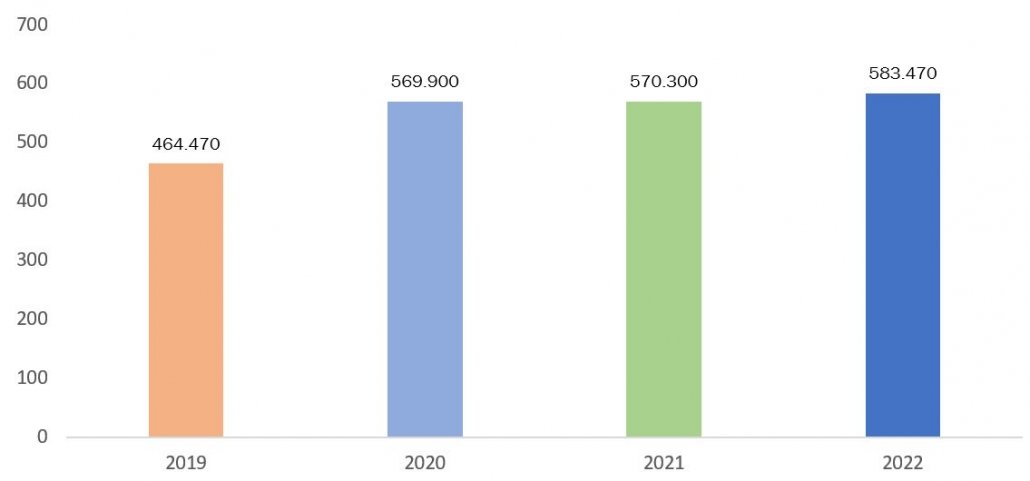 Source: Voltas Ltd. Annual Reports (In Rupees Crores)
Market Dynamics and Drivers
Several factors drive the E-compressor market, including a rise in applications of E-compressor in renewable energy production by integrating them into wind turbines for energy storage and grid stabilization in recent times coupled with the rise in demand for EVs in the automotive industry has contributed significantly to boosting the overall E-compressor market.
So, with this rapid growth in electric vehicle technology and popularity, the need for e-compressors is rising proportionally. E-compressors are used in electric vehicles to provide efficient energy usage and reduce harmful emissions when compared to traditional compressors that use fossil fuel resources. Electric vehicles use this e-compressor not only for the air conditioning systems but also to cool the battery of the electric vehicle for the smooth operation of the vehicle. Therefore, with a rise in demand for these EVs in the market, the e-compressor market is also predicted to grow.
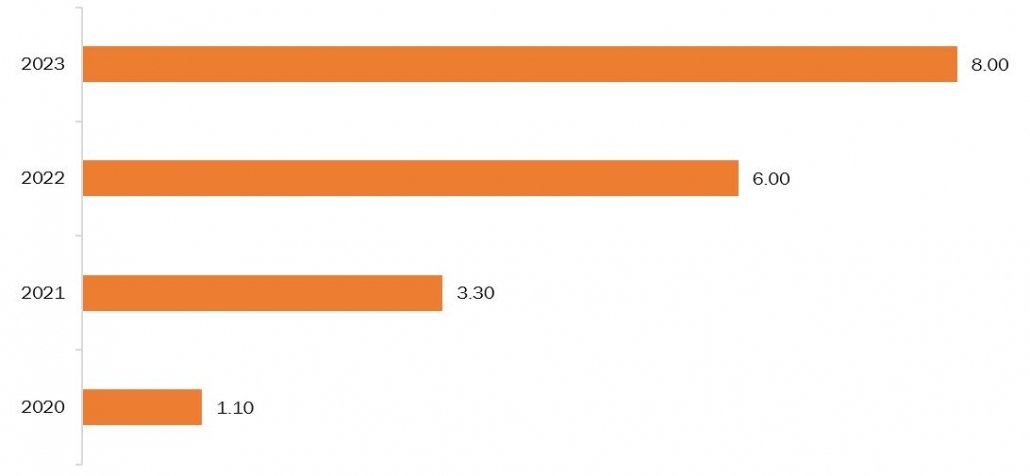
For instance, there has been a significant growth in sales for EVs in China over the past few years which is the largest automobile manufacturer across the globe. The sales went from around 1.1 million units of electric vehicles in 2020 to the sale of 8 million units of electric vehicles in 2023. This huge increase in sales of electric vehicles is expected to fuel the e-compressor market significantly.
Figure 2: Growth in Sales of Electric Vehicles in China, From 2020-23 (In Million Units)
Source: Voltas Ltd. Annual Reports (In Rupees Crores)
Market Dynamics and Drivers
Several factors drive the E-compressor market, including a rise in applications of E-compressor in renewable energy production by integrating them into wind turbines for energy storage and grid stabilization in recent times coupled with the rise in demand for EVs in the automotive industry has contributed significantly to boosting the overall E-compressor market.
So, with this rapid growth in electric vehicle technology and popularity, the need for e-compressors is rising proportionally. E-compressors are used in electric vehicles to provide efficient energy usage and reduce harmful emissions when compared to traditional compressors that use fossil fuel resources. Electric vehicles use this e-compressor not only for the air conditioning systems but also to cool the battery of the electric vehicle for the smooth operation of the vehicle. Therefore, with a rise in demand for these EVs in the market, the e-compressor market is also predicted to grow.
For instance, there has been a significant growth in sales for EVs in China over the past few years which is the largest automobile manufacturer across the globe. The sales went from around 1.1 million units of electric vehicles in 2020 to the sale of 8 million units of electric vehicles in 2023. This huge increase in sales of electric vehicles is expected to fuel the e-compressor market significantly.
Figure 2: Growth in Sales of Electric Vehicles in China, From 2020-23 (In Million Units)
 Source: iea.org
Challenges and Constraints
Despite the huge advantages and use cases of E-compressors the companies that manufacture them require a lot of high-cost materials to build efficient and functioning e-compressors required by different end-user industries, hindering the market expansion.
Also, while manufacturing these e-compressors the workers need to be very precise and highly concentrated because one mistake can ruin a whole set of manufacturing. They are prone to various defects during manufacturing that negatively impact the end-user use case such as electric vehicles or air conditioners. These factors are predicted to contribute to hinder and affect the e-compressor market negatively over the next few years.
Emerging Opportunities and Innovations
Despite the challenges, the e-compressor market presents numerous opportunities for innovation and growth. Advances in its applications across various industries are the major reason for that. Also, the Asia Pacific region which has major key players offering the best electric vehicles such as Toyota, Honda, and Suzuki from Japan, TATA from India, and Hyundai from South Korea are making significant innovations in electric vehicle technology which is anticipated to increase its demand for e-compressors needed for smooth functioning of the vehicle proportionally in the market globally and in the Asia Pacific region. Also, the growing innovations in the automotive industry and electric vehicle's popularity among people is what will create various new opportunities for innovation in the e-compressor market.
Key Developments
Source: iea.org
Challenges and Constraints
Despite the huge advantages and use cases of E-compressors the companies that manufacture them require a lot of high-cost materials to build efficient and functioning e-compressors required by different end-user industries, hindering the market expansion.
Also, while manufacturing these e-compressors the workers need to be very precise and highly concentrated because one mistake can ruin a whole set of manufacturing. They are prone to various defects during manufacturing that negatively impact the end-user use case such as electric vehicles or air conditioners. These factors are predicted to contribute to hinder and affect the e-compressor market negatively over the next few years.
Emerging Opportunities and Innovations
Despite the challenges, the e-compressor market presents numerous opportunities for innovation and growth. Advances in its applications across various industries are the major reason for that. Also, the Asia Pacific region which has major key players offering the best electric vehicles such as Toyota, Honda, and Suzuki from Japan, TATA from India, and Hyundai from South Korea are making significant innovations in electric vehicle technology which is anticipated to increase its demand for e-compressors needed for smooth functioning of the vehicle proportionally in the market globally and in the Asia Pacific region. Also, the growing innovations in the automotive industry and electric vehicle's popularity among people is what will create various new opportunities for innovation in the e-compressor market.
Key Developments
- In July 2023, Atlas Copco launched their all-new XATS 900E which is an electric portable compressor and can be versatile to use different applications. This compressor is highly efficient and quieter during the working while having a 160KW motor.
- In June 2023, Garrett Motion Inc. which is a technology leader in the automotive industry announced the launch of an advanced electric fuel cell compressor technology with BMW group that will produce zero-emission hydrogen fuel cell vehicles. This electric compressor will be installed into that vehicle to increase the overall efficiency of the hydrogen fuel cell vehicle.
- In February 2023, Sprintex announced at the World Hydrogen Expo that happened in Germany the launch of their new high-speed electric compressor for a wide range of applications including hydrogen fuel cells.
Need specialized data cuts or competitive intelligence?
Our analyst team provides bespoke market sizing, supplier audits, and country-level feasibility reports tailored to your enterprise roadmap.
Speak With an Industry Analyst →Ask an Industry Analyst
Have questions regarding this briefing or market projections? Inquire with our sector lead.
Related Blogs
View All →
How America’s Aging Population is Reshaping Healthcare Demand
Jul 14, 2026
Which OSAT Companies Are Best Positioned for AI and HPC Chip Demand?
Jun 29, 2026
Wearable Health Devices and Their Role in Modern Healthcare
Jun 11, 2026
Beyond the Glass: The Decisive Transition to Computational Tissue Intelligence
May 25, 2026
Companion Diagnostics for Targeted Therapies Market: The U.S. Edge In Personalized Medicine
May 21, 2026More Blogs
Clinical Decision Support Diagnostic Systems Market: Why the U.S. Healthcare System Is Quietly Rebuilding Diagnosis Around Algorithms
The U.S. clinical decision support diagnostic systems market is rapidly evolving as hospitals adopt AI-driven tools to manage rising diagnostic complexity, workforce shortages, and operational pressures. Growth is fueled by demand for faster, accurate diagnoses, workflow efficiency, interoperability, and value-based care, while physician trust, cybersecurity, and regulatory compliance increasingly determine long-term market success.
Top U.S. Healthcare Industry Trends to Watch in 2026 for the Global Healthcare Market
The global healthcare industry in 2026 is shifting toward AI-driven efficiency, stronger cybersecurity, outpatient care expansion, and domestic pharmaceutical manufacturing. U.S. healthcare leaders are prioritizing workforce support, operational resilience, value-based care, and integrated digital systems to improve patient outcomes while controlling costs.
How AI Is Reshaping the American Healthcare Industry
The U.S. healthcare industry is rapidly integrating artificial intelligence across clinical, administrative, and pharmaceutical operations. AI is improving diagnostics, automating workflows, reducing clinician burden, accelerating drug discovery, and enhancing personalized care. With strong adoption by hospitals and tech companies, AI is transforming healthcare delivery while driving the U.S. AI healthcare market toward significant growth by 2031.