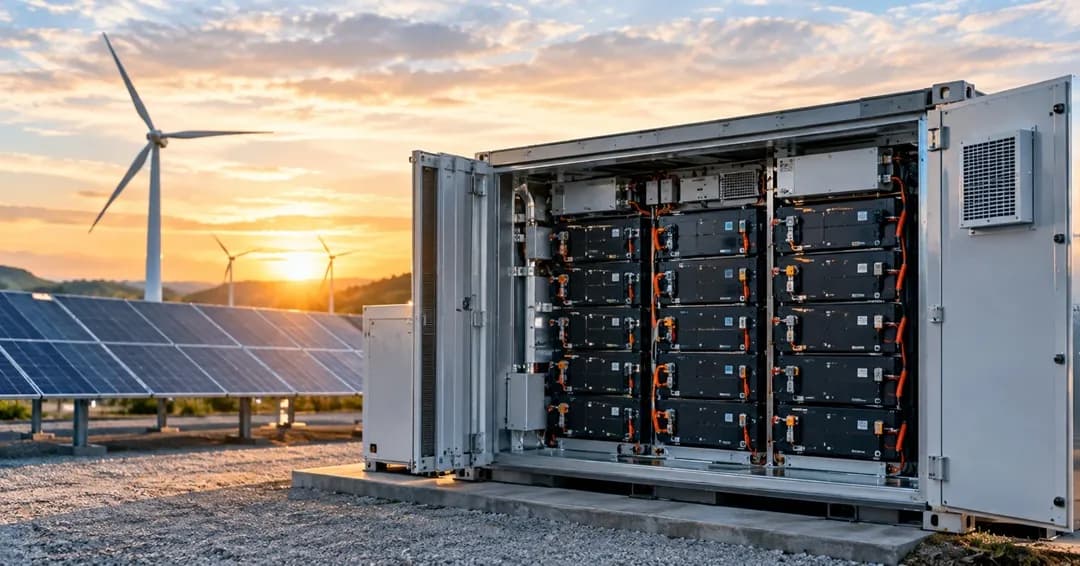
The zinc-ion battery energy storage market is gaining momentum as renewable energy deployment increases demand for safer, scalable stationary storage solutions. Advances in aqueous electrolytes, electrode materials, and manufacturing technologies are creating opportunities across residential, commercial, industrial, and utility-scale applications, while durability, efficiency, and cost remain key commercialization challenges.
Knowledge Sourcing Intelligence has published its latest analysis of the global Zinc-Ion Battery Energy Storage Market, which is projected to grow from USD 60.0 million in 2026 to USD 700.0 million by 2032 at a CAGR of 50.6% during the forecast period.
The forecast reflects growing interest in alternative battery chemistries as solar and wind power capacity expands. Variable renewable generation is increasing the need for storage systems that can retain surplus electricity and release it when generation declines or demand rises. This creates potential opportunities for emerging battery technologies designed for stationary applications.
Aqueous zinc-ion batteries are attracting research and development interest because of their potential safety advantages and the availability of zinc through established industrial supply chains. However, wider commercialization will depend on improvements in cycle life, cathode stability, energy efficiency, manufacturing scalability, and overall system economics.
Request a free sample copy or view the report summary: Zinc-Ion Battery Energy Storage Market Report
Key Market Growth Drivers
Renewable Energy Storage Requirements: Growing solar and wind capacity is increasing demand for technologies that help balance variable electricity supply. Zinc-ion batteries are being investigated for renewable energy storage and grid support, although their commercial suitability will depend on demonstrated performance, storage duration, and cost competitiveness.
Safety and Material Availability: Water-based electrolytes may reduce certain fire risks associated with flammable organic electrolytes. Zinc availability could also diversify battery material supply chains. However, the practical benefits depend on cell design, system configuration, application-specific safety assessments, and lifetime costs.
Battery Technology Advancements: Research into cathode materials, electrolyte formulations, and zinc-anode stability aims to improve battery durability and performance. Addressing degradation and maintaining consistent operating characteristics are important steps toward commercialization. Scalable manufacturing and reliable performance under practical operating conditions will be essential for wider adoption.
Expanding Stationary Storage Applications: Potential applications include residential, commercial, industrial, and utility-scale energy storage, alongside backup power, telecommunications, and remote infrastructure. Each application has different requirements for efficiency, operating life, storage duration, and installed cost. Suppliers must demonstrate suitability for specific use cases to expand commercial adoption.
Latest Industry Developments
Recent developments highlight continued progress in aqueous zinc-ion battery commercialization, alongside broader investment in alternative zinc-based energy storage technologies.
July 2026 - Offgrid Energy Labs: The company launched a 10 MWh pilot manufacturing facility in Hook, Hampshire, UK, for its ZincGel long-duration storage batteries. The facility supports the scale-up of zinc-bromine technology, an adjacent battery chemistry rather than conventional zinc-ion technology.
June 2026 - Eos Energy Enterprises: Eos commenced commercial production on its second battery line at its Thorn Hill manufacturing facility in Pennsylvania, advancing the manufacturing scale-up of its proprietary zinc-based energy storage technology. This development represents progress in the broader zinc-based storage sector rather than a confirmed conventional zinc-ion market milestone.
May 2026 - City University of Hong Kong and Amazinc Energy: CityUHK announced a funded initiative to advance aqueous zinc-based batteries for backup power and energy storage. The project targets a production line with annual capacity of 1 GWh within three years, subject to successful development and scale-up.
These developments illustrate increasing investment in alternative zinc-based energy storage technologies. However, manufacturing announcements, research funding and planned production capacity should be distinguished from verified commercial deployment of zinc-ion battery systems.
Regional Outlook
Asia-Pacific represents an important region for zinc-ion battery development, with research and commercialization efforts in China and India. Renewable energy expansion, industrial capabilities, and research collaborations offer potential opportunities. Wider adoption will depend on manufacturing scale, competitive production costs, and validation of battery performance in practical applications.
Europe and North America offer opportunities through renewable energy deployment, grid modernization, and battery research programmes. Research initiatives are helping advance materials development and manufacturing approaches. The pace of adoption will depend on reliable field performance, competitive lifecycle costs, and the ability to scale production beyond laboratory and pilot stages.
Competitive Landscape
Participants in the zinc-ion technology ecosystem include Vastech Energy (Zhejiang Hanwei Technology Co. Ltd.), Salient Energy, and ZNL Energy.
Companies are focusing on electrode development, electrolyte engineering, cell manufacturing, and strategic partnerships to improve commercial readiness. Competitive positioning will depend on technical performance, manufacturing consistency, intellectual property, and the ability to translate research advances into commercially viable energy storage systems.
Analyst Perspective
“Renewable energy integration is creating new opportunities for zinc-ion battery energy storage. Advances in battery materials and growing interest in safer stationary storage solutions could support market development, while improvements in durability, manufacturing scalability, and cost competitiveness will shape commercialization.”
Report Coverage
The Zinc-Ion Battery Energy Storage Market Report by Knowledge Sourcing Intelligence examines market forecasts through 2032, growth drivers and restraints, cell chemistry and formats, applications, storage duration, system scale, regional trends, and the competitive landscape. It also covers company profiles, technology developments, research collaborations, and commercialization trends across key regions.
Have questions?
More Press Releases
Global EV DC-DC Converter Market to Reach USD 6.10 Billion by 2031 as High-Voltage EV Architectures Gain Momentum
The global EV DC-DC converter market is expanding as electric vehicle adoption, higher-voltage architectures, and vehicle electrical content increase. Demand is rising for efficient, compact, high-power-density converters supporting auxiliary systems and advanced electronics. Asia-Pacific remains a key market, while manufacturers focus on thermal performance, integration, reliability, and power-conversion efficiency.
Global EV Battery Enclosures Market to Reach USD 20.4 Billion by 2031 as EV Production and Lightweight Enclosure Demand Accelerate
The global EV battery enclosures market is expanding as rising EV production, lightweighting, structural battery architectures, and integrated thermal management increase enclosure requirements. The market is projected to reach USD 20.4 billion by 2031. Asia Pacific remains the leading manufacturing region.
How Samsung Medison, Philips, and Carestream’s Recent Diagnostic Imaging Innovations Could Drive Growth: The Medical/Diagnostic Imaging Market Is Anticipated to Reach USD 60.7 Billion by 2031
Diagnostic imaging companies are advancing AI-assisted ultrasound and X-ray technologies to improve image quality, automate measurements, streamline workflows, and support faster examinations. Samsung Medison, Philips, and Carestream have introduced new solutions featuring AI-enabled analysis, enhanced visualization, single-transducer functionality, automated exposure control, noise reduction, and connected clinical capabilities.