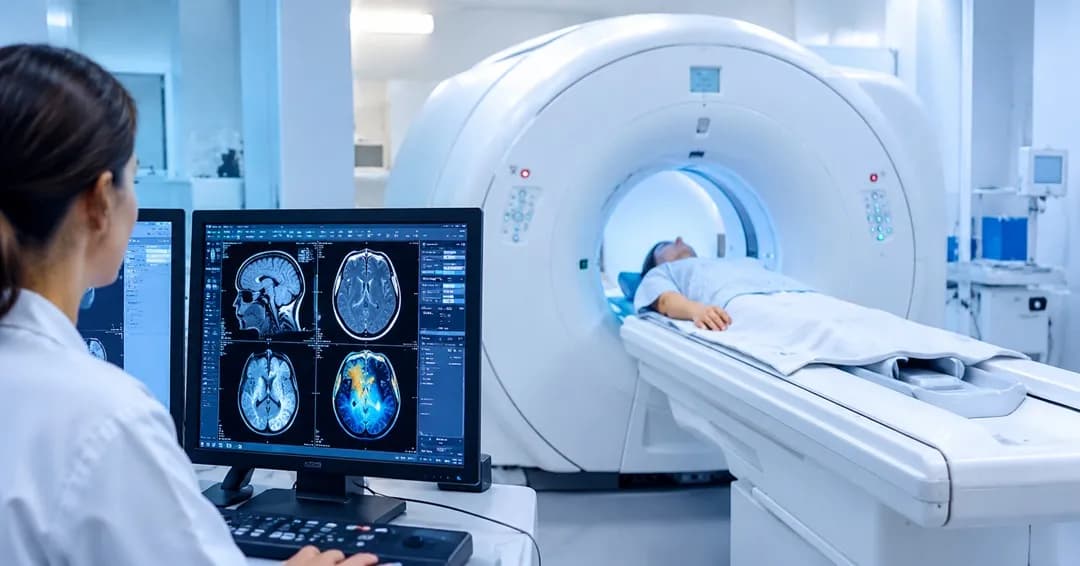
Diagnostic imaging companies are advancing AI-assisted ultrasound and X-ray technologies to improve image quality, automate measurements, streamline workflows, and support faster examinations. Samsung Medison, Philips, and Carestream have introduced new solutions featuring AI-enabled analysis, enhanced visualization, single-transducer functionality, automated exposure control, noise reduction, and connected clinical capabilities.
Several diagnostic imaging companies are launching new imaging technologies, signaling a shift in the global medical imaging industry toward AI-assisted diagnosis, improved image quality, streamlined clinical workflows, and faster imaging procedures.
Samsung Medison expands AI-enabled ultrasound imaging with HERA Z10
On September 7, 2026, Samsung Medison unveiled the HERA Z10, a premium obstetrics and gynecology ultrasound system that completes its HERA Z Series alongside the flagship HERA Z20. The system features AI-driven workflow tools, including Live ViewAssist, which the company says can reduce scan times during mid-trimester examinations by up to 52%, and EzStructure, a measurement tool that reportedly reduces manual manipulation for key measurements by up to 71%.
The HERA Z10 also pairs advanced beamforming technology with AI-assisted diagnostic capabilities, including MV-Flow 3D for visualizing blood flow at a microvascular level and FibroidVue for automated segmentation and measurement of the uterus, endometrium, and fibroids.
Philips innovates ultrasound imaging with a single-transducer solution
Philips launched the eV14-2v transvaginal transducer on September 3, 2026, expanding its ultrasound portfolio for gynecology and early obstetrics. The transducer has received FDA 510(k) clearance and CE marking, and is designed to reduce the need to switch transducers between examinations.
Compared with Philips' prior 3D9-3v transducer, the eV14-2v offers greater penetration (41.7%), improved 2D resolution (10%), a wider field of view (15.8% wider), and a 22% lighter design. It also supports Philips Collaboration Live for real-time remote consultation, reflecting a broader trend toward ultrasound hardware built for workflow efficiency, portability, and connected care.
Carestream's DRX-LC Detector adds AI enablement to X-ray imaging
On September 4, 2026, Carestream Healthcare International introduced the latest version of its DRX-LC Detector, designed for long-length imaging. The detector supports single-shot capture of long-bone, end-to-end, and spine images, reducing the need for multiple exposures and image stitching and helping streamline radiography workflows.
The updated detector adds Detector Exposure Control (DEC), which automatically adjusts exposure parameters, and Smart Noise Cancellation (SNC), which reduces image noise while preserving fine detail. Compatibility with DR rooms, mobile systems, and retrofit installations allows healthcare providers to deploy the detector across a range of clinical environments.
Request a free sample copy or view the report summary: Medical/Diagnostic Imaging Market Report
Market Impact of These Developments
These developments point to a broader shift in the medical/diagnostic imaging industry toward AI-assisted diagnostics, integrated software, enhanced image quality, workflow automation, and optimized imaging exams, spanning both ultrasound and digital X-ray platforms. Several themes stand out:
AI-assisted imaging is becoming more significant, with a shift toward automated measurements, exposure control, and image-enhancement systems intended to improve workflow consistency and support diagnosis.
Ultrasound system versatility is increasing, with single-transducer solutions reducing the number of equipment changes needed during an exam.
Higher image quality and dose efficiency are gaining importance as imaging providers aim for clearer diagnostic information alongside a better patient and operator experience.
Workflow optimization is an increasingly important equipment-selection factor, driven by single-shot acquisition, automated measurements, and remote consultation capabilities that help speed up examinations.
AI Integration Is Reshaping Diagnostic Imaging Workflows
AI integration is becoming more embedded in diagnostic imaging workflows, with manufacturers incorporating automation into measurements, image enhancement, exposure management, and clinical visualization. Samsung Medison's HERA Z10 uses AI-assisted tools for automated measurements and anatomical assessment, while Carestream's DRX-LC incorporates automated exposure control and Smart Noise Cancellation. These capabilities can reduce repetitive tasks, support image consistency, and streamline examinations. As imaging manufacturers evaluate new models, AI functionality is increasingly weighed alongside image quality, workflow efficiency, and application-specific performance, among other factors.
Global Medical/Diagnostic Imaging Market Outlook
These innovations are closely related to the Medical/Diagnostic Imaging Market report by Knowledge Sourcing Intelligence (KSI). According to the KSI research report, the global medical/diagnostic imaging market is predicted to reach USD 47.5 billion in 2026, growing at a compound annual growth rate (CAGR) of 5.0% from 2026 to 2031 to reach USD 60.7 billion by 2031.
Market Segmentation
Segment | Sub-Segments |
|---|---|
Offering | Imaging Systems, Imaging Software and Informatics |
Imaging Modality | X-Ray and Digital Radiography, Magnetic Resonance Imaging (MRI), Ultrasound Imaging, Computed Tomography (CT), Nuclear and Molecular Imaging, Others |
End User | Hospitals, Diagnostic Imaging Centers, Ambulatory and Specialty Centers, Others |
Application | Cardiovascular, Oncology, Neurology, Women’s Health, Musculoskeletal, Others |
Geography | North America, South America, Europe, Middle East and Africa, Asia Pacific |
Introduction of Novel Diagnostic Imaging Equipment Is Expanding the Gynaecology Application Segment
Among applications, the gynaecology segment stands to benefit from imaging technologies aimed at better tissue visualization and more accurate measurement during examinations. Samsung Medison's HERA Z10 and Philips' eV14-2v both target the women's health segment, combining advanced ultrasound imaging and automated assessment capabilities with versatile transducer technology to support gynecology and early-obstetrics examinations.
X-Ray Imaging Segment Transitioning Toward AI-Powered and Resource-Efficient Digital Detection
Intelligent detectors used in the X-ray imaging segment are increasingly enhancing image consistency, dose efficiency, and workflow speed. Carestream's updated DRX-LC integrates single-shot long-length imaging with automatic exposure control and AI-based noise cancellation, aimed at more efficient radiography in fixed, mobile, or retrofitted settings.
Medical/Diagnostic Imaging Market Key Players
Siemens Healthineers AG
GE HealthCare Technologies Inc.
Koninklijke Philips N.V.
Canon Medical Systems Corporation
FUJIFILM Healthcare Corporation
United Imaging Healthcare Co., Ltd.
Samsung Medison Co., Ltd.
Shenzhen Mindray Bio-Medical Electronics Co., Ltd.
Shimadzu Corporation
Hologic, Inc.
Explore More Reports
Have questions?
More Press Releases
X-Ray Inspection Systems Market to Cross USD 1.98 Billion by 2031, Driven by Product Launches from Rigaku, 3DX-RAY, and Eagle
X-ray inspection technology is advancing through higher-resolution 3D imaging, intelligent material identification, and faster inline inspection. Recent launches from Rigaku, 3DX-RAY, and Eagle Product Inspection demonstrate expanding applications across electronics, batteries, food production, security, and manufacturing, supporting more detailed defect detection, quality control, and non-destructive inspection.
How JenaValve’s Trilogy THV System FDA Approval Could Impact the Global Heart Valve Replacement Procedures Market
JenaValve Technology received FDA approval for its Trilogy Transcatheter Heart Valve System to treat symptomatic severe native aortic regurgitation in high-risk surgical patients. The technology uses leaflet-based locator technology for anchoring, expanding transcatheter treatment options beyond aortic stenosis and influencing competition across the heart valve replacement procedures market.
How Meta's Expected Smartwatch Reveal at Connect 2026 Could Impact the Wearable Computing Market, Expected to Reach USD 148.5 Billion by 2031
At Meta Connect 2026, scheduled for September 23–24, Meta is expected to unveil its first commercial smartwatch, reportedly codenamed Project Malibu 2, with health-tracking capabilities and a built-in Meta AI assistant. The expected launch follows Meta's revival of a smartwatch project that was shelved in 2022 amid cost reductions across its Reality Labs hardware division, with the new device reportedly designed to complement Meta's AI glasses ecosystem. The move reinforces the shift toward AI-enabled, ecosystem-connected wearables described in a new report by Knowledge Sourcing Intelligence, which values the global wearable computing market at USD 71.0 billion in 2026, growing to USD 148.5 billion by 2031.