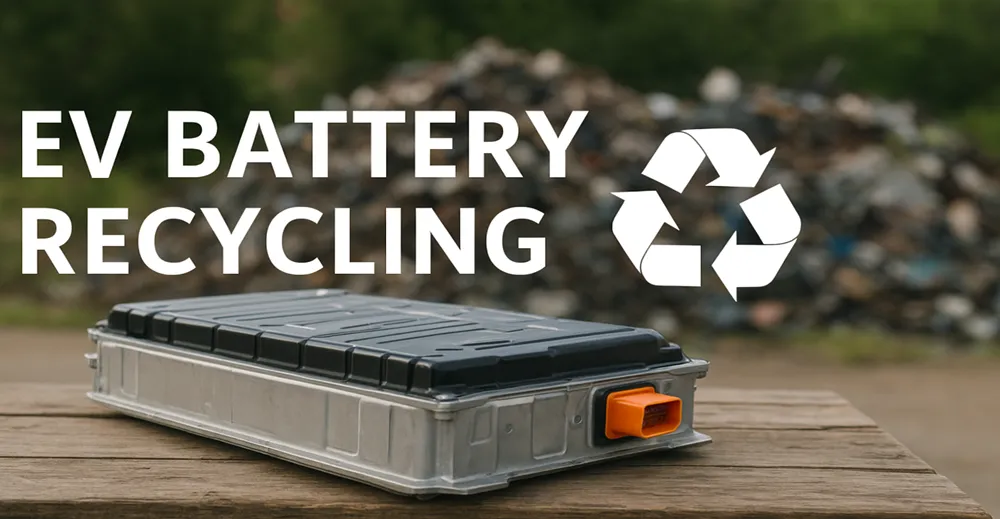
Over the past years, the global EV battery recycling industry has grown from an emerging, niche sector to an important part of the global economy. As supply chain security and the implementation of ambitious Circular...
Competitive Landscape: Comparative Data and Market Dominance
The market leaders can be segmented into three strategic groups: European pioneers (Umicore), North American pure-plays now backed by global giants Li-Cycle/Glencore, and Redwood Materials.Key Market Players and Comparison
| Company | Headquarters | Primary Technology | Key Recent Update (2025) | 2024 Market Share (Approx.) | Strategic Focus |
| Glencore Battery Recycling (GBR) / Li-Cycle | Baar, CH / Toronto, CA | Proprietary Spoke & Hub (Hydrometallurgy) | Acquisition of Li-Cycle by Glencore in August 2025, integrating Li-Cycle's Black Mass tech with Glencore's refining power. | Significant market expansion potential post-merger. | Global scale; High-efficiency Nickel/Cobalt/Lithium recovery. |
| Umicore N.V. | Brussels, Belgium | Proprietary Pyro-Hydro Process (High Lithium Recovery) | Umicore unveiled its roadmap to 2028, outlining a strategic focus on maximizing cash generation | Market leader in European capacity and yield. | Circularity in Europe; Cathode Active Material production. |
| Redwood Materials | Carson City, US | Hydrometallurgy (Integrated Spoke-and-Hub) | Critical materials recovery began in South Carolina (Nov 2025). Announced $350 million Series E funding in October 2025. | Estimated ~16% in the global market (2024), US leader. | Domestic US closed-loop; Manufacturing of anode/cathode components. |
The New Geopolitical and Regulatory Reality
The market's expansion is not purely organic; it is an industrial response to aggressive, regionally focused government mandates designed to foster strategic autonomy and circularity. This policy environment has created three distinct, heavily capitalised battlegrounds: Asia-Pacific (China), Europe (EU), and North America (US). Policy as the Primary Catalyst for Investment The key regulatory frameworks dictating future investment are the EU Battery Regulation and the U.S. Inflation Reduction Act (IRA).| Policy Instrument | Geographic Focus | Primary Mechanism | Impact on Recycling Investment |
| EU Battery Regulation (2023/1542) | Europe | Mandated Recycled Content, Collection Targets, Battery Passport. Requires minimum recycled content in new batteries (e.g., 6% for Lithium by 2030, 16% for Nickel by 2031). | Forces manufacturers to secure European recycling capacity (e.g., Umicore's advantage). Ensures long-term, high-quality feedstock supply for European facilities. |
| U.S. Inflation Reduction Act (IRA) | North America | Advanced Manufacturing Production Tax Credits (AMPTC) for domestic production of battery components and critical minerals. | Incentivizes the establishment of entire domestic supply chains, from Black Mass processing to cathode active material (CAM) manufacturing (Redwood/Li-Cycle strategy). Shifts investment away from Asia-Pacific. |
Geographic Competitive Dynamics (2026-2030)
The global market is not a single entity; it is a collection of regionally protected markets, each rapidly building capacity to secure its own supply of critical battery metals.- The Asia-Pacific region is home to the world’s highest volume and environmentally-corrected installed (or reused) recycling capacity. It is currently led by China and South Korea.
- North America - Competition Driven by Subsidised Technology
- Europe is known for having a higher abundance of policy-driven initiatives than any other region, using legislative means to enforce materials security and compliance with increasingly rigorous environmental regulations.
Comparative Analysis: Financial Models of Market Leaders
The competitive battle in the global EV battery recycling market is fundamentally a contest between two distinct financial and operational models: the integrated component manufacturer (Redwood Materials) versus the global commodity producer (Glencore Battery Recycling/GBR). Their differing approaches to capital deployment, revenue generation, and risk management define the future financial structure of the industry.The Vertical Integration Premium and CAPEX Burden from Redwood Materials
Redwood Materials is pursuing an aggressive vertically integrated strategy, which could provide the greatest margins; however, it requires immense Capital Expenditures (CAPEX) upfront. Their strategy is based on developing and operating not only to gain recycling facilities but also on anode and cathode production capabilities on the same property. By manufacturing the higher-value battery components directly to the battery manufacturers, Redwood can take advantage of all possible benefits from the U.S. Inflation Reduction Act (IRA) tax credits by generating revenue from both battery components and the government subsidies they receive for producing these products domestically. The significant financial advantage of using this model is the "manufacturing premium", as it allows a manufacturer to eliminate exposure to commodity pricing volatility and instead utilise long-term supply agreements for specialised components. However, there is a significant risk in implementing this model since Redwood must overcome the vast technical and financial challenges associated with efficiently and effectively scaling the complex manufacturing of the various components and therefore will require continuous, significant capital raising; they have recently completed a Series E round of investment.Glencore Battery Recycling (GBR): The Commodity Scale and Existing Infrastructure Leverage
The Glencore Battery Recycling (GBR) model is different from other battery recycling models because it acquires assets from Li-Cycle and then builds maximum scale and commodity trading around that model. Unlike other battery recyclers, GBR’s main business focus is not on producing finished components. Instead, GBR wants to efficiently process batteries that have been collected into high-purity, battery-grade nickel, cobalt and lithium salts, which they sell as commodities. GBR's financial strength is derived from Glencore’s existing global infrastructure, particularly through the use of Glencore's already established, large-scale refining/smelting facilities and comprehensive commodity trading capabilities. By using these resources to process battery materials efficiently, GBR is able to minimise its capital costs by eliminating the need to build brand new, highly specialised processing facilities that are normally required for battery recyclers. This enables GBR to bring its products to market promptly and generate revenue quickly. The revenue GBR generates is a function of the fluid and volatile nature of metal pricing on the global marketplace. Because GBR receives its revenue directly from metal sales, it is subject to changes in the price of metals. However, because of Glencore's experience with commodity hedging, GBR is able to manage the risk related to fluctuations in metal prices. The key to GBR's success will be in completing the Rochester Hub promptly, so as to be able to take advantage of the Department of Energy's subsidisation of GBR’s capital, and to produce at very high levels of competitive efficiency, and thereby capture market share at speed. In conclusion, a critical turning point has emerged in the international market for battery recycling through the emergence of traditional industry models with geographical differences. The companies in this sector are competing with one another not only in terms of the volume of materials recovered from used batteries but also in terms of how those recovered materials will be monetised under varying legal statutes. For example, in North America, companies such as Redwood Materials are utilising a Vertical Integration strategy, which combines high-risk and high-return elements through significant, ongoing Capital Expenditures (CAPEX) to create vertically-aligned manufacturing plants that will produce finished components (anodes & cathodes) for future use. The Vertical Integration strategy presents an opportunity for companies to capture both increased margins and additional funding by selling finished components through the Inflation Reduction Act (IRA).Have questions?
More Thought Articles
How EV Charger Manufacturers Can Capitalize on India’s Home Charging Revolution
India’s residential EV charging opportunity is expanding as policy support, EV adoption, and private parking infrastructure develop. Manufacturers can capture value beyond AC chargers through installation, smart charging, load management, solar integration, software, and after-sales services. Housing societies, automakers, and property developers offer scalable routes to residential charging customers.
Second-Life EV Battery Market in India: What Is Driving Demand from Manufacturers?
India’s second-life EV battery market is gaining relevance as electric vehicle adoption expands and batteries retain useful capacity after automotive service. Growing stationary-storage demand, battery data, refurbishment capabilities, EPR obligations, and critical-mineral policies are encouraging manufacturers to extend battery value through reuse before eventual recycling within India’s emerging circular battery ecosystem.
The Rise of Locally Manufactured Battery Separators in India’s EV Ecosystem
India’s battery industry is progressing from pack assembly toward domestic cell and material manufacturing, creating opportunities for lithium-ion battery separators. Policy support, ACC capacity expansion and R&D initiatives are strengthening the ecosystem. However, technical complexity, manufacturing yields, qualification requirements and economics mean localisation will likely advance gradually through coatings, testing and finishing.