Regional Breakdown of the Mechanical Keyboard Market: Who Leads and Why?
The future of mechanical keyboard market is influenced by regional differences as much as it is influenced by the switch types, layouts, or the RGB trends. While this once-niche category grew out of PC gaming and enthusiast forums, it is now a global, multi-billion-dollar market with very different...
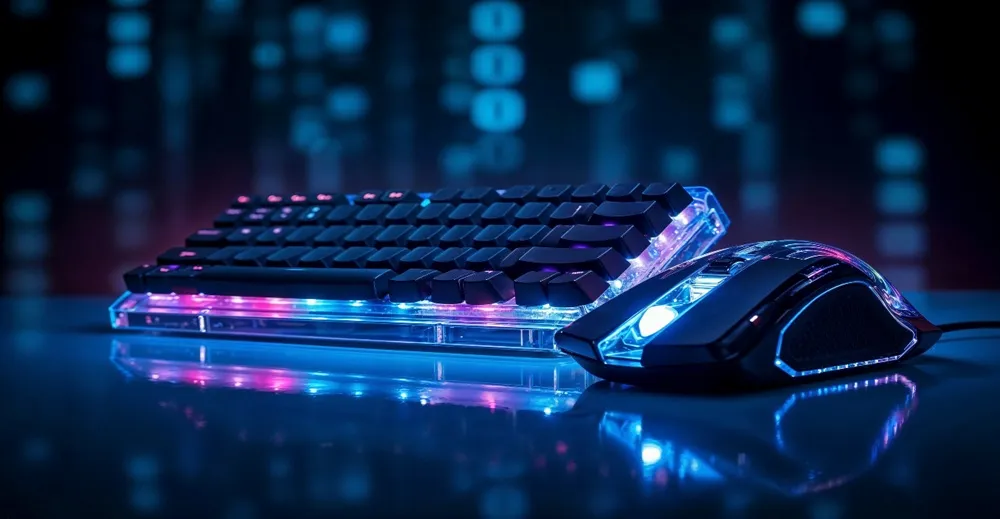
1. Global Snapshot: From Niche to Mainstream
Across recent reports by Knowledge Sourcing Intelligence, the global mechanical keyboard market is projected to witness a compound annual growth rate of 13.51% to grow to US$3.870 billion by 2030, from US$2.054 billion in 2025.depending on methodology and time horizon. Growth is driven by three overlapping use cases:-
- PC gaming / esports (fastest growth, highest ASPs)
- Productivity / hybrid work (developers, creatives, office workers)
- Enthusiast / hobbyist segment (custom builds, artisan keycaps, modding)
2. North America: Value Leader and Trend Setter
Market Position Most recent comparative analyses indicate that North America is the largest regional market by revenue and is expected to retain that leadership through the early 2030s. The U.S. in particular is projected to be the single largest national market for mechanical keyboards by value, thanks to high ASPs (average selling prices) and a large base of gamers and knowledge workers. Why North America Leads1. High purchasing power + premium positioning: Mechanical keyboards are often priced as “premium peripherals” in North America, USD 80–250 is widely acceptable among gamers, streamers, programmers, and hobbyists. Premium brands like Razer, Corsair, Logitech G, SteelSeries, and boutique makers target this willingness to pay.
2. Mature PC gaming and esports ecosystem
-
- Large esports organizations, Twitch/YouTube streaming, and competitive titles like Valorant, CS2, and Fortnite all heavily feature mechanical keyboards in their marketing.
- The gaming keyboard market alone, which overlaps heavily with mechanical, is forecast to grow at significant pace, with North America one of the key demand centers.
3. Enthusiast/custom culture
-
- Mechanical keyboard subreddits, Discords, and YouTube channels have strong North American representation.
- There’s a robust ecosystem of group buys, artisan keycaps, switch modding, and small-batch PCB/case makers, many of whom ship globally but rely heavily on U.S. demand.
4. Hybrid work and productivity spending: Post-pandemic hybrid work has normalized spending on desk setup upgrades. According to Census.gov, in 2023, 13.8% of workers in the U.S. tend to work more than twice at home than 5.7% in 2019, although this is a decline of 17.9% in 2021 and 15.2% in 2022. In line with this, mechanical keyboards are increasingly pitched not only as gaming tools, but as ergonomic, durable, and satisfying devices for daily work.
Constraints and Emerging Challenges- Tariffs and trade tensions: Many mechanical keyboards or their components are manufactured in China. The US has announced to exempt smartphones and computers imported to the country from the latest tariffs. According to a US Customs and Border Protection notice, the smartphones and computers would be excluded from US President Donald Trump’s 10 per cent global tariff on most countries, and the much larger Chinese tariffs of 145 per cent. The exemption applies to products entering the US or removed from warehouses as early as April, 2025.
- Market saturation at the mid-range: As mainstream gaming keyboards have a high level of competition, software ecosystems, wireless performance, or unique switch technologies (optical, Hall effect, magnetic switches) have become more and more the source of a differentiation.
3. Europe: Fastest-Growing “Quality-First” Market
Market Position Europe is frequently named as one of the most rapidly-growing regional market of the mechanical keyboards, although it is small in absolute terms when compared with North America, in some cases it is predicted to grow to approximately USD 1+ billion by the early 2030s, and as the fastest-growing region in percentages. Why Europe Is Accelerating1. Strong PC gaming culture in key countries: Germany, the Nordics, the UK, France, and Eastern Europe all have vibrant PC gaming and esports scenes. Gaming keyboard demand closely maps to this, especially in FPS, MMO, and competitive titles. The video games industry is a significant economic sector. In 2022, the EU27 video games market earned the revenue of 23.48 billion.
2. Preference for quality, ergonomics, and sustainability: European customers are comparatively more concerned with the quality of the building, the potential of repair, and the environment; in these fields, mechanical keyboards (interchangeable switches and keycaps, longer life, etc.) can be placed as a more sustainable option over inexpensive membrane boards.
Brands respond with:-
- Hot-swappable PCBs
- Repair-friendly designs
- Durable PBT keycaps and metal frames
3. Expanding remote and hybrid workforce: Europe similarly to North America has experienced the structural change in the direction towards hybrid and remote workforce. Mechanical keyboards have the advantages of:
-
- Productivity-minded marketing (no-noise designs, low-profile designs, ergonomic designs)
- contract sourcing among corporate purchasers, designers and power users.
4. Regional brands and EU-friendly imports: European-based brands and distributors, as well as international companies such as Logitech, Corsair, and SteelSeries, have established a good network of channels via large e-retailers and dedicated modding retailers and are able to access the mainstream and the pro board markets with fewer issues.
Regulatory and Market Challenges- Stern consumer laws and product laws imply increased compliance requirements, but they also create consumer trust.
- The increased taxes and import duties on certain electronics may squeeze the margins forcing the brands to the high-end segments instead of the lowest-cost ones.
4. Asia-Pacific (APAC): Manufacturing Hub and Volume Powerhouse
APAC is the most complex region in this market because it is both the core manufacturing base and one of the largest demand centers, especially in China, Japan, South Korea, and emerging markets like India and Southeast Asia. 4.1 China: The Factory Floor and a Giant Domestic Market China is the undisputed global manufacturing center for mechanical keyboards. Why China Matters1. Manufacturing dominance
-
- The vast majority of mechanical keyboard brands worldwide have some components of Chinese origin: PCBs, plastic cases, metal enclosures, switches, and PBT keycaps, in particular.
- OEM/ODM facilities in Guangdong and Shenzhen and other centers manufacture not only house-brand boards, but also white-label boards to Western brands.
2. Explosive domestic enthusiast and gaming culture
-
-
- China has a huge base of PC gamers and mobile gamers who also invest in peripherals.
- Local brands, Keychron, Akko, Varmilo, Epomaker, and many others, compete aggressively on aesthetics (pastel themes, anime collabs), transparent/colored cases, and pre-modded switches.
- The latest trends have been transparent and semi-transparent keyboards and ceramic materials which have tended to first be introduced through Chinese brands before reaching the rest of the world.
-
3. Price–performance sweet spot
-
-
- China’s domestic buyers are very price-sensitive but also quality-conscious, forcing brands to deliver surprisingly premium features at lower prices, gasket mounts, multi-mode connectivity, factory-lubed switches, etc.
- These designs then get exported under multiple brand names globally, reshaping expectations in budget and mid-range segments.
-
- One of the recent reports in Japan cites millions of mechanical keyboards being sold every year, and uptake of wireless and DIY kits and a high demand in wireless mechanical solutions in the last two years.
- South Korea has an excellent enthusiast base, boasting of well-known custom brands and colorways, which frequently dominate the trends in the entire world, as K-Beauty and K-Pop have done with other product lines.
- India's gaming market grew 23% YoY to US$ 3.8 billion in revenue in 2023-24 (FY24), despite the 28% Goods and Services Tax (GST) imposed on online gaming, according to a report by gaming-focused venture capital firm Lumikai. The market is expected to exceed US$ 9.2 billion by FY29, growing at a five-year compound annual growth rate (CAGR) of 20%. Real-money gaming (RMG) remains the largest revenue driver, contributing US$ 2.4 billion.
1. Young demographic + mobile-to-PC transition: Lots of gamers begin with mobile, then move to PCs and consoles, opening up the market to simple mechanical boards.
2. Expansion of esports/streaming: Mechanical keyboards have been demonstrated in repeated tournaments and streams as the correct gaming equipment, which is influencing the aspirations.
3. Import + local assembly model
-
- A lot of boards come in through global brands and Chinese OEMs.
- Over time, more local brands assemble or customize keyboards locally, balancing price and performance.
4. Strong value orientation: These markets prioritize feature-rich budget boards, hot-swap, RGB, wireless, over very high-end customs. This compels multinational companies to provide aggressive-level line-ups that are specifically APAC-oriented.
The APAC is the volume leader, factory, and manufacturing hub, with China as the key market/factory, Japan/Korea as trend, and India/SEA as engine of further growth, value, and gaming-driven.5. South America: Growing from a Low Base
The market of mechanical keyboards in Latin America is smaller than that in North America, Europe, and APAC though its growth is consistent. Demand Drivers1. Increasing PC and console gaming adoption: In other countries, such as Brazil, and Argentina, the popularity of esports and streaming is growing rapidly, following the situation with gaming keyboards and mice across the world.
2. The young population and the internet penetration: With the development of broadband and gaming infrastructure, the number of players who are upgrading their generic or office keyboards to mechanical ones to gain competitive edge and status is growing. According to WHO, in Argentina, the population currently stands at 45,538,401 with a forecasted growth of 6.1 to 48,308,944 by 2050.
3. E-commerce across borders: The marketplace (Amazon, Mercado Libre, and local distributors) allows consumers to have both mainstream products (Logitech, Corsair, Redragon) and cheaper Chinese products.
Constraints- The large import duty and taxes may cause the prices to be high; hence mechanical keyboards will be a luxury in certain nations.
- Currency volatility will deter the local retailer to stock many different models resulting in a small selection in-store offerings.
- Numerous fans are dependent on group buys or grey imports, which slows down mainstream adoption.
6. Middle East & Africa (MEA): Niche but Rising
The Middle East and Africa are the most paltry portion of the mechanical keyboard market as of today, yet there are locations of robust growth:- Demand in the gulf states (UAE, Saudi Arabia, Qatar) is increasing because of high disposable income, gaming cafes and high numbers of expat population.
- In Sub-Saharan Africa and North Africa, the demand is focused along urban centers where PC gaming and internet cafes are a common place.
1. Congcentrated, urbanized demand: The majority of sales are made in large cities, through large scale gaming retailing or online stores.
2. Effects of esports and streamers around the world: Gamers here follow the same Twitch and YouTube as anyone, meaning the aspirational appeal of mechanical keyboards will be the same, just suppressed by the income and access.
3. Government technological projects: National visions of digital economies, smart cities, and STEM education in certain states of the Gulf indirectly increase the demand of personal computing and peripherals, such as mechanical keyboards.
Conclusion: MEA has a supportive role in the international market but has a long-term potential with the growth of digital infrastructure and gaming culture.7. Who Really Leads, and on What Dimension?
These leadership can be based on these factors:1. Revenue leadership – North America
-
- Highest ASPs and large user base.
- Existence of great international gaming and peripherals brands.
- Established hybrid work ethos which legitimizes expenditures on desk set-ups.
2. Volume and manufacturing leadership- Asia-Pacific (particularly China).
-
- The majority of the keyboards and parts are produced here.
- China is a huge domestic market, and exporter to almost all other regions.
3. Growth leadership - Europe and Emerging APAC.
-
- Europe has one of the highest forecast CAGRs in mechanical keyboards.
- India and Southeast Asia are fast converting to gaming keyboards and mechanical in gaming segments has already dominated the market in India.
8. Technology and Design Trends Crossing Regions
Some trends are genuinely global, but each region adopts them differently. 8.1 Switch Technology: From Classic Mechanical to Optical and Hall Effect- Traditional mechanical switches (Cherry MX, Gateron, Kailh, etc.) are still the most popular, however, optical and magnetic/Hall-effect switches are the most rapidly expanding subsegment, particularly when used in gaming keyboards.
- North America/ Europe are active in developing high-end magnetic or analog switches (e.g., ultra-high polling rates, actuation adjustable). The fact that such features can be easily implemented and made at a lower price point is fast being commoditized by the APAC manufacturers.
- There has been a surge in the demand of wireless mechanical keyboards in areas where the practice of remote working is the norm. In other markets such as Japan, there are reports of percentages of more than 10 percent growth in demand of wireless mechanical in only two years.
- Lower-latency, multi-device wireless (2.4 GHz + Bluetooth) is more expensive in North America and Europe, but in the emerging APAC, wired or single-mode wireless is frequently the technology to keep costs down.
- Compact layouts have grown globally due to desk space constraints and aesthetic preferences; this is particularly strong in Japan, Korea, and Western urban markets where desk space is at a premium.
- Transparent, frosted, and themed designs are especially popular in China and export heavily to Western enthusiasts.
9. Strategic Outlook: How the Regional Map Might Evolve
9.1 Short to Medium Term (Next 3–5 Years)- North America will likely remain the top region by revenue, but growth rates may normalize as the market matures and faces price pressure from APAC brands.
- Europe is likely to close the gap on North America’s share in several key subsegments (wireless, ergonomic, low-profile boards) due to strong growth and high purchasing power.
- APAC will deepen its dominance in manufacturing and continue to push design innovation (materials like ceramic, advanced switches, “out of the box” pre-tuned boards).
- Emerging markets (India, SEA, Latin America, MEA) will expand rapidly from a smaller base, mostly through mid-range gaming-focused boards.
1. Trade policy and supply chain restructuring
-
- If tariffs on Chinese electronics intensify, some production may shift to other APAC countries (Vietnam, Malaysia, India) and even Eastern Europe or Mexico, redistributing economic value but likely keeping APAC central as a production hub.
2. Convergence of gaming and productivity
-
- As mechanical keyboards become normal office equipment, corporate procurement policies in North America and Europe could create big pockets of demand outside the traditional gaming channel.
3. Innovation pace and miniaturization
-
- Magnetic/optical switches, low-profile designs, wireless latency improvements, and new materials (like ceramic, advanced polymers) will come largely from APAC engineering and then be optimized for premium Western segments.
10. Key Takeaways
- The mechanical keyboard business is a solid worldwide enterprise with a couple of-billion dollar value and increasingly stable.
- North America is the market leader in terms of revenue and ecosystem maturity with a great demand among gamers, streamers and knowledge workers.
- Asia-Pacific, particularly China, is the world leader in design and components manufacturing, volume and speed of innovation exporting their designs and components globally.
- Europe is one of the fastest-growing regions, driven by quality and sustainability preferences plus hybrid work adoption.
- Latin America and MEA are emerging markets where gaming and e-commerce are slowly turning mechanical keyboards from luxury items into attainable upgrades.
Get in Touch
Interested in this topic? Contact our analysts for more details.
Related Insights

EV Tires Are Changing Fast: What India’s Electric Mobility Boom Means for Tire Makers
Aug 11, 2026
How Certified Pre-Owned EV Programs Are Reshaping India's Used EV Market
Aug 10, 2026
The Future of Solar-Powered EV Charging Stations in India
Aug 6, 2026
India’s EV Adoption Is Accelerating. Can Urban Charging Keep Pace?
Aug 6, 2026
How Local Manufacturing Is Strengthening India's EV Powertrain Ecosystem
Aug 4, 2026