Introduction The market for kids’ smartwatches has dramatically changed in the last ten years. These devices have been transformed from simple GPS tracking gadgets into complete wearable ecosystems aimed at prov...
Introduction
The market for kids’ smartwatches has dramatically changed in the last ten years. These devices have been transformed from simple GPS tracking gadgets into complete wearable ecosystems aimed at providing safety, communication, education, health monitoring, and digital wellness to children. Initially, only a few tech-savvy parents would buy such a novelty product, but now it has become an indispensable element of the digital parenting toolkit utilized by families worldwide. The transition has been mainly influenced by parental worries about children's safety, the rapid development of mobile connectivity, and concern over the risks of giving a smartphone to a child at an early age. As doing so may expose children to harmful content, families demand controlled and age-appropriate digital experiences. Hence, smartwatches have become the means to achieve a child's need for connection and a parent's necessity of supervision. The market for children's smartwatches will, therefore, be sizable in ten years due to technological innovation, parenting culture, and a growing range of digital services for younger users. The expansion path of the kids’ smartwatch market is essentially dependent on variations in worldwide birth rates since the number of the child population significantly affects future demand for smart wearable devices that are made for safety and communication. In the past 20 years, the growth in birth registration rates in South Asia has been the most rapid among all the regions, going up from 39 per cent in 2008 to 76 per cent in 2024, as per the latest UNICEF report. South Asia Birth Registration Rates, In %, 2008-2024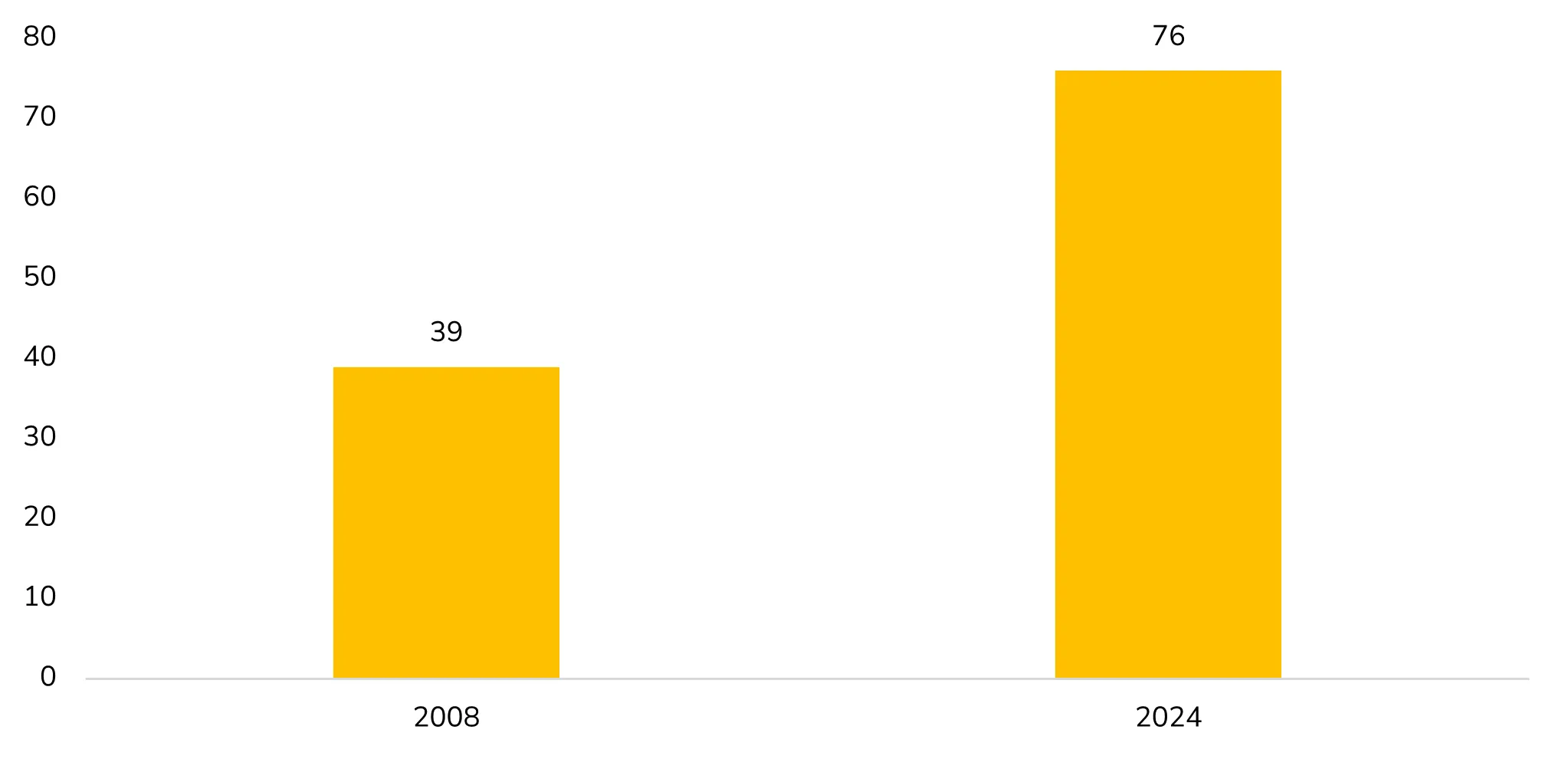 Source: UNICEF Report
Market Evolution
The progression of children's smartwatches may be separated into different stages, each showing the technological innovations and the changing demands of the customers. At the very beginning, approximately in the early 2010s, kids’ wearables were mainly considered as simple GPS trackers. In most cases, they were untrustworthy, had a short battery life, and didn't offer any interactive features besides sending location data. Despite their drawbacks, these initial gadgets gave parents the idea of monitoring their kids, and thus, they became the starting point for a safety and communication-oriented market to be created in the future. As tech parts got smaller, more affordable, and energy-efficient, a second stage of the story came up. To attract the kids, manufacturers added features like two-way calling, basic messaging, and simple touchscreen displays. The products became more interactive through colorful designs, cartoon-themed watch faces, and child-friendly user interfaces. Parents were also good off with better device performance and the start of app-based parental control systems. While these gadgets were hardly referred to as must-have household tools, they were progressively seen as handy ones for families looking for a small yet significant way to connect with their kids. The third period, which started around the late 2010s and early 2020s, was a major leap towards connected ecosystems. With eSIM technology, children could wear a smartwatch without the need for a smartphone, and 4G connectivity, multi-satellite GPS, improved sensors, and cloud integrations made the communication and monitoring process smooth and uninterrupted. The smartwatches reached a level where they could perform various advanced functions like voice notes, live tracking, geofencing, remote camera access, health tracking, and learning apps. The parental control apps were enhanced, providing dashboards that could control communication permissions, school-hour restrictions, and location history. Such a development turned the child's smartwatch into a comprehensive tool that was equally geared towards the empowerment of the child's independence and the supervision of the parent. After 2025, when the market is going to a new phase, the question arises: How are smartwatches for children going to be smarter, more personalized, and more integrated in daily life? The answer is AI, biometrics, ultra-low-power mobile networks, and hybrid learning environments. These devices are not only considered means of communication but also as the ways in which families share safety, health, and digital engagement management. START WIRELESS, a tech company recognized for its innovative wireless technology, communicated the introduction of the START 5G Kid's Watch. It is a ground-breaking product conceived exclusively for the young generation. The futuristic gadget unites the up-to-the-minute 5G technology with the basic but indispensable features that ensure kids' safety, security, and amusement.Key Market Drivers
One of the major factors that has led to the expansion of the children's smartwatch market is the increased concern of parents about their children's safety. Parents crave a clear and instant view of where their kids are, plus the option to be able to contact them at any time. GPS tracking, SOS emergency alerts, safe-zone notifications, and communication tools that enable kids to call their caregivers without any unnecessary complications are all included in kids’ smartwatches. Usually, these safety features are the main reason why parents buy a smartwatch for their kids who are too young to have a smartphone. In a lot of cities where kids go to school by themselves or are involved in after-school activities, the real-time tracking gives a sense of security and lowers the level of stress. One of the biggest reasons behind the growth is the significant decrease in the willingness of parents to let their kids have a smartphone at a young age. A smartphone means giving access to the internet, social media, and online games and other activities to which a child can become addicted. It also means interaction with strangers whose parents do not know. More parents are becoming aware of the influence of early smartphone exposure on kids' psychological development and behavior. On the other hand, smartwatches can provide only a few but very tightly controlled digital access capabilities. In this way, kids can make calls, send messages, and have some basic entertainment without being exposed to the internet or social platforms. In this way, it is the perfect "first device" which allows children to be introduced to technology in a proper way. Digital-parenting solutions are one of the reasons that the adoption rate has increased. In fact, contemporary applications are functioning as control centers for the supervision of device usage. Parents have an opportunity to see location history, establish usage schedules, monitor calls and messages, and set up allowed contacts. Remotely managing a device and being able to forcibly put good digital habits in place make parents feel that they have control, which is the feature that smartphones usually lack. This software environment is almost as significant as the wearable device itself in that it is a way of ongoing customer loyalty and a steady source of income for the company. The market expansion is additionally being fueled by technology and connectivity refinements. Enhancements in GPS precision, battery life, and chipset functionality have changed the way users experience. eSIM and LTE-M/NB-IoT are technologies that allow a device to remain connected in a very low-power consumption mode; thus, the battery life can vary from one day to several days depending on the usage. With the help of these improvements, children carrying on with some active sport can be more comfortable and safer thanks to waterproofing, ruggedized casings, and ergonomic bands. These improvements transport parents' minds to a higher level of trust and confidence in the durability of smartwatches as safety tools in everyday life.Market Restraints
The market for smartwatches for children, while having a strong momentum, is still faced with several challenges that could limit its expansion. One of the most talked about issues is privacy concerns, since children are a sensitive group under data protection laws. Regulations like the GDPR-K in Europe, COPPA in the United States, and the UK Children's Code impose very strict rules on the way companies gather, store, and use data of children. Wearable device manufacturers need to put a lot of money into security on the internet and an infrastructure that is in line with privacy requirements to comply with these standards. In case there is an incident that involves children's data, the brand's reputation can be affected tremendously, thus privacy being a very important, albeit expensive, matter. Another restriction arises from apprehensions about the time spent in front of the screen and the digital exposure. Some parents, out of their own free will, refrain from giving any kind of gadget to their children below a certain age. They are afraid that even a small exposure might make the children take for granted that they must be connected all the time or that it might cause them to become dependent on digital devices. Hence, producers must constantly balance the features with the simplicity level to make sure that smartwatches are a source of healthy development and not one of digital fatigue. Battery life is still a major technical problem most of the time, especially for devices that have cellular connectivity and GPS tracking. A few enhancements have been made, but parents still want a battery that will last for several days without giving up on real-time accuracy and performance. Often, to extend the battery life of a smartwatch, one must give up some of the features, for example, the brightness of the display, the speed of the processor, or the availability of the feature. The competition from low-priced smartphones affects the growth of the market as well, especially in developing areas where parents' limited budgets make them buy low-cost smartphones instead of smartwatches. In fact, even though smartphones are riskier, their low price and more extensive capabilities sometimes have more weight than the benefits of the controlled smartwatch environment. The problem with the durability of the device also impacts the pool of potential users, as children, in general, are more energetic and likely to drop the gadget, take it to a place with water, or treat it roughly. The issue of providing manufacturers with the means to ensure their products have rugged designs without a significant increase in price is still ongoing .Technological Trends Shaping the Future
Artificial intelligence is going to be one of the major changes in the children's smartwatch market. Such tools will not just be simple aids; rather, they will become smart helpers that will be able to foresee dangers to the safety of the kids, for example, by analyzing the way they move, examining their location histories, or noting behavioral changes. Emotional AI could, for instance, evaluate the tone of the child's voice during the call and if it detects that the child is stressed or scared, it will send the alert to the parents. Machine learning might be used for saving battery by getting to know the daily routine and changing the level of connectivity accordingly. An AI-powered educational content system can become a tutor, language learning, or personalized study guide, providing recommendations based on the child's performance and interests. Health and wellness features are going to be a lot more comprehensive with the shrinking and more energy-efficient biometric sensors. The children’s wearable tech could be able to measure not only pulse but also heart rate variability, sleep stages, stress, hydration, and temperature. Such information could give parents an overview of their child’s health and even alert them first if the child is getting sick or is too tired. In view of this, the coming generation of smartwatches will become an indispensable tool in the care and monitoring of children’s health as well as in its prevention. Connectivity improvements are going to be a major factor as well. Through 5G expansion and the development of IoT-optimized networks such as NB-IoT and LTE-M, kids' smartwatches will be able to have more stable connections with low-latency and lower power consumption. Thus, it will be possible to have communication in real-time, provide geolocation updates instantly, and perform cloud syncing without exhausting the battery being exhausted. In the future, satellite-supported connectivity, for example, could be the way to guarantee coverage in places where cellular networks are weak. When the digital identity ecosystem comes to be, kids' smartwatches might be a kind of safe digital identity device that can be used for school entry, public transportation, payment, and attendance tracking. Contactless payment capabilities, which are currently being tested in some areas, may become commonly used after the regulators set up more defined guidelines for children's digital transactions.Competitive Landscape
The children's smartwatch market competitors consist of various types of players, such as tech brands specifically for kids, large consumer electronics companies, mobile operators, and educational technology companies. The producers set themselves apart through aspects like product styling, safety features, software ecosystems, pricing strategies, and the extent of integration with other family digital services. There are firms that emphasize providing cost-efficient models with basic features, while others produce luxurious devices that have advanced sensors, high-quality displays, and AI-powered parental dashboards. Competitive agreements are increasingly inclined towards those brands that can provide continuous value through good software updates, privacy respect, and subscription-based services that facilitate device usage in the long run.| Company | Product Focus |
| Huawei | Kids GPS and communication smartwatches |
| Xiaomi | Kids smartwatches and fitness trackers |
| Garmin | Kids activity and GPS wearables |
| VTech | Educational smartwatches for children |
| Fitbit (Google) | Kids fitness-focused smartwatches |
| imoo (BBK Group) | Video-calling and GPS kids smartwatches |
| Omate | Kids safety and SOS smartwatches |
| TickTalk | 4G communication + parental control watches |
Future Opportunities and Growth Strategies
There are a lot of opportunities in the children's smartwatch market for the next generation if the companies are willing to innovate thoughtfully. With the continuous advancement in AI, biometrics, and connectivity, smartwatches will have the capability to provide more personalized and sophisticated experiences. A future scenario that has great potential could be the creation of hybrid learning environments where smartwatches support school education by providing micro-learning modules, quiz reminders, and personalized study paths. Besides that, the next breakthrough in technologies might also be the mental health monitoring system in which smartwatches identify the stress patterns and suggest the relieving exercises or notify the caregivers about the emotional changes. Smart home ecosystems integration might also be a trend that will be widely adopted in the future. For example, if a kid is wearing a smartwatch, he or she may be able to unlock digital doors, trigger home alarms, or even interact with voice assistants in a child-safe manner automatically. Collaborations with transport systems might give children the opportunity to children to use their smartwatches as digital passes when getting on buses or trains. Besides, health insurance providers could enable such a situation by giving a discount to those families who keep track of the activity and sleep data using smartwatches, hence promoting them as preventive health tools. Long-term expansion is going to be largely influenced by trust, transparency, and responsible design. It is imperative for producers to put privacy at the forefront and make sure that the data of children is kept safe. Besides that, they must refrain from creating of gadgets that attract distraction or create a dependency. The adoption of ethical design principles that focus on limited screen time, intentional interactions, and the welfare of the child will not only be important but also indispensable for the existence of the market.Conclusion
The children's smartwatch sector is at a crossroads full of possibilities, influenced by trends such as digital parenting, mobile connectivity, artificial intelligence, and changes in family lifestyles worldwide. While parents are looking for safer, healthier, and more controlled digital ways for their children, smartwatches become a balanced alternative to smartphones, thus allowing kids to have communication and some freedom without being exposed to the wider risks of the internet. If there is proper innovation, respect for privacy, and support for the child's development, the kids’ smartwatches of tomorrow can be not only safety and convenience devices but also a child's daily routine essential companions. As a result of technological advances and changes in cultural norms, these gadgets will become an integral part of how families deal with safety, education, and digital well-being, thus securing the continued growth of the market for many more years.Have questions?
More Thought Articles
From Data Centers to EV Charging: Where Low-Voltage DC Distribution Is Making an Impact
Low-voltage DC distribution is gaining relevance as AI data centers, EV charging hubs, solar systems, and battery storage increase demand for efficient power architectures. The article examines 800 VDC standardization, conversion losses, protection challenges, and greenfield opportunities, highlighting why hybrid AC/DC systems could become increasingly important across high-power infrastructure applications.
How EV Charger Manufacturers Can Capitalize on India’s Home Charging Revolution
India’s residential EV charging opportunity is expanding as policy support, EV adoption, and private parking infrastructure develop. Manufacturers can capture value beyond AC chargers through installation, smart charging, load management, solar integration, software, and after-sales services. Housing societies, automakers, and property developers offer scalable routes to residential charging customers.
Second-Life EV Battery Market in India: What Is Driving Demand from Manufacturers?
India’s second-life EV battery market is gaining relevance as electric vehicle adoption expands and batteries retain useful capacity after automotive service. Growing stationary-storage demand, battery data, refurbishment capabilities, EPR obligations, and critical-mineral policies are encouraging manufacturers to extend battery value through reuse before eventual recycling within India’s emerging circular battery ecosystem.