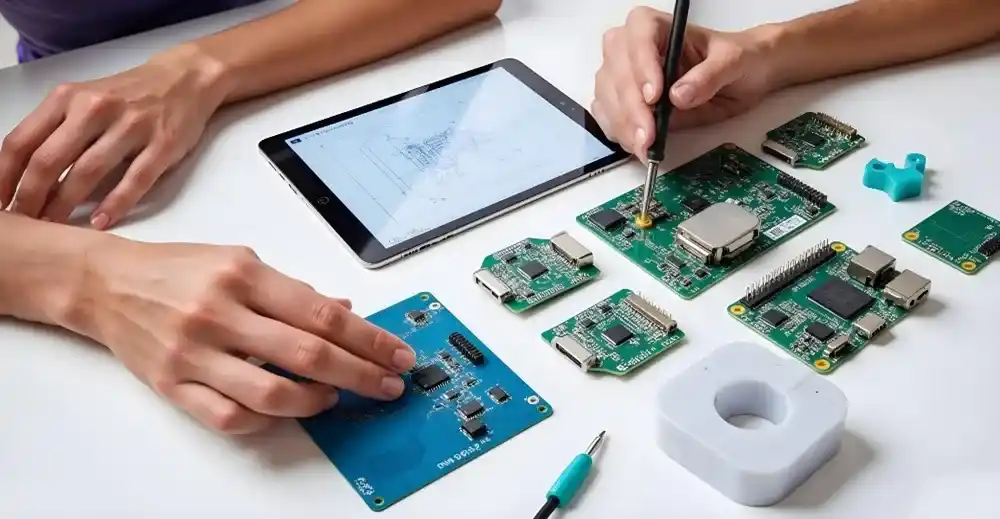
The OSAT (Outsourced Semiconductor Assembly and Test) companies take the finished silicon wafer produced in a semiconductor fabrication facility (foundry) and perform the last and most important processes of assembly &...
The OSAT (Outsourced Semiconductor Assembly and Test) companies take the finished silicon wafer produced in a semiconductor fabrication facility (foundry) and perform the last and most important processes of assembly & packaging (which includes surrounding an individual die with material that allows the die to be packaged together with other chips, which gives them protection) and extensive testing (which includes a range of functional testing for performance as well as parametric testing for reliability). As such, these companies have become the "innovation engine" for continuing to push the performance boundaries of semiconductors further than Moore's law can provide through traditional means of miniaturisation.
They are taking the lead in evolving advanced packaging techniques, including 2.5D & 3D integration, Chiplet architecture and SiP packaging, which enable the integration of numerous components into a single, high-speed (or high bandwidth) package. These advanced packaging technologies are the foundation for subsequent growth in major industries, such as AI Accelerators and other AI Technologies, 5G and other Next-Generation Communication Networks and high-performance computing. The report highlights the leading companies in this highly-consolidated global industry, including their respective areas of expertise and the competitive landscape, while offering insights into future developments for the sector.
The Top OSAT Companies:
Sr. no. | Company Name | Key Specialization / Focus |
1 | ASE Technology Holding Co., Ltd. (ASE) | Largest player; Advanced packaging, SiP, 2.5D/3D integration. |
2 | Amkor Technology, Inc. | Automotive, communications, and consumer electronics packaging (Flip Chip, Wafer Level Packaging). |
3 | JCET Group Co., Ltd. (Jiangsu Changjiang Electronics Technology) | China's largest OSAT; comprehensive chip integration services, including Wafer Bumping and SiP. |
4 | Tongfu Microelectronics Co., Ltd. (TFME) | Advanced packaging, Bumping, WLCSP; strong performance supported by key customers like AMD. |
5 | Powertech Technology Inc. (PTI) | Memory packaging and testing; DRAM, Flash memory. |
6 | Huatian Technology Co., Ltd. | Rapidly growing; investing heavily in high-end development for AI, HPC, and automotive electronics. |
7 | WiseRoad Group / Zhilu | Growing domestic presence in packaging and testing services. |
8 | Hana Micron Inc. | Strong focus on memory-related packaging and testing. |
9 | King Yuan Electronics Co., Ltd. (KYEC) | Major player specializing in dedicated Testing Services (wafer probing and final IC testing). |
10 | ChipMOS TECHNOLOGIES INC. | Specializes in packaging and testing for display driver ICs and memory. |
1. ASE Technology Holding Co., Ltd.
Market Position and Strategy: ASE is the uncontested leader in the worldwide OSAT market. They have built upon their scale advantages following the 2018 merger with SPIL to achieve this status. ASE's strategic direction involves continuously investing in the latest, next-generation Advanced Packaging Technologies through aggressive ongoing capital expenditures aimed at meeting the increased demand created by the AI and HPC revolutions. Core Competency: ASE distinguishes itself from its competition by providing high-density Integration Solutions, such as System-in-Package (SiP) and Fan-out Wafer-level Package (FOWLP), and consistently partners with leading-edge suppliers of next-generation architectures, including 2.5D and 3D Stacks-AI Accelerators and GPUs, to drive the continued evolution of high-performance computing systems. ASE's most recent strategic initiatives, including a substantial capital expenditure increase for 2025, demonstrate ASE's commitment to increasing its capability to deliver the highest-value, highest-margin advanced Packaging Services on a worldwide basis and establishing itself as the technology leader in advanced package solutions.
2. Amkor Technology, Inc.
Market Position and Strategy: Amkor is the largest OSAT provider headquartered in the USA, and its position in the market is attributed to its depth of technology and its reliable and extremely diversified global operations. Amkor prioritises delivering products to demanding, long-cycle markets that demand the highest level of Quality and Supply Chain Resiliency, including Automotive and Industrial. Core Competency: Amkor is recognised as a leader in the OSAT Automotive market and is the leader in developing and supplying specialised packaging and testing for electric vehicles (EV) and advanced driver assistance systems (ADAS), as well as infotainment systems. Amkor has been one of the primary beneficiaries of the US CHIPS and Science Act and has been awarded proposed funding to build an advanced Packaging and Test facility in Arizona.
3. JCET Group Co., Ltd.
Market Position & Strategy: JCET is one of the largest OSAT companies in mainland China and holds the third rank globally. Its strategic trajectory is defined by aggressive growth, often outpacing its peers, and leveraging its role as a core component of China’s push for semiconductor self-sufficiency. Core Specialisation: The company offers comprehensive chip integration services, including wafer bumping, flip chip, and advanced Panel-Level Packaging (PLP). Its growth is fueled by surging domestic demand, particularly in the mobile, telecom (5G), and industrial electronics segments.
4. Tongfu Microelectronics Co., Ltd. (TFME)
Market Positioning and Strategic Priorities: TFME is a rapidly growing Chinese OSAT manufacturer that has grown rapidly due to its close working relationships with many of the world's leading suppliers. Its growth strategy is focused on developing long-term contracts for large quantities of advanced packaging solutions, supported by creating synergies through acquisitions or local partnerships with companies with established technologies. Core Competencies: TFME has developed considerable competence in advanced packaging technologies, including Wafer Level Chip Scale Package (WLCSP) and Bumping. Growth in revenue and the development of advanced technology have been closely tied to the strategic partnership and ongoing collaboration with Advanced Micro Devices (AMD), which has relied on TFME for the packaging of advanced, high-performance CPUs and GPUs. This partnership has resulted in a rapid evolution of TFME's capabilities in complex, high-power, high-performance packaging solutions, making it a formidable competitor to larger companies in the Taiwanese OSAT market, particularly within the segments of HPC (high-performance computing) and Data Centre.
5. Powertech Technology Inc.
Market Positioning and Strategic Priorities: PTI represents one of the top global players in memory packaging and assembly due to its highly dedicated specialisation. PTI may not be as large or broad as the three largest players, but with its highly focused strategy around one of the most lucrative and highly specialised segments of technology packaging, PTI generates recurring high-volume business. Core Competencies: PTI is a dedicated specialist in Memory Packaging & Testing covering DRAM (Dynamic Random Access Memory) and Flash Memory (NAND/NOR). The Nature of the Memory Technology Market is characterised by high-volume and cyclical demand, and extremely tight deadlines for getting products to market. PTI has specialised expertise in developing, designing, and delivering high-speed and high-density assembly and testing technologies.
6. Huatian Technology Co., Ltd. (China)
Huatian Technology Co.'s market strategy is based on a broad investment strategy which aims to climb the technology curve through heavy investment in R&D and a focus on exposing its manufacturing capabilities to high-end manufacturers rather than the low-margin standard package services. Huatian Technology Co. is focusing on developing advanced packaging technologies for emerging high-value applications, including automotive electronics, artificial intelligence, and high-performance computing. Huatian is bringing new advanced packaging solutions to market, including flip chip and copper pillar bumping. The growth in Huatian's revenues is evidence of the continued success of integrating advanced capacity in Huatian and is capturing a greater market share of the domestic assembled and tested complex chip designs.
7. Wise Road Group / Zhilu
Market Position and Strategy: Wise Road Group, through its investment vehicle Zhilu, exemplifies the strategic consolidation strategy to rapidly increase the market share of the domestic OSAT in China. Contrasted with other firms focused solely on organic growth, Wise Road Group is strategically pursuing an acquisition and integration-based approach to immediately gain scale and have access to technology by absorbing the facilities of international competitors. Core Specialisation: While the company's portfolio is a product of acquisitions and is therefore defined as broad, the company's focus is to build a strong domestic capacity in providing Packaging and Testing services, thus reducing its dependence on foreign supply chains. South Korean semiconductor manufacturer MagnaChip Semiconductor announced on March 29 that it would accept a takeover proposal from Chinese investment fund Wise Road Capital. Wise Road Capital plans to make a public takeover offer (TOB) to acquire all shares of MagnaChip at $29 per share, a 54% premium over MagnaChip's recent share price. The expected acquisition amount is $1.4 billion.
8. Hana Micron Inc.
Market Position and Strategy: Hana Micron is a significant regional player that has strategically aligned itself with South Korea's memory semiconductor giants. Hana Micron's strategy is one of specialisation to the extreme and focuses on only providing Packaging and Testing services for Memory Chips. Core Specialisation: The company's operations are highly integrated with the volume and density demands of DRAM and NAND Flash. The performance of Hana Micron is heavily dependent upon the cyclicality and technological roadmap of the global Memory Industry, which is currently in a recovery cycle.
9. Yuan Electronics Co., Ltd (KYEC)
Market Position and Strategy: KYEC has a strategic role in the global semiconductor supply chain, being the largest specialised Test House in the world. As a result, it is able to deliver high-value Testing and Engineering services, which have become increasingly crucial as the complexity of debugging/validating chips grows and as chips become heterogeneously designed. Core Specialisation: KYEC's areas of expertise include Dedicated Wafer Probing (i.e. testing die while still on the wafer) and Final IC Testing. It provides Testing for a broad range of chips, including Automotive, Communication, and High-Performance Computing (HPC). KYEC’s customers include overseas customers and domestic customers. The primary customer groups are fabless firms (more than 80%), integrated device manufacturers (IDM, approximately 18%), foundry firms (approximately 2%) and others. As the world's largest professional IC testing firm, KYEC has received certificates and orders from leading manufacturers in various markets, such as those of mobile phones, wireless communication, liquid crystal display driver ICs, graphics cards, special dynamic random access memory, NOR flash, ICs for consumer electronics, and micro electro mechanical systems. Consequently, KYEC's revenue is growing rapidly, creating new high records in corporate performance and gradually stabilising the production line structure.
10. ChipMOS Technologies Inc.
Market Position & Strategy: ChipMOS is an OSAT company that specialises in providing packaging and testing services to manufacturers of display driver ICs (DDIs) for high-volume consumer electronics such as smartphones, tablets and TVs. ChipMOS’s strategy for success is based upon maintaining its technological leadership within these categories to ensure that the company continues to receive stable, high-volume orders. Core Specialisation: As a leading global supplier of packaging and testing services, ChipMOS is also a key supplier of packaging and testing services to manufacturers of display driver ICs (DDIs) used in LCD and OLED display technology for smartphones, tablets and TVs. The company has a significant capacity to provide Flash Memory packaging and testing services. Consolidated revenue for the fiscal year ended December 31, 2024, was NT$22.70 billion, which reflects a 6.3% up from 2023. The consolidated gross margin for the year was 13.0%. In individual product lines, memory product revenue increased 13.9% from 2023 and represented 37.8% of 2024 total revenue. The profit attributable to equity holders of the Company and the basic earnings per share were NT$1.42 billion and NT$1.95. Till the end of 2024, the aggregated amount of ChipMOS’ consolidated assets was NT$45.38 billion, and the cash and cash equivalents were NT$15.22 billion.
The consolidated liabilities were NT$20.31 billion with the consolidated liabilities to assets ratio of 44.7%. The equity attributable to equity holders of the Company was NT$25.07 billion, with the Return on Equity (ROE) being 5.7% for 2024. Ten of the world’s leading outsourced semiconductor assembly and test (OSAT) companies collectively demonstrate a significant change for the semiconductor industry, reflecting a position shift from backend performance to backend performance improvements being the primary means of creating a better-performing product over the past several years. Advances in the OSAT industry are being catalysed by the ever-growing demand for Artificial Intelligence (AI) and High-Performance Computing (HPC) chips, and moving from a historical era of standard package designs to a future defined by advanced packaging methods, such as Chiplet Integration, 2.5D/3D Stacking, and System on a Chip Packaging (SiP). The giants in this industry continue to make significant investments to secure their future by developing expertise in high-margin, complex OSAT processes, led by ASE's substantial investments in OSAT. At the same time, specialised companies such as PTI and Hana Micron continue to provide important memory solutions, while KYEC is a critical player in the memory testing markets. Furthermore, as a result of their national strategies and focus on developing superior packaging capabilities, the growth of Chinese OSAT firms (JCET, TFME, and Huatian) is reshaping the competitive landscape. Moving forward, success in developing a competitive advantage will require continued investment in high-end OSAT manufacturing systems and the ability to effectively manage the costs and increasing geopolitical pressures impacting capacity development and supply chain resiliency within the US, China, and Taiwan. The OSAT industry has transcended being just a manufacturing phase of the semiconductor supply chain, and now effectively serves as a bottleneck for the technology and system-level performance of all advanced semiconductor chips.
Have questions?
More Thought Articles
From Data Centers to EV Charging: Where Low-Voltage DC Distribution Is Making an Impact
Low-voltage DC distribution is gaining relevance as AI data centers, EV charging hubs, solar systems, and battery storage increase demand for efficient power architectures. The article examines 800 VDC standardization, conversion losses, protection challenges, and greenfield opportunities, highlighting why hybrid AC/DC systems could become increasingly important across high-power infrastructure applications.
How EV Charger Manufacturers Can Capitalize on India’s Home Charging Revolution
India’s residential EV charging opportunity is expanding as policy support, EV adoption, and private parking infrastructure develop. Manufacturers can capture value beyond AC chargers through installation, smart charging, load management, solar integration, software, and after-sales services. Housing societies, automakers, and property developers offer scalable routes to residential charging customers.
Second-Life EV Battery Market in India: What Is Driving Demand from Manufacturers?
India’s second-life EV battery market is gaining relevance as electric vehicle adoption expands and batteries retain useful capacity after automotive service. Growing stationary-storage demand, battery data, refurbishment capabilities, EPR obligations, and critical-mineral policies are encouraging manufacturers to extend battery value through reuse before eventual recycling within India’s emerging circular battery ecosystem.