
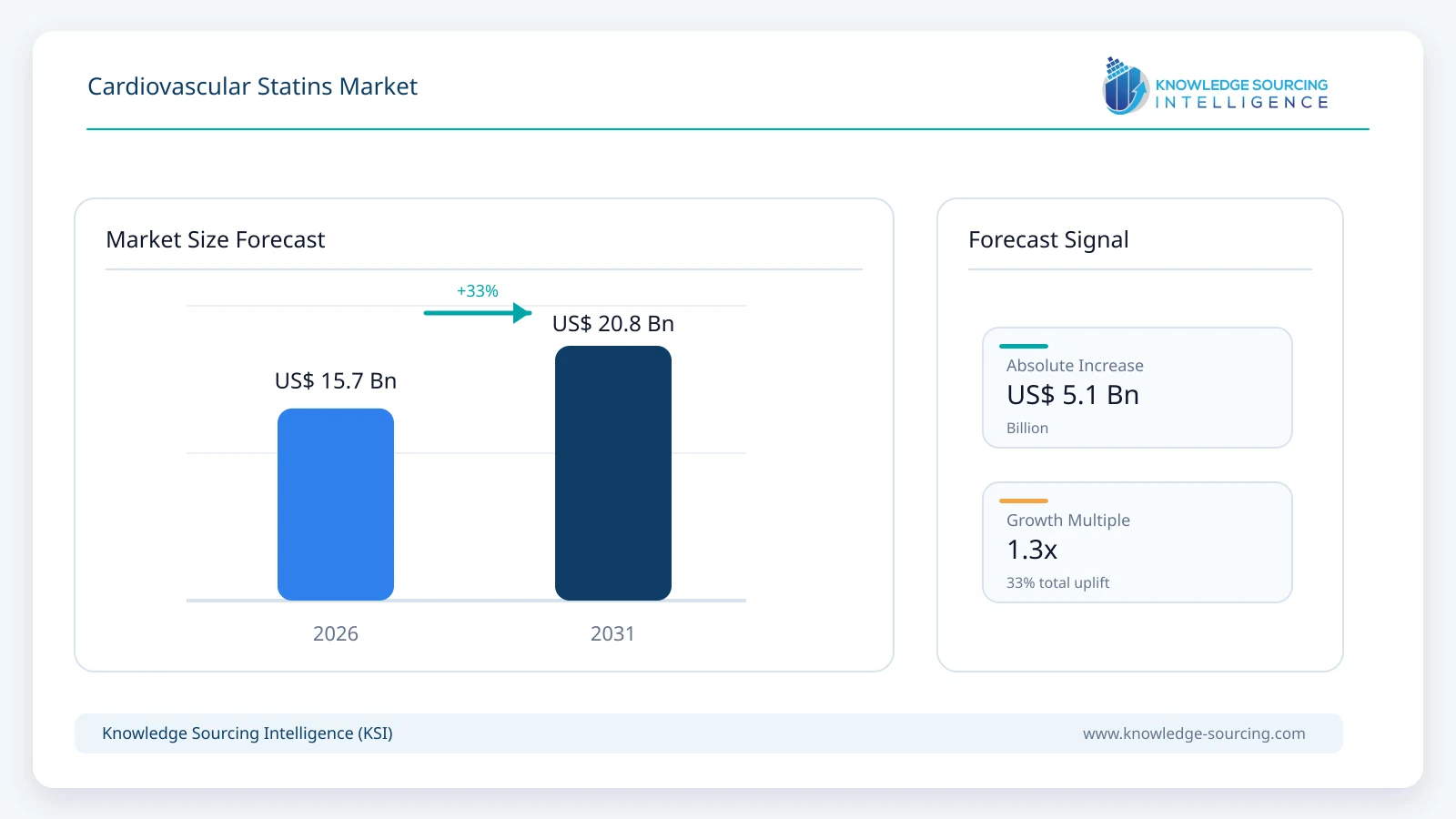
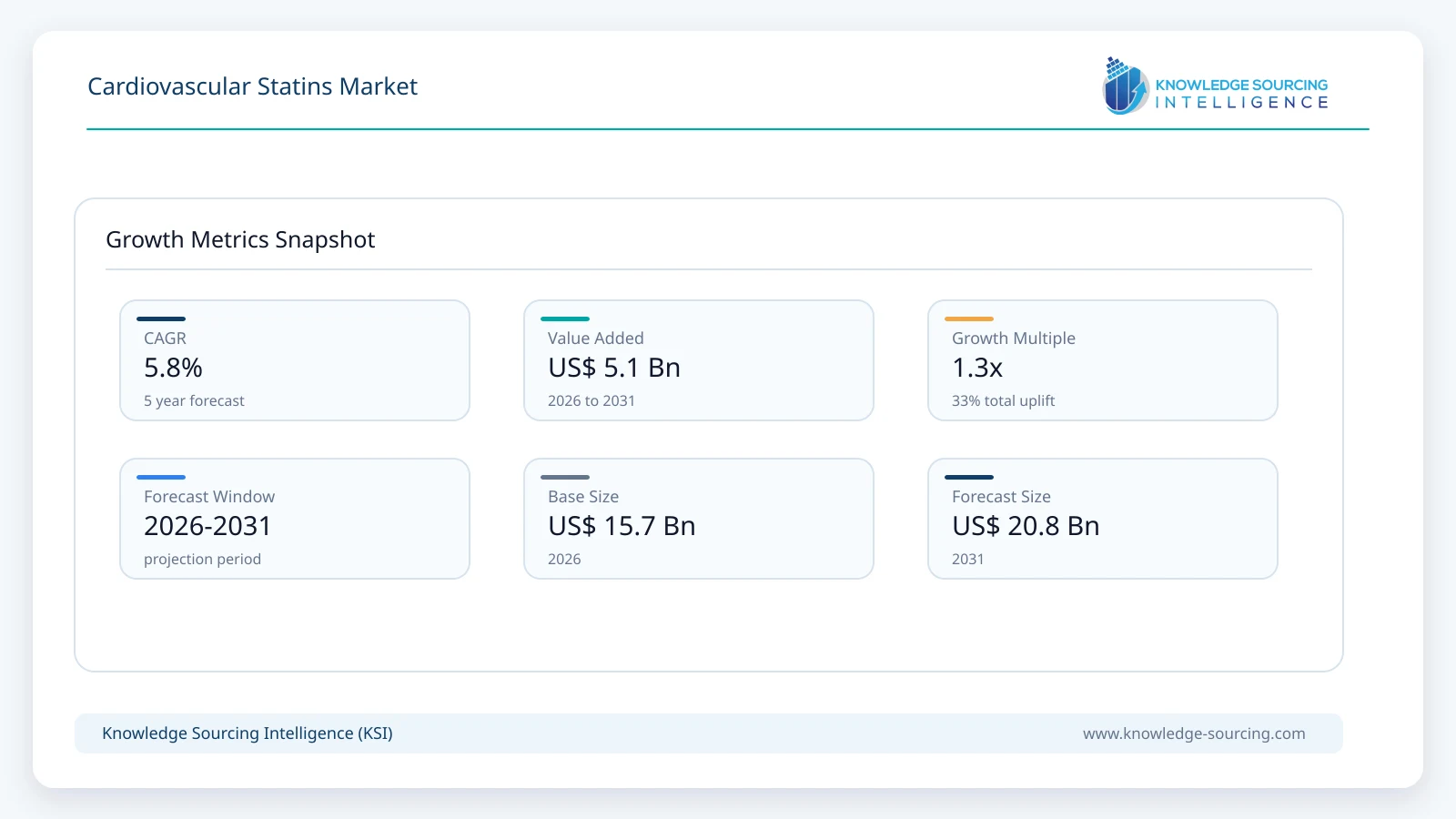
The Cardiovascular Statins Market is set to reach USD 20.75 billion in 2031, growing at a CAGR of 5.80% from USD 15.65 billion in 2026.
Highlights:
- 1Rising cardiovascular disease prevalence is increasing long-term demand for lipid-lowering therapies.
- 2Preventive cardiology initiatives are expanding statin utilization across high-risk populations.
- 3Generic statin availability is improving treatment accessibility and adherence.
- 4Healthcare systems are strengthening cholesterol screening programs because early intervention reduces cardiovascular complications.
Statins constitute a class of lipid-lowering medications that inhibit hydroxymethylglutaryl-coenzyme A reductase, thereby reducing cholesterol synthesis and lowering cardiovascular risk. Their clinical importance remains significant because cardiovascular diseases continue to represent one of the leading causes of mortality globally.
Healthcare providers increasingly prioritize cholesterol management because elevated lipid levels contribute directly to atherosclerotic plaque development and vascular complications. Physicians are prescribing statins earlier in disease progression because preventive intervention reduces long-term cardiovascular events.
Guideline-directed cardiovascular care emphasizes statin therapy because extensive clinical evidence demonstrates reductions in myocardial infarction, stroke, and cardiovascular mortality. Healthcare systems are expanding cardiovascular screening programs because early detection of dyslipidemia improves preventive care outcomes.
Strategic importance continues increasing because statins support population-level cardiovascular risk reduction while maintaining favorable cost-effectiveness across diverse healthcare environments.
Market Dynamics
Market Drivers
Expanding Burden of Cardiovascular Diseases
Cardiovascular disease remains a major global healthcare challenge because coronary artery disease, stroke, and atherosclerotic disorders continue affecting large patient populations. Healthcare providers are expanding statin utilization because lipid reduction remains a cornerstone of preventive cardiology. This trend supports sustained market demand.
Increasing Cholesterol Screening Programs
Early detection of dyslipidemia drives treatment initiation because elevated cholesterol levels frequently remain asymptomatic. Healthcare organizations are strengthening population screening efforts because preventive cardiovascular management improves long-term outcomes. This development increases statin prescription volumes.
Growing Adoption of Preventive Cardiology
Preventive cardiovascular care reduces disease progression because timely intervention lowers future cardiovascular risk. Physicians are initiating statin therapy earlier because clinical guidelines increasingly emphasize primary prevention among at-risk individuals. This factor supports market expansion.
Expansion of Generic Drug Availability
Generic statins improve treatment affordability because healthcare systems seek cost-effective chronic disease management solutions. Pharmaceutical companies are expanding generic distribution because broad patient access remains essential for long-term cardiovascular prevention. This trend strengthens market penetration.
Market Restraints
Statin-associated adverse effects may reduce long-term patient adherence.
Availability of alternative lipid-lowering therapies increases treatment competition.
Variability in healthcare access limits treatment uptake in underserved regions.
Market Opportunities
Growth of High-Risk Cardiovascular Screening
Healthcare providers increasingly identify patients with elevated cardiovascular risk because diagnostic capabilities continue improving. Screening programs are expanding because earlier intervention reduces disease burden. This opportunity supports future demand growth.
Expansion in Emerging Healthcare Markets
Developing healthcare systems continue strengthening cardiovascular care infrastructure because noncommunicable disease prevalence is increasing. Pharmaceutical manufacturers are expanding market access initiatives because untreated dyslipidemia remains widespread. This development creates substantial opportunities.
Integration of Digital Health Monitoring
Digital health platforms improve therapy management because medication adherence remains a critical determinant of treatment effectiveness. Healthcare organizations are implementing remote monitoring solutions because continuous patient engagement supports better outcomes. This trend enhances market potential.
Personalized Lipid Management Strategies
Cardiovascular care increasingly incorporates individualized risk assessment because patient populations exhibit diverse clinical profiles. Physicians are tailoring treatment intensity because precision medicine approaches improve therapeutic effectiveness. This opportunity supports innovation in cardiovascular management.
Disease & Epidemiology Analysis
Cardiovascular diseases continue to represent a leading cause of mortality because atherosclerosis, hypertension, diabetes, obesity, and aging populations increase disease incidence. Lipid abnormalities remain major modifiable risk factors because elevated cholesterol directly contributes to plaque formation and vascular dysfunction.
Hypercholesterolemia drives substantial statin utilization because cholesterol reduction lowers the probability of cardiovascular events. Healthcare providers are intensifying lipid management because treatment guidelines increasingly support aggressive risk reduction strategies.
Coronary artery disease continues generating significant therapeutic demand because ischemic cardiovascular complications remain highly prevalent. Physicians are expanding preventive interventions because recurrent cardiovascular events contribute substantially to healthcare costs and mortality.
Stroke prevention remains a major application area because lipid management reduces cerebrovascular risk. Healthcare systems are strengthening preventive cardiovascular programs because long-term disease management reduces hospitalization and disability burdens.
Treatment Guidelines Landscape
Guideline Focus | Clinical Objective | Impact on Statin Demand |
Hypercholesterolemia Management | LDL cholesterol reduction | Increases first-line statin utilization |
Primary Prevention | Cardiovascular risk reduction | Expands treatment initiation |
Secondary Prevention | Prevention of recurrent events | Supports long-term therapy use |
Familial Hypercholesterolemia | Aggressive lipid control | Increases high-intensity statin demand |
Stroke Prevention | Reduction of cerebrovascular risk | Strengthens chronic statin utilization |
Market Segmentation
By Drug Type
Atorvastatin maintains substantial demand because clinicians frequently prescribe it across primary and secondary prevention settings. Rosuvastatin continues gaining adoption because intensive LDL reduction remains an important treatment objective. Simvastatin and pravastatin retain utilization because healthcare providers seek established lipid-lowering options. Fluvastatin, pitavastatin, and lovastatin support niche demand because individualized treatment considerations influence prescribing decisions. Broad generic availability sustains overall market accessibility.
By Indication
Hypercholesterolemia represents the largest indication because elevated cholesterol remains a major cardiovascular risk factor. Coronary artery disease continues generating significant demand because secondary prevention requires long-term lipid management. Atherosclerotic cardiovascular disease supports widespread statin utilization because risk reduction remains a central therapeutic objective. Stroke prevention and peripheral artery disease applications continue expanding because vascular protection improves clinical outcomes. Familial hypercholesterolemia sustains demand for intensive lipid-lowering strategies.
By Distribution Channel
Retail pharmacies account for substantial distribution because chronic cardiovascular therapies require convenient patient access. Hospital pharmacies maintain importance because cardiovascular patients frequently initiate therapy within healthcare institutions. Online pharmacies are expanding because digital healthcare adoption improves prescription accessibility. Specialty pharmacies support selected patient populations because complex cardiovascular treatment programs require additional clinical support services.
Regional Analysis
North America
North America maintains leadership in statin utilization because cardiovascular disease prevalence remains significant and preventive healthcare programs are well established. Healthcare providers increasingly implement risk-based lipid management because clinical guidelines emphasize aggressive cholesterol reduction among high-risk populations. Insurance coverage supports broad access because generic statin therapies remain highly cost-effective. Pharmaceutical companies continue expanding patient support initiatives because long-term adherence determines cardiovascular outcomes. These factors sustain strong regional demand.
Europe
Europe demonstrates stable statin demand because cardiovascular prevention remains a major healthcare priority. National healthcare systems increasingly support population-based cholesterol screening because early risk identification improves long-term disease management. Physicians continue prescribing statins extensively because evidence-based guidelines prioritize lipid control. Generic medicine adoption remains widespread because healthcare systems emphasize cost containment while maintaining treatment accessibility. These dynamics support continued market stability.
Asia Pacific
Asia Pacific represents a rapidly expanding market because urbanization, lifestyle changes, and population aging are increasing cardiovascular disease prevalence. Governments are strengthening cardiovascular screening initiatives because noncommunicable diseases generate growing healthcare burdens. Healthcare providers are expanding preventive cardiology programs because dyslipidemia rates continue rising. Generic manufacturers maintain strong regional presence because affordability remains a key determinant of treatment adoption. These factors create substantial growth opportunities.
Rest of the World
Latin America, the Middle East, and Africa continue strengthening cardiovascular disease management because healthcare systems increasingly recognize the burden of chronic noncommunicable diseases. Physicians are expanding cholesterol screening because cardiovascular risk awareness is improving. Pharmaceutical companies continue increasing generic medicine availability because affordability remains essential for long-term treatment adherence. These developments support gradual market expansion across emerging healthcare environments.
Regulatory Landscape
Regulatory authorities maintain extensive oversight of statin therapies because cardiovascular medicines serve large patient populations and require long-term administration. Agencies evaluate safety, efficacy, manufacturing quality, and post-marketing surveillance because treatment consistency remains critical for chronic disease management.
The U.S. Food and Drug Administration continues monitoring cardiovascular therapies through established pharmacovigilance frameworks.
European regulators continue supporting access to generic lipid-lowering medicines because healthcare systems prioritize affordable cardiovascular prevention. These regulatory approaches improve treatment availability while maintaining quality standards.
Pipeline Analysis
The cardiovascular lipid management pipeline continues evolving because residual cardiovascular risk remains a major clinical challenge despite widespread statin utilization. Pharmaceutical companies are investigating combination approaches because patients frequently require additional LDL reduction beyond statin therapy alone.
Developers continue evaluating cardiometabolic and lipid-regulating mechanisms because personalized cardiovascular prevention is becoming increasingly important. Research programs are exploring complementary therapeutic pathways because comprehensive risk reduction requires multifactorial intervention strategies.
Innovation increasingly focuses on long-term cardiovascular outcomes because healthcare systems seek therapies that reduce hospitalization, mortality, and healthcare expenditures. These developments support continued evolution of cardiovascular prevention strategies alongside established statin therapies.
Reimbursement Landscape
Healthcare payers broadly support statin reimbursement because these therapies demonstrate strong clinical effectiveness and favorable economic value. Public and private insurance programs continue providing coverage because cardiovascular prevention reduces downstream healthcare costs associated with major cardiovascular events.
Generic competition strengthens reimbursement support because affordability improves treatment accessibility. Healthcare systems increasingly emphasize adherence initiatives because sustained statin utilization remains essential for achieving population-level cardiovascular risk reduction.
Competitive Landscape
Pfizer Inc.
Pfizer remains strategically significant because its historical cardiovascular expertise and global pharmaceutical infrastructure support extensive market presence. The company continues leveraging large-scale commercialization capabilities because broad therapeutic reach strengthens healthcare provider engagement and cardiovascular portfolio management.
AstraZeneca PLC
AstraZeneca maintains a strong cardiovascular position through continuous investment in cardiometabolic innovation. The company expands integrated cardiovascular disease management strategies because healthcare systems increasingly prioritize comprehensive risk reduction across multiple disease pathways.
Merck & Co., Inc.
Merck & Co. retains strategic relevance through extensive pharmaceutical expertise and global commercial capabilities. The company supports cardiovascular healthcare initiatives because long-term chronic disease management remains an important component of healthcare delivery systems.
Novartis AG
Novartis differentiates itself through advanced cardiovascular research capabilities and innovation-driven development strategies. The company strengthens cardiometabolic disease management programs because cardiovascular prevention remains a major healthcare priority globally.
Viatris Inc.
Viatris plays an important role in expanding access to affordable cardiovascular medicines. The company leverages extensive generic pharmaceutical capabilities because healthcare systems increasingly require cost-effective chronic disease therapies.
Teva Pharmaceutical Industries Ltd.
Teva Pharmaceutical Industries supports global cardiovascular treatment accessibility through large-scale generic medicine manufacturing. The company strengthens market reach because affordable lipid-lowering therapies remain essential across diverse healthcare environments.
Sun Pharmaceutical Industries Ltd.
Sun Pharmaceutical Industries expands cardiovascular medicine availability through extensive international pharmaceutical operations. The company continues strengthening generic cardiovascular portfolios because chronic disease prevalence is increasing worldwide.
Dr. Reddy’s Laboratories Ltd.
Dr. Reddy’s Laboratories maintains a strong position in generic cardiovascular therapeutics through broad manufacturing and distribution capabilities. The company focuses on treatment accessibility because long-term cardiovascular management requires affordable medication options.
Lupin Limited
Lupin supports cardiovascular healthcare delivery through diversified generic pharmaceutical offerings. The company expands international market participation because cardiovascular disease prevention remains a growing healthcare priority.
Aurobindo Pharma Limited
Aurobindo Pharma strengthens the cardiovascular market through high-volume generic medicine production. The company continues supporting healthcare affordability because widespread statin utilization depends on accessible treatment pricing.
Key Developments
January 2026: AstraZeneca expanded cardiovascular research initiatives supporting broader cardiometabolic disease management strategies.
December 2025: Novartis continued advancing cardiovascular innovation programs focused on atherosclerotic disease management.
November 2025: Pfizer strengthened cardiovascular therapeutic portfolio initiatives through lifecycle management activities.
October 2025: Viatris expanded global generic cardiovascular medicine distribution programs.
Strategic Insights and Future Market Outlook
The statins market will remain fundamental to cardiovascular disease prevention because cholesterol management continues to represent one of the most effective approaches for reducing atherosclerotic risk. Healthcare systems increasingly emphasize preventive cardiology because chronic disease burdens continue rising globally.
Risk-based treatment strategies are becoming more prominent because clinicians increasingly tailor interventions according to individual cardiovascular profiles. Healthcare providers are strengthening early screening programs because prompt identification of dyslipidemia improves long-term clinical outcomes. These developments support sustained statin utilization despite the emergence of newer lipid-lowering therapies.
Generic medicine availability will continue expanding because healthcare systems seek scalable and affordable cardiovascular prevention solutions. Pharmaceutical companies are strengthening patient adherence initiatives because treatment persistence directly influences cardiovascular risk reduction. Digital health technologies are supporting therapy monitoring because continuous patient engagement improves long-term outcomes.
The global statins market for cardiovascular applications will continue serving as a cornerstone of preventive and secondary cardiovascular care. Expanding screening programs, increasing cardiovascular disease prevalence, broader generic availability, and stronger guideline-directed therapy adoption will sustain demand across developed and emerging healthcare markets throughout the forecast period.
Cardiovascular Statins Market Scope:
| Report Metric | Details |
|---|---|
| Total Market Size in 2026 | USD 15.65 billion |
| Total Market Size in 2031 | USD 20.75 billion |
| Forecast Unit | USD Billion |
| Growth Rate | 5.80% |
| Study Period | 2021 to 2031 |
| Historical Data | 2021 to 2024 |
| Base Year | 2025 |
| Forecast Period | 2026 – 2031 |
| Segmentation | Drug Type, Indication, Distribution Channel, Geography |
| Companies |
|
Market Segmentation
By Drug Type
- Atorvastatin
- Rosuvastatin
- Simvastatin
- Pravastatin
- Fluvastatin
- Pitavastatin
- Lovastatin
By Indication
- Hypercholesterolemia
- Coronary Artery Disease
- Atherosclerotic Cardiovascular Disease
- Stroke Prevention
- Peripheral Artery Disease
- Familial Hypercholesterolemia
By Distribution Channel
- Hospital Pharmacies
- Retail Pharmacies
- Online Pharmacies
- Specialty Pharmacies
By End User
- Hospitals
- Cardiology Clinics
- Ambulatory Care Centers
- Home Care Settings
By Geography
- North America
- Europe
- Asia-Pacific
- Latin America
- Middle East & Africa
Table of Contents
1.EXECUTIVE SUMMARY
1.1 Cardiovascular Statins Market Scope and Objectives
1.2 Key Market Insights and Strategic Highlights
1.3 Statin Prescription Trends and Utilization Overview
1.4 Market Growth Outlook and Revenue Forecast
1.5 Strategic Conclusions
2.CARDIOVASCULAR STATINS MARKET OVERVIEW
2.1 Definition and Scope of Cardiovascular Statins Market
2.2 Cardiovascular Statins Market Size Analysis 2021–2024
2.3 Cardiovascular Statins Market Size Forecast 2025–2035
2.4 Market Drivers
2.4.1 Rising Global Burden of Cardiovascular Diseases
2.4.2 Growing Awareness of Cholesterol Management
2.4.3 Expanding Preventive Cardiology Programs
2.4.4 Favorable Clinical Guidelines Supporting Statin Therapy
2.5 Market Restraints
2.5.1 Patent Expirations and Generic Competition
2.5.2 Statin Intolerance and Adverse Effect Concerns
2.5.3 Pricing Pressures Across Healthcare Systems
2.6 Market Opportunities
2.6.1 Increasing Use in Primary Prevention Populations
2.6.2 Combination Therapy Development Opportunities
2.6.3 Growth Potential in Emerging Markets
2.7 Cardiovascular Statins Market Segmentation
2.7.1 By Drug Type
2.7.1.1 Atorvastatin
2.7.1.2 Rosuvastatin
2.7.1.3 Simvastatin
2.7.1.4 Pravastatin
2.7.1.5 Fluvastatin
2.7.1.6 Pitavastatin
2.7.1.7 Lovastatin
2.7.2 By Indication
2.7.2.1 Hypercholesterolemia
2.7.2.2 Coronary Artery Disease
2.7.2.3 Atherosclerotic Cardiovascular Disease
2.7.2.4 Stroke Prevention
2.7.2.5 Peripheral Artery Disease
2.7.2.6 Familial Hypercholesterolemia
2.7.3 By Distribution Channel
2.7.3.1 Hospital Pharmacies
2.7.3.2 Retail Pharmacies
2.7.3.3 Online Pharmacies
2.7.3.4 Specialty Pharmacies
2.7.4 By End User
2.7.4.1 Hospitals
2.7.4.2 Cardiology Clinics
2.7.4.3 Ambulatory Care Centers
2.7.4.4 Home Care Settings
3.CARDIOVASCULAR DISEASE EPIDEMIOLOGY AND TREATMENT DEMAND ANALYSIS
3.1 Global Burden of Cardiovascular Diseases
3.2 Coronary Artery Disease Epidemiology
3.3 Hypercholesterolemia Prevalence Analysis
3.4 Stroke Epidemiology
3.5 Familial Hypercholesterolemia Patient Population Analysis
3.6 Forecast of Statin Prescription Volumes
4.DISEASE AND UNMET NEED ANALYSIS
4.1 Need for Effective Lipid-Lowering Therapies
4.2 Challenges in Long-Term Patient Adherence
4.3 Residual Cardiovascular Risk Despite Statin Therapy
4.4 Statin Intolerance and Alternative Treatment Needs
4.5 Unmet Needs in High-Risk Cardiovascular Populations
5.TREATMENT LANDSCAPE AND INNOVATION ANALYSIS
5.1 Evolution of Statin Therapy
5.2 Comparative Assessment of Available Statins
5.3 High-Intensity versus Moderate-Intensity Statin Therapy
5.4 Combination Therapy Trends with Ezetimibe and PCSK9 Inhibitors
5.5 Personalized Lipid Management Approaches
5.6 Emerging Lipid-Lowering Treatment Strategies
5.7 Clinical Outcomes and Effectiveness Analysis
6.CLINICAL AND COMMERCIAL INTELLIGENCE
6.1 Clinical Guideline Positioning
6.2 Statin Utilization Trends
6.3 Comparative Effectiveness Benchmarking
6.4 Pricing Trends and Reimbursement Dynamics
6.5 Market Share Analysis by Drug Type
6.6 Prescription and Physician Preference Trends
6.7 Lifecycle Management Strategies
6.8 Regulatory and Compliance Analysis
7.PRODUCT BENCHMARKING
7.1 Atorvastatin Benchmarking
7.2 Rosuvastatin Benchmarking
7.3 Simvastatin Benchmarking
7.4 Pravastatin Benchmarking
7.5 Pitavastatin Benchmarking
7.6 Competitive Differentiation Analysis
8.Market Forecast and Risk Analysis
8.1 Revenue Forecast Modeling
8.2 Prescription Volume Forecast
8.3 Therapy Adoption Forecast
8.4 Pricing and Reimbursement Sensitivity Analysis
8.5 Key Risk Factors
8.5.1 Generic Competition Risks
8.5.2 Regulatory Risks
8.5.3 Reimbursement Risks
8.5.4 Patient Adherence Risks
8.6 Sensitivity and Scenario Analysis
9.COMPETITIVE LANDSCAPE
9.1 Market Share Analysis by Company
9.2 Competitive Positioning of Statin Brands and Generics
9.3 Product Portfolio Analysis
9.4 Strategic Collaborations and Licensing Agreements
9.5 Mergers, Acquisitions, and Investment Activity
9.6 Competitive Benchmarking Analysis
10.GEOGRAPHIC ANALYSIS
10.1 North America
10.2 Europe
10.3 Asia-Pacific
10.4 Latin America
10.5 Middle East and Africa
11.KEY COUNTRIES ANALYSIS
11.1 United States
11.2 Canada
11.3 Germany
11.4 United Kingdom
11.5 France
11.6 Italy
11.7 Spain
11.8 China
11.9 Japan
11.10 India
11.11 South Korea
11.12 Australia
11.13 Brazil
11.14 Mexico
11.15 Saudi Arabia
11.16 South Africa
12.Company Profiles
12.1 Pfizer Inc.
12.1.1 Overview
12.1.2 Financials
12.1.3 Product Portfolio
12.1.4 Recent Developments
12.2 AstraZeneca PLC
12.2.1 Overview
12.2.2 Financials
12.2.3 Product Portfolio
12.2.4 Recent Developments
12.3 Merck & Co., Inc.
12.3.1 Overview
12.3.2 Financials
12.3.3 Product Portfolio
12.3.4 Recent Developments
12.4 Novartis AG
12.4.1 Overview
12.4.2 Financials
12.4.3 Product Portfolio
12.4.4 Recent Developments
12.5 Viatris Inc.
12.5.1 Overview
12.5.2 Financials
12.5.3 Product Portfolio
12.5.4 Recent Developments
12.6 Teva Pharmaceutical Industries Ltd.
12.6.1 Overview
12.6.2 Financials
12.6.3 Product Portfolio
12.6.4 Recent Developments
12.7 Sun Pharmaceutical Industries Ltd.
12.7.1 Overview
12.7.2 Financials
12.7.3 Product Portfolio
12.7.4 Recent Developments
12.8 Dr. Reddy’s Laboratories Ltd.
12.8.1 Overview
12.8.2 Financials
12.8.3 Product Portfolio
12.8.4 Recent Developments
12.9 Lupin Limited
12.9.1 Overview
12.9.2 Financials
12.9.3 Product Portfolio
12.9.4 Recent Developments
12.10 Aurobindo Pharma Limited
12.10.1 Overview
12.10.2 Financials
12.10.3 Product Portfolio
12.10.4 Recent Developments
13.FUTURE OUTLOOK AND STRATEGIC INSIGHTS
13.1 Expansion of Preventive Cardiovascular Care Programs
13.2 Growth of Combination Lipid-Lowering Therapies
13.3 Increasing Use of Precision Cardiovascular Medicine
13.4 Opportunities in Emerging Healthcare Markets
13.5 Strategic Recommendations
14.METHODOLOGY AND DATA FRAMEWORK
14.1 Data Sources
14.2 Epidemiology and Prescription Volume Modeling Approach
14.3 Market Sizing and Forecasting Methodology
14.4 Competitive Benchmarking Framework
14.5 Assumptions and Limitations
Navigate
Trusted by the world's leading organizations











