
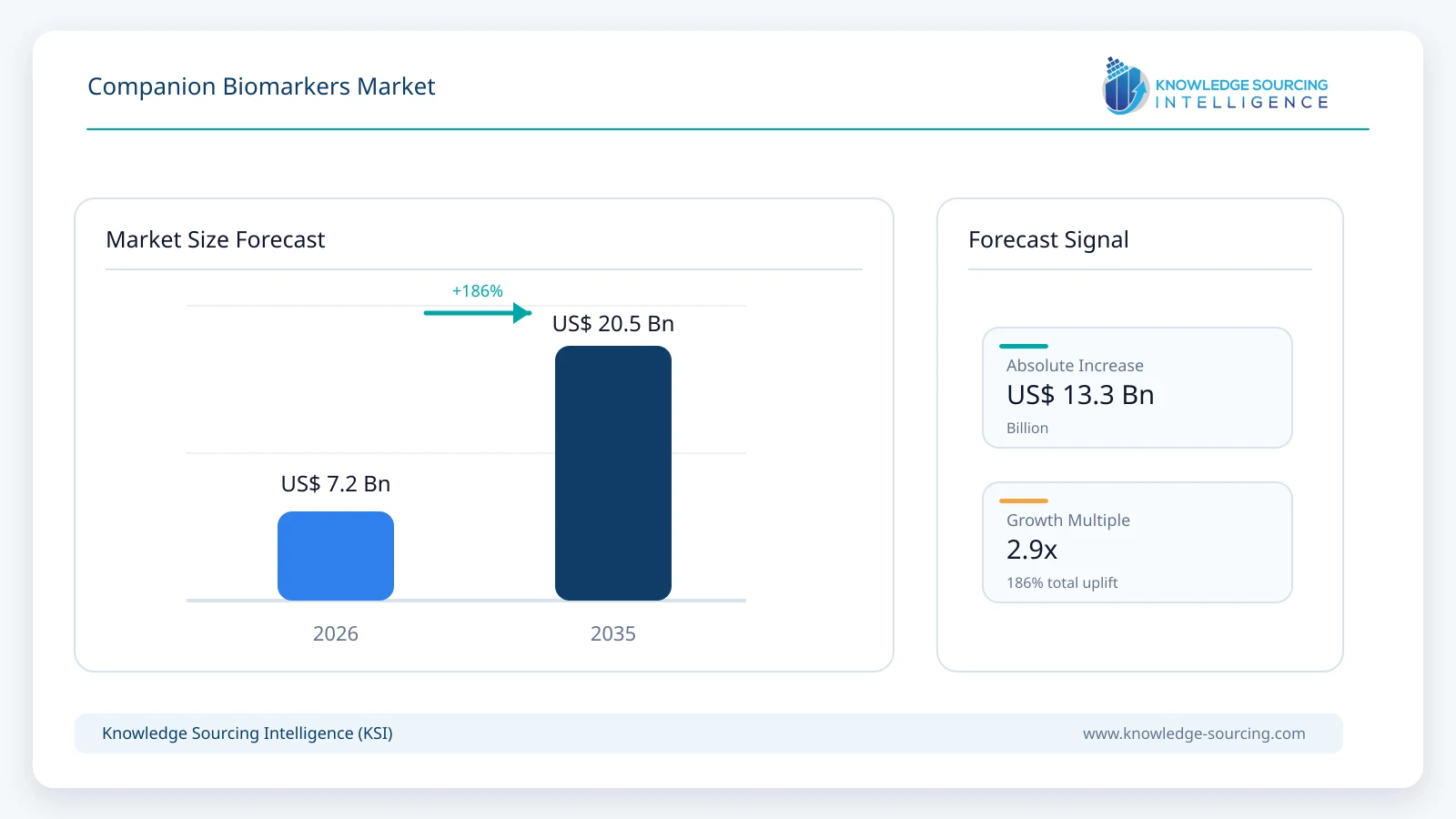
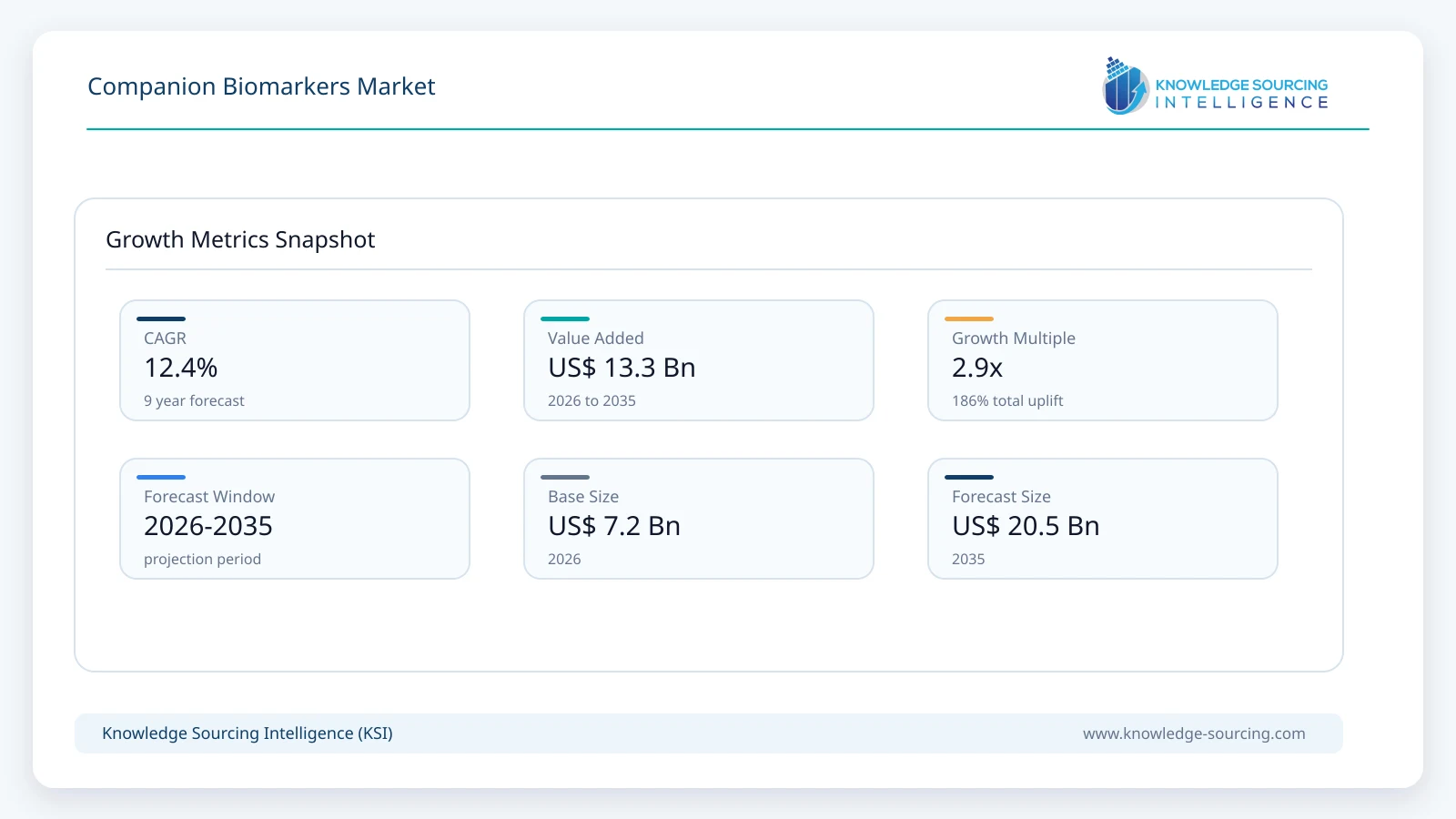
The Companion Biomarkers Market is expected to grow at a CAGR of 12.4% from a market value of USD 7.18 billion in 2026 to USD 20.52 billion in 2035.
Highlights:
- 1Increasing approvals of biomarker-directed oncology therapies are strengthening demand for validated companion biomarkers because regulatory labeling increasingly links treatment eligibility to molecular testing.
- 2Pharmaceutical sponsors are integrating companion biomarker strategies during early clinical development, which is improving patient stratification while reducing late-stage clinical trial uncertainty.
- 3Next-generation sequencing is replacing sequential single-gene testing because oncology treatment algorithms increasingly require simultaneous evaluation of multiple actionable mutations.
- 4Liquid biopsy technologies are expanding clinical adoption because minimally invasive sampling enables longitudinal biomarker monitoring throughout disease progression and treatment response.
Companion biomarkers provide biological evidence that determines patient eligibility, predicts therapeutic response, or identifies resistance mechanisms before targeted treatment begins. Their role extends beyond diagnostic testing because biomarker-guided treatment selection directly influences clinical outcomes, healthcare resource utilization, and drug development efficiency. Precision oncology therefore represents the largest commercial application since targeted therapies increasingly require validated biomarkers within regulatory labeling.
Drug developers are integrating biomarker discovery with therapeutic research because molecularly defined patient populations improve trial success rates while reducing unnecessary exposure to ineffective therapies. Regulatory agencies are encouraging simultaneous development of therapeutics and companion diagnostics through coordinated review programs, which is shortening commercialization timelines for eligible products. This regulatory alignment increases investment across sequencing technologies, multiplex testing platforms, and artificial intelligence-supported biomarker interpretation.
Healthcare systems are adopting broader molecular testing strategies because multiple actionable biomarkers increasingly coexist within individual tumor types. Single-gene testing consequently is giving way to comprehensive genomic profiling that supports multiple therapeutic decisions from one tissue or liquid biopsy sample. This transition strengthens demand for scalable laboratory infrastructure while encouraging partnerships among pharmaceutical companies, diagnostic developers, sequencing platform providers, and clinical laboratories.
Market Dynamics
Market Drivers
Expansion of Precision Oncology Drug Development: Targeted oncology therapies increasingly depend on validated biomarkers for patient selection. Pharmaceutical companies are developing therapies against genetically defined tumor populations because molecular stratification improves clinical efficacy while reducing variability across study populations. Companion biomarkers therefore become integral components of drug development rather than optional diagnostic tools. This integration is increasing investments in biomarker discovery platforms and co-development partnerships that support simultaneous therapeutic and diagnostic approvals.
Increasing Adoption of Comprehensive Genomic Profiling: Tumor biology increasingly involves multiple actionable genomic alterations that influence therapeutic selection. Clinical laboratories are replacing sequential biomarker testing with comprehensive genomic profiling because a single assay identifies numerous predictive biomarkers simultaneously. This transition reduces tissue consumption while supporting increasingly complex treatment pathways. Demand therefore continues expanding for NGS-based companion biomarker platforms capable of delivering standardized molecular information across diverse cancer types.
Regulatory Support for Companion Diagnostic Co-development: Regulatory agencies recognize that therapeutic effectiveness increasingly depends on accurate biomarker identification. Agencies are supporting coordinated review processes because synchronized evaluation reduces delays between therapeutic approval and diagnostic availability. Drug sponsors consequently are integrating diagnostic partners much earlier during clinical development. This regulatory environment strengthens investment confidence while encouraging broader adoption of companion biomarker development strategies.
Expansion of Biomarker-Driven Clinical Trial Designs: Modern oncology trials increasingly enroll patients according to molecular alterations rather than tumor histology alone. Basket, umbrella, and platform trials are expanding because they improve recruitment efficiency across rare genomic subsets. Companion biomarkers therefore become essential enrollment tools that determine study eligibility and treatment allocation. This evolution increases demand for standardized molecular assays capable of supporting multicenter global clinical trials.
Market Restraints
Variable reimbursement policies continue limiting routine comprehensive biomarker testing across several healthcare systems despite increasing clinical evidence.
Limited availability of high-quality tumor tissue and inconsistent pre-analytical sample handling reduce diagnostic accuracy for some biomarker assays.
Rapid emergence of novel biomarkers creates continual validation requirements that increase development costs for diagnostic manufacturers.
Market Opportunities
Integration of Liquid Biopsy Companion Biomarkers: Liquid biopsy expands molecular testing opportunities because circulating tumor DNA enables repeated genomic assessment throughout treatment. Pharmaceutical companies are validating blood-based biomarkers across metastatic cancers since longitudinal monitoring identifies resistance mutations that emerge after therapy initiation. Companion biomarker developers therefore are expanding investments in highly sensitive sequencing technologies capable of detecting low-frequency genomic alterations.
AI-Enabled Biomarker Interpretation: High-dimensional molecular datasets require advanced analytical methods that improve clinical interpretation. Artificial intelligence platforms are assisting molecular pathologists by identifying clinically actionable variants while reducing reporting variability. Diagnostic developers therefore are integrating computational decision-support systems into companion biomarker workflows. This evolution supports greater scalability as molecular testing volumes continue increasing.
Growth of Tissue-Agnostic Oncology Development: Targeted therapies increasingly receive approvals based on shared molecular alterations instead of tumor location. Companion biomarkers therefore support broader patient identification across multiple cancer types through a single validated assay. Sponsors are expanding tissue-agnostic clinical development because biomarker-defined populations accelerate enrollment while maximizing commercial opportunity across diverse malignancies.
Expansion of Real-World Molecular Evidence: Healthcare systems increasingly generate genomic datasets through routine clinical testing. Real-world evidence is supporting biomarker validation because longitudinal clinical outcomes strengthen confidence in predictive performance. Diagnostic manufacturers consequently are collaborating with hospitals and pharmaceutical sponsors to establish large molecular databases that support future biomarker discovery and regulatory submissions.
Disease & Epidemiology Analysis
Cancer incidence remains the principal demand generator for companion biomarkers because the increasing use of targeted therapies requires molecular characterization before treatment selection. Molecular testing identifies predictive genomic alterations that determine therapeutic eligibility, making biomarker assessment an essential component of precision oncology rather than an optional diagnostic procedure. As oncology pipelines continue expanding, clinicians are incorporating broader biomarker panels into routine practice because multiple actionable mutations increasingly coexist within the same tumor type. This transition reinforces demand for validated companion biomarkers that support personalized treatment decisions while reducing exposure to ineffective therapies.
Lung cancer, breast cancer, colorectal cancer, melanoma, ovarian cancer, and hematological malignancies account for the majority of approved companion biomarker applications because these diseases contain well-characterized molecular targets linked to targeted therapeutics. Clinical practice is increasingly requiring simultaneous evaluation of EGFR, ALK, ROS1, BRAF, KRAS, HER2, BRCA1/2, RET, MET, NTRK, MSI-H/dMMR, PD-L1, and other biomarkers as treatment algorithms become more complex. This expanding molecular landscape increases dependence on multiplex testing platforms and standardized laboratory workflows that can deliver accurate results within clinically relevant turnaround times.
Treatment Guidelines Landscape
Organization | Guideline Focus | Companion Biomarker Recommendation |
NCCN | Non-Small Cell Lung Cancer | Recommends comprehensive molecular profiling including EGFR, ALK, ROS1, BRAF, MET exon 14, RET, NTRK, KRAS, HER2 before systemic therapy selection. |
ASCO | Precision Oncology | Supports biomarker-directed treatment using validated companion diagnostic assays where approved targeted therapies exist. |
ESMO | Advanced Solid Tumors | Recommends routine molecular testing for actionable genomic alterations using validated laboratory methods. |
CAP/IASLC/AMP | Molecular Testing Standards | Provides standardized recommendations for molecular testing in lung cancer and biomarker reporting. |
Market Segmentation
By Biomarker Type
Genomic biomarkers represent the largest segment because most approved targeted oncology therapies rely on DNA-level alterations for patient selection. Clinical development is increasingly focusing on actionable mutations including EGFR, KRAS, BRCA, RET, HER2, MET, and NTRK since these biomarkers directly influence therapeutic eligibility. Pharmaceutical companies continue integrating genomic biomarkers into early clinical development because molecular stratification improves trial efficiency while supporting regulatory approval. This trend reinforces sustained demand for high-throughput sequencing technologies capable of simultaneously evaluating numerous genomic alterations.
By Detection Technology
Next-generation sequencing dominates advanced companion biomarker testing because a single assay identifies numerous actionable genomic alterations across multiple genes. Healthcare providers are replacing sequential single-gene assays with comprehensive genomic profiling because tissue availability remains limited while therapeutic decision-making is becoming increasingly complex. Diagnostic manufacturers therefore continue expanding NGS panels that support multiple pharmaceutical partnerships simultaneously. This structural transition strengthens laboratory efficiency while reducing overall diagnostic turnaround time.
By Therapeutic Area
Oncology remains the largest therapeutic area because the majority of companion diagnostics support targeted cancer therapies. Drug developers are expanding biomarker-directed pipelines across lung, breast, colorectal, ovarian, melanoma, and hematologic cancers since molecular characterization improves treatment response rates. Regulatory agencies continue approving biomarker-linked therapeutics because precision medicine demonstrates improved clinical outcomes compared with non-stratified treatment approaches. This ongoing expansion establishes oncology as the principal driver of companion biomarker innovation.
Regional Analysis
North America Market Analysis
North America represents the most mature companion biomarkers market because precision oncology adoption closely aligns with advanced molecular diagnostics infrastructure, regulatory clarity, and broad pharmaceutical innovation. The United States maintains leadership through extensive FDA-approved companion diagnostics linked to targeted oncology therapies across lung, breast, colorectal, ovarian, melanoma, and hematological cancers. Pharmaceutical companies are integrating biomarker strategies into early-stage clinical development because molecular stratification improves trial efficiency and increases regulatory confidence. Clinical laboratories continue expanding comprehensive genomic profiling as oncologists increasingly request multiplex biomarker testing instead of sequential single-gene assays. Medicare coverage decisions and growing private payer support are encouraging broader adoption of validated companion diagnostics despite remaining reimbursement variability across institutions.
Europe Market Analysis
Europe maintains strong demand for companion biomarkers because precision medicine initiatives continue expanding across national healthcare systems. The European Medicines Agency increasingly supports biomarker-guided oncology therapies through coordinated regulatory assessments that recognize companion diagnostics as essential components of targeted treatment. Healthcare providers are adopting comprehensive genomic profiling because European oncology guidelines increasingly recommend molecular characterization before treatment selection. National cancer programs continue investing in molecular pathology infrastructure as healthcare systems seek to improve therapeutic outcomes while optimizing healthcare expenditure. Academic research institutions remain active collaborators in biomarker discovery because multinational clinical trials require harmonized laboratory standards across participating countries.
Asia Pacific Market Analysis
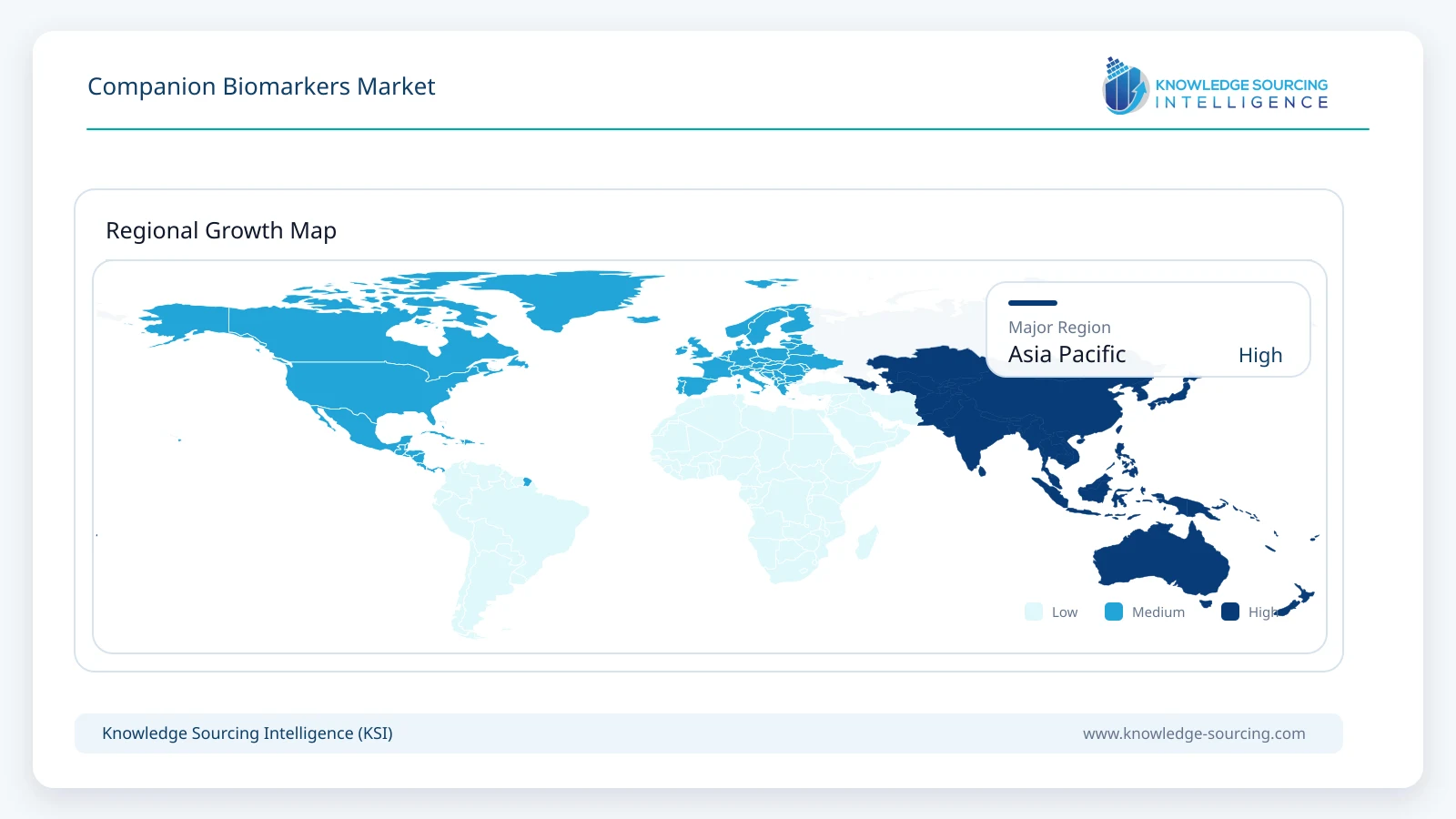
Asia Pacific is experiencing the fastest expansion in companion biomarker adoption because cancer incidence, healthcare investment, and precision medicine initiatives continue increasing across major economies. China, Japan, South Korea, Australia, and Singapore are strengthening molecular diagnostic capacity through regulatory modernization and investments in genomic medicine. Pharmaceutical companies are conducting more regional biomarker-driven clinical trials because genetically diverse patient populations support broader therapeutic development. Local diagnostic manufacturers continue partnering with multinational pharmaceutical companies to accelerate commercialization of companion diagnostics tailored to regional regulatory requirements. Academic medical centers increasingly utilize NGS-based testing as targeted oncology therapies become more widely available.
Rest of the World
Companion biomarker adoption across Latin America, the Middle East, and Africa remains comparatively limited because access to advanced molecular diagnostics varies considerably among healthcare systems. Healthcare providers are gradually incorporating biomarker-guided oncology treatment as targeted therapies become increasingly available through public and private healthcare programs. Reference laboratories continue expanding centralized molecular testing services because local laboratory capacity remains uneven across many countries. International pharmaceutical companies are supporting biomarker testing initiatives through clinical trial collaborations and educational programs aimed at improving diagnostic capabilities. Regulatory agencies continue modernizing approval pathways to facilitate access to innovative diagnostics, although reimbursement limitations still restrict widespread implementation. Long-term demand remains positive because precision oncology continues expanding globally despite infrastructure disparities.
Regulatory Landscape
Companion biomarkers are regulated as essential components of precision oncology because the clinical benefit of many targeted therapies depends on accurate identification of eligible patients. Regulatory agencies require evidence demonstrating analytical validity, clinical validity, and clinical utility before approving companion diagnostic assays linked to specific therapeutics. Pharmaceutical sponsors are integrating diagnostic development with therapeutic clinical programs because synchronized regulatory submissions reduce commercialization delays and improve treatment availability. This co-development model establishes companion biomarkers as critical regulatory assets rather than supporting laboratory tests.
The U.S. Food and Drug Administration (FDA) maintains the most established regulatory framework through its companion diagnostic guidance and coordinated review process for therapeutics and diagnostics. Many oncology drug labels specify the use of an FDA-approved companion diagnostic before treatment initiation, reinforcing standardized molecular testing in routine clinical practice. The European Medicines Agency (EMA) is strengthening collaboration with notified bodies under the In Vitro Diagnostic Regulation (IVDR), while Japan's PMDA and China's NMPA are expanding review pathways for precision oncology diagnostics. This regulatory convergence is encouraging multinational pharmaceutical companies to develop globally harmonized biomarker strategies that support simultaneous commercialization across major healthcare markets.
Companion biomarker regulation is increasingly emphasizing real-world evidence and post-market performance monitoring because molecular testing technologies continue evolving rapidly. Regulatory authorities are encouraging standardized quality management systems and external proficiency testing to ensure consistent assay performance across laboratories. Diagnostic manufacturers therefore continue investing in assay standardization, digital pathology integration, and quality assurance programs that strengthen regulatory compliance while supporting broader clinical adoption.
Pipeline Analysis
The oncology companion biomarker pipeline is expanding because targeted drug development increasingly depends on molecular patient selection during every stage of clinical research. Pharmaceutical sponsors are evaluating predictive biomarkers alongside investigational therapies rather than after therapeutic efficacy has been established. This strategy improves trial enrollment by identifying patients with the highest probability of response while reducing unnecessary exposure among biomarker-negative populations. As precision oncology continues advancing, companion diagnostics are becoming integral components of Phase I through Phase III development programs instead of post-approval additions.
Several biomarker-drug combinations continue progressing through global clinical development. Biomarkers including CLDN18.2, TROP2, HER2-low, B7-H3, FGFR2, KRAS G12D, MET amplification, RET, NRG1 fusions, and homologous recombination deficiency (HRD) are supporting investigational targeted therapies across gastric, breast, lung, ovarian, colorectal, and biliary cancers. Clinical trial designs are increasingly utilizing umbrella, basket, and adaptive protocols because these approaches efficiently evaluate multiple biomarker-defined patient populations within a unified development framework. Sponsors are therefore investing in multiplex NGS panels and liquid biopsy assays that enable simultaneous identification of numerous actionable alterations.
The mechanisms of action (MoA) underlying companion biomarkers continue evolving alongside therapeutic innovation. Genomic biomarkers identify activating mutations, gene fusions, amplifications, or DNA repair deficiencies that predict sensitivity to kinase inhibitors, antibody-drug conjugates, PARP inhibitors, immune checkpoint inhibitors, or bispecific antibodies. Protein-expression biomarkers such as PD-L1, HER2, and CLDN18.2 guide antibody-based therapies by identifying tumors expressing clinically relevant targets. Liquid biopsy biomarkers are increasingly used to monitor treatment-emergent resistance mutations because serial blood sampling provides a minimally invasive method for evaluating tumor evolution during therapy.
Reimbursement Landscape
Reimbursement remains a significant determinant of companion biomarker adoption because advanced molecular testing often involves higher upfront diagnostic costs than conventional pathology methods. Payers increasingly recognize that validated companion biomarkers improve treatment efficiency by identifying patients most likely to benefit from targeted therapies while avoiding ineffective treatment expenditures. Consequently, reimbursement decisions are increasingly considering long-term clinical value rather than solely laboratory testing costs.
In the United States, the Centers for Medicare & Medicaid Services (CMS) continues supporting reimbursement for many FDA-approved companion diagnostics and next-generation sequencing tests under defined coverage policies, particularly for advanced cancers meeting eligibility criteria. Several European healthcare systems are also expanding reimbursement for comprehensive genomic profiling through national cancer initiatives, although implementation varies among member states. Many emerging economies continue relying on institution-specific reimbursement or private insurance because nationwide precision oncology funding remains limited. These differences continue influencing global adoption rates despite increasing regulatory approvals.
Competitive Landscape
F. Hoffmann-La Roche Ltd.
Roche remains strategically distinct because it combines one of the world's largest oncology pharmaceutical portfolios with a comprehensive companion diagnostics business through Roche Diagnostics and Ventana Medical Systems. The company develops therapeutics and companion diagnostics in parallel, enabling synchronized regulatory submissions that accelerate commercialization of biomarker-directed treatments.
QIAGEN N.V.
QIAGEN differentiates itself through a diversified molecular diagnostics portfolio supporting PCR, NGS, sample preparation, bioinformatics, and companion diagnostic development. The company collaborates extensively with pharmaceutical sponsors because its flexible technology platforms enable biomarker development throughout clinical research and commercialization.
Thermo Fisher Scientific Inc.
Thermo Fisher Scientific maintains strategic strength through its extensive life sciences infrastructure encompassing sequencing, PCR, laboratory automation, reagents, software, and clinical diagnostics. The Ion Torrent Genexus and Ion GeneStudio platforms support rapid molecular profiling suitable for oncology companion diagnostic development.
Agilent Technologies, Inc.
Agilent Technologies distinguishes itself through expertise in pathology, genomics, laboratory instrumentation, and companion diagnostic assay development. The company supports precision oncology by providing immunohistochemistry, in situ hybridization, digital pathology, and molecular workflow solutions that facilitate biomarker-guided therapeutic selection.
Illumina, Inc.
Illumina remains the global leader in next-generation sequencing technology, making the company strategically important for comprehensive genomic profiling within precision oncology. Its sequencing platforms enable simultaneous assessment of numerous actionable genomic alterations required for companion biomarker testing.
Guardant Health, Inc.
Guardant Health differentiates itself through leadership in liquid biopsy technologies supporting non-invasive genomic profiling and companion diagnostic applications. The company's Guardant360 CDx platform identifies actionable genomic alterations from circulating tumor DNA, enabling biomarker testing when tissue availability is limited.
Key Developments
May 2026: Leica Biosystems and CellCarta expand their collaborative CDx development model globally. The companies are broadening a flexible end-to-end companion diagnostic framework for biopharma sponsors worldwide, building on operational success in China. The model is designed to support multiple regulatory pathways and faster global commercialization of CDx programs.
May 2026: Indica Labs expanded its CDx capabilities with an AI-driven digital pathology offering designed to accelerate drug development and support companion diagnostic co-development. The platform uses quantitative biomarker analysis, automated tissue classification, and compliant workflows to help pharma partners move from discovery to regulatory submission.
Strategic Insights and Future Market Outlook
The companion biomarkers market is entering a phase where competitive differentiation depends increasingly on integrated therapeutic-diagnostic development rather than standalone diagnostic innovation. Pharmaceutical companies are embedding biomarker discovery into translational research because molecularly defined clinical trials improve development efficiency while increasing the probability of regulatory success. This structural shift is encouraging long-term partnerships among sequencing companies, pathology providers, software developers, and biotechnology firms that collectively support precision oncology ecosystems.
Technology evolution continues expanding the clinical utility of companion biomarkers beyond initial treatment selection. Artificial intelligence, digital pathology, spatial biology, multi-omics analysis, and liquid biopsy platforms are improving molecular characterization while enabling dynamic monitoring of disease progression. Healthcare systems are gradually adopting these technologies because broader molecular insights support increasingly personalized therapeutic strategies.
Companion biomarkers are expected to remain fundamental to oncology drug development because virtually every generation of targeted therapeutics depends on precise molecular patient selection. Continued regulatory harmonization, pharmaceutical investment, and improvements in sequencing technologies are likely to reinforce precision medicine adoption across global healthcare systems. Companies capable of integrating biomarker discovery, clinical validation, regulatory compliance, and scalable commercialization are expected to maintain the strongest competitive positions throughout the forecast period.
Precision oncology increasingly depends on companion biomarkers because therapeutic effectiveness is becoming inseparable from accurate molecular characterization. As targeted therapies continue expanding across oncology indications, companion biomarkers will remain central to clinical decision-making, regulatory approval, pharmaceutical strategy, and future innovation in personalized cancer care.
Companion Biomarkers Market Scope:
| Report Metric | Details |
|---|---|
| Total Market Size in 2026 | USD 7.18 billion |
| Total Market Size in 2035 | USD 20.52 billion |
| Forecast Unit | Billion |
| Growth Rate | 12.4% |
| Study Period | 2021 to 2035 |
| Historical Data | 2021 to 2024 |
| Base Year | 2025 |
| Forecast Period | 2026 – 2035 |
| Segmentation | Biomarker Type, Detection Technology, Sample Type, Therapeutic Area, End User, Geography |
| Companies |
|
Market Segmentation
Biomarker Type
Detection Technology
End User
Geography
- North America
- South America
- Europe
- Middle East and Africa
- Asia Pacific
Table of Contents
1. EXECUTIVE SUMMARY
1.1 Market Snapshot
1.2 Key Findings
1.3 Analyst Insights
1.4 Strategic Recommendations
2. RESEARCH METHODOLOGY
2.1 Research Design
2.2 Data Collection Methodology
2.3 Market Size Estimation
2.4 Forecasting Model
2.5 Assumptions & Limitations
3. GLOBAL COMPANION BIOMARKERS MARKET OVERVIEW, SIZE & FORECAST
3.1 Market Definition & Scope
3.2 Biomarker Overview and Clinical Significance
3.3 Evolution of Companion Biomarkers in Precision Medicine
3.4 Key Market Trends
3.5 Historical Market Size Analysis (2021–2025)
3.6 Market Forecast (2026–2035)
3.7 Disease Burden and Unmet Clinical Needs in Precision Medicine
3.8 Biomarker Prevalence Analysis Across Major Therapeutic Areas
3.9 Companion Diagnostic–Biomarker Co-development Landscape
3.10 Biomarker Discovery to Clinical Implementation Workflow
3.11 Clinical Adoption Trends of Companion Biomarkers
4. MARKET DYNAMICS
4.1 Market Drivers
4.2 Market Restraints
4.3 Market Opportunities
4.4 Market Challenges
5. INDUSTRY LANDSCAPE
5.1 Industry Value Chain Analysis
5.2 Pricing Analysis
5.3 Reimbursement Landscape
6. INNOVATION LANDSCAPE
6.1 Emerging Biomarker Discovery Technologies
6.2 Multi-Omics Integration in Companion Biomarker Development
6.3 AI and Machine Learning in Biomarker Discovery and Validation
6.4 Liquid Biopsy and Non-Invasive Companion Biomarkers
6.5 Clinical Trial Analysis
6.6 Pipeline Analysis for Companion Biomarkers and Companion Diagnostics
6.7 Digital Pathology and Next-Generation Sequencing Integration
6.8 Technology Roadmap
7. REGULATORY LANDSCAPE
7.1 Regulatory Framework
7.2 Approval Pathways
7.3 Compliance Requirements
8. GLOBAL COMPANION BIOMARKERS MARKET LANDSCAPE ANALYSIS
8.1 Analysis by Biomarker Type
8.2 Analysis by Detection Technology
8.3 Analysis by Sample Type
8.4 Analysis by Therapeutic Area
8.5 Analysis by End User
9. GLOBAL COMPANION BIOMARKERS MARKET SEGMENT ANALYSIS (2021–2035)
9.1 By Biomarker Type
9.1.1 Genomic Biomarkers
9.1.2 Proteomic Biomarkers
9.1.3 Transcriptomic Biomarkers
9.1.4 Others
9.2 By Detection Technology
9.2.1 Next-Generation Sequencing (NGS)
9.2.2 Polymerase Chain Reaction (PCR)
9.2.3 Immunohistochemistry (IHC)
9.2.4 In Situ Hybridization (ISH)
9.2.5 Others
9.3 By Sample Type
9.3.1 Tissue Biopsy
9.3.2 Blood
9.3.3 Urine
9.3.4 Cerebrospinal Fluid
9.3.5 Other Biological Samples
9.4 By Therapeutic Area
9.4.1 Oncology
9.4.2 Neurology
9.4.3 Autoimmune Diseases
9.4.4 Infectious Diseases
9.4.5 Cardiovascular Diseases
9.4.6 Other Therapeutic Areas
9.5 By End User
9.5.1 Pharmaceutical & Biotechnology Companies
9.5.2 Clinical Laboratories
9.5.3 Hospitals & Specialty Clinics
9.5.4 Others
10. GLOBAL COMPANION BIOMARKERS MARKET GEOGRAPHICAL ANALYSIS (2021–2035)
10.1 North America
10.2 Europe
10.3 Asia-Pacific
10.4 South America
10.5 Middle East & Africa
11. GLOBAL COMPANION BIOMARKERS MARKET COUNTRY ANALYSIS (2021–2035)
11.1 United States
11.2 Canada
11.3 Germany
11.4 United Kingdom
11.5 France
11.6 Italy
11.7 Spain
11.8 Japan
11.9 China
11.10 South Korea
11.11 India
11.12 Australia
11.13 Brazil
11.14 Saudi Arabia
12. COMPETITIVE LANDSCAPE
12.1 Market Share Analysis
12.2 Strategic Developments
12.3 Mergers & Acquisitions, Partnerships & Collaborations
12.4 Product Launches
13. COMPANY PROFILES
13.1 F. Hoffmann-La Roche Ltd
?13.1.1 Company Overview
?13.1.2 Financials
?13.1.3 Product Portfolio
?13.1.4 Recent Developments
13.2 QIAGEN N.V.
13.3 Thermo Fisher Scientific Inc.
13.4 Agilent Technologies, Inc.
13.5 Illumina, Inc.
13.6 Bio-Rad Laboratories, Inc.
13.7 Abbott Laboratories
13.8 Guardant Health, Inc.
13.9 Exact Sciences Corporation
13.10 Myriad Genetics, Inc
14. GLOBAL COMPANION BIOMARKERS MARKET COMMERCIAL FORECAST ANALYSIS
14.1 Commercial Forecast by Biomarker Technology
14.2 Commercial Forecast by Therapeutic Area
14.3 Commercial Forecast by Companion Diagnostic Platform
14.4 Commercial Forecast by End User
14.5 Commercial Forecast by Region
15. INVESTMENT & FUNDING ANALYSIS
15.1 Venture Capital Trends
15.2 Government Funding
15.3 R&D Investments
16. FUTURE OUTLOOK
16.1 Key Growth Opportunities
16.2 Future Industry Trends
Navigate
Trusted by the world's leading organizations











