
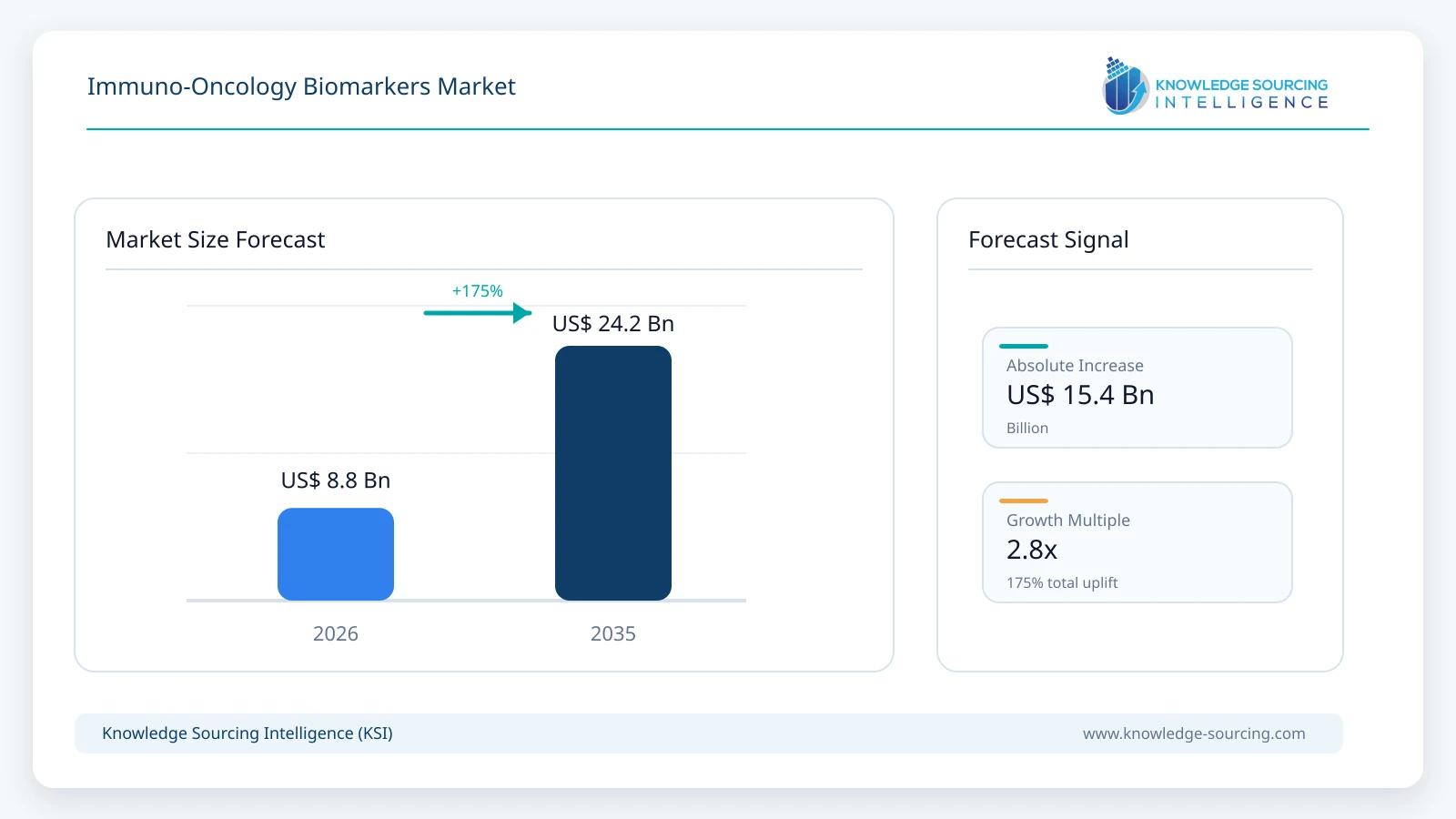
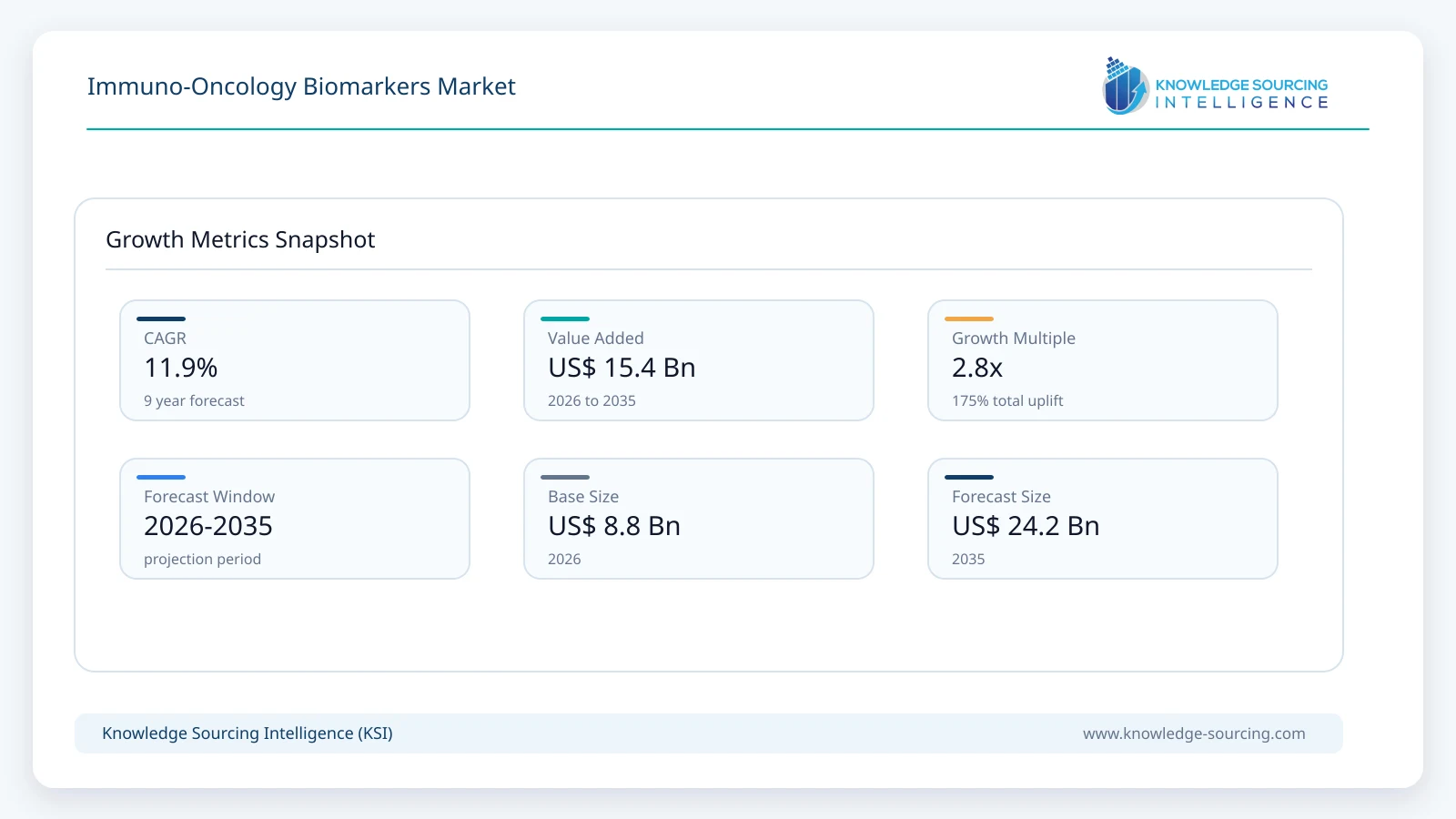
The Immuno-Oncology Biomarkers Market is predicted to increase at a CAGR of 11.9% from a market size of USD 8.81 billion in 2026 to USD 24.23 billion in 2035.
Highlights:
- 1Increasing approvals of immune checkpoint inhibitors are driving demand for validated companion diagnostics because treatment eligibility increasingly depends on biomarker-guided patient selection.
- 2Expansion of next-generation sequencing platforms is increasing comprehensive immune profiling because clinicians require simultaneous evaluation of multiple predictive biomarkers before therapy selection.
- 3Pharmaceutical sponsors are incorporating biomarker-enriched clinical trial designs because targeted patient recruitment improves therapeutic response rates and clinical development efficiency.
- 4Regulatory agencies are expanding companion diagnostic approvals alongside immunotherapies because standardized biomarker assessment supports consistent clinical decision-making.
The Immuno-Oncology Biomarkers Market consists of molecular, genomic, proteomic, and immune-based biomarkers that guide immunotherapy selection, predict clinical response, monitor treatment effectiveness, and identify mechanisms of resistance across various malignancies. The market includes companion diagnostics, laboratory-developed tests, next-generation sequencing assays, immunohistochemistry-based diagnostics, PCR assays, digital pathology solutions, and liquid biopsy technologies that support precision oncology programs.
Clinical adoption continues increasing because immune checkpoint inhibitors demonstrate heterogeneous responses across patient populations, making biomarker-guided treatment selection essential for maximizing therapeutic benefit while minimizing ineffective treatment exposure. Healthcare providers are integrating comprehensive biomarker testing earlier within diagnostic pathways because expanding immunotherapy indications require increasingly precise patient stratification.
Regulatory frameworks are supporting simultaneous development of therapeutics and companion diagnostics through coordinated review pathways, while professional oncology organizations continue updating treatment guidelines to incorporate validated biomarkers across additional tumor types. Pharmaceutical companies are expanding biomarker-driven clinical trial designs because enriched patient populations improve trial efficiency and increase the probability of demonstrating clinical benefit.
The strategic importance of immuno-oncology biomarkers continues increasing as precision medicine shifts from single-marker diagnostics toward integrated molecular profiling capable of capturing tumor heterogeneity, immune microenvironment characteristics, and dynamic treatment response throughout the patient journey.
Market Dynamics
Market Drivers
Expanding Companion Diagnostic Approvals Are Increasing Biomarker Testing Requirements: Companion diagnostics remain fundamental to immunotherapy selection because multiple immune checkpoint inhibitors require validated biomarker assessment before treatment initiation. Clinical practice is increasingly incorporating standardized PD-L1, MSI/dMMR, and TMB testing because regulatory approvals directly link therapeutic eligibility with diagnostic confirmation. Laboratory networks are expanding validated testing capabilities as pharmaceutical companies continue introducing biomarker-driven immunotherapies across additional cancer indications. This integration strengthens diagnostic utilization while supporting precision treatment decisions throughout oncology care.
Multiplex Genomic Profiling Is Transforming Precision Immuno-Oncology: Comprehensive molecular profiling provides broader characterization of tumor biology than single-analyte testing. Healthcare systems are adopting multiplex sequencing workflows because clinicians increasingly require simultaneous evaluation of multiple genomic and immune biomarkers. Diagnostic manufacturers continue integrating sequencing, transcriptomics, and immune profiling technologies into unified platforms because consolidated testing improves laboratory efficiency and reduces tissue consumption. These capabilities support increasingly individualized immunotherapy strategies.
Biomarker-Enriched Clinical Trials Are Accelerating Diagnostic Innovation: Clinical development increasingly depends on biomarker-defined patient populations because immunotherapy response varies substantially across molecular subgroups. Pharmaceutical sponsors are incorporating predictive biomarkers into trial protocols to improve patient selection and clinical endpoint achievement. Diagnostic developers continue collaborating with therapeutic manufacturers because co-development strategies accelerate companion diagnostic validation. This partnership model strengthens commercialization opportunities while supporting regulatory approval pathways.
AI-Enabled Digital Pathology Is Enhancing Biomarker Interpretation: Digital pathology supports standardized biomarker assessment by improving reproducibility across pathology laboratories. Healthcare institutions are integrating artificial intelligence-assisted image analysis because quantitative interpretation reduces observer variability associated with manual scoring. Technology providers continue expanding computational pathology capabilities to improve PD-L1 assessment, immune cell quantification, and spatial biomarker evaluation. These developments increase confidence in diagnostic reporting while supporting broader adoption of precision oncology.
Market Restraints
Limited global standardization across biomarker assays continues creating variability in analytical performance and clinical interpretation.
High implementation costs for advanced sequencing platforms and digital pathology infrastructure restrict adoption among smaller healthcare institutions.
Tumor heterogeneity and evolving immune biology continue limiting the predictive accuracy of individual biomarkers across several cancer types.
Market Opportunities
Spatial Biology Is Expanding Immune Microenvironment Assessment: Spatial biology technologies provide contextual information regarding immune cell interactions within tumors. Research organizations are increasing investment because spatial characterization improves understanding of treatment response mechanisms. Diagnostic developers continue commercializing spatial biomarker platforms that complement conventional molecular testing. These innovations support next-generation companion diagnostic development.
Liquid Biopsy Is Supporting Longitudinal Immunotherapy Monitoring: Liquid biopsy enables repeated molecular assessment without invasive tissue sampling. Oncology centers are expanding circulating tumor DNA testing because serial monitoring provides insights into treatment response and emerging resistance mechanisms. Industry participants continue validating blood-based immuno-oncology biomarkers across clinical studies. This trend broadens opportunities for minimally invasive disease management.
Multiomic Biomarkers Are Improving Predictive Performance: Integrated genomic, transcriptomic, proteomic, and immune datasets provide more comprehensive biological characterization than individual biomarkers. Research collaborations are validating composite biomarker signatures because combined molecular information improves predictive accuracy. Diagnostic companies continue investing in multiomic platforms that support precision immunotherapy selection. These integrated approaches strengthen future companion diagnostic strategies.
Emerging Healthcare Systems Are Expanding Precision Oncology Infrastructure: National cancer programs increasingly recognize biomarker-guided treatment as an essential component of oncology care. Governments are investing in molecular diagnostics because precision medicine initiatives require expanded testing capacity. Industry participants continue establishing regional laboratory partnerships to improve access to validated biomarker testing. These investments support broader global adoption of immuno-oncology diagnostics.
Disease & Epidemiology Analysis
Cancer incidence continues driving demand for immuno-oncology biomarkers because an expanding patient population is becoming eligible for immune checkpoint inhibitors across multiple tumor types. Non-small cell lung cancer, melanoma, colorectal cancer with MSI-H/dMMR status, urothelial carcinoma, breast cancer, gastric cancer, and head and neck squamous cell carcinoma remain the principal clinical indications where biomarker-guided immunotherapy influences treatment selection. Clinical evidence increasingly demonstrates that molecular heterogeneity substantially affects therapeutic outcomes, making predictive biomarker assessment a routine component of oncology practice.
Healthcare providers are integrating biomarker testing earlier within diagnostic pathways because first-line immunotherapy recommendations increasingly depend on validated molecular results. This shift strengthens demand for standardized laboratory workflows while encouraging broader adoption of comprehensive genomic profiling. Pharmaceutical sponsors continue evaluating additional biomarkers capable of predicting immune response beyond PD-L1 and TMB because current markers do not fully explain treatment variability.
Treatment Guidelines Landscape
Organization | Guideline/Recommendation | Biomarker Recommendation | Clinical Significance |
National Comprehensive Cancer Network (NCCN) | Non-Small Cell Lung Cancer | Routine assessment of PD-L1 expression and broad molecular profiling, including testing for actionable genomic alterations before first-line systemic therapy | Supports selection of immune checkpoint inhibitor monotherapy, chemo-immunotherapy, or targeted therapy according to biomarker status. |
American Society of Clinical Oncology (ASCO) | Metastatic Non-Small Cell Lung Cancer | PD-L1 testing before initiation of first-line immunotherapy and molecular profiling for eligible patients | Improves patient selection while avoiding ineffective immunotherapy in biomarker-negative populations. |
European Society for Medical Oncology (ESMO) | Metastatic Colorectal Cancer | Universal MSI/dMMR testing for colorectal cancer and molecular characterization for treatment planning | Identifies patients eligible for immune checkpoint inhibitors while supporting hereditary cancer evaluation. |
ESMO | Advanced Melanoma | Biomarker assessment integrated with clinical evaluation and molecular testing where appropriate | Supports individualized immunotherapy strategies and treatment sequencing. |
Market Segmentation
By Biomarker Type
PD-L1 expression biomarkers constitute one of the most established segments because regulatory approvals for multiple immune checkpoint inhibitors directly depend on validated companion diagnostic testing. Clinical laboratories are expanding standardized immunohistochemistry workflows as first-line immunotherapy recommendations increasingly require PD-L1 assessment across non-small cell lung cancer, urothelial carcinoma, head and neck cancer, and additional malignancies. The market also continues adopting TMB, MSI/dMMR, TILs, gene expression signatures, HLA-associated biomarkers, and emerging composite immune signatures because individual biomarkers do not consistently predict therapeutic response across heterogeneous tumors. This evolution supports broader integration of multiplex molecular profiling into routine oncology practice.
By Cancer Indication
Non-small cell lung cancer represents the leading clinical application because immune checkpoint inhibitors have become integral components of first-line treatment algorithms. Healthcare providers are expanding biomarker testing across melanoma, colorectal cancer, breast cancer, urothelial carcinoma, gastric and gastroesophageal cancers, and head and neck squamous cell carcinoma because approved immunotherapies increasingly require molecular stratification before treatment initiation. Growing evidence supporting biomarker-guided therapy across additional tumor types continues broadening clinical demand while encouraging pharmaceutical sponsors to validate predictive biomarkers for less common malignancies.
By Clinical Application
Patient selection remains the largest clinical application because validated biomarkers determine eligibility for immunotherapy across multiple cancer indications. Oncology centers are incorporating treatment response prediction, prognostic assessment, and disease monitoring into comprehensive precision oncology workflows because longitudinal biomarker evaluation improves therapeutic management throughout disease progression. Liquid biopsy, molecular monitoring, and integrated genomic profiling continue expanding clinical utility by enabling repeated assessment of tumor evolution without invasive tissue collection. These advances strengthen biomarker adoption across the entire cancer care continuum.
Regional Analysis
North America Market Analysis
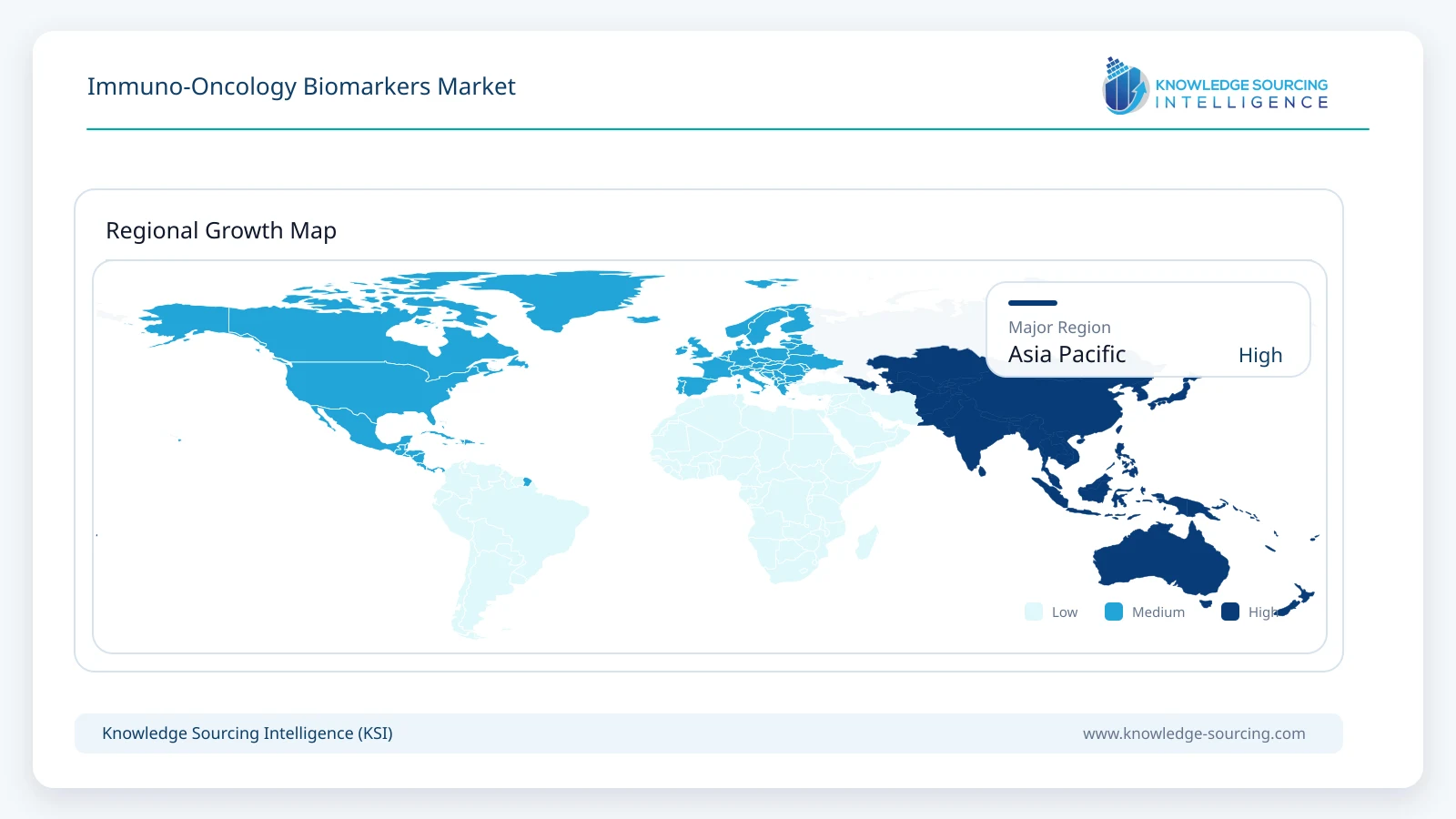
North America represents the most mature market because precision oncology has become firmly integrated into routine cancer management across academic medical centers and community oncology networks. Regulatory support for companion diagnostics, widespread availability of next-generation sequencing infrastructure, and strong reimbursement mechanisms continue supporting high clinical adoption of immuno-oncology biomarkers. Healthcare providers are increasingly implementing comprehensive molecular profiling rather than sequential single-marker testing because expanding immunotherapy indications require broader genomic characterization before treatment selection. This transition is increasing demand for multiplex sequencing, digital pathology, and liquid biopsy technologies capable of improving diagnostic efficiency while reducing tissue utilization. Pharmaceutical companies continue conducting biomarker-enriched clinical trials throughout the region because collaboration with diagnostic manufacturers accelerates simultaneous therapeutic and companion diagnostic development.
Europe Market Analysis
Europe maintains a strong position because harmonized regulatory frameworks and evidence-based oncology guidelines encourage standardized biomarker testing across major healthcare systems. National cancer programs are expanding molecular diagnostic capacity because personalized medicine initiatives increasingly emphasize biomarker-driven treatment decisions. Academic cancer centers continue validating predictive biomarkers across multinational clinical studies, strengthening evidence supporting routine implementation of comprehensive immune profiling. Healthcare providers are adopting integrated genomic testing because reimbursement authorities increasingly recognize the clinical value of precision diagnostics for optimizing immunotherapy utilization. Pharmaceutical sponsors continue collaborating with European diagnostic developers to accelerate companion diagnostic validation and regulatory approval, while digital pathology adoption is improving consistency across pathology laboratories.
Asia Pacific Market Analysis
Asia Pacific continues demonstrating substantial growth potential because governments are strengthening precision medicine infrastructure and expanding access to molecular diagnostics. Cancer incidence remains high across several countries, creating sustained demand for biomarker-guided treatment strategies. Healthcare systems are increasing investments in genomic sequencing facilities because immunotherapy utilization continues expanding within national oncology programs. Pharmaceutical companies are conducting more regional clinical trials as genetically diverse patient populations support biomarker discovery and validation across multiple tumor types. Diagnostic manufacturers continue establishing laboratory partnerships to improve accessibility of standardized biomarker testing while supporting technology transfer across emerging healthcare markets.
Rest of the World
The Rest of the World market remains at an earlier stage of development because access to advanced molecular diagnostics varies considerably between countries. Healthcare authorities are gradually expanding oncology infrastructure as precision medicine becomes increasingly recognized within national cancer control strategies. Clinical laboratories are adopting validated biomarker assays because international treatment guidelines increasingly recommend molecular testing before immunotherapy initiation. Partnerships between multinational diagnostic companies and regional healthcare providers continue improving laboratory capabilities while expanding technical expertise. Adoption remains concentrated within tertiary cancer centers where specialized oncology services support comprehensive molecular profiling.
Regulatory Landscape
The regulatory environment for immuno-oncology biomarkers is increasingly emphasizing the co-development of therapeutics and companion diagnostics because biomarker-driven treatment selection has become essential for demonstrating the clinical benefit of many immunotherapies. Regulatory agencies continue requiring robust analytical validation, clinical validation, and reproducibility data before approving companion diagnostic assays, ensuring that biomarker results consistently support treatment decisions across diverse laboratory settings. This approach is strengthening confidence among clinicians while reducing variability in biomarker interpretation.
The U.S. Food and Drug Administration (FDA) continues expanding approvals for companion diagnostics linked to immune checkpoint inhibitors, particularly for biomarkers such as PD-L1, MSI/dMMR, and Tumor Mutational Burden (TMB). The FDA also encourages simultaneous review of therapeutics and diagnostics through coordinated development programs because synchronized approvals accelerate patient access to precision oncology. The agency's guidance on in vitro companion diagnostic devices has established clear expectations for analytical performance, clinical evidence, and labeling, supporting greater consistency across diagnostic manufacturers.
In Europe, the In Vitro Diagnostic Regulation (IVDR) (EU 2017/746) is strengthening oversight of oncology diagnostics by requiring enhanced clinical evidence, post-market performance monitoring, and greater involvement of notified bodies in conformity assessment. Regulatory authorities in Japan, China, South Korea, and other Asia-Pacific countries are also expanding precision medicine frameworks by integrating companion diagnostics into oncology approvals and encouraging local validation of molecular assays. These initiatives are increasing harmonization with international regulatory standards while improving regional access to biomarker-guided cancer care.
Pipeline Analysis
The biomarker development pipeline is shifting beyond single-marker diagnostics because clinical experience demonstrates that individual biomarkers frequently fail to capture the complexity of tumor-immune interactions. Research organizations and diagnostic companies are validating multi-biomarker approaches that combine genomic alterations, immune cell composition, transcriptomic signatures, and circulating biomarkers into integrated predictive models. This evolution reflects the growing need to improve response prediction for checkpoint inhibitors and emerging immunotherapies.
PD-L1 continues to represent the most clinically established biomarker; however, sponsors are expanding development programs around gene expression signatures, immune-related transcriptomic panels, spatial biomarkers, circulating tumor DNA (ctDNA), circulating immune cell profiling, and multiomic biomarker platforms. Spatial biology technologies are receiving considerable investment because they characterize immune cell localization within the tumor microenvironment rather than measuring biomarker expression alone. Similarly, liquid biopsy developers are validating ctDNA-based immune biomarkers capable of monitoring treatment response and detecting acquired resistance through serial blood sampling.
Clinical trials are increasingly incorporating biomarker-defined patient cohorts because enrichment strategies improve the probability of demonstrating therapeutic benefit while reducing unnecessary exposure among likely non-responders. Sponsors are validating adaptive biomarker algorithms that evolve throughout clinical development rather than relying on fixed biomarker thresholds established during early-stage studies. This strategy supports increasingly personalized immunotherapy development while expanding opportunities for companion diagnostic commercialization.
Reimbursement Landscape
Reimbursement policies are increasingly recognizing biomarker-guided testing as a prerequisite for precision oncology because validated diagnostics improve treatment selection and reduce unnecessary healthcare expenditure associated with ineffective immunotherapy. Coverage decisions increasingly consider the strength of clinical evidence linking biomarker status with therapeutic response rather than evaluating diagnostic tests independently. This approach is supporting broader adoption of companion diagnostics across major oncology indications.
In the United States, the Centers for Medicare & Medicaid Services (CMS) continues supporting reimbursement for FDA-approved companion diagnostics and has established national coverage for certain next-generation sequencing (NGS) tests in patients with advanced cancer when specific eligibility criteria are met. Commercial insurers generally align reimbursement with FDA labeling, NCCN recommendations, and peer-reviewed clinical evidence, although coverage may vary depending on individual payer policies and the specific biomarker assay.
European reimbursement decisions remain country-specific, with health technology assessment (HTA) agencies evaluating both clinical utility and cost-effectiveness before approving routine funding. Several countries are expanding reimbursement for comprehensive genomic profiling because precision oncology programs increasingly require simultaneous evaluation of multiple biomarkers.
Competitive Landscape
F. Hoffmann-La Roche Ltd.
F. Hoffmann-La Roche Ltd. remains one of the most strategically integrated participants in the immuno-oncology biomarkers market because it combines pharmaceutical development with a comprehensive companion diagnostics portfolio through Roche Pharmaceuticals and Roche Diagnostics. This dual capability enables simultaneous development of immunotherapies and diagnostic assays, strengthening biomarker adoption throughout the clinical development lifecycle.
Agilent Technologies, Inc.
Agilent Technologies differentiates itself through its strong expertise in pathology workflow solutions, immunohistochemistry reagents, and molecular diagnostics that support precision oncology testing. The company provides automated staining systems, antibodies, pathology consumables, and companion diagnostic assays used in cancer biomarker evaluation.
QIAGEN N.V.
QIAGEN occupies a prominent position in precision oncology because of its broad portfolio of molecular diagnostic technologies, sample preparation solutions, PCR assays, next-generation sequencing workflows, and companion diagnostics. The company continues emphasizing partnerships with pharmaceutical manufacturers because coordinated development accelerates regulatory approval of biomarker-guided therapies.
Illumina, Inc.
Illumina serves as a foundational technology provider for comprehensive genomic profiling because its next-generation sequencing platforms support detection of multiple immuno-oncology biomarkers through a single sequencing workflow. The company continues advancing sequencing chemistry, workflow automation, and bioinformatics capabilities as oncology laboratories increasingly transition from single-gene testing to comprehensive genomic analysis.
Guardant Health, Inc.
Guardant Health has established a differentiated position through its leadership in liquid biopsy technologies that enable non-invasive comprehensive genomic profiling for cancer patients. The company's Guardant360 platform supports identification of clinically relevant genomic alterations while expanding applications in immuno-oncology biomarker assessment.
NeoGenomics Laboratories, Inc.
NeoGenomics Laboratories differentiates itself through a comprehensive oncology testing service model that combines molecular diagnostics, cytogenetics, flow cytometry, immunohistochemistry, fluorescence in situ hybridization (FISH), and next-generation sequencing within an integrated laboratory network.
Key Developments
June 2025: Agenus and Noetik announced a research collaboration to develop predictive biomarkers for response to botensilimab plus balstilimab using Noetik’s virtual cell foundation models. The effort is aimed at improving patient selection for immuno-oncology treatment and accelerating precision oncology development.
May 2025: The University of Houston said the CPRIT-backed core will expand access to targeted proteomic cancer biomarker screening in Texas. The facility is intended to accelerate biomarker discovery, improve immunotherapy targeting, and support broader cancer research capacity.
Strategic Insights and Future Market Outlook
The immuno-oncology biomarkers market is transitioning from individual companion diagnostics toward integrated biomarker ecosystems because cancer immunotherapy is becoming increasingly dependent on comprehensive molecular characterization rather than single-marker assessment. PD-L1, MSI/dMMR, and tumor mutational burden continue forming the clinical foundation of immunotherapy selection, yet emerging evidence is supporting gene expression signatures, spatial biology, circulating biomarkers, and multiomic profiling as complementary predictors of therapeutic response. This transition is encouraging diagnostic companies to develop multiplex platforms capable of generating clinically actionable insights from limited patient samples while improving laboratory efficiency.
Pharmaceutical sponsors are increasingly embedding biomarker discovery throughout clinical development because enriched patient populations improve trial outcomes and accelerate regulatory approval. Artificial intelligence, digital pathology, and advanced bioinformatics are expanding beyond research applications into routine clinical workflows, enabling more standardized interpretation of complex immune biomarkers. Simultaneously, liquid biopsy technologies are supporting longitudinal monitoring of treatment response and resistance, reducing dependence on repeated tissue biopsies while improving patient management throughout therapy.
Regulatory agencies continue strengthening companion diagnostic requirements while professional oncology guidelines increasingly recommend biomarker testing across additional cancer indications. These developments are reinforcing precision diagnostics as an indispensable component of cancer care rather than an adjunct laboratory service. Companies capable of integrating sequencing, pathology, bioinformatics, and companion diagnostic development into unified clinical solutions are expected to strengthen their competitive positions as personalized immunotherapy continues expanding globally.
The market's long-term evolution depends less on identifying additional standalone biomarkers and more on integrating multiple biological signals into clinically validated predictive models that improve treatment selection, optimize healthcare resources, and enhance patient outcomes across diverse oncology populations.
Immuno-Oncology Biomarkers Market Scope:
| Report Metric | Details |
|---|---|
| Total Market Size in 2026 | USD 8.81 billion |
| Total Market Size in 2035 | USD 24.23 billion |
| Forecast Unit | Billion |
| Growth Rate | 11.9% |
| Study Period | 2021 to 2035 |
| Historical Data | 2021 to 2024 |
| Base Year | 2025 |
| Forecast Period | 2026 – 2035 |
| Segmentation | Biomarker Type, Technology Platform, Sample Type, Cancer Indication, Clinical Application, End User, Geography |
| Companies |
|
Market Segmentation
Biomarker Type
Technology Platform
End User
Geography
- North America
- South America
- Europe
- Middle East and Africa
- Asia Pacific
Table of Contents
1. EXECUTIVE SUMMARY
1.1 Market Snapshot
1.2 Key Findings
1.3 Analyst Insights
1.4 Strategic Recommendations
2. RESEARCH METHODOLOGY
2.1 Research Design
2.2 Data Collection Methodology
2.3 Market Size Estimation
2.4 Forecasting Model
2.5 Assumptions & Limitations
3. GLOBAL IMMUNO-ONCOLOGY BIOMARKERS MARKET OVERVIEW, SIZE & FORECAST
3.1 Market Definition & Scope
3.2 Immuno-Oncology Biomarkers Industry Overview
3.3 Industry Evolution
3.4 Key Market Trends
3.5 Historical Market Size Analysis (2021–2025)
3.6 Market Forecast (2026–2035)
3.7 Cancer Burden and Clinical Need for Biomarker-Guided Immunotherapy
3.8 Biomarker Testing Landscape
3.9 Patient Population and Biomarker Eligibility Analysis
3.10 Companion Diagnostics Landscape
3.11 Biomarker-Driven Treatment Decision Framework
4. MARKET DYNAMICS
4.1 Market Drivers
4.2 Market Restraints
4.3 Market Opportunities
4.4 Market Challenges
5. INDUSTRY LANDSCAPE
5.1 Industry Value Chain Analysis
5.2 Pricing Analysis
5.3 Reimbursement Landscape
6. INNOVATION LANDSCAPE
6.1 Emerging Biomarker Technologies
6.2 Product Innovation
6.3 Clinical Trial Analysis
6.4 Pipeline Analysis
6.5 AI Integration in Immuno-Oncology Biomarker Discovery and Interpretation
6.6 Multi-Omics and Spatial Biology Integration
7. REGULATORY LANDSCAPE
7.1 Regulatory Framework
7.2 Approval Pathways
7.3 Compliance Requirements
8. GLOBAL IMMUNO-ONCOLOGY BIOMARKERS MARKET LANDSCAPE ANALYSIS
8.1 Analysis by Biomarker Type
8.2 Analysis by Technology Platform
8.3 Analysis by Sample Type
8.4 Analysis by Cancer Indication
8.5 Analysis by Clinical Application
8.6 Analysis by Testing Methodology
9. GLOBAL IMMUNO-ONCOLOGY BIOMARKERS MARKET SEGMENT ANALYSIS (2021–2035)
9.1 By Biomarker Type
9.1.1 PD-L1 Expression Biomarkers
9.1.2 Tumor Mutational Burden (TMB)
9.1.3 Microsatellite Instability (MSI) / Mismatch Repair Deficiency (dMMR)
9.1.4 Tumor-Infiltrating Lymphocytes (TILs)
9.1.5 Gene Expression Signatures
9.1.6 HLA and Neoantigen Biomarkers
9.1.7 Others
9.2 By Technology Platform
9.2.1 Immunohistochemistry (IHC)
9.2.2 Next-Generation Sequencing (NGS)
9.2.3 Polymerase Chain Reaction (PCR)
9.2.4 Fluorescence In Situ Hybridization (FISH)
9.2.5 Others
9.3 By Sample Type
9.3.1 Tissue-Based Testing
9.3.2 Blood-Based (Liquid Biopsy)
9.3.3 Other Biological Samples
9.4 By Cancer Indication
9.4.1 Non-Small Cell Lung Cancer
9.4.2 Melanoma
9.4.3 Urothelial Carcinoma
9.4.4 Breast Cancer
9.4.5 Colorectal Cancer
9.4.6 Gastric and Gastroesophageal Cancers
9.4.7 Head and Neck Squamous Cell Carcinoma
9.4.8 Other Cancer Types
9.5 By Clinical Application
9.5.1 Patient Selection
9.5.2 Treatment Response Prediction
9.5.3 Prognostic Assessment
9.5.4 Disease Monitoring and Recurrence Assessment
9.6 By End User
9.6.1 Hospitals
9.6.2 Diagnostic Laboratories
9.6.3 Academic & Research Institutes
9.6.4 Others
10. GLOBAL IMMUNO-ONCOLOGY BIOMARKERS MARKET GEOGRAPHICAL ANALYSIS (2021–2035)
10.1 North America
10.2 Europe
10.3 Asia-Pacific
10.4 South America
10.5 Middle East & Africa
11. GLOBAL IMMUNO-ONCOLOGY BIOMARKERS MARKET COUNTRY ANALYSIS (2021–2035)
11.1 United States
11.2 Canada
11.3 Germany
11.4 United Kingdom
11.5 France
11.6 Italy
11.7 Spain
11.8 Japan
11.9 China
11.10 South Korea
11.11 India
11.12 Australia
11.13 Brazil
12. COMPETITIVE LANDSCAPE
12.1 Market Share Analysis
12.2 Strategic Developments
12.3 Mergers & Acquisitions, Partnerships & Collaborations
12.4 Product Launches
13. COMPANY PROFILES
13.1 F. Hoffmann-La Roche Ltd.
13.1.1 Company Overview
13.1.2 Financials
13.1.3 Product Portfolio
13.1.4 Recent Developments
13.2 Agilent Technologies, Inc.
13.3 QIAGEN N.V.
13.4 Illumina, Inc.
13.5 Natera, Inc
13.6 Bio-Rad Laboratories, Inc.
13.7 Danaher Corporation
13.8 Guardant Health, Inc.
13.9 NeoGenomics Laboratories, Inc.
13.10 Myriad Genetics, Inc.
14. GLOBAL IMMUNO-ONCOLOGY BIOMARKERS MARKET COMMERCIAL FORECAST ANALYSIS
14.1 Forecast by Commercial Biomarker Category
14.1.1 PD-L1 Biomarker Tests
14.1.2 TMB Assays
14.1.3 MSI/dMMR Tests
14.1.4 Comprehensive Genomic Profiling Assays
14.1.5 Liquid Biopsy-Based Immuno-Oncology Biomarker Tests
14.2 Commercial Opportunity Assessment by Cancer Indication
14.3 Companion Diagnostics Revenue Outlook
15. INVESTMENT & FUNDING ANALYSIS
15.1 Venture Capital Trends
15.2 Government Funding
15.3 R&D Investments
16. FUTURE OUTLOOK
16.1 Key Growth Opportunities
16.2 Future Industry Trends
Navigate
Trusted by the world's leading organizations











