
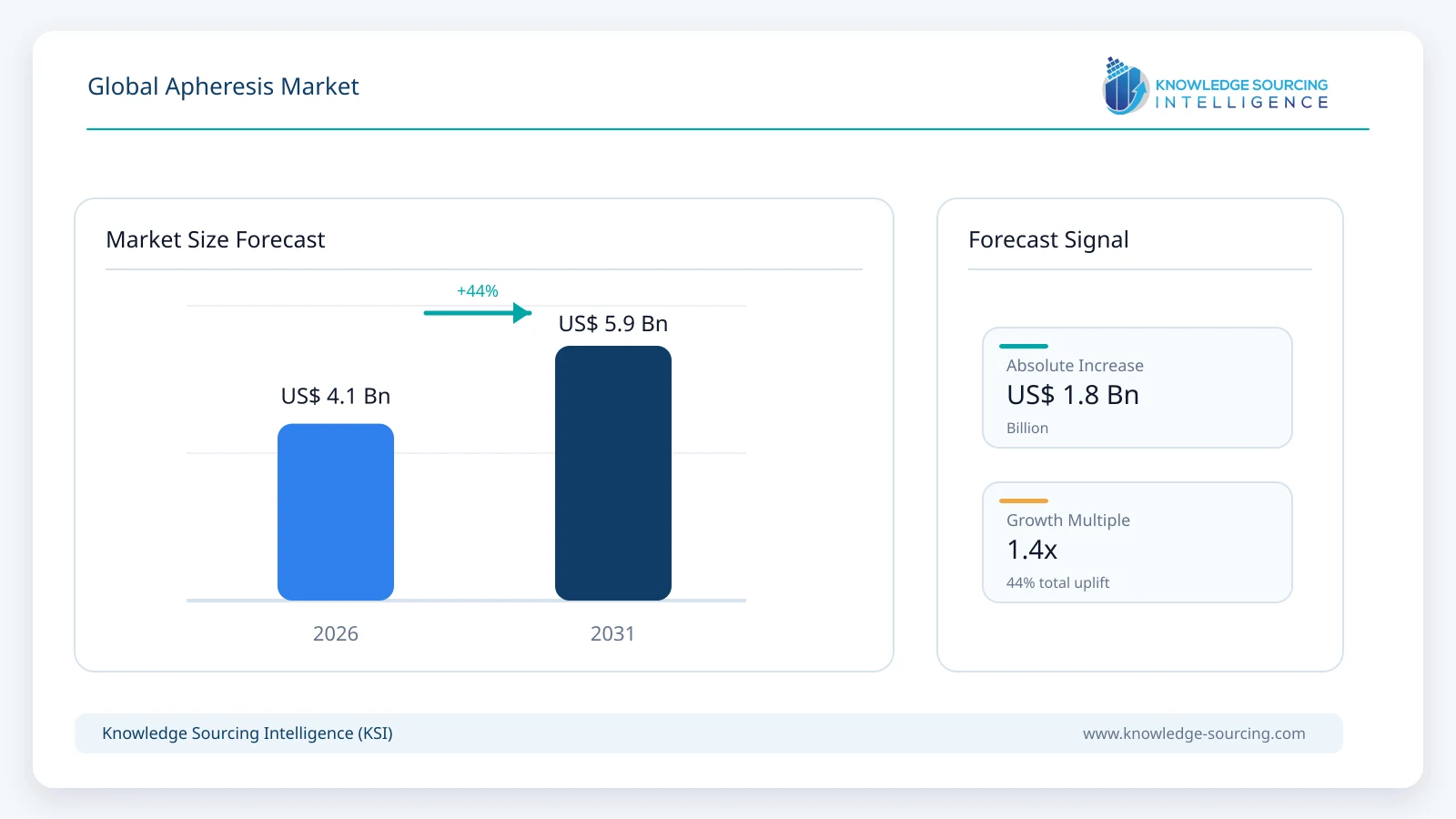
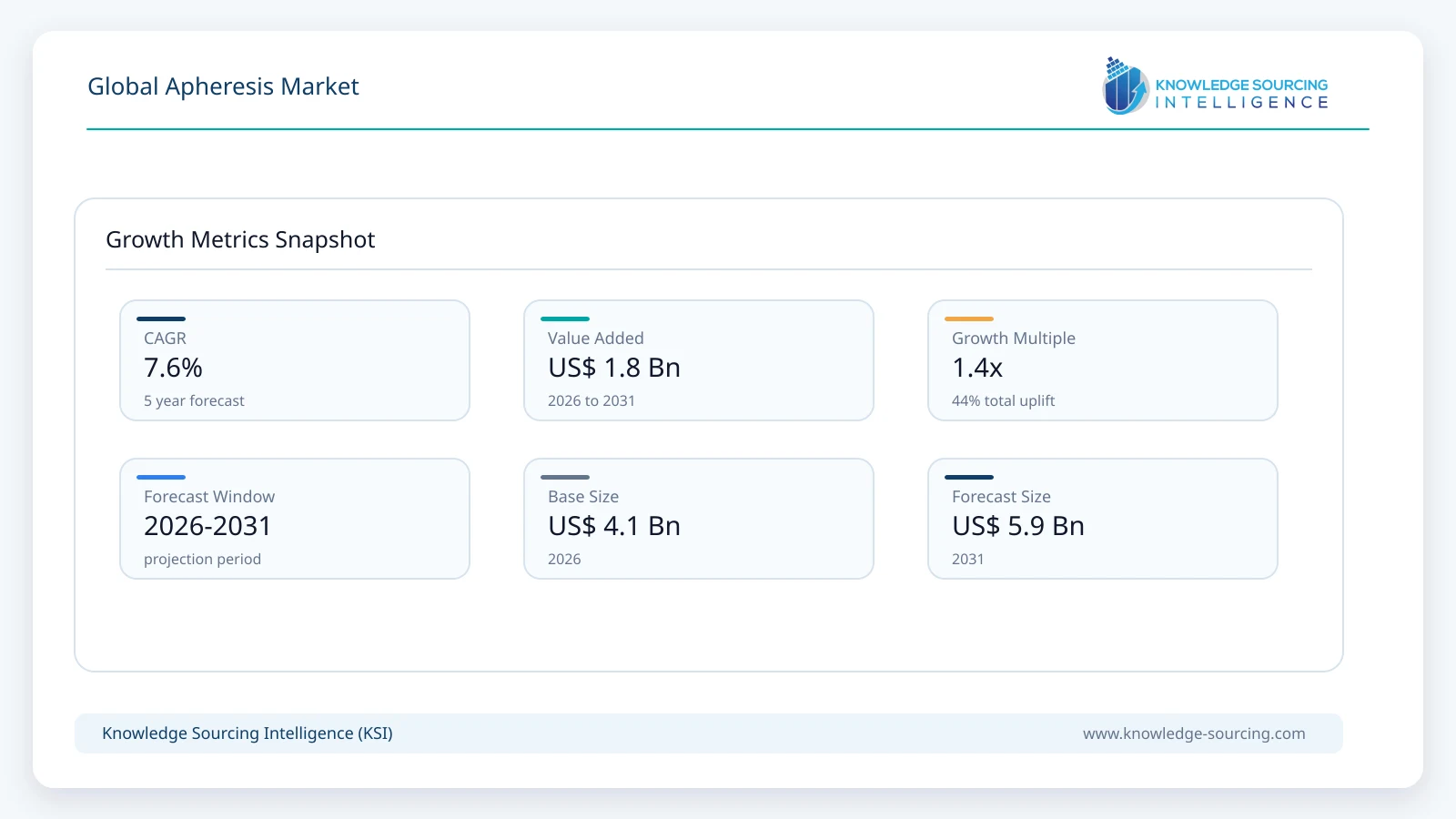
The Global Apheresis Market is forecast to grow at a CAGR of 7.6%, reaching USD 5.89 billion in 2031 from USD 4.09 billion in 2026.
Highlights:
- 1Blood-component shortages are sustaining demand for automated platelet, plasma, and multicomponent collection systems.
- 2Therapeutic plasma exchange remains a major clinical application across neurological, autoimmune, renal, and hematological conditions.
- 3Asia Pacific offers substantial infrastructure opportunities as specialized hospitals and transfusion networks expand apheresis capacity.
- 4Centrifugation remains the principal separation approach, while membrane filtration and adsorption support more selective therapeutic applications.
- 5Regulatory requirements are raising the importance of device validation, quality systems, traceability, post-market surveillance, and disposable-set consistency.
- 6Suppliers are competing through integrated platforms combining instruments, consumables, software, service, training, and clinical workflow support.
The apheresis market covers equipment, disposable circuits, procedure-specific kits, accessories, and related systems used to selectively remove, collect, separate, modify, or return blood components. The market serves two closely connected demand pools. The first comprises blood centers that collect plasma, platelets, red blood cells, and other components from donors. The second comprises hospitals and specialized treatment centers that use therapeutic apheresis to remove pathogenic plasma constituents, abnormal cells, or other targeted blood components from patients.
Commercial demand therefore depends on both blood-component supply requirements and clinical treatment volumes. Apheresis equipment is purchased by blood banks, transfusion services, hospitals, academic medical centers, therapeutic apheresis units, cell-processing facilities, and specialized laboratories. Procurement decisions generally extend beyond the instrument itself. Buyers assess disposable consumption, procedure throughput, operator training, service coverage, software compatibility, regulatory clearance, equipment uptime, clinical workflow, and the supplier's ability to maintain consumable availability.
The market has a structurally recurring revenue component because most apheresis procedures require single-use tubing sets, separation chambers, collection bags, filters, columns, anticoagulants, or procedure-specific accessories. This creates an installed-base relationship between equipment suppliers and healthcare providers. Once a center standardizes its workflow around a particular platform, switching costs can rise because personnel require training, protocols may need validation, inventory systems must be adjusted, and replacement equipment may need regulatory qualification.
Apheresis also occupies an important position within modern blood-component management. In the United States, apheresis remains central to platelet collection, while automated blood-processing systems are being introduced to supplement platelet availability through whole-blood-derived components. Terumo Blood and Cell Technologies reported in October 2025 that nearly 98% of the U.S. platelet supply came from apheresis donations, illustrating the importance of automated component collection to transfusion infrastructure.
The therapeutic side of the market has a different purchasing logic. Hospitals typically evaluate systems according to patient safety, separation efficiency, procedure reliability, vascular-access requirements, treatment time, extracorporeal volume, anticoagulation management, and compatibility with replacement fluids or adsorption technologies. Reimbursement and clinical-practice protocols also influence whether a center develops an in-house therapeutic apheresis capability or refers patients to specialized facilities.
The market is not limited to conventional centrifugation. Centrifugal separation remains important because of its ability to separate cellular components according to density, while membrane filtration and adsorption technologies support applications where selective plasma processing is required. Kaneka, for example, maintains a portfolio spanning adsorption-type blood and plasma purification systems, membrane plasma separators, and apheresis machinery.
Demand is also being influenced by the expansion of cell and gene therapy manufacturing. Mobilized peripheral blood and leukapheresis products provide starting material for cellular processing workflows, creating an intersection between the conventional apheresis market and the broader cell-processing ecosystem. Miltenyi Biotec's CliniMACS platform, for example, supports clinical-scale cell separation and includes workflows involving apheresis-derived hematopoietic products.
The commercial structure consequently favors suppliers that can combine instruments with recurring consumables, software, technical support, training, and workflow integration. Haemonetics' apheresis portfolio illustrates this model through systems for blood-component and plasma collection, alongside donor-management software and training services.
Market Drivers
Rising Demand for High-Value Blood Components
Blood centers face a recurring requirement to collect specific components according to hospital demand rather than relying exclusively on whole-blood collection. Apheresis enables collection of targeted components from a donor and can support multicomponent collection protocols. This improves the alignment between donation output and inventory requirements.
Platelets are particularly important because of their short storage life and dependence on reliable collection schedules. Terumo BCT's 2025 deployments of automated blood-processing systems demonstrate how blood centers are investing in additional processing capacity to address platelet availability, staffing limitations, and operational consistency.
For buyers, equipment productivity is therefore linked directly to inventory economics. Blood centers assess collection yield, procedure duration, donor throughput, operator requirements, and consumable costs. Suppliers that can improve the number of usable components produced per operating shift can strengthen their economic proposition even when the initial equipment price is not the lowest.
The resulting demand favors automated systems with standardized protocols and reliable consumables. It also supports recurring revenue because higher procedure volumes translate into greater consumption of disposable sets and collection components.
Wider Use of Therapeutic Apheresis
Therapeutic apheresis is used when removing a particular blood component can alter the clinical course of a disease or support a treatment pathway. Applications include therapeutic plasma exchange, red blood cell exchange, leukapheresis, extracorporeal photopheresis, and adsorption-based therapies.
The purchasing decision in this segment is strongly influenced by clinical versatility. A hospital may prefer a system capable of supporting several procedures rather than purchasing separate equipment for every application. This favors multipurpose platforms, broad disposable portfolios, adaptable protocols, and established technical support.
Therapeutic apheresis also creates repeat utilization. Patients receiving scheduled procedures generate recurring demand for disposables, replacement fluids, filters, columns, and associated accessories. Consequently, the lifetime economics of a therapeutic apheresis installation can be more important than its initial capital cost.
Expansion of Cell Therapy and Transplantation Workflows
Apheresis-derived cellular material is increasingly important in transplantation and cellular therapy manufacturing. Leukapheresis provides a starting material for selected cell-processing workflows, while hematopoietic progenitor cell collection remains relevant to transplantation.
This connection expands the addressable customer base beyond conventional transfusion centers. Cell-processing organizations, transplant centers, biopharmaceutical companies, and specialized laboratories can become users or purchasers of equipment and associated consumables.
Miltenyi Biotec's clinical-scale separation portfolio illustrates the relationship between apheresis-derived starting material and downstream cell processing. Its CliniMACS systems are designed for automated cell enrichment and depletion, with applications extending into transplantation and cell therapy workflows.
The commercial implication is important. Suppliers increasingly need to demonstrate compatibility with controlled, closed, documented workflows rather than simply provide a blood-separation machine.
Investment in Blood-System Automation
Labor shortages, pressure on blood-center productivity, donor-management requirements, and the need for consistent component quality are encouraging automation investments. Automated processing reduces manual intervention and can improve standardization between operators.
Terumo BCT's Reveos deployment in multiple U.S. blood centers illustrates the type of infrastructure investment occurring within the blood-processing sector. The system automates balancing, centrifugation, component expression, sealing, and data transfer, reducing the number of manual processing steps.
Automation creates opportunities for suppliers beyond the instrument sale. Software integration, service contracts, operator training, workflow qualification, and consumable supply become part of the commercial relationship.
Increasing Importance of Plasma Supply Security
Plasma availability has become a strategic issue for healthcare systems because plasma-derived medicinal products depend on a stable supply of source plasma. WHO's 2026 global status report on blood safety and availability emphasizes national blood programs, plasma collection, and sustainable supply chains for plasma-derived medicinal products.
Although plasma collection is only one part of the broader apheresis market, it creates demand for high-throughput plasma collection systems and related disposables. Buyers increasingly assess equipment according to collection yield, donor throughput, operating reliability, and integration with donor-management systems.
Haemonetics, for instance, positions its NexSys PCS platform around plasma collection productivity, quality, donor experience, and integration with donor-management systems.
Market Restraints and Challenges
High Total Cost of Ownership
Apheresis equipment requires more than an upfront capital allocation. Hospitals and blood centers must budget for disposable sets, tubing, filters, collection bags, anticoagulants, maintenance, software, training, and periodic equipment replacement.
This creates purchasing sensitivity among public hospitals and smaller blood centers. A lower-cost instrument can appear attractive initially but become less economical if consumables are expensive or equipment uptime is poor.
Suppliers mitigate this issue by offering integrated contracts, service agreements, standardized consumable packages, and workflow support. However, the commercial model can also create customer concerns about vendor dependence.
Skilled Operator Requirements
Apheresis procedures require trained personnel capable of managing anticoagulation, vascular access, machine alarms, patient reactions, blood-component quality, and procedure-specific parameters. Therapeutic applications can require additional clinical judgment.
Staff shortages can therefore limit the utilization of installed equipment. An institution may own a capable system but operate it below capacity because it lacks trained nurses, technologists, physicians, or transfusion specialists.
Manufacturers respond through structured training, online education, certification programs, technical support, and service contracts. Haemonetics, for example, provides dedicated apheresis training through its education platform for customers, distributors, and employees.
Regulatory and Validation Burden
Apheresis equipment interacts directly with blood, plasma, cells, or patient circulation. Regulatory requirements therefore cover device performance, materials, sterility, software, manufacturing quality, labeling, clinical use, and post-market surveillance.
The regulatory burden can extend product-development timelines and increase costs associated with validation and documentation. In the United States, blood-bank equipment and separators can fall under FDA regulatory pathways, while certain therapeutic devices have different classifications and review requirements.
The mitigation strategy is early regulatory planning and harmonized product development. Manufacturers with established quality systems and regulatory infrastructure have an advantage when entering multiple markets.
Disposable Supply and Manufacturing Risks
Disposable components are critical to procedure continuity. A shortage of tubing sets, collection bags, filters, separation chambers, or other procedure-specific components can prevent the use of otherwise operational equipment.
The problem is particularly serious because disposables are often validated for a specific platform. Substitution may not be straightforward without regulatory and clinical review.
Manufacturers therefore need resilient sourcing, controlled production environments, inventory buffers, and regional distribution networks. Buyers increasingly evaluate supply continuity during procurement rather than treating consumables as a secondary purchasing issue.
Uneven Infrastructure Across Emerging Markets
Apheresis adoption depends on access to transfusion medicine specialists, reliable blood supplies, hospital infrastructure, trained operators, and financing for capital equipment. These conditions vary substantially across emerging markets.
Large tertiary hospitals may support advanced therapeutic apheresis while smaller facilities lack the patient volume or personnel required to justify a dedicated unit. This limits addressable demand outside major medical centers.
Suppliers can address the constraint through distributor networks, regional service centers, training programs, modular equipment, and centralized referral models. However, infrastructure development remains a prerequisite for sustained utilization.
Major Segment Analysis:
Apheresis Machines and Systems
Apheresis machines and systems represent a commercially important segment because they establish the installed base from which recurring disposable and service revenue develops. The equipment determines which procedures a center can perform, how efficiently operators can manage patients or donors, and which consumable ecosystem the institution will subsequently purchase.
Demand comes from two distinct buyer groups. Blood centers purchase systems primarily for component collection, including plasma and platelets, while hospitals and therapeutic apheresis units purchase platforms for patient treatment. Some equipment portfolios span both collection and therapeutic applications, while others are optimized for specific workflows.
For blood centers, procurement criteria focus on throughput, component yield, donor comfort, operator usability, mobility, protocol flexibility, and system reliability. Haemonetics' MCS portfolio demonstrates the importance of multicomponent collection and mobility in blood-center operations.
For hospitals, the priorities shift toward clinical versatility, treatment consistency, extracorporeal volume, anticoagulation management, alarm handling, vascular-access compatibility, and availability of procedure-specific disposable sets. Therapeutic applications can require systems to work with plasma exchange, cellular depletion, or other separation and purification workflows.
The segment also illustrates the importance of technology architecture. Centrifugation remains commercially important because it can separate blood components according to density and supports established collection workflows. Membrane filtration provides an alternative separation mechanism and is particularly relevant to plasma processing. Adsorption technologies add another layer of selectivity by removing specific substances from plasma or blood.
Kaneka's portfolio demonstrates this technology diversity through adsorption-type blood and plasma purification systems, membrane plasma separators, and an apheresis machine for plasma purification.
Competition in machines and systems is therefore not based solely on hardware specifications. Vendors compete through the complete operating ecosystem. A supplier with reliable consumables, responsive service, training infrastructure, software integration, and regulatory support can have an advantage over a technically capable but less integrated competitor.
Installed-base economics reinforce this position. Once a blood center or hospital has trained personnel and validated protocols around a platform, switching suppliers may require capital expenditure, staff retraining, protocol verification, inventory changes, and operational disruption. This makes customer retention a major commercial consideration.
The segment also has a strong relationship with consumables. Higher equipment utilization increases recurring demand for disposable sets, tubing, bags, filters, and other accessories. Consequently, equipment suppliers may accept a longer capital-equipment payback period when the installed system produces durable consumable demand.
Regional Analysis
North America
North America remains an important apheresis market because of its mature blood-center infrastructure, high therapeutic apheresis utilization, advanced transplant services, and strong regulatory framework.
The United States has a particularly developed market for automated blood-component collection. Apheresis platelet collection remains central to platelet supply, while blood centers are also investing in automation to supplement supply and reduce manual processing requirements. Terumo BCT's U.S. deployments in 2025 provide evidence of continued investment in blood-processing infrastructure.
Buyer behavior in the region emphasizes regulatory clearance, total cost of ownership, workflow productivity, service response, consumable availability, and interoperability. Large hospital systems and blood organizations can also conduct centralized procurement, giving scale advantages to suppliers with established service networks.
Canada has a smaller absolute market but benefits from structured national and provincial blood-service infrastructure. Mexico represents an opportunity for tertiary-care expansion, although purchasing capacity and specialist availability remain more uneven than in the United States.
Europe
Europe has a mature transfusion infrastructure and a strong regulatory emphasis on device quality, blood safety, traceability, and clinical governance. Demand arises from blood-component collection, therapeutic apheresis, transplantation, and specialized cellular therapy.
Germany, France, the United Kingdom, Italy, and Spain provide important demand centers because of their large healthcare systems and specialist hospital networks. Procurement is influenced by public-sector purchasing frameworks, hospital budgets, clinical protocols, and European regulatory requirements.
The region also provides an important base for suppliers such as B. Braun, Fresenius Medical Care, Macopharma, and Miltenyi Biotec. Cell-processing and transplantation applications strengthen the connection between apheresis equipment and advanced therapy manufacturing.
Asia Pacific
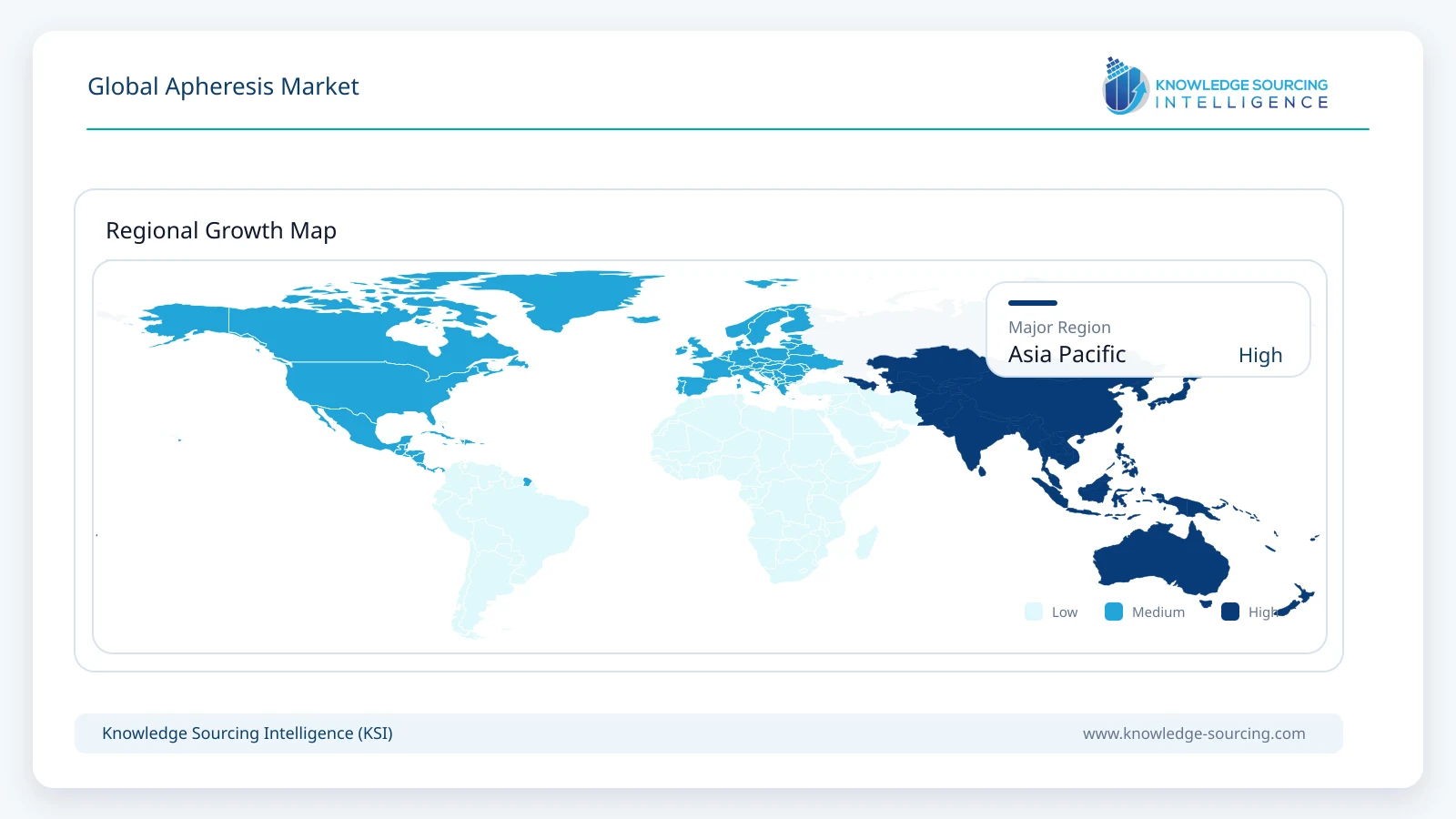
Asia Pacific offers substantial long-term opportunity because healthcare infrastructure is expanding while large populations create a broad potential patient and donor base. China, Japan, India, South Korea, Australia, Taiwan, Thailand, and Indonesia differ considerably in reimbursement, hospital concentration, specialist availability, and regulatory processes.
Japan has a mature medical technology environment and established blood-purification expertise. China combines large hospital demand with increasing medical-device manufacturing and clinical infrastructure investment. Terumo BCT's 2025 partnership with the Shandong Institute of Medical Devices and Pharmaceutical Packaging Inspection included cooperation covering blood-component collection and processing, therapeutic apheresis, and cell-therapy technology.
India offers a particularly important expansion opportunity for therapeutic apheresis in major tertiary hospitals, especially for neurological, renal, autoimmune, hematological, and transplant-related care. However, utilization remains concentrated in facilities with specialist expertise and sufficient patient volume.
Australia has a mature transfusion and hospital system, while Southeast Asian markets are likely to develop through large private hospitals, public tertiary centers, and specialist treatment networks. Training and service infrastructure will remain important constraints.
Middle East and Africa
The Middle East market is concentrated in countries with well-funded tertiary healthcare systems, including Saudi Arabia and the United Arab Emirates. Demand is linked to specialized hospitals, transplantation, oncology, hematology, and advanced blood-component services.
Saudi Arabia's healthcare investment programs and development of specialized medical centers provide opportunities for high-value therapeutic equipment. The UAE has a similar concentration of demand in major hospitals and private healthcare networks.
Africa presents a more fragmented opportunity. South Africa has comparatively advanced transfusion and specialist healthcare infrastructure, while other markets face limitations related to equipment financing, specialist staffing, blood supply infrastructure, and maintenance capabilities.
Suppliers entering the region must therefore prioritize service availability and training alongside product supply. Equipment sales without dependable technical support can lead to low utilization and weak customer retention.
South America
Brazil represents the largest commercial opportunity in South America because of its population, hospital infrastructure, specialist centers, and blood-component requirements. Argentina also supports demand through tertiary hospitals and specialist treatment facilities.
The region's main constraints include public healthcare budget pressures, currency volatility, import dependence for specialized medical equipment, and uneven availability of trained personnel. These factors can lengthen procurement cycles.
Suppliers with established local distribution, technical support, and regulatory capabilities are better positioned to convert hospital demand into sustainable equipment utilization.
Competitive Landscape
The competitive structure includes global blood-management companies, medical-device manufacturers, blood-purification specialists, cell-processing technology suppliers, and healthcare companies with adjacent therapeutic capabilities.
The principal companies considered in this market are Terumo Blood and Cell Technologies, Haemonetics Corporation, Asahi Kasei Medical Co., Ltd., B. Braun Melsungen AG, Kaneka Corporation, Fresenius Medical Care AG & Co. KGaA, Macopharma, Miltenyi Biotec, Mallinckrodt plc, and Charles River Laboratories International, Inc..
Competition is shaped by portfolio breadth rather than a single device specification. Terumo BCT and Haemonetics have strong positioning in blood collection and processing. Kaneka has a differentiated position in adsorption and plasma-purification technologies. Miltenyi Biotec connects apheresis-derived starting material with downstream cell separation and manufacturing.
Asahi Kasei Medical's strategic restructuring is also relevant to market positioning. In April 2025, Asahi Kasei transferred its therapeutic apheresis and related blood-purification business to a special-purpose company associated with IA Holdings, while the bioprocess business moved to Asahi Kasei Life Science. This illustrates how portfolio restructuring can alter ownership and investment priorities within the blood-purification segment.
Suppliers compete through installed-base expansion, disposable compatibility, workflow integration, technical support, regulatory coverage, geographic distribution, and relationships with blood centers and hospitals. Partnerships can accelerate market entry where local regulatory knowledge or clinical infrastructure is necessary.
The strongest competitive position is generally associated with an ecosystem capable of supporting the full procedure cycle. This includes equipment, disposables, software, service, training, documentation, and supply continuity.
Recent Developments
May 2026: Circulate Health announced peer-reviewed clinical research showing therapeutic plasma exchange significantly reduced circulating microplastic particles in patients, broadening potential applications for apheresis procedures.
March 2026: Fresenius Kabi’s Plasmacell-C Disposable Set received FDA clearance as an automated blood-cell-separator component intended for plasma collection through membrane filtration, expanding approved apheresis consumable options.
March 2026: Terumo Blood and Cell Technologies launched its APAC C> Ecosystem Blueprint, integrating cell collection, processing, and clinical workflows to support scalable cell and gene therapy delivery across Asia-Pacific.
February 2026: Haemonetics received FDA clearance for the NexSys PCS Plasma Collection System with Persona PLUS Technology, expanding personalized plasma collection capabilities and strengthening its next-generation apheresis platform.
December 2025: Terumo Blood and Cell Technologies announced that Community Blood Center in Appleton, Wisconsin, became the fifth U.S. blood center to implement the Reveos system and Lumia software platform. Commercial relevance: Repeated adoption across U.S. blood centers supports the commercial case for automation and integrated blood-processing software.
October 2025: Terumo Blood and Cell Technologies announced deployment of its FDA-cleared Reveos automated blood-processing system at The Blood Center in New Orleans, the second U.S. site to adopt the platform. Commercial relevance: The deployment demonstrates continued investment in automated component processing as blood centers address platelet supply, staffing, and workflow pressures.
April 2025: Asahi Kasei transferred its therapeutic apheresis and related blood-purification business to IA Holdings through a corporate restructuring. Commercial relevance: The transaction changes the ownership structure of an established therapeutic apheresis portfolio and may influence future investment and product strategy.
Regulatory and Policy Environment
Apheresis products operate within overlapping medical-device, blood-component, biologics, and healthcare regulations. The exact regulatory pathway depends on whether the product is intended for donor collection, therapeutic treatment, blood processing, cell separation, or another application.
In the United States, FDA oversight is divided across CBER and CDRH depending on the relationship between the device and regulated blood or cellular products. FDA states that devices used in blood banking, including separators and collection systems, can be regulated through 510(k) pathways.
FDA's device quality framework also changed materially in February 2026. The Quality Management System Regulation became effective on February 2, 2026, incorporating ISO 13485:2016 into U.S. medical-device quality requirements. For manufacturers, this increases the importance of documented quality systems, manufacturing controls, design controls, risk management, supplier oversight, and post-market processes.
FDA also maintains specific classifications for devices used in long-term therapeutic apheresis. For example, its classification database identifies subcutaneous implanted apheresis ports as Class II prescription devices subject to 510(k) review.
Blood establishments face additional registration, product-listing, recordkeeping, and quality obligations. FDA requires applicable blood-product establishments to register and list manufactured blood products, with electronic submission requirements and periodic updates.
Internationally, WHO's 2025 good-practice guidance for blood establishments provides a framework for quality and safety across blood collection, processing, transfusion, and plasma for industrial fractionation. This has commercial implications for equipment manufacturers because blood-center customers increasingly require systems that support traceability, controlled processing, documentation, and consistent component quality.
WHO's 2025 guidance on cross-border transfer of domestic plasma also emphasizes legal and regulatory conditions for plasma quality, donor protection, and arrangements for plasma fractionation. These policies can affect plasma-collection infrastructure and the equipment required to support secure plasma supply chains.
For manufacturers, regulatory compliance is therefore becoming part of the commercial value proposition. Buyers need evidence that equipment, consumables, software, and manufacturing processes can meet applicable standards across their operating jurisdictions.
Outlook and Strategic Implications
The apheresis market will depend less on equipment replacement alone and more on procedure volumes, blood-component availability, specialist healthcare capacity, and the expansion of cell-processing workflows.
Investment priorities are likely to concentrate on systems that improve throughput without compromising component quality or patient safety. Blood centers will continue to evaluate automation according to usable output per operating hour, staffing requirements, donor experience, and integration with inventory and donor-management systems.
Hospitals will place greater emphasis on platform versatility. A system capable of supporting several therapeutic procedures can improve asset utilization and reduce the need for separate equipment purchases. However, versatility must be matched by dependable disposable availability and validated clinical protocols.
Procurement is also likely to shift toward total-cost-of-ownership analysis. Buyers will examine capital expenditure together with consumables, maintenance, downtime, training, software, and service. This favors suppliers capable of presenting transparent lifecycle economics rather than competing solely on instrument price.
Consumables will remain strategically important. Apheresis machines create recurring demand for procedure-specific disposable sets, making manufacturing capacity and supply continuity critical competitive factors. Suppliers with geographically diversified manufacturing and distribution networks can reduce the risk of customer disruption.
Technology development will continue across three main directions. Centrifugal systems will remain central to established blood-component collection. Membrane technologies will retain relevance where controlled plasma separation is required. Adsorption and selective purification will support specialized therapeutic procedures where conventional separation cannot sufficiently target the pathogenic substance.
The intersection with cell therapy is another strategic opportunity. Leukapheresis and other cellular collection procedures can feed downstream cell-processing workflows, linking apheresis equipment suppliers with the broader clinical manufacturing ecosystem. Miltenyi Biotec's closed-system cell separation capabilities illustrate the importance of this connection.
Geographically, North America and Europe are likely to remain important revenue centers because of established infrastructure and specialist expertise. Asia Pacific offers a wider infrastructure-development opportunity, particularly in China, India, Japan, South Korea, and selected Southeast Asian markets. Middle Eastern demand will remain concentrated in advanced healthcare systems, while South American growth will depend heavily on hospital investment and local procurement conditions.
Competitive differentiation will increasingly depend on the complete customer relationship. Equipment, consumables, software, training, maintenance, regulatory documentation, and clinical workflow support are becoming interconnected purchasing criteria.
The principal risks remain regulatory delays, disposable shortages, raw-material disruptions, limited specialist staffing, budget constraints, and uneven infrastructure. Suppliers that underestimate recurring consumable economics or local service requirements may struggle to convert equipment placements into sustainable market share.
Strategically, the most attractive opportunities are likely to arise where three conditions overlap: high clinical need, inadequate processing capacity, and institutional willingness to invest in automation. Blood centers facing platelet or plasma supply constraints represent one such opportunity. Tertiary hospitals expanding therapeutic apheresis and cell-therapy services represent another.
Overall, the market's commercial trajectory will be determined by utilization of installed systems rather than equipment shipments alone. Suppliers that increase procedure capacity, simplify operator workflows, maintain reliable consumable supply, and support regulatory compliance should be better positioned to capture recurring revenue through 2031.
Apheresis Market Scope
| Report Metric | Details |
|---|---|
| Total Market Size in 2026 | USD 4.09 billion |
| Total Market Size in 2031 | USD 5.89 billion |
| Forecast Unit | Billion |
| Growth Rate | 7.6% |
| Study Period | 2021 to 2031 |
| Historical Data | 2021 to 2024 |
| Base Year | 2025 |
| Forecast Period | 2026 – 2031 |
| Segmentation | Product, Procedure, Technology, Application, Geography |
| Companies |
|
Market Segmentation
By Product
- Apheresis Machines and Systems
- Apheresis Disposables
- Apheresis Kits and Accessories
- Others
By Procedure
- Therapeutic Plasma Exchange
- Leukapheresis
- Red Blood Cell Exchange
- Plateletpheresis
- Extracorporeal Photopheresis
- Other Apheresis Procedures
By Technology
- Centrifugation
- Membrane Filtration
- Adsorption and Other Separation Technologies
By Application
- Hematological Disorders
- Autoimmune Disorders
- Neurological Disorders
- Renal Disorders
- Transplantation
- Oncology
- Other Applications
By Geography
- North America
- United States
- Canada
- Mexico
- South America
- Brazil
- Argentina
- Others
- Europe
- Germany
- Spain
- United Kingdom
- France
- Italy
- Others
- Middle East and Africa
- Saudi Arabia
- South Africa
- United Arab Emirates
- Others
- Asia Pacific
- China
- Japan
- India
- South Korea
- Australia
- Thailand
- Indonesia
- Taiwan
- Others
Table of Contents
1. INTRODUCTION
1.1. Market Definition
1.2. Market Segmentation
1.3. Key Market Trends
1.4. Research Scope
2. RESEARCH METHODOLOGY
2.1. Research Data
2.2. Research Approach
2.3. Data Sources and Validation
2.4. Assumptions
3. EXECUTIVE SUMMARY
3.1. Research Highlights
3.2. Key Findings
3.3. Market Overview
4. MARKET DYNAMICS
4.1. Market Drivers
4.2. Market Restraints and Challenges
4.3. Porter's Five Forces Analysis
4.3.1. Bargaining Power of Suppliers
4.3.2. Bargaining Power of Buyers
4.3.3. Threat of New Entrants
4.3.4. Threat of Substitutes
4.3.5. Competitive Rivalry
4.4. Industry Value Chain Analysis
5. GLOBAL APHERESIS MARKET ANALYSIS, BY PRODUCT
5.1. Introduction
5.2. Apheresis Machines and Systems
5.3. Apheresis Disposables
5.4. Apheresis Kits and Accessories
5.5. Others
6. GLOBAL APHERESIS MARKET ANALYSIS, BY PROCEDURE
6.1. Introduction
6.2. Therapeutic Plasma Exchange
6.3. Leukapheresis
6.4. Red Blood Cell Exchange
6.5. Plateletpheresis
6.6. Extracorporeal Photopheresis
6.7. Other Apheresis Procedures
7. GLOBAL APHERESIS MARKET ANALYSIS, BY TECHNOLOGY
7.1. Introduction
7.2. Centrifugation
7.3. Membrane Filtration
7.4. Adsorption and Other Separation Technologies
8. GLOBAL APHERESIS MARKET ANALYSIS, BY APPLICATION
8.1. Introduction
8.2. Hematological Disorders
8.3. Autoimmune Disorders
8.4. Neurological Disorders
8.5. Renal Disorders
8.6. Transplantation
8.7. Oncology
8.8. Other Applications
9. GLOBAL APHERESIS MARKET ANALYSIS, BY GEOGRAPHY
9.1. Introduction
9.2. North America
9.2.1. North America Apheresis Market Analysis, By Product, 2026 to 2031
9.2.2. North America Apheresis Market Analysis, By Procedure, 2026 to 2031
9.2.3. North America Apheresis Market Analysis, By Technology, 2026 to 2031
9.2.4. North America Apheresis Market Analysis, By Application, 2026 to 2031
9.2.5. By Country
9.2.5.1. United States
9.2.5.2. Canada
9.2.5.3. Mexico
9.3. South America
9.3.1. South America Apheresis Market Analysis, By Product, 2026 to 2031
9.3.2. South America Apheresis Market Analysis, By Procedure, 2026 to 2031
9.3.3. South America Apheresis Market Analysis, By Technology, 2026 to 2031
9.3.4. South America Apheresis Market Analysis, By Application, 2026 to 2031
9.3.5. By Country
9.3.5.1. Brazil
9.3.5.2. Argentina
9.3.5.3. Others
9.4. Europe
9.4.1. Europe Apheresis Market Analysis, By Product, 2026 to 2031
9.4.2. Europe Apheresis Market Analysis, By Procedure, 2026 to 2031
9.4.3. Europe Apheresis Market Analysis, By Technology, 2026 to 2031
9.4.4. Europe Apheresis Market Analysis, By Application, 2026 to 2031
9.4.5. By Country
9.4.5.1. Germany
9.4.5.2. Spain
9.4.5.3. United Kingdom
9.4.5.4. France
9.4.5.5. Italy
9.4.5.6. Others
9.5. Middle East and Africa
9.5.1. Middle East and Africa Apheresis Market Analysis, By Product, 2026 to 2031
9.5.2. Middle East and Africa Apheresis Market Analysis, By Procedure, 2026 to 2031
9.5.3. Middle East and Africa Apheresis Market Analysis, By Technology, 2026 to 2031
9.5.4. Middle East and Africa Apheresis Market Analysis, By Application, 2026 to 2031
9.5.5. By Country
9.5.5.1. Saudi Arabia
9.5.5.2. South Africa
9.5.5.3. United Arab Emirates
9.5.5.4. Others
9.6. Asia Pacific
9.6.1. Asia Pacific Apheresis Market Analysis, By Product, 2026 to 2031
9.6.2. Asia Pacific Apheresis Market Analysis, By Procedure, 2026 to 2031
9.6.3. Asia Pacific Apheresis Market Analysis, By Technology, 2026 to 2031
9.6.4. Asia Pacific Apheresis Market Analysis, By Application, 2026 to 2031
9.6.5. By Country
9.6.5.1. China
9.6.5.2. Japan
9.6.5.3. India
9.6.5.4. South Korea
9.6.5.5. Australia
9.6.5.6. Thailand
9.6.5.7. Indonesia
9.6.5.8. Taiwan
9.6.5.9. Others
10. COMPETITIVE ENVIRONMENT AND ANALYSIS
10.1. Major Players and Strategy Analysis
10.2. Emerging Players and Market Opportunities
10.3. Mergers, Acquisitions, Agreements, and Collaborations
10.4. Competitive Positioning Matrix
11. COMPANY PROFILES
11.1. Terumo Blood and Cell Technologies
11.2. Haemonetics Corporation
11.3. Asahi Kasei Medical Co., Ltd.
11.4. B. Braun Melsungen AG
11.5. Kaneka Corporation
11.6. Fresenius Medical Care AG & Co. KGaA
11.7. Macopharma
11.8. Miltenyi Biotec
11.9. Mallinckrodt plc
11.10. Charles River Laboratories International, Inc.
Navigate
Trusted by the world's leading organizations











