
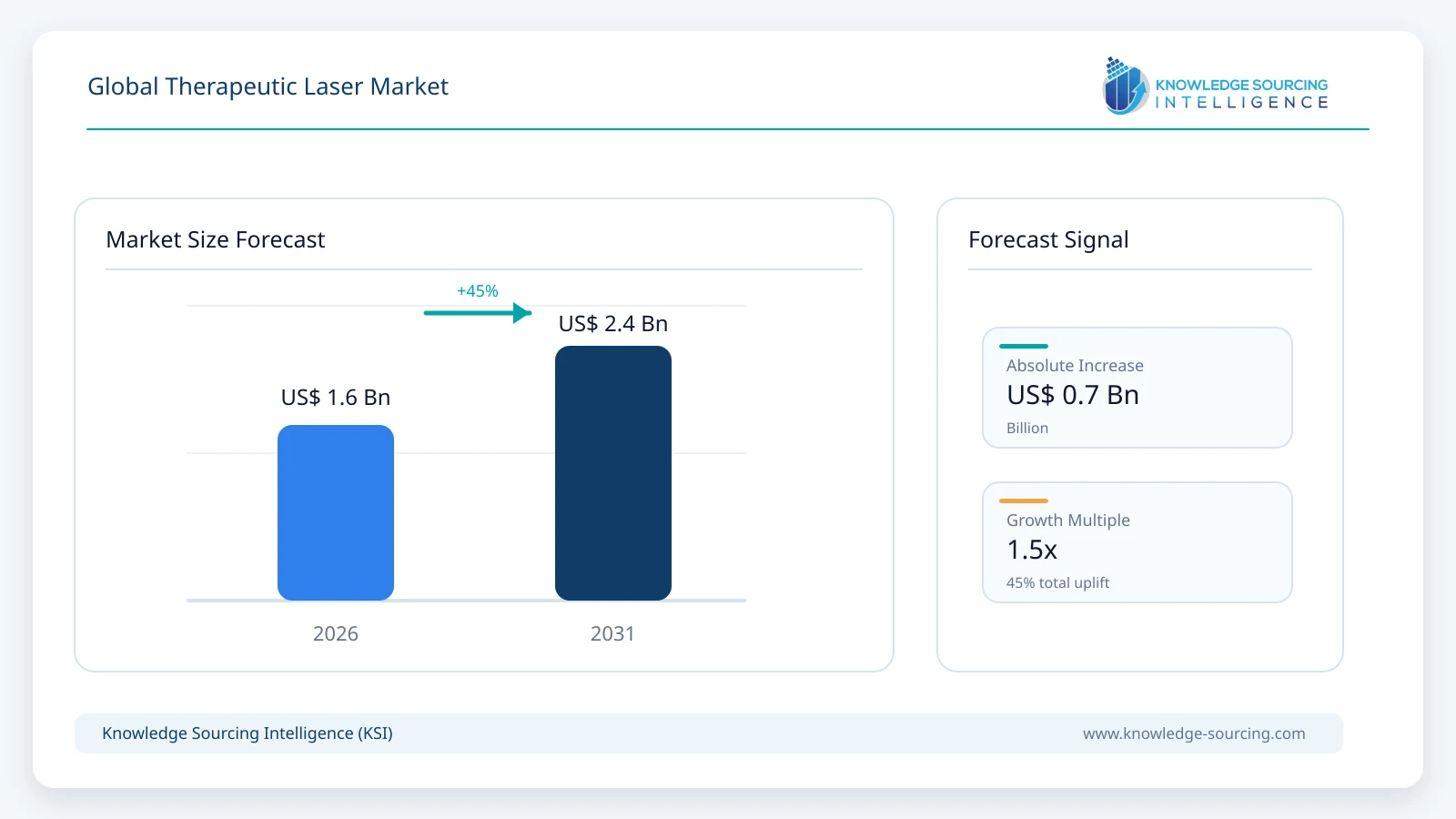
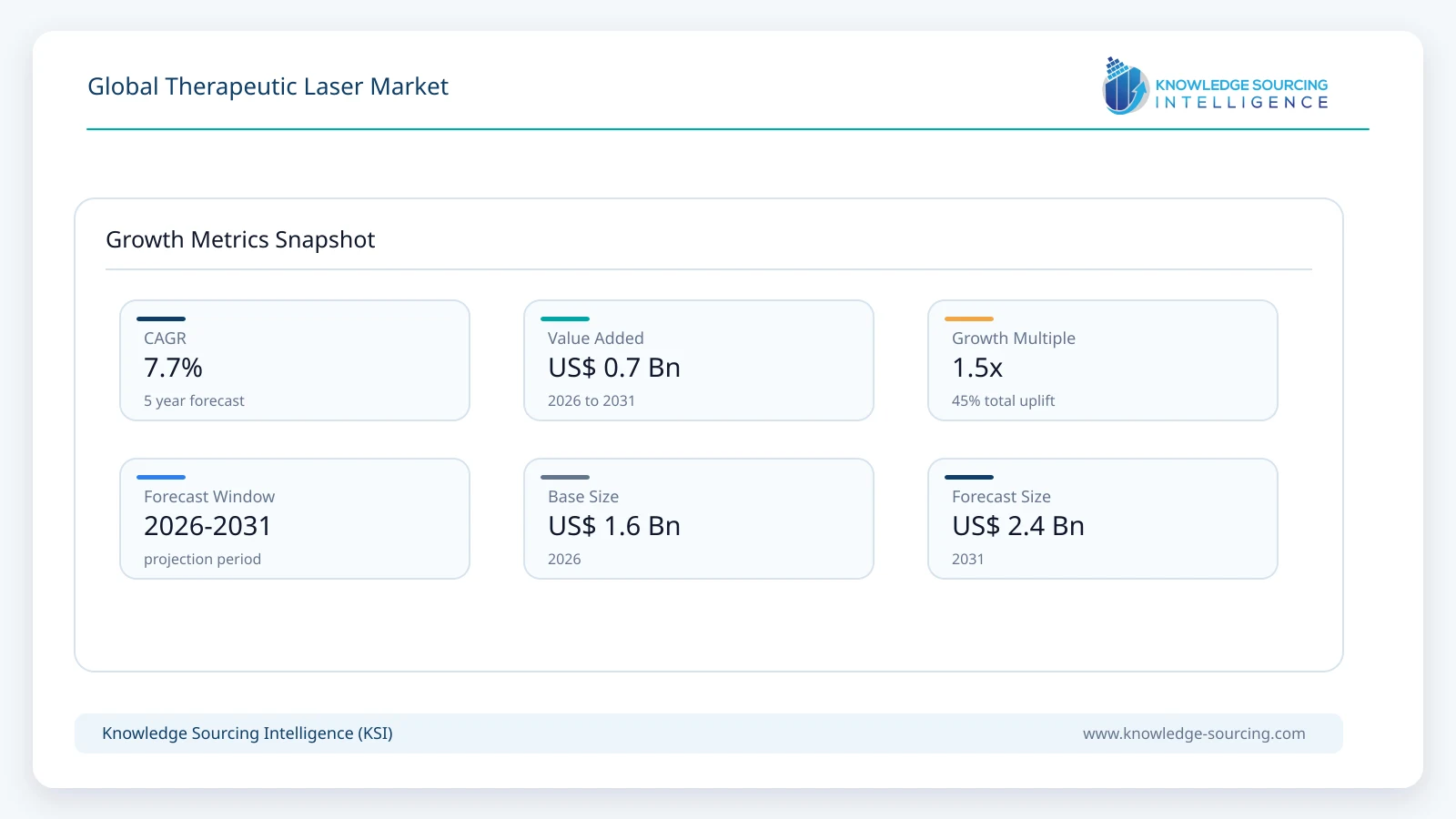
The Global Therapeutic Laser Market is forecast to grow at a CAGR of 7.7%, reaching USD 2.35 billion in 2031 from USD 1.62 billion in 2026.
Highlights:
- 1Rising adoption of non-invasive therapies is expanding demand across rehabilitation, pain management, and sports medicine settings.
- 2Clinical evidence supporting photobiomodulation is encouraging broader integration into multidisciplinary treatment pathways.
- 3Regulatory approvals and reimbursement developments continue to influence purchasing priorities across healthcare providers.
- 4Manufacturers are expanding product portfolios with software-enabled platforms, multi-wavelength systems, and application-specific devices.
- 5Hospital groups, specialty clinics, and rehabilitation centers increasingly evaluate therapeutic lasers based on clinical outcomes, treatment efficiency, and lifecycle costs.
Market Overview
Therapeutic laser systems are used across hospitals, physiotherapy centers, chiropractic clinics, sports medicine facilities, dental practices, and dermatology clinics. Purchasing decisions increasingly depend on clinical evidence, regulatory approval, treatment versatility, ease of operation, service support, and total ownership cost rather than device specifications alone.
Healthcare providers are placing greater emphasis on treatments that reduce reliance on long-term pharmacological pain management while improving patient throughput. Therapeutic lasers are being incorporated into multimodal rehabilitation programs for musculoskeletal disorders, sports injuries, chronic pain, wound management, and selected neurological conditions. Demand also reflects the growing incidence of age-related degenerative disorders and expanding rehabilitation needs following orthopedic procedures. The World Health Organization identifies musculoskeletal conditions as one of the largest contributors to disability worldwide, reinforcing demand for rehabilitation technologies that support functional recovery.
Commercial activity is increasingly shaped by evidence-based procurement. Buyers seek devices supported by published clinical studies, established treatment protocols, regulatory compliance, and training programs for healthcare professionals. Manufacturers are responding through expanded clinical research, multi-application platforms, software-guided treatment protocols, and broader after-sales service networks. Product differentiation increasingly depends on treatment flexibility, wavelength combinations, ergonomic design, and digital workflow integration rather than hardware performance alone.
Value creation extends beyond equipment sales. Service contracts, clinician education, software upgrades, accessories, and replacement components contribute recurring revenue, particularly among providers operating high patient volumes. As reimbursement policies evolve and clinical acceptance broadens, suppliers capable of combining clinical validation with reliable service infrastructure are likely to strengthen their competitive position.
Key Market Indicators
Indicator | Latest Evidence | Commercial Meaning |
Global population living with musculoskeletal conditions | Approximately 1.71 billion people (WHO) | Large patient base supports continued rehabilitation demand. |
Adults requiring rehabilitation during illness or injury | Around 2.4 billion people globally (WHO) | Expands the addressable market for therapeutic rehabilitation technologies. |
Adults affected by low back pain | Around 619 million people globally (WHO estimate) | Sustains demand for non-invasive pain management therapies. |
Rehabilitation need projected by 2050 | Around 3.6 billion people (WHO projection) | Indicates expanding long-term demand for rehabilitation services and treatment technologies. |
Sports injuries requiring rehabilitation | Millions of cases reported annually across organized sports worldwide | Continues to support procurement by sports medicine clinics and rehabilitation centers. |
Key indicator: WHO estimates that approximately 2.4 billion people worldwide could benefit from rehabilitation services.
Commercial meaning: Healthcare systems are expanding rehabilitation capacity, creating sustained opportunities for therapeutic laser manufacturers that demonstrate clinical effectiveness.
Market Drivers
Growing rehabilitation demand associated with musculoskeletal disorders and chronic pain. Musculoskeletal diseases remain among the most common causes of disability, creating sustained demand for rehabilitation technologies that complement physical therapy and conventional pain management. According to the World Health Organization, approximately 1.71 billion people live with musculoskeletal conditions globally, while low back pain remains a leading cause of disability. Healthcare providers increasingly incorporate therapeutic laser systems into rehabilitation programs because they can support pain reduction and tissue healing without invasive intervention. Suppliers continue expanding product portfolios and clinical education programs to strengthen adoption across rehabilitation networks and outpatient care.
Broader clinical acceptance of photobiomodulation across multiple medical specialties. Clinical literature evaluating low-level laser therapy has expanded across pain management, wound healing, dentistry, neurology, and sports medicine, encouraging wider institutional adoption. As treatment guidelines increasingly reference evidence-supported laser applications for selected conditions, hospitals and specialty clinics are becoming more willing to invest in versatile laser platforms capable of serving multiple departments. Manufacturers such as BTL, Zimmer MedizinSysteme, Fotona, and ASA Laser have broadened multi-application product offerings while investing in clinician training and protocol development to improve treatment consistency and support purchasing decisions.
Increasing preference for non-pharmacological pain management. Healthcare systems continue to evaluate treatment approaches that reduce dependence on long-term analgesic use, particularly for chronic musculoskeletal disorders. Professional medical organizations and public health authorities have encouraged broader use of multidisciplinary pain management strategies that combine physical rehabilitation with evidence-based non-drug interventions where clinically appropriate. Therapeutic laser systems align with this shift because they can be incorporated into existing rehabilitation workflows without major facility modifications. The resulting demand extends beyond hospitals to physiotherapy clinics, chiropractic practices, and sports medicine centers seeking differentiated treatment capabilities.
Product innovation focused on treatment flexibility and workflow efficiency. Procurement increasingly favors systems capable of treating diverse clinical indications while reducing operator complexity. Manufacturers are introducing devices that combine multiple wavelengths, programmable treatment protocols, touchscreen interfaces, and integrated clinical guidance to improve workflow standardization. Company disclosures and product announcements indicate continued investment in software enhancements, ergonomic handpieces, portable systems, and expanded application libraries. These improvements support higher equipment utilization across multiple specialties, improving return on investment for healthcare providers and strengthening supplier competitiveness in institutional procurement processes.
Market Restraints and Challenges
Limited reimbursement and inconsistent clinical coverage policies. Reimbursement remains uneven across countries, insurers, and clinical indications, creating uncertainty for healthcare providers considering capital investment in therapeutic laser systems. While some applications are supported through established rehabilitation or physiotherapy reimbursement pathways, others rely on self-pay models or local funding decisions. This variation affects purchasing priorities, particularly among smaller outpatient clinics where equipment utilization must justify upfront investment. Manufacturers increasingly respond by generating additional clinical evidence and supporting health economic studies to strengthen payer acceptance and expand reimbursable indications.
Variation in clinical evidence across therapeutic indications. Although photobiomodulation has gained wider clinical acceptance, evidence quality differs between treatment applications. Stronger support exists for selected musculoskeletal conditions and pain management than for several neurological or emerging therapeutic uses. Healthcare institutions increasingly require published clinical data, treatment guidelines, and standardized protocols before approving procurement. Consequently, suppliers invest in multicenter clinical studies, clinician education, and post-market evidence generation to improve confidence among physicians, procurement teams, and reimbursement authorities rather than relying solely on product specifications.
High acquisition costs and lengthy procurement cycles. Hospital procurement decisions increasingly evaluate total ownership costs instead of purchase price alone. Besides the laser platform itself, buyers consider maintenance contracts, operator training, software updates, accessories, calibration, and service availability. Public hospitals often require competitive tenders, clinical evaluation, and capital budget approval before procurement, extending purchasing timelines. Smaller rehabilitation clinics may postpone replacement cycles when patient volumes or reimbursement levels remain uncertain, encouraging suppliers to offer leasing arrangements, financing options, and scalable product portfolios.
Regulatory compliance and product certification requirements. Therapeutic laser systems are regulated as medical devices and must satisfy stringent safety, quality, and clinical performance requirements before commercialization. Regulatory expectations continue to evolve across major healthcare markets, particularly regarding software documentation, clinical evaluation, post-market surveillance, and quality management systems. Compliance increases development costs and extends product launch timelines, especially for companies introducing new treatment platforms. Larger manufacturers generally possess greater regulatory resources, while smaller suppliers often face higher relative compliance costs when entering multiple international markets.
Major Segment Analysis
Low-level Laser Therapy (LLLT)
Low-level Laser Therapy (LLLT), commonly referred to as photobiomodulation, represents one of the most commercially important therapy segments because of its broad clinical applicability across rehabilitation, pain management, sports medicine, wound care, and selected neurological conditions. Unlike ablative laser systems, LLLT delivers low-energy light intended to stimulate cellular activity without generating significant tissue heating. This characteristic allows providers to integrate treatment into routine rehabilitation sessions while maintaining patient comfort and relatively short treatment times.
Purchasing decisions within this segment increasingly depend on published clinical evidence, standardized treatment protocols, wavelength flexibility, and ease of integration into existing physiotherapy workflows. Hospitals and rehabilitation centers often prefer systems capable of treating multiple indications through programmable protocols rather than application-specific devices. Suppliers compete by expanding clinical validation, improving software-guided treatment planning, and offering clinician training that supports consistent treatment delivery. Although reimbursement variation continues to influence purchasing decisions, the segment remains an important source of recurring equipment demand because of its broad patient base and compatibility with multidisciplinary rehabilitation programs.
Regional Analysis
Region | Main Demand Signal | Principal Constraint |
North America | High rehabilitation spending, sports medicine adoption, established outpatient care | Reimbursement variation across payers and indications |
Europe | Ageing population, evidence-based rehabilitation, supportive medical device framework | Country-specific reimbursement and procurement differences |
Asia Pacific | Expanding healthcare infrastructure and rehabilitation capacity | Uneven access between urban and rural healthcare systems |
Middle East and Africa | Hospital modernization and private healthcare investment | Limited specialist availability and budget constraints |
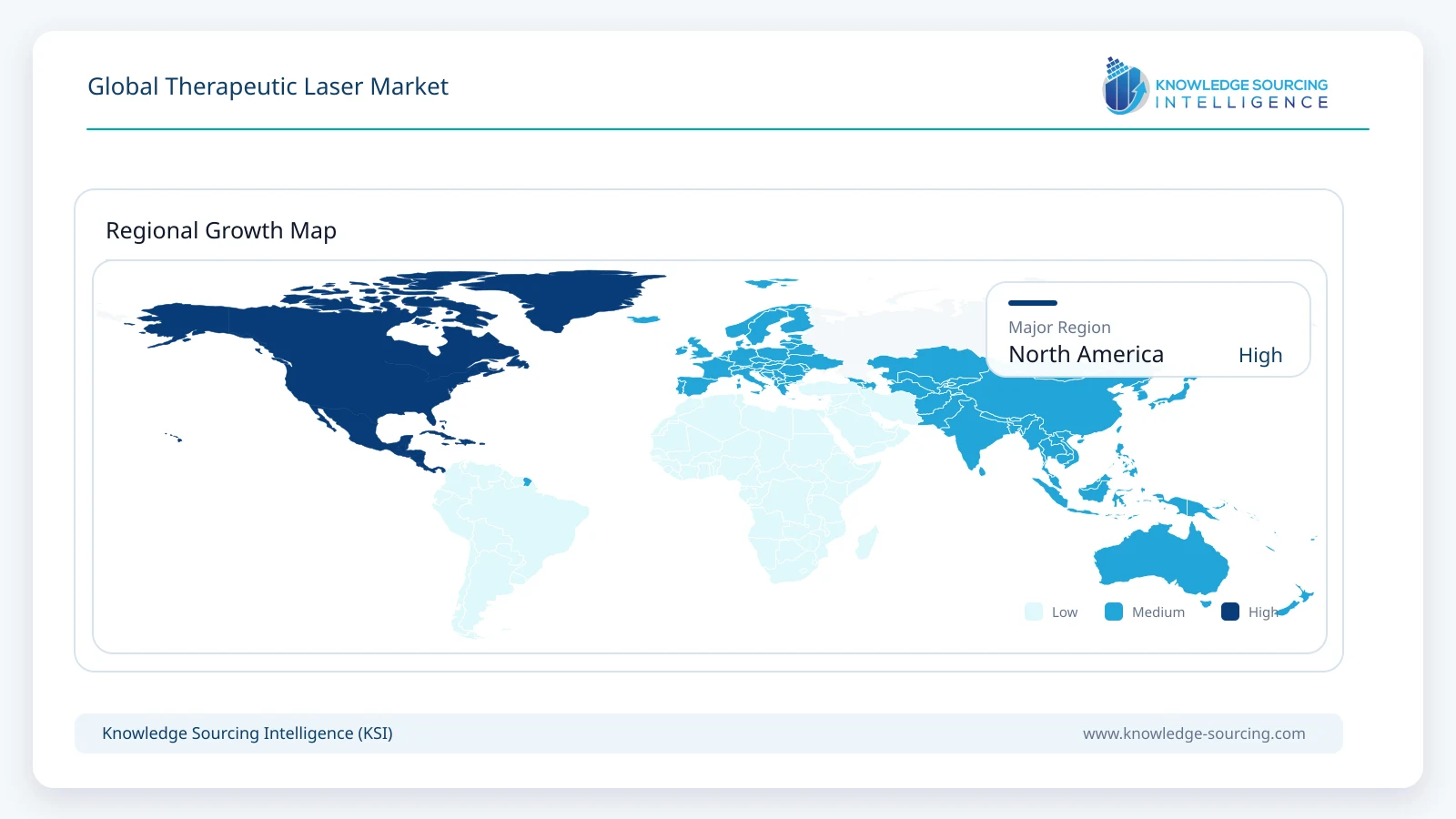
North America continues to represent a mature commercial environment supported by extensive rehabilitation infrastructure, outpatient physiotherapy networks, and high adoption of non-invasive pain management technologies. The United States accounts for much of regional demand owing to its large sports medicine sector, orthopedic procedure volumes, and broad presence of rehabilitation clinics. Procurement increasingly emphasizes clinical evidence, regulatory compliance, service support, and long-term operating costs. However, reimbursement policies differ among public and private payers, requiring suppliers to demonstrate both clinical effectiveness and economic value.
European demand is supported by ageing populations, expanding rehabilitation services, and established medical device regulation under the Medical Device Regulation (MDR). Countries including Germany, France, the United Kingdom, and Spain continue to invest in rehabilitation services for chronic musculoskeletal disorders and post-operative recovery. Hospitals typically evaluate therapeutic laser systems through structured procurement processes that prioritize clinical evidence, safety, and lifecycle costs. Suppliers with established distribution networks and regulatory expertise generally maintain stronger access to institutional buyers.
Asia Pacific presents a diverse demand profile shaped by expanding healthcare infrastructure, rising rehabilitation awareness, and increasing investment in specialty medical services. China, Japan, South Korea, and India account for a substantial share of regional equipment demand owing to growing hospital capacity, larger elderly populations, and expanding sports medicine services. Domestic manufacturing capabilities continue to improve in several countries, although imported systems remain important for premium clinical applications. Market development differs considerably between metropolitan healthcare systems and underserved regions where specialist rehabilitation services remain limited.
The Middle East and Africa is supported by hospital modernization programs, private healthcare investment, and increasing interest in advanced rehabilitation technologies across Gulf Cooperation Council countries. Saudi Arabia and the United Arab Emirates continue investing in specialty healthcare facilities that incorporate modern physiotherapy and pain management services. Adoption remains comparatively slower across lower-income healthcare systems where capital budgets, workforce availability, and specialist training continue to constrain procurement decisions.
Competitive Landscape
Competition in the global therapeutic laser market is technology-led and moderately fragmented, with manufacturers differentiating through clinical validation, product breadth, regulatory compliance, and service capability rather than price alone. BTL, Zimmer MedizinSysteme, Fotona d.o.o., El.En. Group, ASA Laser, DJO Global (Chattanooga), Erchonia Corporation, Theralase Technologies Inc., K-Laser USA, and LiteCure, LLC compete across multiple clinical specialties, although their portfolios vary in wavelength technologies, treatment protocols, and target applications.
Product development increasingly focuses on multi-wavelength platforms, software-guided treatment protocols, portability, and workflow integration to improve equipment utilization across rehabilitation, sports medicine, pain management, and specialty clinical practices. Companies are also strengthening clinician training, distributor partnerships, and after-sales service because institutional buyers increasingly evaluate lifecycle support alongside clinical performance. Established manufacturers generally possess stronger regulatory capabilities and broader international distribution, while smaller suppliers compete through application-specific technologies, niche clinical expertise, and close engagement with specialist healthcare providers.
Recent Developments
July 2026 – IPG Photonics announced a binding offer to acquire Lumibird Medical. The proposed acquisition expands IPG’s medical laser portfolio with complementary ophthalmology and urology technologies, creating a larger therapeutic laser platform for future growth.
June 2026 – K-Laser launched the GIRO Rehabilitation & Sports Series. The new Class IV therapeutic laser platform features GIRO Core, Elite, and Ultra models, delivering faster treatments, improved workflow, and enhanced pain management and rehabilitation performance for clinicians.
June 2026 – Ultradent Products acquired Azena Medical. The acquisition brings the Gemini™ soft-tissue diode laser portfolio and laser engineering expertise in-house, strengthening Ultradent’s therapeutic dental laser business while accelerating innovation, manufacturing, and global clinical education.
September 2025 – Alcon completed the acquisition of LumiThera. The transaction added the Valeda® photobiomodulation device for treating dry age-related macular degeneration, expanding Alcon’s therapeutic laser and light-based ophthalmic treatment portfolio into new clinical markets.
Regulatory and Policy Environment
Therapeutic laser systems operate within comprehensive medical device regulatory frameworks that govern product safety, manufacturing quality, clinical performance, and post-market surveillance. In the United States, therapeutic laser devices are regulated by the U.S. Food and Drug Administration (FDA) through risk-based medical device requirements, including quality system regulations and applicable premarket pathways. Manufacturers introducing new technologies must demonstrate compliance with performance, labeling, and safety standards before commercialization. These requirements influence development costs, product launch schedules, and market entry strategies.
Across Europe, manufacturers must comply with the Medical Device Regulation (EU MDR 2017/745), which strengthened clinical evidence requirements, technical documentation, post-market surveillance, and traceability throughout the product lifecycle. The regulation has increased documentation and compliance obligations while supporting greater consistency in patient safety and device performance across European markets. Similar regulatory modernization is occurring in several Asia Pacific countries, where authorities continue aligning medical device oversight with internationally recognized quality and safety standards. These evolving requirements increasingly favor manufacturers with established regulatory expertise, robust quality management systems, and sufficient resources to maintain compliance across multiple jurisdictions.
Outlook and Strategic Implications
Demand during the 2026-2031 forecast period is expected to remain closely linked to the expansion of rehabilitation services, broader clinical acceptance of photobiomodulation, and increasing preference for non-invasive treatment pathways. Hospitals, rehabilitation centers, sports medicine facilities, and specialty clinics are likely to prioritize systems capable of supporting multiple therapeutic indications while demonstrating measurable clinical outcomes and operational efficiency. Purchasing decisions will increasingly consider evidence generation, software functionality, clinician training, service responsiveness, and total ownership costs alongside hardware performance.
Commercial competition is expected to shift toward integrated clinical solutions rather than standalone equipment sales. Manufacturers that combine validated clinical protocols, regulatory compliance, digital treatment support, and comprehensive after-sales services are likely to strengthen long-term customer relationships. Continued investment in clinician education and evidence-based treatment protocols should remain important as healthcare providers place greater emphasis on standardized care and measurable patient outcomes.
Several strategic priorities are expected to influence market performance over the forecast period:
Expansion of clinical evidence supporting additional therapeutic indications.
Greater integration of software-guided treatment planning and digital workflow support.
Broader adoption of multi-wavelength platforms capable of serving multiple specialties.
Continued investment in regulatory compliance, post-market surveillance, and product quality.
Expansion of distributor networks, technical support, and clinician training to improve customer retention.
Overall, the therapeutic laser market is expected to advance through gradual clinical adoption rather than rapid technology replacement. Suppliers that balance product innovation with strong clinical validation, regulatory readiness, and dependable service infrastructure are likely to be better positioned to address evolving procurement requirements across global healthcare systems.
Global Therapeutic Laser Market Scope:
| Report Metric | Details |
|---|---|
| Total Market Size in 2026 | USD 1.62 billion |
| Total Market Size in 2031 | USD 2.35 billion |
| Forecast Unit | USD Billion |
| Growth Rate | 7.7% |
| Study Period | 2021 to 2031 |
| Historical Data | 2021 to 2024 |
| Base Year | 2025 |
| Forecast Period | 2026 – 2031 |
| Segmentation | Therapy, Application, Geography |
| Companies |
|
Market Segmentation
By Therapy
Low-level laser therapy (LLLT)
High-Intensity Laser Therapy (HILT)
Carbon Dioxide ($\text{CO}_2$) Laser
Diode Laser
Nd:YAG Laser
Pulsed Dye Laser
By Application
Pain Management
Musculoskeletal Disorders
Wound Healing
Sports Medicine
Dermatology
Neurology
Dentistry
Others
By Geography
North America
USA
Canada
Mexico
South America
Brazil
Argentina
Others
Europe
Germany
France
United Kingdom
Spain
Others
Middle East and Africa
Saudi Arabia
UAE
Others
Asia Pacific
China
Japan
South Korea
India
Thailand
Others
Table of Contents
1. INTRODUCTION
1.1. Market Overview
1.2. Market Definition
1.3. Scope of the Study
1.4. Market Segmentation
1.5. Currency
1.6. Assumptions
1.7. Base and Forecast Years Timeline
1.8. Key Benefits to the Stakeholder
2. RESEARCH METHODOLOGY
2.1. Research Design
2.2. Research Processes
3. EXECUTIVE SUMMARY
3.1. Key Findings
4. MARKET DYNAMICS
4.1. Market Drivers
4.2. Market Restraints
4.3. Porter’s Five Forces Analysis
4.3.1. Bargaining Power of Suppliers
4.3.2. Bargaining Power of Buyers
4.3.3. Threat of New Entrants
4.3.4. Threat of Substitutes
4.3.5. Competitive Rivalry in the Industry
4.4. Industry Value Chain Analysis
4.5. Analyst View
5. GLOBAL THERAPEUTIC LASER MARKET BY THERAPY
5.1. Introduction
5.2. Low-level laser therapy (LLLT)
5.3. High-Intensity Laser Therapy (HILT)
5.4. Carbon Dioxide (CO?) Laser
5.5. Diode Laser
5.6. Nd:YAG Laser
5.7. Pulsed Dye Laser
6. GLOBAL THERAPEUTIC LASER MARKET BY APPLICATION
6.1. Introduction
6.2. Pain Management
6.3. Musculoskeletal Disorders
6.4. Wound Healing
6.5. Sports Medicine
6.6. Dermatology
6.7. Neurology
6.8. Dentistry
6.9. Others
7. GLOBAL THERAPEUTIC LASER MARKET BY GEOGRAPHY
7.1. Introduction
7.2. North America
7.2.1. By Therapy
7.2.2. By Application
7.2.3. By Country
7.2.3.1. USA
7.2.3.1.1. Market Opportunities and Trends
7.2.3.1.2. Growth Prospects
7.2.3.2. Canada
7.2.3.2.1. Market Opportunities and Trends
7.2.3.2.2. Growth Prospects
7.2.3.3. Mexico
7.2.3.3.1. Market Opportunities and Trends
7.2.3.3.2. Growth Prospects
7.3. South America
7.3.1. By Therapy
7.3.2. By Application
7.3.3. By Country
7.3.3.1. Brazil
7.3.3.1.1. Market Opportunities and Trends
7.3.3.1.2. Growth Prospects
7.3.3.2. Argentina
7.3.3.2.1. Market Opportunities and Trends
7.3.3.2.2. Growth Prospects
7.3.3.3. Others
7.3.3.3.1. Market Opportunities and Trends
7.3.3.3.2. Growth Prospects
7.4. Europe
7.4.1. By Therapy
7.4.2. By Application
7.4.3. By Country
7.4.3.1. Germany
7.4.3.1.1. Market Opportunities and Trends
7.4.3.1.2. Growth Prospects
7.4.3.2. France
7.4.3.2.1. Market Opportunities and Trends
7.4.3.2.2. Growth Prospects
7.4.3.3. United Kingdom
7.4.3.3.1. Market Opportunities and Trends
7.4.3.3.2. Growth Prospects
7.4.3.4. Spain
7.4.3.4.1. Market Opportunities and Trends
7.4.3.4.2. Growth Prospects
7.4.3.5. Others
7.4.3.5.1. Market Opportunities and Trends
7.4.3.5.2. Growth Prospects
7.5. Middle East and Africa
7.5.1. By Therapy
7.5.2. By Application
7.5.3. By Country
7.5.3.1. Saudi Arabia
7.5.3.1.1. Market Opportunities and Trends
7.5.3.1.2. Growth Prospects
7.5.3.2. UAE
7.5.3.2.1. Market Opportunities and Trends
7.5.3.2.2. Growth Prospects
7.5.3.3. Others
7.5.3.3.1. Market Opportunities and Trends
7.5.3.3.2. Growth Prospects
7.6. Asia Pacific
7.6.1. By Therapy
7.6.2. By Application
7.6.3. By Country
7.6.3.1. China
7.6.3.1.1. Market Opportunities and Trends
7.6.3.1.2. Growth Prospects
7.6.3.2. Japan
7.6.3.2.1. Market Opportunities and Trends
7.6.3.2.2. Growth Prospects
7.6.3.3. South Korea
7.6.3.3.1. Market Opportunities and Trends
7.6.3.3.2. Growth Prospects
7.6.3.4. India
7.6.3.4.1. Market Opportunities and Trends
7.6.3.4.2. Growth Prospects
7.6.3.5. Thailand
7.6.3.5.1. Market Opportunities and Trends
7.6.3.5.2. Growth Prospects
7.6.3.6. Others
7.6.3.6.1. Market Opportunities and Trends
7.6.3.6.2. Growth Prospects
8. COMPETITIVE ENVIRONMENT AND ANALYSIS
8.1. Major Players and Strategy Analysis
8.2. Market Share Analysis
8.3. Mergers, Acquisitions, Agreements, and Collaborations
8.4. Competitive Dashboard
9. COMPANY PROFILES
9.1. BTL
9.2. ERCHONIA CORPORATION
9.3. Theralase® Technologies Inc.
9.4. Zimmer MedizinSysteme
9.5. DJO Global (Chattanooga)
9.6. El.En. Group
9.7. ASA Laser
9.8. Fotona d.o.o.
9.9. K-Laser USA
9.10. LiteCure, LLC
LIST OF FIGURES
LIST OF TABLES
Navigate
Trusted by the world's leading organizations











