
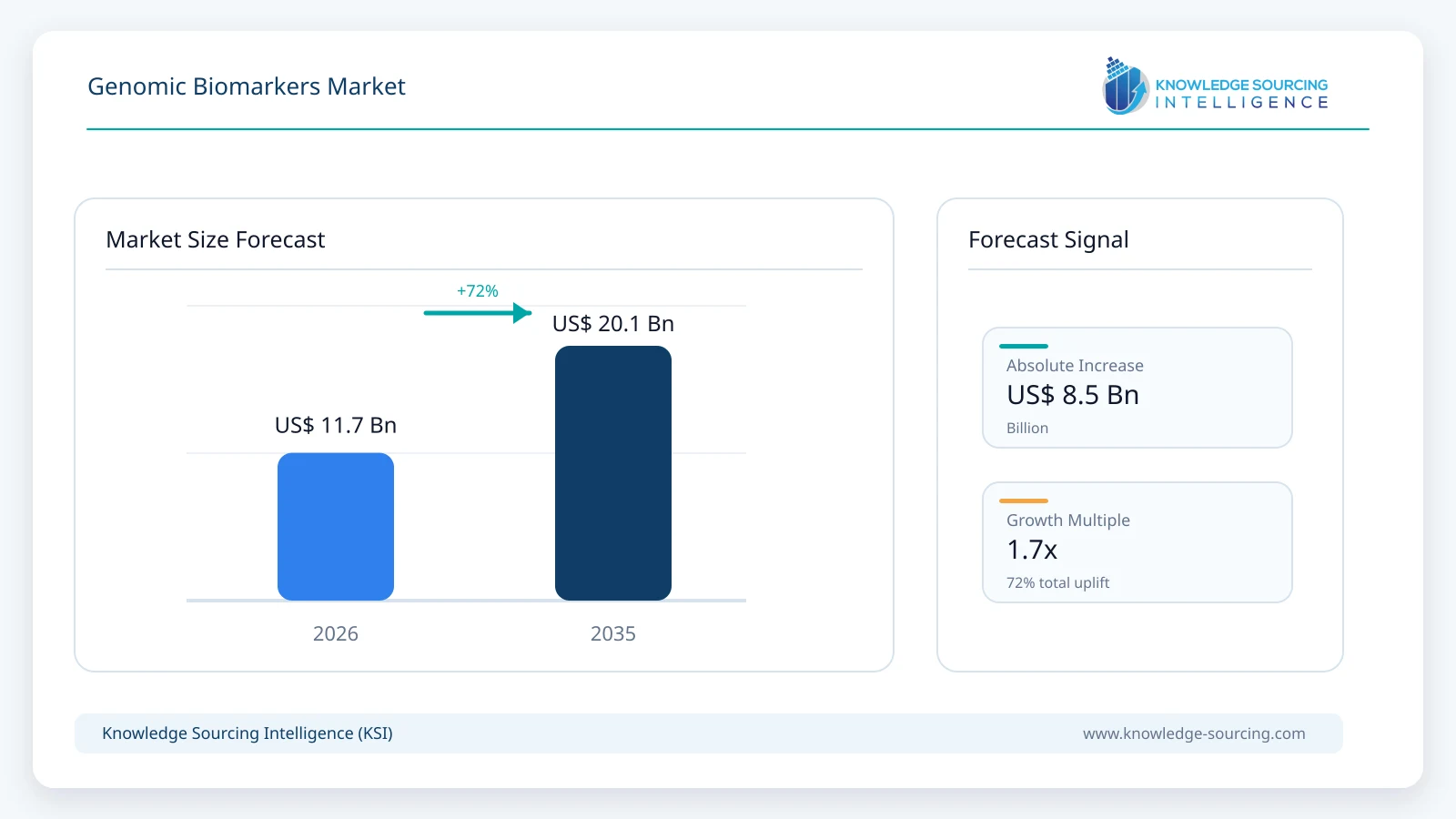
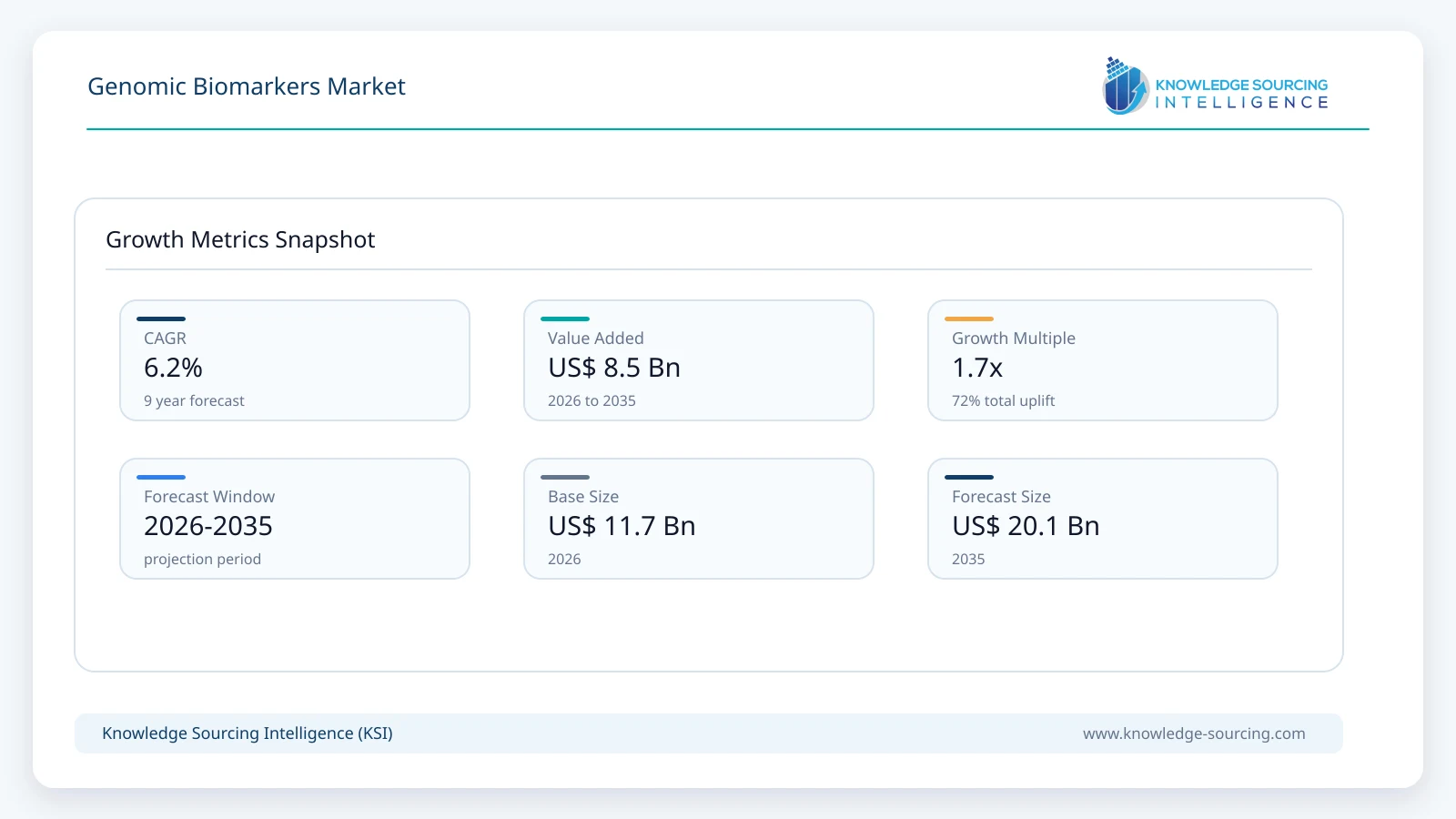
The Genomic biomarkers Market is predicted to increase at a CAGR of 6.2%, from USD 11.67 billion in 2026 to USD 20.12 billion in 2035.
Highlights:
- 1Increasing adoption of precision medicine is driving demand for comprehensive genomic biomarker testing because targeted therapies require molecular patient stratification before treatment initiation.
- 2Expansion of next-generation sequencing technologies is improving biomarker discovery while reducing sequencing costs, enabling broader clinical utilization across multiple therapeutic areas.
- 3Pharmaceutical sponsors are incorporating genomic biomarkers into clinical trial protocols because biomarker-guided enrollment increases trial efficiency and improves therapeutic response rates.
- 4Regulatory agencies are expanding approvals for companion diagnostics, which is strengthening physician confidence and accelerating routine implementation of genomic testing.
Genomic biomarkers comprise measurable DNA, RNA, or other genomic alterations that indicate disease susceptibility, diagnosis, prognosis, or therapeutic response. They provide molecular evidence that supports individualized clinical decision-making across multiple disease areas. Their role extends beyond laboratory diagnostics because they enable patient selection, monitor disease progression, predict treatment response, and identify mechanisms of therapeutic resistance.
Demand is increasing because healthcare providers are adopting precision medicine strategies that rely on genomic information rather than conventional phenotypic assessment alone. This transition is strengthening collaborations between diagnostic manufacturers, pharmaceutical companies, sequencing technology developers, and healthcare institutions. Regulatory agencies are simultaneously expanding frameworks for companion diagnostics and laboratory-developed genomic tests, which supports clinical confidence and broader reimbursement discussions.
The strategic importance of genomic biomarkers continues to increase because targeted therapeutics require validated molecular evidence before treatment initiation. Drug developers are integrating genomic biomarkers throughout clinical development programs to improve trial efficiency and regulatory success. Consequently, genomic biomarker testing is becoming a critical infrastructure component across oncology, rare diseases, infectious diseases, cardiovascular medicine, and neurological disorders.
Market Dynamics
Market Drivers
Increasing Adoption of Precision Oncology Is Expanding Clinical Demand: Precision oncology relies on genomic biomarkers to identify molecular alterations that influence treatment selection. Hospitals and cancer centers are increasingly incorporating comprehensive genomic profiling because targeted therapies require validated biomarker evidence before prescription. This dependency reduces empirical treatment approaches while improving patient stratification across multiple cancer types. Pharmaceutical companies are simultaneously expanding biomarker-driven clinical trials, which increases demand for standardized genomic testing platforms. The resulting integration of diagnostics and therapeutics strengthens long-term market adoption.
Expansion of Next-Generation Sequencing Infrastructure Is Accelerating Biomarker Discovery: Next-generation sequencing provides scalable genomic analysis that supports simultaneous evaluation of numerous clinically relevant variants. Healthcare providers are expanding sequencing capacity because comprehensive molecular characterization improves diagnostic accuracy compared with sequential testing methods. Larger genomic datasets create interpretation challenges that require advanced bioinformatics capabilities. Diagnostic developers are responding by integrating automated analysis software with sequencing platforms to improve clinical workflow efficiency. This technological ecosystem supports continued growth in genomic biomarker utilization.
Companion Diagnostics Are Becoming Essential for Targeted Drug Development: Many targeted therapies require validated companion diagnostics to identify eligible patients before treatment initiation. Pharmaceutical sponsors are increasingly co-developing therapeutics and genomic assays because regulatory agencies emphasize biomarker-supported clinical evidence. Drug developers face higher development complexity when molecular selection is absent. Diagnostic manufacturers are expanding partnerships with pharmaceutical companies to address this requirement throughout clinical development. These collaborations reinforce the strategic value of genomic biomarkers across the pharmaceutical value chain.
Population Genomics Programs Are Increasing Clinical Evidence Generation: National genomic medicine initiatives generate extensive genomic datasets that improve biomarker validation across diverse populations. Governments are investing in precision medicine programs because genomic evidence supports earlier diagnosis and individualized treatment strategies. Population diversity remains a scientific challenge for biomarker validation. Research organizations are expanding multicenter genomic collaborations to improve clinical representation and analytical robustness. This broader evidence base strengthens future biomarker adoption in routine healthcare.
Market Restraints
High implementation costs associated with sequencing infrastructure, bioinformatics integration, and clinical interpretation continue to limit adoption among smaller healthcare institutions.
Variability in reimbursement policies for comprehensive genomic testing restricts routine utilization across several healthcare systems despite increasing clinical evidence.
Clinical interpretation of variants of uncertain significance remains challenging because limited evidence reduces physician confidence in certain genomic findings.
Market Opportunities
Multi-Cancer Early Detection Programs Are Creating New Commercial Potential: Multi-cancer early detection technologies increasingly rely on genomic biomarkers identified through circulating nucleic acids. Healthcare providers are evaluating these approaches because earlier diagnosis improves treatment outcomes across multiple malignancies. Clinical validation requires large prospective studies before widespread implementation. Diagnostic developers are expanding population-based clinical trials to strengthen regulatory evidence. Successful validation positions genomic biomarkers as a cornerstone of future cancer screening strategies.
Artificial Intelligence Is Improving Genomic Interpretation: Large sequencing datasets require efficient computational analysis to generate clinically actionable insights. Healthcare laboratories are implementing artificial intelligence tools because manual variant interpretation limits operational scalability. Data standardization remains an ongoing technical challenge across institutions. Technology developers are integrating machine learning algorithms with genomic databases to improve classification accuracy. Enhanced interpretation capabilities support broader adoption of genomic biomarker testing.
Rare Disease Diagnostics Continue Expanding Clinical Demand: Many inherited disorders possess identifiable genomic signatures that enable definitive molecular diagnosis. Healthcare systems are increasingly incorporating genomic sequencing because conventional diagnostic pathways often delay disease identification. Limited disease prevalence constrains clinical expertise across many institutions. Specialized diagnostic laboratories are expanding rare disease genomic testing services to address this unmet need. Earlier diagnosis improves clinical management while strengthening demand for genomic biomarkers.
Liquid Biopsy Is Broadening Longitudinal Disease Monitoring: Liquid biopsy enables repeated genomic assessment without invasive tissue collection. Clinicians are increasingly adopting these technologies because continuous disease monitoring supports personalized treatment adjustment. Analytical sensitivity remains essential for detecting low-frequency genomic alterations. Diagnostic manufacturers are improving assay performance through advanced sequencing chemistry and computational analysis. These innovations increase confidence in genomic biomarker-guided disease monitoring.
Disease & Epidemiology Analysis
Genomic biomarkers have become fundamental across disease areas where molecular heterogeneity influences diagnosis and therapeutic response. Oncology represents the largest area of clinical utilization because cancers accumulate genomic alterations that define treatment eligibility, prognosis, and mechanisms of resistance. Precision oncology programs increasingly depend on comprehensive genomic profiling to identify actionable mutations involving EGFR, ALK, KRAS, BRAF, BRCA1/2, RET, MET, HER2, and numerous additional molecular targets. Continuous expansion of targeted therapeutics is increasing demand for validated genomic biomarker assays throughout clinical care.
Rare genetic diseases also represent a major application because pathogenic genomic variants frequently establish definitive diagnoses that conventional diagnostic methods cannot achieve. Clinical sequencing programs are reducing prolonged diagnostic journeys while supporting genetic counseling and family risk assessment. Cardiovascular medicine is gradually expanding genomic biomarker utilization for inherited cardiomyopathies, arrhythmias, and lipid metabolism disorders, whereas neurological diseases increasingly incorporate genomic testing to characterize inherited neurodegenerative conditions. Infectious disease surveillance is simultaneously adopting genomic biomarkers to monitor pathogen evolution, antimicrobial resistance, and outbreak dynamics, extending the clinical significance of genomic technologies beyond hereditary and oncological applications.
Treatment Guidelines Landscape
Organization | Disease Area | Guideline Focus | Role of Genomic Biomarkers |
National Comprehensive Cancer Network (NCCN) | Oncology | Precision oncology treatment selection | Recommends biomarker testing before multiple targeted therapies |
American Society of Clinical Oncology (ASCO) | Oncology | Molecular testing recommendations | Supports genomic profiling for appropriate patient selection |
European Society for Medical Oncology (ESMO) | Oncology | Precision medicine implementation | Recommends NGS in selected advanced cancers |
College of American Pathologists (CAP) | Molecular Pathology | Laboratory standards | Establishes quality standards for genomic biomarker testing |
Market Segmentation
By Biomarkers Type
DNA biomarkers constitute the largest segment because permanent genomic alterations provide highly reliable molecular evidence for disease diagnosis, prognosis, and therapeutic selection. Healthcare providers are increasingly utilizing comprehensive DNA sequencing because targeted therapies require identification of actionable genomic variants before treatment initiation. Large genomic datasets increase interpretation complexity across clinical laboratories. Diagnostic developers are integrating advanced bioinformatics platforms to improve analytical consistency and reporting accuracy. DNA biomarkers remain the primary foundation for precision medicine across oncology and inherited disorders.
By Sample Type
Tissue biopsy remains the clinical reference standard because direct tumor sampling enables comprehensive genomic characterization with high analytical confidence. Oncology centers are continuing to depend on tissue-derived genomic analysis because regulatory approvals for numerous companion diagnostics originate from tissue validation studies. Invasive sampling limits repeated assessment during disease progression. Diagnostic companies are optimizing tissue sequencing workflows to improve turnaround time and maximize genomic information from limited specimens. Tissue biopsy maintains its central role within precision oncology.
By Clinical Application
Oncology dominates clinical utilization because genomic biomarkers determine eligibility for an expanding portfolio of targeted therapies and immunotherapies. Cancer centers are incorporating comprehensive genomic profiling into routine practice because molecular characterization improves therapeutic precision and clinical outcomes. Tumor heterogeneity complicates interpretation across disease progression. Diagnostic companies are integrating tissue and liquid biopsy approaches to generate more comprehensive molecular information. Oncology continues to define innovation across the genomic biomarker market.
Regional Analysis
North America Market Analysis
North America represents the most established genomic biomarkers market because the region combines advanced molecular diagnostics infrastructure, extensive pharmaceutical research activity, and widespread adoption of precision medicine. The United States maintains strong clinical demand through comprehensive cancer centers, academic medical institutions, and commercial reference laboratories that routinely perform genomic profiling across multiple disease indications. Precision oncology programs are expanding because targeted therapies increasingly require validated genomic evidence before treatment initiation. This dependency encourages continuous investment in next-generation sequencing platforms, bioinformatics infrastructure, and companion diagnostics. Federal research initiatives, including precision medicine programs supported by the National Institutes of Health, strengthen scientific evidence while increasing genomic data generation. Regulatory oversight from the U.S. Food and Drug Administration continues evolving alongside advances in companion diagnostics and laboratory-developed testing frameworks, creating greater regulatory clarity for manufacturers.
Europe Market Analysis
Europe maintains a strong position in the genomic biomarkers market through coordinated precision medicine strategies, expanding genomic infrastructure, and harmonized regulatory oversight across many healthcare systems. European healthcare providers increasingly incorporate genomic profiling because national cancer plans emphasize personalized treatment approaches supported by molecular diagnostics. Public healthcare reimbursement creates favorable conditions for adoption when clinical utility is clearly demonstrated, although implementation varies between countries. The European Medicines Agency continues supporting biomarker-guided drug development, encouraging pharmaceutical companies to integrate genomic evidence throughout clinical development programs. Research collaborations supported by the European Union are generating large-scale genomic datasets that strengthen biomarker validation across diverse populations.
Asia Pacific Market Analysis
Asia Pacific is becoming one of the fastest-evolving regions for genomic biomarkers because healthcare modernization, expanding cancer incidence, and government-supported precision medicine initiatives are increasing clinical demand. Countries including China, Japan, South Korea, Australia, and Singapore are strengthening genomic research infrastructure while investing in national sequencing capabilities. Hospitals are expanding molecular diagnostic services because targeted oncology therapies increasingly require genomic characterization before clinical use. Growing pharmaceutical research activity creates additional demand for biomarker-driven clinical trials throughout the region. Variability in reimbursement and healthcare infrastructure continues influencing adoption between developed and emerging economies. Domestic biotechnology companies are introducing sequencing platforms and molecular diagnostic assays that improve regional accessibility while reducing dependence on imported technologies. Academic institutions are simultaneously expanding genomic databases representing Asian populations, improving variant interpretation and clinical relevance. Government support for precision medicine programs, combined with increasing awareness among physicians and patients, strengthens long-term market development.
Rest of the World
The Rest of the World market continues to develop through the gradual expansion of molecular diagnostics infrastructure across Latin America, the Middle East, and Africa. Clinical adoption remains concentrated within major urban healthcare institutions because advanced genomic testing requires specialized laboratory capabilities and trained personnel. Governments are increasing investment in cancer control programs and genomic medicine initiatives to improve diagnostic capacity for high-burden diseases. International collaborations provide technical expertise that supports the implementation of sequencing technologies within regional healthcare systems. Limited reimbursement and uneven healthcare infrastructure continue to restrict widespread adoption across many countries. Diagnostic manufacturers are expanding regional distribution partnerships because demand for precision oncology and inherited disease testing is steadily increasing. Private healthcare providers are also investing in genomic laboratories that complement public healthcare capacity.
Regulatory Landscape
The regulatory environment for genomic biomarkers continues evolving because precision medicine increasingly requires standardized analytical validation, clinical evidence, and quality assurance. Regulatory agencies including the U.S. Food and Drug Administration, the European Medicines Agency, and Japan's Pharmaceuticals and Medical Devices Agency support biomarker-guided therapeutic development through companion diagnostic frameworks. These pathways establish clear expectations for analytical performance, clinical validity, and post-market surveillance, encouraging greater confidence among clinicians and healthcare providers.
Companion diagnostics remain a central regulatory priority because targeted therapies frequently depend on validated genomic evidence before prescription. Pharmaceutical companies are increasingly pursuing simultaneous approval of therapeutics and associated genomic assays to streamline regulatory review and strengthen clinical adoption. Regulatory agencies continue refining policies for next-generation sequencing technologies, recognizing that multiplex genomic testing requires different evaluation approaches than single-analyte assays. This transition is improving regulatory predictability while encouraging broader investment in comprehensive genomic profiling platforms.
International harmonization efforts are also strengthening laboratory quality standards through organizations such as the International Organization for Standardization (ISO), the College of American Pathologists (CAP), and professional molecular pathology societies. Standardized validation requirements improve reproducibility across laboratories while facilitating multinational clinical studies that support future genomic biomarker approvals.
Pipeline Analysis
Genomic biomarker development increasingly supports precision medicine by identifying patients who are most likely to benefit from targeted therapies while enabling earlier disease detection and longitudinal treatment monitoring. Pipeline activity is concentrating on multi-gene sequencing panels, circulating tumor DNA (ctDNA)-based assays, minimal residual disease (MRD) testing, methylation-based biomarkers, transcriptomic signatures, and multi-omic platforms. Pharmaceutical companies are incorporating biomarker endpoints earlier in clinical development because molecular stratification improves trial efficiency, reduces patient heterogeneity, and increases the probability of demonstrating clinically meaningful outcomes. Diagnostic developers are simultaneously expanding analytical validation studies that support regulatory submissions for companion diagnostics and laboratory-developed genomic assays.
Current pipeline candidates are employing diverse mechanisms of action according to disease indication. In oncology, ctDNA assays detect tumor-derived genomic alterations in plasma to identify actionable mutations, monitor treatment response, and detect molecular relapse before radiographic progression. Methylation-based genomic biomarkers analyze epigenetic modifications associated with malignant transformation, supporting multi-cancer early detection from peripheral blood samples. RNA expression signatures evaluate transcriptional activity that reflects disease biology and therapeutic response, whereas comprehensive genomic profiling simultaneously identifies single nucleotide variants, insertions and deletions, copy number alterations, structural rearrangements, microsatellite instability, and tumor mutational burden within a single assay. Multi-omic platforms are integrating genomic, transcriptomic, and epigenomic information because combined molecular signatures improve diagnostic accuracy compared with single biomarker approaches.
Reimbursement Landscape
Reimbursement remains one of the principal determinants of genomic biomarker adoption because advanced molecular diagnostics require substantial analytical infrastructure and clinical validation. Coverage decisions generally depend on demonstrated clinical utility, analytical validity, and evidence that biomarker-guided treatment improves patient outcomes compared with conventional care. Oncology currently receives the broadest reimbursement support because numerous targeted therapies require companion diagnostic testing before treatment initiation. Consequently, comprehensive genomic profiling continues expanding within healthcare systems where evidence-based reimbursement frameworks recognize precision oncology.
Healthcare payers are increasingly evaluating real-world clinical evidence because genomic technologies are evolving faster than traditional reimbursement processes. Multi-gene sequencing panels, liquid biopsy assays, and minimal residual disease testing require continuous evidence generation demonstrating cost-effectiveness and clinical benefit. Pharmaceutical sponsors are collaborating with diagnostic manufacturers to generate health economic data that support reimbursement negotiations alongside regulatory approval. Although reimbursement variability persists across countries and healthcare systems, increasing clinical evidence and expanding precision medicine programs continue strengthening long-term reimbursement prospects for genomic biomarker testing.
Competitive Landscape
Illumina, Inc.
Illumina distinguishes itself through global leadership in next-generation sequencing technologies that form the technological foundation of numerous genomic biomarker applications. The company provides integrated sequencing instruments, consumables, informatics software, and clinical sequencing solutions that support research, translational medicine, and routine molecular diagnostics.
F. Hoffmann-La Roche Ltd.
Roche maintains a differentiated market position by integrating pharmaceutical development with molecular diagnostics through its companion diagnostic strategy. The company develops genomic biomarker assays alongside targeted therapeutics, enabling synchronized regulatory submissions and clinical implementation.
Thermo Fisher Scientific Inc.
Thermo Fisher Scientific offers a comprehensive molecular diagnostics ecosystem encompassing sequencing platforms, PCR technologies, sample preparation systems, reagents, and bioinformatics solutions. The company supports genomic biomarker discovery as well as clinical implementation across pharmaceutical, academic, and healthcare laboratories.
Guardant Health, Inc.
Guardant Health differentiates itself through leadership in liquid biopsy technologies utilizing circulating tumor DNA for comprehensive genomic profiling and minimal residual disease assessment. The company focuses on non-invasive cancer diagnostics that support therapy selection, disease monitoring, and recurrence detection throughout the patient journey.
Exact Sciences Corporation
Exact Sciences focuses on molecular diagnostics that support early cancer detection, precision oncology, and treatment monitoring through advanced genomic technologies. The company continues expanding its oncology portfolio by integrating genomic biomarker testing with cancer screening and diagnostic services. Clinical validation studies strengthen physician confidence while supporting broader reimbursement discussions for molecular diagnostics.
Tempus AI
Tempus AI combines artificial intelligence, clinical data analytics, and comprehensive genomic profiling to improve precision medicine decision-making. The company integrates molecular sequencing with large-scale clinical datasets that enable physicians to identify clinically actionable genomic alterations more efficiently.
Key Developments
July 2026: SONATA announced a new preventive care membership in New York, San Francisco, and Los Angeles, combining deep biological testing, whole-genome sequencing, clinical AI, and ongoing physician-led care. The model is designed to connect biomarker data, medical history, and lifestyle inputs into personalized care plans.
March 2026: Illumina announced TruPath Genome, a new genomic offering aimed at setting a higher standard for genome-informed insights in research and clinical applications. The release positions the platform around deeper biological interpretation and expanded utility in genomic analysis.
March 2026: Foundation Medicine introduced a whole-genome sequencing germline test for research use to support translational research and biomarker discovery beyond oncology. The assay is positioned to help biopharmaceutical partners with broad genomic coverage for retrospective and discovery-focused studies.
February 2025: CENTOGENE launched CentoGenome Ultra-Fast, a rapid whole-genome sequencing solution with results in about 5 business days. The product is aimed at urgent diagnostic settings such as critical care, ICU, and emergency medicine, where faster genetic answers can influence care decisions.
Strategic Insights and Future Market Outlook
The genomic biomarkers market is transitioning from technology-driven adoption toward clinically integrated precision healthcare. Targeted therapeutics increasingly depend on validated genomic evidence, which positions biomarker testing as a prerequisite rather than an optional diagnostic procedure. Healthcare providers are incorporating comprehensive genomic profiling earlier in patient management because precision diagnosis improves therapeutic selection, minimizes unnecessary treatment exposure, and supports more efficient clinical decision-making. This structural change strengthens long-term demand for sequencing technologies, liquid biopsy platforms, and advanced bioinformatics solutions.
Pharmaceutical sponsors are simultaneously redefining drug development strategies by embedding genomic biomarkers throughout discovery, clinical development, regulatory submission, and post-market evidence generation. Artificial intelligence, real-world genomic databases, and multi-omic analytical platforms are expanding biomarker discovery while improving interpretation of complex molecular datasets. Continued regulatory harmonization and broader reimbursement support are reducing barriers to adoption, although analytical standardization and equitable healthcare access remain important priorities.
Genomic biomarkers are evolving beyond single-disease applications into comprehensive platforms that integrate diagnosis, treatment selection, therapeutic monitoring, and population health management. Companies that successfully combine robust clinical evidence, scalable sequencing technologies, regulatory alignment, and strategic pharmaceutical partnerships are likely to strengthen their competitive positions throughout the forecast period.
Genomic biomarkers increasingly define the future of precision medicine because they connect molecular biology with individualized clinical decision-making. Continuous advances in sequencing technologies, computational analysis, regulatory science, and targeted therapeutics are transforming genomic information into routine clinical practice. The market remains strategically positioned for sustained innovation as healthcare systems continue prioritizing earlier diagnosis, personalized treatment, and evidence-based disease management.
Genomic Biomarkers Market Scope:
| Report Metric | Details |
|---|---|
| Total Market Size in 2026 | USD 11.67 billion |
| Total Market Size in 2035 | USD 20.12 billion |
| Forecast Unit | USD Billion |
| Growth Rate | 6.2% |
| Study Period | 2021 to 2035 |
| Historical Data | 2021 to 2024 |
| Base Year | 2025 |
| Forecast Period | 2026 – 2035 |
| Segmentation | Biomarker Type, Sample Type, End User, Geography |
| Companies |
|
Market Segmentation
Biomarker Type
Sample Type
End User
Geography
- North America
- South America
- Europe
- Middle East and Africa
- Asia Pacific
Table of Contents
1. EXECUTIVE SUMMARY
1.1 Market Snapshot
1.2 Key Findings
1.3 Analyst Insights
1.4 Strategic Recommendations
2. RESEARCH METHODOLOGY
2.1 Research Design
2.2 Data Collection Methodology
2.3 Market Size Estimation
2.4 Forecasting Model
2.5 Assumptions & Limitations
3. GLOBAL GENOMIC BIOMARKERS MARKET OVERVIEW, SIZE & FORECAST
3.1 Market Definition & Scope
3.2 Industry Overview
3.3 Industry Evolution
3.4 Key Market Trends
3.5 Historical Market Size Analysis (2021–2025)
3.6 Market Forecast Analysis (2026–2035)
3.7 Disease Burden and Clinical Significance of Genomic Biomarkers
3.8 Epidemiology and Disease Prevalence Analysis
3.9 Diagnosed Patient Population Analysis
3.10 Precision Medicine Adoption Landscape
3.11 Biomarker Testing Volume Analysis
3.12 Companion Diagnostics Landscape
3.13 Clinical Utility Across Therapeutic Areas
4. MARKET DYNAMICS
4.1 Market Drivers
4.2 Market Restraints
4.3 Market Opportunities
4.4 Market Challenges
5. INDUSTRY LANDSCAPE
5.1 Industry Value Chain Analysis
5.2 Pricing Analysis
5.3 Reimbursement Landscape
6. INNOVATION LANDSCAPE
6.1 Emerging Genomic Technologies
6.2 Biomarker Discovery and Validation Trends
6.3 Companion Diagnostic Innovation
6.4 Clinical Trial Analysis
6.5 Pipeline Analysis of Genomic Biomarker-Based Diagnostics
6.6 AI Integration in Genomic Biomarker Discovery and Interpretation
6.7 Multi-Omics and Digital Health Integration
6.8 Technology Roadmap
7. REGULATORY LANDSCAPE
7.1 Regulatory Framework
7.2 Approval Pathways
7.3 Compliance Requirements
8. GLOBAL GENOMIC BIOMARKERS MARKET LANDSCAPE ANALYSIS
8.1 Analysis by Biomarker Type
8.2 Analysis by Technology Platform
8.3 Analysis by Sample Type
8.4 Analysis by Clinical Application
8.5 Analysis by Testing Methodology
8.6 Analysis by Therapeutic Area
9. GLOBAL GENOMIC BIOMARKERS MARKET SEGMENT ANALYSIS (2021–2035)
9.1 By Biomarker Type
9.1.1 DNA Biomarkers
9.1.2 RNA Biomarkers
9.1.3 Other Genomic Biomarkers
9.2 By Technology
9.2.1 Next-Generation Sequencing (NGS)
9.2.2 Polymerase Chain Reaction (PCR)
9.2.3 Microarray Analysis
9.2.4 Other Genomic Technologies
9.3 By Sample Type
9.3.1 Tissue Biopsy
9.3.2 Liquid Biopsy
9.3.3 Saliva and Buccal Swab
9.3.4 Other Biological Samples
9.4 By Clinical Application
9.4.1 Oncology
9.4.2 Rare Genetic Diseases
9.4.3 Cardiovascular Diseases
9.4.4 Neurological Disorders
9.4.5 Infectious Diseases
9.4.6 Autoimmune Disorders
9.4.7 Other Clinical Applications
9.5 By End User
9.5.1 Hospitals
9.5.2 Clinical Diagnostic Laboratories
9.5.3 Academic & Research Institutes
9.5.4 Others
10. GLOBAL GENOMIC BIOMARKERS MARKET GEOGRAPHICAL ANALYSIS (2021–2035)
10.1 North America
10.2 Europe
10.3 Asia-Pacific
10.4 South America
10.5 Middle East & Africa
11. GLOBAL GENOMIC BIOMARKERS MARKET COUNTRY ANALYSIS (2021–2035)
11.1 United States
11.2 Canada
11.3 Germany
11.4 United Kingdom
11.5 France
11.6 Italy
11.7 Spain
11.8 Japan
11.9 China
11.10 India
11.11 South Korea
11.12 Australia
11.13 Brazil
11.14 Mexico
11.15 Saudi Arabia
11.16 South Africa
12. COMPETITIVE LANDSCAPE
12.1 Market Share Analysis
12.2 Strategic Developments
12.3 Mergers & Acquisitions, Partnerships & Collaborations
12.4 Product Launches
13. COMPANY PROFILES
13.1 Illumina, Inc.
13.1.1 Company Overview
13.1.2 Financials
13.1.3 Product Portfolio
13.1.4 Recent Developments
13.2 F. Hoffmann-La Roche Ltd.
13.3 Thermo Fisher Scientific Inc.
13.4 Natera
13.5 Tempus AI
13.6 Guardant Health, Inc.
13.7 Exact Sciences Corporation
13.8 Grail
13.9 Bio-Rad Laboratories, Inc.
13.10 Natera, Inc.
14. GLOBAL GENOMIC BIOMARKERS MARKET COMMERCIAL FORECAST ANALYSIS
14.1 Next-Generation Sequencing (NGS)-Based Biomarker Testing
14.2 PCR-Based Genomic Biomarker Testing
14.3 Liquid Biopsy Genomic Biomarker Testing
14.4 Tissue-Based Genomic Biomarker Testing
14.5 Companion Diagnostic Genomic Biomarker Testing
14.6 Comprehensive Genomic Profiling Services
15. INVESTMENT & FUNDING ANALYSIS
15.1 Venture Capital Trends
15.2 Government Funding
15.3 R&D Investments
16. FUTURE OUTLOOK
16.1 Key Growth Opportunities
16.2 Future Industry Trends
Navigate
Trusted by the world's leading organizations











