
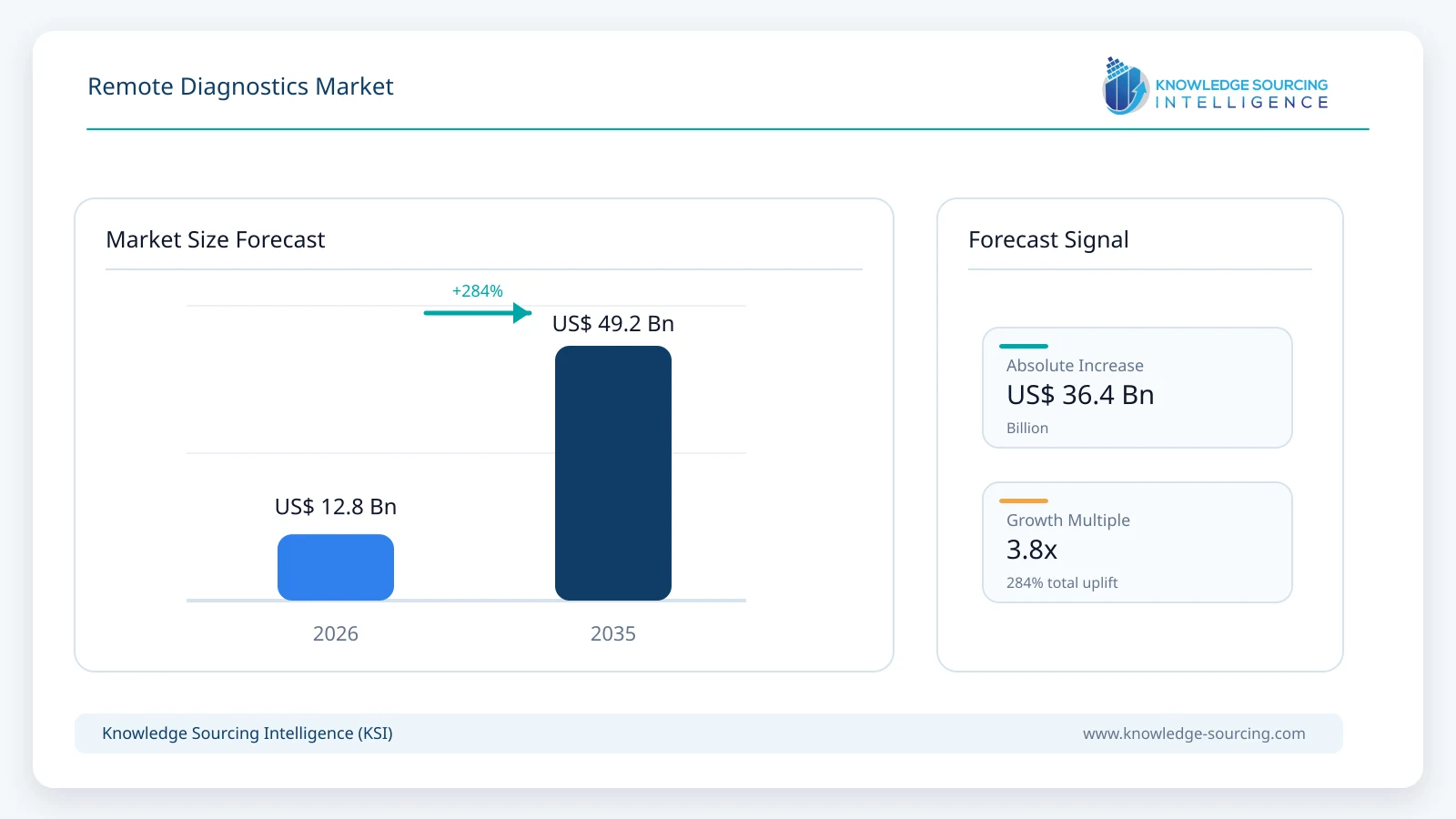
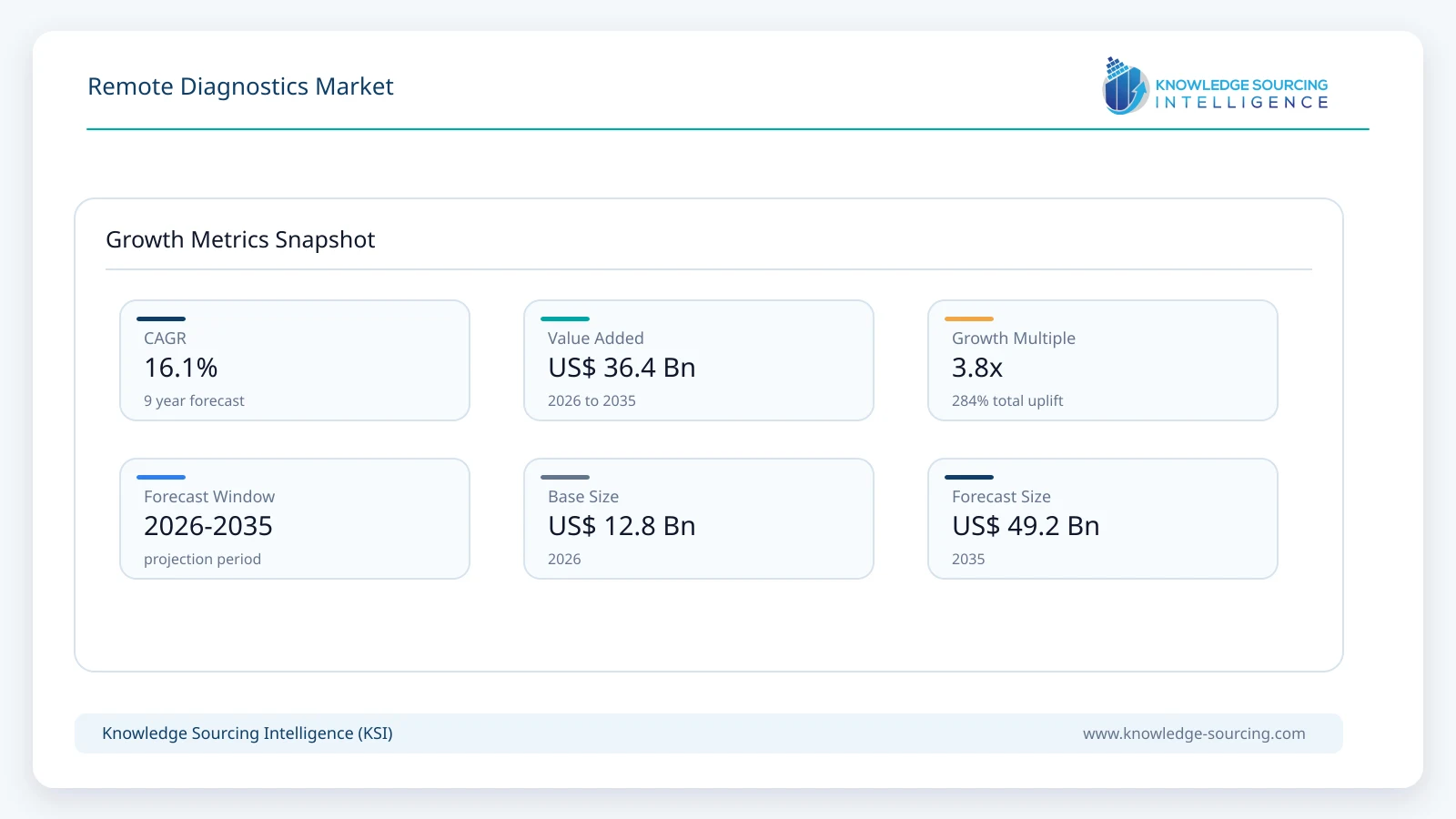
The Remote diagnostics Market is forecast to grow at a CAGR of 16.1%, reaching USD 49.2 billion in 2035 from USD 12.8 billion in 2026.
Highlights:
- 1Rising chronic disease prevalence increases demand for continuous physiological monitoring, encouraging healthcare providers to adopt connected diagnostic technologies that support earlier clinical intervention.
- 2Expansion of telemedicine services increases dependence on home-based diagnostic devices because clinicians require reliable physiological data for virtual consultations.
- 3Artificial intelligence integration improves interpretation efficiency while healthcare providers are adopting automated decision-support systems to reduce diagnostic variability.
- 4Miniaturization of biosensors expands portable diagnostic capabilities, enabling manufacturers to introduce laboratory-quality testing within decentralized healthcare environments.
Remote diagnostics combines connected medical devices, software platforms, artificial intelligence, laboratory technologies, and telecommunications infrastructure to generate clinically actionable diagnostic information outside traditional hospital laboratories. The market supports disease screening, diagnosis, therapy monitoring, and long-term patient management across acute and chronic care settings.
Healthcare systems increasingly require diagnostic models that reduce unnecessary hospital visits while maintaining clinical accuracy. This requirement is driving manufacturers to develop portable diagnostic platforms capable of securely transmitting physiological and biochemical information to clinicians in real time. Clinical decision-making therefore depends not only on diagnostic accuracy but also on connectivity, interoperability, and continuous data availability.
Government agencies and regulatory authorities are establishing digital health frameworks that define software validation, cybersecurity, medical device interoperability, and real-world evidence generation. These regulatory initiatives are encouraging manufacturers to invest in cloud-enabled diagnostic ecosystems because compliance increasingly determines commercial adoption across healthcare systems.
The market also supports broader healthcare transformation by connecting diagnostic data with electronic health records, telemedicine platforms, and population health management systems. This integration strengthens preventive care, accelerates disease identification, and improves resource utilization across both developed and emerging healthcare markets.
Market Dynamics
Market Drivers
Expansion of Chronic Disease Monitoring Programs: Chronic disease management requires continuous clinical assessment rather than episodic hospital visits. Healthcare providers are expanding remote monitoring programs because cardiovascular disease, diabetes, respiratory disorders, and neurological conditions require frequent physiological evaluation to prevent disease progression. Conventional follow-up models create resource constraints that connected diagnostic devices increasingly address through continuous patient-generated health data. Healthcare systems therefore improve care continuity while reducing avoidable hospital utilization through decentralized diagnostic pathways.
Growth of Telehealth Infrastructure: Virtual healthcare depends on reliable clinical information that extends beyond patient-reported symptoms. Telehealth providers are integrating connected diagnostic devices because physicians require objective physiological measurements during remote consultations. This integration reduces diagnostic uncertainty while enabling more effective triage and treatment planning. Healthcare organizations therefore expand investment in interoperable remote diagnostic platforms that strengthen digital care delivery.
Advancements in Artificial Intelligence and Connected Diagnostics: Artificial intelligence improves diagnostic interpretation by identifying clinically relevant patterns across large physiological datasets. Device manufacturers are incorporating machine learning algorithms into wearable sensors, imaging platforms, and digital biomarkers because healthcare professionals require faster clinical insights without increasing workforce burden. Automated interpretation also supports earlier disease detection while improving diagnostic consistency across decentralized healthcare environments. AI-enabled diagnostics therefore strengthen scalability without compromising clinical decision quality.
Regulatory Support for Digital Health Technologies: Healthcare innovation depends on regulatory clarity that supports commercialization while maintaining patient safety. Regulatory agencies are expanding guidance for software as a medical device, cybersecurity, interoperability, and connected medical devices because digital diagnostics increasingly influence clinical decision-making. Manufacturers are aligning product development with evolving regulatory expectations, enabling broader market access across international healthcare systems. Regulatory harmonization therefore reduces commercialization barriers while accelerating adoption of connected diagnostic ecosystems.
Market Restraints
Limited interoperability between healthcare information systems restricts seamless integration of remote diagnostic data across multiple clinical platforms.
Cybersecurity and patient data privacy requirements increase compliance costs for manufacturers developing cloud-connected diagnostic ecosystems.
Clinical validation requirements remain extensive for AI-enabled diagnostic software, extending regulatory review timelines before commercialization.
Market Opportunities
Expansion of Home-Based Diagnostic Testing: Patients increasingly prefer diagnostic services that reduce dependence on hospital visits. Manufacturers are expanding home-based testing portfolios because healthcare systems seek scalable solutions for chronic disease management and preventive screening. Improved biosensor performance and smartphone connectivity strengthen diagnostic reliability while supporting decentralized healthcare delivery. Home diagnostics therefore create long-term commercial opportunities across multiple therapeutic areas.
Integration of Digital Biomarkers into Clinical Decision-Making: Continuous physiological monitoring generates large volumes of longitudinal patient information that conventional diagnostics rarely capture. Healthcare providers are incorporating digital biomarkers because disease progression increasingly depends on continuous clinical assessment rather than isolated measurements. Technology developers therefore invest in advanced analytics capable of translating wearable sensor data into actionable clinical insights. This evolution expands opportunities for precision medicine and personalized disease management.
Expansion Across Emerging Healthcare Markets: Healthcare infrastructure development increases demand for portable diagnostic technologies capable of reaching underserved populations. Governments are investing in digital healthcare networks because specialist shortages continue limiting diagnostic accessibility in rural regions. Manufacturers are adapting connected diagnostic platforms for resource-constrained environments while telecommunications infrastructure continues improving. These developments broaden commercial opportunities across rapidly expanding healthcare systems.
Strategic Collaborations Between Diagnostics and Digital Health Companies: Connected healthcare requires coordinated technology ecosystems rather than standalone diagnostic devices. Medical technology companies are forming partnerships with cloud service providers, artificial intelligence developers, and telemedicine platforms because integrated clinical workflows improve healthcare efficiency. Collaborative innovation therefore accelerates commercialization while expanding disease-specific diagnostic solutions across global healthcare markets.
Disease & Epidemiology Analysis
The burden of chronic and infectious diseases creates sustained demand for remote diagnostics because healthcare providers require continuous access to patient data outside conventional clinical settings. Cardiovascular diseases, diabetes, chronic respiratory disorders, neurological conditions, infectious diseases, and women's health applications represent the primary demand centers where early diagnosis directly influences treatment outcomes. Healthcare systems are expanding decentralized care pathways because hospital-based diagnostic capacity cannot accommodate increasing long-term monitoring requirements. This transition strengthens demand for wearable sensors, portable diagnostic instruments, and smartphone-enabled testing platforms capable of transmitting clinically actionable information in real time.
Cardiovascular diseases remain one of the largest clinical applications for remote diagnostics because disease progression depends on continuous monitoring of physiological parameters including electrocardiographic activity, blood pressure, cardiac rhythm, and oxygen saturation. Healthcare providers are integrating connected monitoring technologies into outpatient care because early identification of arrhythmias and cardiovascular deterioration reduces emergency admissions. Device manufacturers continue improving sensor accuracy while artificial intelligence algorithms are supporting earlier recognition of clinically significant abnormalities. The combination of continuous monitoring and predictive analytics therefore expands demand for connected cardiovascular diagnostic ecosystems.
Diabetes management also supports substantial market demand because patients require frequent assessment of glucose levels to optimize therapeutic decisions. Continuous glucose monitoring technologies are replacing intermittent measurement approaches because longitudinal glucose data improves treatment personalization. Manufacturers are integrating glucose sensors with cloud-based analytical platforms while healthcare professionals increasingly rely on remote review of patient-generated data. This evolution strengthens preventive disease management while reducing complications associated with delayed intervention.
Treatment Guidelines Landscape
Organization | Disease Area | Guideline Focus | Relevance to Remote Diagnostics |
World Health Organization (WHO) | Digital Health | Recommendations on Digital Health Interventions | Supports integration of telemedicine and remote monitoring into healthcare delivery. |
American Diabetes Association (ADA) | Diabetes | Standards of Care in Diabetes | Recommends continuous glucose monitoring and remote review of patient data for eligible populations. |
American Heart Association (AHA) | Cardiovascular Disease | Cardiac Monitoring Guidelines | Supports remote physiological monitoring for high-risk cardiovascular patients. |
European Society of Cardiology (ESC) | Cardiology | Heart Failure Guidelines | Encourages remote monitoring to improve disease management and reduce hospitalization. |
Market Segmentation
By Device Type
Wearable diagnostic devices represent one of the fastest-evolving product categories because continuous physiological monitoring improves disease detection beyond episodic clinical assessments. Healthcare providers are incorporating wearable biosensors into chronic disease management programs while manufacturers continue improving battery life, sensor accuracy, and wireless connectivity. Continuous patient-generated health data reduces diagnostic uncertainty because clinicians receive longitudinal physiological information rather than isolated clinical measurements. This structural transition strengthens adoption across cardiovascular disease management, diabetes care, neurological monitoring, and preventive healthcare.
By Sample Type
Blood-based diagnostics remain the largest sample category because numerous biomarkers supporting disease diagnosis, therapeutic monitoring, and preventive screening originate from blood specimens. Portable blood testing technologies are reducing dependence on centralized laboratory infrastructure while healthcare providers increasingly adopt point-of-care testing for decentralized clinical environments. Device manufacturers continue developing minimally invasive sampling technologies because patient convenience directly influences testing adherence. Improved analytical performance therefore expands clinical confidence in remote blood-based diagnostic platforms.
By Clinical Application
Diabetes management generates sustained demand for remote diagnostics because therapeutic decisions require frequent assessment of metabolic status. Continuous glucose monitoring systems are replacing conventional intermittent testing while clinicians increasingly analyze longitudinal glucose trends through cloud-connected digital platforms. Artificial intelligence-supported analytics improve treatment optimization because personalized glucose patterns become available for clinical review. The integration of wearable sensors with telehealth services therefore strengthens preventive disease management while reducing long-term diabetes complications.
Regional Analysis
North America Market Analysis
North America represents the largest regional market because advanced healthcare infrastructure, favorable reimbursement mechanisms, strong digital health investment, and early technology adoption support widespread implementation of remote diagnostics. Healthcare providers are integrating connected diagnostic platforms into routine clinical workflows because value-based healthcare models increasingly emphasize preventive care and continuous disease management. Regulatory agencies continue modernizing digital health policies while manufacturers expand software-enabled diagnostic ecosystems capable of integrating with electronic health records. Artificial intelligence adoption further strengthens clinical decision support because healthcare organizations seek greater operational efficiency amid workforce shortages. The region also benefits from significant investment in cloud infrastructure, cybersecurity, and interoperability standards that improve data exchange across healthcare networks. Pharmaceutical companies, medical device manufacturers, and digital health developers increasingly collaborate to commercialize integrated diagnostic solutions, supporting sustained technological innovation throughout the regional market.
Europe Market Analysis
European demand remains driven by aging populations, universal healthcare systems, and increasing emphasis on preventive disease management. Healthcare providers are expanding remote patient monitoring services because chronic disease prevalence continues increasing across multiple European countries. Regulatory harmonization under the European Medical Device Regulation and In Vitro Diagnostic Regulation strengthens clinical quality while manufacturers continue investing in compliance and post-market surveillance. Governments are supporting digital health transformation through national healthcare modernization initiatives that improve interoperability and telemedicine adoption. Artificial intelligence integration also continues expanding because hospitals seek efficient resource utilization while maintaining high clinical standards. These structural developments position Europe as one of the leading markets for connected diagnostic technologies.
Asia Pacific Market Analysis
Asia Pacific represents the fastest-expanding regional opportunity because healthcare infrastructure modernization, growing digital connectivity, and rising healthcare expenditure increase access to decentralized diagnostic services. Governments are investing in digital healthcare ecosystems while healthcare providers continue extending diagnostic services into rural and underserved populations. Smartphone penetration supports widespread adoption of connected diagnostic platforms because mobile health applications improve patient engagement and clinical accessibility. Manufacturers increasingly introduce cost-effective portable diagnostic technologies tailored to regional healthcare requirements. Expanding chronic disease prevalence and improving telecommunications infrastructure therefore reinforce long-term market growth across Asia Pacific.
Rest of the World
Healthcare systems across Latin America, the Middle East, and Africa increasingly prioritize decentralized healthcare delivery because geographic disparities continue limiting access to diagnostic services. Governments are investing in digital health infrastructure while telecommunications networks are expanding into underserved communities that traditionally rely on centralized hospitals. This expansion reduces barriers to remote consultations because connected diagnostic devices transmit clinical information directly to healthcare professionals. Medical technology manufacturers therefore adapt portable and battery-powered diagnostic platforms that operate effectively in resource-constrained environments. International healthcare organizations also support digital health implementation through capacity-building initiatives that strengthen disease surveillance and chronic disease management. These structural improvements increase adoption of wearable monitoring devices, portable molecular diagnostics, and smartphone-enabled testing solutions across emerging healthcare markets.
Regulatory Landscape
Remote diagnostics operate within regulatory frameworks that combine medical device requirements, software validation standards, cybersecurity expectations, and patient data protection regulations. Regulatory agencies evaluate connected diagnostic technologies according to analytical performance, clinical validity, software reliability, interoperability, and post-market surveillance obligations. Manufacturers are incorporating quality-by-design principles into product development because digital healthcare solutions increasingly combine hardware, software, artificial intelligence, and cloud connectivity within a single clinical ecosystem. Regulatory convergence therefore supports broader commercialization while maintaining patient safety and clinical effectiveness.
Artificial intelligence is becoming an important regulatory focus because machine learning algorithms continuously influence diagnostic interpretation. Regulatory authorities are publishing guidance for Software as a Medical Device (SaMD), predetermined change control plans, lifecycle management, and real-world performance monitoring. Developers are strengthening algorithm transparency, cybersecurity resilience, and clinical validation strategies because regulators require evidence that adaptive software maintains consistent diagnostic performance throughout commercialization. This transition increases development complexity while improving long-term clinical confidence in AI-enabled remote diagnostics.
Healthcare data protection regulations also influence commercialization strategies because connected diagnostic devices continuously exchange sensitive patient information. Manufacturers are expanding investments in encryption technologies, secure cloud infrastructure, identity management, and interoperability standards while healthcare providers integrate connected diagnostic systems into electronic health record environments. Regulatory compliance therefore becomes a competitive differentiator that supports sustainable market expansion across global healthcare systems.
Pipeline Analysis
Innovation pipelines increasingly focus on continuous physiological monitoring because healthcare providers require diagnostic information that extends beyond periodic clinical assessments. Medical technology companies are advancing wearable biosensors, digital biomarkers, multiplex point-of-care testing platforms, and artificial intelligence-supported interpretation systems while miniaturization continues improving patient usability. These technologies seek to strengthen earlier disease identification through continuous monitoring rather than isolated diagnostic encounters, supporting preventive healthcare models across multiple therapeutic areas.
Several sponsors are progressing connected diagnostic platforms through clinical validation programs targeting diabetes, cardiovascular disease, respiratory disorders, neurological diseases, and infectious disease surveillance. Continuous glucose monitoring technologies, wearable electrocardiographic sensors, remote spirometry platforms, and smartphone-based ophthalmology diagnostics remain among the most active development areas. Manufacturers are simultaneously integrating cloud-based analytics because clinicians increasingly require longitudinal interpretation instead of isolated diagnostic measurements. These integrated ecosystems improve clinical workflow efficiency while supporting personalized disease management strategies.
Reimbursement Landscape
Reimbursement policies increasingly influence remote diagnostics adoption because healthcare providers require sustainable payment mechanisms before integrating connected technologies into routine clinical practice. Public and private healthcare payers are recognizing the clinical value of remote patient monitoring while reimbursement frameworks continue expanding for chronic disease management, virtual care, and home-based diagnostic services. These policies encourage providers to incorporate connected monitoring technologies into long-term treatment pathways because continuous patient assessment reduces avoidable hospital utilization and supports preventive intervention.
Outcome-based healthcare models also strengthen reimbursement opportunities because remote diagnostics improve longitudinal disease management and clinical resource allocation. Healthcare systems are evaluating evidence demonstrating reductions in emergency department utilization, hospital admissions, and treatment delays while manufacturers continue generating health economic evidence supporting reimbursement negotiations. The combination of clinical effectiveness and economic value therefore strengthens long-term commercialization opportunities for remote diagnostic platforms.
Competitive Landscape
Abbott Laboratories
Abbott maintains strategic leadership through one of the industry's broadest connected diagnostic portfolios spanning continuous glucose monitoring, cardiovascular diagnostics, rapid testing, and digital health integration. The company continues expanding wearable biosensor technologies because long-term disease management increasingly depends on continuous physiological assessment rather than episodic testing. Abbott integrates cloud connectivity with patient-focused digital applications while healthcare providers increasingly incorporate these platforms into chronic disease management programs.
Roche Diagnostics
Roche differentiates itself through integrated molecular diagnostics, laboratory informatics, digital pathology, and connected healthcare platforms that support precision medicine. The company continues expanding cloud-enabled diagnostic ecosystems because healthcare providers increasingly require seamless integration between laboratory testing and remote patient management.
Siemens Healthineers AG
Siemens Healthineers differentiates itself through an integrated portfolio spanning diagnostic imaging, laboratory diagnostics, digital health platforms, and artificial intelligence-enabled clinical workflow solutions. The company is expanding connected diagnostic ecosystems because healthcare providers increasingly require interoperability between imaging systems, laboratory diagnostics, and remote patient management platforms.
Koninklijke Philips N.V.
Philips maintains a strong competitive position through integrated patient monitoring, connected care, telehealth, and home-based diagnostic solutions. The company is strengthening hospital-at-home programs because healthcare providers increasingly seek continuous patient monitoring beyond acute care settings. Cloud-enabled monitoring platforms integrate physiological data from multiple connected devices while clinicians receive actionable information through centralized digital dashboards.
Dexcom, Inc.
Dexcom distinguishes itself through continuous glucose monitoring technologies that enable real-time diabetes management across home and clinical settings. The company is expanding digital diabetes ecosystems because clinicians increasingly depend on continuous metabolic data rather than intermittent glucose measurements. Cloud-connected monitoring systems transmit patient information directly to healthcare professionals while advanced analytics improve therapeutic decision-making.
Key Developments
July 2026: GE HealthCare introduced MIM Anyware, a secure web-based platform that provides healthcare-system-controlled remote access to imaging data and MIM software without requiring local installation. The platform enables clinicians in different locations to review and process imaging studies collaboratively.
November 2025: GE HealthCare and Starvision launched a collaboration to implement Imaging 360 Remote, powered by nCommand™ Lite, across five multi-vendor MRI scanners in Germany. The initiative is designed to address radiographer shortages, enable remote expert support, and improve imaging access and operational efficiency.
June 2025: PathAI and Northwestern Medicine entered a multi-year collaboration to deploy the AISight digital pathology platform across Northwestern Medicine’s 11 hospitals. The partnership also includes joint research and co-development of AI diagnostic tools for applications such as cancer detection and biomarker analysis.
Strategic Insights and Future Market Outlook
Remote diagnostics is becoming an essential component of modern healthcare because clinical decision-making increasingly depends on continuous access to patient-generated health information. Healthcare providers are transitioning toward decentralized care models while connected diagnostic technologies continue reducing dependence on conventional hospital-based testing. Artificial intelligence, wearable biosensors, cloud computing, and interoperability standards collectively strengthen diagnostic accuracy, improve workflow efficiency, and support earlier clinical intervention across chronic and acute disease management.
Manufacturers are expanding investment in integrated diagnostic ecosystems because standalone devices no longer satisfy evolving healthcare requirements. Strategic collaborations among medical technology companies, digital health developers, pharmaceutical organizations, and healthcare providers continue accelerating commercialization of connected diagnostic platforms. Regulatory modernization and expanding reimbursement frameworks are reducing adoption barriers while healthcare systems increasingly recognize the economic value of preventive monitoring and virtual care delivery.
The competitive landscape therefore continues evolving toward comprehensive digital healthcare ecosystems that combine diagnostics, predictive analytics, remote monitoring, and personalized clinical decision support. Organizations capable of integrating advanced diagnostics with secure cloud infrastructure, artificial intelligence, and interoperable healthcare platforms are expected to strengthen long-term competitive positioning as decentralized healthcare delivery becomes an integral component of global health systems.
Remote diagnostics establishes a structural foundation for future healthcare transformation because connected technologies improve accessibility, accelerate diagnosis, and enable continuous patient engagement across diverse care settings. Continued advances in biosensors, digital biomarkers, and software-driven clinical intelligence are expected to enhance diagnostic precision while supporting sustainable healthcare delivery models that emphasize prevention, early intervention, and personalized patient care.
Remote Diagnostics Market Scope:
| Report Metric | Details |
|---|---|
| Total Market Size in 2026 | USD 12.8 billion |
| Total Market Size in 2035 | USD 49.2 billion |
| Forecast Unit | USD Billion |
| Growth Rate | 16.1% |
| Study Period | 2021 to 2035 |
| Historical Data | 2021 to 2024 |
| Base Year | 2025 |
| Forecast Period | 2026 – 2035 |
| Segmentation | Product Type, Diagnostic Modality, Device Type, Sample Type, Clinical Application, End User, Geography |
| Companies |
|
Market Segmentation
Product Type
Diagnostic Modality
Device Type, Sample Type, Clinical Application, End User
Geography
- North America
- South America
- Europe
- Middle East and Africa
- Asia Pacific
Table of Contents
1. EXECUTIVE SUMMARY
1.1. Market Snapshot
1.2. Key Findings
1.3. Analyst Insights
1.4. Strategic Recommendations
2. RESEARCH METHODOLOGY
2.1. Research Design
2.2. Data Collection Methodology
2.3. Market Size Estimation
2.4. Forecasting Model
2.5. Assumptions & Limitations
3. GLOBAL REMOTE DIAGNOSTICS MARKET OVERVIEW, SIZE & FORECAST
3.1. Market Definition & Scope
3.2. Industry Overview
3.3. Industry Evolution
3.4. Key Market Trends
3.5. Historical Market Size Analysis (2021–2025)
3.6. Market Forecast (2026–2035)
3.7. Remote Diagnostics Workflow
3.8. Healthcare Digitalization and Connected Care Ecosystem
3.9. Diagnostic Testing Volume Analysis
3.10. User Adoption Analysis
3.11. Clinical Application Landscape
4. MARKET DYNAMICS
4.1. Market Drivers
4.2. Market Restraints
4.3. Market Opportunities
4.4. Market Challenges
5. INDUSTRY LANDSCAPE
5.1. Industry Value Chain Analysis
5.2. Pricing Analysis
5.3. Reimbursement Landscape
6. INNOVATION LANDSCAPE
6.1. Emerging Technologies
6.2. AI-Enabled Diagnostic Decision Support
6.3. Product Innovation
6.4. Pipeline Analysis
6.5. Digital Health Integration
6.6. Technology Roadmap
7. REGULATORY LANDSCAPE
7.1. Regulatory Framework
7.2. Approval Pathways
7.3. Compliance Requirements
8. GLOBAL REMOTE DIAGNOSTICS MARKET LANDSCAPE ANALYSIS
8.1. Analysis by Technology Platform
8.2. Analysis by Diagnostic Modality
8.3. Analysis by Sample Type
8.4. Analysis by Clinical Application
8.5. Analysis by Deployment Model
8.6. Analysis by Connectivity Platform
8.7. Analysis by End-user Environment
9. GLOBAL REMOTE DIAGNOSTICS MARKET SEGMENT ANALYSIS (2021–2035)
9.1. By Product Type
9.1.1. Hardware
9.1.2. Software & Platforms
9.1.3. Services
9.2. By Diagnostic Modality
9.2.1. Vital Sign Monitoring
9.2.2. Imaging Diagnostics
9.2.3. Physiological Monitoring Diagnostics
9.2.4. Molecular Diagnostics
9.2.5. Others
9.3. By Device Type
9.3.1. Wearable Devices
9.3.2. Handheld Devices
9.3.3. Portable Diagnostic Devices
9.3.4. Smartphone-Based Diagnostic Devices
9.3.5. Others
9.4. By Sample Type
9.4.1. Blood
9.4.2. Urine
9.4.3. Saliva
9.4.4. Others
9.5. By Clinical Application
9.5.1. Infectious Diseases
9.5.2. Cardiovascular Diseases
9.5.3. Diabetes Management
9.5.4. Oncology
9.5.5. Respiratory Disorders
9.5.6. Neurological Disorders
9.5.7. Women's Health
9.5.8. Others
9.6. By End User
9.6.1. Hospitals
9.6.2. Diagnostic Laboratories
9.6.3. Ambulatory Care Centers
9.6.4. Home Healthcare
9.6.5. Others
10. GLOBAL REMOTE DIAGNOSTICS MARKET GEOGRAPHICAL ANALYSIS (2021–2035)
10.1. North America
10.2. Europe
10.3. Asia-Pacific
10.4. South America
10.5. Middle East & Africa
11. GLOBAL REMOTE DIAGNOSTICS MARKET COUNTRY ANALYSIS (2021–2035)
11.1. United States
11.2. Canada
11.3. Germany
11.4. United Kingdom
11.5. France
11.6. Italy
11.7. Spain
11.8. Japan
11.9. China
11.10. India
11.11. South Korea
11.12. Australia
11.13. Brazil
11.14. Mexico
11.15. Saudi Arabia
11.16. United Arab Emirates
11.17. South Africa
12. COMPETITIVE LANDSCAPE
12.1. Market Share Analysis
12.2. Strategic Developments
12.3. Mergers & Acquisitions, Partnerships & Collaborations
12.4. Product Launches
13. COMPANY PROFILES
13.1. Abbott Laboratories
13.1.1. Company Overview
13.1.2. Financials
13.1.3. Product Portfolio
13.1.4. Recent Developments
13.2. Roche Diagnostics
13.3. Siemens Healthineers AG
13.4. Koninklijke Philips N.V.
13.5. Dexcom, Inc.
13.6. Salesforce, Inc.
13.7. Zendesk, Inc.
13.8. Intercom, Inc.
13.9. PagerDuty, Inc.
14. GLOBAL REMOTE DIAGNOSTICS MARKET COMMERCIAL FORECAST ANALYSIS
14.1. Forecast by Product Category
14.2. Forecast by Diagnostic Modality
14.3. Forecast by Clinical Application
14.4. Forecast by End User
15. INVESTMENT & FUNDING ANALYSIS
15.1. Venture Capital Trends
15.2. Government Funding
15.3. R&D Investments
16. FUTURE OUTLOOK
16.1. Key Growth Opportunities
16.2. Future Industry Trends
Navigate
Trusted by the world's leading organizations











