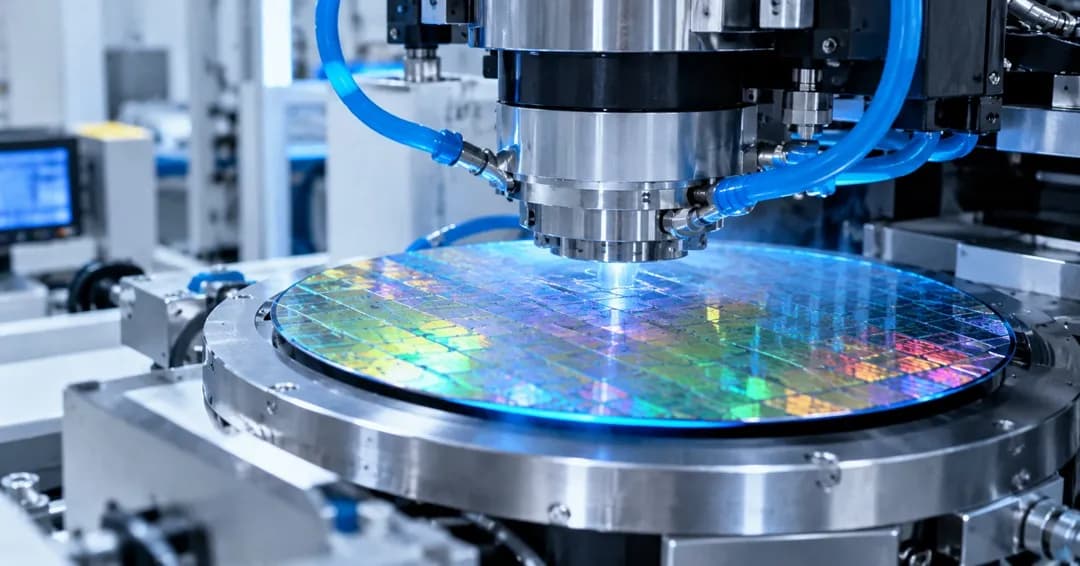
The semiconductor process cooling market is expanding as advanced chip manufacturing increases demand for precision temperature control, energy efficiency, and specialized cooling systems. Growth in advanced logic, high-bandwidth memory, and semiconductor fabrication capacity is creating opportunities for ultra-low-temperature chillers, multi-channel systems, and sustainable cooling technologies across major manufacturing regions.
According to Knowledge Sourcing Intelligence, the global semiconductor process cooling market is projected to grow from USD 2.90 billion in 2026 to USD 5.65 billion by 2032, registering a compound annual growth rate (CAGR) of 11.8%. Increasing demand for precision temperature control, expanding semiconductor fabrication capacity, and the development of energy-efficient cooling technologies are supporting market growth. As chip manufacturing processes become more complex, reliable thermal management is essential for maintaining process stability, equipment performance, and manufacturing yields.
Advanced logic, high-layer-count NAND flash memory, and high-bandwidth memory (HBM) production are increasing the importance of thermal management across semiconductor manufacturing and packaging. These applications require carefully controlled operating temperatures to maintain process consistency and manage heat generated by increasingly complex equipment and high-density components. This is creating opportunities for specialized process chillers, ultra-low-temperature systems, and integrated cooling solutions designed for demanding semiconductor applications.
Request a free sample copy or view the report summary: Semiconductor Process Cooling Market Report
Key Growth Drivers
Precision Temperature Control in Advanced Semiconductor Manufacturing
Advanced semiconductor fabrication requires accurate thermal regulation to support wafer uniformity and process repeatability. Temperature variations during plasma etching, deposition, and other fabrication processes can influence material properties, dimensional accuracy, and manufacturing yields. As semiconductor architectures become more sophisticated, equipment manufacturers require cooling systems capable of maintaining stable temperatures under changing process loads. These requirements are supporting demand for high-precision chillers and responsive temperature-control technologies.
Increasing Demand for Ultra-Low-Temperature Cooling
Certain semiconductor manufacturing applications require specialized cooling systems capable of maintaining temperatures below -50°C. These systems support temperature-sensitive processes by controlling the thermal conditions of wafers and critical equipment components. The technical requirements of deep-sub-zero cooling also create challenges for the adoption of alternative refrigerants, particularly where safety, temperature range, and performance must be maintained simultaneously. Continued development of specialized chillers and lower-global-warming-potential (GWP) alternatives is therefore becoming increasingly important to semiconductor equipment suppliers.
Energy Efficiency and Sustainable Semiconductor Manufacturing
Semiconductor fabrication facilities consume substantial amounts of energy to operate production equipment and maintain controlled environments. Manufacturers are consequently evaluating inverter-driven compressors, variable-speed pumps, improved heat exchange, and lower-GWP refrigerants to improve operational efficiency and reduce environmental impact. Integrating equipment-level cooling with facility process-cooling-water infrastructure can also reduce refrigeration demand where process temperatures and operating conditions permit. These developments are encouraging suppliers to improve cooling performance while balancing energy consumption, reliability, and regulatory requirements.
Growing Demand for Multi-Channel Cooling Systems
Modern semiconductor manufacturing equipment may require independent temperature control across multiple components and process circuits. Multi-channel chillers can provide separate cooling loops for different equipment subsystems, allowing manufacturers to address varying thermal requirements within a single installation. Such configurations can support equipment integration, improve operational flexibility, and reduce installation-space requirements. Suppliers offering compact systems with precise independent temperature regulation are positioned to address these specialized applications.
Latest Industry Developments
June 2026: Step Science launched its SCS-105W Series semiconductor process chiller, featuring inverter compressor control, precision liquid-temperature regulation, energy-saving operation, dual-channel configuration, and non-fluorocarbon or low-GWP refrigerant options. The product is designed for semiconductor manufacturing equipment, including dry-etching and plasma chemical vapour deposition applications.
May 2026: SK hynix unveiled its iHBM thermal solution, integrating cooling elements within high-bandwidth memory packages to create an additional heat-dissipation pathway. The company reported a 30% reduction in thermal resistance, addressing heat-management challenges in next-generation memory designed for demanding computing applications. This development highlights the growing importance of thermal engineering across the semiconductor value chain.
February 2026: The European Commission adopted Implementing Regulation (EU) 2026/286, granting a temporary exemption from specified fluorinated greenhouse gas restrictions for certain chillers used in semiconductor manufacturing. Applicable from 1 January 2027 through 31 December 2029, the exemption addresses equipment with particular cooling-capacity and temperature requirements where compliant alternatives are not yet commercially available. The regulation highlights the technical challenges associated with transitioning semiconductor process cooling to lower-GWP refrigerants.
Market Segmentation and Regional Outlook
The semiconductor process cooling market is segmented by cooling architecture, temperature range, semiconductor process, cooling medium, installation type, and geography. Cooling architectures include compressor-based chillers, ultra-low-temperature systems, thermoelectric chillers, liquid-to-liquid heat exchangers, multi-channel units, and process-cooling-water interfaces. Key applications include etching, deposition, lithography, cleaning, ion implantation, chemical mechanical planarization, and wafer testing.
Asia Pacific represents a major regional opportunity, supported by semiconductor manufacturing ecosystems in Taiwan, South Korea, Japan, and China. Investment in advanced logic, memory production, and semiconductor fabrication infrastructure is strengthening the need for reliable temperature-control equipment. The region's established manufacturing base also creates opportunities for suppliers providing specialized chillers, equipment-integrated cooling systems, and servicing solutions.
North America offers opportunities through semiconductor fabrication investments, advanced manufacturing initiatives, and demand for increasingly sophisticated production equipment. The expansion of domestic fabrication capabilities can create additional requirements for precision cooling infrastructure and equipment qualification.
Europe presents opportunities linked to semiconductor equipment innovation, industrial energy-efficiency objectives, and refrigerant regulation. The European Commission's 2026 exemption for certain semiconductor manufacturing chillers illustrates the complexity of transitioning to lower-GWP refrigerants while maintaining stringent temperature and performance requirements. Across regions, adoption timelines will depend on equipment qualification, process compatibility, capital expenditure, and operating costs.
Competitive Landscape
The competitive landscape includes semiconductor-focused cooling manufacturers such as Shinwa Controls, Ferrotec, Step Science, and FST, alongside broader temperature-control suppliers such as SMC Corporation, LAUDA, and JULABO. Participants compete on temperature stability, cooling capacity, energy efficiency, refrigerant compatibility, system reliability, and integration with semiconductor manufacturing equipment.
Product development is increasingly focused on improving temperature-control precision, supporting multiple cooling circuits, reducing energy consumption, and accommodating changing refrigerant requirements. Collaboration with semiconductor equipment manufacturers is also important because cooling systems must satisfy application-specific operating conditions and qualification requirements before deployment in production environments.
Analyst Perspective
Advanced semiconductor manufacturing is creating increasingly demanding temperature-control requirements across fabrication and related equipment applications. Opportunities extend from conventional process chillers to specialized ultra-low-temperature and multi-channel cooling architectures. At the same time, suppliers must balance thermal precision, energy efficiency, refrigerant compliance, equipment qualification, and operating costs. These considerations will influence product development and adoption as semiconductor processes continue to advance.
What the Study Covers
The report provides market estimates and forecasts through 2032, alongside an assessment of key growth drivers, restraints, cooling technologies, application areas, and regional opportunities. It also examines market segmentation, competitive dynamics, company profiles, and relevant technology and regulatory developments shaping demand for semiconductor process cooling solutions.
Have questions?
More Press Releases
Zinc-Ion Battery Energy Storage Market to Reach USD 700 Million by 2032, Driven by Renewable Energy Integration
The zinc-ion battery energy storage market is gaining momentum as renewable energy deployment increases demand for safer, scalable stationary storage solutions. Advances in aqueous electrolytes, electrode materials, and manufacturing technologies are creating opportunities across residential, commercial, industrial, and utility-scale applications, while durability, efficiency, and cost remain key commercialization challenges.
EV Traction Motor Market to Reach USD 20.6 Billion by 2031 as Integrated E-Axles Gain Momentum
The global EV traction motor market is expanding as automakers adopt integrated e-axles, compact drivetrain architectures, and advanced propulsion technologies. Rising electric vehicle production, improved motor efficiency, power electronics innovation, and manufacturing optimization are creating opportunities for suppliers developing scalable, reliable, and space-efficient electric drive systems across passenger and commercial vehicle segments.
Semiconductor Test Socket Market Projected to Reach USD 3.55 Billion by 2032, Driven by AI and HPC Demand
The semiconductor test socket market is expanding as AI processors, high-performance computing, advanced packaging, and high-speed memory increase testing requirements. Growing semiconductor complexity is driving demand for reliable electrical contacts, improved signal integrity, and thermal management. Automotive electronics and power semiconductors are further creating opportunities for specialized test socket technologies.