
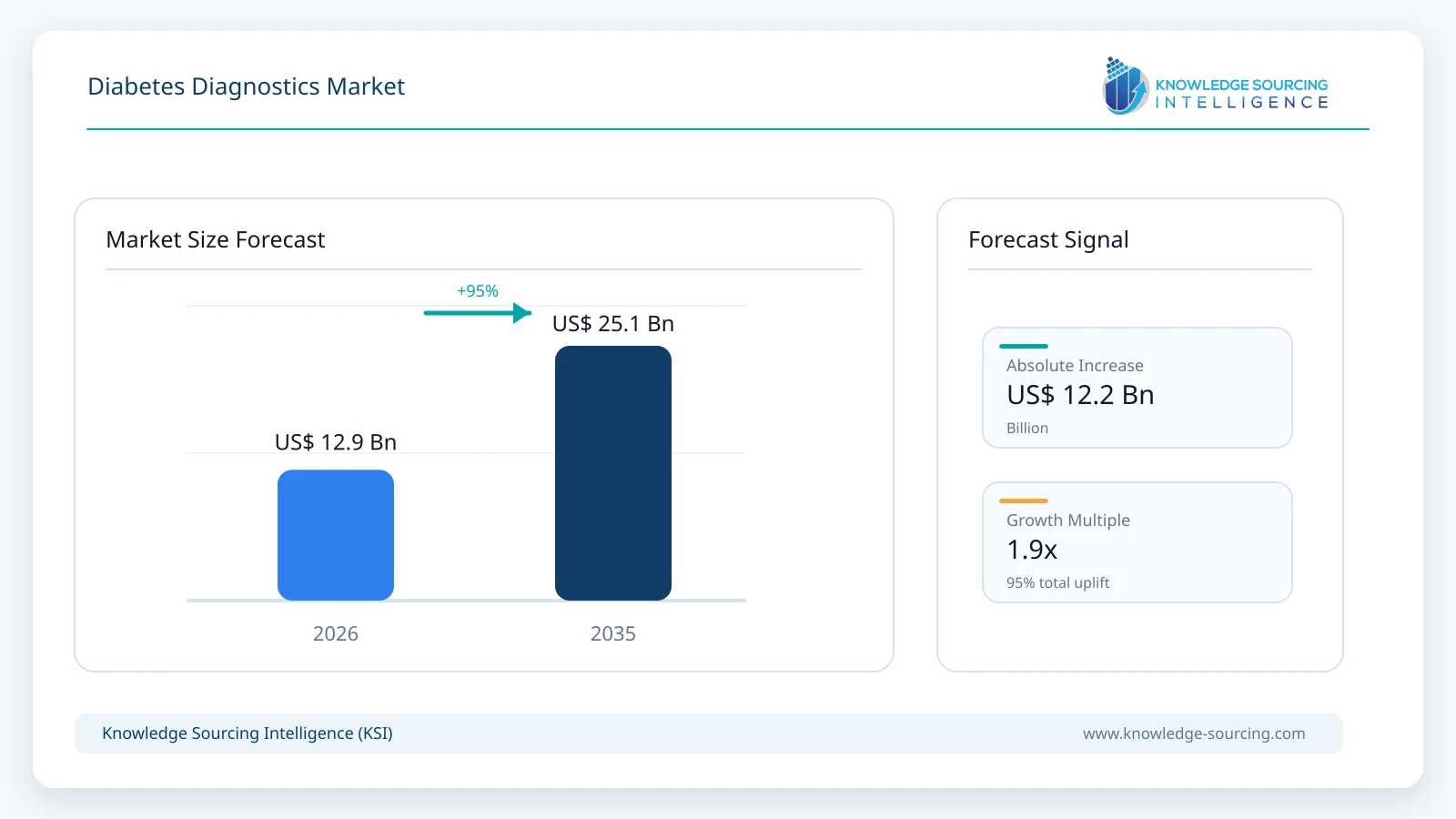
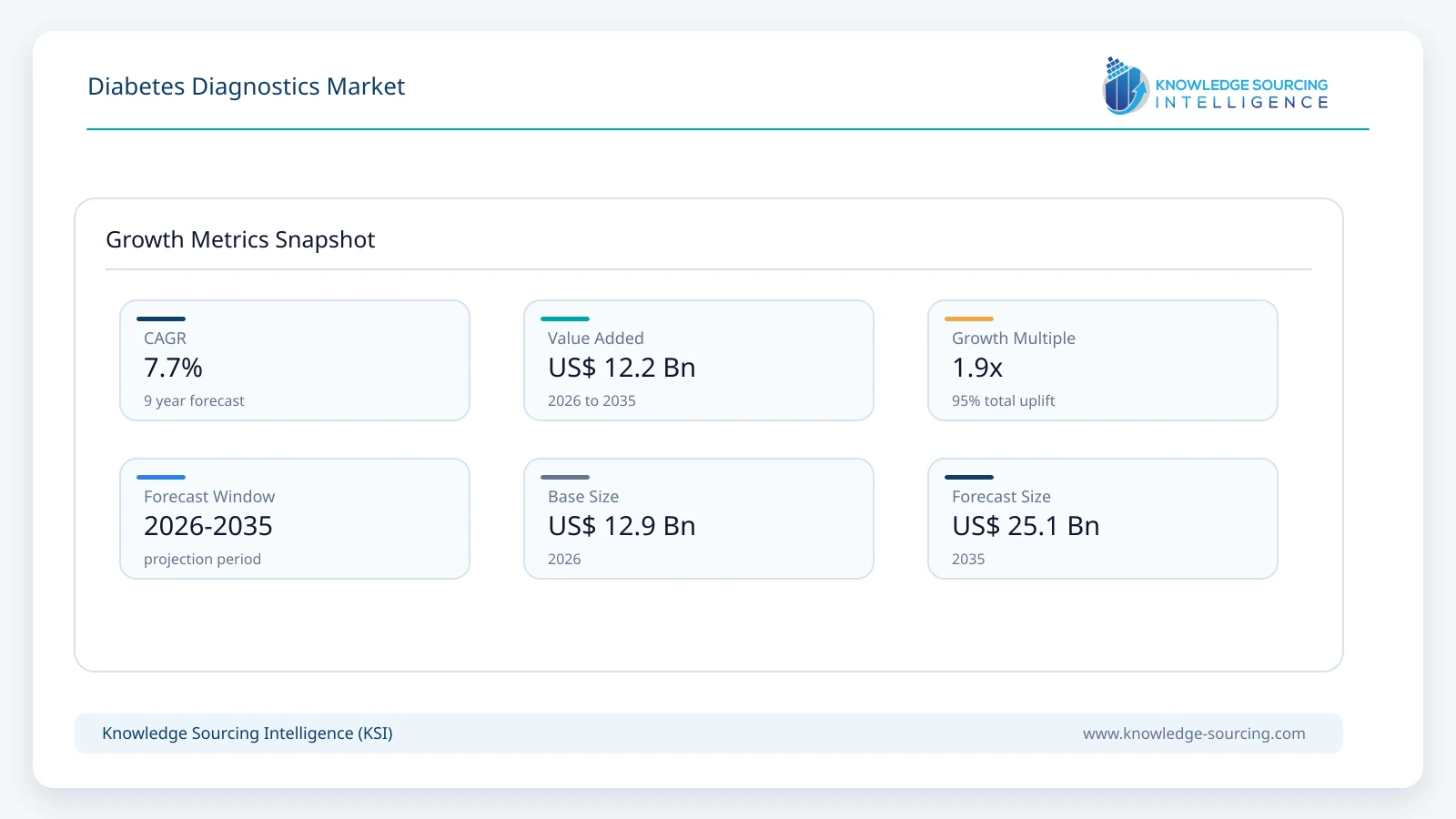
The Diabetes Diagnostics Market is forecast to grow at a CAGR of 7.7%, reaching USD 25.08 billion in 2035 from USD 12.87 billion in 2026.
Highlights:
- 1Rising diabetes prevalence is increasing the need for early diagnostic screening, accelerating demand for standardized laboratory and point-of-care testing platforms.
- 2Healthcare providers are adopting continuous glucose monitoring because longitudinal glucose data improve therapeutic decision-making and patient engagement.
- 3Automation in clinical laboratories is reducing testing turnaround times, supporting higher diagnostic throughput and operational efficiency.
- 4Digital integration between diagnostic devices and electronic health records is enhancing remote patient monitoring and coordinated diabetes management.
The diabetes diagnostics market supports disease detection, treatment selection, therapeutic monitoring, and complication prevention across hospitals, diagnostic laboratories, physician offices, community healthcare settings, and home-based care. Rising diabetes prevalence expands the demand for standardized diagnostic pathways because healthcare providers require reliable methods to identify disease progression before irreversible complications develop. Diagnostic innovation is improving analytical precision while automation is reducing laboratory turnaround time, enabling clinicians to make faster therapeutic decisions.
Digital connectivity is linking diagnostic devices with electronic health records and remote monitoring platforms, allowing healthcare providers to evaluate longitudinal glycemic patterns instead of isolated glucose values. Regulatory frameworks established by agencies such as the U.S. Food and Drug Administration (FDA), the European Medicines Agency (EMA), and the World Health Organization (WHO) continue to strengthen quality expectations for diagnostic performance, cybersecurity, and clinical validation. As healthcare systems increasingly emphasize preventive medicine and value-based care, diabetes diagnostics remain strategically important for reducing hospitalization risk, improving treatment adherence, and supporting population-level disease management.
Market Dynamics
Market Drivers
Increasing Global Burden of Diabetes Is Expanding Screening Programs: Diabetes diagnosis depends on timely biochemical testing because early disease identification reduces the risk of cardiovascular, renal, neurological, and ophthalmic complications. Healthcare authorities are expanding national screening initiatives as diabetes prevalence continues increasing across both developed and emerging economies. Larger screening populations create sustained demand for laboratory analyzers, HbA1c assays, glucose meters, and continuous glucose monitoring systems. Manufacturers are developing integrated diagnostic platforms that accommodate higher testing volumes while maintaining analytical accuracy. The resulting expansion of diagnostic infrastructure strengthens long-term demand across hospitals, laboratories, and community healthcare networks.
Continuous Glucose Monitoring Is Transforming Diabetes Management: Traditional glucose measurements provide single time-point information, whereas continuous glucose monitoring delivers dynamic glucose profiles that improve therapeutic decision-making. Clinicians are increasingly recommending CGM systems because they identify glycemic variability, nocturnal hypoglycemia, and treatment response more effectively than intermittent testing. Healthcare providers are integrating CGM data into digital diabetes management platforms, enabling proactive clinical interventions. Device manufacturers are introducing smaller sensors, longer wear durations, and improved connectivity, increasing patient acceptance across both Type 1 and Type 2 diabetes populations. These advancements strengthen recurring demand for disposable sensors and connected monitoring ecosystems.
Laboratory Automation Is Improving Diagnostic Efficiency: Clinical laboratories require higher operational efficiency because diabetes screening volumes continue increasing globally. Automated analyzers standardize sample processing, reduce manual intervention, and improve analytical reproducibility. Diagnostic manufacturers are integrating robotics, artificial intelligence-assisted quality control, and digital workflow management into laboratory platforms, enabling healthcare providers to process larger testing volumes without proportionally increasing workforce requirements. Improved laboratory productivity supports wider implementation of diabetes screening initiatives while maintaining diagnostic reliability.
Preventive Healthcare Policies Are Strengthening Early Detection: Healthcare systems recognize that early diagnosis lowers long-term treatment expenditure by reducing complications associated with uncontrolled diabetes. Governments and healthcare organizations are promoting preventive screening programs targeting high-risk populations, including individuals with obesity, hypertension, a history of gestational diabetes, and cardiovascular disease. Healthcare providers are expanding routine HbA1c and fasting plasma glucose testing within primary care settings, increasing diagnostic utilization. This preventive approach reinforces sustained demand for both centralized laboratory diagnostics and decentralized point-of-care testing technologies.
Market Restraints
High reimbursement variability across countries limits patient access to advanced continuous glucose monitoring technologies despite demonstrated clinical benefits.
Diagnostic accuracy requirements increase regulatory complexity, extending product development timelines and raising clinical validation costs.
Limited laboratory infrastructure and trained healthcare personnel reduce diagnostic accessibility across several low- and middle-income healthcare systems.
Market Opportunities
Digital Diabetes Ecosystems Are Creating Integrated Diagnostic Platforms: Connected healthcare increasingly relies on interoperable diagnostic systems that combine glucose monitoring, laboratory analytics, electronic health records, and clinical decision support. Healthcare providers are adopting cloud-enabled diagnostic platforms because integrated patient information improves longitudinal disease management. Manufacturers are expanding software capabilities alongside diagnostic hardware, strengthening recurring service-based revenue models while improving clinician workflow efficiency.
Non-Invasive Glucose Monitoring Technologies Are Advancing Clinical Innovation: Patient adherence often declines because conventional glucose monitoring requires repeated skin punctures. Medical device developers are investigating optical spectroscopy, electromagnetic sensing, and wearable biosensor technologies that reduce procedural burden while maintaining diagnostic accuracy. Continued technological progress could broaden routine monitoring among patients requiring frequent glucose assessment, creating new commercial opportunities across chronic disease management.
Artificial Intelligence Is Enhancing Clinical Decision Support: Artificial intelligence enables diagnostic platforms to analyze longitudinal glucose trends, predict glycemic excursions, and recommend individualized treatment adjustments. Healthcare providers are incorporating AI-assisted analytics into diabetes management programs because predictive insights support proactive clinical intervention. Diagnostic companies are investing in digital software capabilities that complement existing biosensor technologies, strengthening product differentiation and long-term customer retention.
Emerging Healthcare Systems Are Expanding Diagnostic Infrastructure: Healthcare investment continues increasing across Asia-Pacific, Latin America, the Middle East, and parts of Africa as governments strengthen chronic disease management capabilities. National health programs are expanding diagnostic laboratory capacity while improving access to primary healthcare services. Diagnostic manufacturers are increasing regional partnerships and distribution networks to address growing testing demand, supporting broader adoption of laboratory analyzers, point-of-care devices, and diabetes monitoring technologies.
Disease & Epidemiology Analysis
Diabetes mellitus represents one of the fastest-growing chronic non-communicable diseases worldwide and includes Type 1 diabetes, Type 2 diabetes, gestational diabetes mellitus (GDM), and several less common forms of diabetes caused by genetic disorders, pancreatic diseases, or endocrine dysfunction. Type 2 diabetes accounts for the overwhelming majority of diagnosed cases because progressive insulin resistance frequently develops alongside obesity, sedentary lifestyles, aging populations, and metabolic syndrome. These epidemiological trends continue increasing the need for early laboratory screening and long-term glucose monitoring across healthcare systems.
Healthcare providers increasingly emphasize earlier diagnosis because prolonged hyperglycemia accelerates cardiovascular disease, diabetic nephropathy, neuropathy, retinopathy, and peripheral vascular complications. Screening recommendations are expanding toward individuals with obesity, hypertension, dyslipidemia, family history of diabetes, previous gestational diabetes, and prediabetes. This broader screening strategy increases utilization of fasting plasma glucose testing, HbA1c assessment, oral glucose tolerance testing, and continuous glucose monitoring technologies across primary care and specialist settings.
The increasing prevalence of obesity among younger populations is shifting diabetes diagnosis toward earlier age groups, extending lifetime monitoring requirements and reinforcing sustained demand for advanced diagnostic technologies.
Treatment Guidelines Landscape
Organization | Patient Population | Diagnostic Recommendation | Key Clinical Guidance | Impact on Diagnostic Demand |
American Diabetes Association (ADA) – Standards of Care 2026 | Adults with risk factors, asymptomatic individuals, pregnant women, children at elevated risk | HbA1c, Fasting Plasma Glucose (FPG), 2-hour Oral Glucose Tolerance Test (OGTT), or Random Plasma Glucose in symptomatic patients | Recommends risk-based screening, confirmation of abnormal results in the absence of unequivocal hyperglycemia, and expanded use of Continuous Glucose Monitoring (CGM) across insulin-treated populations | Supports increasing utilization of HbA1c analyzers, laboratory glucose testing, and CGM devices as routine components of diabetes management. |
World Health Organization (WHO) | General population, particularly low- and middle-income countries | FPG, OGTT, HbA1c where standardized laboratory methods are available | Emphasizes early diagnosis through accessible laboratory testing integrated into primary healthcare services | Encourages expansion of standardized laboratory infrastructure and affordable point-of-care diagnostics. |
International Diabetes Federation (IDF) | Adults at high metabolic risk | Risk assessment followed by laboratory confirmation using internationally accepted diagnostic criteria | Promotes opportunistic screening, structured follow-up, and long-term glycemic monitoring | Increases demand for screening assays, laboratory automation, and chronic disease monitoring technologies. |
American Association of Clinical Endocrinology (AACE) | Patients with obesity, metabolic syndrome, prediabetes, and established diabetes | HbA1c combined with glucose-based testing and individualized CGM utilization | Supports personalized monitoring strategies based on disease severity and therapeutic goals | Expands demand for connected glucose monitoring systems and integrated diabetes management platforms. |
Market Segmentation
By Diagnostic Test
Continuous glucose monitoring represents one of the fastest-evolving diagnostic segments because diabetes management increasingly depends on real-time glycemic information rather than isolated laboratory measurements. Healthcare providers are recommending CGM systems for a broader patient population as continuous glucose trends improve insulin titration and reduce hypoglycemic events. Traditional finger-stick testing remains clinically relevant, although recurring sensor innovation is improving accuracy, wear duration, and patient convenience. Manufacturers are integrating cloud connectivity and mobile applications into CGM platforms, allowing clinicians to evaluate longitudinal glucose patterns remotely. This transition establishes CGM as a central component of personalized diabetes management while expanding recurring demand for disposable sensors and digital monitoring services.
By Product Type
Test strips remain a fundamental component of diabetes diagnostics because self-monitoring continues supporting routine glucose assessment across millions of patients worldwide. Home-based glucose monitoring requires affordable consumables that provide rapid and reproducible measurements throughout daily disease management. Manufacturers are improving enzymatic chemistry and electrochemical sensor performance while reducing sample volume requirements, increasing user convenience. Healthcare systems continue procuring large testing volumes because routine monitoring remains essential for insulin adjustment, medication optimization, and complication prevention. The recurring nature of strip replacement sustains long-term revenue generation despite increasing adoption of continuous glucose monitoring technologies.
By Technology
Electrochemical biosensors constitute the dominant technological platform within diabetes diagnostics because they provide rapid glucose measurement with high analytical sensitivity and relatively low manufacturing costs. Device developers are refining electrode materials, enzyme stability, and signal processing algorithms to improve measurement precision under routine clinical conditions. Miniaturized biosensor technologies are enabling wearable diagnostic systems that continuously evaluate glucose concentrations with minimal patient intervention. Healthcare providers increasingly favor electrochemical platforms because they combine portability, affordability, and digital connectivity across both laboratory and home-care environments. Continued innovation in biosensor materials and wireless communication strengthens the technology's competitive position within next-generation diabetes diagnostics.
Regional Analysis
North America Market Analysis
North America represents the most technologically advanced diabetes diagnostics market because the region combines high diabetes prevalence with widespread access to laboratory infrastructure and digital healthcare systems. Healthcare providers are expanding continuous glucose monitoring adoption as clinical evidence increasingly demonstrates improvements in glycemic control and reductions in severe hypoglycemic events. Public and private insurers are gradually broadening reimbursement eligibility for CGM technologies, although coverage differences continue influencing adoption patterns across patient populations. Diagnostic manufacturers are investing in connected platforms that integrate glucose monitoring with cloud analytics and electronic health records, enabling clinicians to evaluate patient outcomes through continuous data streams. Regulatory oversight by the U.S. Food and Drug Administration (FDA) maintains rigorous analytical performance standards while supporting innovation through streamlined review pathways for qualified medical devices. Academic medical centers, integrated healthcare networks, and biotechnology companies continue collaborating on digital diabetes management, reinforcing sustained demand for laboratory automation, biosensors, and software-enabled diagnostic ecosystems.
Europe Market Analysis
Europe maintains a mature diabetes diagnostics market because universal healthcare systems emphasize early disease detection, standardized clinical pathways, and long-term management of chronic metabolic disorders. Population aging and increasing obesity prevalence are expanding diabetes screening across both primary care and specialist services, creating sustained demand for HbA1c assays, fasting plasma glucose testing, and continuous glucose monitoring technologies. National health systems are increasing investment in laboratory modernization because higher testing volumes require automated analyzers capable of delivering standardized and reproducible results. Healthcare providers are integrating connected glucose monitoring devices with digital patient management platforms, enabling remote follow-up for individuals requiring continuous glycemic assessment. The implementation of the European Union In Vitro Diagnostic Regulation (IVDR 2017/746) continues strengthening evidence requirements for analytical performance, clinical validation, post-market surveillance, and quality management. Diagnostic manufacturers are expanding clinical evidence generation and regulatory documentation to maintain market access under the revised framework. Public reimbursement systems support routine diabetes diagnostics across most European countries, although reimbursement for advanced CGM technologies continues varying according to national healthcare policies and patient eligibility criteria.
Asia Pacific Market Analysis
Asia Pacific is experiencing the fastest expansion in diabetes diagnostics because rapid urbanization, dietary transitions, sedentary lifestyles, and population aging are increasing the incidence of Type 2 diabetes across both developed and emerging economies. Governments are strengthening chronic disease prevention programs since early diagnosis reduces future healthcare costs associated with cardiovascular disease, kidney failure, neuropathy, and diabetic retinopathy. Large population bases are increasing demand for affordable laboratory diagnostics, while improving healthcare infrastructure is supporting wider deployment of automated analyzers and point-of-care testing systems. Healthcare providers are adopting continuous glucose monitoring technologies in metropolitan healthcare centers as specialist diabetes management becomes increasingly data-driven. Countries including China, India, Japan, South Korea, and Australia continue expanding national diabetes screening initiatives through primary healthcare networks, creating sustained demand for glucose analyzers, HbA1c testing systems, and diagnostic consumables. Domestic manufacturers are increasing production capacity to improve affordability, while multinational companies are expanding regional manufacturing and distribution partnerships to strengthen market penetration.
Rest of the World
The Rest of the World, comprising Latin America, the Middle East, and Africa, is demonstrating increasing demand for diabetes diagnostics because the burden of metabolic diseases continues rising alongside demographic and lifestyle changes. Healthcare systems are expanding laboratory capacity to improve early diagnosis, although infrastructure disparities remain significant across countries. Governments are strengthening national non-communicable disease strategies because delayed diabetes diagnosis contributes substantially to preventable complications and healthcare expenditure. International health organizations are supporting screening initiatives that improve access to standardized diagnostic testing within primary healthcare facilities. Private healthcare providers are introducing advanced glucose monitoring technologies in urban centers, while public health programs continue emphasizing affordable laboratory-based testing for broader population coverage. Diagnostic manufacturers are increasing partnerships with regional distributors to improve product availability and technical support across underserved markets. Growth in private health insurance, healthcare digitization, and investment in hospital infrastructure is encouraging gradual adoption of connected diabetes management solutions.
Regulatory Landscape
Diabetes diagnostics operate within highly regulated environments because analytical accuracy directly influences treatment decisions and long-term disease outcomes. Regulatory agencies require manufacturers to demonstrate analytical validity, clinical performance, manufacturing quality, and post-market safety before commercializing diagnostic devices. In the United States, the U.S. Food and Drug Administration (FDA) regulates glucose monitoring systems, HbA1c assays, laboratory analyzers, and continuous glucose monitoring devices through risk-based pathways that include 510(k), De Novo, or Premarket Approval (PMA), depending on product classification. Manufacturers are generating increasingly comprehensive clinical evidence because software integration, wireless connectivity, and artificial intelligence are expanding the functional scope of diagnostic platforms.
Within Europe, implementation of the In Vitro Diagnostic Regulation (IVDR 2017/746) is increasing regulatory expectations for clinical evidence, quality management systems, performance evaluation, and post-market surveillance. Diagnostic companies are investing in regulatory compliance programs because successful certification under IVDR determines continued commercial access to European markets. Notified Bodies are evaluating more extensive technical documentation than under the previous directive, encouraging manufacturers to strengthen clinical validation and lifecycle monitoring strategies.
Regulatory authorities across Asia-Pacific are simultaneously modernizing approval pathways for in vitro diagnostics while harmonizing selected requirements with internationally recognized quality standards. Japan's Pharmaceuticals and Medical Devices Agency (PMDA), China's National Medical Products Administration (NMPA), and India's Central Drugs Standard Control Organization (CDSCO) continue refining review frameworks for diabetes diagnostic technologies. These regulatory developments encourage manufacturers to conduct region-specific validation studies while accelerating access to innovative diagnostic platforms through clearer approval pathways.
Pipeline Analysis
The diabetes diagnostics pipeline is evolving beyond conventional glucose measurement toward integrated platforms that combine biosensing technologies, digital analytics, and predictive clinical decision support. Manufacturers are developing next-generation continuous glucose monitoring systems with extended sensor wear durations, improved calibration-free operation, smaller device profiles, and enhanced interoperability with insulin delivery systems. These technological improvements aim to reduce patient burden while increasing measurement accuracy across diverse physiological conditions.
Research programs are advancing non-invasive and minimally invasive glucose monitoring technologies that employ optical spectroscopy, electromagnetic sensing, fluorescence-based biosensors, and microneedle platforms. Although many candidates remain in investigational or early clinical evaluation stages, developers are attempting to overcome challenges related to signal variability, calibration stability, and physiological interference. Progress in material science and biosensor engineering is improving analytical performance, encouraging continued investment from established diagnostic manufacturers and emerging medical technology companies.
Artificial intelligence is becoming an increasingly important component of the development pipeline because predictive algorithms are analyzing continuous glucose data to forecast glycemic excursions, optimize insulin dosing, and support personalized therapeutic interventions. Sponsors are integrating cloud-based software with diagnostic hardware to create comprehensive diabetes management ecosystems that extend beyond standalone diagnostic testing. These innovations are positioning future diabetes diagnostics as clinical decision-support platforms rather than simple glucose measurement devices.
Reimbursement Landscape
Reimbursement policies play a central role in diabetes diagnostics because long-term disease management requires repeated testing throughout a patient's lifetime. Public and private payers generally reimburse laboratory-based diagnostic procedures, including fasting plasma glucose (FPG), HbA1c, oral glucose tolerance test (OGTT), and random plasma glucose testing when they are performed according to recognized clinical guidelines. As healthcare systems increasingly prioritize preventive care, reimbursement frameworks are supporting routine diabetes screening among high-risk populations to reduce the economic burden associated with advanced diabetic complications.
Coverage for continuous glucose monitoring (CGM) devices is expanding because growing clinical evidence demonstrates improvements in glycemic control, reductions in severe hypoglycemia, and enhanced treatment adherence. Several reimbursement programs are broadening eligibility beyond individuals with Type 1 diabetes to selected patients with insulin-treated Type 2 diabetes, although coverage criteria continue to differ by country, payer, and therapeutic indication. Manufacturers are generating additional health-economic evidence because payers increasingly evaluate long-term cost savings resulting from reduced hospitalizations and complication management. This shift is encouraging diagnostic developers to integrate clinical outcome studies into commercialization strategies while strengthening the value proposition of connected glucose monitoring technologies.
Competitive Landscape
Abbott Laboratories
Abbott Laboratories maintains a leading position in diabetes diagnostics through its broad portfolio of laboratory diagnostics and continuous glucose monitoring technologies. The company's strategic differentiation stems from the FreeStyle Libre platform, which combines sensor-based glucose monitoring with mobile connectivity and cloud-enabled data sharing, enabling clinicians to evaluate glycemic trends in real time.
F. Hoffmann-La Roche Ltd
F. Hoffmann-La Roche Ltd remains strategically positioned through the integration of laboratory diagnostics with digital diabetes management solutions. The company's diagnostics portfolio includes blood glucose monitoring systems, HbA1c assays, clinical chemistry analyzers, and informatics platforms that improve laboratory efficiency and patient management.
Siemens Healthineers AG
Siemens Healthineers differentiates itself through highly automated laboratory diagnostics platforms that support high-volume diabetes screening and chronic disease monitoring. The company focuses on integrating clinical chemistry, immunoassays, laboratory automation, and digital workflow management into unified diagnostic ecosystems.
Dexcom, Inc.
Dexcom, Inc. has established a strong competitive position by focusing exclusively on continuous glucose monitoring technologies that support real-time diabetes management. The company's strategic advantage lies in combining highly accurate wearable sensors with cloud-based software, mobile applications, and digital health integration, enabling patients and healthcare professionals to monitor glucose trends continuously rather than relying on intermittent testing.
Becton, Dickinson and Company
Becton, Dickinson and Company (BD) maintains a diversified position in diabetes care by combining diagnostic expertise with insulin delivery technologies and connected healthcare solutions. The company's diabetes portfolio supports both glucose monitoring and insulin administration, allowing healthcare providers to manage disease diagnosis and treatment through complementary technologies.
ARKRAY, Inc.
ARKRAY, Inc. differentiates itself through specialized expertise in diabetes diagnostics, point-of-care testing, and laboratory analyzers designed for glycemic assessment. The company maintains a balanced portfolio serving hospitals, clinical laboratories, physician offices, and home-care settings, enabling broad participation across the diabetes diagnostic continuum.
Key Developments
July 2026: Precision Diabetes and Nagase Diagnostics entered an exclusive U.S. partnership to commercialize Lucica Glycated Albumin-L, the only FDA-cleared assay specifically intended to measure glycated albumin in the United States. The collaboration is aimed at broadening clinical adoption of glycated albumin testing for diabetes management.
May 2026: Abbott received CE Mark for Libre Duo and Libre Duo 10 Day, sensors that continuously measure glucose and ketones every minute. The systems are designed to help people with diabetes monitor for rising ketones and potentially detect diabetic ketoacidosis earlier.
August 2025: Abbott launched the FreeStyle Libre 2 Plus sensor in India, bringing minute-by-minute glucose readings and optional alarms to adults and children aged 2 and above, including women with gestational diabetes. The launch expands Abbott’s CGM portfolio in the Indian market.
Strategic Insights and Future Market Outlook
The diabetes diagnostics market is transitioning from episodic laboratory testing toward continuous, digitally connected disease management because healthcare systems increasingly prioritize preventive care and personalized therapeutic interventions. Continuous glucose monitoring is becoming an integral component of diabetes management as clinicians recognize the value of longitudinal glycemic data in optimizing treatment decisions and reducing diabetes-related complications. This transformation is encouraging manufacturers to integrate biosensors, cloud connectivity, artificial intelligence, and clinical decision-support software into unified diagnostic ecosystems that extend well beyond conventional glucose measurement.
Regulatory expectations are simultaneously becoming more comprehensive because diagnostic technologies increasingly incorporate software, wireless communication, and data analytics. Manufacturers are investing in clinical validation, cybersecurity, interoperability, and post-market surveillance to maintain compliance across major regulatory jurisdictions. At the same time, reimbursement authorities are evaluating long-term health-economic outcomes rather than focusing solely on device acquisition costs, encouraging broader adoption of technologies that demonstrate reductions in hospitalization, emergency care utilization, and chronic disease complications.
Artificial intelligence, predictive analytics, and non-invasive sensing technologies are expected to influence the next phase of innovation across the diabetes diagnostics landscape. Companies capable of combining analytical accuracy with digital integration, patient convenience, and scalable healthcare connectivity are likely to strengthen competitive positioning as healthcare delivery continues shifting toward remote monitoring and value-based care. Expansion into emerging healthcare markets, supported by improved diagnostic infrastructure and national diabetes screening initiatives, is expected to create additional opportunities for sustained industry growth.
The diabetes diagnostics market remains strategically important because accurate and timely diagnosis underpins every stage of diabetes care, from early disease detection to lifelong therapeutic monitoring. Continued advances in biosensor technologies, laboratory automation, connected healthcare platforms, and personalized monitoring solutions are reinforcing the role of diagnostics in improving clinical outcomes while supporting more efficient and sustainable healthcare systems.
Diabetes Diagnostics Market Scope:
| Report Metric | Details |
|---|---|
| Total Market Size in 2026 | USD 12.87 billion |
| Total Market Size in 2035 | USD 25.08 billion |
| Forecast Unit | USD Billion |
| Growth Rate | 7.7% |
| Study Period | 2021 to 2035 |
| Historical Data | 2021 to 2024 |
| Base Year | 2025 |
| Forecast Period | 2026 – 2035 |
| Segmentation | Diagnostic Test, Product Type, Technology, Sample Type, Testing Setting, End User, Geography |
| Companies |
|
Market Segmentation
Diagnostic Test
Product Type
Technology, Sample Type, Testing Setting, End User
Geography
- North America
- South America
- Europe
- Middle East and Africa
- Asia Pacific
Table of Contents
1. EXECUTIVE SUMMARY
1.1. Market Snapshot
1.2. Key Findings
1.3. Analyst Insights
1.4. Strategic Recommendations
2. RESEARCH METHODOLOGY
2.1. Research Design
2.2. Data Collection Methodology
2.3. Market Size Estimation
2.4. Forecasting Model
2.5. Assumptions & Limitations
3. GLOBAL DIABETES DIAGNOSTICS MARKET OVERVIEW, SIZE & FORECAST
3.1. Market Definition & Scope
3.2. Diabetes Overview
3.3. Disease Classification
3.4. Industry Evolution
3.5. Key Market Trends
3.6. Epidemiology & Disease Burden Analysis
3.6.1. Global Diabetes Prevalence
3.6.2. Diagnosed Patient Population
3.6.3. Undiagnosed Patient Population
3.6.4. Prediabetes Population
3.7. Screening & Diagnostic Pathway
3.8. Testing Volume Analysis
3.9. Diagnostic Guidelines & Standard of Care
3.10. Historical Market Size Analysis (2021–2025)
3.11. Market Forecast Analysis (2026–2035)
4. MARKET DYNAMICS
4.1. Market Drivers
4.2. Market Restraints
4.3. Market Opportunities
4.4. Market Challenges
5. INDUSTRY LANDSCAPE
5.1. Industry Value Chain Analysis
5.2. Pricing Analysis
5.3. Reimbursement Landscape
6. INNOVATION LANDSCAPE
6.1. Emerging Diagnostic Technologies
6.2. Product Innovation Analysis
6.3. Pipeline Diagnostics Analysis
6.4. Digital Health & Connected Diabetes Diagnostics
6.5. Artificial Intelligence in Diabetes Diagnostics
7. REGULATORY LANDSCAPE
7.1. Regulatory Framework
7.2. Approval Pathways
7.3. Compliance Requirements
8. GLOBAL DIABETES DIAGNOSTICS MARKET LANDSCAPE ANALYSIS
8.1. Analysis by Diagnostic Test
8.2. Analysis by Technology Platform
8.3. Analysis by Sample Type
8.4. Analysis by Testing Setting
8.5. Analysis by Clinical Application
9. GLOBAL DIABETES DIAGNOSTICS MARKET SEGMENT ANALYSIS (2021–2035)
9.1. By Diagnostic Test
9.1.1. Fasting Plasma Glucose (FPG)
9.1.2. Oral Glucose Tolerance Test (OGTT)
9.1.3. HbA1c Test
9.1.4. Random Plasma Glucose Test
9.1.5. Continuous Glucose Monitoring (CGM)
9.1.6. Others
9.2. By Product Type
9.2.1. Instruments & Analyzers
9.2.2. Test Strips
9.2.3. Reagents & Consumables
9.2.4. Others
9.3. By Technology
9.3.1. Electrochemical Biosensors
9.3.2. Optical Biosensors
9.3.3. Immunoassays
9.3.4. Chromatographic Methods
9.3.5. Others
9.4. By Sample Type
9.4.1. Whole Blood
9.4.2. Plasma
9.4.3. Serum
9.4.4. Urine
9.4.5 Interstitial Fluid
9.5. By Testing Setting
9.5.1. Laboratory-Based Testing
9.5.2. Point-of-Care Testing
9.5.3. Home-Based Testing
9.6. By End User
9.6.1. Hospitals
9.6.2. Diagnostic Laboratories
9.6.3. Physician Clinics
9.6.4. Others
10. GLOBAL DIABETES DIAGNOSTICS MARKET GEOGRAPHICAL ANALYSIS (2021–2035)
10.1. North America
10.2. Europe
10.3. Asia-Pacific
10.4. South America
10.5. Middle East & Africa
11. GLOBAL DIABETES DIAGNOSTICS MARKET COUNTRY ANALYSIS (2021–2035)
11.1. United States
11.2. Canada
11.3. Germany
11.4. United Kingdom
11.5. France
11.6. Italy
11.7. Spain
11.8. Japan
11.9. China
11.10. India
11.11. South Korea
11.12. Australia
11.13. Brazil
11.14. Mexico
11.15. Saudi Arabia
11.16. South Africa
12. COMPETITIVE LANDSCAPE
12.1. Market Share Analysis
12.2. Strategic Developments
12.3. Mergers & Acquisitions, Partnerships & Collaborations
12.4. Product Launches
13. COMPANY PROFILES
13.1. Abbott Laboratories
13.1.1. Company Overview
13.1.2. Financials
13.1.3. Product Portfolio
13.1.4. Recent Developments
13.2. F. Hoffmann-La Roche Ltd
13.3. Siemens Healthineers AG
13.4. Dexcom, Inc.
13.5. Becton, Dickinson and Company
13.6. ARKRAY, Inc.
13.7. Medtronic plc
13.8. ACON Laboratories
13.9. Nipro Corporation
13.10. Insulet Corporation
14. GLOBAL DIABETES DIAGNOSTICS MARKET COMMERCIAL FORECAST ANALYSIS
14.1. HbA1c Testing
14.2. Blood Glucose Testing Systems
14.3. Point-of-Care Diabetes Diagnostic Systems
14.4. Continuous Glucose Monitoring Systems
14.5. Laboratory-Based Diabetes Diagnostic Solutions
15. INVESTMENT & FUNDING ANALYSIS
15.1. Venture Capital Trends
15.2. Government Funding
15.3. R&D Investments
16. FUTURE OUTLOOK
16.1. Key Growth Opportunities
16.2. Future Industry Trends
Navigate
Trusted by the world's leading organizations











