
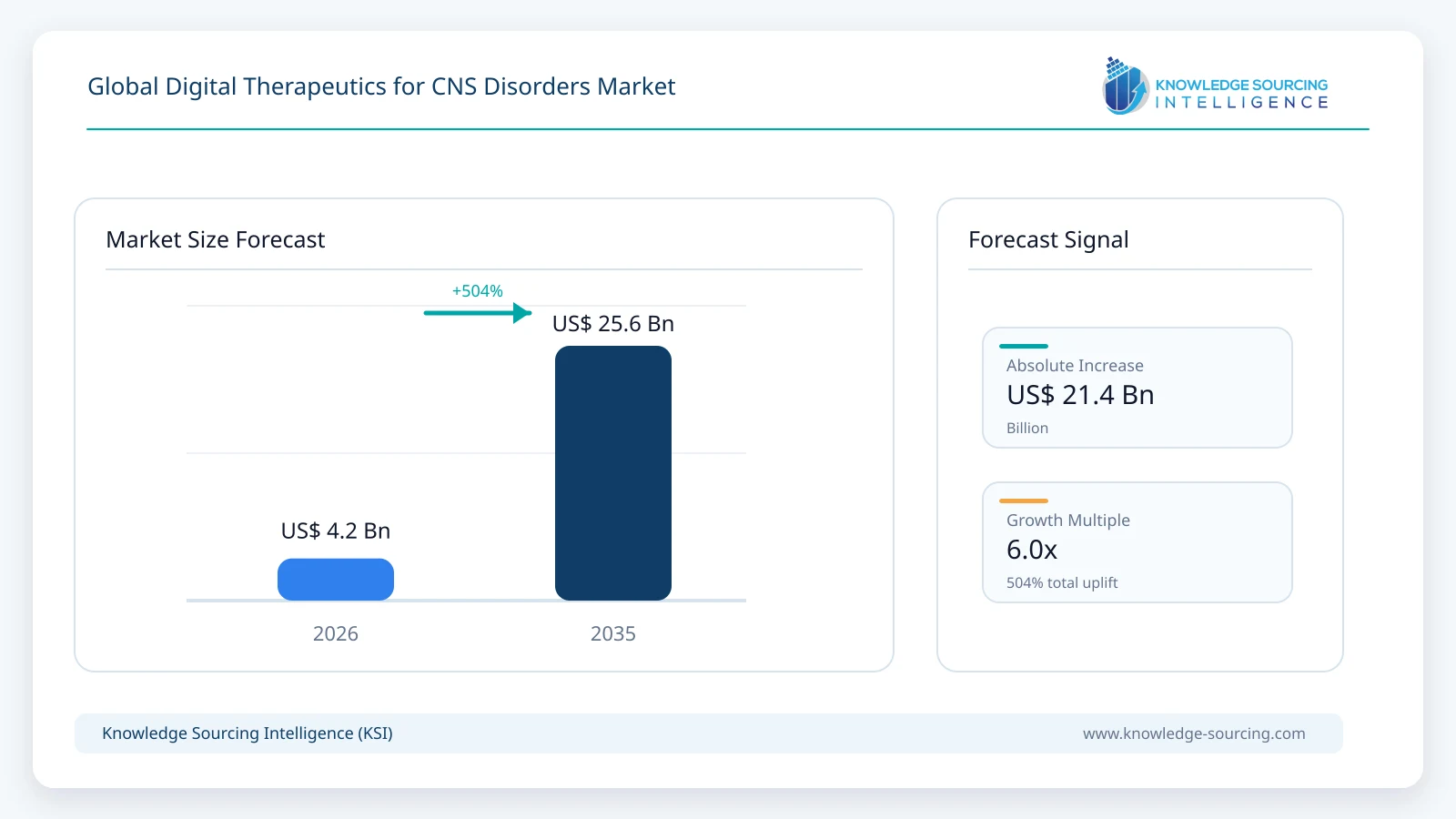
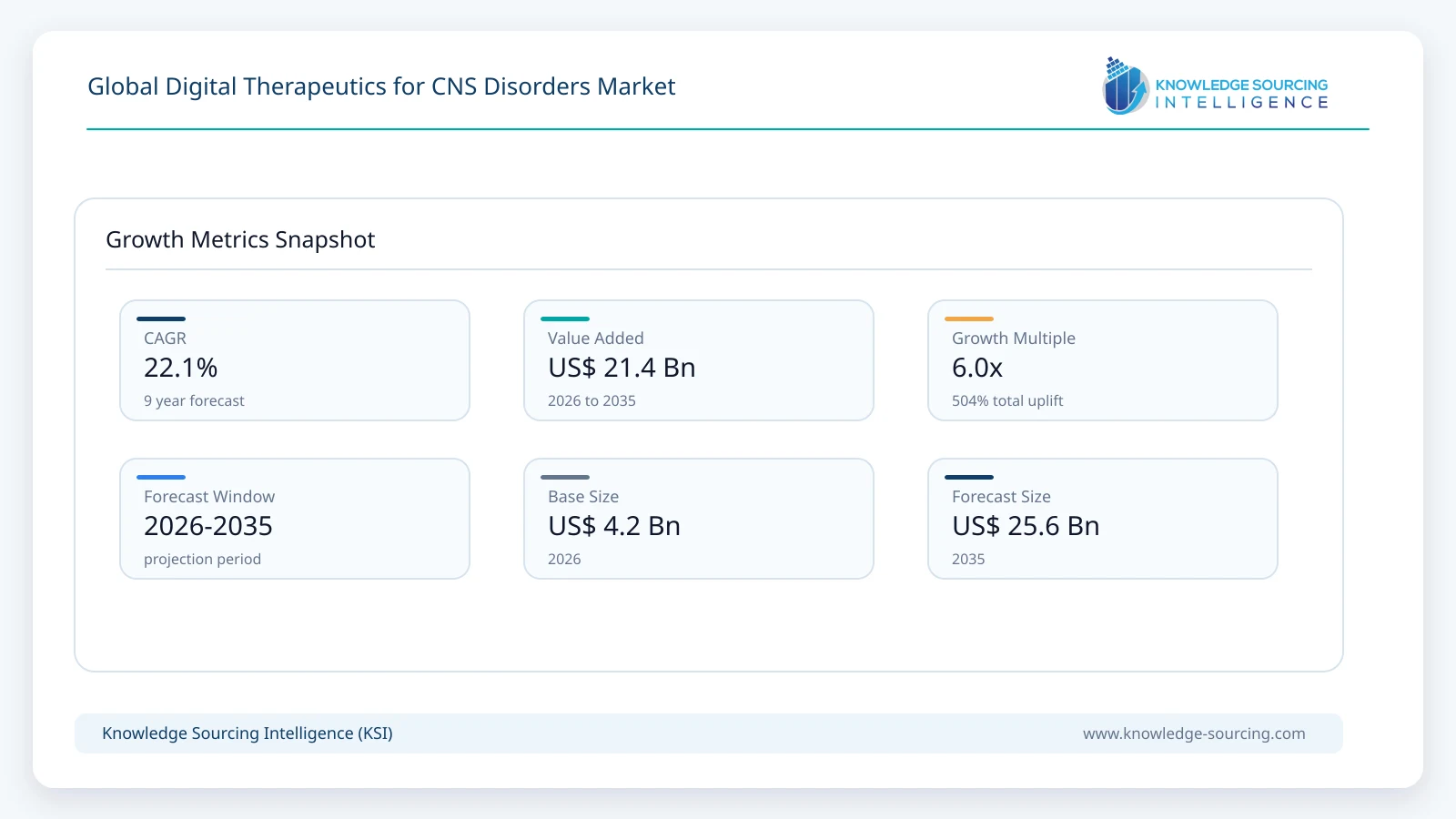
The Global Digital Therapeutics for CNS Disorders Market is projected to grow at a CAGR of 22.1% the forecast period, increasing from USD 4.24 billion in 2026 to USD 25.61 billion by 2035.
Highlights:
- 1Rising prevalence of depression, anxiety disorders, ADHD, and cognitive disorders is increasing demand for scalable therapeutic interventions that extend beyond conventional clinical encounters.
- 2Healthcare providers are adopting remote care models, which increases the value of software-driven treatment delivery and longitudinal symptom monitoring.
- 3Regulatory agencies are requiring stronger clinical evidence, which is improving confidence among physicians, payers, and healthcare systems.
- 4Neurorehabilitation programs are incorporating virtual reality and cognitive training platforms because long-term rehabilitation requires sustained patient engagement.
Digital therapeutics for CNS disorders address persistent limitations in conventional neurological and psychiatric treatment pathways. CNS disorders often require long-term behavioral modification, adherence support, cognitive training, and symptom monitoring, which conventional healthcare delivery models struggle to provide consistently. This gap creates sustained demand for scalable software-based interventions.
Healthcare providers are increasingly seeking solutions that extend treatment beyond hospitals and clinics because workforce shortages limit access to continuous neurological and psychiatric care. This pressure is encouraging adoption of digital interventions capable of delivering structured therapeutic content between physician visits. The resulting care continuity improves treatment adherence and supports outcome monitoring.
Regulatory oversight increasingly influences market expansion because clinical stakeholders require evidence of safety, efficacy, and patient benefit before incorporating digital therapeutics into treatment pathways. Regulatory clearance is becoming a competitive differentiator as payers and providers prioritize validated therapeutic platforms over consumer wellness applications.
The strategic importance of the market stems from its ability to combine clinical intervention, behavioral modification, data analytics, and remote patient management within a single treatment framework. This capability aligns with healthcare system objectives focused on improving outcomes while controlling long-term disease management costs.
Market Dynamics
Market Drivers
Expanding Burden of Mental Health and Neurological Disorders: CNS disorders represent one of the largest contributors to global disability. Demand is increasing because healthcare systems face growing psychiatric and neurological patient populations while specialist availability remains constrained. Treatment pathways often require continuous behavioral support that traditional care delivery models cannot consistently provide. Digital therapeutic developers are expanding clinically validated interventions to bridge this accessibility gap. The outcome is greater integration of software-based therapies into long-term disease management frameworks.
Shift Toward Remote and Continuous Care Models: Healthcare delivery increasingly emphasizes longitudinal patient management. Patients are seeking interventions that remain accessible outside clinical environments because treatment adherence often declines between physician interactions. Healthcare providers are incorporating remote monitoring and digital engagement tools to maintain continuity of care. Digital therapeutics are becoming central to this transition because they deliver structured interventions while generating treatment data. The result is broader acceptance of digitally enabled CNS care pathways.
Regulatory Validation Strengthening Clinical Acceptance: Clinical adoption depends on evidence. Regulators are requiring structured efficacy and safety demonstrations comparable to medical device evaluations. Developers face higher evidence-generation requirements, which strengthens physician confidence in approved products. Companies are investing heavily in randomized controlled trials and real-world evidence generation. The outcome is gradual movement from wellness applications toward regulated therapeutic products.
Market Restraints
Reimbursement remains one of the most significant barriers to digital therapeutics adoption because many healthcare systems have not established standardized payment pathways for software-based interventions.
Digital therapeutics depend heavily on sustained patient participation to achieve therapeutic outcomes. Patients are increasingly accessing app-based interventions, yet engagement rates often decline over extended treatment periods.
Regulatory agencies are strengthening oversight of digital therapeutic products because CNS interventions increasingly handle sensitive behavioral, cognitive, and health-related data.
Market Opportunities
Prescription Digital Therapeutics Integration: Prescription digital therapeutics create opportunities for integration into established treatment pathways. Clinicians require evidence-based interventions that complement pharmacological therapy because many CNS disorders demonstrate incomplete treatment response. Developers are positioning prescription products as adjunctive interventions supported by clinical evidence. This evolution strengthens reimbursement discussions and increases provider acceptance. The outcome is expansion of digital therapeutics within formal healthcare delivery systems.
Neurorehabilitation Digitization: Neurological rehabilitation requires repetitive and sustained engagement. Healthcare providers face challenges maintaining patient participation across extended rehabilitation periods. Virtual reality and gamified therapeutic platforms are improving engagement while enabling home-based rehabilitation programs. Developers are introducing sensor-enabled and adaptive therapeutic solutions that personalize treatment intensity. The result is growing demand across stroke recovery, cognitive rehabilitation, and neurodegenerative disease management.
AI-Enabled Personalization: Treatment response varies substantially across CNS disorders. Traditional one-size-fits-all interventions often produce inconsistent outcomes. Developers are incorporating AI-driven personalization engines that adapt therapeutic content according to patient behavior and symptom progression. Healthcare organizations are evaluating these capabilities to improve treatment adherence and effectiveness. The outcome is increasing differentiation among next-generation digital therapeutic platforms.
Disease & Epidemiology Analysis
CNS disorders encompass a broad spectrum of neurological and psychiatric conditions that collectively represent a substantial global healthcare burden. Depression, anxiety disorders, ADHD, autism spectrum disorders, dementia, Parkinson’s disease, epilepsy, and cognitive impairment contribute significantly to disability-adjusted life years worldwide.
Mental health disorders currently constitute the largest addressable segment because prevalence levels are high and treatment gaps remain substantial. Demand is increasing for scalable interventions capable of extending therapeutic engagement beyond conventional provider interactions. This trend creates favorable conditions for software-driven cognitive and behavioral interventions.
Neurodevelopmental disorders represent another significant opportunity because treatment effectiveness often depends on sustained cognitive training and behavioral reinforcement. Digital platforms provide repeatable and measurable intervention delivery that aligns with long-term management requirements.
Neurodegenerative disorders generate growing demand for cognitive monitoring, rehabilitation support, and caregiver engagement tools. Population aging increases disease prevalence, which expands the need for scalable digital support mechanisms. The outcome is increasing investment in therapeutic platforms targeting cognitive preservation and functional maintenance.
Treatment Guidelines Landscape
Disease Area | Standard Treatment Approach | Role of Digital Therapeutics |
Major Depressive Disorder | Pharmacotherapy, psychotherapy, behavioral interventions | Adjunctive cognitive and behavioral treatment support |
ADHD | Medication, behavioral therapy, cognitive training | Attention training and cognitive engagement programs |
Anxiety Disorders | CBT, medication, counseling | Digital CBT delivery and symptom management |
Market Segmentation
By Therapy Type
Mental Health and Psychiatric Disorders constitute the largest demand center because depression, anxiety disorders, and related conditions require ongoing behavioral intervention. Demand is increasing for clinically validated software solutions because healthcare systems face shortages of mental health professionals. Treatment adherence remains a persistent challenge, which creates demand for continuous engagement mechanisms. Developers are expanding evidence-based cognitive and behavioral interventions to address these limitations. The outcome is stronger adoption of psychiatric digital therapeutics within structured treatment pathways.
By Application
Treatment and Care-Related applications represent the most established segment because healthcare providers prioritize measurable clinical outcomes. Demand is shifting toward therapeutic interventions that directly influence symptom management rather than wellness enhancement alone. Clinical stakeholders require validated efficacy evidence before integrating digital solutions into care pathways. Developers are conducting increasingly rigorous clinical studies to meet these expectations. The outcome is a growing distinction between regulated therapeutics and consumer health applications.
By Route of Administration
Smartphone and Software-Based Applications dominate deployment because they leverage existing consumer technology infrastructure. Patients increasingly prefer accessible treatment modalities that fit daily routines. Engagement challenges remain significant because long-term therapeutic effectiveness depends on consistent use. Developers are incorporating personalization, gamification, and adaptive content delivery to improve adherence. The outcome is sustained expansion of software-first therapeutic models.
Regional Analysis
North America Market Analysis
North America represents the most mature market because regulatory frameworks, healthcare digitization, and venture investment activity support commercialization of digital therapeutics. Demand is increasing as healthcare systems pursue scalable solutions for depression, ADHD, anxiety disorders, and cognitive impairment. Clinical stakeholders require validated evidence, which favors companies capable of conducting robust trials and securing regulatory authorization. Developers are aligning products with reimbursement expectations and physician workflows to accelerate adoption. The outcome is continued leadership in prescription digital therapeutic deployment.
Europe Market Analysis
Europe maintains strong growth potential because healthcare systems increasingly emphasize preventive care, digital health integration, and long-term disease management. Demand is shifting toward clinically validated interventions as regulators and payers scrutinize evidence requirements. Market expansion faces variability in reimbursement frameworks across countries, which creates commercialization complexity. Developers are pursuing partnerships with public healthcare systems to strengthen market access. The outcome is gradual but structurally significant adoption across neurological and psychiatric care pathways.
Asia Pacific Market Analysis
Asia Pacific presents substantial growth opportunities because CNS disease burdens are increasing while specialist access remains uneven across many countries. Healthcare providers seek scalable treatment models capable of extending therapeutic access beyond urban medical centers. Governments are supporting healthcare digitization initiatives that improve acceptance of digital health solutions. Developers are localizing therapeutic content and expanding regional partnerships to address diverse patient populations. The outcome is accelerating adoption of digital therapeutic models across emerging and developed healthcare markets.
Rest of the World
The Rest of the World market remains at an earlier development stage because regulatory pathways and reimbursement mechanisms are still evolving. Demand is increasing as mobile connectivity expands and healthcare systems seek cost-effective treatment extensions. Infrastructure limitations constrain large-scale deployment in certain regions. Developers are prioritizing smartphone-based models because they require less specialized infrastructure. The outcome is progressive adoption concentrated in urban and digitally connected populations.
Regulatory Landscape
Digital therapeutics operate within increasingly formalized regulatory environments because healthcare stakeholders require evidence of safety and efficacy. In the United States, many prescription digital therapeutics follow medical device regulatory pathways administered by the FDA. Regulatory scrutiny focuses on clinical validation, software performance, cybersecurity, usability, and post-market monitoring.
European regulatory frameworks increasingly classify therapeutic software as medical devices under the Medical Device Regulation (MDR). This approach requires manufacturers to demonstrate clinical benefit while maintaining quality management and post-market surveillance processes. The resulting compliance burden raises development costs but strengthens clinical credibility.
Global regulators are placing greater emphasis on data privacy, cybersecurity, interoperability, and real-world evidence generation. Developers are expanding regulatory capabilities because market access increasingly depends on sustained compliance throughout the product lifecycle. The outcome is a more structured and clinically oriented digital therapeutics ecosystem.
Pipeline Analysis
The CNS digital therapeutics pipeline increasingly focuses on depression, anxiety disorders, ADHD, autism spectrum disorders, cognitive impairment, neurorehabilitation, and neurodegenerative disease management. Developers prioritize these areas because unmet clinical needs remain substantial and long-term disease management requires continuous engagement.
Pipeline activity is increasingly incorporating AI-enabled personalization, adaptive cognitive training, virtual reality rehabilitation, and digital biomarkers. Traditional therapeutic approaches often produce heterogeneous outcomes, which creates demand for individualized interventions. Developers are integrating behavioral analytics and longitudinal monitoring capabilities to improve treatment precision.
Recent regulatory milestones demonstrate growing maturity of the field. The FDA clearance and commercial launch of Rejoyn illustrate increasing regulatory acceptance of clinically validated digital therapeutic interventions for CNS disorders. The outcome is stronger investor and healthcare stakeholder confidence in future CNS-focused digital therapeutic pipelines.
Competitive Landscape
Akili Interactive
Akili Interactive remains strategically distinct because it pioneered clinically validated cognitive therapeutic interventions delivered through interactive digital experiences. The company focuses on addressing cognitive dysfunction through software-driven neurocognitive engagement rather than traditional behavioral health applications. This positioning supports differentiation within neurodevelopmental and attention-related disorders.
Big Health
Big Health differentiates itself through scalable digital behavioral interventions targeting mental health conditions. Its strategy centers on evidence generation and broad accessibility, which supports integration into employer, payer, and healthcare delivery channels. The company benefits from growing demand for non-pharmacological mental health interventions.
Click Therapeutics
Click Therapeutics distinguishes itself through a strong clinical development framework and regulatory execution capabilities. The FDA clearance of Rejoyn significantly strengthens its position within CNS therapeutics and demonstrates the company’s ability to translate clinical evidence into commercial products.
Otsuka Holdings
Otsuka Holdings brings pharmaceutical expertise, regulatory experience, and global commercialization capabilities to digital therapeutics. Its collaboration with Click Therapeutics demonstrates how pharmaceutical companies increasingly view digital interventions as complementary components of CNS treatment strategies.
MindMaze
MindMaze occupies a distinctive position in neurorehabilitation through the integration of neuroscience, virtual reality, and digital rehabilitation technologies. Its focus on neurological recovery aligns with the growing demand for scalable rehabilitation solutions supporting long-term functional improvement.
Key Developments
June 2026: UCB completed its acquisition of Neurona Therapeutics, a regenerative medicine company developing cell-based disease-modifying therapies for epilepsy, to advance its leadership as an innovator in epilepsy through regenerative science and pursue long-term seizure freedom by restoring neuronal function and correcting underlying disease pathology.
May 2026: Click Therapeutics received FDA Breakthrough Device Designation for CLICK-101, a prescription digital therapeutic delivering precision relaxation training to treat episodic migraine, marking the first digital therapeutic to receive this designation for migraine and the second for any neurological condition.
May 2026: Lunai Bioworks and Brainstorm Therapeutics launched a foundation-funded AI discovery collaboration to identify novel precision therapeutics for Parkinson's disease and rare epilepsies, combining the Parkinson's Foundation's global resources with Brainstorm's clinical expertise and Lunai's AI-driven drug discovery platform.
November 2025: Neuraxpharm and MJN Neuro announced plans to launch Episeras, a digital health solution using an AI-powered wearable device for early detection of epileptic seizures, combining Neuraxpharm's epilepsy expertise with MJN Neuro's AI technology to provide real-time seizure monitoring and alerts.
Strategic Insights and Future Market Outlook
The market increasingly rewards companies capable of demonstrating measurable clinical outcomes rather than engagement metrics alone. Healthcare providers require evidence that digital interventions improve patient outcomes because reimbursement and adoption decisions increasingly depend on clinical value. This requirement is driving industry consolidation around evidence-based development models.
Artificial intelligence, digital biomarkers, and personalized therapeutic pathways are becoming central competitive differentiators. Patient populations demonstrate heterogeneous treatment responses, which increases demand for adaptive therapeutic interventions. Developers are investing in predictive analytics and individualized engagement frameworks to improve long-term effectiveness.
Regulatory acceptance continues to shape market structure because clinical stakeholders prioritize validated solutions over consumer wellness applications. Companies capable of navigating evidence generation, regulatory approval, cybersecurity compliance, and reimbursement discussions are likely to secure sustainable competitive advantages through 2035.
The Global Digital Therapeutics for CNS Disorders Market is evolving from an emerging digital health category into a clinically integrated therapeutic ecosystem. Long-term growth depends on evidence generation, reimbursement expansion, regulatory alignment, and healthcare provider acceptance. Organizations that successfully combine clinical validation, patient engagement, and scalable deployment models are likely to define the next phase of CNS therapeutic innovation.
Global Digital Therapeutics for CNS Disorders Market Scope:
| Report Metric | Details |
|---|---|
| Total Market Size in 2026 | USD 4.24 billion |
| Total Market Size in 2035 | USD 25.61 billion |
| Forecast Unit | USD Billion |
| Growth Rate | 22.1% |
| Study Period | 2021 to 2035 |
| Historical Data | 2021 to 2024 |
| Base Year | 2025 |
| Forecast Period | 2026 – 2035 |
| Segmentation | Therapy Type, Application, Route of Administration, Geography |
| Companies |
|
Market Segmentation
By Geography
Key Countries Analysis
Regulatory & Policy Landscape
Table of Contents
1. EXECUTIVE SUMMARY
1.1 Market Overview
1.2 Key Findings
1.3 Strategic Insights
1.4 Market Snapshot by Indication
1.5 Market Snapshot by Therapy Type
1.6 Key Growth Opportunities
1.7 Analyst Recommendations
2. DISEASE & EPIDEMIOLOGY ANALYSIS
2.1 Introduction to CNS Disorders
2.2 Burden of Neurological and Psychiatric Disorders
2.3 Epidemiology by Major Indication
2.3.1 Attention-Deficit/Hyperactivity Disorder (ADHD)
2.3.2 Major Depressive Disorder (MDD)
2.3.3 Insomnia
2.3.4 Anxiety Disorders
2.3.5 Substance Use Disorders (SUD)
2.3.6 Autism Spectrum Disorder (ASD)
2.3.7 Cognitive Impairment and Mild Cognitive Disorders
2.3.8 Multiple Sclerosis-Associated Cognitive Dysfunction
2.3.9 Migraine and Related Neurological Conditions
2.3.10 Other CNS Disorders
2.4 Epidemiology by Age Group
2.4.1 Pediatric Population
2.4.2 Adult Population
2.4.3 Geriatric Population
2.5 Disease Burden and Healthcare Utilization
2.6 Unmet Clinical Needs
3. MARKET DYNAMICS
3.1 Market Drivers
3.1.1 Rising Prevalence of CNS Disorders
3.1.2 Growing Adoption of Digital Health Solutions
3.1.3 Expanding Smartphone and Connected Device Penetration
3.1.4 Increasing Demand for Remote Care Models
3.1.5 Growing Clinical Evidence Supporting Digital Therapeutics
3.2 Market Restraints
3.2.1 Reimbursement Limitations
3.2.2 Regulatory Variability Across Regions
3.2.3 Patient Engagement and Adherence Challenges
3.2.4 Data Privacy and Cybersecurity Concerns
3.3 Market Opportunities
3.3.1 AI-Enabled Personalized Therapeutics
3.3.2 Integration with Telehealth Platforms
3.3.3 Expansion into Emerging Markets
3.3.4 Combination Therapy Approaches
3.4 Market Challenges
3.5 Porter’s Five Forces Analysis
3.6 PESTLE Analysis
4. COMMERCIAL & MARKET ACCESS
4.1 Commercialization Models
4.2 Prescription Digital Therapeutics (PDTx) Market
4.3 Direct-to-Consumer Digital Therapeutics Market
4.4 Reimbursement Landscape
4.5 Health Technology Assessment Trends
4.6 Pricing Analysis
4.7 Stakeholder Ecosystem Analysis
4.8 Patient Access Pathways
5. INNOVATION & PIPELINE LANDSCAPE
5.1 Overview of Digital Therapeutics Innovation
5.2 Technology Platforms and Modalities
5.2.1 Cognitive Behavioral Therapy (CBT)-Based Platforms
5.2.2 Cognitive Training Platforms
5.2.3 Neurobehavioral Intervention Platforms
5.2.4 AI-Enabled Adaptive Therapeutics
5.2.5 Gamified Therapeutic Platforms
5.3 Pipeline Analysis by Development Stage
5.3.1 Commercialized Products
5.3.2 Phase III Pipeline Programs
5.3.3 Phase II Pipeline Programs
5.3.4 Phase I Pipeline Programs
5.4 Pipeline Analysis by Indication
5.5 Pipeline Analysis by Mechanism of Action
5.6 Pipeline Analysis by Modality
5.7 Clinical Trial Landscape
5.8 Strategic Collaborations and Partnerships
5.9 Patent and Intellectual Property Landscape
6. TREATMENT LANDSCAPE
6.1 Current Standard of Care
6.2 Pharmacological Treatment Approaches
6.3 Non-Pharmacological Treatment Approaches
6.4 Role of Digital Therapeutics in CNS Management
6.5 Combination Therapy Approaches
6.6 Comparative Assessment of Digital Therapeutics versus Conventional Therapies
6.7 Clinical Evidence Review of Approved Digital Therapeutics
7. GLOBAL DIGITAL THERAPEUTICS FOR CNS DISORDERS MARKET SIZE & FORECAST
7.1 Market Size Analysis
7.2 Market Forecast Methodology
7.3 Revenue Forecast by Therapy Type
7.4 Revenue Forecast by Indication
7.5 Revenue Forecast by End User
7.6 Market Attractiveness Analysis
8. GLOBAL DIGITAL THERAPEUTICS FOR CNS DISORDERS MARKET SEGMENTATION
8.1 By Therapy Type
8.1.1 Mental Health / Psychiatric Disorders
8.1.2 Neurodevelopmental & Cognitive Disorders
8.1.3 Neurodegenerative Disorders
8.1.4 Other Neurological Conditions
8.2 By Application
8.2.1 Treatment & Care-Related
8.2.2 Preventive & Wellness
8.2.3 Rehabilitation
8.2.4 Adherence & Monitoring
8.2.5 Maintenance & Relapse Prevention
8.3 By Route of Administration
8.3.1 Smartphone & Software-Based Applications
8.3.2 Prescription Digital Therapeutics
8.3.3 Virtual Reality-Based Therapeutics
8.3.4 Hardware-Integrated Therapeutics
8.4 By End User
8.4.1 Hospitals
8.4.2 Specialty Clinics
8.4.3 Rehabilitation Centers
8.4.4 Homecare Settings
8.4.5 Others
9. GEOGRAPHICAL ANALYSIS
9.1 North America
9.1.1 Market Size and Forecast
9.1.2 Demand Drivers
9.1.3 Regional Regulatory Overview
9.1.4 Competitive Intensity
9.2 Europe
9.2.1 Market Size and Forecast
9.2.2 Demand Drivers
9.2.3 Regional Regulatory Overview
9.2.4 Competitive Intensity
9.3 Asia-Pacific
9.3.1 Market Size and Forecast
9.3.2 Demand Drivers
9.3.3 Regional Regulatory Overview
9.3.4 Competitive Intensity
9.4 Latin America
9.4.1 Market Size and Forecast
9.4.2 Demand Drivers
9.4.3 Regional Regulatory Overview
9.4.4 Competitive Intensity
9.5 Middle East & Africa
9.5.1 Market Size and Forecast
9.5.2 Demand Drivers
9.5.3 Regional Regulatory Overview
9.5.4 Competitive Intensity
10. KEY COUNTRIES ANALYSIS
10.1 United States
10.1.1 Market Size
10.1.2 Epidemiology
10.1.3 Regulatory Framework
10.1.4 Reimbursement Landscape
10.1.5 Key Companies and Product Presence
10.2 Canada
10.3 Germany
10.4 United Kingdom
10.5 France
10.6 Italy
10.7 Spain
10.8 China
10.9 Japan
10.10 India
10.11 South Korea
10.12 Australia
10.13 Brazil
10.14 Mexico
10.15 Saudi Arabia
10.16 South Africa
11. REGULATORY & POLICY LANDSCAPE
11.1 Global Regulatory Overview
11.2 United States – FDA Framework for Digital Therapeutics
11.3 Europe – MDR and Relevant Regulatory Pathways
11.4 Japan – PMDA Regulatory Framework
11.5 India – CDSCO Regulatory Framework
11.6 China – NMPA Regulatory Framework
11.7 Clinical Validation Requirements
11.8 Data Privacy and Cybersecurity Requirements
11.9 Reimbursement and Coverage Policies
11.10 Future Regulatory Trends
12. COMPETITIVE LANDSCAPE
12.1 Market Share Analysis
12.2 Competitive Benchmarking
12.3 Product Portfolio Analysis
12.4 Clinical Evidence Comparison
12.5 Strategic Partnerships and Collaborations
12.6 Licensing and Commercialization Agreements
12.7 Mergers, Acquisitions, and Investments
12.8 SWOT Analysis
13. COMPANY PROFILES
13.1 Akili Interactive
13.1.1 Company Overview
13.1.2 Approved Product: EndeavorRx
13.1.3 Key Indication(s)
13.1.4 Clinical Evidence
13.1.5 Pipeline Programs
13.2 Big Health
13.2.1 Company Overview
13.2.2 Commercial Product: Sleepio
13.2.3 Commercial Product: Daylight
13.2.4 Key Indication(s)
13.2.5 Pipeline Programs
13.3 Headspace Health
13.3.1 Company Overview
13.3.2 Approved Product
13.3.5 Key Indication(s)
13.4 Click Therapeutics
13.4.1 Company Overview
13.4.2 CNS-Focused Pipeline Programs
13.4.3 Clinical Development Status
13.4.4 Strategic Collaborations
13.5 Cognoa
13.5.1 Company Overview
13.5.2 Digital Therapeutics Portfolio
13.5.3 CNS-Related Development Activities
13.5.4 Pipeline Assessment
13.6 Otsuka Holdings
13.6.1 Company Overview
13.6.2 Digital Health and CNS Strategy
13.6.3 Key Collaborations
13.6.4 Pipeline Assessment
13.7 Voluntis
13.7.1 Company Overview
13.7.2 Digital Therapeutics Platform
13.7.3 Pipeline and Technology Review
13.8 MindMaze
13.8.1 Company Overview
13.8.2 Neurorehabilitation and Cognitive Health Portfolio
13.8.3 CNS-Focused Programs
13.8.4 Pipeline Assessment
13.9 Happify Health (Twill)
13.9.1 Company Overview
13.9.2 Mental Health Digital Therapeutics Portfolio
13.9.3 Clinical Evidence
13.9.4 Pipeline Assessment
13.10 Woebot Health
13.10.1 Company Overview
13.10.2 CNS and Mental Health Digital Therapeutics Programs
13.10.3 Clinical Development Activities
13.10.4 Pipeline Assessment
14. FUTURE OUTLOOK
14.1 Future Market Projections
14.2 Emerging Technologies
14.3 AI and Precision Digital Therapeutics
14.4 Digital Biomarkers and Real-World Evidence
14.5 Reimbursement Evolution
14.6 Strategic Opportunities
14.7 Analyst Outlook Through Forecast Period
15. METHODOLOGY
15.1 Research Objectives
15.2 Market Definition
15.3 Inclusion and Exclusion Criteria
15.4 Secondary Research Methodology
15.5 Primary Research Methodology
15.6 Epidemiology Modeling Approach
15.7 Pipeline Validation Methodology
15.8 Forecasting Methodology
15.9 Data Triangulation
15.10 Assumptions and Limitations
15.11 Abbreviations and Acronyms
15.12 References and Data Sources
Navigate
Trusted by the world's leading organizations











