
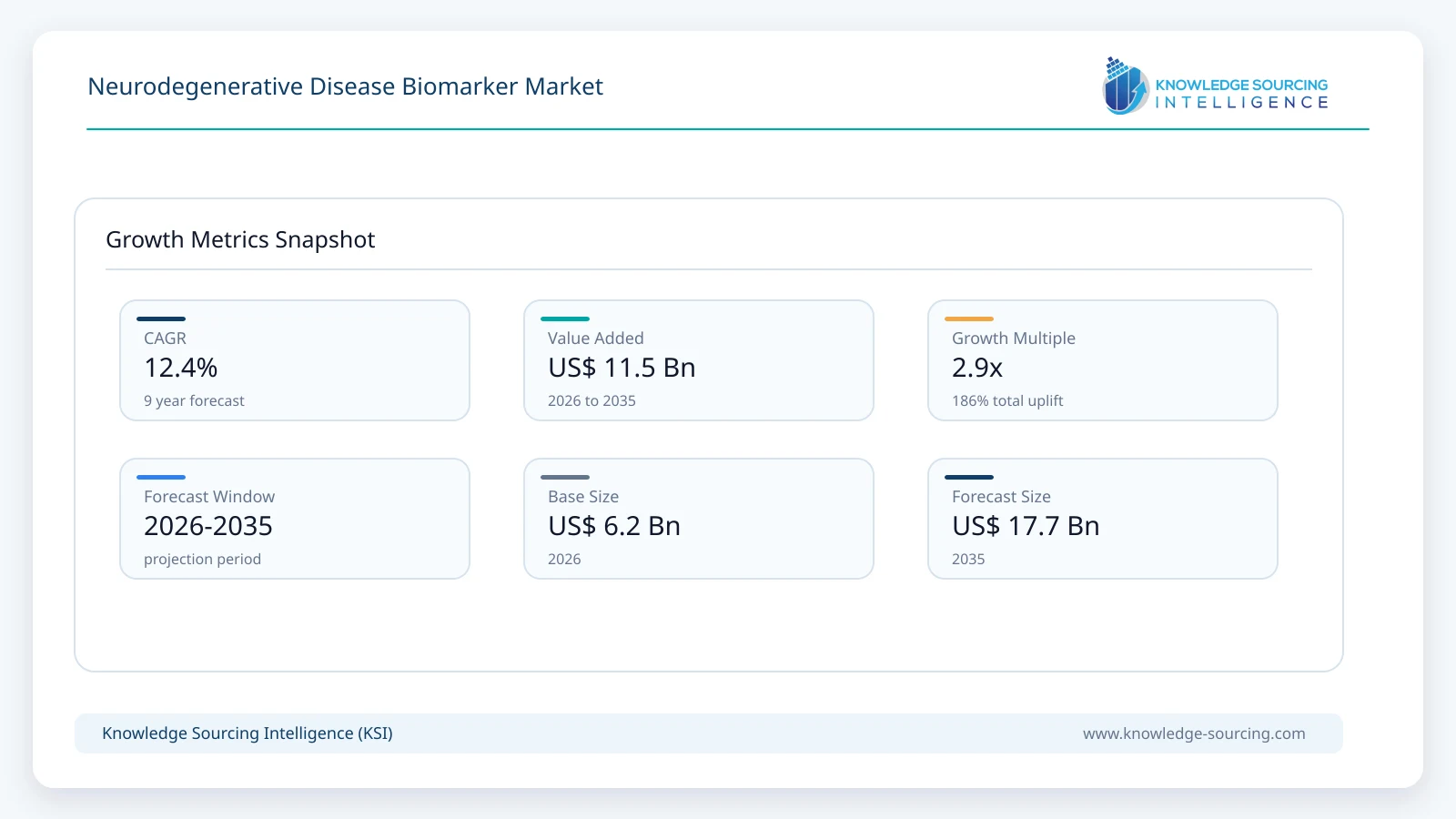
The Neurodegenerative Disease Biomarker Market is anticipated to grow at a CAGR of 12.4% from USD 6.18 billion in 2026 to USD 17.67 billion in 2035.
Highlights:
- 1Growing development of disease-modifying therapies is increasing demand for validated biomarkers because treatment eligibility increasingly depends on objective pathological confirmation.
- 2Expanding adoption of blood-based biomarker assays is improving accessibility by reducing dependence on invasive cerebrospinal fluid sampling.
- 3Artificial intelligence integration is enhancing biomarker interpretation through automated data analysis and multimodal clinical decision support.
- 4Precision medicine initiatives are encouraging healthcare providers to integrate molecular biomarkers with imaging and clinical assessment for individualized patient management.
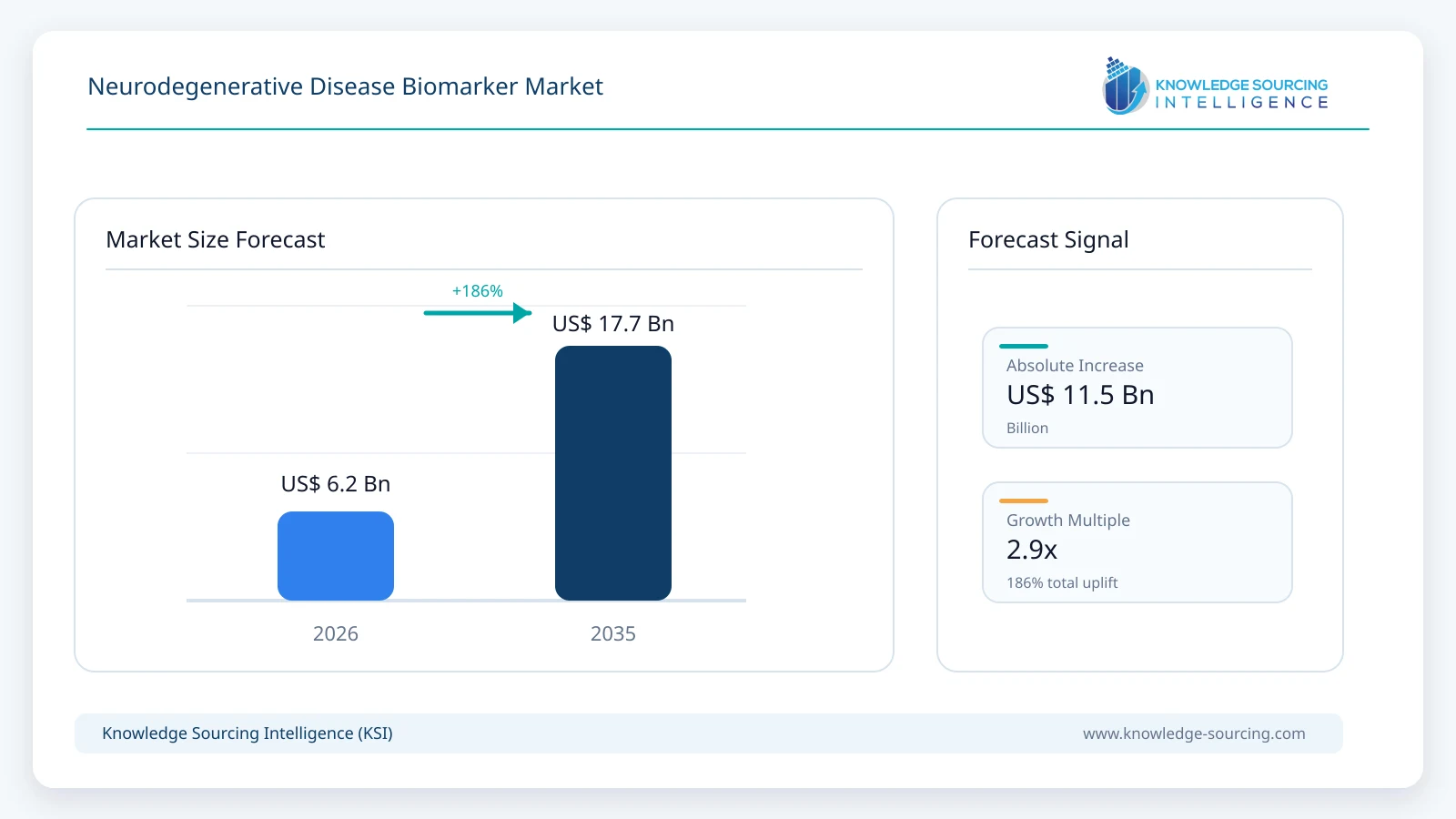
The neurodegenerative disease biomarker market comprises laboratory assays, molecular diagnostic technologies, imaging biomarkers, and analytical platforms that detect biological indicators associated with progressive neurological disorders. Biomarkers provide objective evidence of pathological mechanisms including amyloid deposition, tau aggregation, neuroaxonal injury, neuroinflammation, synaptic dysfunction, and genetic alterations, enabling clinicians to differentiate disease subtypes and monitor disease progression with greater precision. Rising global life expectancy continues increasing the prevalence of age-associated neurodegenerative diseases, creating sustained demand for diagnostic technologies capable of identifying disease during preclinical and early symptomatic stages. This demographic shift is encouraging healthcare providers to incorporate biomarker-supported diagnostics into routine neurological practice.
Regulatory authorities and healthcare organizations increasingly recognize biomarkers as essential tools for precision medicine because therapeutic effectiveness depends on accurate identification of disease pathology and progression. Pharmaceutical innovation in Alzheimer's disease, Parkinson's disease, and other neurodegenerative disorders is increasing reliance on biomarker-guided clinical trials and companion diagnostics to improve treatment selection and monitor therapeutic response. Diagnostic manufacturers are expanding automated laboratory systems, digital analytics, and artificial intelligence-enabled interpretation to improve assay reproducibility and clinical efficiency. These structural developments position biomarkers as fundamental components of future neurological diagnosis, drug development, and personalized patient care.
Market Dynamics
Market Drivers
Growing Adoption of Blood-Based Biomarkers: Blood-based biomarkers are becoming central to neurodegenerative disease diagnosis because they provide minimally invasive alternatives to cerebrospinal fluid analysis while supporting earlier disease detection. Healthcare providers are increasingly incorporating plasma biomarkers such as phosphorylated tau, neurofilament light chain, amyloid-beta, and glial fibrillary acidic protein into diagnostic workflows because these assays improve patient accessibility and clinical scalability. Conventional diagnostic methods often require invasive procedures or expensive imaging, creating demand for laboratory-based alternatives that simplify clinical evaluation. Diagnostic manufacturers are expanding highly sensitive immunoassay technologies capable of delivering standardized analytical performance across diverse healthcare settings. This transition establishes blood-based biomarkers as one of the strongest growth drivers within the market.
Increasing Demand for Precision Neurology: Precision neurology depends on accurate molecular characterization because neurodegenerative disorders frequently demonstrate overlapping clinical symptoms despite distinct pathological mechanisms. Healthcare providers are increasingly utilizing biomarker-guided diagnosis to improve disease classification and optimize therapeutic decision-making before irreversible neuronal damage progresses. Conventional symptom-based evaluation limits diagnostic confidence, creating demand for objective biological evidence that differentiates disease subtypes. Diagnostic developers are integrating proteomic, genomic, and imaging biomarkers into comprehensive testing platforms that strengthen clinical interpretation. This evolution continues expanding demand for advanced biomarker technologies across neurological healthcare.
Expansion of Disease-Modifying Therapies: Emerging disease-modifying therapies require validated biomarkers because treatment eligibility increasingly depends on confirmation of underlying disease pathology. Pharmaceutical companies are incorporating biomarker endpoints throughout clinical development to improve patient selection, monitor therapeutic response, and accelerate regulatory approval processes. Healthcare providers require reliable laboratory assays capable of identifying appropriate treatment candidates while supporting longitudinal disease monitoring. Diagnostic companies are responding through development of companion diagnostic platforms that integrate seamlessly into routine clinical practice. These developments reinforce biomarker adoption as therapeutic innovation continues advancing.
Technological Advancements in Biomarker Analysis: Continuous innovation in proteomics, genomics, multiplex immunoassays, mass spectrometry, and artificial intelligence is improving biomarker sensitivity and analytical reproducibility. Clinical laboratories are increasingly implementing automated platforms because high-throughput technologies enhance operational efficiency while reducing analytical variability. Growing diagnostic complexity creates demand for integrated analytical solutions capable of simultaneously evaluating multiple biomarkers within a single workflow. Technology providers are strengthening digital connectivity and cloud-based analytics that support standardized interpretation across healthcare networks. These innovations continue accelerating adoption of advanced biomarker technologies throughout neurological diagnostics.
Market Restraints
High analytical validation requirements and lengthy regulatory approval processes delay commercialization of novel biomarker assays.
Limited reimbursement coverage for emerging biomarker tests restricts routine clinical adoption across several healthcare systems.
Variability in biomarker standardization and inter-laboratory assay performance creates challenges for widespread clinical implementation.
Market Opportunities
Expansion of Companion Diagnostics: Companion diagnostics are becoming increasingly important because disease-modifying therapies require precise patient stratification before treatment initiation. Pharmaceutical companies are expanding partnerships with diagnostic manufacturers to develop biomarkers that support therapeutic eligibility, treatment monitoring, and clinical trial enrollment. Healthcare providers require validated diagnostic tools that improve treatment selection while reducing unnecessary healthcare expenditure. These collaborations are creating significant commercial opportunities for biomarker developers focused on precision neurology.
Integration of Artificial Intelligence with Biomarker Analytics: Artificial intelligence enhances biomarker interpretation by identifying complex molecular patterns that support earlier disease detection and prognostic evaluation. Clinical laboratories are increasingly adopting machine learning algorithms because automated analytics improve reproducibility while reducing interpretation variability. Growing availability of multimodal patient datasets encourages development of integrated decision-support platforms that combine laboratory biomarkers, imaging, and clinical information. These technological advances continue expanding opportunities for intelligent biomarker-based diagnostics.
Growth of Multi-Biomarker Testing Platforms: Single biomarkers often provide limited diagnostic information because neurodegenerative diseases involve multiple pathological pathways. Healthcare providers are increasingly adopting multiplex testing platforms that simultaneously measure protein, inflammatory, genetic, and metabolic biomarkers to improve diagnostic confidence and disease classification. Diagnostic manufacturers are investing in automated multiplex technologies that enhance workflow efficiency while supporting personalized clinical management. This transition is positioning comprehensive biomarker panels as a major area of future market expansion.
Supply Chain Analysis
The neurodegenerative disease biomarker market depends on a specialized supply chain that integrates biomarker discovery, reagent manufacturing, laboratory instrumentation, clinical validation, regulatory compliance, and healthcare delivery. The process begins with academic institutions, biotechnology companies, and life science organizations that identify candidate biomarkers associated with neurodegenerative diseases through proteomics, genomics, metabolomics, and translational research. Growing demand for earlier disease detection is increasing procurement of high-quality antibodies, recombinant proteins, sequencing reagents, assay consumables, and laboratory chemicals because analytical sensitivity directly determines biomarker reliability. Manufacturers are strengthening supplier diversification and expanding production capacity to ensure uninterrupted availability of critical raw materials. This approach improves supply chain resilience while supporting large-scale commercialization of biomarker assays.
Diagnostic manufacturers convert validated biomarkers into commercial assay kits, automated immunoassays, molecular diagnostic platforms, multiplex testing systems, and laboratory software that support routine clinical use. Increasing adoption of precision medicine is encouraging collaboration between biotechnology firms, pharmaceutical companies, diagnostic developers, and artificial intelligence providers because integrated diagnostic ecosystems improve clinical decision-making and patient stratification. Regulatory requirements create additional development complexity, requiring manufacturers to conduct extensive analytical validation, multicenter clinical studies, and quality assurance before market approval. Companies are investing in automated manufacturing, digital quality management systems, and scalable production technologies to improve consistency while reducing operational risk. These investments strengthen manufacturing efficiency and accelerate the availability of innovative biomarker solutions.
Distribution networks connect manufacturers with reference laboratories, hospitals, academic medical centers, neurology clinics, and research organizations through direct sales channels and specialized laboratory distributors. Healthcare providers are increasing adoption of automated laboratory analyzers and cloud-connected diagnostic platforms because higher testing volumes require standardized workflows and faster turnaround times. Laboratory service providers are expanding technical support, instrument maintenance, calibration services, and professional training to maximize assay performance and regulatory compliance. Digital connectivity enables continuous quality monitoring while improving integration with hospital information systems and electronic medical records. This coordinated supply chain supports reliable biomarker testing while enabling broader implementation of precision neurology across global healthcare systems.
Government Regulations
Region/Country | Regulatory Authority | Key Regulatory Focus | Impact on Neurodegenerative Disease Biomarker Market |
United States | U.S. Food and Drug Administration (FDA) | Approval of in vitro diagnostics (IVDs), companion diagnostics, laboratory-developed tests (LDTs), and AI-enabled diagnostic software | Encourages commercialization of validated biomarker assays while ensuring analytical accuracy, clinical performance, and patient safety. |
European Union | European Commission – In Vitro Diagnostic Regulation (IVDR) & Medical Device Regulation (MDR) | Clinical evidence, analytical validation, post-market surveillance, quality management | Strengthens confidence in biomarker diagnostics through rigorous regulatory requirements while increasing compliance obligations for manufacturers. |
United Kingdom | Medicines and Healthcare products Regulatory Agency (MHRA) | Regulation of diagnostic devices, AI-based medical software, and laboratory diagnostics | Supports safe adoption of innovative biomarker technologies through evidence-based regulatory oversight. |
Japan | Pharmaceuticals and Medical Devices Agency (PMDA) | Evaluation of molecular diagnostics, biomarker assays, and companion diagnostics | Facilitates market access for precision diagnostic technologies while maintaining high standards for clinical validation. |
Market Segmentation
By Biomarker Type
Protein biomarkers constitute the largest segment of the neurodegenerative disease biomarker market because they directly reflect pathological processes such as amyloid deposition, tau aggregation, neuroaxonal injury, and neuroinflammation. Healthcare providers are increasingly utilizing biomarkers including phosphorylated tau (p-tau217 and p-tau181), amyloid-beta (A?42/A?40), neurofilament light chain (NfL), and glial fibrillary acidic protein (GFAP) to improve diagnostic confidence and monitor disease progression. Conventional symptom-based diagnosis limits early intervention, creating demand for objective molecular indicators that identify disease before significant neuronal loss occurs. Diagnostic companies are expanding highly sensitive immunoassays and multiplex protein detection platforms that improve analytical precision while supporting routine clinical implementation. These advancements position protein biomarkers as the foundation of precision neurology and companion diagnostic development.
By Disease Indication
Alzheimer's disease represents the largest disease indication within the neurodegenerative disease biomarker market because increasing global disease prevalence is strengthening demand for accurate early diagnosis and treatment selection. Healthcare providers are increasingly adopting biomarkers such as amyloid-beta, phosphorylated tau, neurofilament light chain, and GFAP because disease-modifying therapies require pathological confirmation before treatment initiation. Symptom overlap with other forms of dementia creates diagnostic uncertainty, encouraging broader implementation of biomarker-guided clinical evaluation. Diagnostic manufacturers are expanding blood-based assays and automated laboratory platforms that improve testing accessibility while reducing dependence on invasive cerebrospinal fluid analysis. These developments continue positioning Alzheimer's disease as the primary driver of biomarker commercialization.
By Sample Type
Blood represents the fastest-growing sample type because minimally invasive collection improves patient acceptance, enables repeat testing, and supports large-scale screening initiatives. Healthcare providers are increasingly adopting plasma biomarker assays due to their compatibility with routine laboratory workflows and expanding clinical validation. Analytical sensitivity historically limited blood-based testing, creating demand for ultra-sensitive immunoassay technologies capable of detecting low-abundance neurological biomarkers. Diagnostic manufacturers are improving assay performance through advanced detection platforms and standardized analytical protocols. These developments are accelerating the transition toward blood-based precision diagnostics.
Regional Analysis
North America
North America represents the largest market for neurodegenerative disease biomarkers because advanced healthcare infrastructure, strong translational research capabilities, and early adoption of precision medicine accelerate the integration of biomarker-based diagnostics into neurological care. The region maintains high demand for biomarkers used in Alzheimer's disease, Parkinson's disease, multiple sclerosis, and amyotrophic lateral sclerosis as the aging population increases the clinical burden of neurodegenerative disorders. Pharmaceutical companies are increasingly developing disease-modifying therapies that require biomarker-supported patient selection, strengthening demand for validated laboratory assays and companion diagnostics. Stringent regulatory standards and reimbursement evaluation create high evidence requirements, encouraging manufacturers to invest in large-scale clinical validation and standardized testing platforms. This environment positions North America as the leading commercialization hub for innovative neurodegenerative disease biomarker technologies.
The United States accounts for the largest regional share because the presence of major diagnostic manufacturers, biotechnology companies, academic medical centers, and neurological research institutions supports continuous biomarker innovation. Clinical laboratories are increasingly implementing ultra-sensitive immunoassays, next-generation sequencing, multiplex diagnostics, and artificial intelligence-assisted data analysis to improve diagnostic precision and workflow efficiency. Canada is expanding biomarker adoption through investments in neuroscience research, precision medicine initiatives, and integrated healthcare delivery models that support earlier diagnosis of neurodegenerative disorders. Healthcare providers continue emphasizing minimally invasive blood-based biomarkers because these technologies improve patient accessibility while reducing dependence on cerebrospinal fluid testing. This sustained investment in clinical research, regulatory compliance, and diagnostic innovation reinforces North America's leadership within the global neurodegenerative disease biomarker market.
Europe
Europe maintains a significant position in the neurodegenerative disease biomarker market because coordinated healthcare systems, strong academic collaborations, and supportive regulatory frameworks encourage early implementation of precision diagnostics. Rising prevalence of age-related neurological disorders continues increasing demand for validated biomarkers that improve disease classification and therapeutic decision-making across specialized neurological centers. Healthcare providers are increasingly incorporating molecular biomarkers into routine diagnostic pathways because pathology-based diagnosis supports personalized treatment strategies and clinical trial participation. Compliance with the In Vitro Diagnostic Regulation (IVDR) strengthens analytical quality while increasing clinical evidence requirements for diagnostic manufacturers. These regulatory standards improve long-term confidence in biomarker technologies despite extending product development timelines.
Germany, the United Kingdom, France, Italy, and Spain contribute substantially to regional market growth through continuous investment in neuroscience research, molecular diagnostics, and advanced laboratory infrastructure. Diagnostic laboratories are increasingly adopting automated immunoassay systems, digital pathology platforms, and artificial intelligence-enabled analytical tools that enhance testing consistency and operational efficiency. Public healthcare systems continue supporting collaborative biomarker research through partnerships involving universities, biotechnology companies, pharmaceutical manufacturers, and clinical research organizations. Blood-based biomarker testing is gaining wider clinical acceptance because minimally invasive diagnostic pathways improve accessibility while reducing healthcare resource utilization. These structural developments position Europe as a major center for biomarker validation, clinical implementation, and precision neurology innovation.
Asia Pacific
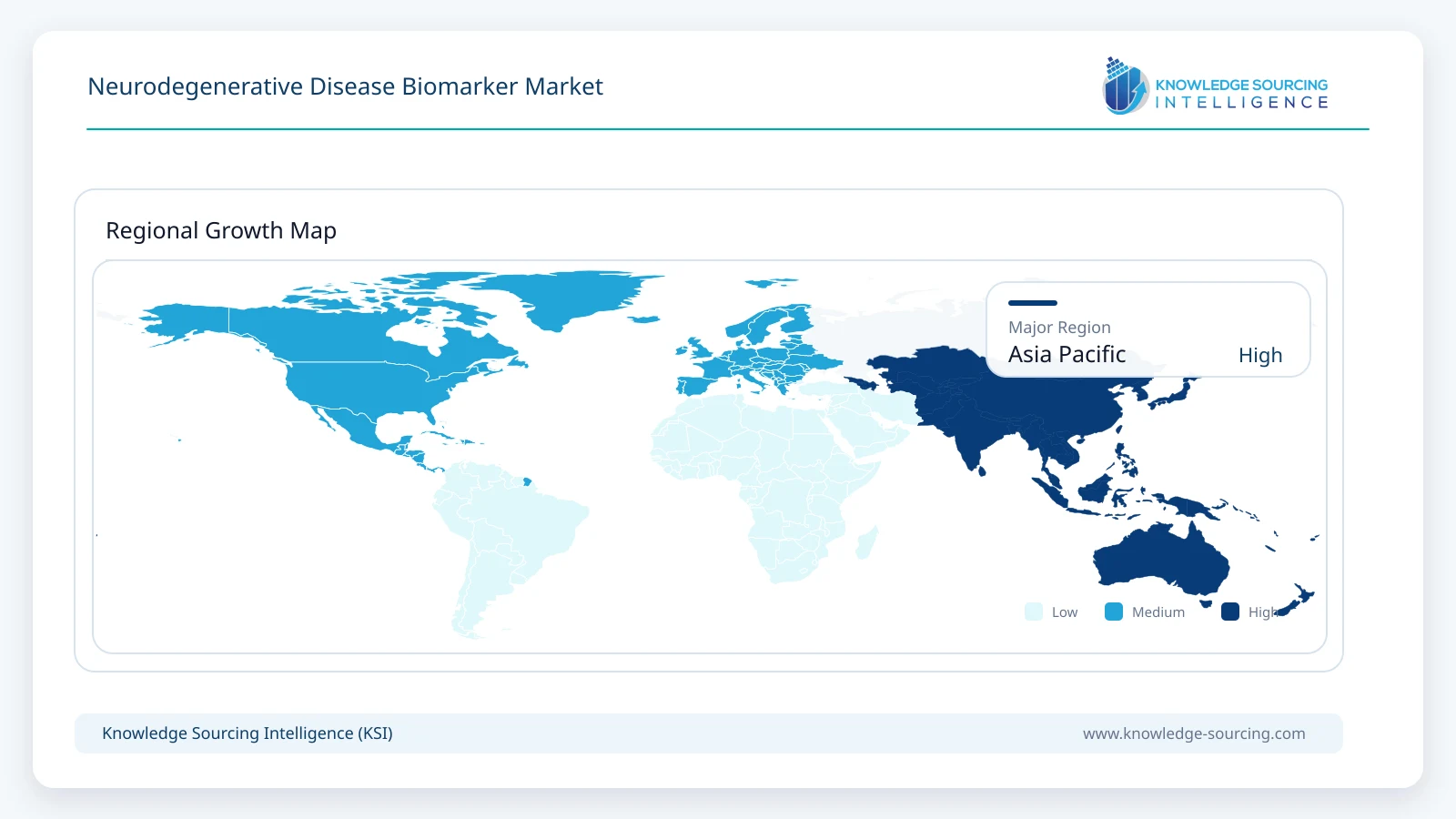
Asia Pacific is the fastest-growing regional market because rapid population aging, improving healthcare infrastructure, and increasing neurological disease awareness are expanding demand for early diagnostic technologies. Countries throughout the region continue strengthening investments in molecular diagnostics, laboratory automation, and precision medicine to address the growing burden of Alzheimer's disease, Parkinson's disease, and other neurodegenerative disorders. Healthcare providers are increasingly adopting biomarker-supported diagnosis because earlier disease identification improves clinical management while supporting participation in emerging therapeutic programs. Variability in healthcare accessibility and reimbursement continues influencing adoption rates, encouraging governments to expand diagnostic capacity and neurological care services. These developments create substantial long-term opportunities for biomarker manufacturers.
Japan leads regional adoption because its aging population creates sustained demand for advanced neurological diagnostics supported by strong clinical research capabilities. China is expanding biomarker development through substantial investment in biotechnology, precision medicine, and domestic diagnostic manufacturing, strengthening both innovation and commercial production. India is increasing implementation of molecular diagnostics as healthcare infrastructure improves and neurological disease awareness expands across tertiary care hospitals. South Korea and Australia continue supporting biomarker innovation through government-funded research, academic collaborations, and advanced laboratory networks focused on precision healthcare. These regional investments collectively strengthen Asia Pacific's position as one of the most dynamic markets for neurodegenerative disease biomarkers.
Rest of the World
The Rest of the World region is experiencing gradual expansion as healthcare systems increase investment in neurological diagnostics to address the rising burden of chronic neurodegenerative diseases. Countries in Latin America, the Middle East, and Africa continue recognizing the importance of early diagnosis because demographic aging is increasing demand for specialized neurological services and long-term disease management. Healthcare providers are increasingly seeking accessible biomarker technologies that improve diagnostic accuracy while reducing dependence on highly specialized imaging infrastructure. Limited laboratory capacity and reimbursement challenges continue restricting widespread implementation, encouraging governments and healthcare organizations to prioritize investment in diagnostic modernization. These initiatives are supporting gradual market development across emerging economies.
Brazil and Mexico represent the largest markets within Latin America because expanding healthcare infrastructure and growing access to specialized neurological care are increasing adoption of biomarker-based diagnostics. Saudi Arabia and the United Arab Emirates are strengthening investments in precision medicine, biotechnology research, and digital healthcare transformation to improve management of complex neurological diseases. South Africa continues expanding clinical research activities and laboratory capabilities through collaborations with academic institutions and international healthcare organizations. Diagnostic manufacturers are increasing strategic partnerships with regional distributors and healthcare providers to improve technology accessibility while supporting professional training and laboratory standardization. These developments are creating sustainable opportunities for long-term growth across the Rest of the World region.
Regulatory Landscape
The regulatory landscape for neurodegenerative disease biomarkers is evolving toward stronger analytical validation and clinical evidence requirements because biomarker-guided diagnosis is becoming central to precision neurology and therapeutic decision-making. Regulatory authorities, including the U.S. Food and Drug Administration (FDA), the European Commission through the In Vitro Diagnostic Regulation (IVDR), the Pharmaceuticals and Medical Devices Agency (PMDA) in Japan, the National Medical Products Administration (NMPA) in China, and Health Canada, require manufacturers to demonstrate analytical accuracy, clinical validity, and reproducibility before commercialization. Diagnostic developers are increasingly conducting multicenter clinical studies because regulatory agencies expect robust evidence demonstrating biomarker performance across diverse patient populations. These requirements improve confidence in biomarker-guided diagnosis while strengthening patient safety and clinical reliability.
Regulatory agencies are increasingly emphasizing post-market surveillance, quality management systems, and real-world performance monitoring because artificial intelligence-enabled diagnostics and multiplex biomarker platforms introduce greater analytical complexity. Manufacturers continue expanding investments in standardized assay protocols, automated quality control, and digital documentation to comply with evolving regulatory expectations while supporting global product registration. International harmonization remains challenging because regional approval pathways differ in documentation requirements, laboratory standards, and clinical evidence thresholds. These regulatory developments encourage companies to design globally compliant biomarker platforms that facilitate broader commercialization while reducing long-term regulatory risk.
Pipeline Analysis
The development pipeline for neurodegenerative disease biomarkers is expanding rapidly because pharmaceutical innovation is increasing demand for biomarkers capable of supporting early diagnosis, patient stratification, and therapeutic monitoring. Research organizations are increasingly validating plasma biomarkers such as phosphorylated tau (p-tau217 and p-tau181), neurofilament light chain (NfL), glial fibrillary acidic protein (GFAP), and amyloid-beta ratios as minimally invasive alternatives to cerebrospinal fluid testing. Clinical adoption requires extensive longitudinal validation, encouraging biotechnology companies and academic institutions to conduct multicenter studies that establish diagnostic accuracy across multiple neurodegenerative diseases. This research is accelerating the transition from exploratory biomarkers toward standardized clinical assays.
Artificial intelligence and multi-omics technologies are increasingly influencing biomarker discovery because integrated analysis of proteomic, genomic, metabolomic, and imaging datasets improves identification of disease-specific biological signatures. Diagnostic developers are expanding multiplex testing platforms that simultaneously evaluate multiple biomarkers to improve disease differentiation and prognostic assessment. Pharmaceutical companies continue incorporating biomarker endpoints into clinical trials because disease-modifying therapies require objective measures of treatment eligibility and therapeutic response. These innovations are strengthening the clinical value of biomarker-guided precision medicine while expanding opportunities for companion diagnostic development.
Competitive Landscape
Roche Diagnostics
Roche Diagnostics differentiates itself through its integrated precision diagnostics ecosystem that combines advanced immunoassay technologies, automated laboratory platforms, companion diagnostics, and strong pharmaceutical collaboration capabilities. The company has established a leading position in neurodegenerative disease biomarkers by developing highly sensitive blood-based assays, including its Elecsys® Amyloid Plasma Panel, which supports earlier detection of Alzheimer's disease pathology while reducing reliance on invasive cerebrospinal fluid testing. Roche is increasingly expanding collaborations with pharmaceutical companies because disease-modifying therapies require biomarker-supported patient selection and treatment monitoring. Its global installed base of cobas® laboratory systems strengthens clinical adoption by enabling seamless integration of neurological biomarker testing into routine laboratory workflows. Continuous investment in digital diagnostics, artificial intelligence, and precision medicine reinforces Roche's competitive advantage as demand shifts toward standardized, scalable, and clinically validated biomarker solutions.
Fujirebio Holdings, Inc.
Fujirebio Holdings distinguishes itself through its specialized expertise in neurological biomarkers and long-standing leadership in in vitro diagnostics for neurodegenerative diseases. The company has strengthened its market position with the Lumipulse® automated immunoassay platform, including the Lumipulse G pTau217/?-Amyloid 1-42 Plasma Ratio assay, which received U.S. FDA clearance and represents a significant advancement in blood-based Alzheimer's disease diagnostics. Healthcare providers are increasingly adopting automated biomarker assays because minimally invasive testing improves patient accessibility and supports earlier intervention. Fujirebio continues expanding partnerships with research institutions and pharmaceutical companies to validate additional biomarkers across Alzheimer's disease, Parkinson's disease, and other neurological disorders. Its focused neurological portfolio and continuous assay innovation position the company among the leading contributors to precision neurology.
Quanterix Corporation
Quanterix Corporation is strategically recognized for pioneering ultra-sensitive biomarker detection through its proprietary Simoa® (Single Molecule Array) technology platform. The company enables detection of neurological biomarkers at extremely low concentrations, supporting earlier disease identification and more accurate therapeutic monitoring across neurodegenerative disorders. Pharmaceutical companies are increasingly utilizing Simoa technology within clinical trials because highly sensitive biomarker quantification improves patient stratification and evaluation of treatment response. Quanterix continues strengthening collaborations with academic institutions, biotechnology companies, and global pharmaceutical manufacturers to expand clinical validation of blood-based biomarkers including neurofilament light chain, phosphorylated tau, and GFAP. Continuous investment in assay development and digital analytical capabilities reinforces its leadership within high-sensitivity biomarker diagnostics.
Bio-Techne Corporation
Bio-Techne Corporation differentiates itself through its comprehensive portfolio of protein analysis technologies, immunoassays, antibodies, reagents, and molecular biology solutions supporting biomarker discovery and translational research. The company is increasingly expanding advanced assay technologies because researchers require highly reproducible analytical tools for validating emerging neurodegenerative disease biomarkers. Its protein quantification platforms, multiplex immunoassays, and analytical reagents support biomarker development across Alzheimer's disease, Parkinson's disease, ALS, and multiple sclerosis. Academic institutions and pharmaceutical companies continue utilizing Bio-Techne products to accelerate biomarker research and companion diagnostic development. The company's strong presence across research and clinical laboratory markets positions it as a critical technology provider supporting innovation throughout the neurodegenerative biomarker value chain.
Abbott Laboratories
Abbott Laboratories leverages its global diagnostics infrastructure and automated laboratory systems to support the expanding adoption of neurological biomarker testing. The company continues investing in immunoassay technologies because healthcare providers require scalable laboratory platforms capable of integrating novel biomarkers into routine diagnostic workflows. Abbott's extensive installed base of automated analyzers facilitates rapid clinical implementation as validated neurodegenerative biomarkers transition from research to commercial practice. The company is strengthening collaborations focused on precision medicine, digital health integration, and biomarker validation to improve disease detection and therapeutic monitoring. Its broad diagnostic portfolio, global distribution network, and operational scale position Abbott as a significant participant in the future commercialization of neurodegenerative disease biomarkers.
Siemens Healthineers AG
Siemens Healthineers differentiates itself through its ability to integrate laboratory diagnostics, advanced neuroimaging, digital health technologies, and artificial intelligence into a unified precision diagnostic ecosystem. The company is increasingly enhancing multimodal neurological assessment because combining imaging biomarkers with laboratory biomarkers improves diagnostic confidence and disease characterization. Its laboratory automation solutions, molecular diagnostics, and AI-assisted imaging platforms support healthcare providers seeking comprehensive evaluation of neurodegenerative diseases. Siemens Healthineers continues expanding digital workflow solutions that improve laboratory efficiency while facilitating standardized biomarker interpretation across healthcare systems. Its integrated diagnostic strategy strengthens the company's competitive position as precision neurology increasingly depends on multimodal clinical decision support.
Beckman Coulter, Inc.
Beckman Coulter distinguishes itself through high-throughput clinical laboratory automation, advanced immunoassay platforms, and extensive expertise in diagnostic workflow optimization. The company is expanding biomarker testing capabilities because healthcare laboratories require scalable systems that maintain analytical accuracy while processing growing testing volumes. Its automated analyzers support integration of emerging neurodegenerative disease biomarkers into routine clinical practice through standardized laboratory operations and quality management. Beckman Coulter continues investing in assay innovation, digital laboratory connectivity, and collaborative research that strengthen biomarker commercialization across neurological disorders. The company's operational efficiency and automation expertise position it as a valuable partner for laboratories adopting precision neurological diagnostics.
Sysmex Corporation
Sysmex Corporation strategically combines clinical diagnostics, laboratory automation, molecular technologies, and digital healthcare solutions to expand its presence within precision medicine. The company is increasingly investing in neurological biomarker development because aging populations are increasing demand for earlier diagnosis of chronic neurodegenerative diseases. Sysmex continues strengthening collaborations with biotechnology companies, academic institutions, and pharmaceutical organizations to accelerate biomarker validation and improve analytical performance across neurological applications. Its expertise in laboratory automation, quality control, and integrated diagnostic workflows enables healthcare providers to implement standardized biomarker testing efficiently. This combination of technological innovation and global laboratory infrastructure positions Sysmex as an emerging contributor to the neurodegenerative disease biomarker market.
Future Market Outlook
The neurodegenerative disease biomarker market is moving toward pathology-driven clinical decision-making because healthcare systems increasingly recognize that molecular evidence enables earlier intervention than symptom-based diagnosis alone. Demand is shifting toward integrated biomarker platforms that combine protein, genetic, inflammatory, metabolic, and imaging data to improve diagnostic accuracy across heterogeneous neurological disorders. Conventional single-marker approaches provide limited clinical insight for complex diseases, encouraging diagnostic manufacturers to develop multiplex assays supported by artificial intelligence and advanced analytics. Pharmaceutical companies are expanding collaborations with diagnostic developers because disease-modifying therapies require precise patient selection, treatment monitoring, and validated companion diagnostics throughout the therapeutic lifecycle. This convergence of diagnostics and therapeutics is establishing biomarkers as indispensable components of precision neurology.
Technological innovation continues transforming the competitive landscape because ultra-sensitive immunoassays, next-generation sequencing, proteomics, metabolomics, and digital health platforms are improving analytical sensitivity while enabling minimally invasive testing. Healthcare providers are increasingly adopting blood-based biomarker assays because simplified sample collection improves patient accessibility and supports large-scale screening within routine clinical practice. Regulatory expectations continue emphasizing robust clinical validation and standardized analytical performance, encouraging manufacturers to invest in multicenter studies, automated laboratory workflows, and globally harmonized quality systems. These investments strengthen long-term market sustainability while accelerating commercialization of clinically validated biomarker solutions across multiple neurodegenerative diseases.
Future market expansion will increasingly depend on the successful integration of biomarker diagnostics with personalized therapeutic strategies because pharmaceutical innovation is shifting treatment paradigms toward disease modification rather than symptomatic management. Research organizations are expanding investigations into novel biomarkers, including extracellular vesicles, circulating microRNAs, epigenetic signatures, and multi-omics panels that capture diverse pathological mechanisms across neurodegenerative disorders. Healthcare systems continue prioritizing earlier diagnosis to reduce long-term disease burden and improve patient outcomes, creating sustained demand for scalable, cost-effective diagnostic technologies. These structural changes position neurodegenerative disease biomarkers as one of the most strategically important segments within precision medicine and neurological healthcare.
The neurodegenerative disease biomarker market is entering a phase in which scientific validation, regulatory confidence, and therapeutic innovation are becoming increasingly interconnected. Demand continues shifting toward highly standardized, minimally invasive, and clinically actionable biomarker solutions that improve diagnostic certainty and support individualized treatment decisions. Companies capable of combining advanced biomarker discovery, automated laboratory technologies, artificial intelligence, and global clinical validation are expected to strengthen their competitive positions as precision neurology becomes an integral component of future neurological care.
Neurodegenerative Disease Biomarker Market Scope:
| Report Metric | Details |
|---|---|
| Total Market Size in 2026 | USD 6.18 billion |
| Total Market Size in 2035 | USD 17.67 billion |
| Forecast Unit | Billion |
| Growth Rate | 12.4% |
| Study Period | 2021 to 2035 |
| Historical Data | 2021 to 2024 |
| Base Year | 2025 |
| Forecast Period | 2026 – 2035 |
| Segmentation | Biomarker Type, Disease Indication, Sample Type, Geography |
| Companies |
|
Market Segmentation
Biomarker Type
Disease Indication
End User
Geography
- North America
- South America
- Europe
- Middle East and Africa
- Asia Pacific
Table of Contents
1. EXECUTIVE SUMMARY
1.1 Market Snapshot
1.2 Key Findings
1.3 Analyst Insights
1.4 Strategic Recommendations
2. RESEARCH METHODOLOGY
2.1 Research Design
2.2 Data Collection Methodology
2.3 Market Size Estimation
2.4 Forecasting Methodology
2.5 Assumptions & Limitations
3. GLOBAL NEURODEGENERATIVE DISEASE BIOMARKER MARKET OVERVIEW, SIZE & FORECAST
3.1 Market Definition & Scope
3.2 Disease Overview
3.3 Biomarker Classification
3.4 Market Evolution
3.5 Key Market Trends
3.6 Historical Market Analysis (2021–2025)
3.7 Market Forecast (2026–2035)
3.8 Epidemiology and Disease Burden
3.9 Biomarker Development Landscape
3.10 Clinical Utility and Diagnostic Pathway
3.11 Unmet Clinical Needs
4. MARKET DYNAMICS
4.1 Market Drivers
4.2 Market Restraints
4.3 Market Opportunities
4.4 Market Challenges
5. INDUSTRY LANDSCAPE
5.1 Industry Value Chain Analysis
5.2 Pricing Analysis
5.3 Reimbursement Landscape
6. INNOVATION LANDSCAPE
6.1 Emerging Biomarker Technologies
6.2 Product Innovation
6.3 Clinical Trial Analysis
6.4 Pipeline Analysis
6.5 Artificial Intelligence in Biomarker Analysis
6.6 Digital Health Integration
6.7 Future Technology Roadmap
7. REGULATORY LANDSCAPE
7.1 Regulatory Framework
7.2 Approval Pathways
7.3 Quality and Compliance Requirements
8. GLOBAL NEURODEGENERATIVE DISEASE BIOMARKER MARKET LANDSCAPE ANALYSIS
8.1 Analysis by Biomarker Type
8.2 Analysis by Disease Indication
8.3 Analysis by Sample Type
8.4 Analysis by Technology
8.5 Analysis by End User
8.6 Analysis by Application
9. GLOBAL NEURODEGENERATIVE DISEASE BIOMARKER MARKET SEGMENT ANALYSIS (2021–2035)
9.1 By Biomarker Type
9.1.1 Protein Biomarkers
9.1.2 Genetic Biomarkers
9.1.3 Metabolic Biomarkers
9.1.4 Inflammatory Biomarkers
9.1.5 Imaging Biomarkers
9.1.6 Other Biomarkers
9.2 By Disease Indication
9.2.1 Alzheimer's Disease
9.2.2 Parkinson's Disease
9.2.3 Multiple Sclerosis
9.2.4 Amyotrophic Lateral Sclerosis (ALS)
9.2.5 Huntington's Disease
9.2.6 Other Neurodegenerative Disorders
9.3 By Sample Type
9.3.1 Blood
9.3.2 Cerebrospinal Fluid (CSF)
9.3.3 Urine
9.3.4 Saliva
9.3.5 Tissue
9.3.6 Other Sample Types
10. GLOBAL NEURODEGENERATIVE DISEASE BIOMARKER MARKET GEOGRAPHICAL ANALYSIS (2021–2035)
10.1 North America
10.2 Europe
10.3 Asia-Pacific
10.4 South America
10.5 Middle East & Africa
11. GLOBAL NEURODEGENERATIVE DISEASE BIOMARKER MARKET COUNTRY ANALYSIS (2021–2035)
11.1 United States
11.2 Canada
11.3 Germany
11.4 United Kingdom
11.5 France
11.6 Italy
11.7 Spain
11.8 Japan
11.9 China
11.10 India
11.11 South Korea
11.12 Australia
11.13 Brazil
11.14 Saudi Arabia
11.15 South Africa
12. COMPETITIVE LANDSCAPE
12.1 Market Share Analysis
12.2 Strategic Developments
12.3 Mergers, Acquisitions, Partnerships & Collaborations
12.4 Product Launches and Pipeline Progress
13. COMPANY PROFILES
13.1 Roche Diagnostics
13.2 Fujirebio Holdings, Inc.
13.3 Quanterix Corporation
13.4 Bio-Techne Corporation
13.5 Abbott Laboratories
13.6 Siemens Healthineers AG
13.7 Beckman Coulter, Inc.
13.8 Sysmex Corporation
13.9 Thermo Fisher Scientific Inc.
13.10 Revvity, Inc.
13.11 C2N Diagnostics LLC
13.12 Quest Diagnostics Incorporated
13.13 Laboratory Corporation of America Holdings (Labcorp)
13.14 Becton, Dickinson and Company (BD)
13.15 Bio-Rad Laboratories, Inc.
14. GLOBAL NEURODEGENERATIVE DISEASE BIOMARKER MARKET COMMERCIAL FORECAST ANALYSIS
14.1 Protein Biomarkers
14.2 Genetic Biomarkers
14.3 Metabolic Biomarkers
14.4 Inflammatory Biomarkers
14.5 Imaging Biomarkers
14.6 Other Biomarkers
15. INVESTMENT & FUNDING ANALYSIS
15.1 Venture Capital Investments
15.2 Government and Public Research Funding
15.3 Industry R&D Investments
16. FUTURE OUTLOOK
16.1 Emerging Growth Opportunities
16.2 Long-Term Industry Trends
Navigate
Trusted by the world's leading organizations











